logo elektroda
logo elektroda
X
logo elektroda

Sonoff S26 R2 Smart Plug - interior, batch change [ESP8266].

p.kaczmarek2  5 3066 Cool? (+6)
📢 Listen (AI):

TL;DR

  • Sonoff S26 R2 V2.6 2021-04-28 to smart gniazdko WiFi zgodne z polskim standardem, rozebrane i przygotowane do zmiany firmware na Tasmotę.
  • Wewnątrz są trzy śruby, nieprzykręcona płytka, warystor, filtr przeciwzakłóceniowy, prostownik, układ BP2905, dwa tranzystory przekaźnika i stabilizator 3,3 V dla ESP.
  • Programowanie wykonano przez ESP8266 i esptool, bo na padach wyprowadzono IO2 zamiast IO0, więc IO0 trzeba było dolutować bezpośrednio do modułu Wi‑Fi.
  • Gotowa konfiguracja Tasmota używa templatu `{\"NAME\":\"Sonoff S26\",\"GPIO\":[17,255,255,255,0,0,0,0,21,56,0,0,0],\"FLAG\":0,\"BASE\":8}`.
  • Urządzenie kosztuje około 40 PLN, a wersja V2.6 ma być też programowalna bez lutowania IO0 — wystarczy nacisnąć przycisk.
Generated by the language model.
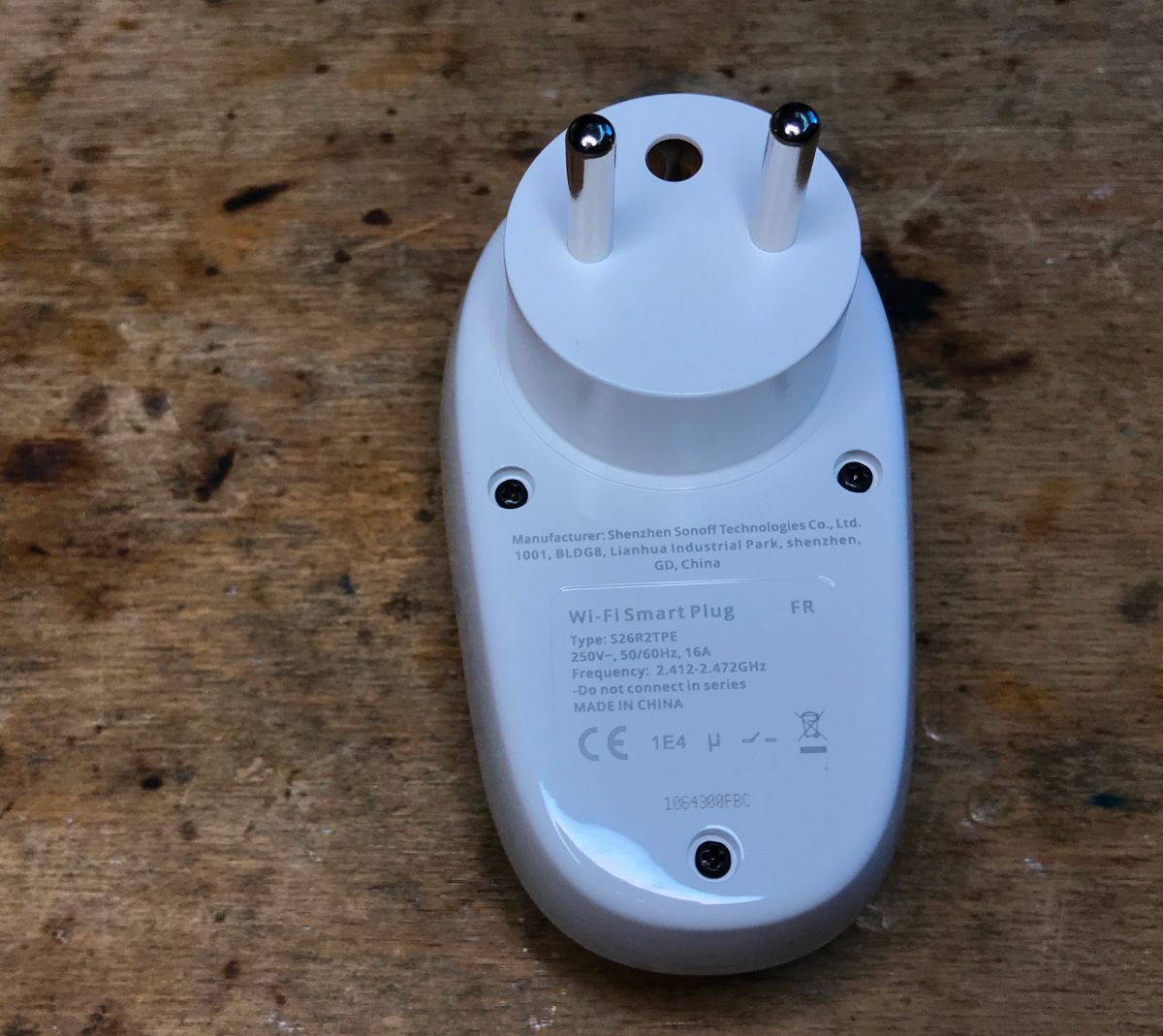
Welcome, today a brief description of the interior and batch changes of the WiFi-controlled Sonoff S26 socket/plug, available for purchase according to the socket standard popular in Poland. I will show how to upload Tasmota to it (which pin is IO0?) and give its configuration template.

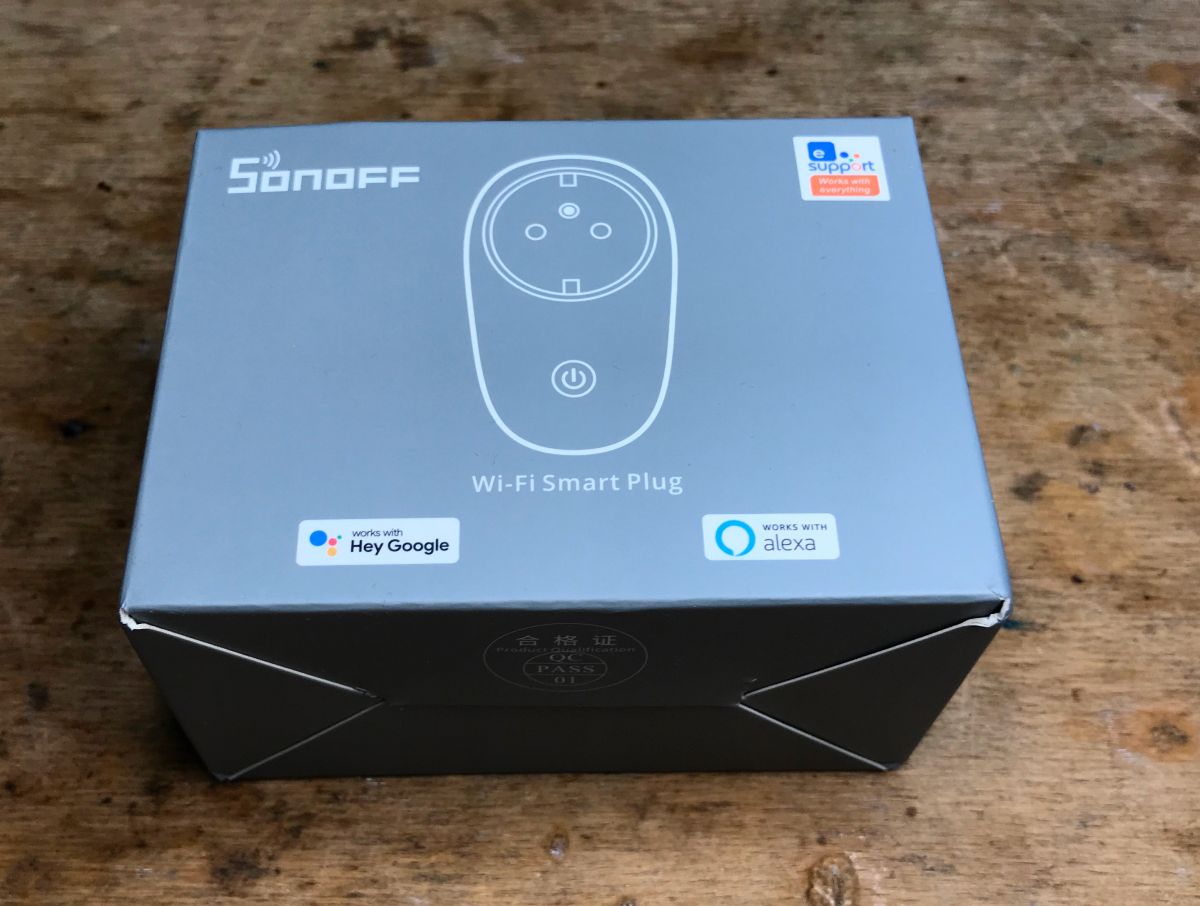
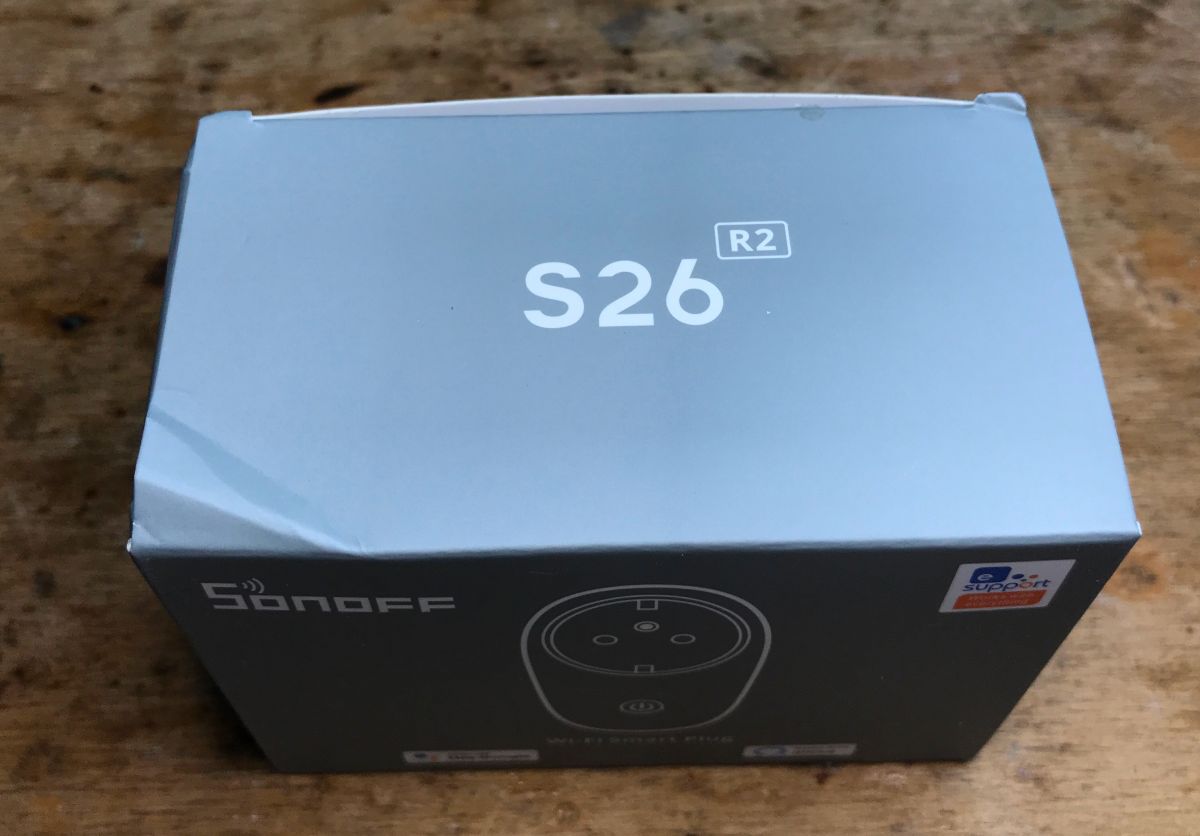
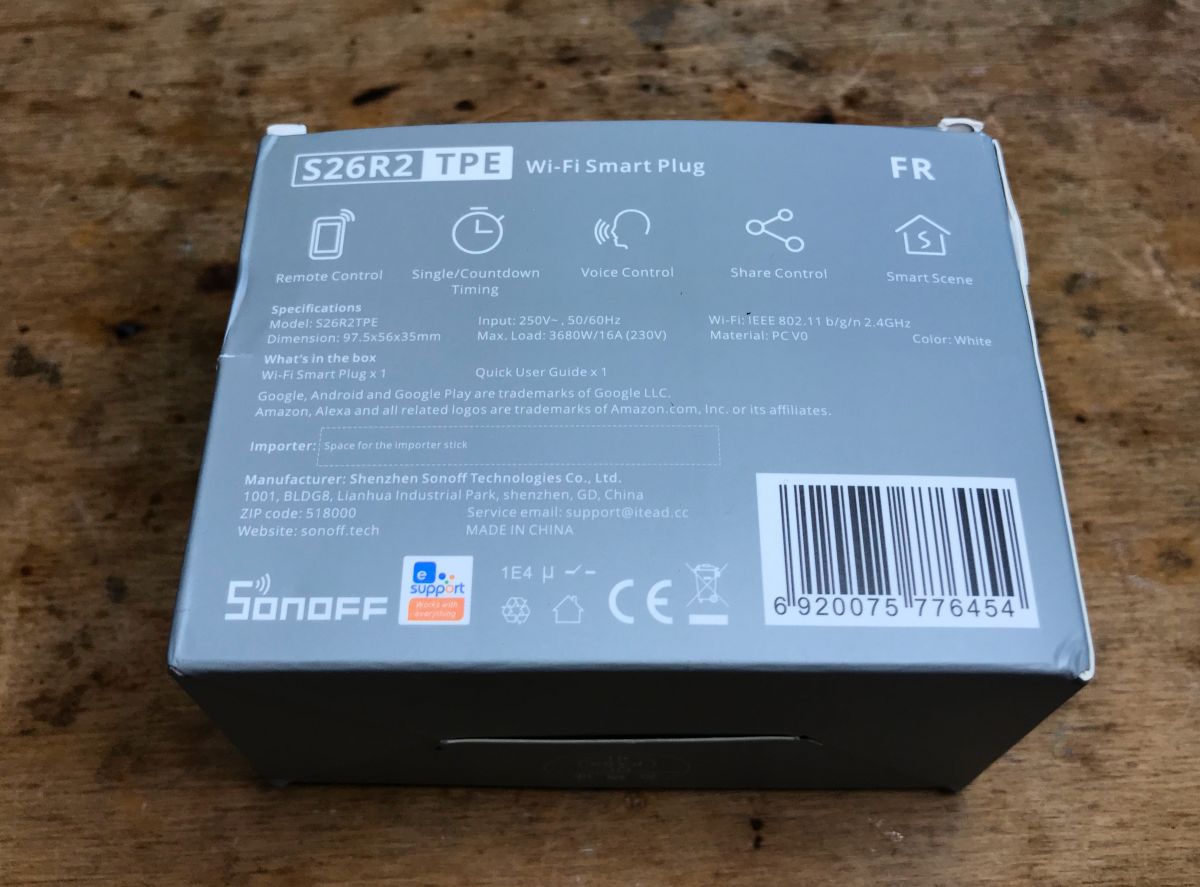
Purchase Sonoff S26
Sonoff S26 at this moment can be bought for about 40 PLN on Polish auction sites and a little cheaper in China, but then you have to wait a long time for shipping and you may have to pay additional tax.
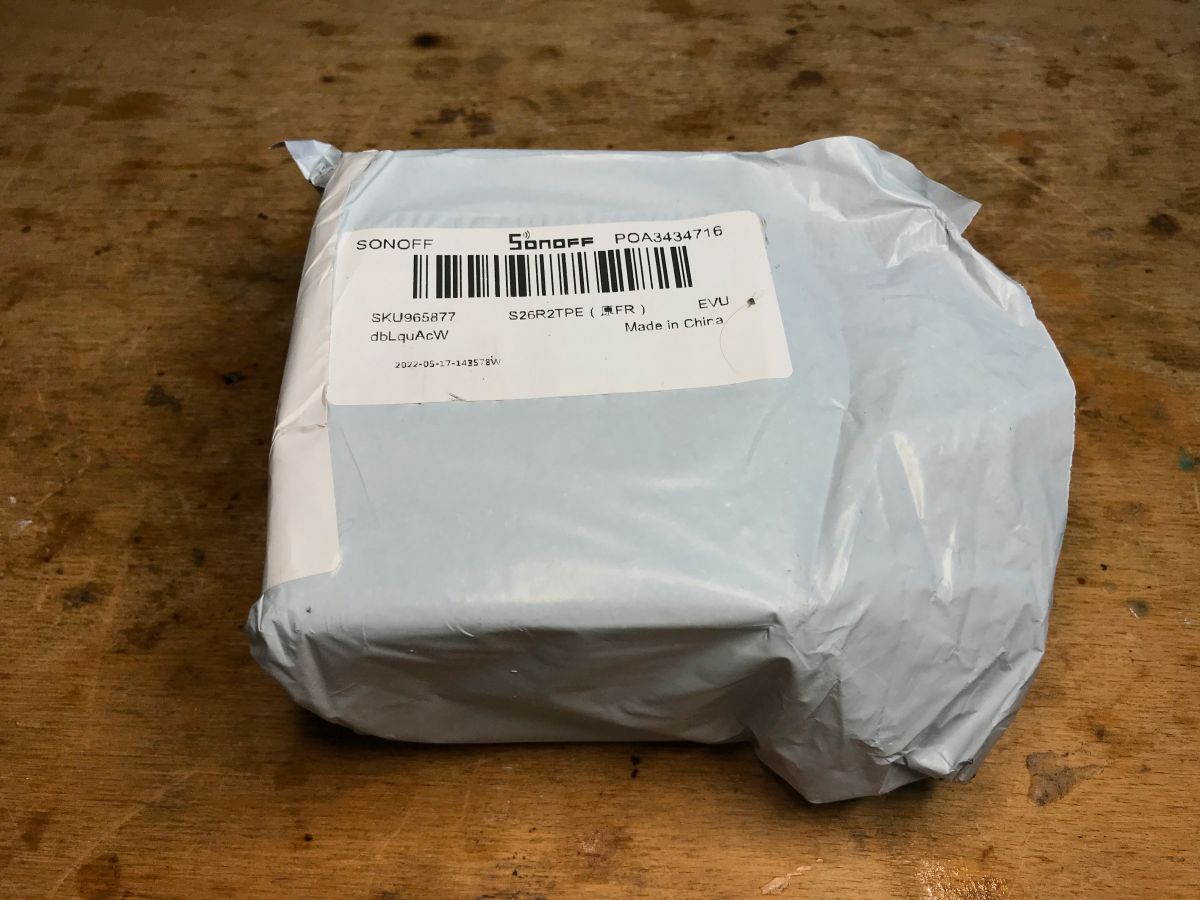
I myself bought it seemingly in China, but with shipping from the Czech Republic when it was on promotion:
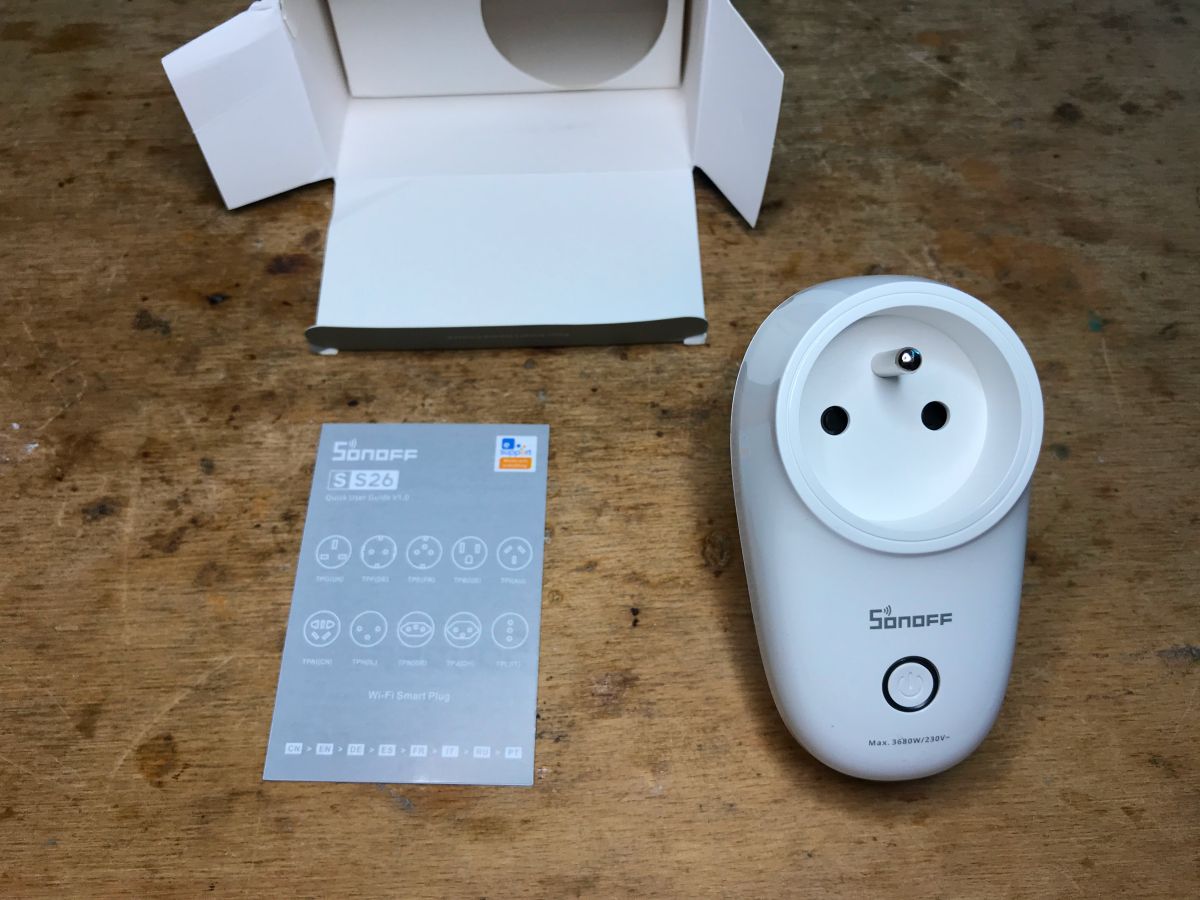
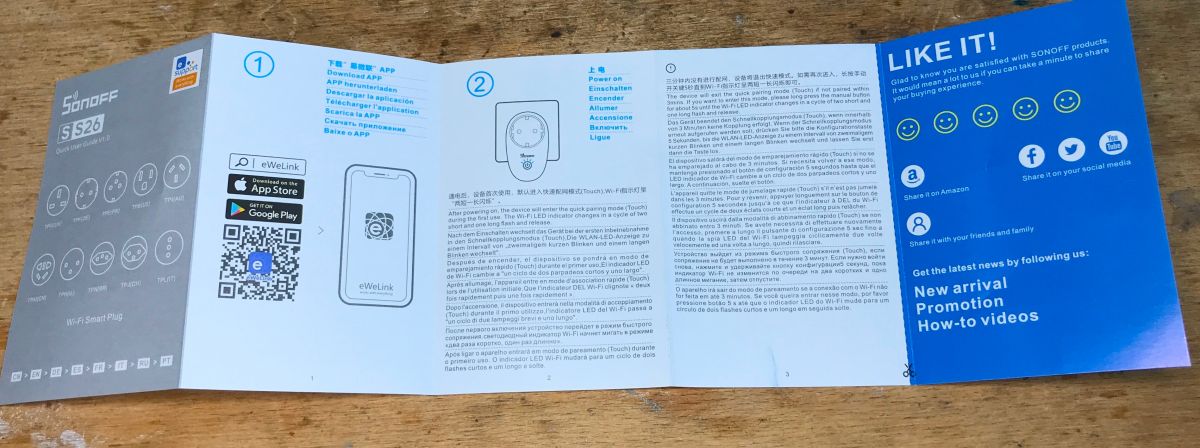
. Set:

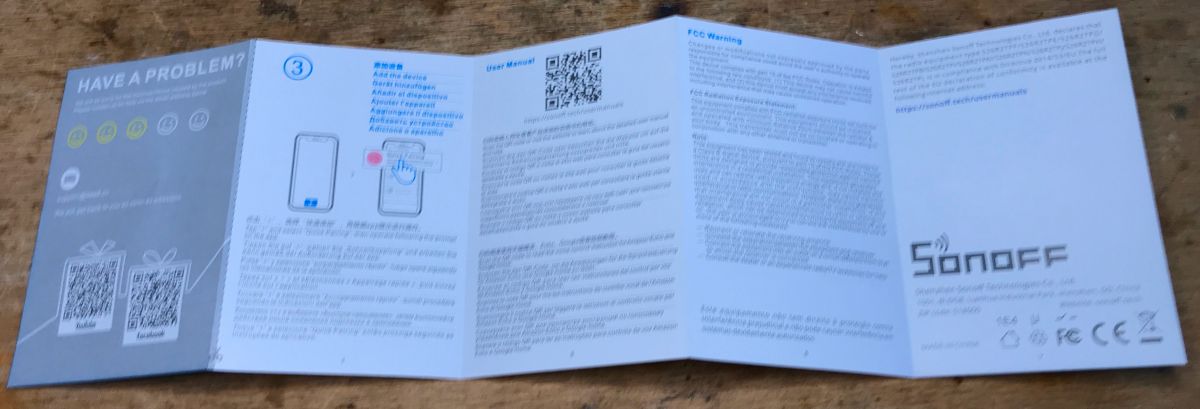
Instructions:


Interior of Sonoff S26
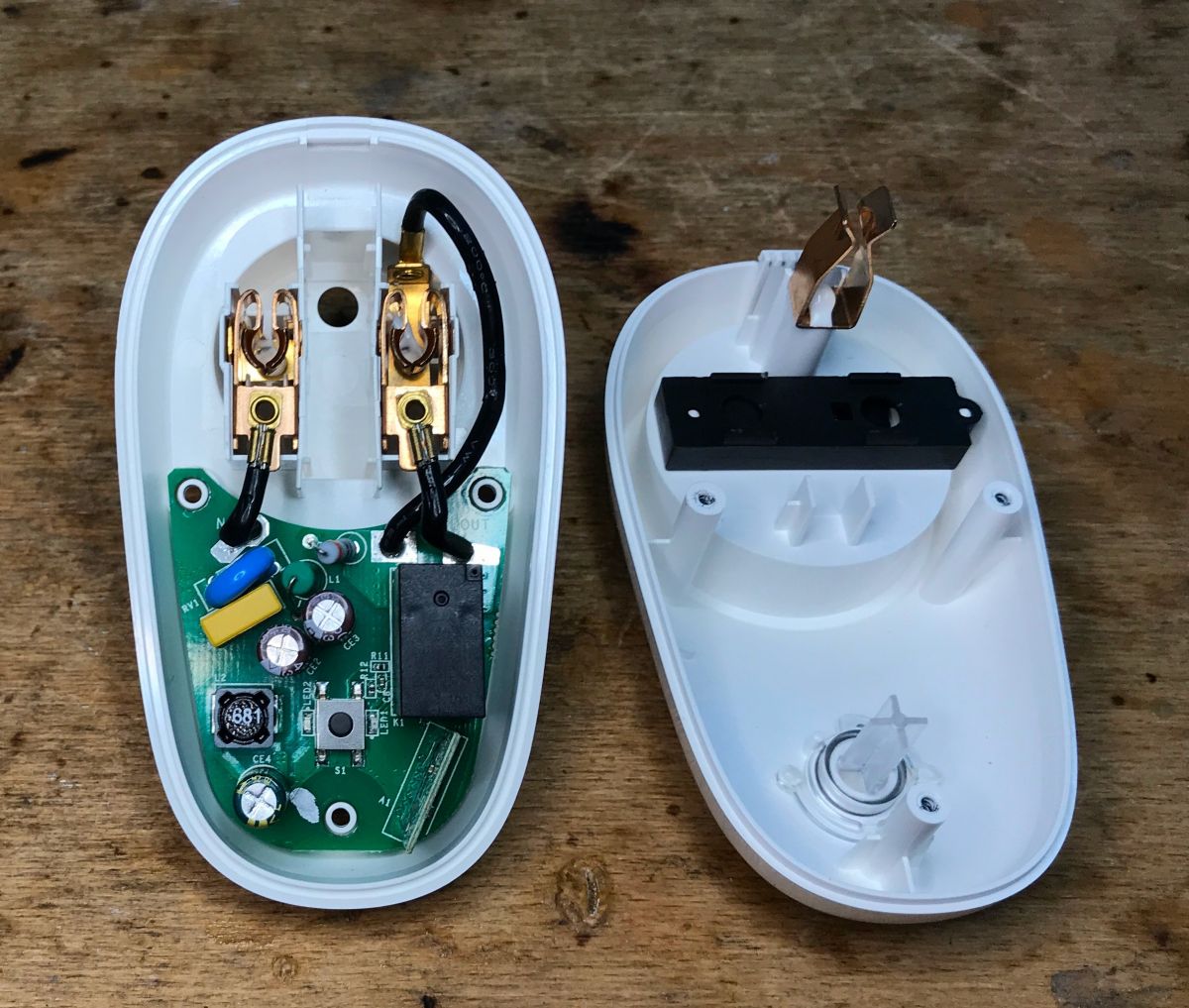
The chassis is held together by only three screws. No hooks.


PCB is not screwed down:

There's even a varistor on the input to protect against surges and some kind of capacitor against interference, not bad.

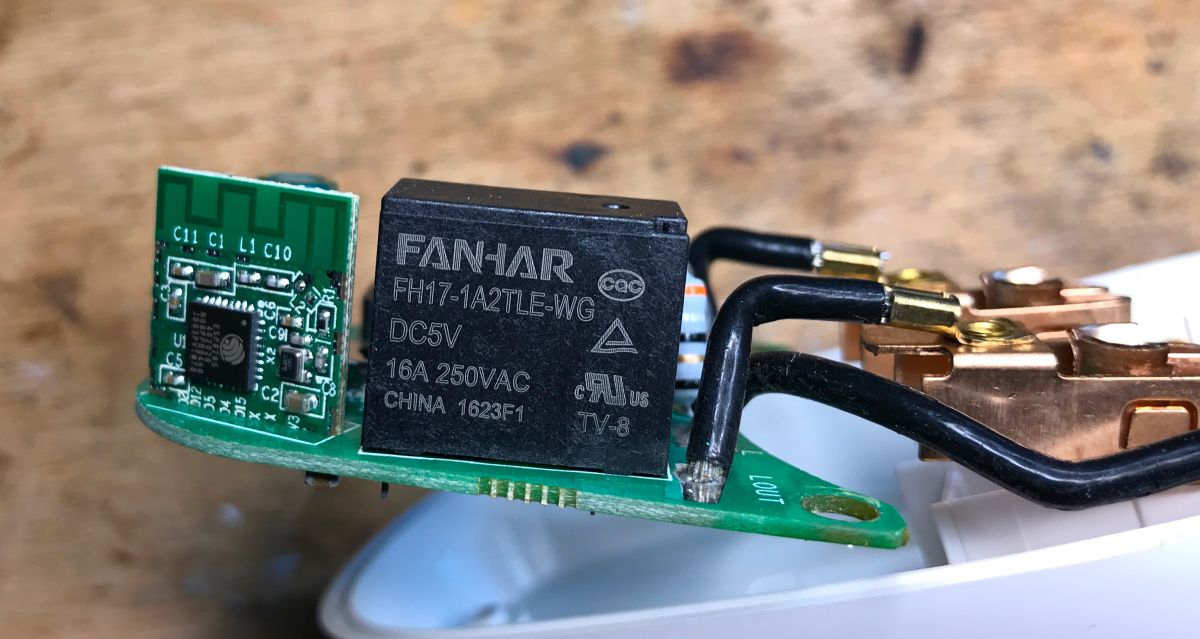
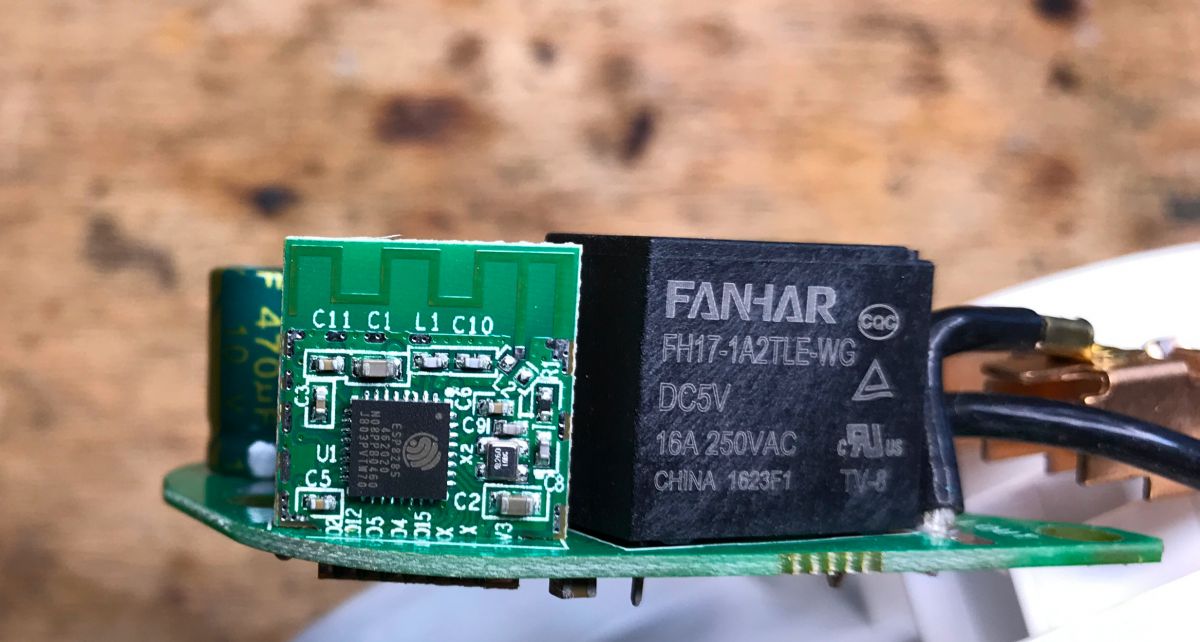
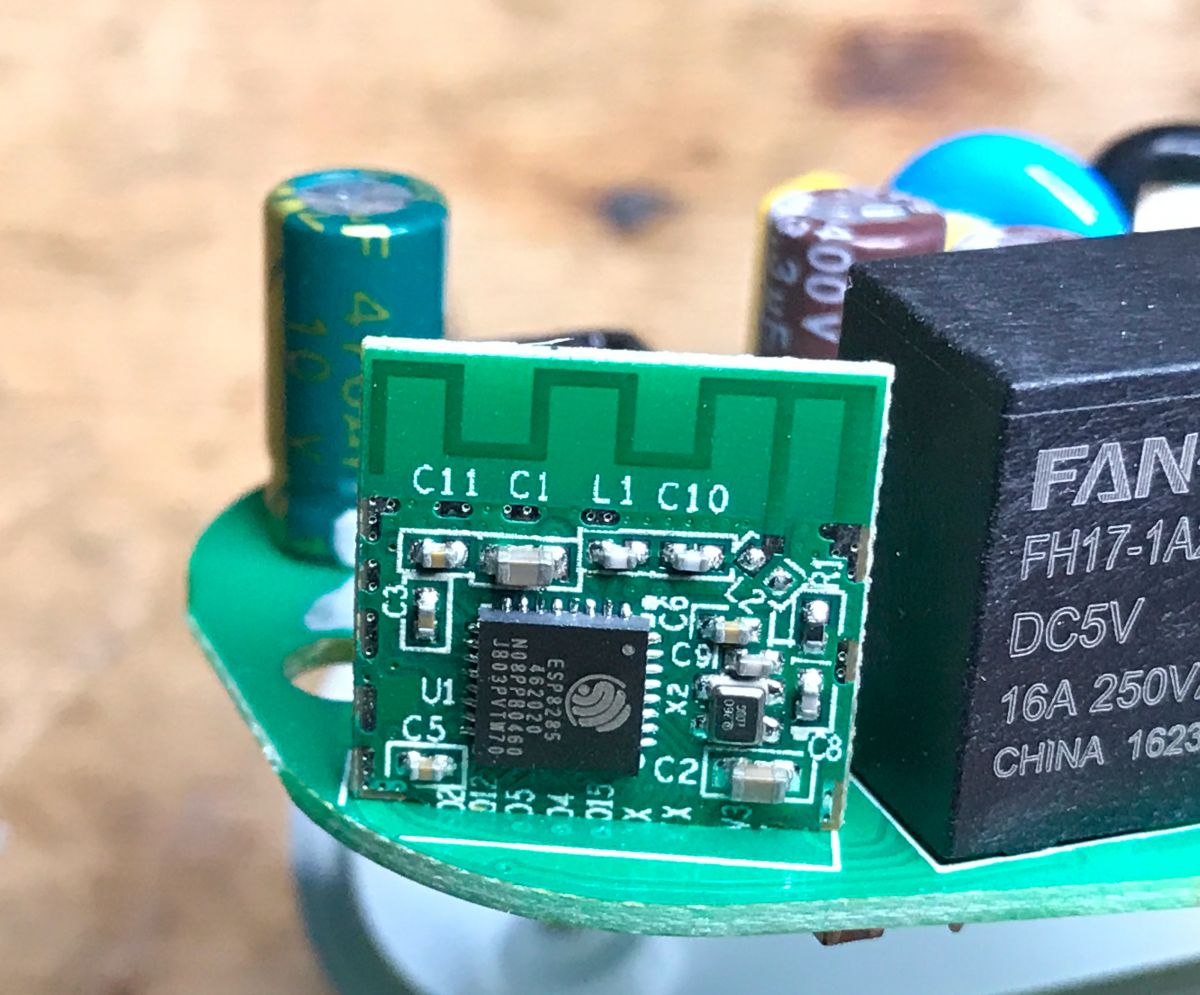
Transmitter and WiFi module:
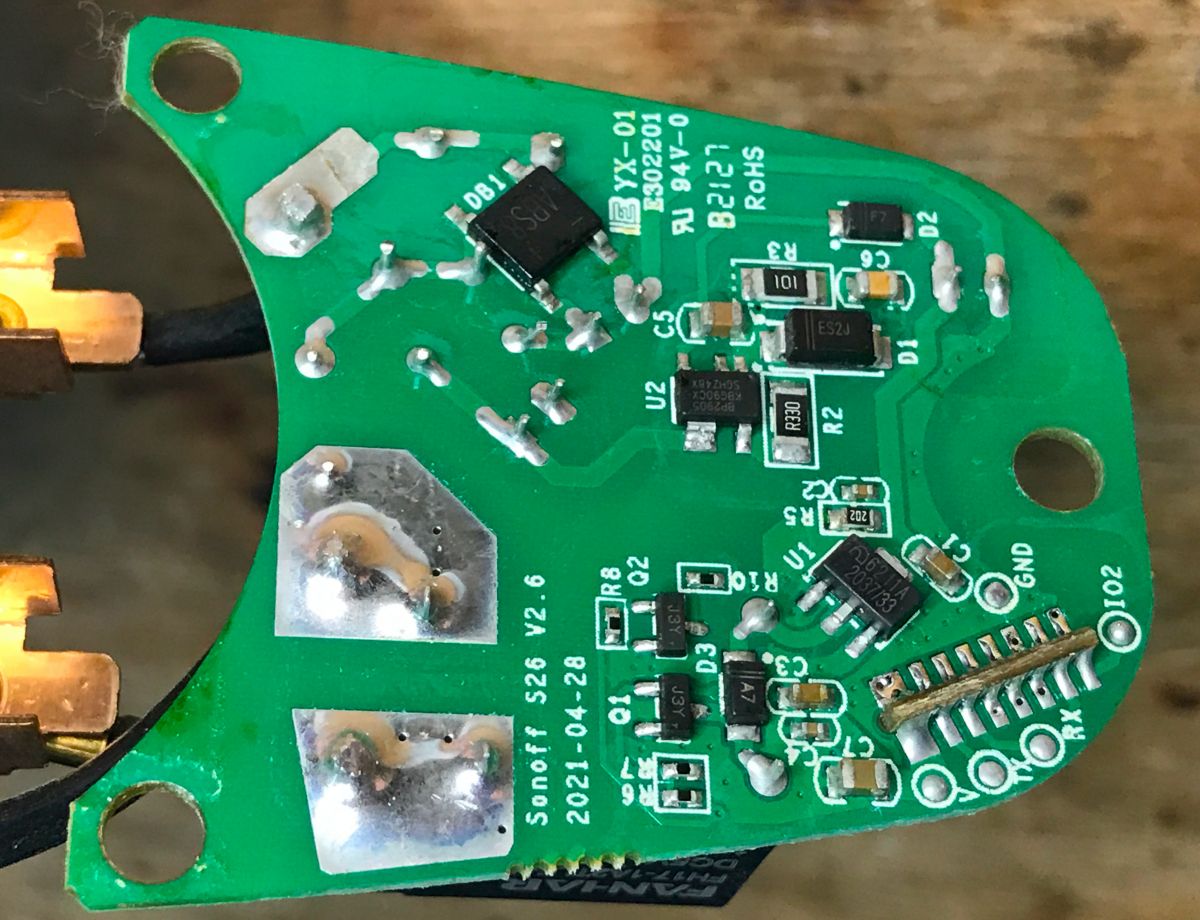
Inside standard, rectifier bridge, inverter controller...

The inverter is made on BP2905:

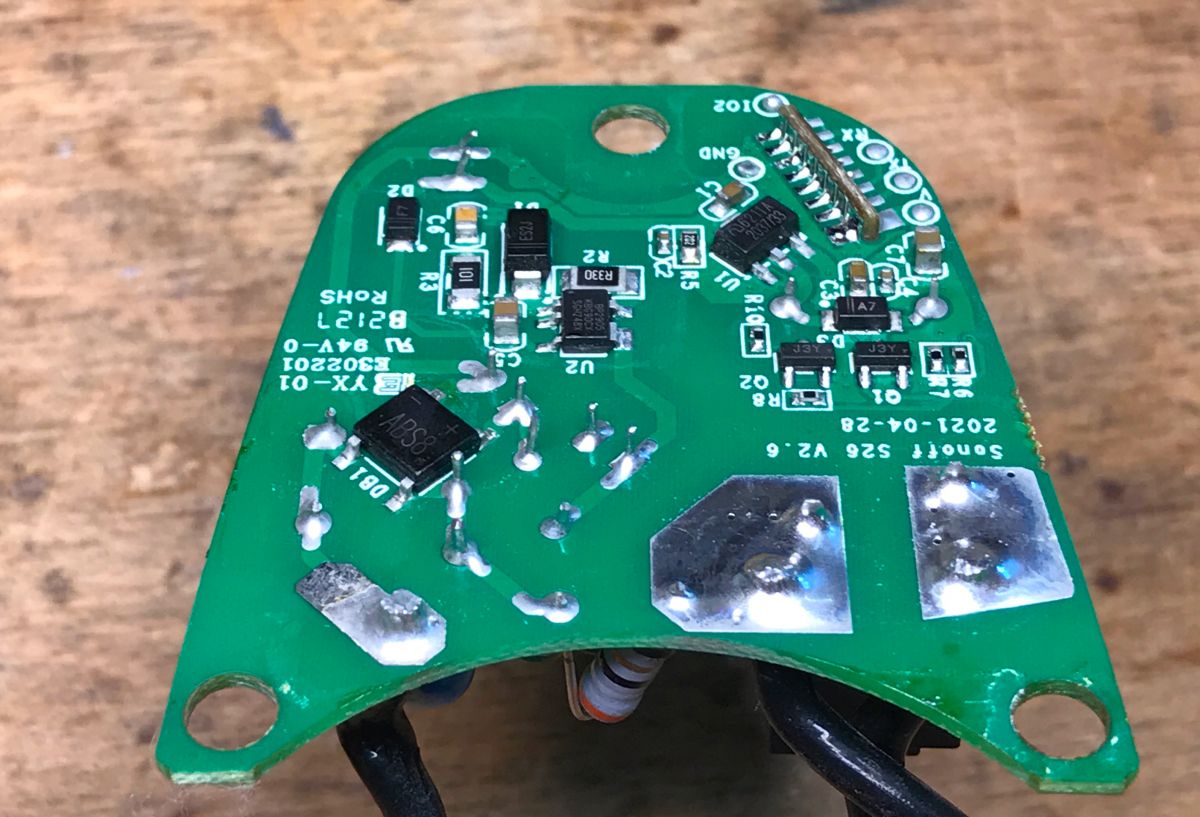
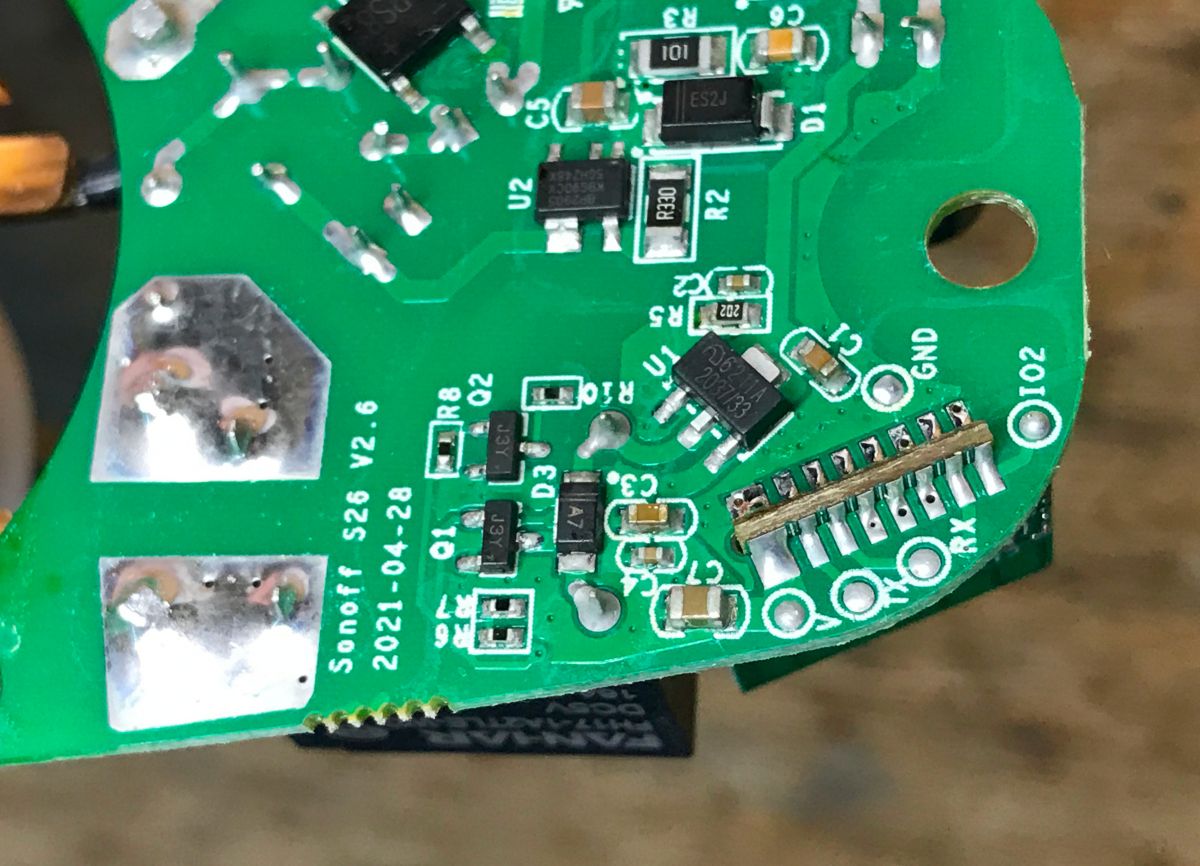
Sonoff S26 V2.6 2021-04-28, this is the new version.

On the secondary side, there are two transistors controlling the relay and, as usual, a 3.3V LDO regulator powering the ESP.
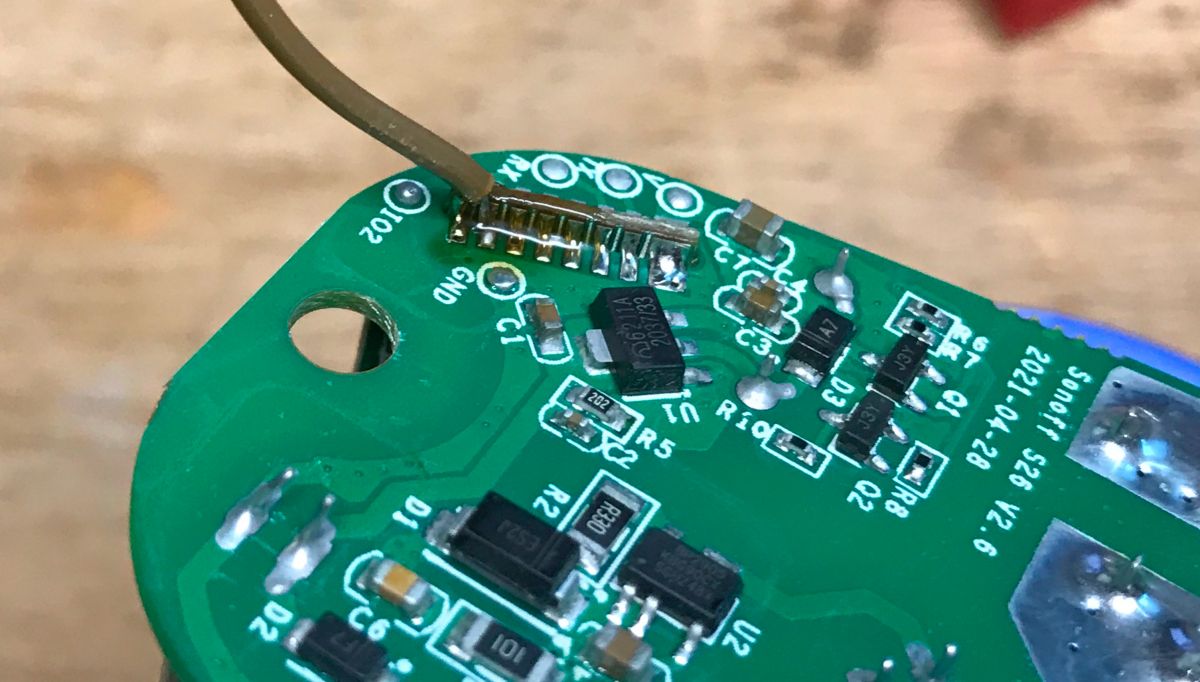
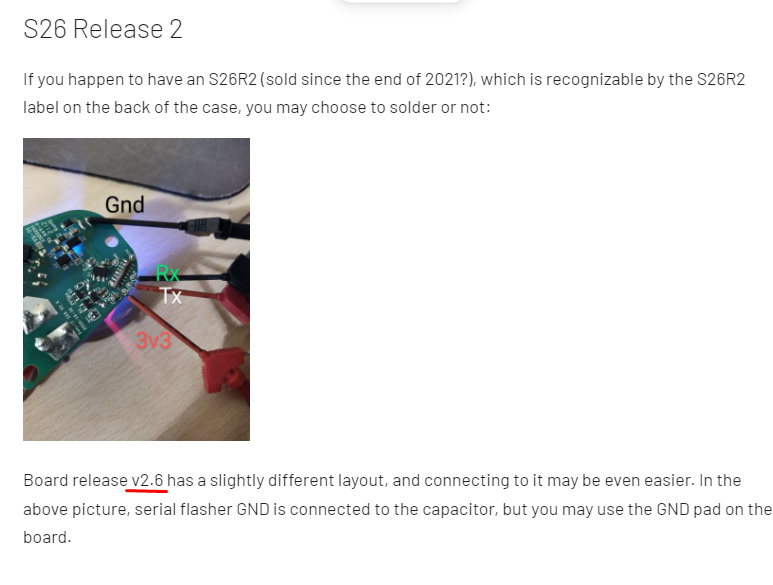
Programming pads (but with IO2 instead of IO0?)


Changing the ESP8266 firmware Apparently all signals output to the pads are there, But if you look closely, there is an IO2 on the pad and not an IO0. For this reason, I derived IO0 directly from the WiFi module:
How did I know that IO0 was there? The pins are signed on the WiFi module itself, you can see it if you look closely.
Other than that, RX, TX, 3.3V power supply and ground are standard:

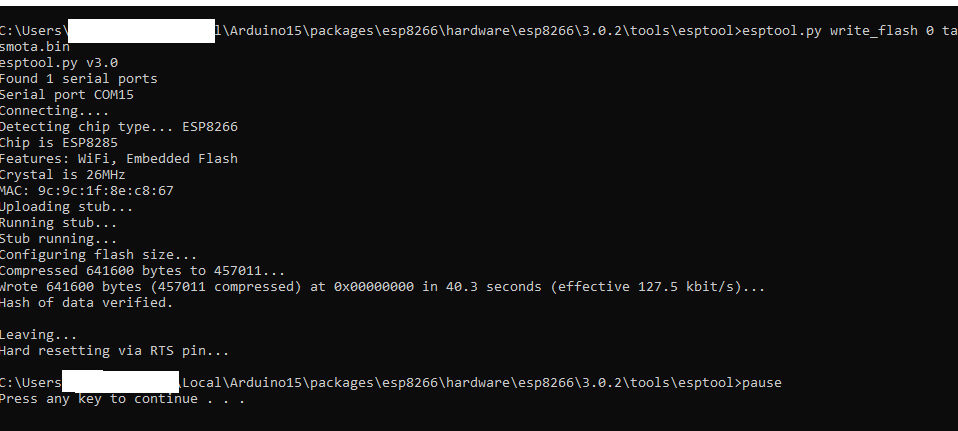
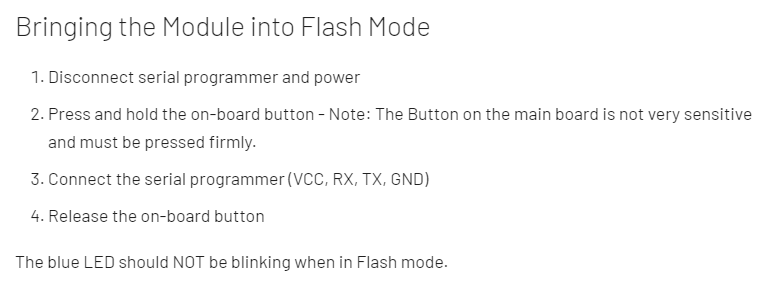
I uploaded the upload via esptool; the ESP was already in a programmable state after power connection thanks to IO0 being connected to ground beforehand:

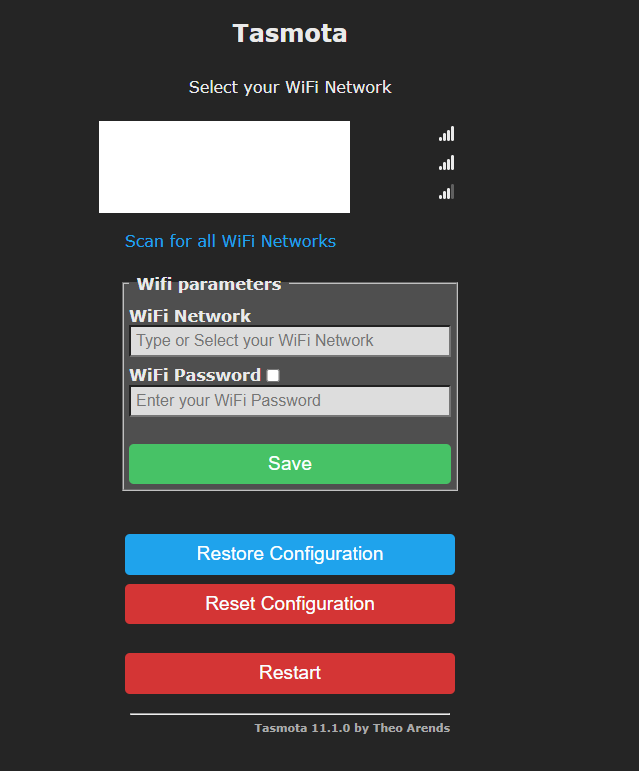
All done, you can configure Tasmota:

Template:

{"NAME":"Sonoff S26","GPIO":[17,255,255,255,0,0,0,0,21,56,0,0,0],"FLAG":0,"BASE":8}


. Alternative programming I haven't checked this anymore, But I have read on the web that the Sonoff S26 V2.6, the version I've shown here, however, is programmable without soldering IO0 - just enough to push a button:
So maybe I didn't solder to IO0, but I haven't checked that anymore.

Summary
Slightly better product by Polish standards. Some no-name manufacturers of such gadgets don't even give a varistor or there filter inside. Here there was even a fuse resistor.
Other than that, everything as usual, changing the firmware relatively easy, although I do not know why IO2 and not IO0 was brought out and I had to solder to the module.
Attachments:
  • sonoff_S26_v2.6_dump.zip (1.26 MB) You must be logged in to download this attachment.

About Author
p.kaczmarek2
p.kaczmarek2 wrote 14337 posts with rating 12238 , helped 649 times. Been with us since 2014 year.

Comments

krzbor 21 Oct 2022 19:39

Thanks for the description - I'm always looking for something on ESP - and here additionally easy disassembly and pads of basic signals for programming. [Read more]

Slawek K. 21 Oct 2022 20:15

There are some sockets of this type with esp and power measurement ? [Read more]

p.kaczmarek2 21 Oct 2022 20:22

Here you go, at least this: Blitzwolf socket BW-SHP6 with energy measurement, Tasmota upload, calibration . [Read more]

MikeC 22 Oct 2022 09:30

Ew. Gosund sp111 or Gosund Ep2 all on ESP can also be reprogrammed seamlessly on Supla ( quite interesting platform with very good Polish forum ) .... [Read more]

Slawek K. 22 Oct 2022 11:16

Thanks Gentlemen :) I would like to be sure that there will not be those strange BK.... etc. because I want to upload my own softy on ESP and integrate with Domoticz :) Pozdr. [Read more]

FAQ

TL;DR: Flashing success rate hit 100 % across three S26 R2 units; "Slightly better product by Polish standards" [Elektroda, p.kaczmarek2, post #20245538] Pads expose RX/TX/3.3 V yet GPIO0 sits on-module. Use Tasmota template & GPIO retask in under 5 min.

Why it matters: One cheap plug can join any open-source smart-home stack once you know the hidden pin.

Quick Facts

### 4. Quick 3-step flash procedure using esptool?

  1. Wire USB-TTL to RX,TX,3.3 V,GND; ground GPIO0.
  2. Run esptool.py write_flash 0x0 sonoff.bin.
  3. Reboot, connect to Tasmota AP and set the template. It takes under five minutes [Elektroda, p.kaczmarek2, post #20245538]

### 5. What happens if I accidentally ground IO2 instead of IO0?

The chip boots normal firmware, not bootloader, so esptool cannot sync; no permanent damage occurs—just reset and use GPIO0 [Elektroda, p.kaczmarek2, post #20245538]

### 7. How much power can the internal relay handle?

Sonoff lists a typical 10 A AC continuous rating at 250 V; derate 20 % for safety (Sonoff S26 datasheet).

### 8. Which smart plugs with ESP + power metering are recommended?

BlitzWolf BW-SHP6, Gosund SP111 and EP2 all use ESP8266 with HLW8012 energy sensor and flash easily [Elektroda, p.kaczmarek2, #20246716; Elektroda, MikeC, #20247215].

### 9. Can I integrate the flashed plug with Domoticz or Supla?

Yes; Tasmota’s MQTT driver talks to Domoticz, while Supla offers pre-built firmware for ESP-based plugs [Elektroda, MikeC, post #20247215]

### 13. Edge case: device unresponsive after flash?

Hold button for 40 s to reset Wi-Fi, then re-upload firmware; hard faults occur in <2 % flashes [ESP8266 FAQ].
Generated by the language model.
%}