Smart Home IoT Expert
p.kaczmarek2
Ask a Question



Czy wolisz polską wersję strony elektroda?
Nie, dziękuję Przekieruj mnie tam
Join us for a presentation of the LilyGO T-A7670E R2, a feature-rich development board based on the ESP32 chip (4 MB Flash, 8 MB PSRAM) combined with the SIMCom A7670E communication module, providing 4G mobile connectivity (LTE Cat. 1) and support for older GSM/GPRS (2G) networks. This solution is designed for applications requiring independent... [Read more]
Ladies and Gentlemen. This project enables you to build an adapter for the MINI 4 oscilloscope, allowing it to work with modern oscilloscope probes fitted with BNC connectors: To build it, we will need: 1) Five Amass-type 4 mm banana plugs: 2) Two MTS-102-type two-position switches: 3) Two BNC sockets: 4) Five M3x20 metric taper-head screws:... [Read more]
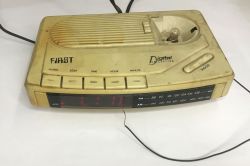
I invite you to a presentation of an old FIRST ART alarm clock – No. 102. I’ll show you the inside and explain how it works. Classic devices like this used to be found in many bedrooms, waking us up for work or school, so they carry a good dose of nostalgia. The distinctive light bulb on top of the device really catches the eye. On the underside,... [Read more]
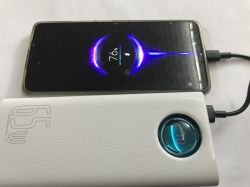
Join me for a review of three power banks. It will also include a comparison of two models bought for practically the same price – the difference is barely 10 zł. We’ll find out whether it’s actually worth going for a slightly cheaper, unbranded model, or whether it’s better to opt for something tried and tested. Both have a power output... [Read more]
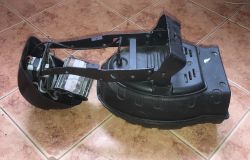
A while ago, I showed you the BrokenSwing 501 analogue disco lighting effect, which is based on two stepper motors and a power-hungry 250 W halogen bulb. Today it’s time for a similar piece of kit – the RollerTron 250 by American DJ. It offers simple control via an external remote (blackout), synchronisation to the beat of the music, as well... [Read more]
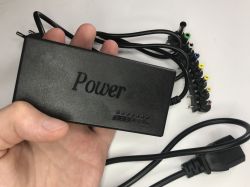
Today we’re testing a universal laptop power supply with an output of up to 96 W, offering voltages from 12 to 24 V and 8 different plug types. The whole lot was bought from a Polish importer for just 45 zł + postage. Is buying this sort of kit a good deal for someone who tinkers with laptops as a hobby? Let’s find out! On the box, there... [Read more]
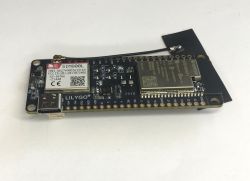
Join me for a presentation on an interesting IoT board that combines the powerful ESP32 microcontroller – known for its Wi-Fi and Bluetooth connectivity – with mobile network capabilities. It is also equipped with an integrated GSM modem and a SIM card slot, making it a good choice for projects requiring remote communication without access... [Read more]
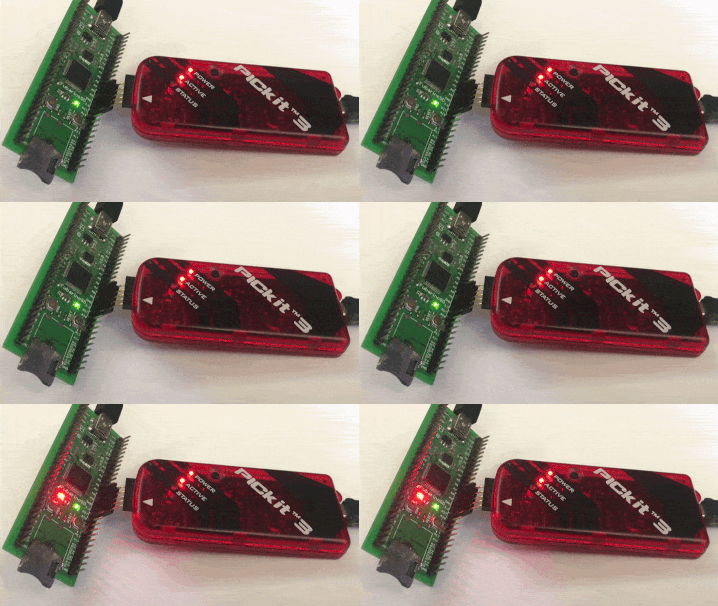
Join me for an interesting experiment – programming a 32-bit PIC microcontroller from scratch. From scratch means without any IDE (such as MPLAB X), without configurators such as MPLAB Harmony, without ready-made libraries, and even without the manufacturer’s header files. All based on the free p32-gcc (MIPS GCC) compiler. PCB used The experiment... [Read more]
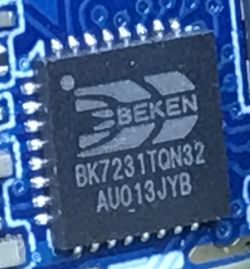
Beken chips have been around for quite some time now, but there isn't any Beken emulator that I am aware of. We have our OBK Simulator , but it's basically a Windows/Linux port of OBK firmware, and not the true emulator which tries to mimic Beken chip by running their instructions at hardware level. However, as I've recently shown with ALI... [Read more]
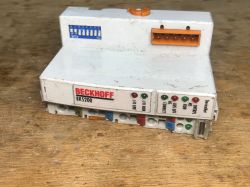
Today we’re taking a look inside some industrial automation equipment. The BK5200, manufactured by Beckhoff, is a so-called DeviceNet® Bus Coupler and is used to connect modular input/output (I/O) terminals to the main communication bus. DeviceNet® is a protocol based on the tried-and-tested CAN physical layer; it is used in machine control... [Read more]
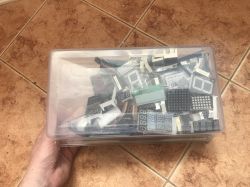
How do you store your parts? Anyone who dabbles even a little in electronics knows that the number of components and ‘bits and bobs’ in most electronics enthusiasts’ collections is growing exponentially, whilst the actual usefulness of these collections decreases in inverse proportion to how difficult it is to find them. What’s the point... [Read more]
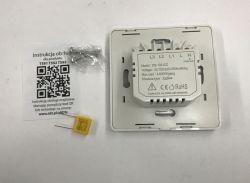
Touch-sensitive light switches are flooding the market; the most popular ones fall into the ‘smart’ category, i.e. devices with additional control via Wi-Fi or Zigbee. However, not everyone likes this control method, as it does not provide a ‘mechanical response’ to pressure. For this reason, I will be showcasing a mechanical light switch... [Read more]

This time, I’ve got my hands on a DeWalt DCR019 rugged radio, which is presenting a rather interesting fault – the display works, but there’s no sound. In this post, I’ll walk you through a brief diagnosis of the problem, share a few photos of the interior, and highlight what sets this radio apart from typical mass-produced Chinese models:... [Read more]
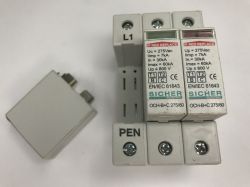
Today, something completely different – a few photos of the inside of a Class B+C surge arrester (protector). The focus of this post is the three-phase OCH-B+C 275/60 model from Sicher Electric. Its main function is to protect low-voltage installations against the effects of partial, direct and indirect lightning strikes. According to the... [Read more]
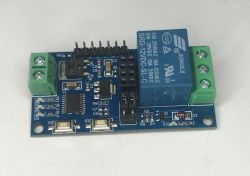
I’d like to present a modification to the LC Technology ESP8266 Relay V2.3 controller, designed to work locally with the Tasmota firmware. This will be a rather unusual modification, as, for some inexplicable reason, the manufacturer decided to use an additional microcontroller to control the relay. Is the ESP8266 capable of driving the relay... [Read more]
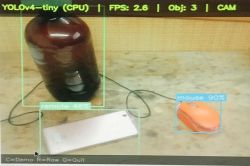
Is the new Arduino clever enough to tell the difference between a bottle and a mouse, and a mouse and a mobile phone? Today we’re testing a single-board computer from Arduino, equipped with a Qualcomm Dragonwing QRB2210 processor, an STM32U585 microcontroller, 4 GB of LPDDR4 RAM and 32 GB of eMMC storage. Here, I’ll be checking whether and... [Read more]

A tiny HDMI monitor for a Raspberry Pi or as an extra screen for a laptop – how much does it cost? How much power does it draw from USB? Today I’m testing a 14-inch STAZER model (PM1402) bought for 250 zł, which offers good viewing angles thanks to its IPS panel with a resolution of 1920x1200 (16:10 aspect ratio). The monitor offers a 60... [Read more]
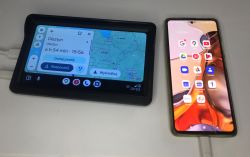
What is Android Auto and how do you pair it with your phone? Android Auto is an app and standard developed by Google that allows you to transfer key smartphone functions (such as GPS navigation, music player, messaging apps and voice assistant) directly to your car’s screen. This makes using your phone whilst driving much easier and safer.... [Read more]
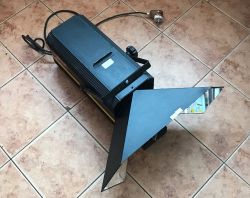
Today we’re taking a look inside the Trix Broken Swing – a classic disco lighting effect that many of us may have enjoyed years ago in clubs. The nameplate immediately reveals a few interesting facts – the unit was manufactured in Slovakia, although it was imported by the Polish company Strong from Końskie. The programme descriptions indicate... [Read more]
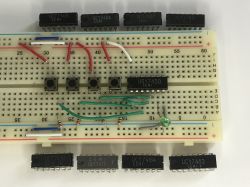
Here’s a brief, practical overview of the popular logic gates from the Polish UCY74xx series. I’ve focused here on providing a practical illustration of how each circuit works. Below you’ll find a discussion of the classic chips that implement NAND, NOR, NOT and AND functions. I have described each gate using the relevant Boolean equation... [Read more]
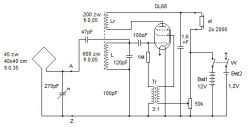
Several articles have already been devoted to transistor radios in matchboxes on ‘Elektroda’. These were circuits built using discrete components and integrated circuits. But would the same level of miniaturisation also be possible if vacuum tubes were used to build such a radio? A few people seem to have tried, or wanted to build, such a... [Read more]
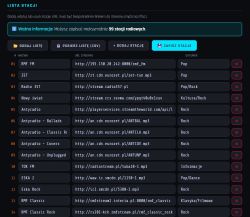
Hi! I’d like to show you my internet radio project based on the ESP32-S3 module. The main aim was to create a system that absolutely anyone can get up and running – without having to install an IDE, search for missing libraries or troubleshoot compilation issues. The entire firmware is uploaded directly from your browser! 🔧 Hardware used At... [Read more]
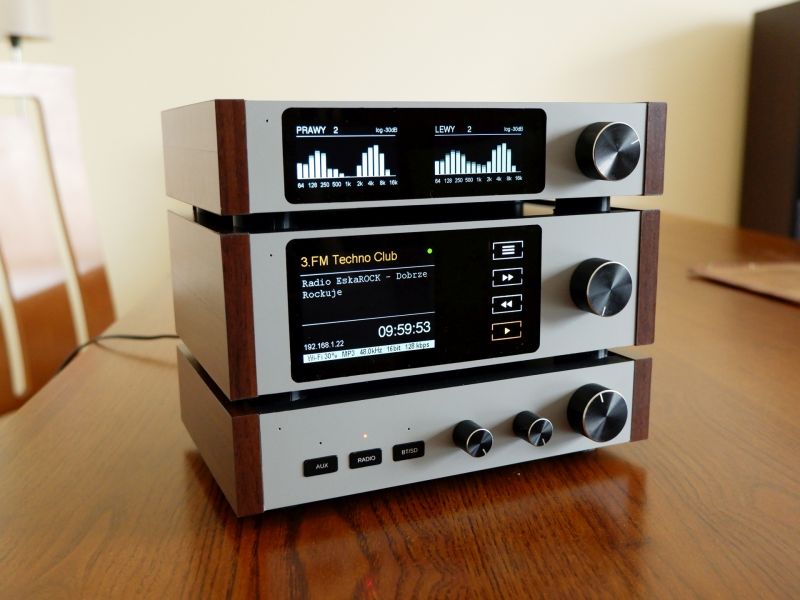
Hello :) I was inspired to build the device by the topic Initially it was to be a radio for the kitchen. Eventually the decision was made to build one. As is usually the case, the question was - how to "package" it? After various measurements, the enclosure finally evolved into the above form. Due to its small size it was given the name micro... [Read more]
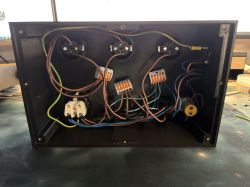
Good morning. My first project. Some time ago I wanted to repair an old radio from my father-in-law as a gift for my wife, but I didn't want to burn it out extra. So I came up with a bulb tester. It was supposed to be as simple as possible, but somehow I got worked up and added a few extra components. I plan to add one more - an ammeter on... [Read more]
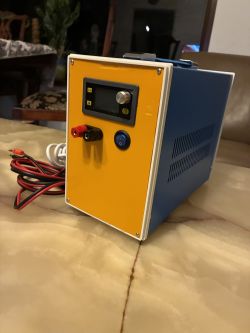
Hi everyone! I would like to present the construction of a WAREHOUSE POWER SUPPLY quite powerful, as it is almost 1200W . The power supply came about as an idea to get a cheaper equivalent to the Riden RD6018 kit. Parameters of the power supply, are: - voltage regulated 0 - 60V with 0.01V resolution - regulated current 0 - 20A with 0.01A... [Read more]
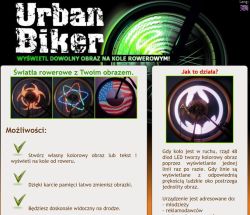
Hello Colleagues, I wanted to share an old project that I once made and was even commercially available for a while. The project is more than 15 years old so I am happy to share the materials. Maybe it will inspire someone or they will want to make such a device themselves. The code is 100% working and everything needed is in the zip. It is... [Read more]

Good morning. I made this kinetic splitter in the spring, but have only now decided to show it off on this forum. Toothed strip module 5, which is 50x50 mm. Most of the components, such as the carriage and bearing mounts, are made of 10 mm sheet metal. The splitter is engaged by the pressure of the toothed bar against a spur gear connected... [Read more]
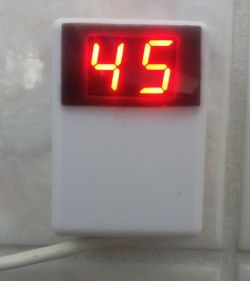
I made myself a two-digit thermometer with a red ELD-515SURWA seven-segment display (soldered out of a Euroster 1100E thermostat) and a DS18B20 sensor. The electronics fit on a 2x8 cm cutout of a 6x17 mesh universal board. The housing is a white 2xRJ11 6P4C surface-mounted telephone socket. Power supply from a 5 V / 120 mA switching power... [Read more]
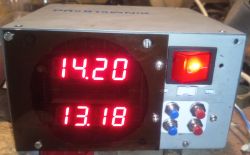
I have made myself a transformer rectifier to charge my car battery, with automatic charge control - on an on/off basis - so that charging can be left unattended for long periods. The circuit has two basic tasks: - enable charging when the battery is connected - switch off charging when the battery is charged or in an error situation The... [Read more]
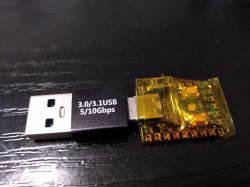
Nothing special to brag about. However, here is a project I made. The device moves to the right by 5 pixels every 1 minute, then back by 5 pixels. Written in Arduino for a Raspberry Pi Zero (RP2040) board. You may ask, why make this when you can buy something like this? And this is for 2 reasons: 1. cheaper, 2. in bought ones the mouse pointer... [Read more]
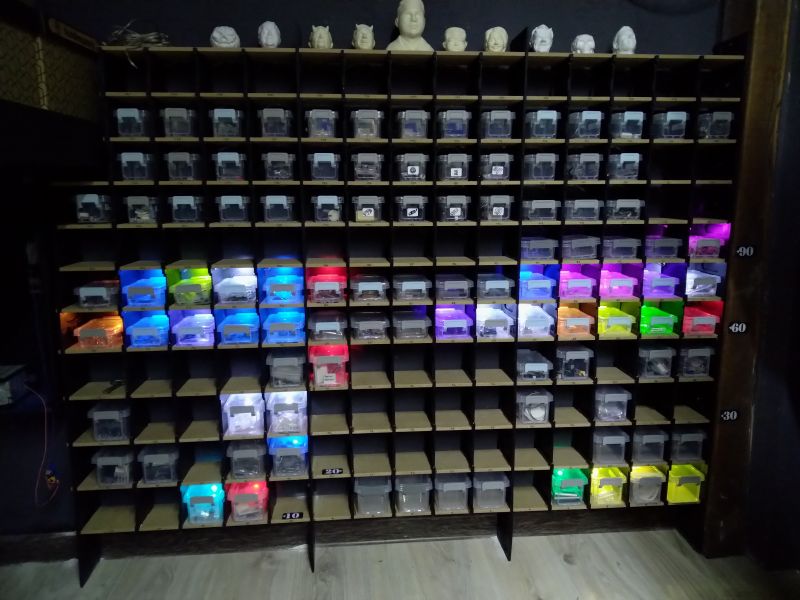
DIY Kiosk - or electronics magazine During the construction phase... Hello esteemed forumers. The year 2025 is upon us and, as is customary, it is good to have some New Year's resolutions. I decided that I would start the new year by putting my studio, and workshop, in order. What was my surprise when I opened the book calendar for 2025, where... [Read more]

Good morning. I would like to show you my mini hauler, which is powered by an engine from a petrol scythe. The 3hp internal combustion engine comes from a NAC scythe and is connected to a 60:1 worm gearbox. The gearbox drives the differential from the mower tractor, on which the 18-8.00x8 wheels are mounted. The kipper is manual and the change... [Read more]
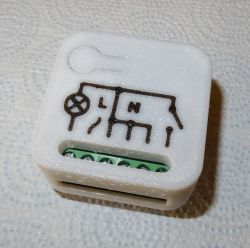
Recently, when building a controller for my cooker, I decided to experiment with something simpler. Admittedly, I'm not keen on Wi-Fi control, but I was curious to see how low the current consumption could currently be. In the off-the-shelf solutions I tested, the consumption ranged from 0.3 W to 1 W. So I bought some Zigbee modules, a couple... [Read more]
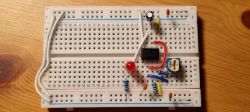
The NE555 astable circuit - how to make a flashing LED The NE555 chip is one of the most popular and widely used integrated circuits in electronics. Due to its simplicity, versatility and low cost, it is used in many projects such as pulse generators, clocks, timers and flashing LEDs. In this article, I will present a simple circuit with the... [Read more]
Hi, under this unusual topic name I present a project of a small automatic music player to make sitting on the toilet more pleasant. Of course this is one application, in other situations it could probably be useful too ;) The main considerations were low complexity, a trivial interface, maintenance-free after initial set-up, and room for... [Read more]
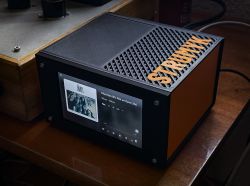
Hello forum members. I would like to present a chassis design I have made for the Raspberry Pi 4 that works with the IQaudIO DAC Pro card. The device serves as a music streamer from a home NAS server and can play audio material in 16-24 bit quality. I used the Volumio system as the software. Operation is possible both from the mobile app and... [Read more]
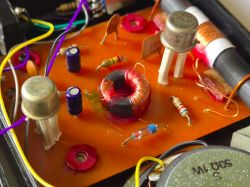
As simple radio receivers are invariably of interest, I have decided to present a rather interesting design for the current technical realities. This is one of the first electronic circuits I had the pleasure of building, but unfortunately, for various reasons it lay unfinished for many years. Recently, looking through my electronic scrapbooks,... [Read more]
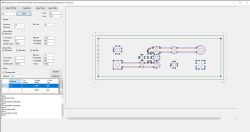
Hi, . The project presented this time is purely programming but I hope it fits in this section and maybe someone will find it interesting or useful in the workshop. The aim of the project was to create a convenient-to-use GCode generator for making PCBs on a CNC milling machine. I design my PCBs in KiCAD so I focused on this input format.... [Read more]
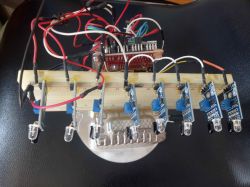
Today, I would like to introduce an interactive Arduino music project. Using six obstacle avoidance modules and DF’s MP3 module, we will build a musical piano (originally, I had eight obstacle avoidance modules, but during assembly, I found that two were incompatible and lacked indicator lights. Since replacing them in time was not feasible,... [Read more]
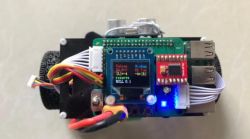
Hi! This piece details building a two-wheeled self-balancing vehicle with a Raspberry Pi. It covers the rationale for choosing the Pi—repurposing idle hardware and learning Linux development via DIY work—lists components (Raspberry Pi, MPU6050, motor drivers, etc.), outlines development steps (sensor calibration, motor control, PID implementation),... [Read more]
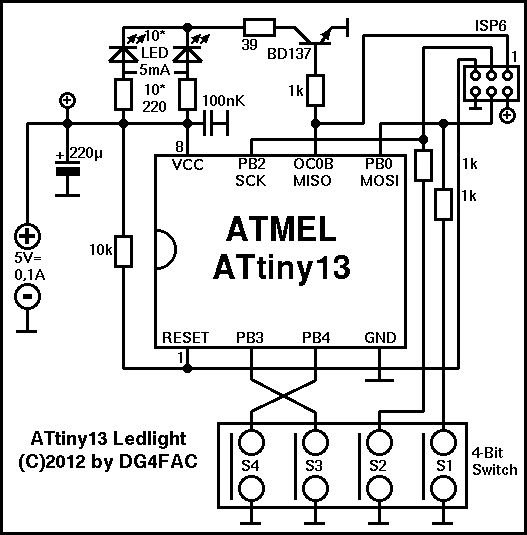
:smile: Over 10 years ago Gerhard Schmidt DG4FAC on avr asm tutorial.net (site already not exists) :cry: presented such a circuit :idea: LED effect based on ATtiny13 ; ; *********************************** ; * Ledlight with an ATtiny13 * ; * (C)2012 by avr-asm-tutorial.net * ; *********************************** ; .nolist .include... [Read more]

For some time now, I became interested in network security and came across an article on how to make a Wi-Fi Jammer (deauthentication attack). I did not even suspect that you can make someone's life so easy and simple. To make a Jammer All we need is esp8266. The principle of operation is very simple. Our device pretends to be a router... [Read more]
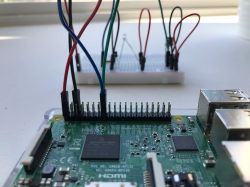
The author of the following project, having no experience with Raspberry Pi, set about creating a simple air conditioning control system. As he did very well, he decided to create the following guide so that any other person could also build a similar device. Step 1: What you'll need To compile the system described below we need: * Raspberry... [Read more]

Do you have audio equipment that is too old to support Apple Airplay that you want to use? You don't want to replace it with lower-quality wireless speakers, but want to listen to music from the Internet? This is a common problem. The good news is that solving this problem costs as much as the Raspberry Pi - not much. Based on this minicomputer,... [Read more]
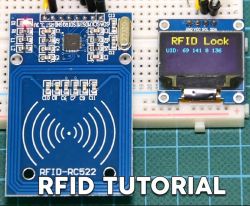
In the material below, the author describes how to use Arduino and an RFID reader to build a simple lock. In this system, Arduino reads the RFID tag ID with the help of a special reader. The identifier is displayed on the OLED screen, and if it matches the number stored in the system's memory, it displays the word "Unlocked", it can also... [Read more]
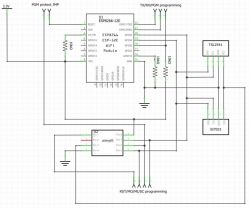
The project below is a weather station based on a module with ESP8266. There would be nothing special about it that distinguishes it from other such constructions, if not for the optimization of the system in terms of minimizing power consumption. The microcontroller used is not very energy-efficient, so it works on average in battery-powered... [Read more]
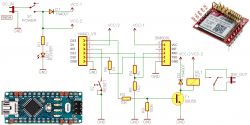
Currently, in the era of simple and inexpensive GSM modules and Arduino modules, it is very easy to construct an SMS-controlled relay. In the project below, the author used the SIM800L module to receive SMS messages. The whole system is controlled by the Arduino Nano V3 module. The system is equipped with one relay, which is controlled by... [Read more]
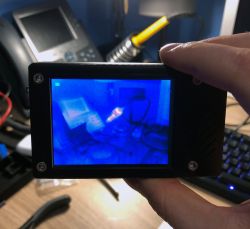
Thermal imagers have been fascinating for years. The idea that you can watch images in a part of the spectrum of electromagnetic radiation, inaccessible to our eyes on a daily basis, is extremely interesting and appealing. Unfortunately, the implementation of this task is not cheap - especially if we want to buy this type of camera only to... [Read more]
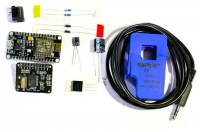
Microchip ATM90E26 is an integrated circuit dedicated to use in modern power consumption monitoring systems. It allows for easy integration with advanced monitoring systems of the power network within, e.g. our home. The use of such a system together with, for example, photovoltaic systems allows you to monitor the level of generated energy,... [Read more]
Most computer platforms have the ability to connect sensors that operate in the audio band (microphones) or in the visible light (e.g. cameras). However, sensors for electromagnetic radiation in the radio range are not popular and until recently it was difficult to connect to computers systems allowing for any collection of radio waves. In... [Read more]

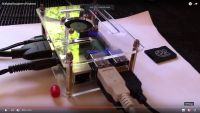
Pigeon is a simple webcam, dedicated to work in the cloud. It is based on the Raspberry Pi Zero W, costing just $ 10. The minicomputer, together with the camera, are enclosed in a housing made in 3D printing technology. A simple handle is integrated with the housing, which allows it to be mounted anywhere, e.g. on the wall. The software itself,... [Read more]
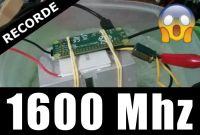
In Brazil, the Raspberry Pi Zero overclocking record has just been set. The team managed to achieve a clock frequency of 1600 MHz and test such an extremely overclocked computer. This gave them the first place in April in the HWBOT ranking for SoC BCM2835, which is in RPi Zero. The whole overclocking began with one teaser on social networks,... [Read more]

The description below shows how you can convert a Raspberry Pi with a GSM modem to USB into a gateway for sending SMS via the web interface. The project was created using PHP and C #. The software that communicates with the modem is written in C #, and the web front-end in PHP. In addition, the system is equipped with a PostgreSQL database,... [Read more]
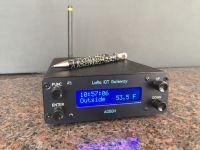
The environment monitoring system, based on the LoRa IoT interface, consists of a base station built using the Arduino Mega module with a LoRa gateway and remote stations based on the Arduino Feather, which connect to the base station via the LoRa radio interface. The system allows monitoring of environmental parameters in the house and its... [Read more]

Pi-FM-RDS is an FM radio transmitter equipped with RDS, running on Raspberry Pi. The GirHub downloadable program is responsible for generating a frequency modulated (FM) waveform with encoded RDS data (data transmission system with audio transmission). All this works in real time and is able to work with both mono and stereo audio signals.... [Read more]
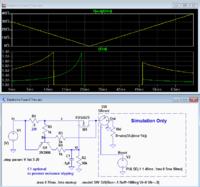
The electronic fuse eliminates the need to replace the element that burns out with excessive current when using a classic fuse, e.g. a fuse. This element does not act as a current limiter in any way - when it rises above the set limit, the system disconnects the circuit. The limiter would instead limit the flowing current to a predetermined... [Read more]
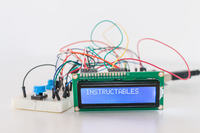
This simple device has one task - it converts received exiles, broadcast in a walrus alphabet, to Latin letters. This translator can find many applications. With it, you can train your morse broadcasting skills, but also decode data received from the ether. It may be amazing, but the walrus alphabet is still very popular in amateur radio,... [Read more]
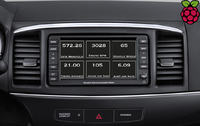
This article will describe how to display and record car diagnostic information with a Raspberry Pi. Step 1: Required materials To complete this project you will need: o Raspberry Pi Model B or B + o Car stereo (must have an AUX socket) o Bluetooth adapter o Car charger o USB or Bluetooth adapter based on ELM327. o RCA cable o Keyboard (optional)... [Read more]
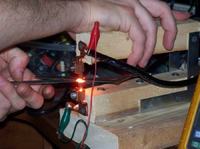
Spot welders are used in almost all plants where it is necessary to join sheets. The advantage of welding machines is the precision of joining (with very good electrical contact), and a very low voltage between the electrodes, which makes the device safe. The presented device is of course not a professional welding machine, but an amateur... [Read more]

Hello. I made a soldering iron for plastic. I saw a similar company, and that the construction is very simple and you have to pay for welding, it is worth doing. 5mm diameter, 2m of hose, a piece of cable with a plug. The required pressure is 0.5 ÷ 1.5 bar. I used a simple regulator on a triac to regulate the heater. And the cube to connect... [Read more]
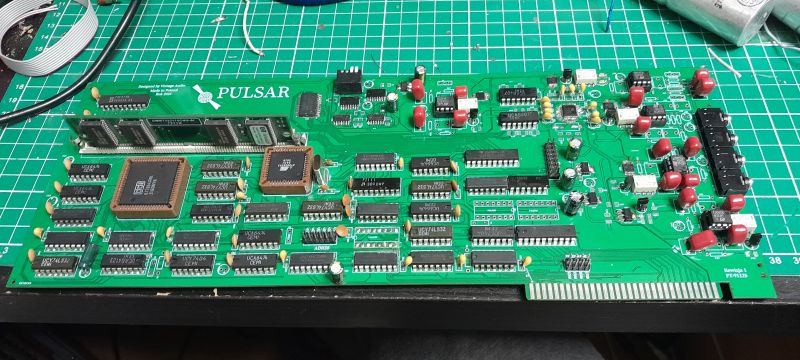
I think it’s high time to present the design for the Pulsar sound card – a Sound Blaster clone enhanced with: - The replacement of the 8051 with the AT89S8253; in terms of instructions, it is still an 8051, but it features an added hardware SPI controller, which is crucial for communication with the VS1063. The microcontroller converts parallel... [Read more]
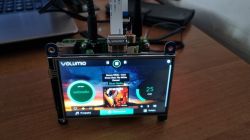
I picked up a Volumio a couple of years ago. I wrote a bit about it in my topic on guitar amplifiers. For the project I purchased a Rasberry Pi4 B, a Hifiberry DAC2 Pro and an "official" 7-inch touchscreen display. The system that was installed was Volumio 2.917 and I hooked up an encoder and IR receiver. I was going to do the enclosure but... [Read more]

. I would like to present an application that is a collection of test tools using CH341 as a physical interface. The original purpose of this application was to repair laptop batteries. However, I had to familiarise myself with the CH341 chip beforehand, I started with more elementary functions like I2C support and the application took the... [Read more]
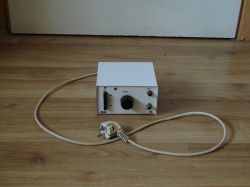
Hello, Necessity is the mother of invention, sometimes the right equipment is needed for servicing, such as a low-frequency signal generator used to repair amplifiers and receivers. There are a lot of devices on the market, both new and used, but their price is unacceptable to me. So I thought that in order to save costs I would build something... [Read more]
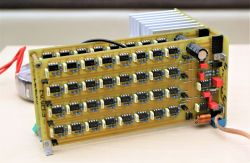
It may seem ridiculous, but you can build an interesting power amplifier from ordinary operational amplifiers (with the right amount of them). :) From this "miracle" I achieve 2×14 W on a load of 8 ohms. Maybe this value is not shocking, but considering what we get it from, it's probably not a little bit. First things first. This project... [Read more]
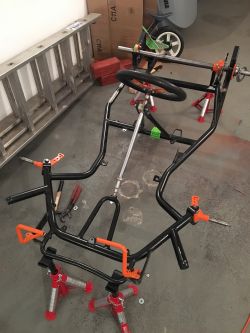
The idea came from the fact that the 5-year-old daughter is willing to drive all kinds of vehicles. He packs on a motorcycle, he wants to drive the car, he stays in the tractor with his grandparents, etc. So I decided to build something for her that would allow to develop certain habits of the driver and provide a dose of adrenaline and child's... [Read more]
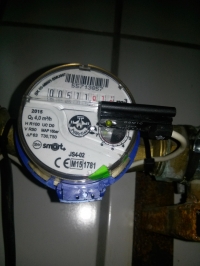
Hello. I am honored to present my present work committed in 15 minutes during the performance of works at the end of the world, i.e. in Central Poland. Needed was a flow meter with pulse output to control the chemistry dosing pump. Of course, there are ready-made flow meters / water meters with such a function, only that within a radius of... [Read more]

Hello a project done (almost a year ago) quickly in order to show the younger generation what can be done with the idea of some parts (the rest can be done). Hardware: Robot platform bought from China Adruino on the atmega 328 Double H-bridge controller for motor control Converter from 12V-> 5V for the webcam WiFi camera dcs-5222l Akku 11.1V... [Read more]
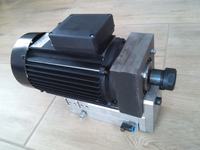
Hello. I would like to present an electro-spindle made by me from a 2.2kW 2800rpm "dachshund" type engine. The design was created for use in a small universal milling machine for machining aluminum and steel. I decided on my own design, because within the budget I would have to choose a liquid-cooled Chinese reaching 25 thousand rpm, but... [Read more]

Hello! I would like to present the Bethlehem Star I made two years ago. The entire structure is made of sheet metal. There are 78 5mm LEDs in the drilled holes (34 red, 33 yellow, 10 green, 1 blue). The star's tail is the ne555 + cd4017 base configuration. Three series-connected LEDs are connected to each counter output. The center of... [Read more]
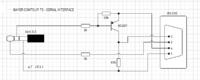
Hello, I wanted to present a simple and proven (using the GLUCOFACTS Deluxe v3.05 program) cable to read data from the Bayer Contour TS glucometer. Of course, there is nothing extraordinary here, and his advantage lies in simplicity. For anyone who needs to archive measurements from time to time and has a computer with an RS-232 port, it... [Read more]
Join us for a presentation of the LilyGO T-A7670E R2, a feature-rich development board based on the ESP32 chip (4 MB Flash, 8 MB PSRAM) combined with the SIMCom A7670E communication module, providing 4G mobile connectivity (LTE Cat. 1) and support for older GSM/GPRS (2G) networks. This solution is designed for applications requiring independent... [Read more]
I invite you to a presentation of an old FIRST ART alarm clock – No. 102. I’ll show you the inside and explain how it works. Classic devices like this used to be found in many bedrooms, waking us up for work or school, so they carry a good dose of nostalgia. The distinctive light bulb on top of the device really catches the eye. On the underside,... [Read more]
Join me for a review of three power banks. It will also include a comparison of two models bought for practically the same price – the difference is barely 10 zł. We’ll find out whether it’s actually worth going for a slightly cheaper, unbranded model, or whether it’s better to opt for something tried and tested. Both have a power output... [Read more]
A while ago, I showed you the BrokenSwing 501 analogue disco lighting effect, which is based on two stepper motors and a power-hungry 250 W halogen bulb. Today it’s time for a similar piece of kit – the RollerTron 250 by American DJ. It offers simple control via an external remote (blackout), synchronisation to the beat of the music, as well... [Read more]
Today we’re testing a universal laptop power supply with an output of up to 96 W, offering voltages from 12 to 24 V and 8 different plug types. The whole lot was bought from a Polish importer for just 45 zł + postage. Is buying this sort of kit a good deal for someone who tinkers with laptops as a hobby? Let’s find out! On the box, there... [Read more]
Join me for a presentation on an interesting IoT board that combines the powerful ESP32 microcontroller – known for its Wi-Fi and Bluetooth connectivity – with mobile network capabilities. It is also equipped with an integrated GSM modem and a SIM card slot, making it a good choice for projects requiring remote communication without access... [Read more]
Join me for an interesting experiment – programming a 32-bit PIC microcontroller from scratch. From scratch means without any IDE (such as MPLAB X), without configurators such as MPLAB Harmony, without ready-made libraries, and even without the manufacturer’s header files. All based on the free p32-gcc (MIPS GCC) compiler. PCB used The experiment... [Read more]
Beken chips have been around for quite some time now, but there isn't any Beken emulator that I am aware of. We have our OBK Simulator , but it's basically a Windows/Linux port of OBK firmware, and not the true emulator which tries to mimic Beken chip by running their instructions at hardware level. However, as I've recently shown with ALI... [Read more]
Today we’re taking a look inside some industrial automation equipment. The BK5200, manufactured by Beckhoff, is a so-called DeviceNet® Bus Coupler and is used to connect modular input/output (I/O) terminals to the main communication bus. DeviceNet® is a protocol based on the tried-and-tested CAN physical layer; it is used in machine control... [Read more]
How do you store your parts? Anyone who dabbles even a little in electronics knows that the number of components and ‘bits and bobs’ in most electronics enthusiasts’ collections is growing exponentially, whilst the actual usefulness of these collections decreases in inverse proportion to how difficult it is to find them. What’s the point... [Read more]
This time, I’ve got my hands on a DeWalt DCR019 rugged radio, which is presenting a rather interesting fault – the display works, but there’s no sound. In this post, I’ll walk you through a brief diagnosis of the problem, share a few photos of the interior, and highlight what sets this radio apart from typical mass-produced Chinese models:... [Read more]
Today, something completely different – a few photos of the inside of a Class B+C surge arrester (protector). The focus of this post is the three-phase OCH-B+C 275/60 model from Sicher Electric. Its main function is to protect low-voltage installations against the effects of partial, direct and indirect lightning strikes. According to the... [Read more]
Is the new Arduino clever enough to tell the difference between a bottle and a mouse, and a mouse and a mobile phone? Today we’re testing a single-board computer from Arduino, equipped with a Qualcomm Dragonwing QRB2210 processor, an STM32U585 microcontroller, 4 GB of LPDDR4 RAM and 32 GB of eMMC storage. Here, I’ll be checking whether and... [Read more]
A tiny HDMI monitor for a Raspberry Pi or as an extra screen for a laptop – how much does it cost? How much power does it draw from USB? Today I’m testing a 14-inch STAZER model (PM1402) bought for 250 zł, which offers good viewing angles thanks to its IPS panel with a resolution of 1920x1200 (16:10 aspect ratio). The monitor offers a 60... [Read more]
What is Android Auto and how do you pair it with your phone? Android Auto is an app and standard developed by Google that allows you to transfer key smartphone functions (such as GPS navigation, music player, messaging apps and voice assistant) directly to your car’s screen. This makes using your phone whilst driving much easier and safer.... [Read more]
Today we’re taking a look inside the Trix Broken Swing – a classic disco lighting effect that many of us may have enjoyed years ago in clubs. The nameplate immediately reveals a few interesting facts – the unit was manufactured in Slovakia, although it was imported by the Polish company Strong from Końskie. The programme descriptions indicate... [Read more]
Here’s a brief, practical overview of the popular logic gates from the Polish UCY74xx series. I’ve focused here on providing a practical illustration of how each circuit works. Below you’ll find a discussion of the classic chips that implement NAND, NOR, NOT and AND functions. I have described each gate using the relevant Boolean equation... [Read more]
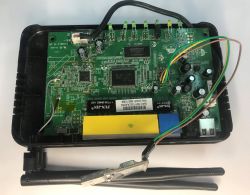
In the previous post, I showed the inside of the Cyfrowy Polsat LT-6408n router. I established that it is based on the RTL8196C chip, whose bootloader offers a simple command line along with the ability to load any machine code into RAM. Here, I’ll try to make use of this – I’ll start by loading simple instructions written by hand in hexadecimal... [Read more]
![[Thermal imaging] Internal view and test of the YSDS-60-5 4.5 A 22.5 W 5 V DIN rail power supply](https://obrazki.elektroda.pl/6647540300_1784674557_thumb.jpg "[Thermal imaging] Internal view and test of the YSDS-60-5 4.5 A 22.5 W 5 V DIN rail power supply")
Join me for a look inside and a practical test, including a thermal imaging analysis, of the Sunny YSDS-60-5 power supply, designed for DIN-rail mounting. The unit supplies 5 VDC at a maximum current output of 4.5 A and a power output of 22.5 W, operating with an input voltage of 90–264 VAC and a frequency of 47–63 Hz. The manufacturer specifies... [Read more]
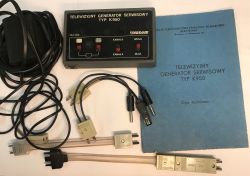
Join me on a journey back in time to 1985, where I’ll be presenting a complete set of the MeraTronik K950 TV service generator, complete with full documentation and the original warranty. A TV service generator is a device used to generate test signals for black-and-white and colour television sets. These signals allow for the convenient... [Read more]