





Hello
The ESP32-WROOM-32E with a simple program works reliably when it has the serial monitor on, but when the device is running with the ESP-Prog programmer unplugged, then once in a while it stops working and resets after about 3 seconds coming back to life.
This causes me to be unable to read the reason for the reset.
How to approach such an issue?
I have ruled out the power supply by substituting a workshop power supply as the source.
The program sends 64 bits every second with one MOSI pin via SPI at 8MHz. It is not receiving anything.
Doesn't help:
-lowering fCLK
-unplugging the pre and post transfer callback
-replacing spi_device_polling_transmit() with spi_device_queue_trans()
-addition of spi_device_acquire_bus() and spi_device_release_bus()
-inserting a 1ms delay just before spi_send()
Helps:
-enabling serial monitor
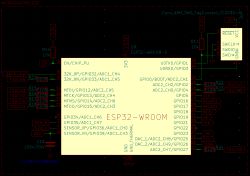
Code:
A procedure is called every second:
The data structure looks like this:
sdkconfig:
Place transmitting functions of SPI master into IRAM: yes
Place GPIO control functions into IRAM: yes
esp-idf v5.5.1
The ESP32-WROOM-32E with a simple program works reliably when it has the serial monitor on, but when the device is running with the ESP-Prog programmer unplugged, then once in a while it stops working and resets after about 3 seconds coming back to life.
This causes me to be unable to read the reason for the reset.
How to approach such an issue?
I have ruled out the power supply by substituting a workshop power supply as the source.
The program sends 64 bits every second with one MOSI pin via SPI at 8MHz. It is not receiving anything.
Doesn't help:
-lowering fCLK
-unplugging the pre and post transfer callback
-replacing spi_device_polling_transmit() with spi_device_queue_trans()
-addition of spi_device_acquire_bus() and spi_device_release_bus()
-inserting a 1ms delay just before spi_send()
Helps:
-enabling serial monitor
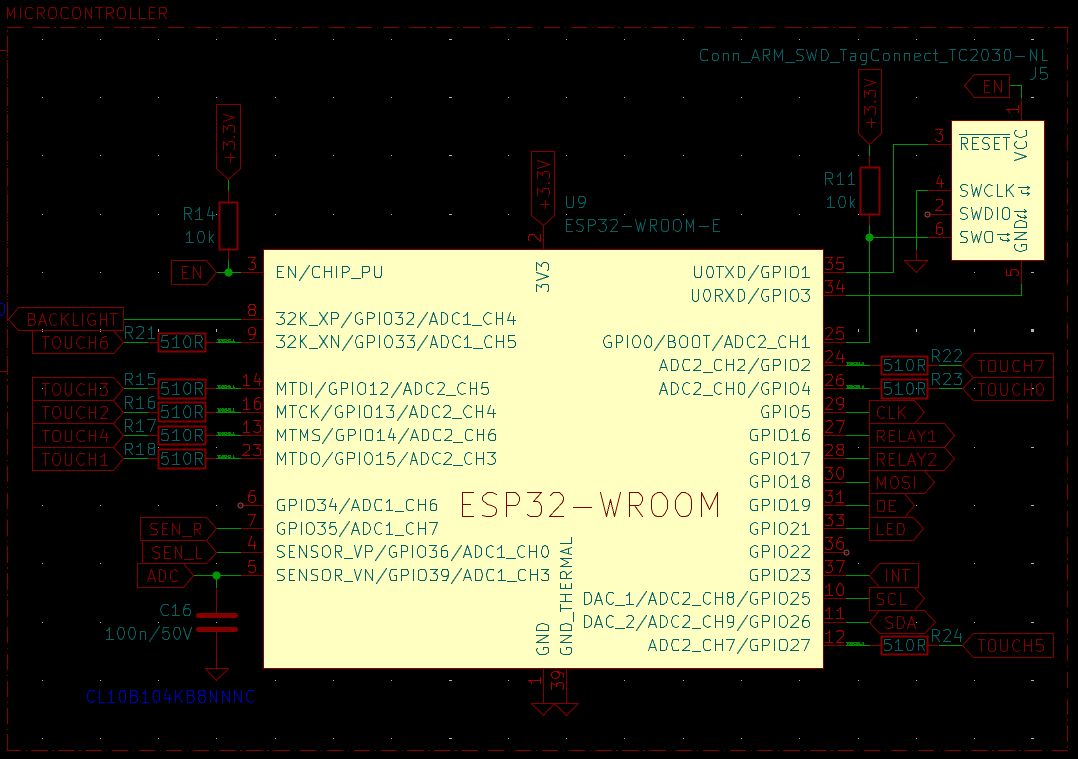
Code:
#define PIN_NUM_OE 19
#define SPI SPI2_HOST
#define PIN_NUM_MOSI 18
#define PIN_NUM_CLK 5

DMA_ATTR uint64_t spi_buf;
DRAM_ATTR spi_device_handle_t spi = NULL;

i2c_master_bus_handle_t bus_handle;
i2c_master_dev_handle_t dev_handle;
struct RTCDateTime_t dane_z_ds3231;


//This function is called (in irq context!) just before a transmission starts.
void IRAM_ATTR spi_pre_transfer_callback(spi_transaction_t *t)
{
    gpio_set_level(PIN_NUM_OE, 0);
}

//This function is called (in irq context!) just after a transmission ends.
void IRAM_ATTR spi_post_transfer_callback(spi_transaction_t *t)
{
    gpio_set_level(PIN_NUM_OE, 1);
}

void IRAM_ATTR spi_send()
{
	spi_transaction_t trans;
	memset(&trans, 0, sizeof(trans));
	trans.length = 8 * sizeof(spi_buf);
	trans.tx_buffer = &spi_buf;

	esp_err_t ret;
    ret = spi_device_polling_transmit(spi, &trans);
	assert(ret == ESP_OK);
}

void spi_init()
{
	esp_err_t ret;
    spi_bus_config_t buscfg = {
		.flags = 0,
		.miso_io_num = -1,
        .mosi_io_num = PIN_NUM_MOSI,
        .sclk_io_num = PIN_NUM_CLK,
        .quadwp_io_num = -1,
        .quadhd_io_num = -1,
        .max_transfer_sz = 8,	//Maximum transfer size in bytes
        .data_io_default_level = 0
    };
    spi_device_interface_config_t devcfg = {
		.flags = 0,
        .clock_speed_hz = 8 * 1000 * 1000,     	//Clock out at 8 MHz
        .mode = 1,                              //SPI mode 1
        .queue_size = 1,                        //We want to be able to queue 1 transactions at a time
        .pre_cb = spi_pre_transfer_callback, 	//Specify pre-transfer callback to handle OE line
        .post_cb = spi_post_transfer_callback, 	//Specify post-transfer callback to handle OE line
        .spics_io_num = -1						//CS pin not used
    };

    //Initialize the SPI bus
    ret = spi_bus_initialize(SPI, &buscfg, SPI_DMA_CH_AUTO);
    ESP_ERROR_CHECK(ret);
    //Attach the handle to the SPI bus
    ret = spi_bus_add_device(SPI, &devcfg, &spi);
    ESP_ERROR_CHECK(ret);
}
void spi_buf_write(uint8_t a,
		   uint8_t b,
		   uint8_t c,
		   uint8_t d,
		   uint8_t e,
		   uint8_t f
		   )
{
	spi_buf = 0;

	uint8_t code_a[10] = {57, 58, 59, 61, 49, 48, 63, 62, 60, 56};
	spi_buf |= ((uint64_t)1 << code_a[a]);

	uint8_t code_b[10] = {40, 42, 43, 55, 51, 50, 52, 53, 41, 54};
	spi_buf |= ((uint64_t)1 << code_b[b]);

	uint8_t code_c[10] = {35, 36, 37, 45, 33, 32, 47, 46, 38, 34};
	spi_buf |= ((uint64_t)1 << code_c[c]);

	uint8_t code_d[10] = {25, 26, 27, 29, 17, 16, 31, 30, 28, 24};
	spi_buf |= ((uint64_t)1 << code_d[d]);

	uint8_t code_e[10] = {8, 23, 22, 21, 20, 19, 18, 11, 10, 9};
	spi_buf |= ((uint64_t)1 << code_e[e]);

	uint8_t code_f[10] = {4, 3, 2, 1, 0, 15, 14, 13, 6, 5};
	spi_buf |= ((uint64_t)1 << code_f[f]);
}
A procedure is called every second:
			spi_buf_write((dane_z_ds3231.Hours)/10,
					  	(dane_z_ds3231.Hours)%10,
					  	(dane_z_ds3231.Minutes)/10,
					  	(dane_z_ds3231.Minutes)%10,
					  	(dane_z_ds3231.Seconds)/10,
					  	(dane_z_ds3231.Seconds)%10);
    		spi_send();
The data structure looks like this:
struct RTCDateTime_t
{
	uint8_t Seconds;
	uint8_t Minutes;
	uint8_t Hours;
	uint8_t Day;
	uint8_t Date;
	uint8_t Month;
	uint8_t Year;
};
sdkconfig:
Place transmitting functions of SPI master into IRAM: yes
Place GPIO control functions into IRAM: yes
esp-idf v5.5.1
