Good morning
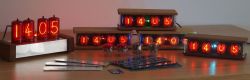
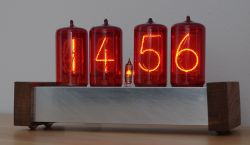
I wanted to present my next watch project. I have been building watches for years and recently I realized that most of the pieces somehow fell apart and I have the last one left. This motivated me to try to rebuild my collection, hence this project. I called him Open Nixie. Firstly, because it has a modular design, so you do not have to limit yourself to a specific type of displays or a single microcontroller. Second - I make all the materials available.
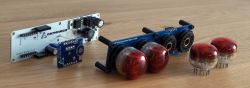
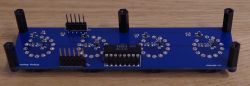
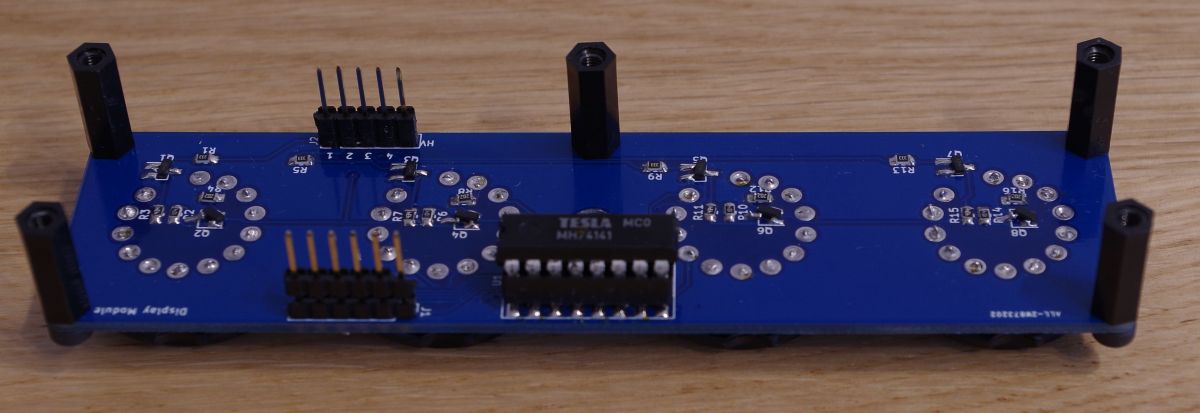
The watch consists of three modules on three plates.
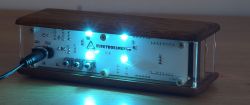
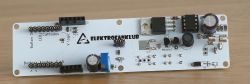
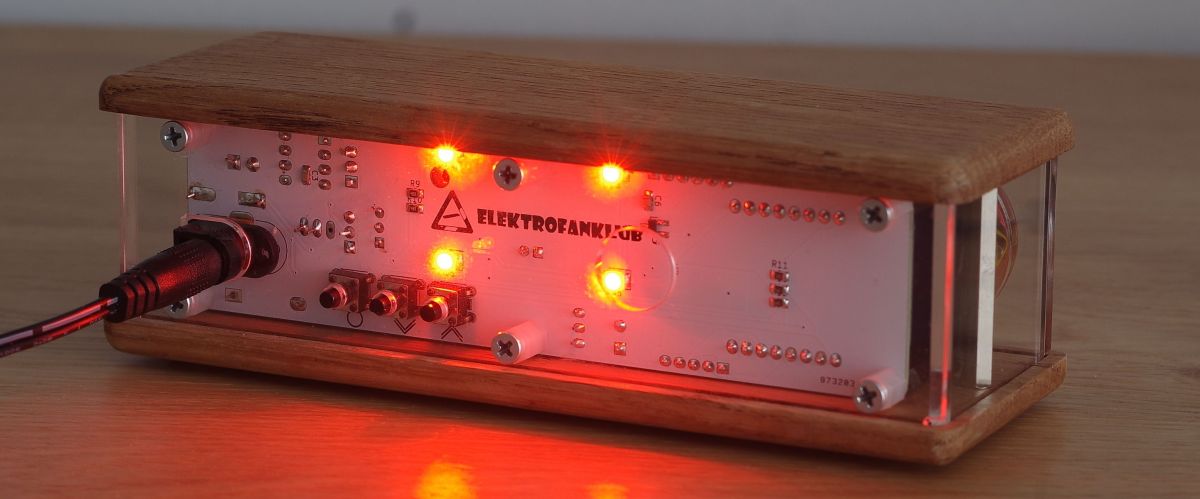
The base module includes the inverter (on MC34063), buttons, power section, ambient light and hour / minute separator.
The display module includes lamps and drivers (MMBTA42 and 92 pairs for the anodes and circuit 74141 for the cathodes).
The logic module contains a microcontroller. You can use the Wemos D1 mini module here and the watch then downloads the time via Wi-Fi. I also developed my module with Atmega 328, DS3231 chip and CR1220 / 1225 battery socket for backup. Maybe someday I will develop a different module for fun, for example on MSP430 or STM32.
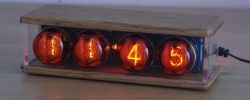
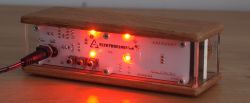
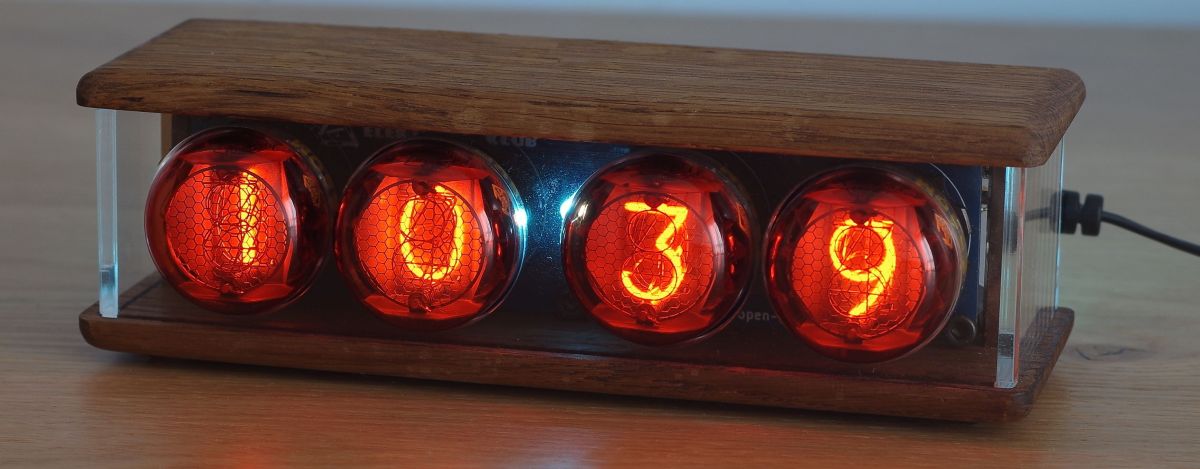
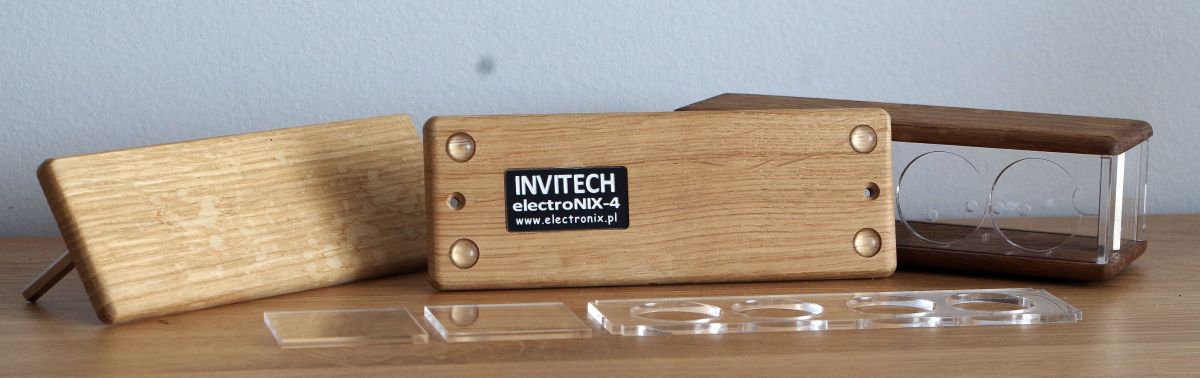
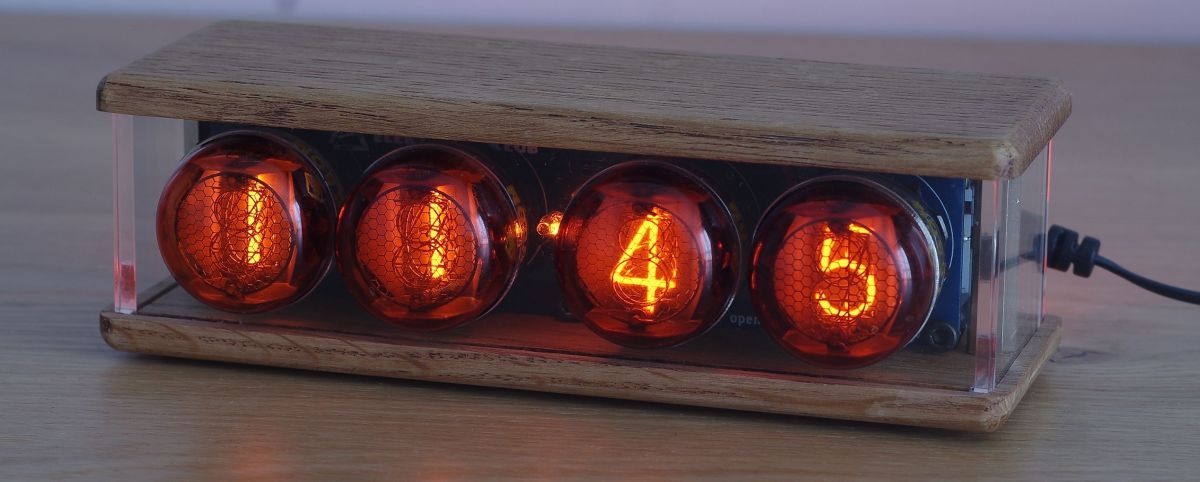
The watch was designed to fit in the case from Electronix - aesthetic, easily accessible and at a reasonable price. I designed the interior my way.
LC-513 lamps and derivatives. There is also a version for the Z566M, it required special assembly to fit into the housing (also from Electronix

)
I built a few pieces, they differ in the logic module and the color of the leds on the back. Leds are and are the way they are, because they are - the privilege of the designer. They do not illuminate the lamps, but the wall / surroundings behind the watch. I know that there are critics of mounting watch diodes - I wasn't sure myself if I would like them - there is a software option to turn them off. Also, choosing the color of the solder mask is just my fantasy. It is dark on the front, so that the plate is unobtrusive, and white on the back, to better diffuse the light from the LEDs.
The project has its side:
http://open-nixie.elektrofanklub.pl/ .
I add materials to the post, but there is also a github repository:
https://github.com/limonit/opennixie 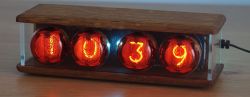













Comments
1. How is time measured? Inside the CPU in the function and every now and then correction from the ds3231 or maybe the processor only gets time from the ds3231 on a regular basis? 2. Is there a brightness... [Read more]
Ad1. As for the version with ATmega328 and DS3231, the time is measured inside the CPU and updated every 30 minutes from the RTC chip. Since the processor is clocked by an internal RC oscillator, this... [Read more]
First look at the pictures and it seemed to me that this is a newly developed electroNIXclock Z560M lamp clock. Here the thread: https://www.elektroda.pl/rtvforum/topic2858244.html#14293490 And these... [Read more]
It looks nice. I envy your aesthetic sense. My designs have always missed an aesthetic finish, hence my question, where can you buy such nice, stylish enclosures? [Read more]
Look for the name electroNIXclock on a well-known auction site ;) [Read more]
Thank you. I've finally found something that will appeal to my nixie clock. Once upon a time I made such a clock on the DCF77, but did not have a nice box. [Read more]
The ZM1020 Tesla looks the most beautiful. They have a rare filter shade - very intense red. Unfortunately, I only have 2 pieces. It's hard to find one. However, I decided to use a dedicated RTC.... [Read more]
Come on, no one will accuse you of that. What matters is the ability to adapt different elements to achieve a great end result. Unfortunately, I do not have it, but I can admire other people's achievements... [Read more]
You can put the atmega to sleep, and only on the timer interruption, perform the necessary operations every second, check if the clock is powered externally, and how not to put it to sleep again. [Read more]
What is the advantage of this solution over getting the time from the RTC chip in real time? [Read more]
Nothing. It's inaccurate and the CPU gets boring most of the time anyway. In my solutions, I take the time on a regular basis from RTC and I do not have to worry about accuracy and all kinds of time... [Read more]
Would you be able to make a watch with radio synchronization? It is about time synchronization such as wall clocks, etc. [Read more]
There is a lot of information that frequent communication with the RTC system causes inaccuracies in timing. My experiences do not confirm this, with both the DS3231 and DS1307. Personally, I had another... [Read more]
There are several problems with DCF77, of which number 2 is probably "more painful": 1 - in fact, as my colleague Limonit describes, the dimensions of the receiver, the difficulty of independent amateur... [Read more]
I confirm the problem number 2 in the case of the inverter. However, I do not agree with problem 1, I use DCF77 receivers similar to the type from the photo and I have no problem with signal reception... [Read more]
It's probably such a myth, the whole idea of RTC systems is to measure time correctly. I do not understand what would be the reason for this, reading the register like any other, how would it affect... [Read more]
This solution is already there. The watch has a removable logic module and fits the Wemos D1 mini which has ESP8266 and syncs via NTP. I programmed it in Arduino, the problem is that a lot of things are... [Read more]
There is no need to use Chinese clocks. There is a 2002A kit based on the U4221B chip, which is a ready-made DCF signal receiver. I use one in my NIXIE clocks and there have never been problems with them. ... [Read more]
Since, according to the website, the power supply is from 10-12V, why is the colleague the archaic 34063 used instead of the UC3843, which is dedicated to such applications? We immediately have a built-in... [Read more]