FAQ 
TL;DR: At 1.51 V output and about 140 mA current, these USB-C AA Li-ion cells act like tiny regulated power banks: “closer to a power bank than to an AA battery.” This FAQ helps buyers and tinkerers understand charging behavior, cutoff, real capacity, and safe device fit before replacing alkaline or NiMH cells. [#20913400]
Why it matters: A regulated 1.5 V Li-ion AA can solve low-voltage device issues, but its abrupt cutoff, limited output current, and USB charging quirks can also cause unexpected failures.
| Option |
Nominal output in use |
Behavior near empty |
Best fit from the thread |
| USB-C Li-ion AA |
1.51 V regulated |
Drops to 1.10 V, then 0 V |
clocks, remotes, some mice, gas heaters |
| NiMH AA |
about 1.2 V |
gradual decline |
general rechargeable use |
| Alkaline AA |
about 1.5 V |
gradual decline |
simple low-drain devices |
| High-drain toys/motors |
needs more current |
may overload low-current USB-C AA |
not confirmed suitable |
Key insight: The main advantage is not raw capacity. It is stable 1.5 V output from a 3.7 V Li-ion cell, until the control chip forces a sharp low-battery transition and shutdown.
Quick Facts
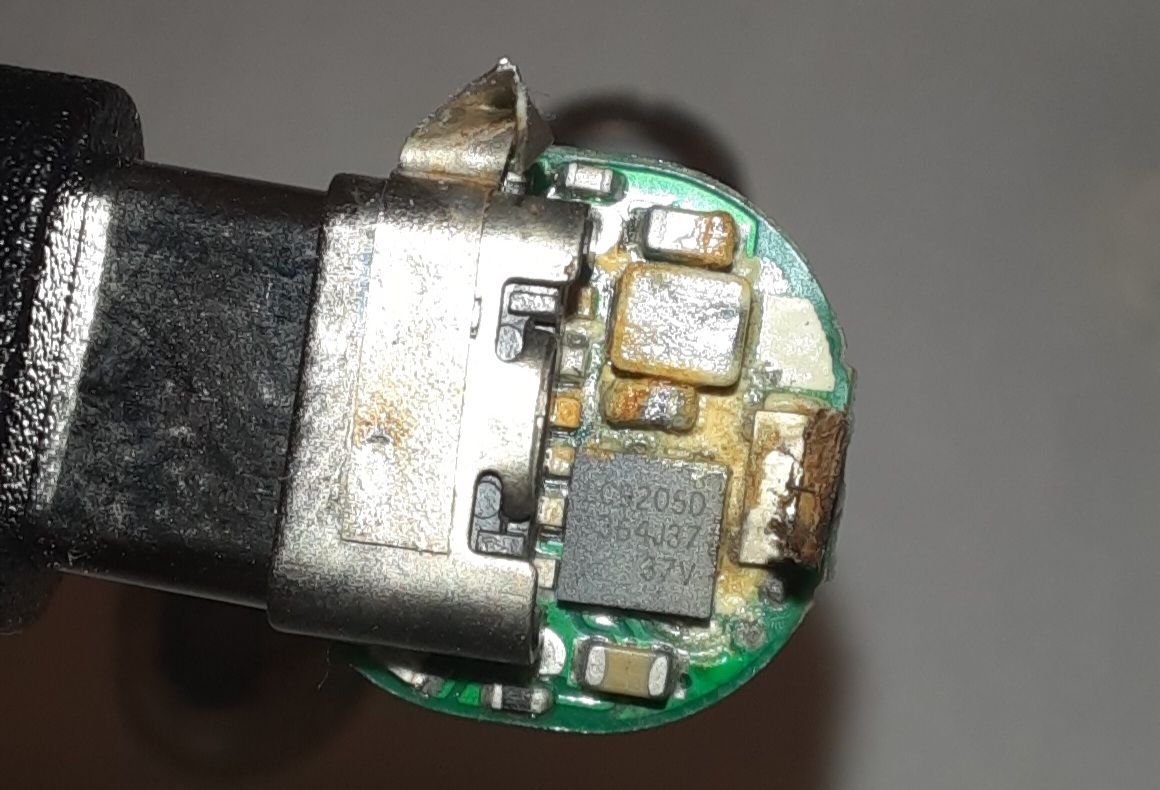
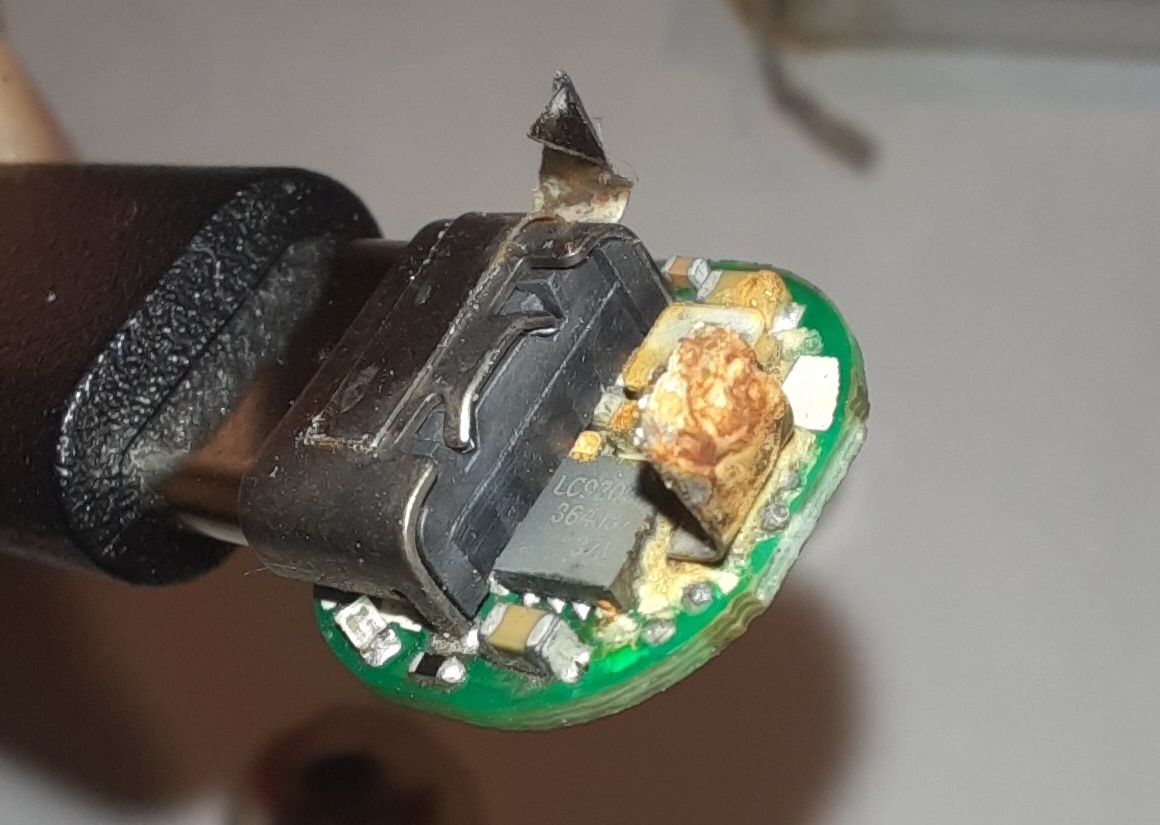
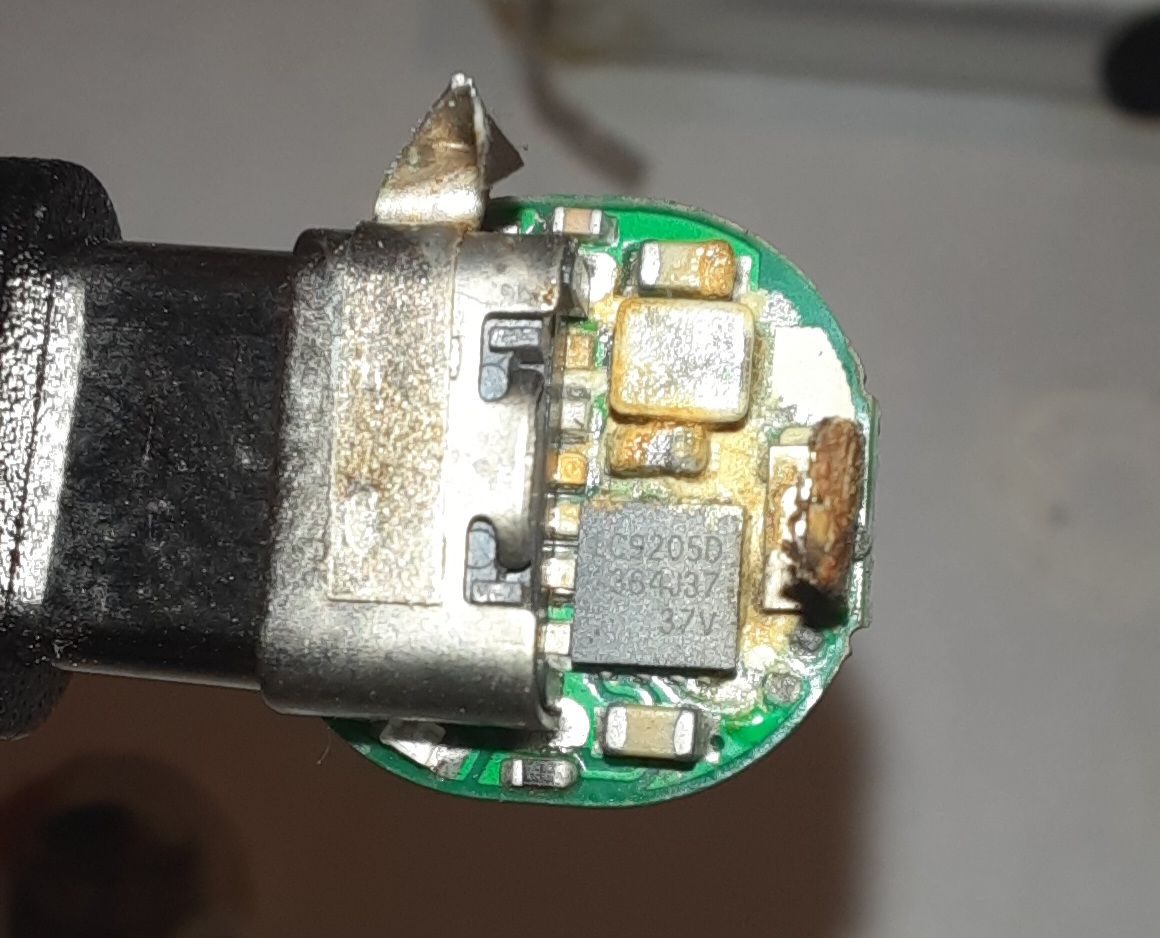
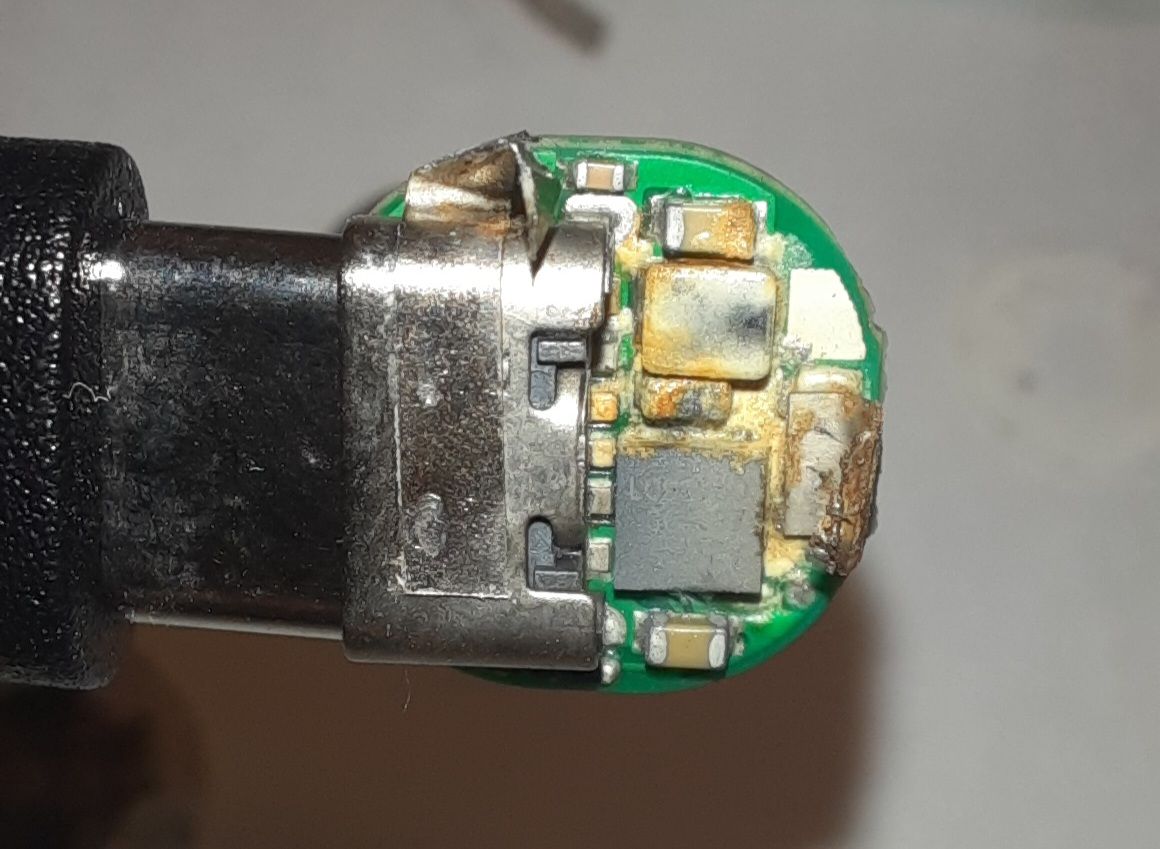
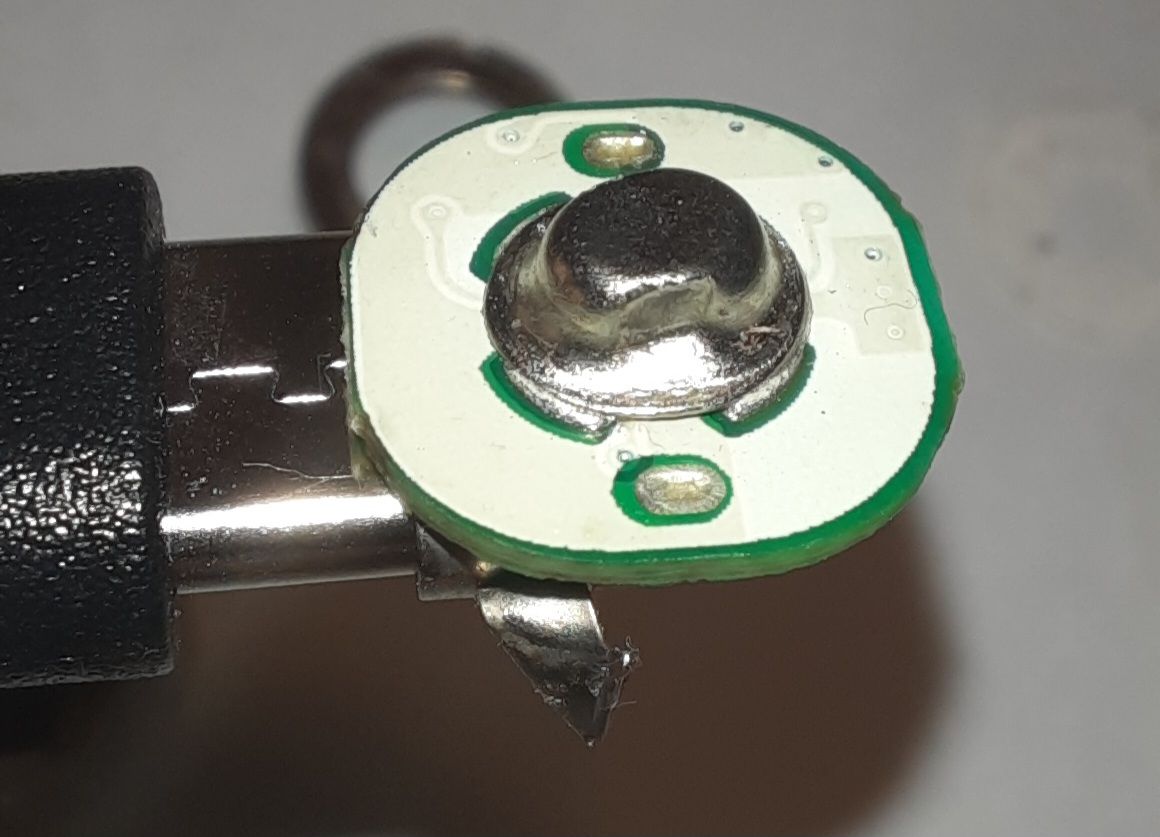
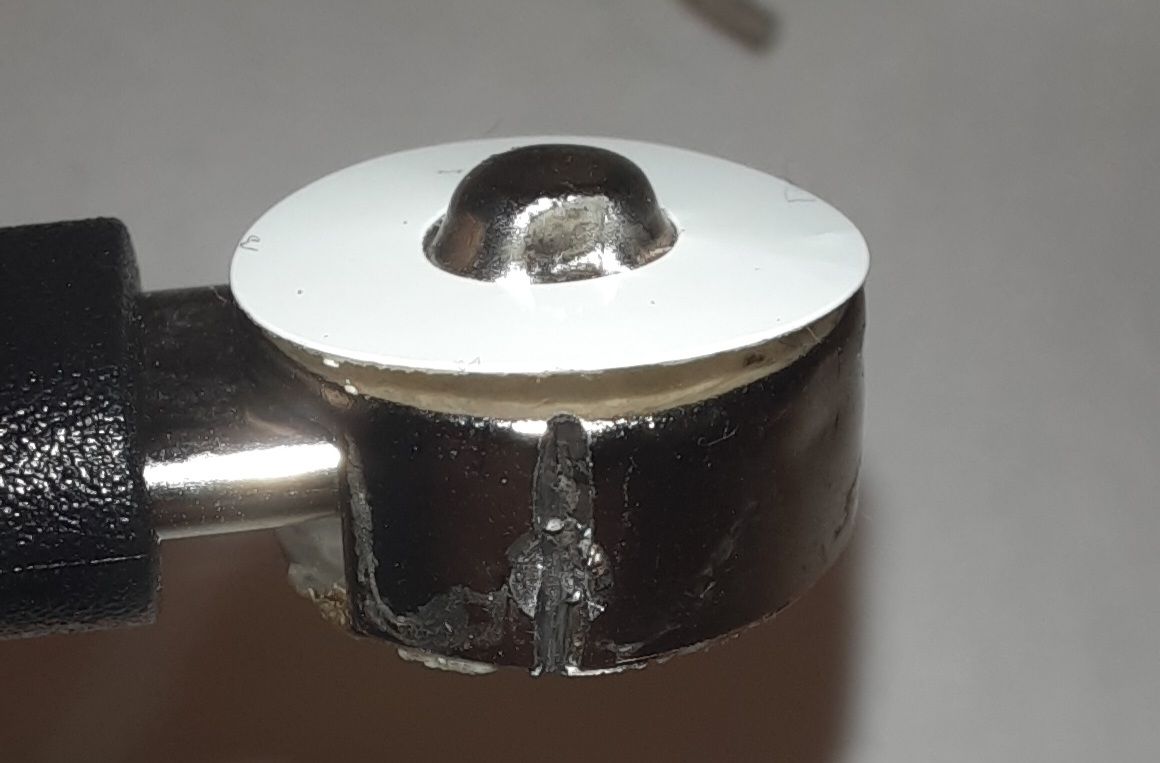
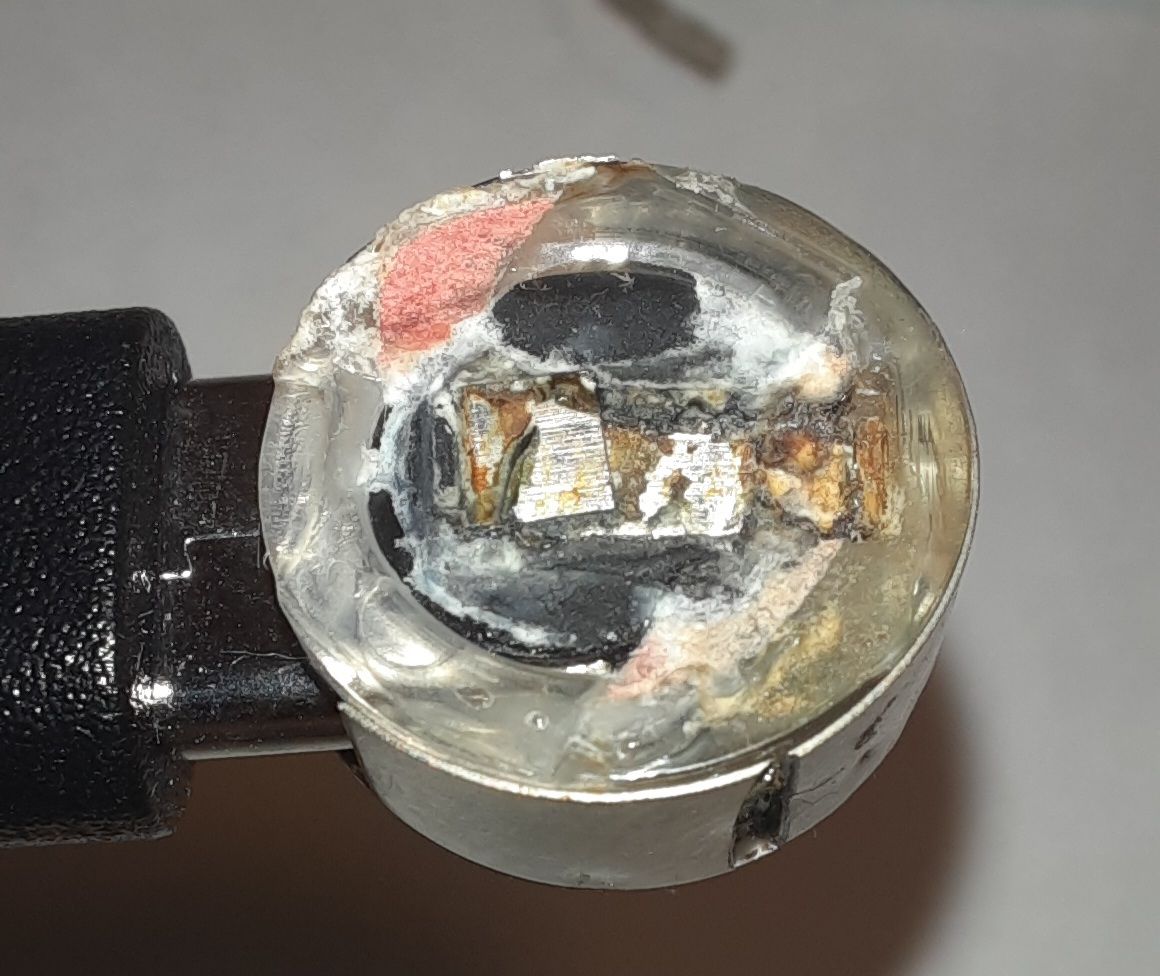
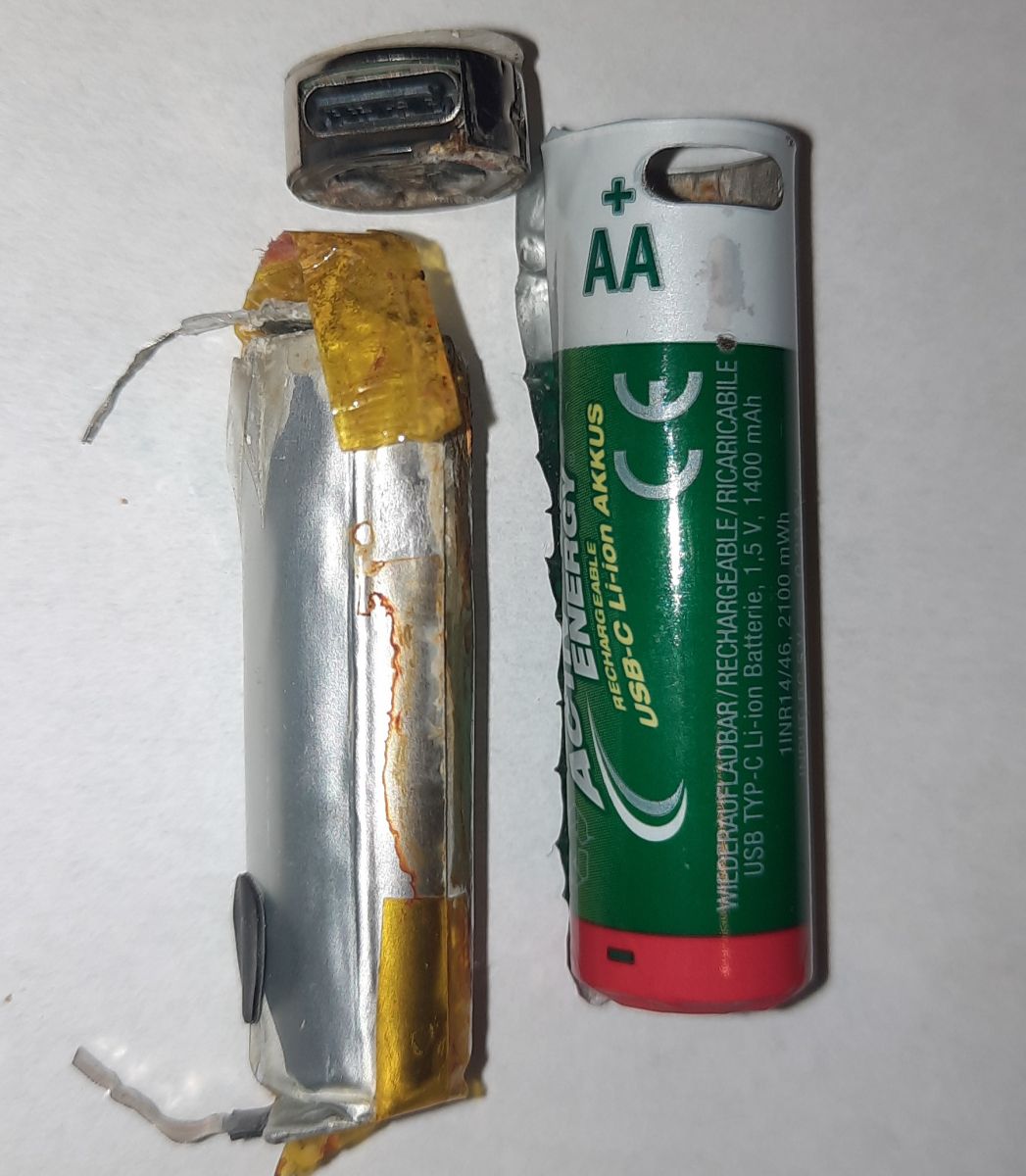
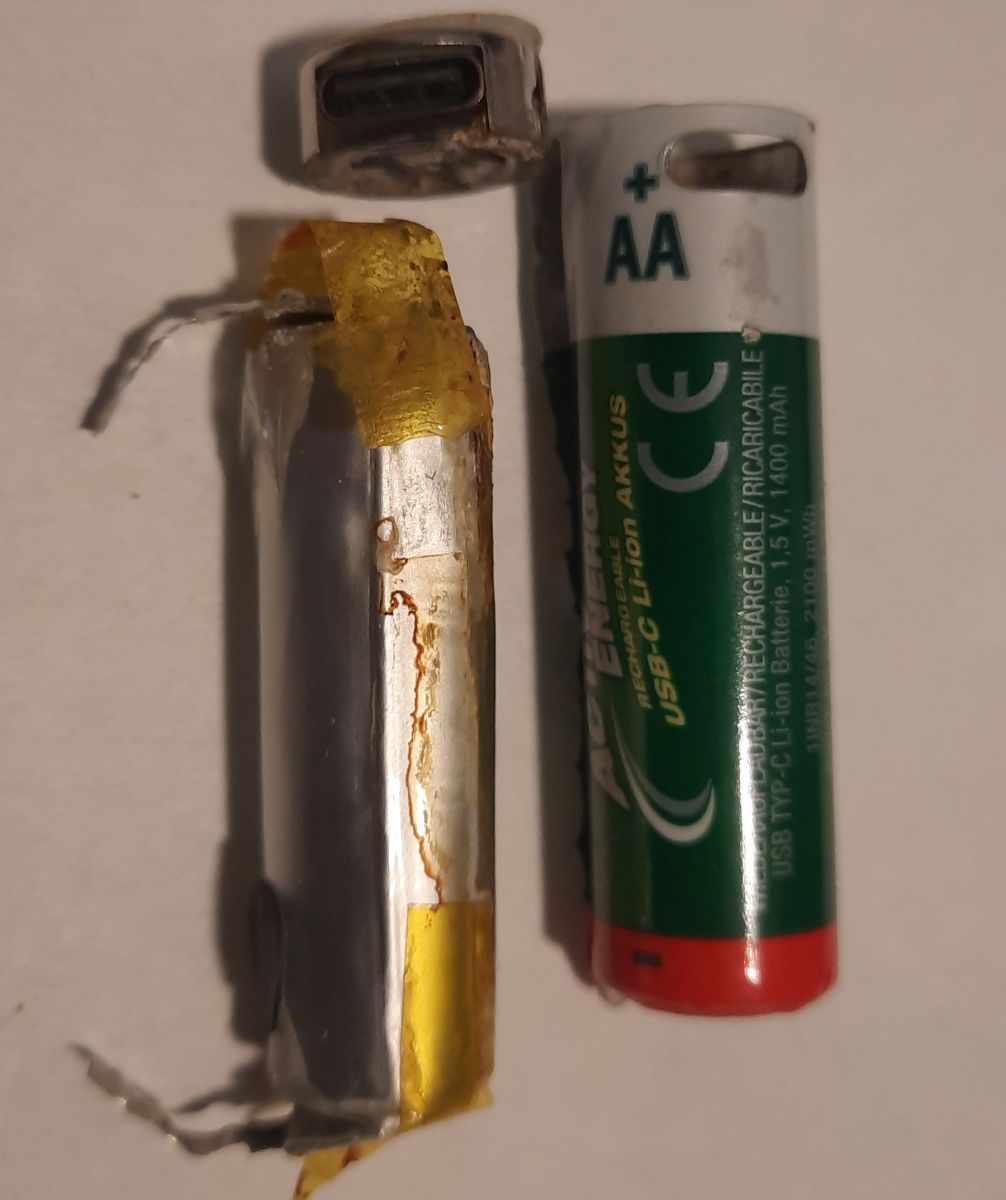
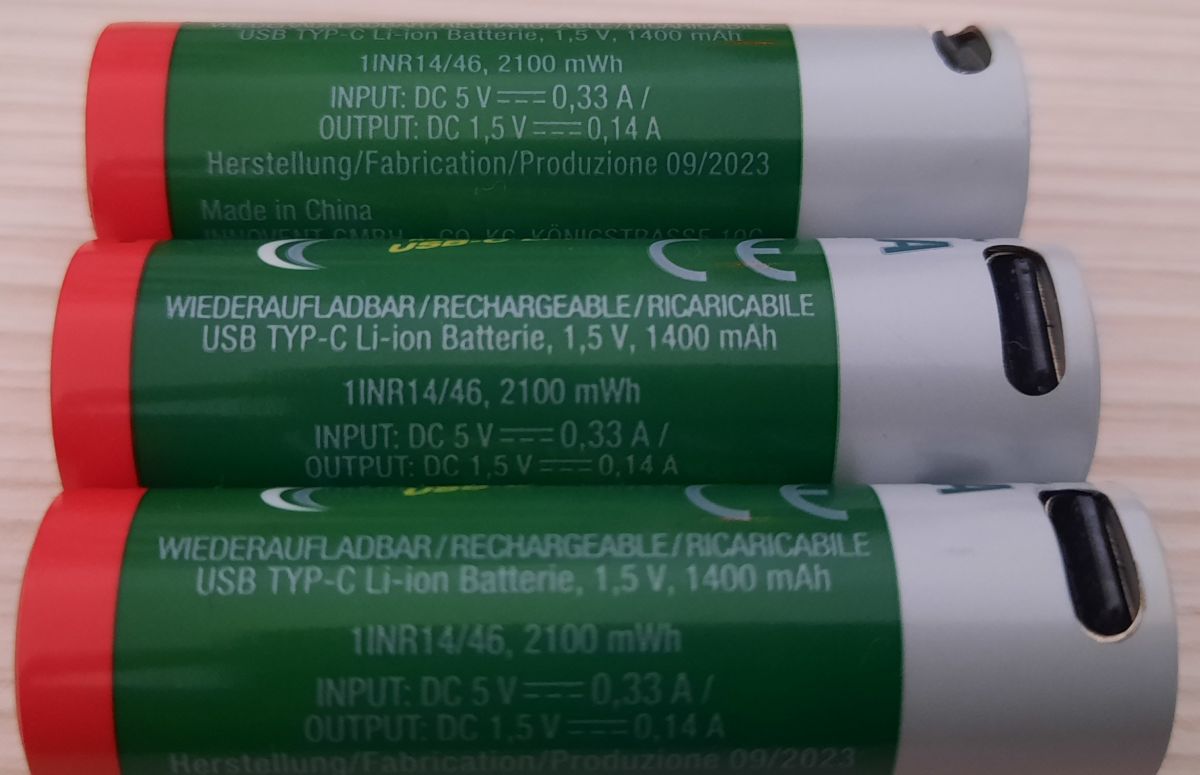
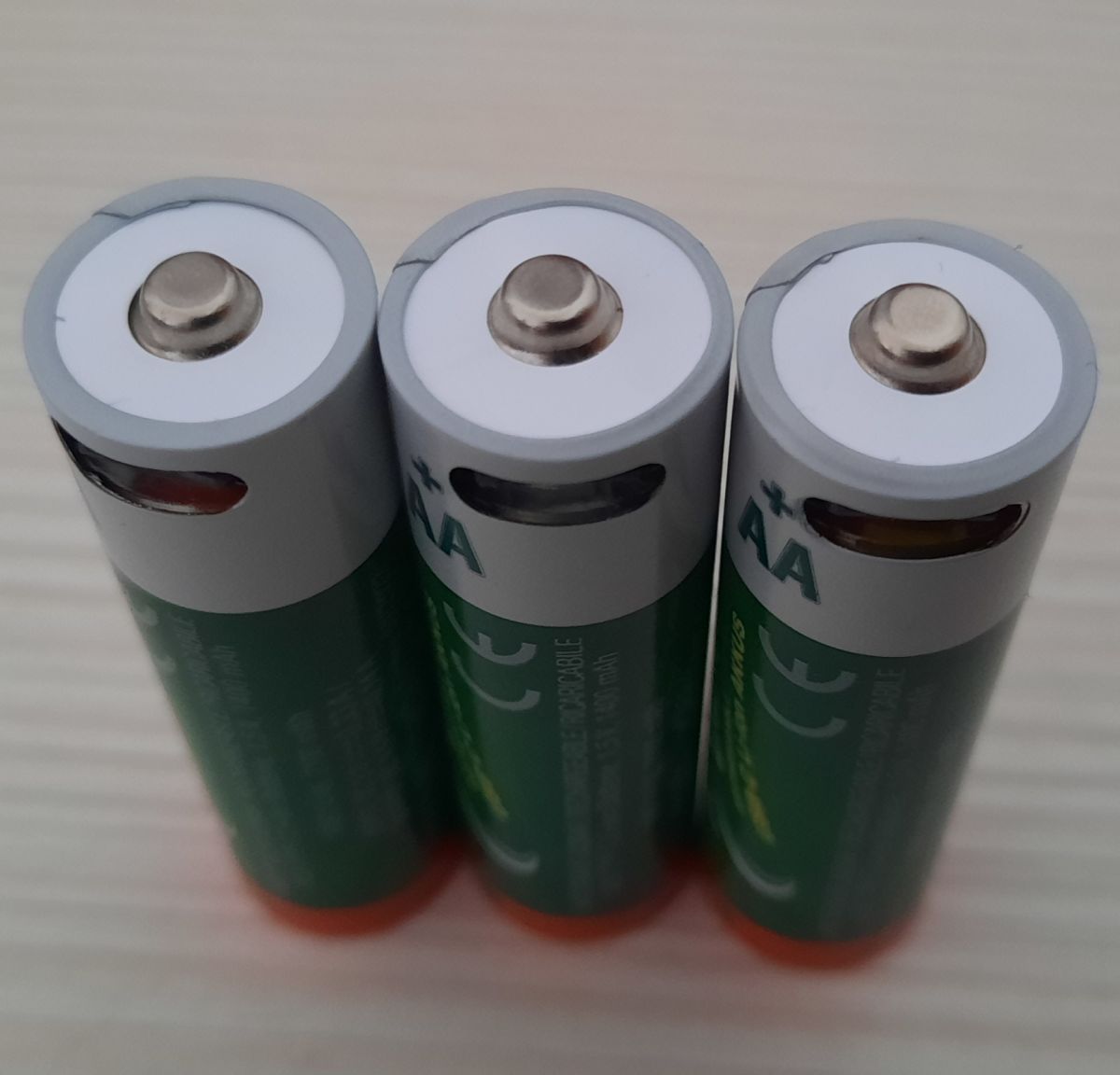
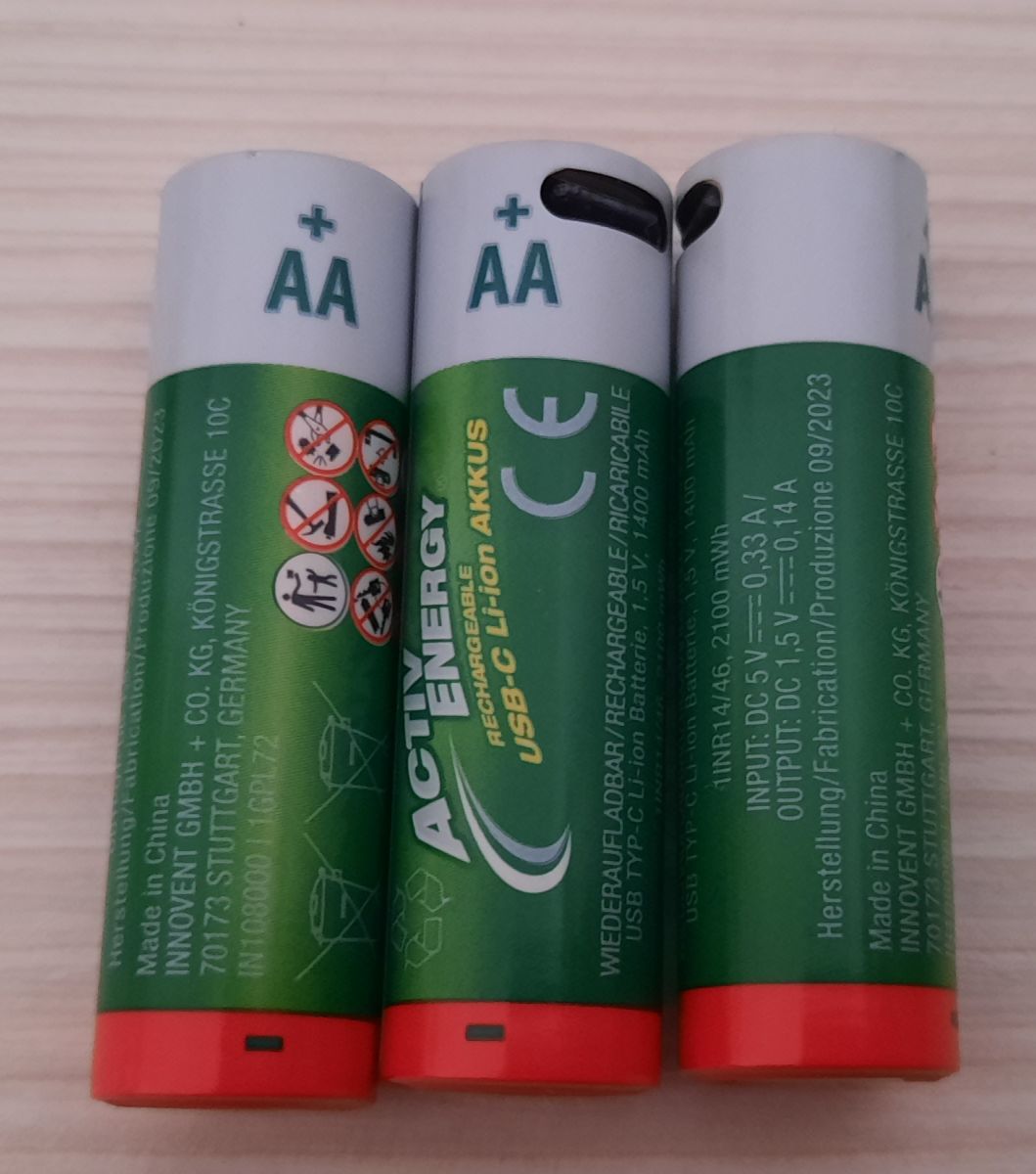
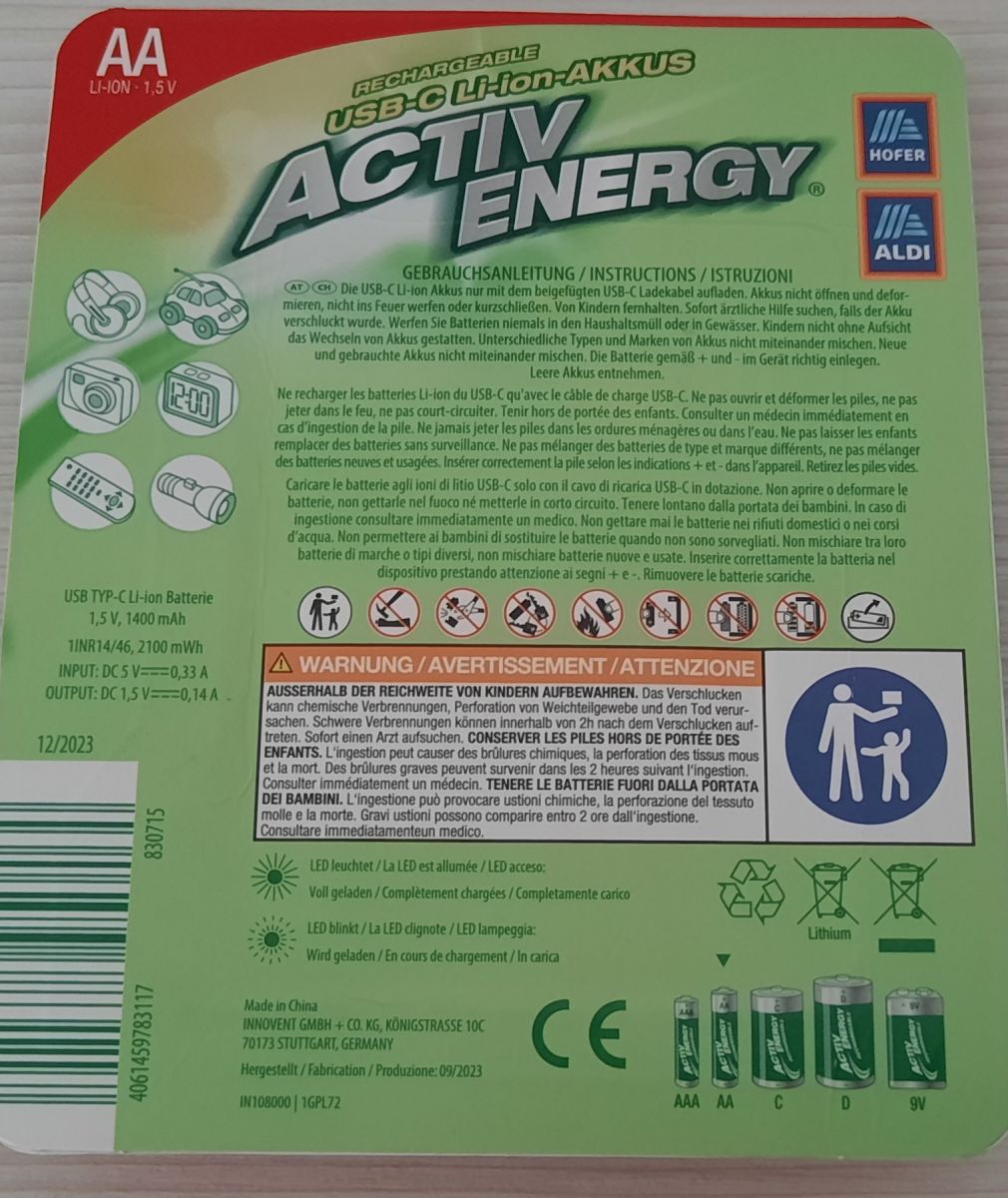
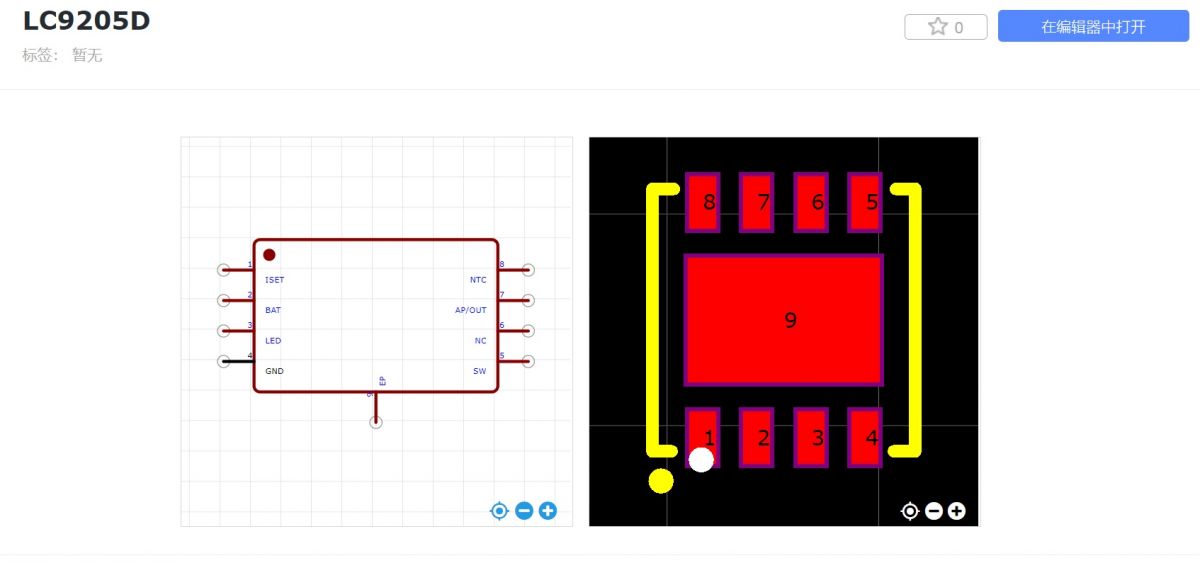
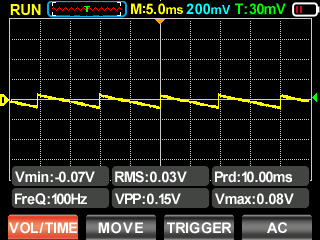
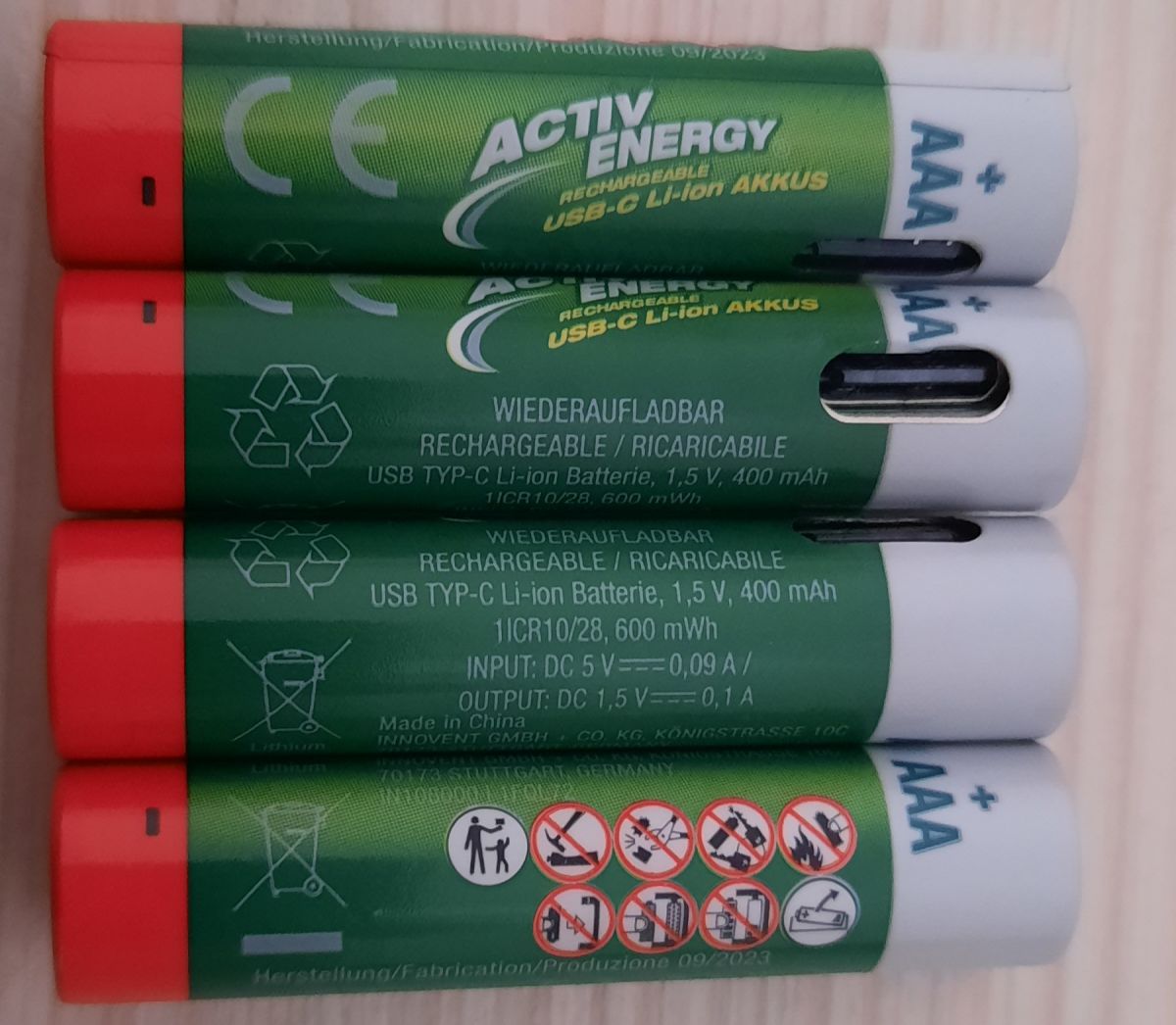
- The teardown found an LC9205D chip and a label stating 140 mA current capacity for the AA version; the measured output was 1.51 V with almost imperceptible ripple. [#20912923]
- Measured discharge behavior was specific: 4.20 V to 3.15 V on the internal cell gives 1.51 V out, 3.14 V to 2.80 V gives 1.10 V out, and below 2.80 V the output becomes 0 V. [#20913806]
- Charging status used three visible states in the thread: slow flashing = charging, solid LED = full with 5 V connected, and very fast flashing = cell fault/open circuit. [#20913400]
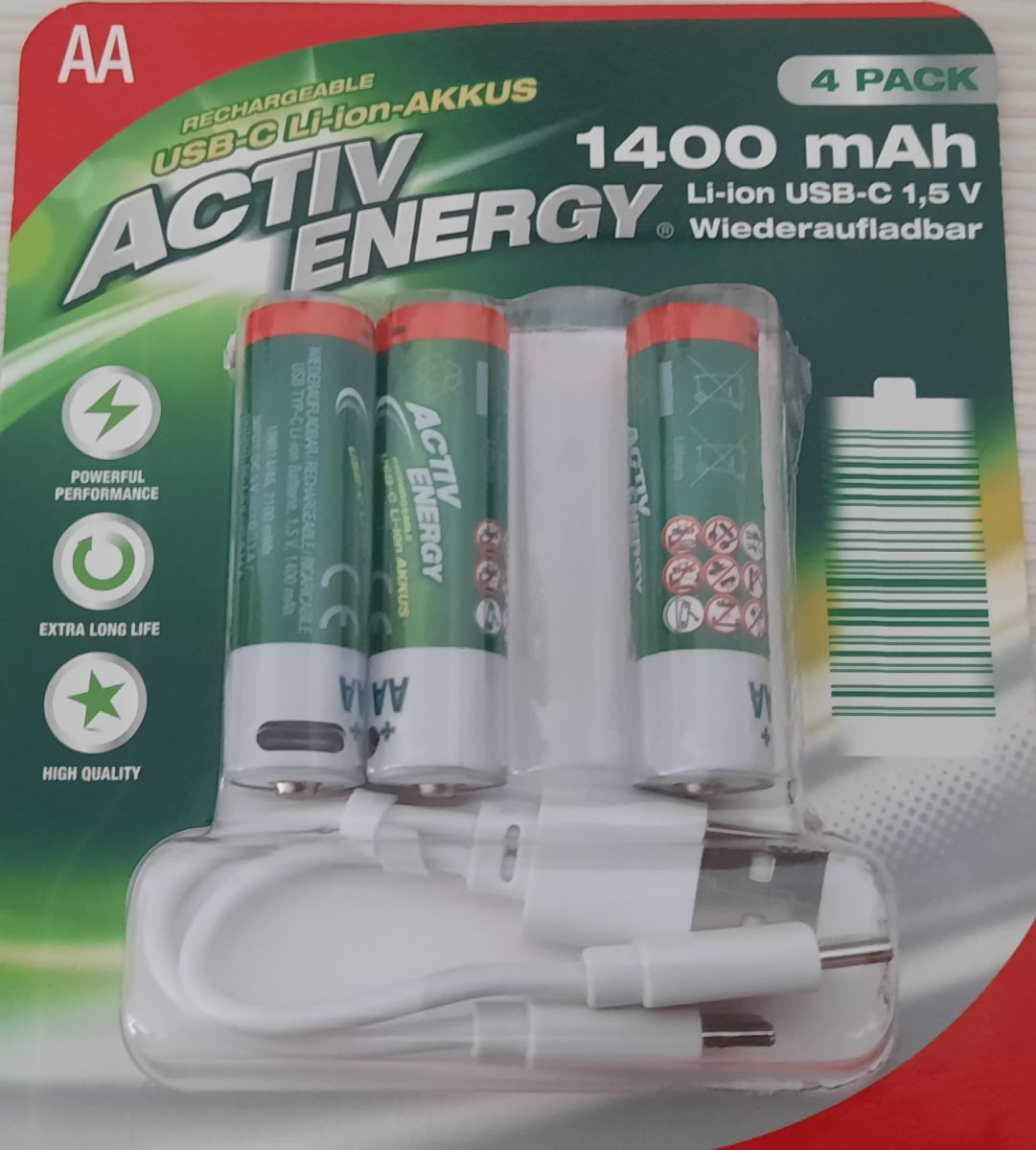
- One later AliExpress sample cost PLN 13.50, took about one month to arrive, and accepted 670 mAh at 5 V, equal to 3.35 Wh input energy. [#20962456]
How does an AA Li-ion battery with USB-C charging keep a steady 1.5 V output, and what role does the LC9205D chip play inside it?
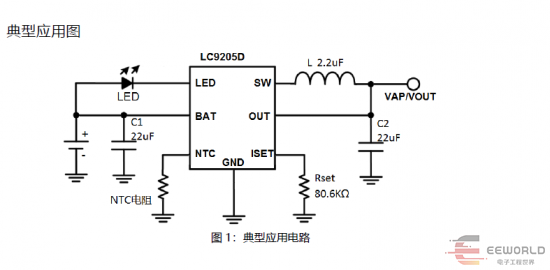
It uses a regulated converter, not the raw Li-ion cell voltage, to hold the output near 1.5 V. The teardown identified an LC9205D and measured 1.51 V at the terminals.
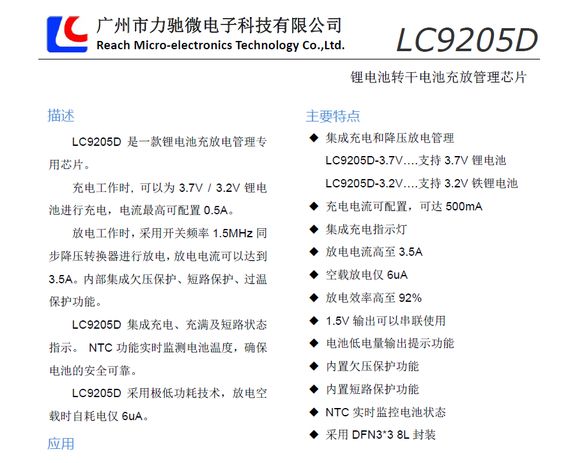
"LC9205D is an integrated power-management chip that charges, discharges, and protects a 3.7 V Li-ion cell while feeding a regulated 1.5 V AA-style output." In the thread’s quoted description, one chip handles charging, discharging, and protection with only a few external parts.
[#20912923]
What happens to the output voltage of a 1.5 V USB-C rechargeable AA cell as the internal Li-ion cell drops from 4.2 V to 2.8 V?
It stays near 1.51 V for most of the discharge, then drops sharply before cutoff. The measured ranges were 1.51 V output from 4.20 V down to 3.15 V on the internal cell, then 1.10 V from 3.14 V to 2.80 V, and finally 0 V below 2.80 V. That means the user sees a regulated plateau, a brief low-voltage stage, and then a shutdown.
[#20913806]
Why does a USB-C rechargeable AA battery suddenly fall to about 1.1 V before shutting off instead of gradually weakening like an alkaline cell?
It falls suddenly because the converter regulates the output until the Li-ion cell reaches its protection threshold. An alkaline cell naturally sags over time, but this design holds 1.51 V until the internal cell reaches about 3.15 V, then the converter drops to 1.10 V and shuts off at 2.80 V. As the teardown author put it, it is “closer to a power bank than to an AA battery.”
[#20913400]
How can I tell from the LED indicator whether a USB-C AA battery is charging normally, fully charged, or has a cell fault such as an open circuit?
You can read the LED by its blink pattern. Slow flashing means normal charging. A steady light means 100% charge, but only while 5 V is still connected through USB. Very fast flashing was observed on a failed unit and was interpreted as a cell fault caused by an open circuit. The packaging shown in the thread did not describe that fast-flash state.
[#20913400]
What is LC9205D, and how is it different from a simple buck converter used with a separate charger and protection circuit?
LC9205D is a three-in-one battery-management and conversion chip, not just a simple step-down regulator. The thread’s quoted description says it combines charging, discharging, and protection for a 3.7 V to 1.5 V lithium “dry battery” in one IC. A plain buck converter would only reduce voltage. This chip also adds under-voltage, overcharge, short-circuit, overheating, and lithium-cell protection in the same device.
[#20912923]
What is USB Power Delivery (USB PD), and why can branched USB-C charging cables be risky with rechargeable AA batteries or other 5 V devices?
USB PD is a USB charging standard that can negotiate voltages above 5 V, so a branched cable can create an overvoltage hazard if one branch triggers a higher profile. The thread warns that when one output connects to a fast-charging device, a voltage higher than 5 V may appear on all terminals. That can damage simple 5 V devices or rechargeable AA cells that expect only basic USB input.
"USB Power Delivery is a charging protocol that negotiates voltage and current over USB-C, with higher-than-5 V operation as a key feature." [#20913962]
How does Qualcomm Quick Charge 2.0 differ from USB PD in the context of split charging cables and overvoltage risk?
Quick Charge 2.0 was described as less cable-aware, which increases concern with split cables. In the thread, one poster noted that older protocols such as Qualcomm Quick Charge 2.0 do not pay attention to cable type, unlike USB PD where negotiation and cable support matter more. The practical risk is the same: a branch intended for 5 V-only devices can see a higher voltage than expected.
[#20914031]
Which devices are these 1.5 V Li-ion AA batteries actually suitable for, such as wall clocks, remotes, mice, and gas heaters, and which loads are too demanding?
They suit low-drain devices that benefit from a stable 1.5 V output. The thread explicitly mentions wall clocks, remote controls, and watches as good fits, and later users described successful use cases in an old mouse and a gas heater. Motorized toys were not tested, and the original teardown warned that overcurrent behavior was unknown. With a stated AA current capacity of 140 mA, demanding loads are the risky category.
[#20912923]
AA Li-ion 1.5 V rechargeable batteries vs NiMH AA cells vs alkaline AA batteries — which is better for remote controls, clocks, and motorized toys?
For remotes and clocks, the 1.5 V Li-ion type is best when stable voltage matters more than simplicity. NiMH and alkaline cells decline more gradually, while the regulated Li-ion cell keeps 1.51 V for most of its run. The tradeoff is lower current on some versions, extra electronics, and abrupt cutoff. For motorized toys, the thread gives no positive test result, so alkaline or stronger rechargeables remain the safer choice.
[#20912923]
How can I estimate the real capacity of a USB-C rechargeable 1.5 V AA battery from a measured 5 V charging input in mAh or Wh?
Convert the measured 5 V charge input to watt-hours first, then divide by 1.5 V for an optimistic equivalent mAh figure. In the thread, 670 mAh charged at 5 V gives 3.35 Wh. Dividing 3.35 Wh by 1.5 V yields about 2.23 Ah, or roughly 2233 mAh equivalent at 1.5 V before converter losses. That number is an estimate, not a true delivered capacity under load.
[#20962456]
What is the right way to test the discharge capacity of a regulated 1.5 V Li-ion AA battery when a normal charger/tester does not recognize it?
Use an external load and time the discharge at the regulated output, not a standard charger/tester. 1. Connect a known resistor or device to the 1.5 V output. 2. Measure current and log runtime until shutdown. 3. Calculate delivered mAh or Wh from current, voltage, and time. One user suggested a 10 Ω, 0.5 W resistor for about 150 mA load, but the thread also warns that accurate measurement needs more than “a resistor and a clock.”
[#20962845]
Why might a 9 V Li-ion replacement battery make a multimeter squeak, and what does that say about converter noise in these batteries?
The squeak points to switching-converter noise inside the regulated battery. One user reported that a multimeter worked normally on a regular 9 V battery or NiMH pack, but squeaked on a Chinese 9 V Li-ion replacement. He blamed the converter in the battery. That suggests some regulated replacement batteries inject audible or electrical noise, which can matter in sensitive instruments even when the nominal voltage is correct.
[#20915496]
What practical problems come up when charging four USB-C AA batteries for a camera or blood pressure monitor, and what charging setups help?
The main problem is logistics, not chemistry. Four cells usually need four USB connections, so charging can become awkward unless you have several ports or a splitter cable. The thread notes that some sets include a 2-way branch cable, and multi-output USB-C splitter cables also exist. The risk is that a bad split setup can expose every branch to more than 5 V if fast charging activates, so simple parallel charging is not always safe.
[#20913939]
How would a single 3 V regulated battery plus a dummy spacer compare with using two separate 1.5 V rechargeable AA cells in a remote control?
A single 3 V regulated battery plus a dummy spacer would simplify charging because you would charge only one cell. The proposal in the thread lists three benefits: conversion from 3.7 V to 3.0 V instead of 1.5 V, only one battery to charge, and possible charging with the cover removed instead of removing two cells. The drawback is that this was only a concept in the discussion, not a tested product.
[#20917162]
Why do some AliExpress and Allegro listings for 1.5 V Li-ion AA cells claim very high capacities like 2600 mAh or 3300 mWh, and how should those numbers be interpreted?
Those numbers often mix different voltage bases, so they are easy to misread. A listing may quote mWh for the internal Li-ion energy or a 1.5 V-equivalent mAh figure after conversion. In the thread, buyers reported some cheap cells had about 700 mAh instead of the advertised 2600 mAh, and one 3300 mWh class listing drew skepticism. Treat such claims as marketing until you verify delivered energy at the actual 1.5 V output.
[#20915496]
AI summary based on the discussion. May contain errors.








Comments
Is the output voltage cut off automatically after discharge, without warning or lowering the output voltage beforehand? [Read more]
These types of AA sticks are advertised as follows: https://obrazki.elektroda.pl/4094904100_1705436406_thumb.jpg Which suggests keeping the voltage at 1.5V for cut-off. The 100% charge signal is... [Read more]
Is the output voltage cut off automatically after discharge, without warning or lowering the output voltage beforehand? [Read more]
I ll say it again: In the cell voltage range of 4.20 V ... 3.15 V, the converter output is 1.51 V In the cell voltage range of 3.14 V ... 2.80 V, the converter output is 1.10 V Below the voltage of... [Read more]
The battery with the converter and charger is a power bank. :D The cell mentioned in the description is a secondary electrochemical cell - a battery. :D Nice for powering something from one battery.... [Read more]
There are cables available with several USB-C outputs https://www.amazon.com/GELRHONR-Splitter-Charging-Compatible-%EF%BC%884FT-1-25M%EF%BC%89/dp/B08GY7FBHZ so if anyone he often wanted to use it, there... [Read more]
The set includes a cable with a branch for 2 pcs. These branched cables are dangerous in certain cases. When connecting one output to a device with the fast charging protocol, a voltage higher than 5... [Read more]
The cable must also support PD, so if they didn t be a problem. [Read more]
Older protocols, e.g. Qualcomm Quick Charge 2.0, do not pay attention to the cable type. https://blog.oxplot.com/quickcharge/ https://en.wikipedia.org/wiki/Quick_Charge [Read more]
Thanks, they actually figured it out cleverly. Maybe someone with an electrode will be tempted to open such a splitter. Maybe there`s some security inside. [Read more]
Thanks! I have something like this, only in the R20 version in a gas heater, just yesterday the diode in the stove started flashing, indicating that the power supply voltage was too low. This surprised... [Read more]
They are not suitable for such applications anyway. Current efficiency too low. Besides, does anyone else have such a battery-powered camera? After all, today`s smartphone will crush it with the quality... [Read more]
They are not universal, but they are certainly perfect for what kucy7 writes. If there was no demand, there would be no supply. Out of curiosity, I searched a bit on Aliexpress and there are those with... [Read more]
Demand/supply - this is simple manipulation. The manufacturer forces people to buy a product with a lower capacity than alkaline cells or NiMH batteries. It also has a shorter lifespan than NiMH, so only... [Read more]
When it comes to capacity, it`s not entirely true. Approximate capacity in size AA https://obrazki.elektroda.pl/6895243900_1705563733_thumb.jpg As for durability, time will tell. As you can see... [Read more]
The average user doesn t think about it, and they won t know that cheap ones last half as long. It wastes time shopping and exchanging and produces a mountain of waste. This is also an example of littering... [Read more]
I read opinions about these batteries and it looks very bad https://allegro.pl/oferta/akumulator-xtar-14500-1-5v-3300mwh-li-ion-4-szt-14508559254 https://allegro.pl/oferta/kp-icr14500-226pcm-2260mah... [Read more]
Usually, such batteries in remote controls come in pairs. Why didn`t anyone come up with the idea of having only one 3V battery + a jumper battery? [Read more]
What problem would such a battery solve? [Read more]