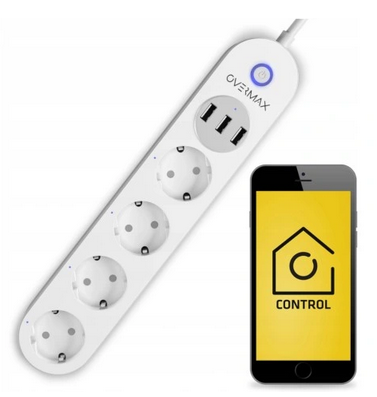
Overmax Flow Multi Control is a Wi‑Fi power strip/extension cord with four Schuko sockets and three USB ports, converted from its stock firmware to Tasmota for Home Assistant control.
Inside, a TYWE2S ESP8266 module, Y32F-SS-105HM relays, J3Y transistor drivers, and a DP2540A flyback supply share control with a UC7441 protection chip on the USB side.
The strip cost PLN 125 and the claimed 2.1A USB rating was exceeded in testing, with protection tripping at 2.3A.
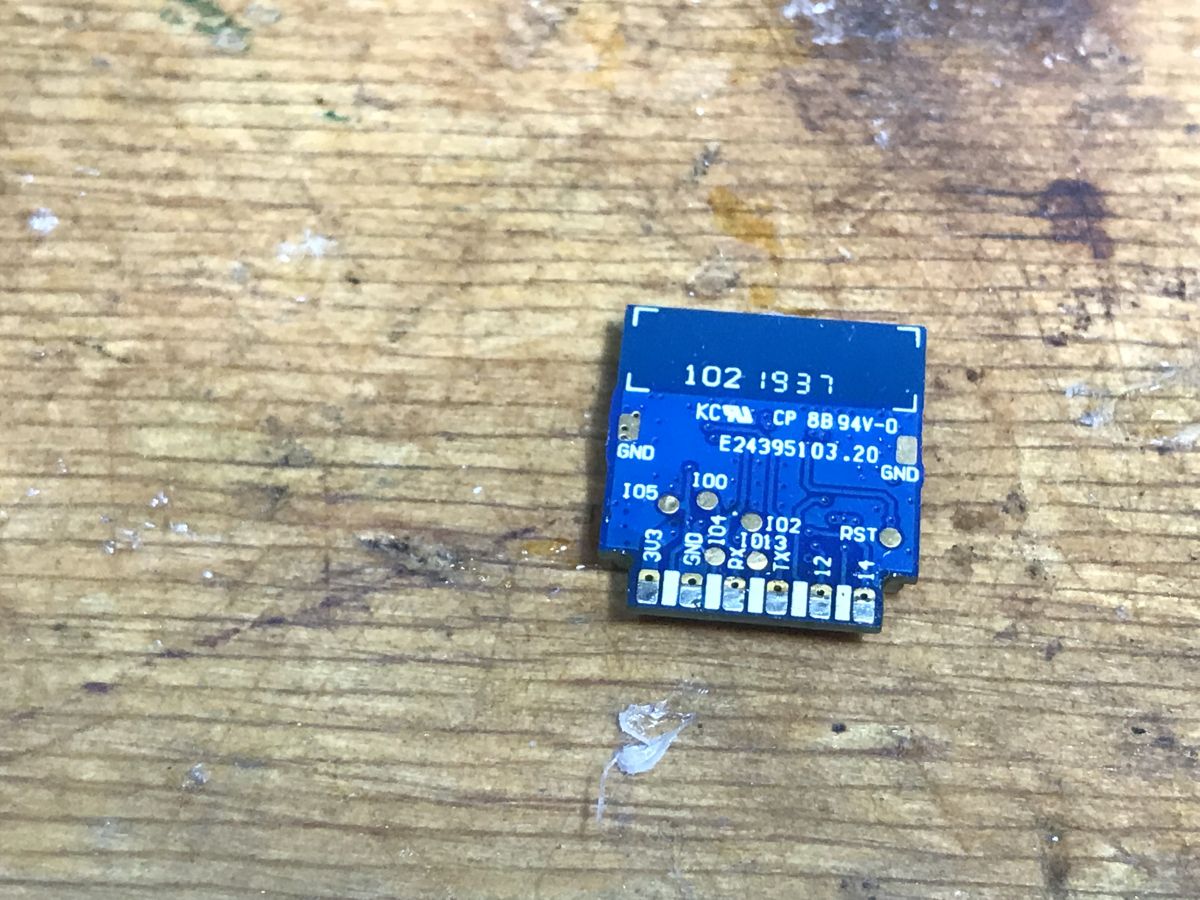
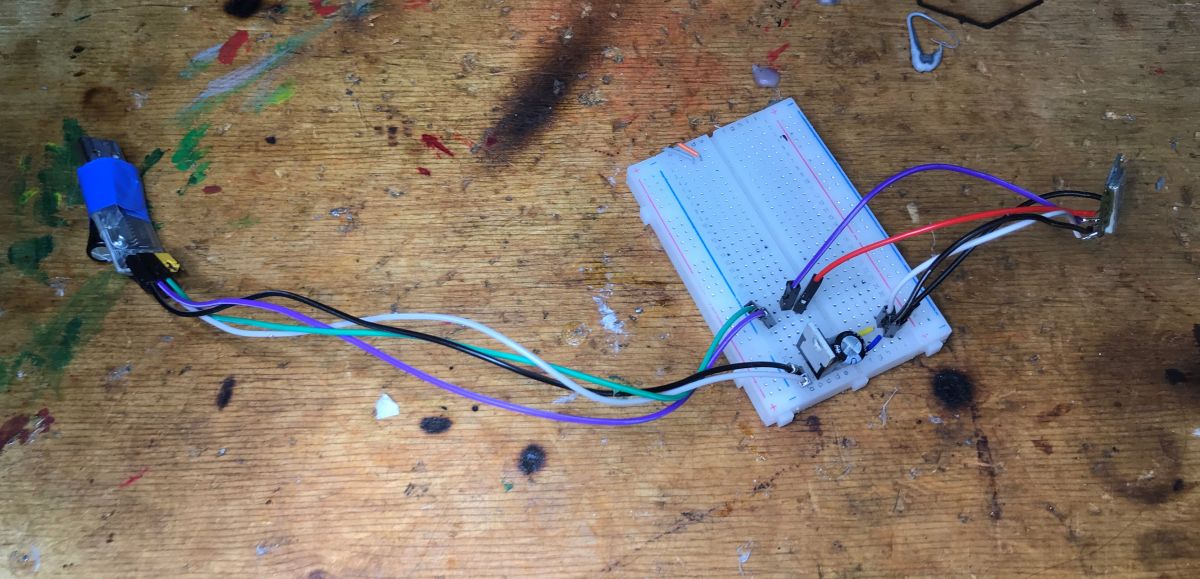
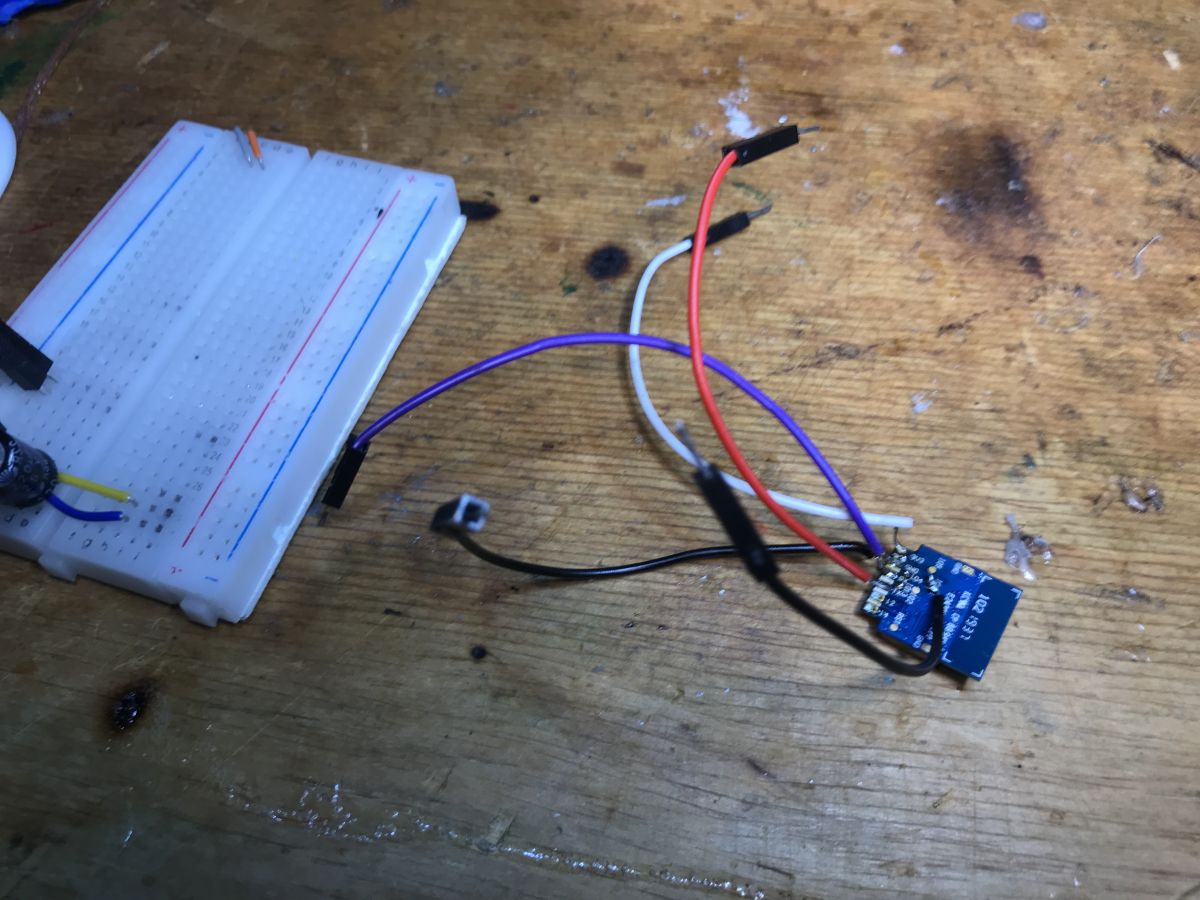
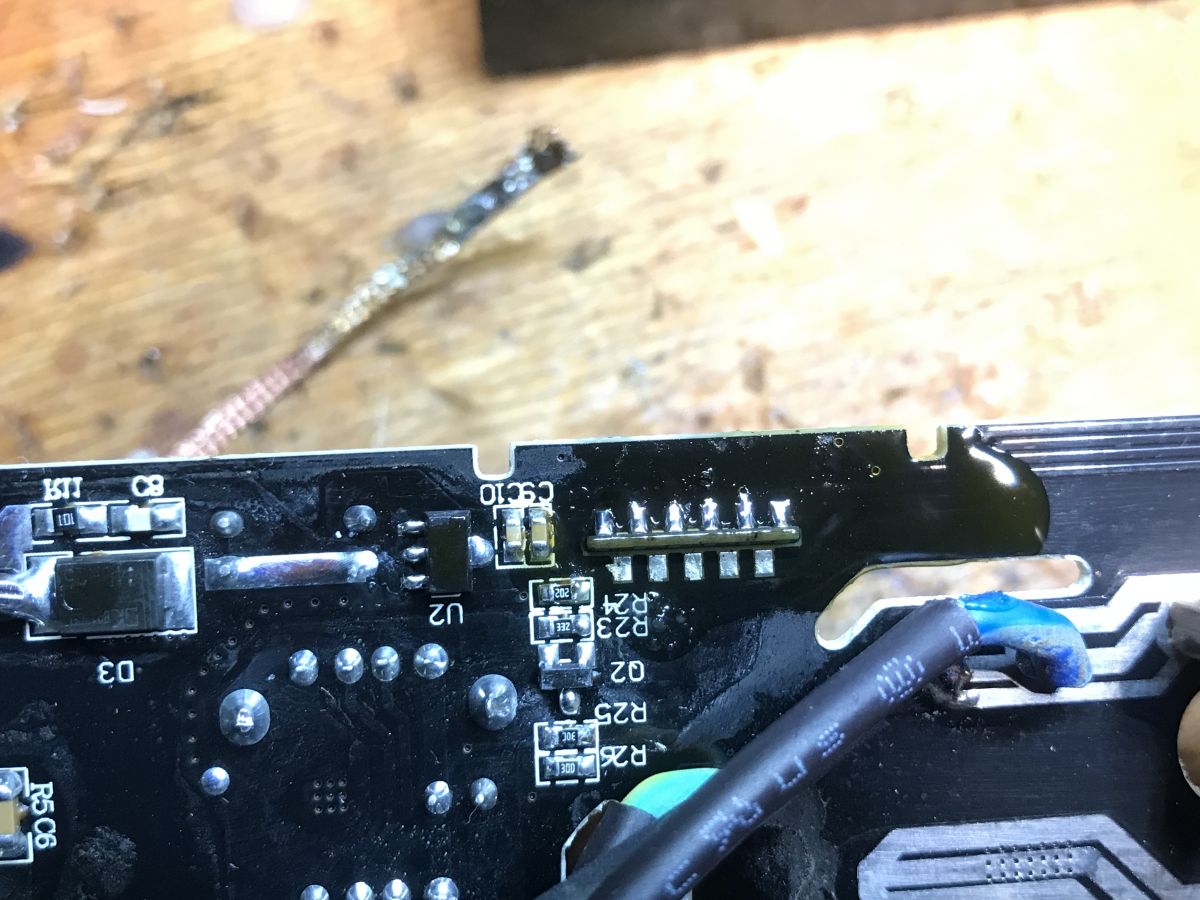
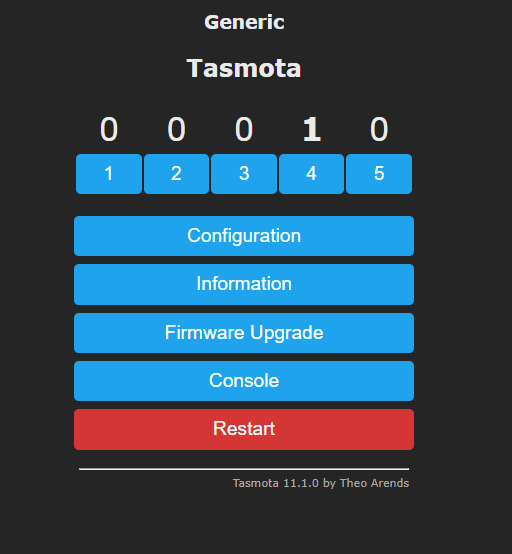
Flashing required desoldering the TYWE2S and the ground pin, but Tasmota came up normally and the relay GPIOs were mapped successfully.
The assembly requires resoldering the ground pin and TYWE2S, so the firmware swap is not a simple drop-in flash.
Generated by the language model.
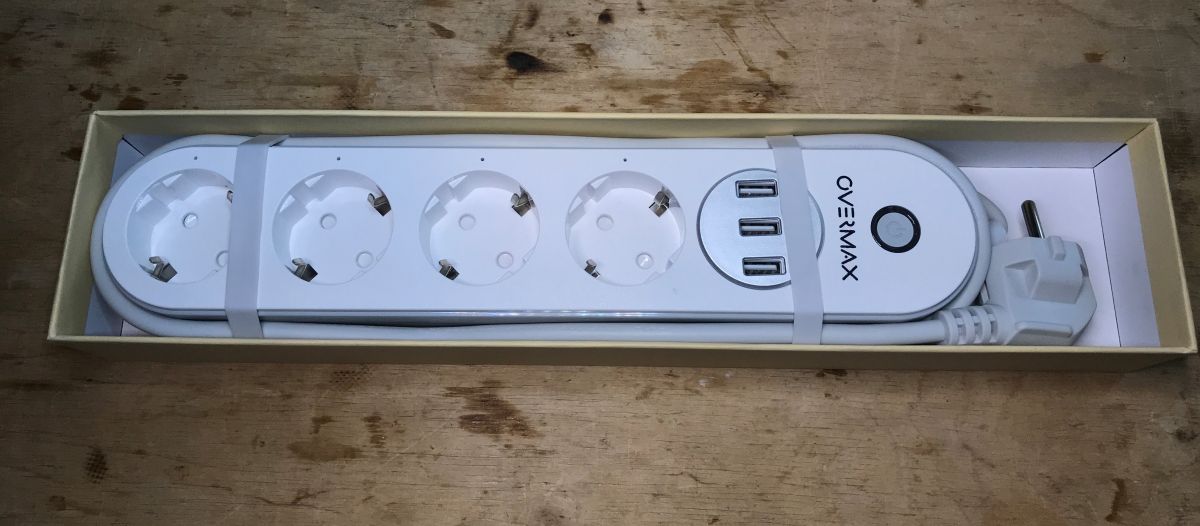
I invite you to a short presentation of the interior and to change the firmware of the strip/extension cord with four Schuko sockets and three USB ports with a total current capacity of only 2.1A. I will install Tasmota on the device in order to connect it with Home Assistant without the involvement of the manufacturer`s servers.
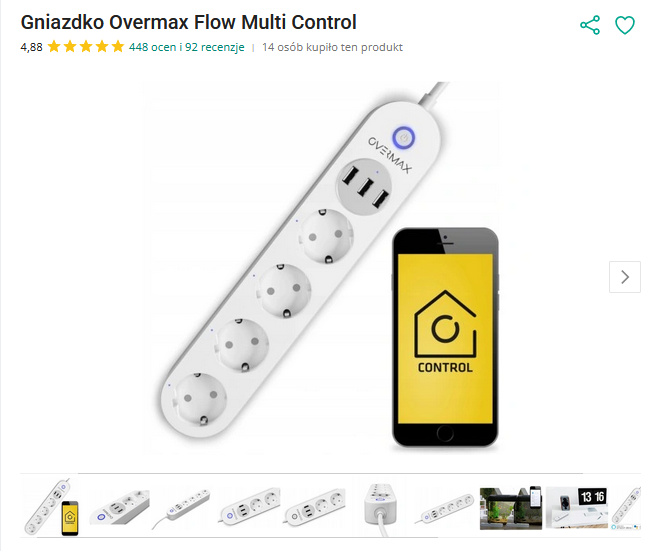
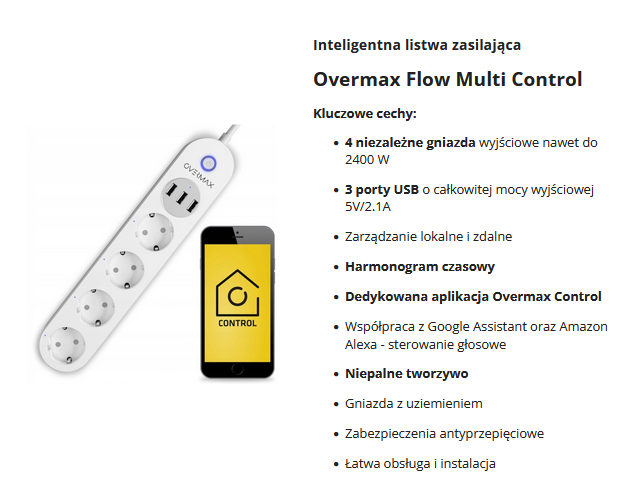
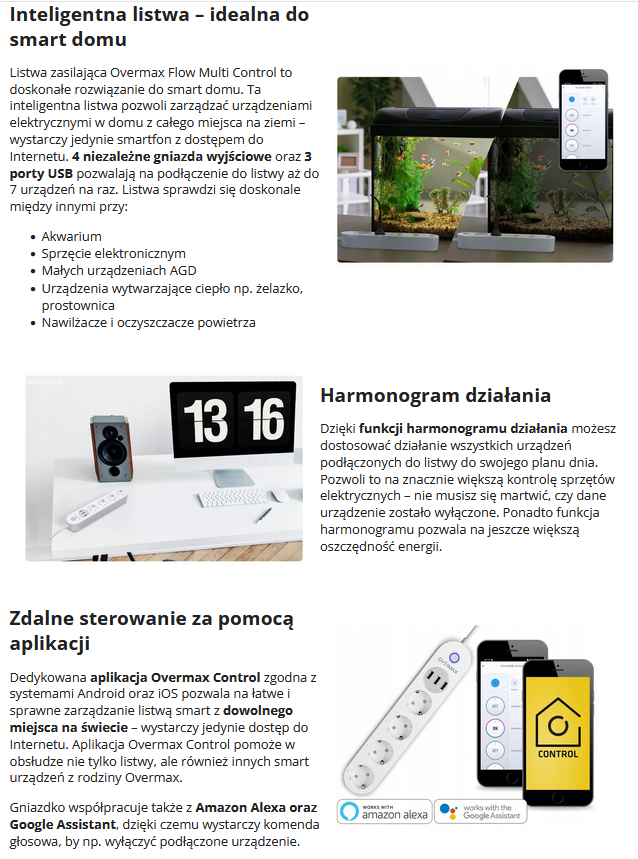
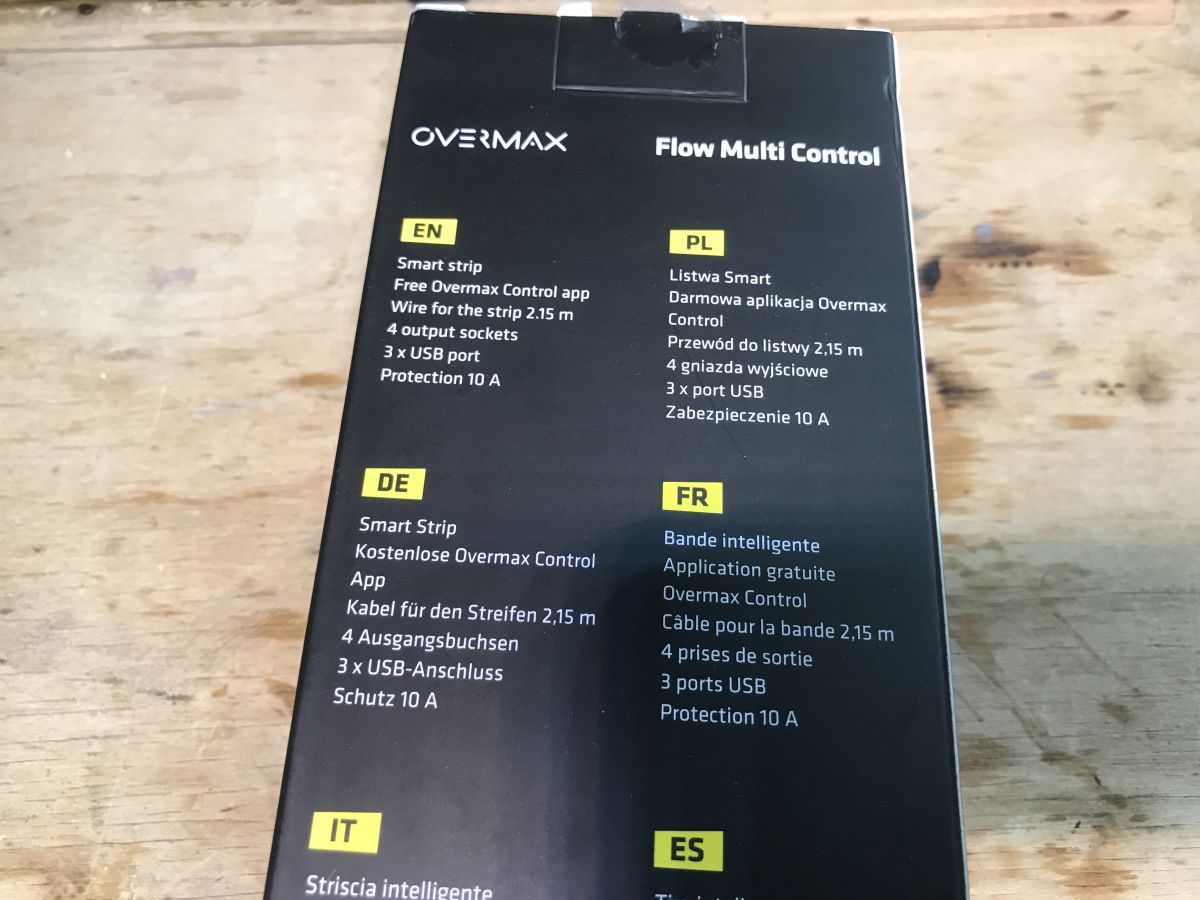
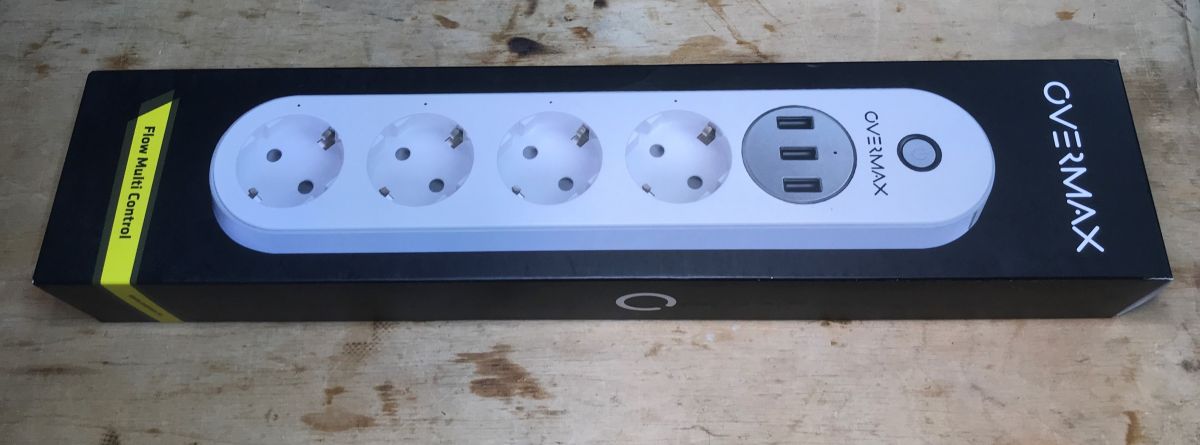
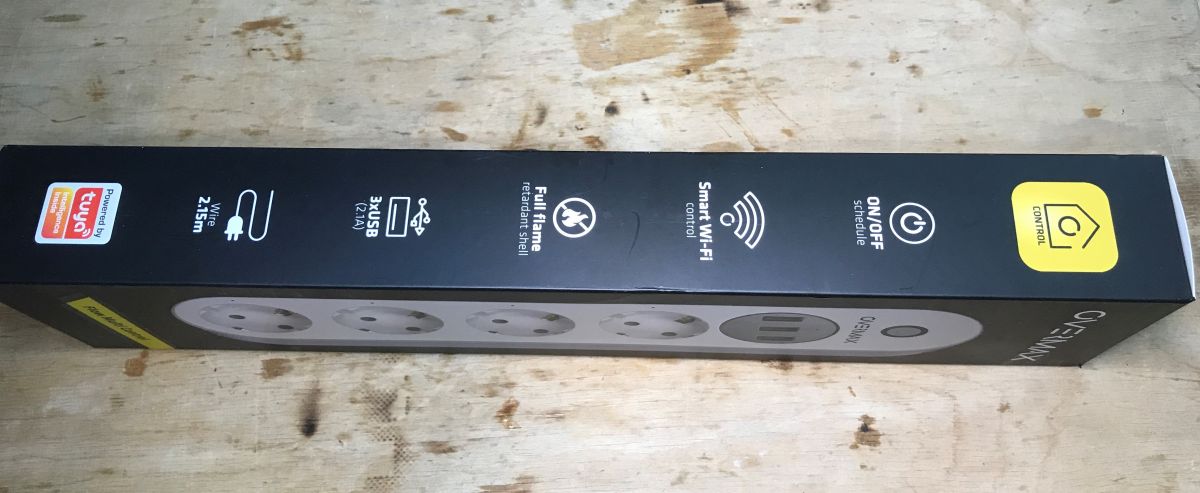
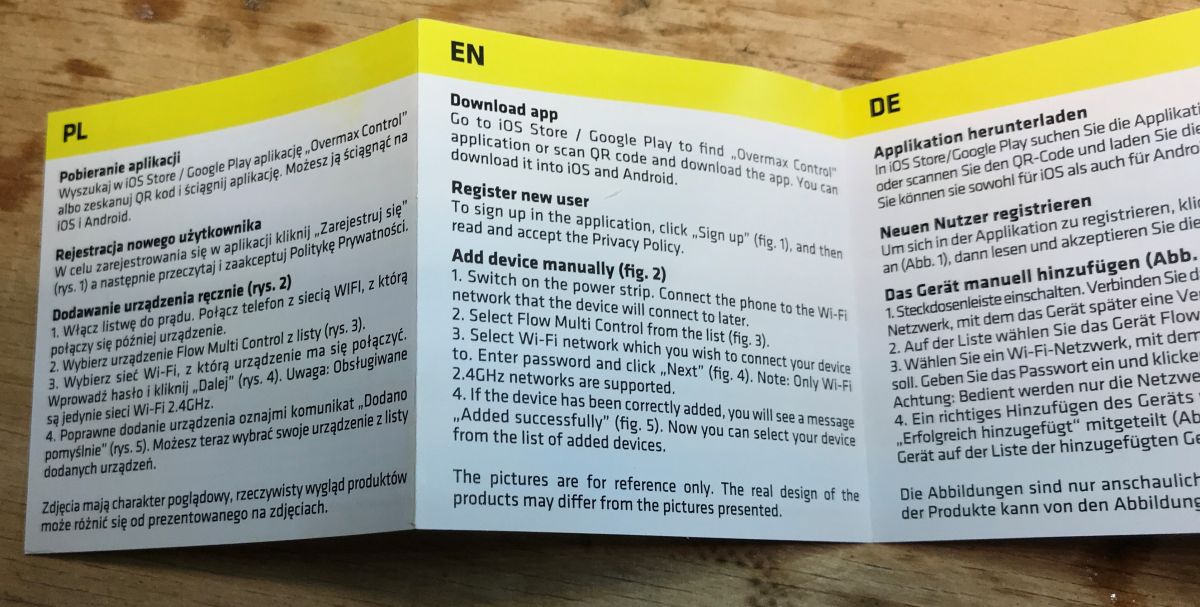
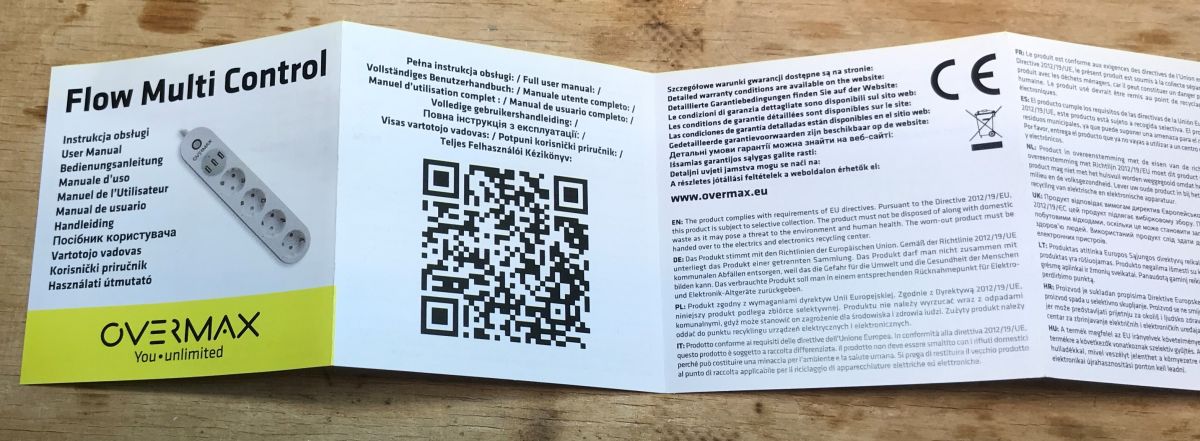
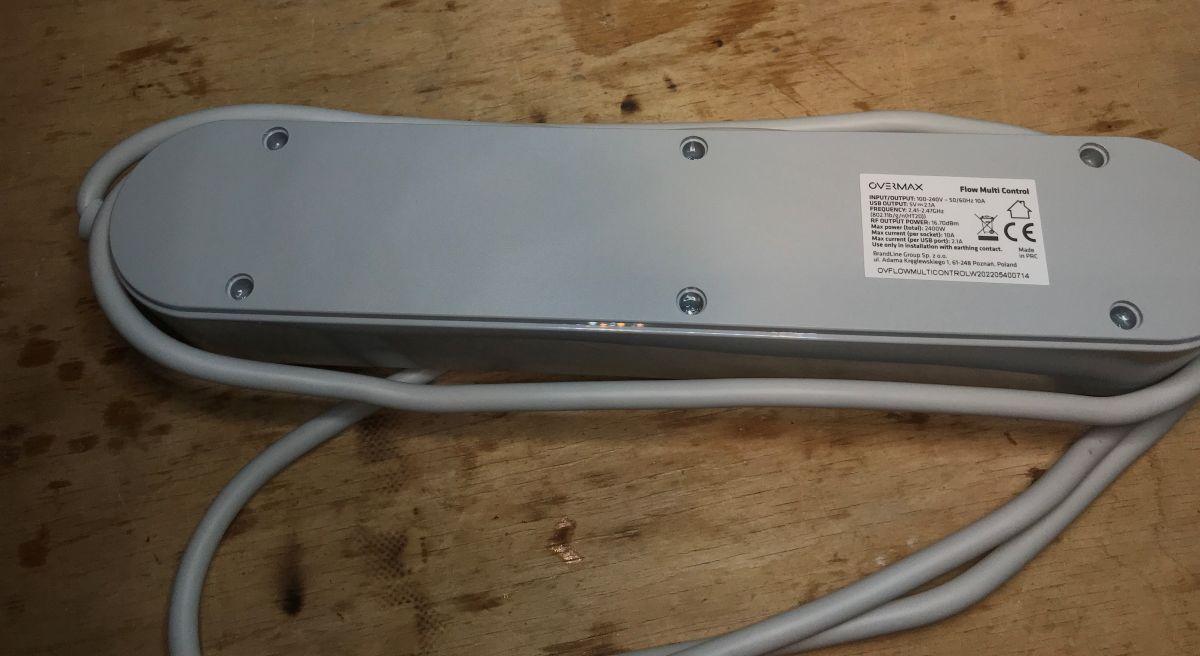
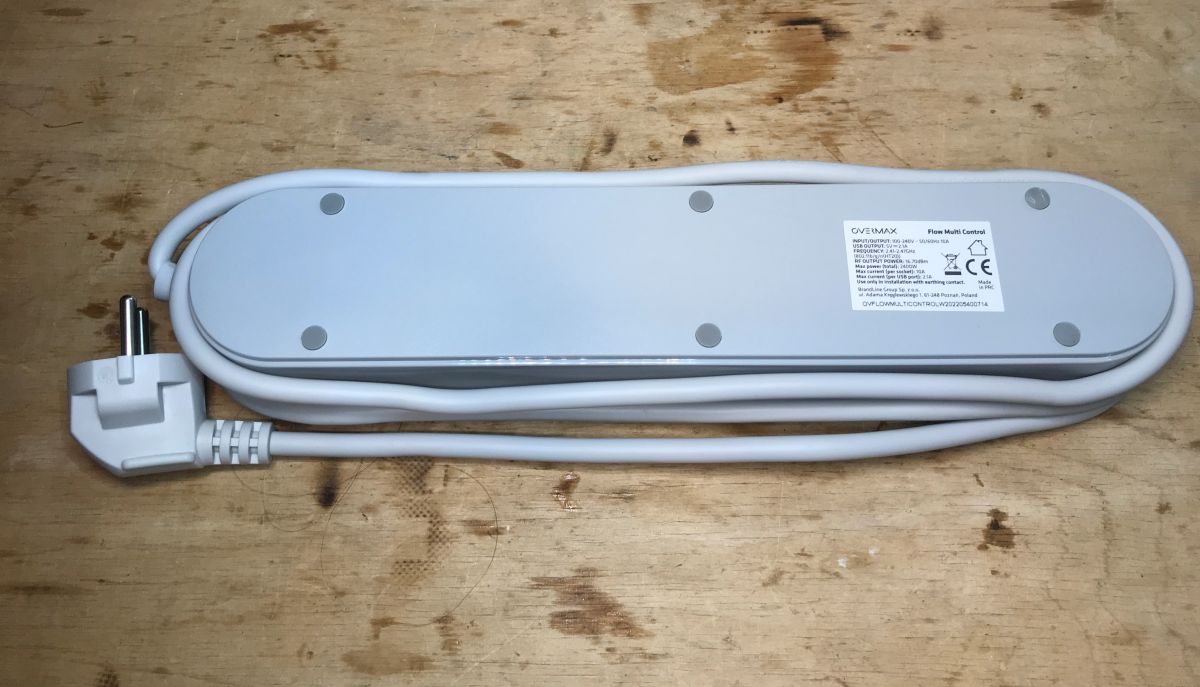
Purchase Overmax Flow Multi Control The strip was purchased for PLN 125: Below are screenshots of the offer: Declared 2.1A at 5V - we will check. The rest of the description praises the manufacturer`s application, but we will still upload our own firmware: Packaging with markings: Unfortunately, I don`t see any specific model number here... QR code for the full manual and short pairing instructions (PL and EN): The bottom of the strip, the nameplate, this model is actually called Flow Multi Control:
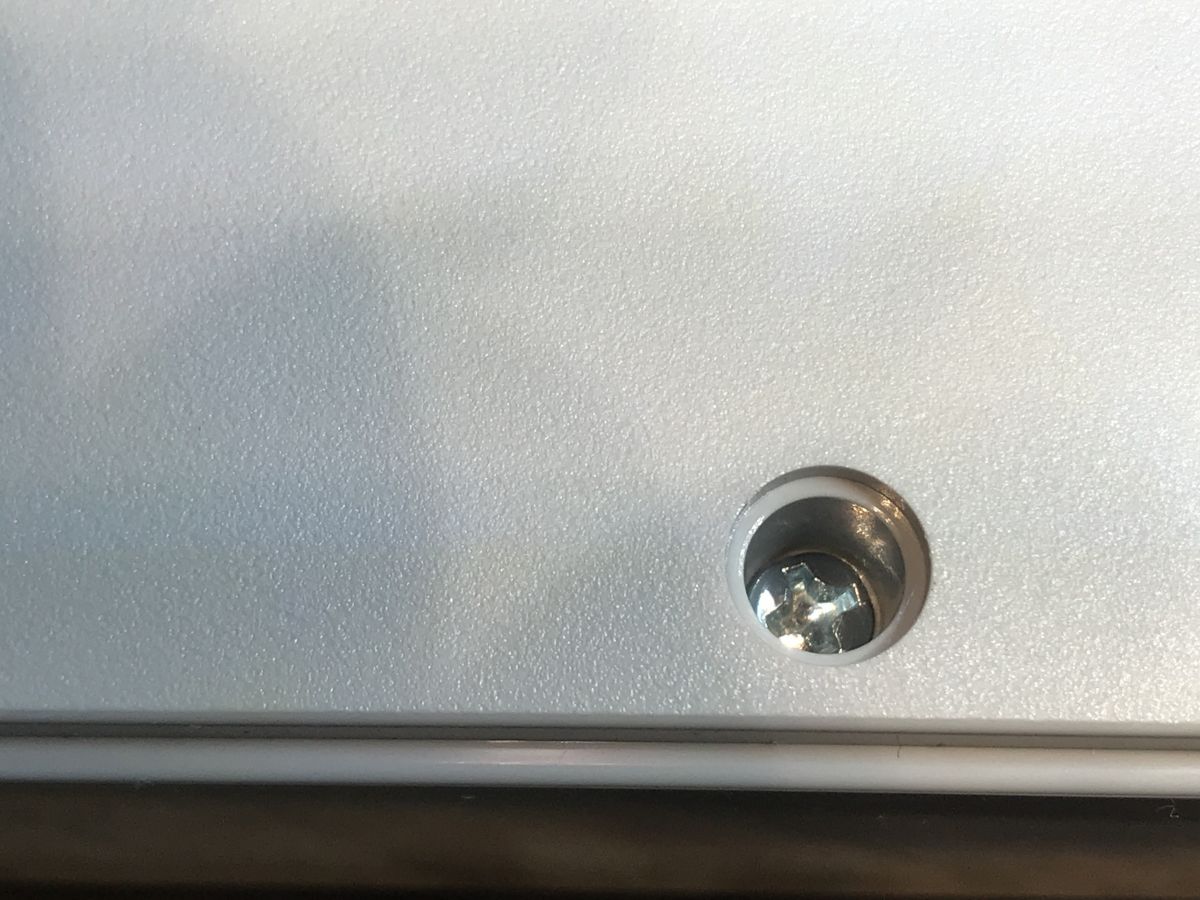
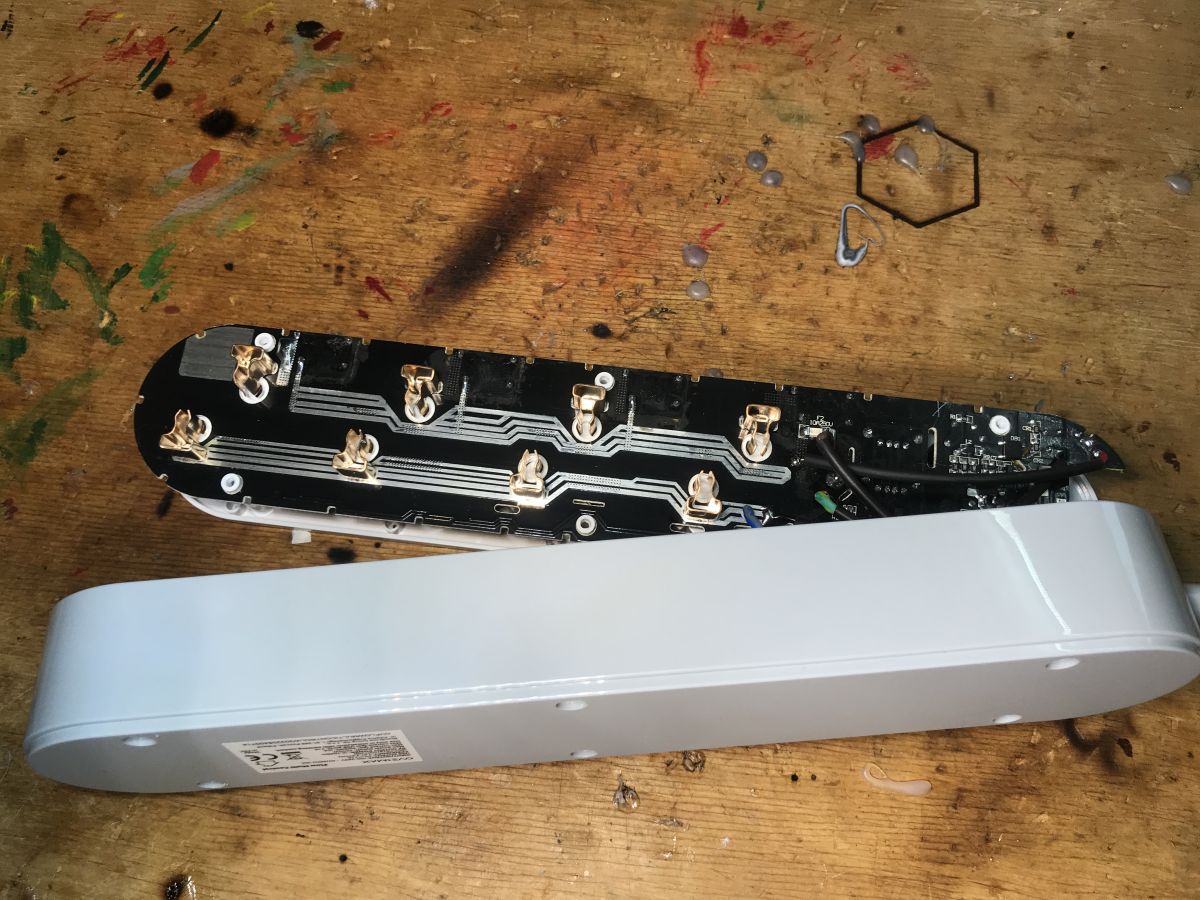
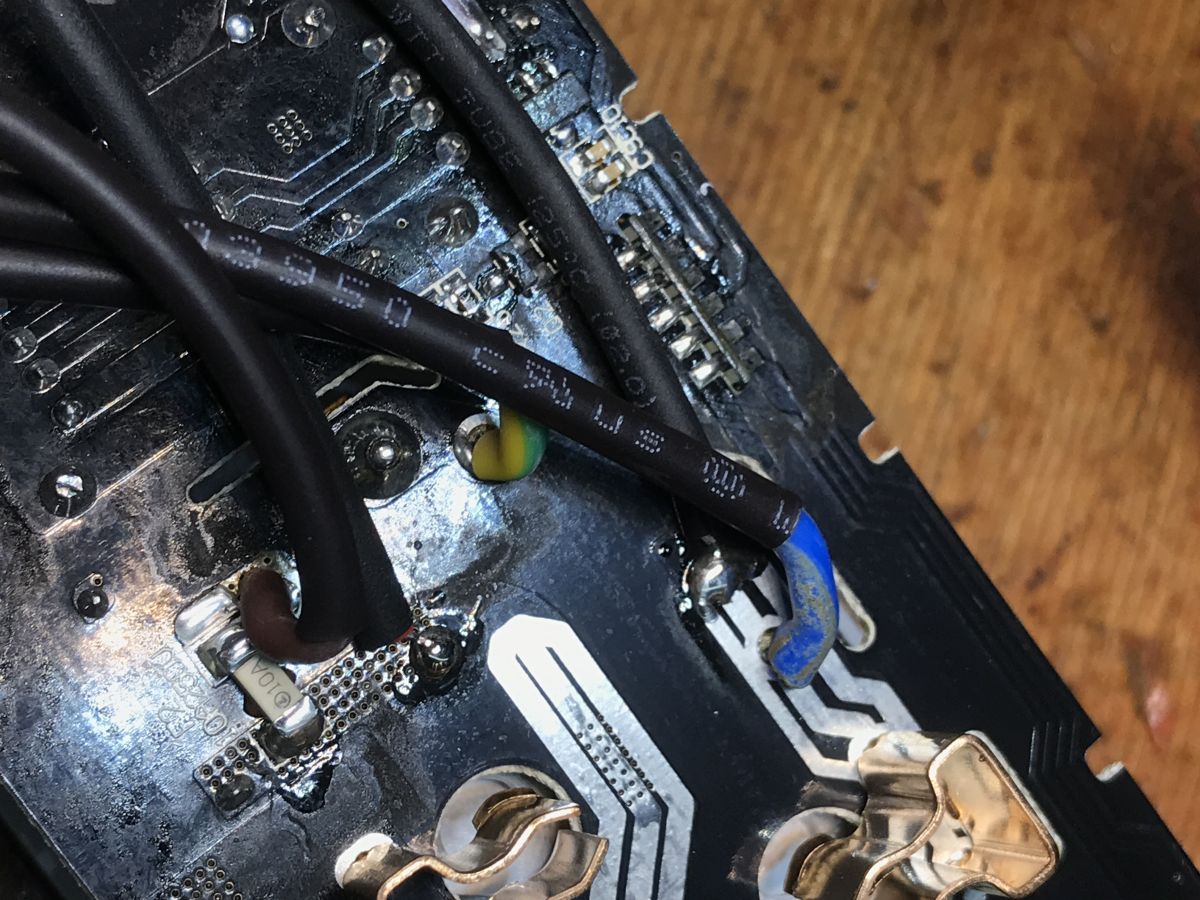
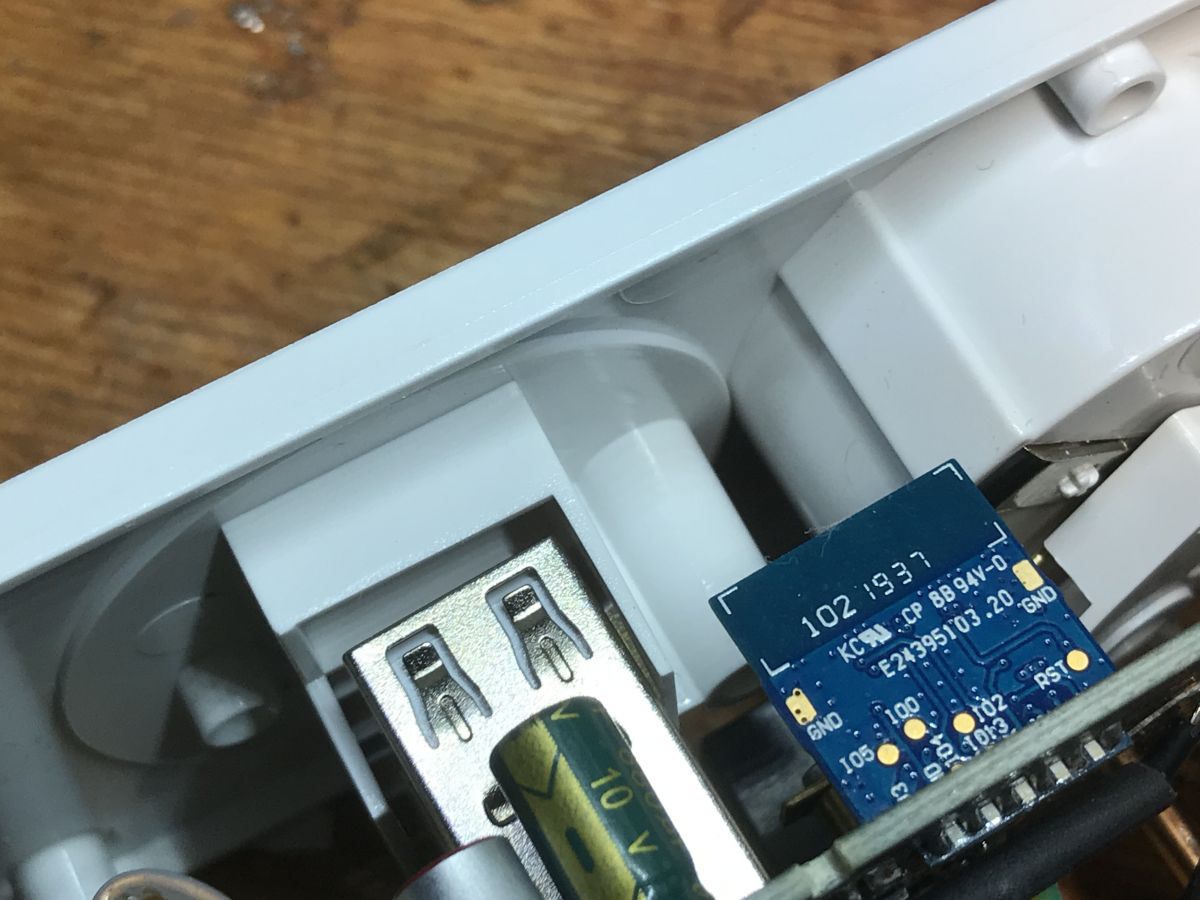
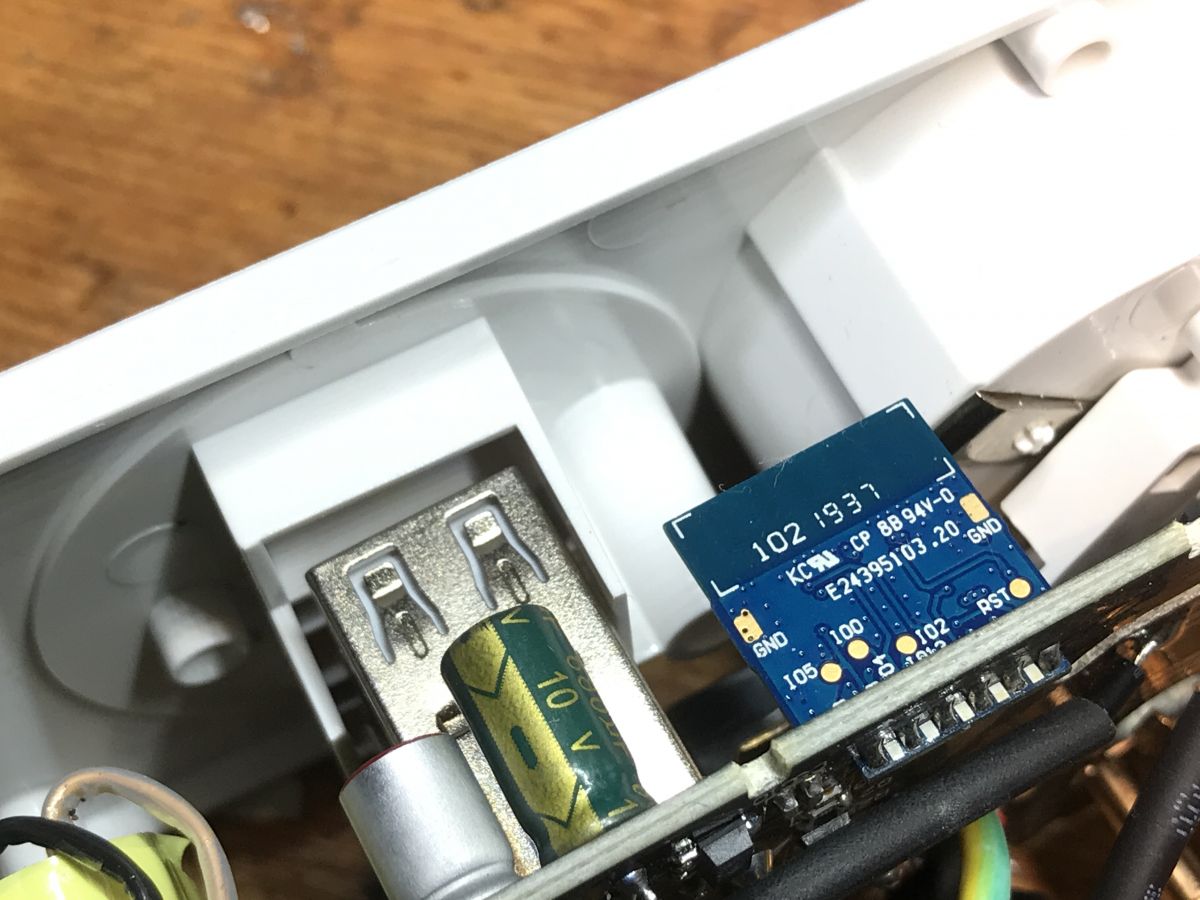
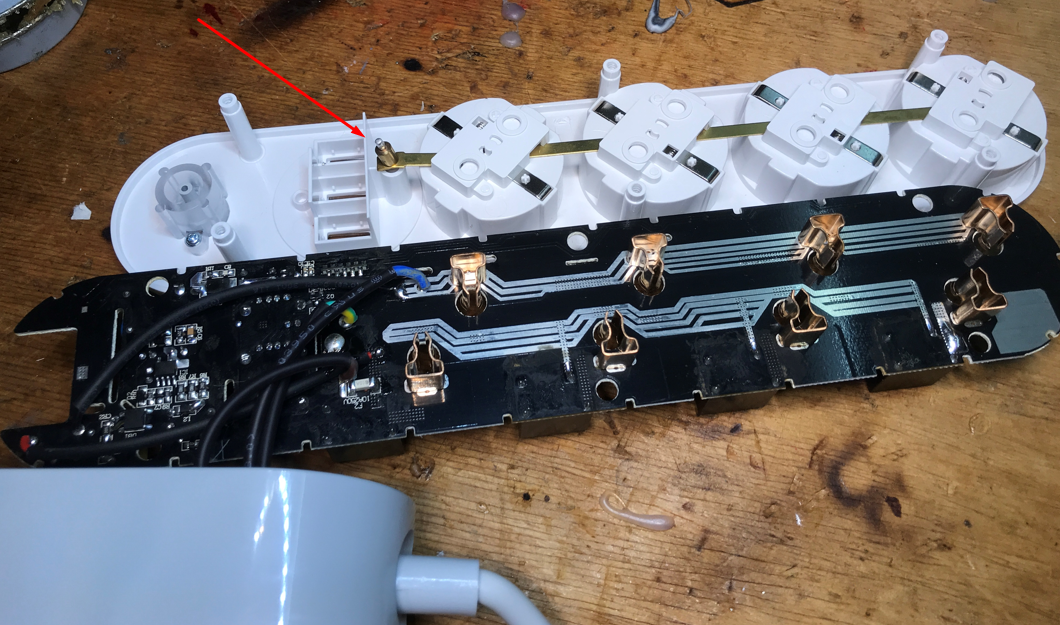
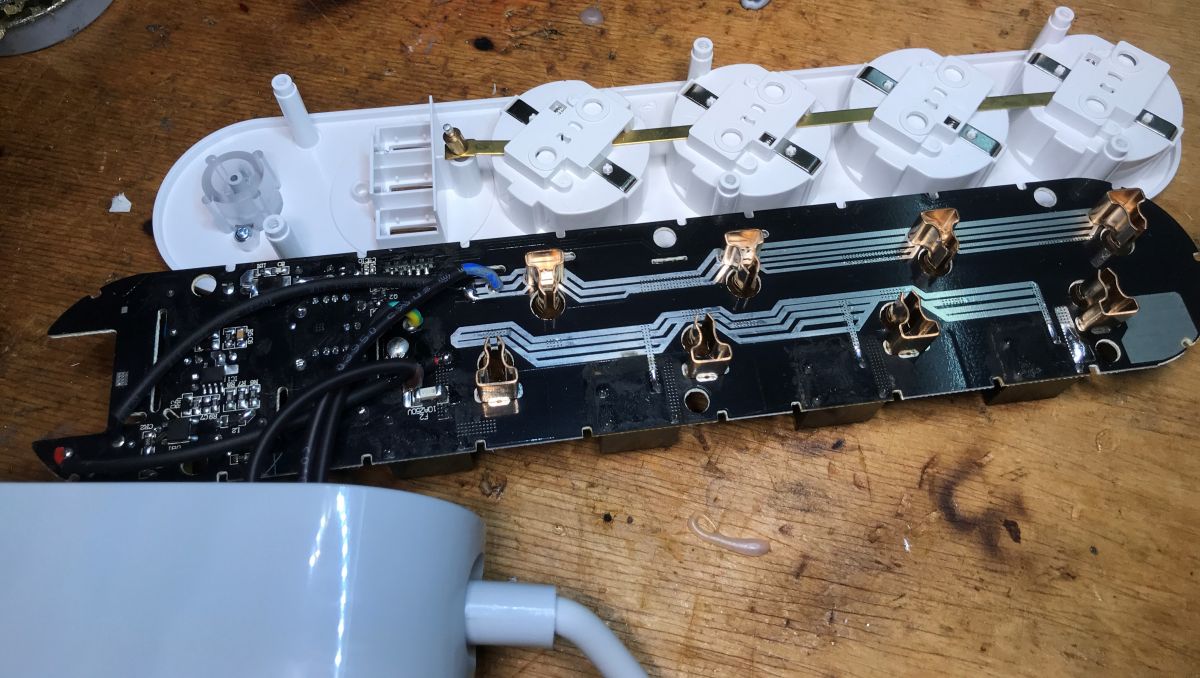
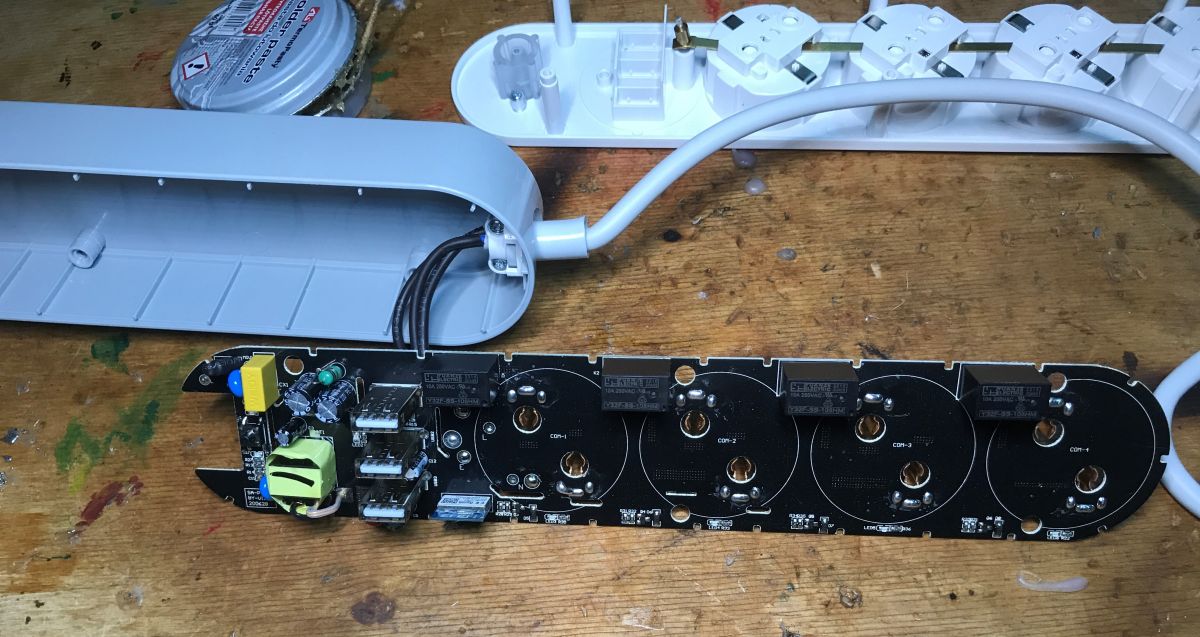
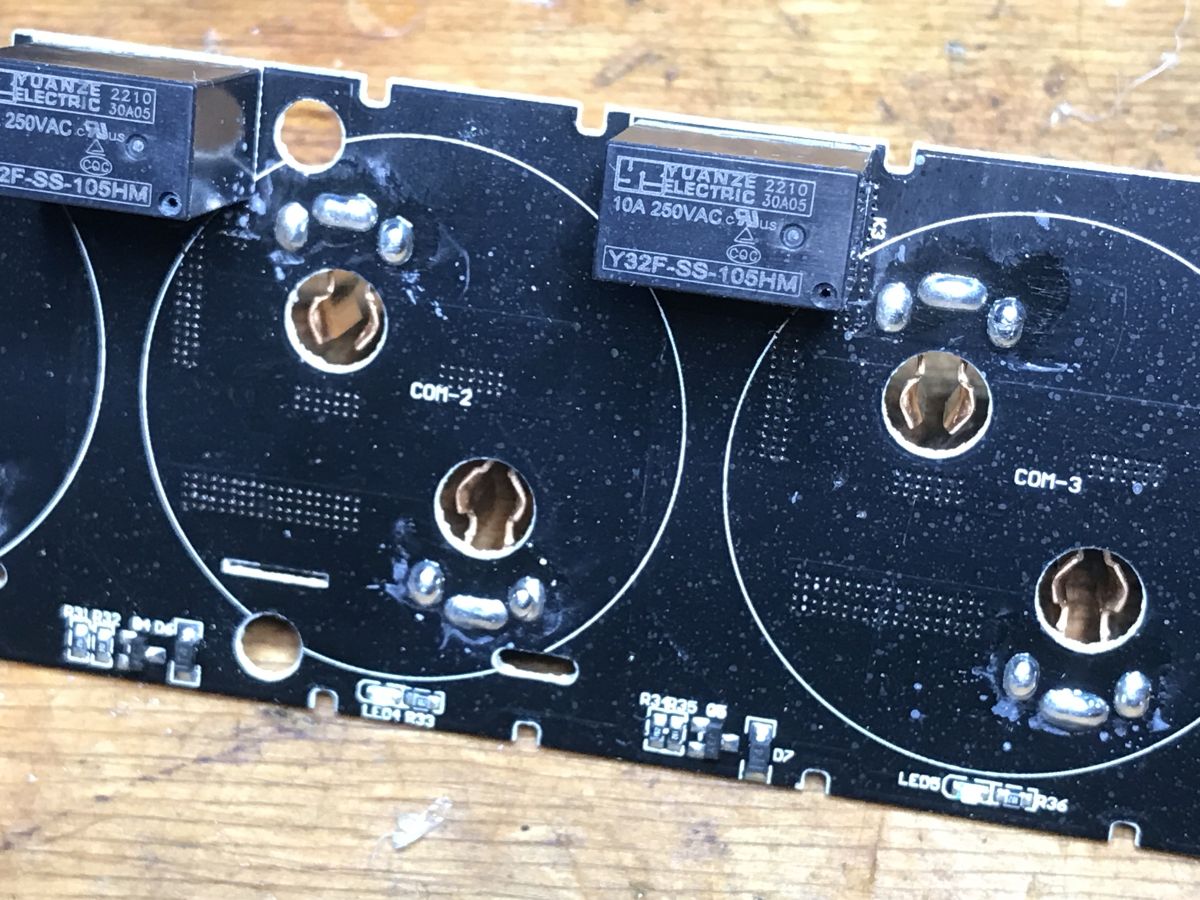
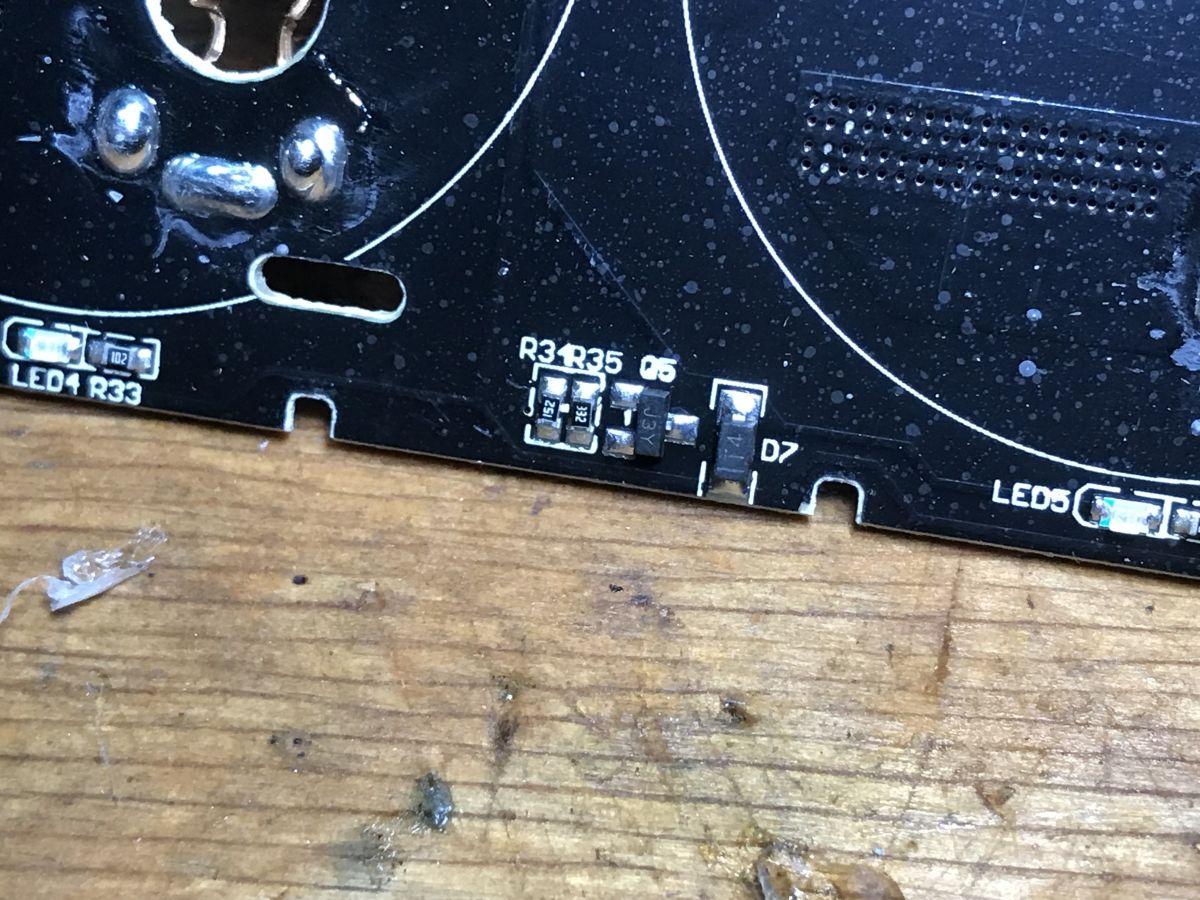
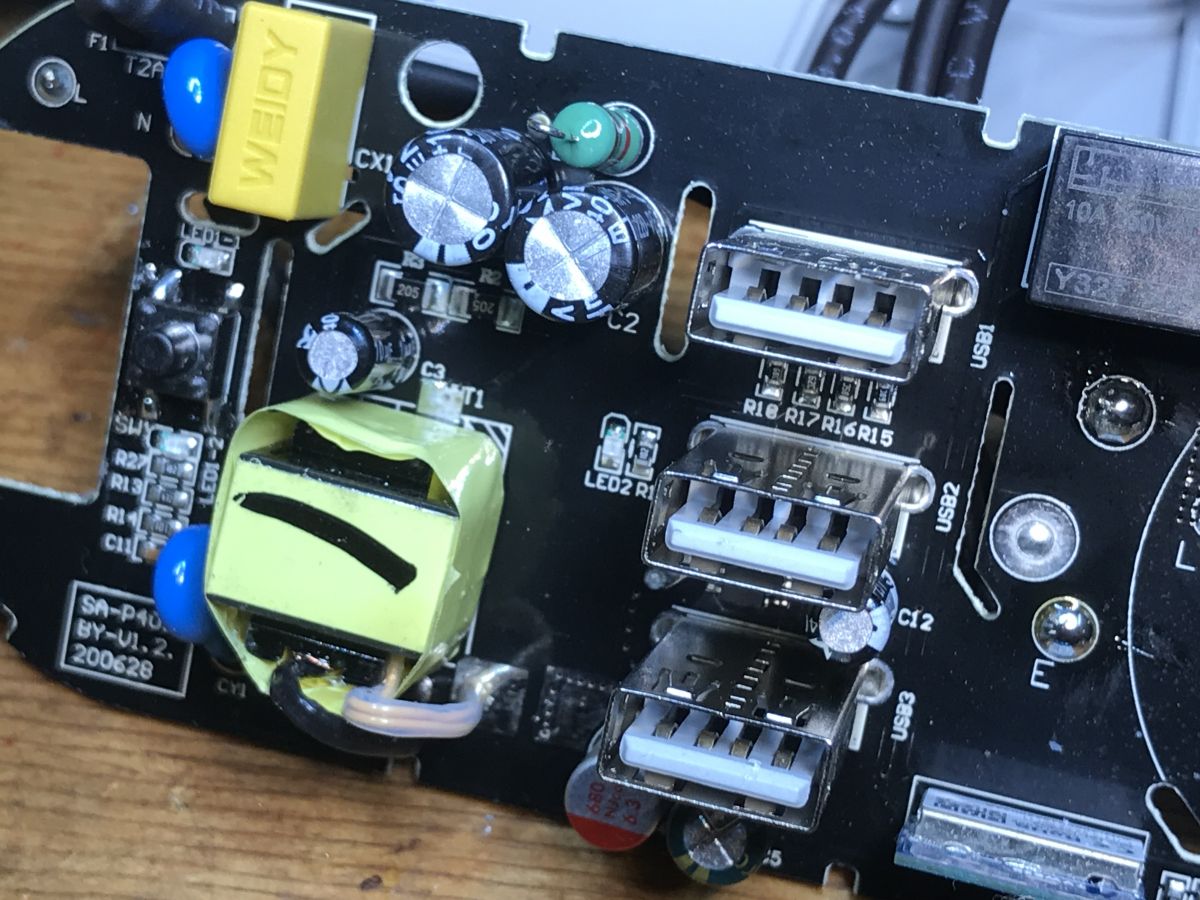
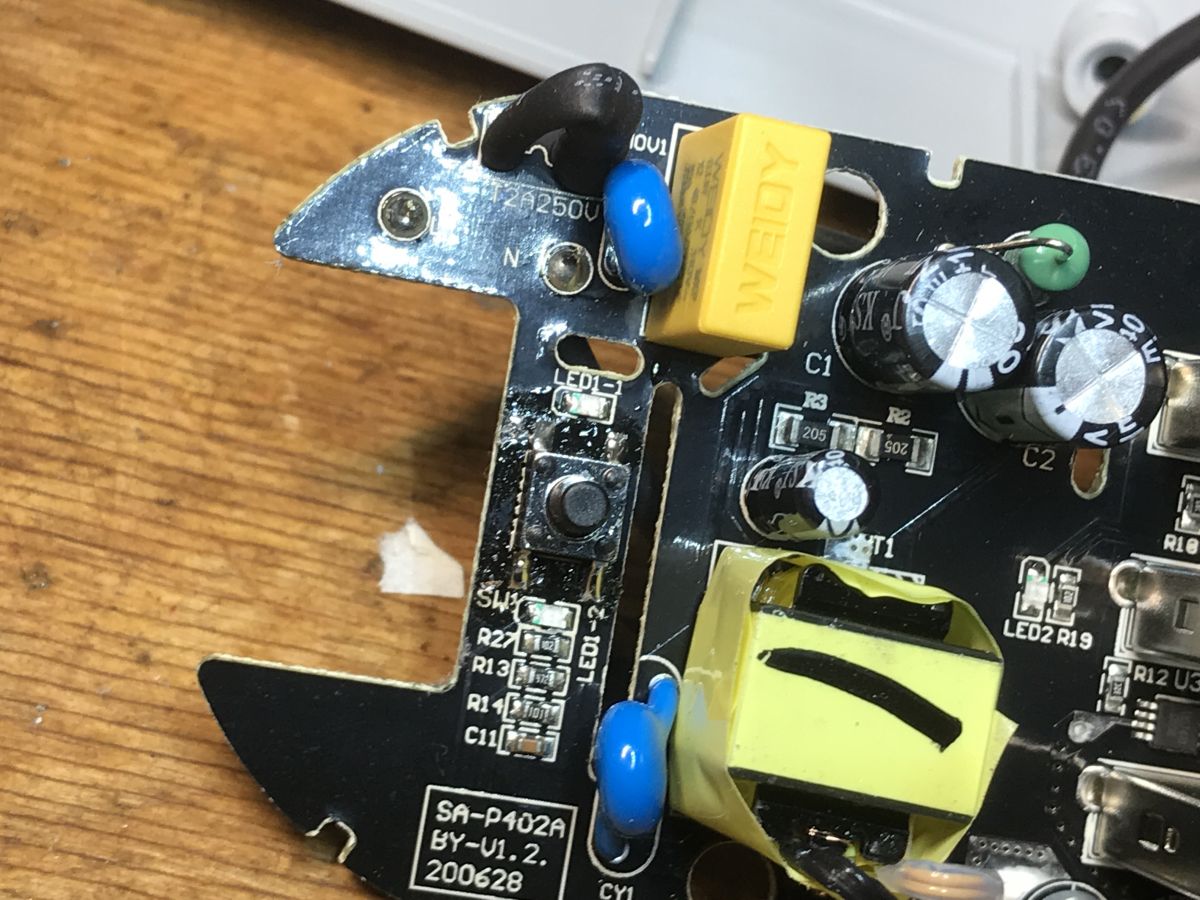
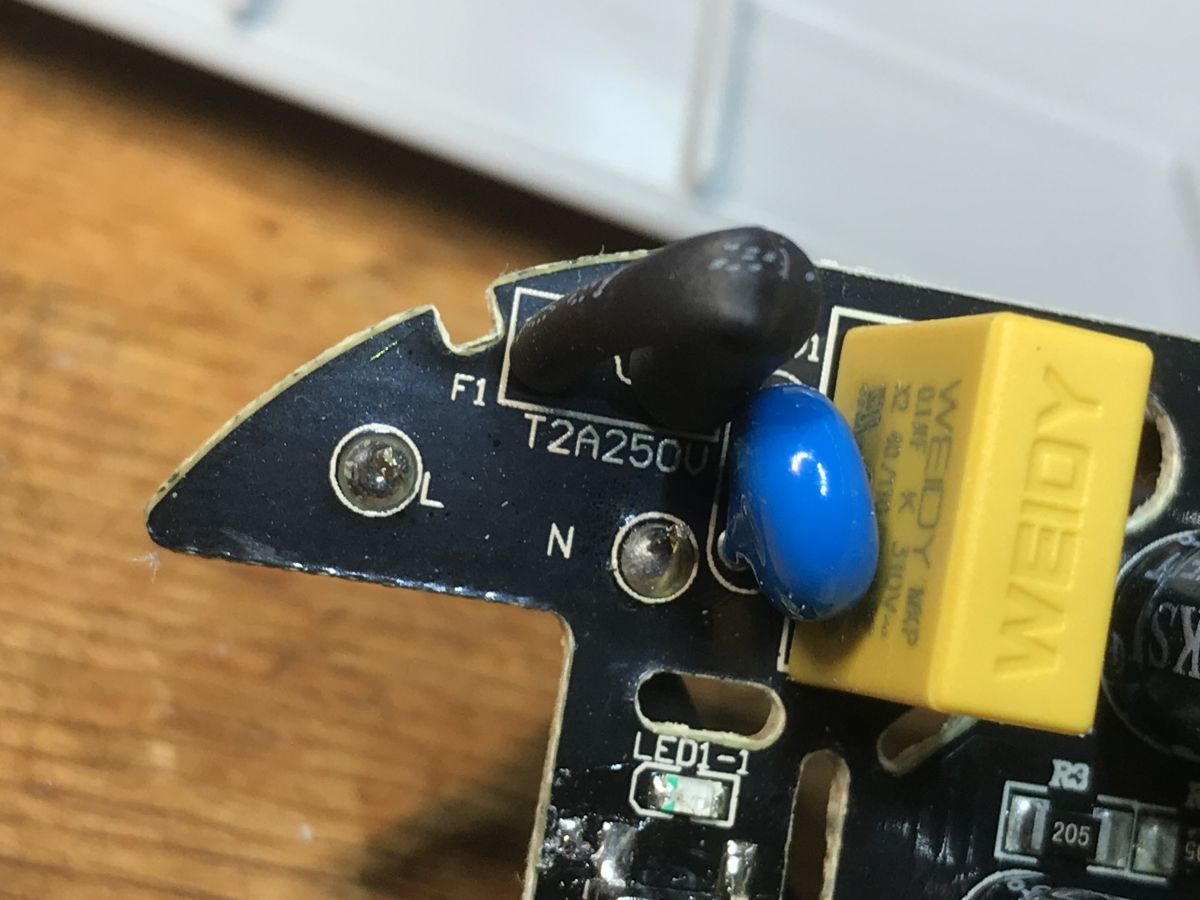
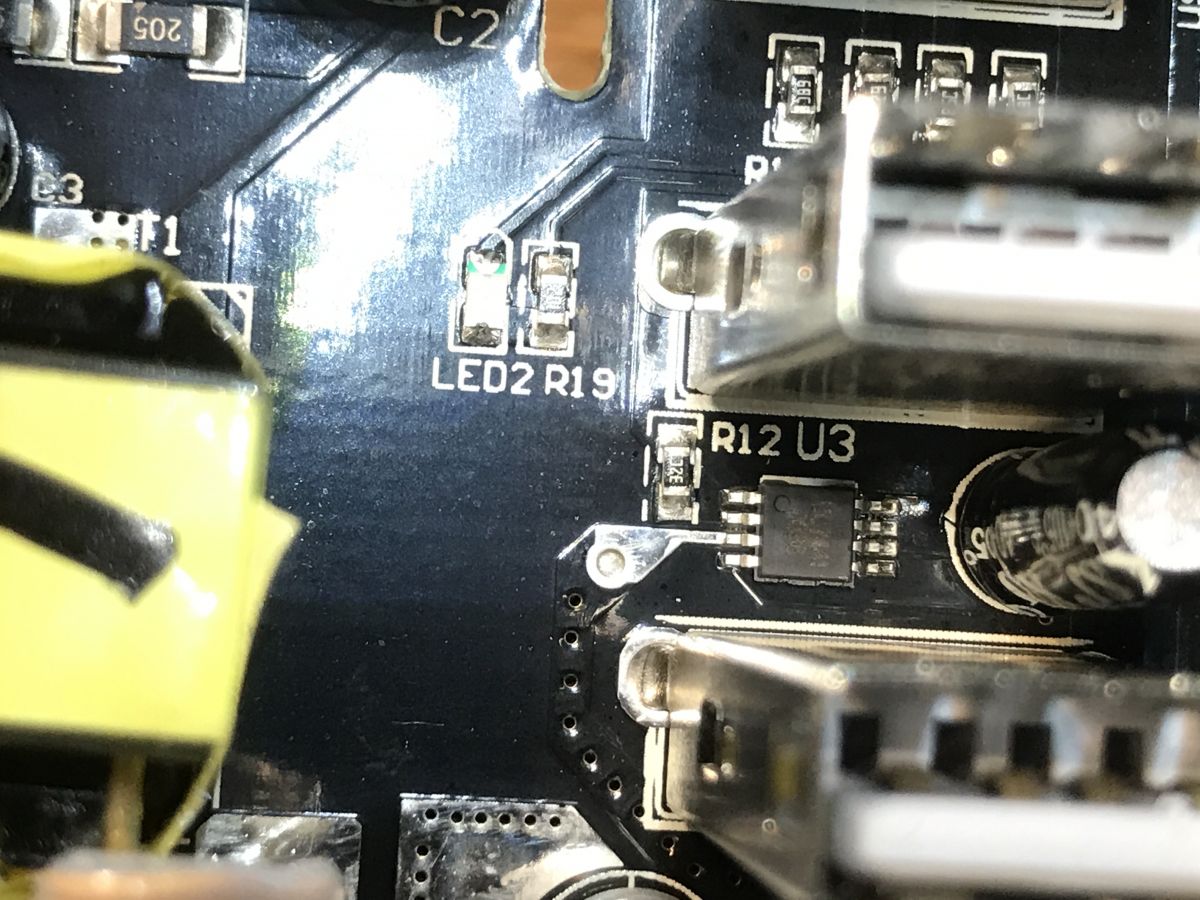
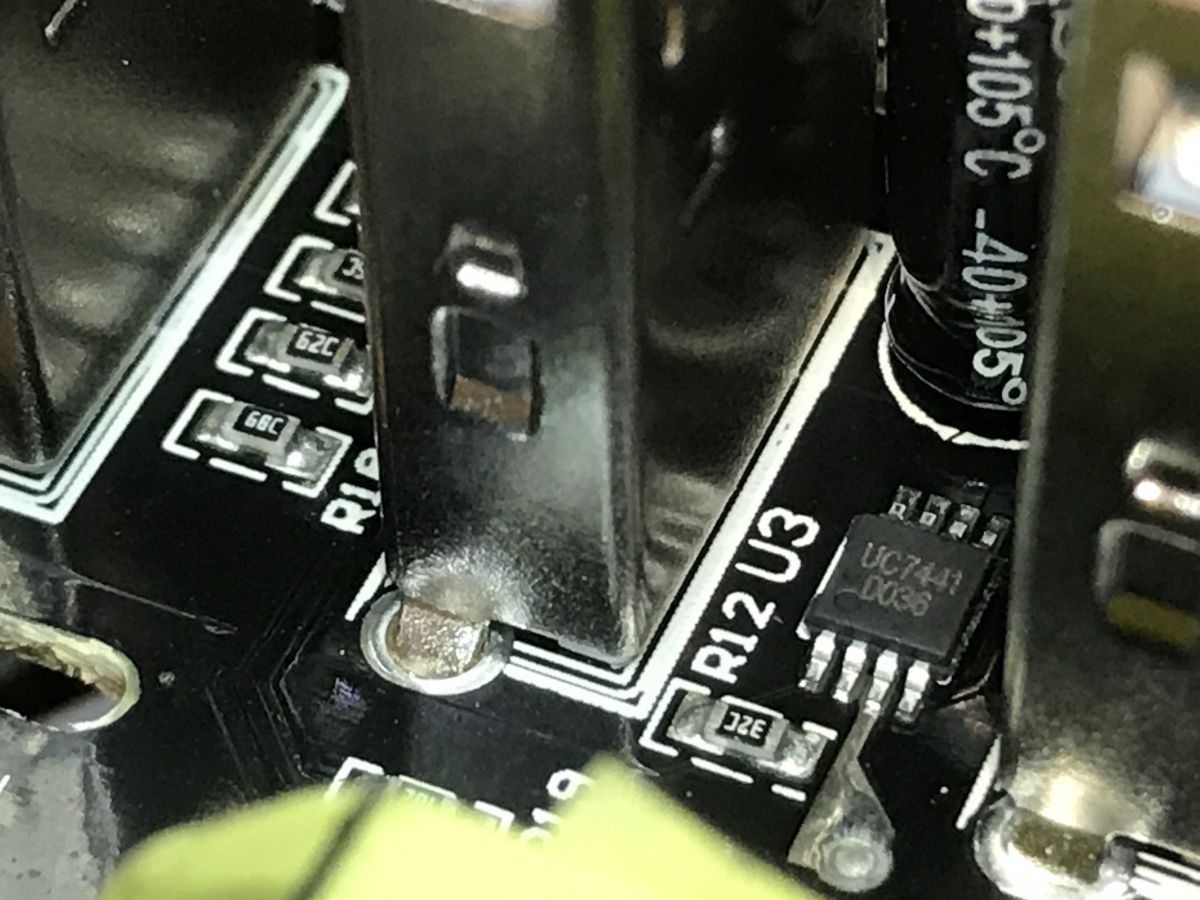
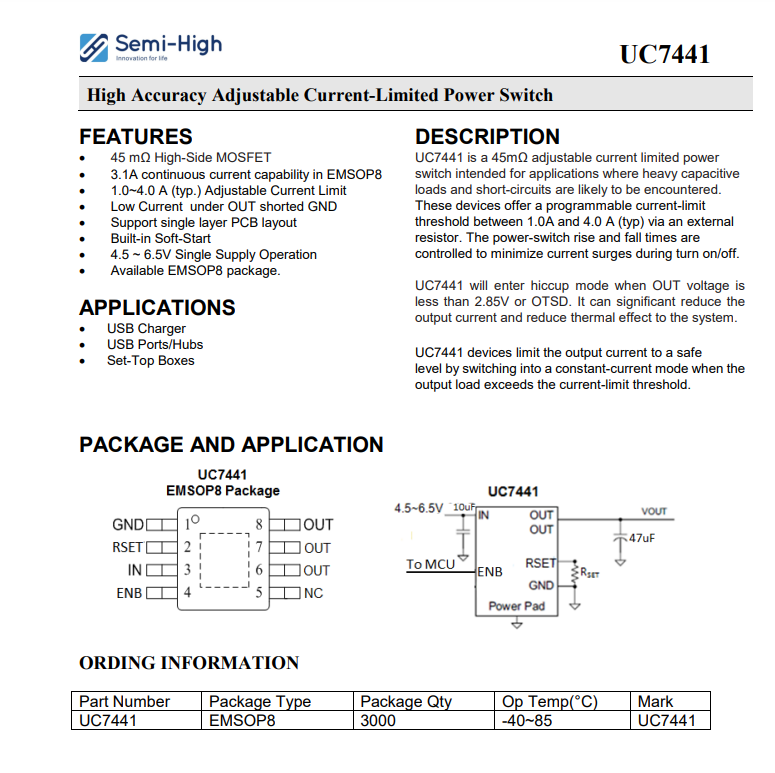
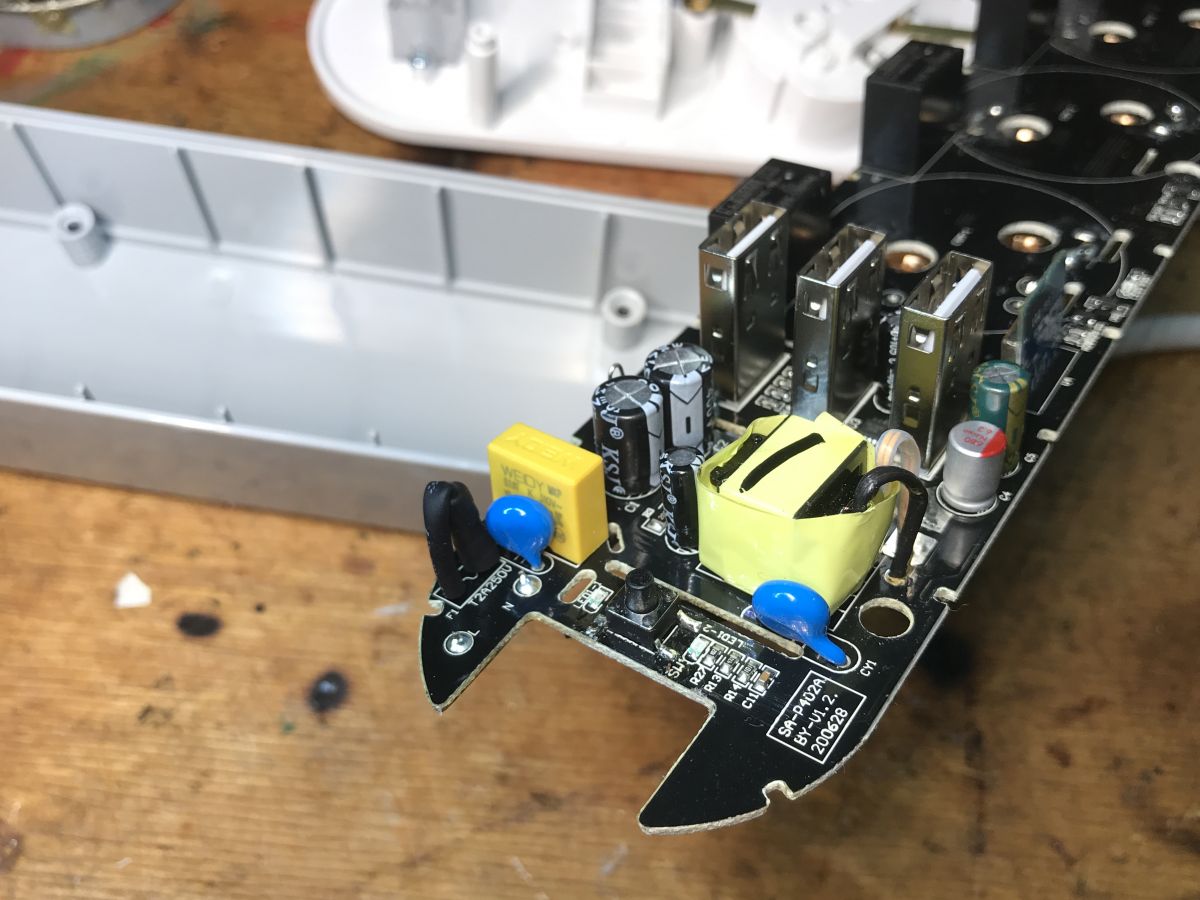
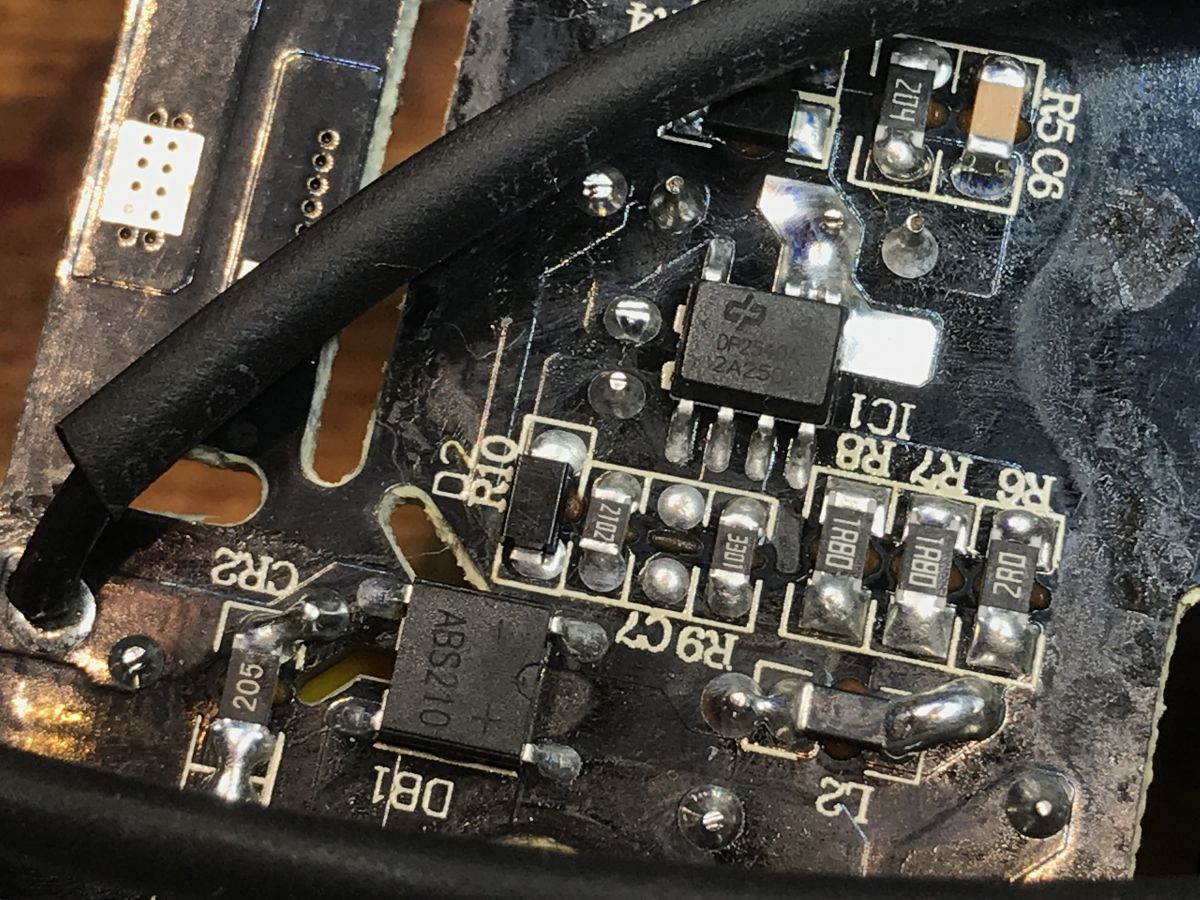
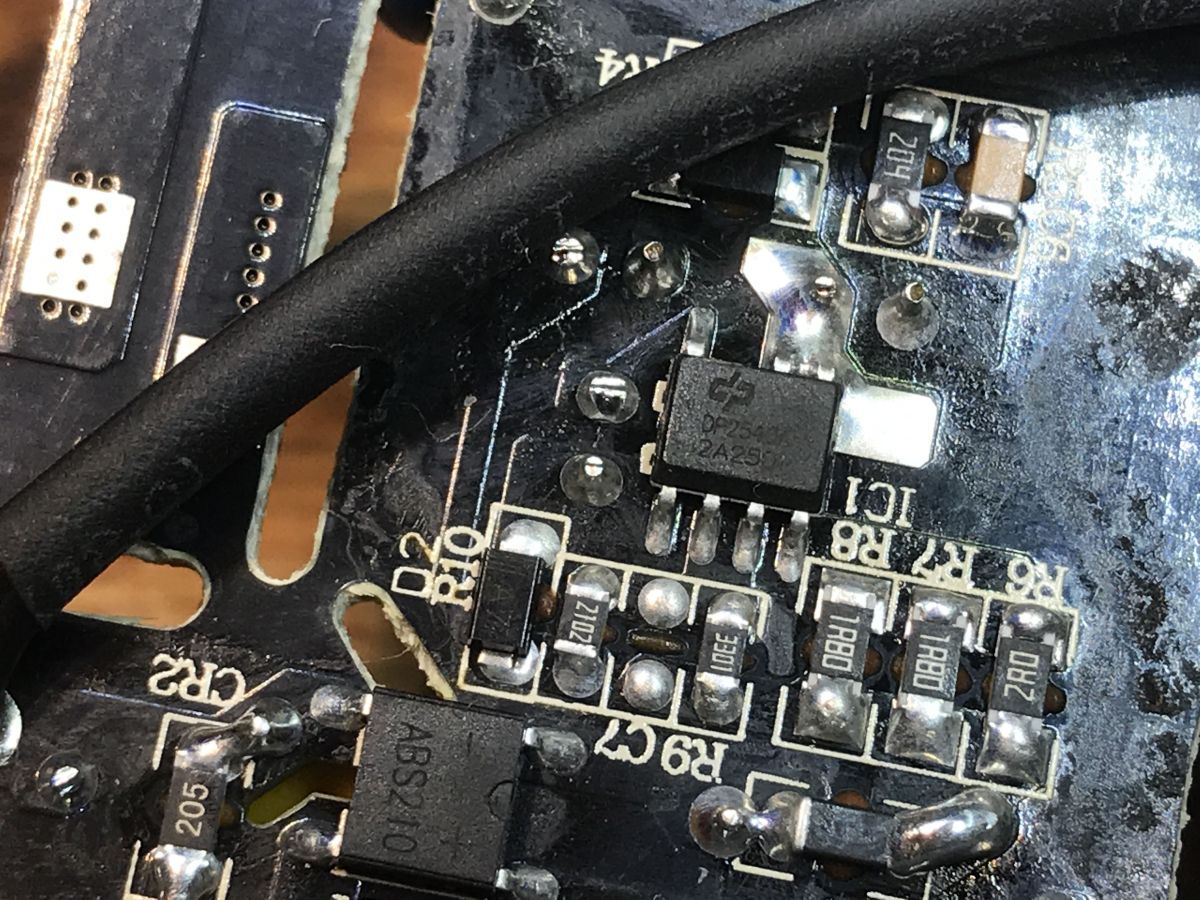
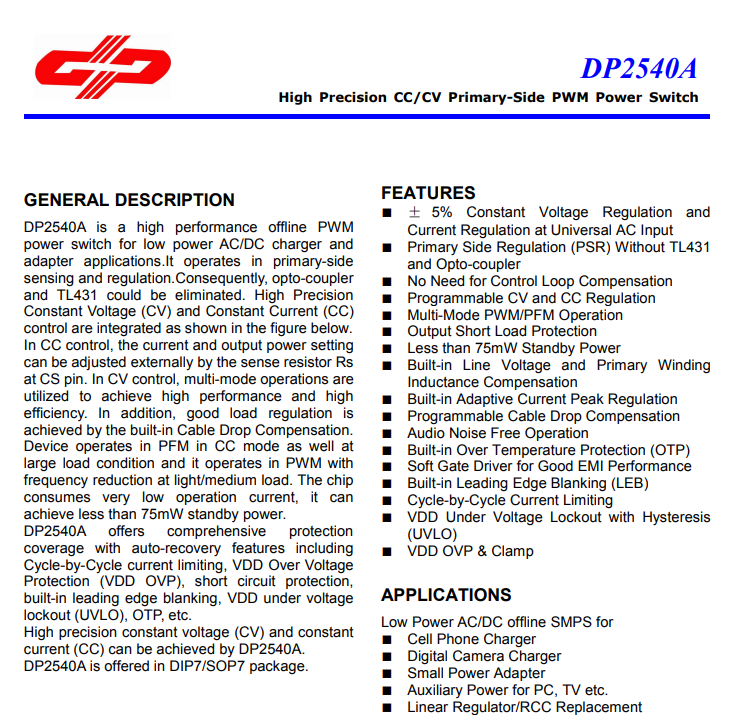
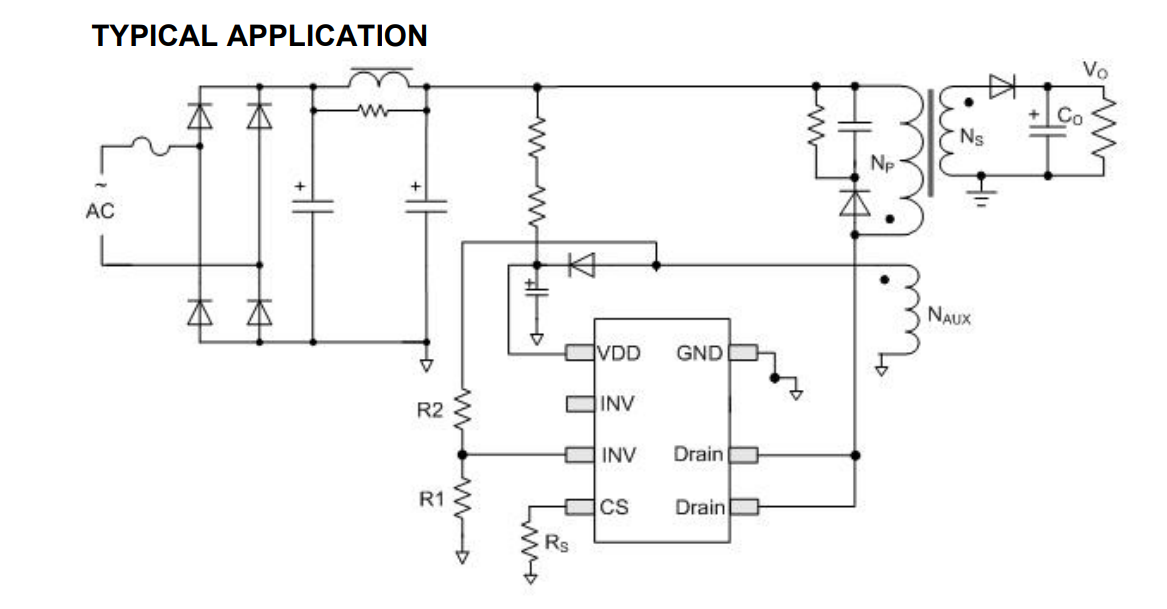
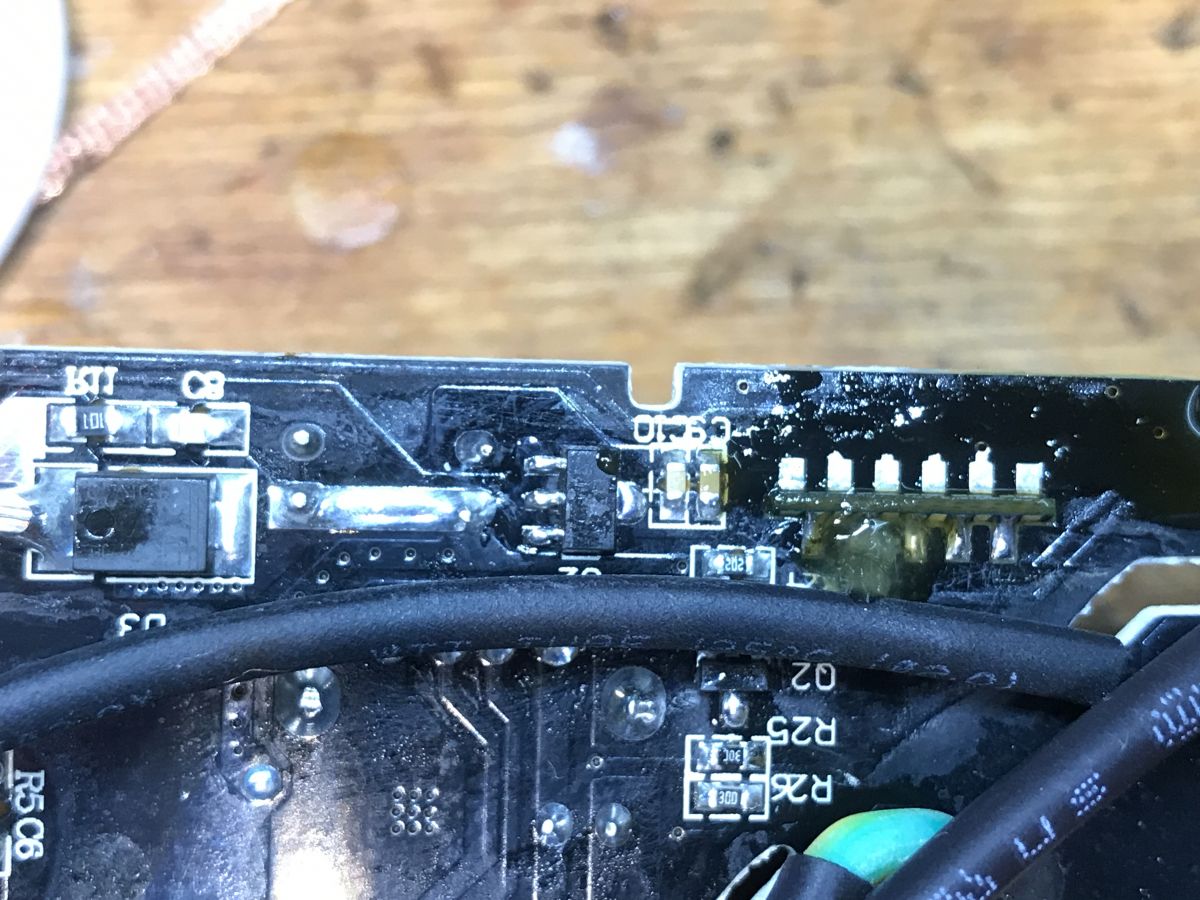
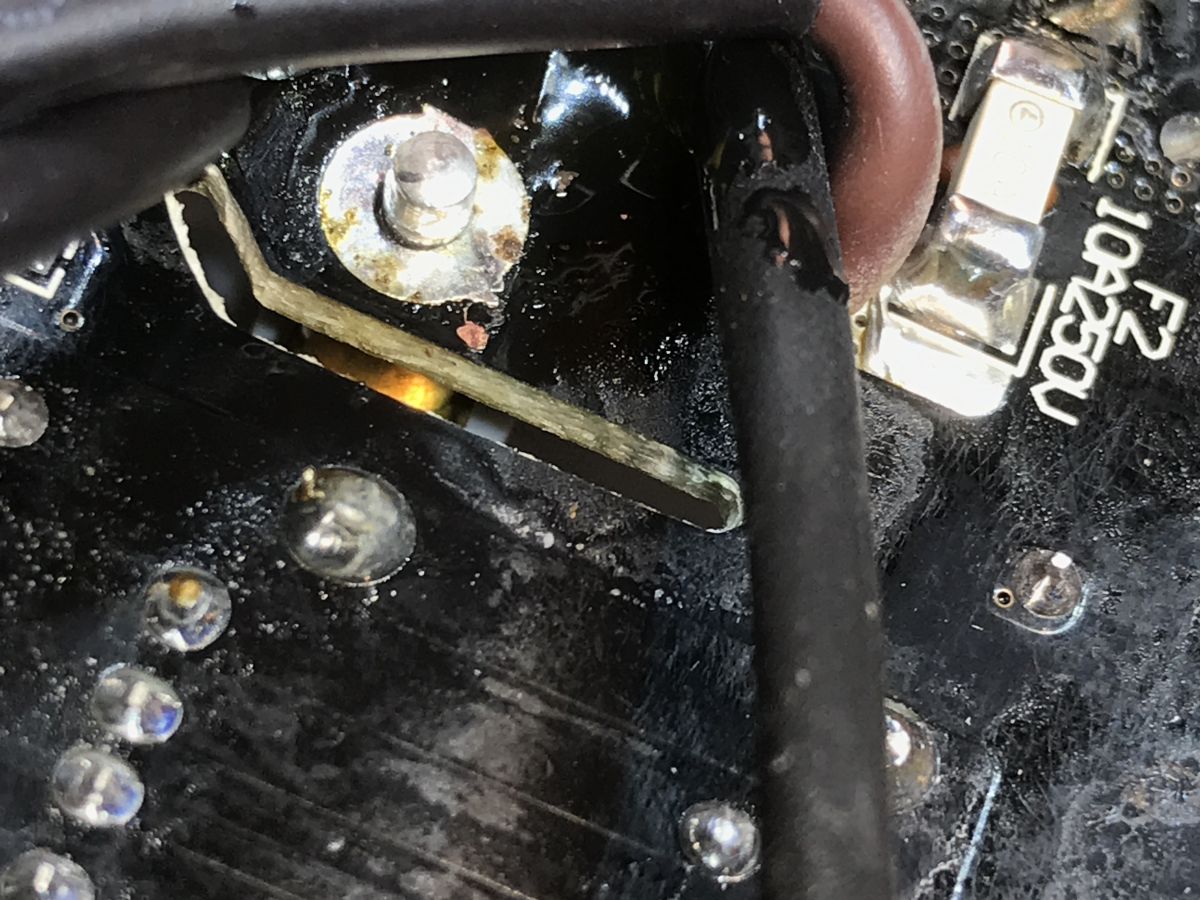
Overmax Flow Multi Control interior The screws are hidden under the legs: We unscrew it and look inside: The wires hold the board, but it can be removed to some extent: You can already see the WiFi module, IO0 indicates that there is ESP there: It is necessary to separate the upper part of the housing from the PCB unsoldering the thick pin from ground : : You can already see the relays and LEDs illuminating the sockets and the power supply section: The relays are Y32F-SS-105HM: They are controlled by J3Y transistors: Let`s look at the power supply section - it`s a regular flyback, without QC, it`s good that at least there is a fuse resistor, a varistor and a filter capacitor at the input: LittleI was surprised by the U3 circuit near the USB connectors, I thought it was something to do with charging negotiations, in cheaper products we simply have resistors that set the levels at D+ and D-: And yet UC7441 seems to be an overload protection, interesting: We look further: The power supply itself is based on DP2540A: There is some information about it on the Internet: There is also an example diagram of such a converter, which in my opinion is the most typical circuit, which I have already discussed several times, so I will not comment on it further here:
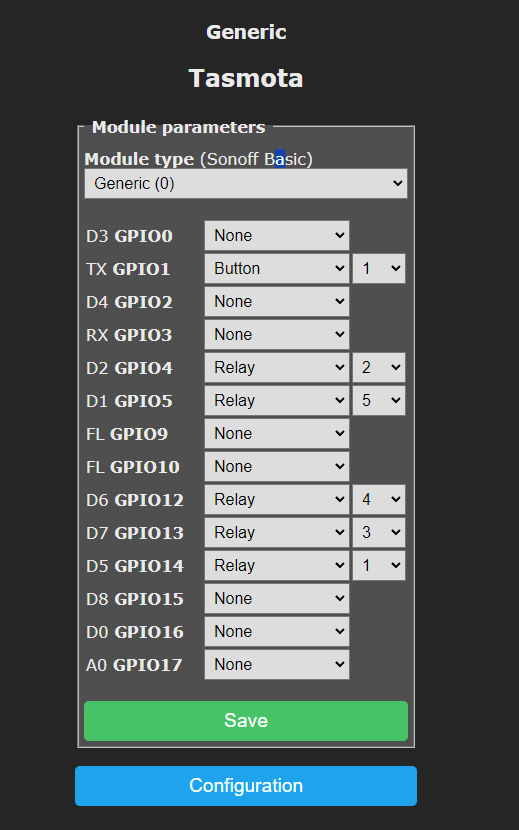
Here is the final Tasmota configuration: NOTE - when assembling, you need to solder the ground pin!
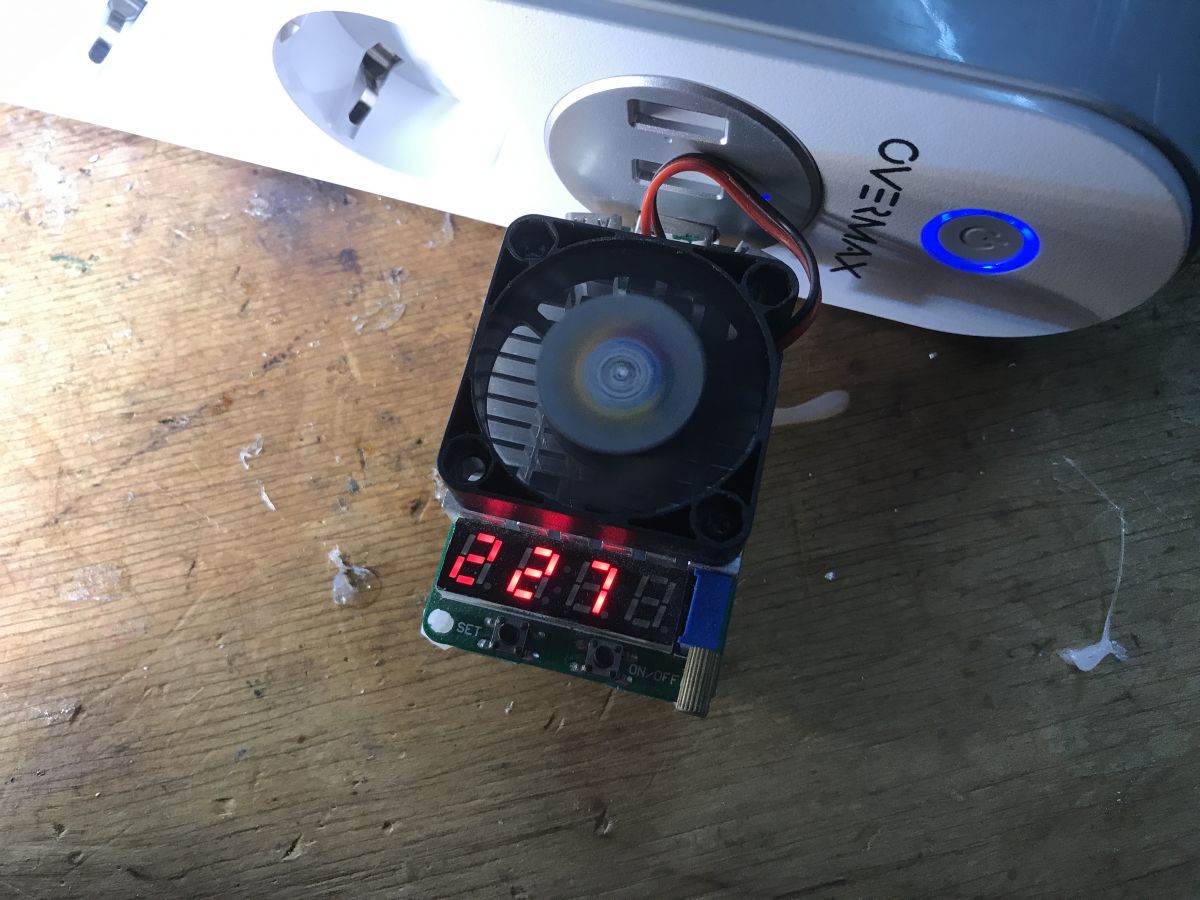
Current efficiency test As a rule - looking at the interior, I think it will be OK, it`s not a total budget, but I don`t trust your word - will there be these 2.1A: There is even more, 2.3A activates the protection, it`s ok.
Summary A very interesting strip and I think I now know why the UC7441 is there - it`s because the WiFi module is also able to control the USB outputs, all together, but it`s still something. So basically we have as many as 5 channels here - 4 separate sockets and 1 common USB output. There is something to control. This TYWE2S has almost all the free GPIO occupied, but fortunately it still works. Flashing is hassle-free, you just need to remember that you need to desolder (and then solder in) the ground pin and similarly you also need to desolder (and then solder in) TYWE2S for the time of changing the firmware. To sum up - in my opinion it`s ok, if you are looking for a strip for ESP (and not for BK), you can consider this product, although these schuko sockets are not something we would normally expect in our country...
About Author
p.kaczmarek2 wrote 14611 posts with
rating 12622 , helped 654 times.
Been with us since 2014 year.
I am always afraid of such power strips with a USB port.
Because the Dutchman knows what the designer wanted to save on.
It`s good that in this case he used a varistor and a filter capacitor, and the... [Read more]
FAQ
TL;DR: With 4 sockets, 3 USB ports, and a tested 2.3A USB cutoff, this FAQ helps Home Assistant users decide if the Overmax Flow Multi Control is worth reflashing. The key result is simple: "it’s ok" for an ESP8266-based smart strip if you accept desoldering the TYWE2S and ground pin. [#20923031]
Why it matters: This thread shows not just that the strip can run Tasmota, but also what hardware protections and flashing obstacles matter before you buy or modify it.
Alternative
What the thread shows
Best fit
esptool.py
Author used it directly for TYWE2S flashing
Users who want full control
Browser installer
Mentioned as an easier web-based option
Users who want simpler setup
BK-based strip
Not the target here
Less attractive if you specifically want ESP/Tasmota
Overmax Flow Multi Control
TYWE2S/ESP-based, 4 relays + common USB control
Home Assistant users avoiding vendor cloud
Key insight: The most valuable finding is not the teardown alone. It is that this strip exposes an ESP-based TYWE2S and effectively offers 5 controllable channels: four AC sockets plus one common USB output.
Quick Facts
Purchase price shown in the thread was PLN 125 for the Overmax Flow Multi Control smart strip. [#20923031]
The hardware combines 4 Schuko sockets with 3 USB ports rated at 5V and 2.1A total. [#20923031]
USB load testing reached the declared range, and protection reportedly tripped at about 2.3A, which is slightly above the nameplate claim. [#20923031]
The teardown identified a varistor, fuse resistor, and input filter capacitor in the power section, which are key safety markers in low-cost USB-equipped strips. [#20923031]
The Wi-Fi section uses a TYWE2S module, and the final control model is 5 channels: 4 relay-switched sockets plus 1 shared USB output. [#20923031]
How do I open the Overmax Flow Multi Control power strip without damaging the case, and where are the screws hidden?
Open it by removing the feet first, because the case screws are hidden underneath them. After that, unscrew the fasteners and lift the housing carefully, as the internal wires still hold the PCB in place. The author then removed the board further by separating the upper housing from the PCB after dealing with the thick ground pin. [#20923031]
What is the TYWE2S module in the Overmax Flow Multi Control strip, and why does the IO0 pin indicate an ESP8266-based design?
The TYWE2S is the strip’s Wi‑Fi module, and the exposed IO0 pin is the clue that it follows an ESP8266-style flashing scheme. "TYWE2S is a Wi‑Fi module that hosts the smart strip firmware, and its exposed IO0 boot pin is a strong practical marker of an ESP8266-family design used for serial flashing." The author explicitly notes that seeing IO0 already indicated there was an ESP inside. [#20923031]
How do I flash Tasmota onto the TYWE2S in the Overmax Flow Multi Control using esptool.py?
Flash it by removing the TYWE2S, wiring it to a programmer, and writing Tasmota with esptool.py. 1. Desolder the TYWE2S with flux and braid. 2. Connect it on the author’s shown programming setup and flash Tasmota with esptool.py. 3. Verify that Tasmota creates an access point, then solder the module back in place. The author used this method successfully on the strip. [#20923031]
Why do you need to desolder the TYWE2S module and the thick ground pin before changing the firmware in this strip?
You need to desolder both parts to get physical access for safe programming and board separation. The thick ground pin ties the upper housing section to the PCB, so the author had to unsolder it before fully exposing the board. The TYWE2S itself was also removed for firmware flashing, then soldered back after Tasmota was tested. Forgetting the ground pin on reassembly is a real failure point. [#20923031]
Which GPIOs on the TYWE2S control the four relays and the common USB output in the Overmax Flow Multi Control?
The thread confirms that the TYWE2S controls four relays and one common USB output, but it does not list the exact GPIO numbers in plain text. The author says he checked experimentally which GPIO controlled each relay, then showed the final Tasmota configuration in screenshots. That means the mapping exists in the illustrated setup, but the post text does not transcribe it numerically. [#20923031]
What is the final Tasmota template or configuration for the Overmax Flow Multi Control power strip?
The final Tasmota setup is a five-channel configuration with four relay-controlled sockets and one shared USB output. The author included screenshots of the finished Tasmota configuration after testing each control line experimentally. The post does not provide the template as copyable text or JSON, so the configuration is documented visually rather than as a pasted template block. [#20923031]
How is the USB charging section built in the Overmax Flow Multi Control, and what role does the UC7441 play there?
The USB section uses a dedicated protection chip instead of only simple D+ and D- resistor coding. The author expected the usual cheap resistor-only arrangement, but identified a UC7441 near the USB connectors and concluded it appears to provide overload protection. He later linked that choice to the strip’s ability to switch the USB outputs together as one controllable channel. [#20923031]
What is the DP2540A chip in the power supply section, and how does a flyback converter like this work in a smart power strip?
The DP2540A is the main chip identified in the strip’s power-supply section, which the author describes as a regular flyback design. In this product, that means the low-voltage electronics and USB section are fed from a conventional AC-to-low-voltage converter stage rather than any fast-charge design. The author also notes there is no QC support and calls the overall topology typical. [#20923031]
How much current do the USB ports on the Overmax Flow Multi Control actually deliver, and what happens when the load reaches about 2.3A?
The USB ports delivered at least the declared 2.1A total, and protection activated at about 2.3A. That result matters because the product claim was 2.1A at 5V across three USB ports, and the load test slightly exceeded it before cutoff. In practice, the author judged that behavior acceptable for this class of smart strip. [#20923031]
Why did the author conclude that the Overmax Flow Multi Control offers 5 controllable channels instead of just 4 sockets?
He concluded there are 5 channels because the strip controls not only 4 separate AC sockets but also 1 shared USB output. The key clue was the extra USB-side control hardware, especially the UC7441-related section, which suggested the Wi‑Fi module can switch USB power as a group. That makes the device more flexible than a basic four-relay strip. [#20923031]
Tasmota browser installer vs esptool.py for TYWE2S flashing — which method is better for this kind of ESP8266 smart strip?
esptool.py is the better fit if you want the same direct method the author used, while the browser installer is the easier option. The post explicitly says the author programs TYWE2S himself with esptool.py, but also points readers to a browser-based Tasmota installer. For this strip, both are presented as valid paths after module removal, not as incompatible workflows. [#20923031]
What safety features were identified inside the Overmax Flow Multi Control, such as the varistor, fuse resistor, and input filter capacitor?
The teardown identified three clear input-side safety elements: a fuse resistor, a varistor, and an input filter capacitor. The author highlights these parts positively because cheap USB power strips often omit or minimize such protections. A later reply reinforces that point, noting approval that this design included the varistor, filter capacitor, and even the UC7441. [#20925815]
Why are some users wary of power strips with built-in USB chargers, and what design shortcuts are worth checking inside them?
Users worry because low-cost strips may save money in the power section where safety margins matter most. The reply in the thread says power strips with USB ports make the commenter uneasy because you do not know what the designer cut to reduce cost. The first things worth checking are input protection parts, such as a varistor, fuse resistor, and filter capacitor, plus whether USB protection is more than simple resistor coding. [#20925815]
What is the UC7441 overload protection chip, and how is it different from simple D+ and D- resistor-based USB charging identification?
The UC7441 in this strip appears to be an overload-protection chip, not just a passive USB identification network. "UC7441 is a protection IC that supervises the USB power path, unlike simple D+ and D- resistor schemes that only advertise charging behavior without adding active overload cutoff." The author expected simple resistors but found UC7441 instead, then observed protection triggering around 2.3A. [#20923031]
How does the Overmax Flow Multi Control compare with BK-based smart strips if I want a model that is easier to reflash for Home Assistant?
It is the more attractive choice if your priority is an ESP-based strip that can take Tasmota for Home Assistant. The author’s conclusion is explicit: if you are looking for a strip for ESP, and not BK, this product is worth considering. He describes flashing as hassle-free once you remember the two desoldering steps for the TYWE2S and the thick ground pin. [#20923031]






Comments
I am always afraid of such power strips with a USB port. Because the Dutchman knows what the designer wanted to save on. It`s good that in this case he used a varistor and a filter capacitor, and the... [Read more]