logo elektroda
logo elektroda
X
logo elektroda

How tightly will Tuya pack two relays? Small flush-mount AVATTO WSM16-W2 module

p.kaczmarek2  2 2766 Cool? (+5)
📢 Listen (AI):

TL;DR

  • AVATTO WSM16-W2 is a tiny Tuya flush-mount WiFi module with two relays, meant to control two loads from a 39mm x 39mm x 19mm enclosure.
  • The PCB is almost identical to the single-relay WSM16-W1, but it packs two very narrow HF49FD 005-1H11T relays rated 5A 250VAC.
  • The module costs PLN 56, almost double the single version at PLN 30, and each channel is limited to 150W.
  • OBK/Tuya configuration shows P8 pair/toggle, P6 WiFi LED, separate toggle and relay pins for both channels, and a CBU module using BK7231N.
  • PowerSave 1 is recommended to avoid premature failure, and the non-isolated power supply makes extra peripherals like DHT11 a cautious mains-connected modification.
Generated by the language model.
AVATTO WSM16-W2 2-channel Wi-Fi switch module in packaging
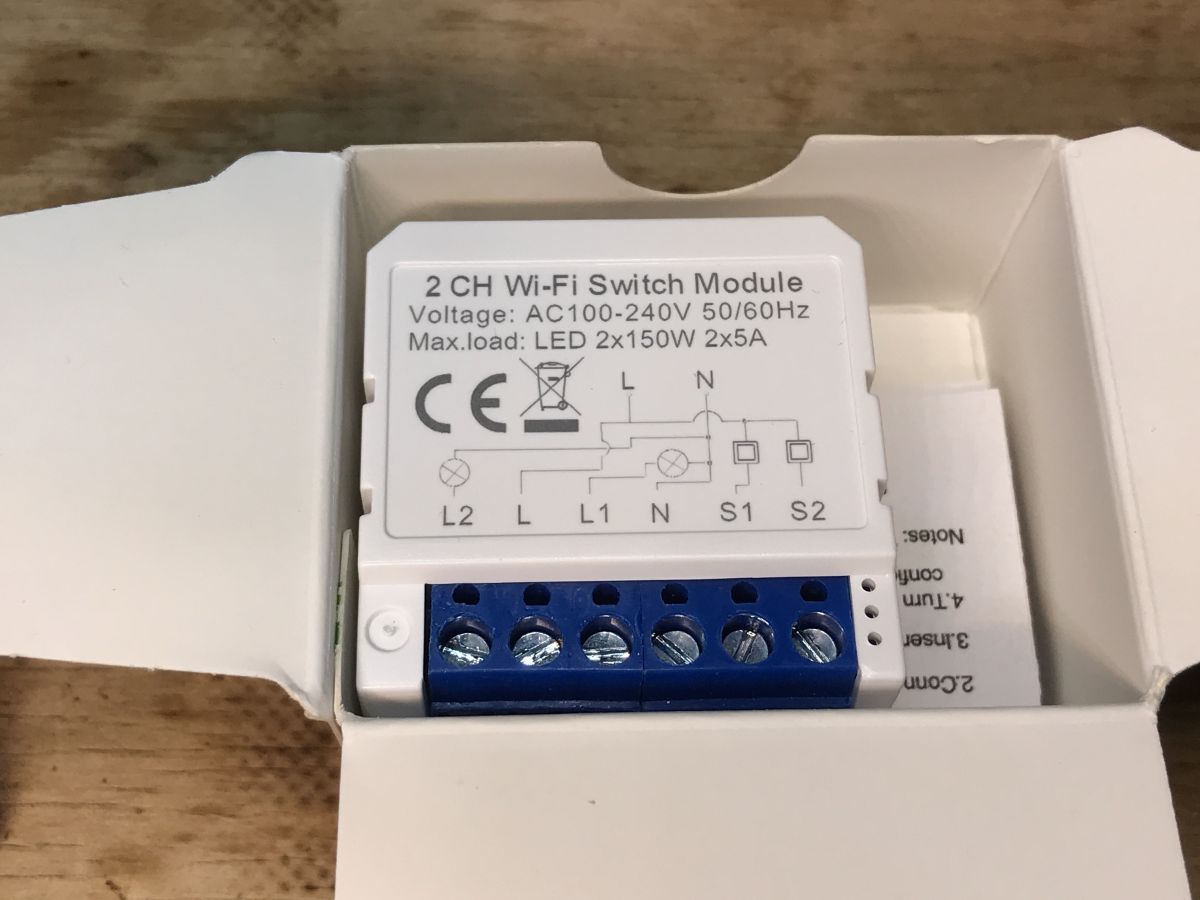
Some time ago I reviewed the Tuya single relay module AVATTO WSM16-W1 WiFi relay for PLN 30 , today it`s time for a similar gadget, but with two relays. All this in a small housing measuring 39mm x 39mm x 19mm. The maximum load on one channel is only 150W, but it is still worth giving this product a chance and taking a look inside...

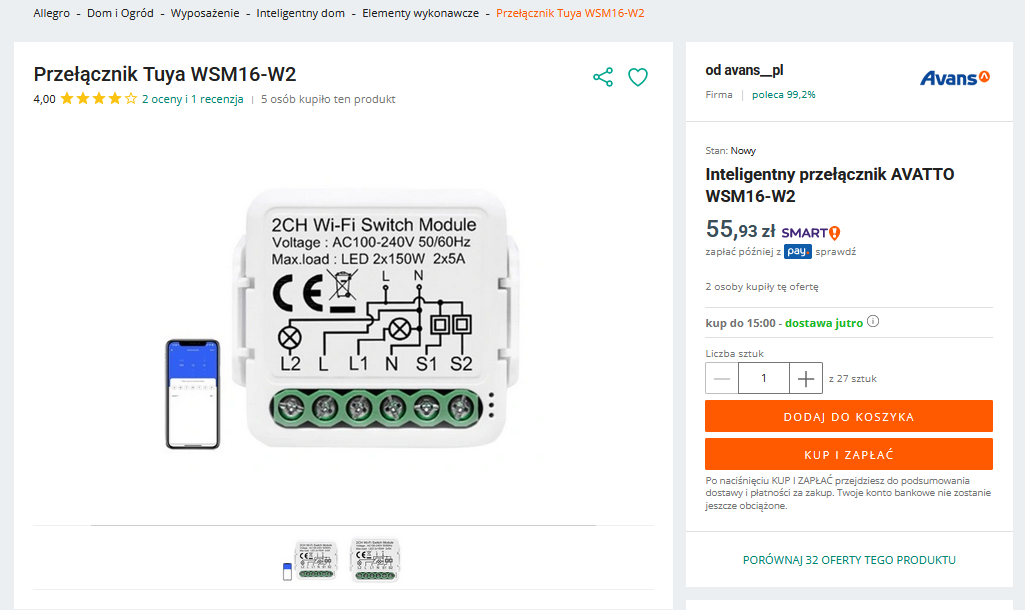
We bought AVATTO WSM16-W2 for PLN 56, which is quite a lot, considering the fact that its "single" version cost only PLN 30:
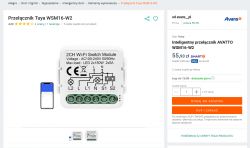
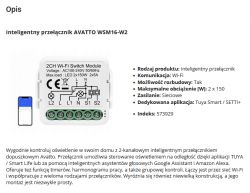
Tuya WSM16-W2 switch front view with a mobile app illustration.
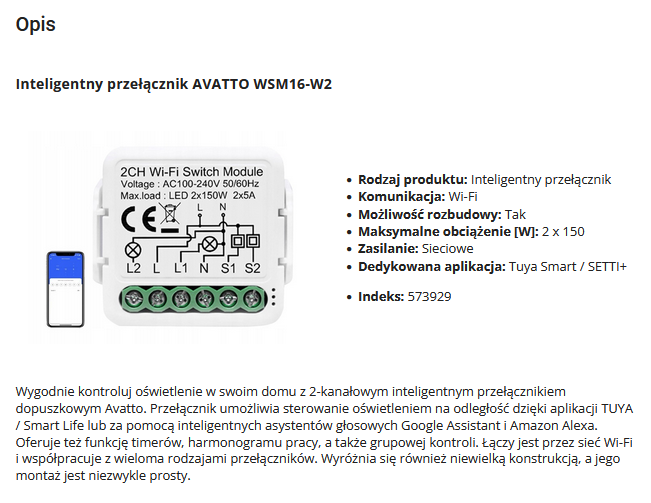
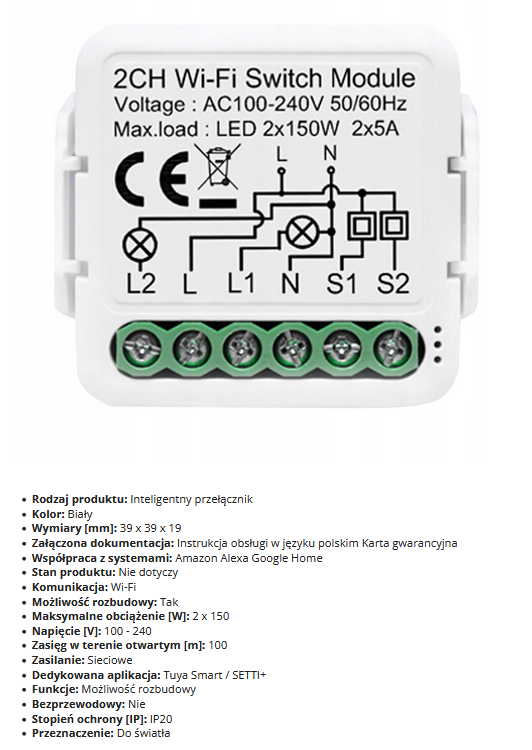
Specification:
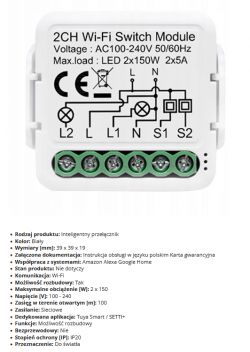
Smart switch AVATTO WSM16-W2 with description and technical specifications.
White WiFi relay module with two channels, markings, and terminals.
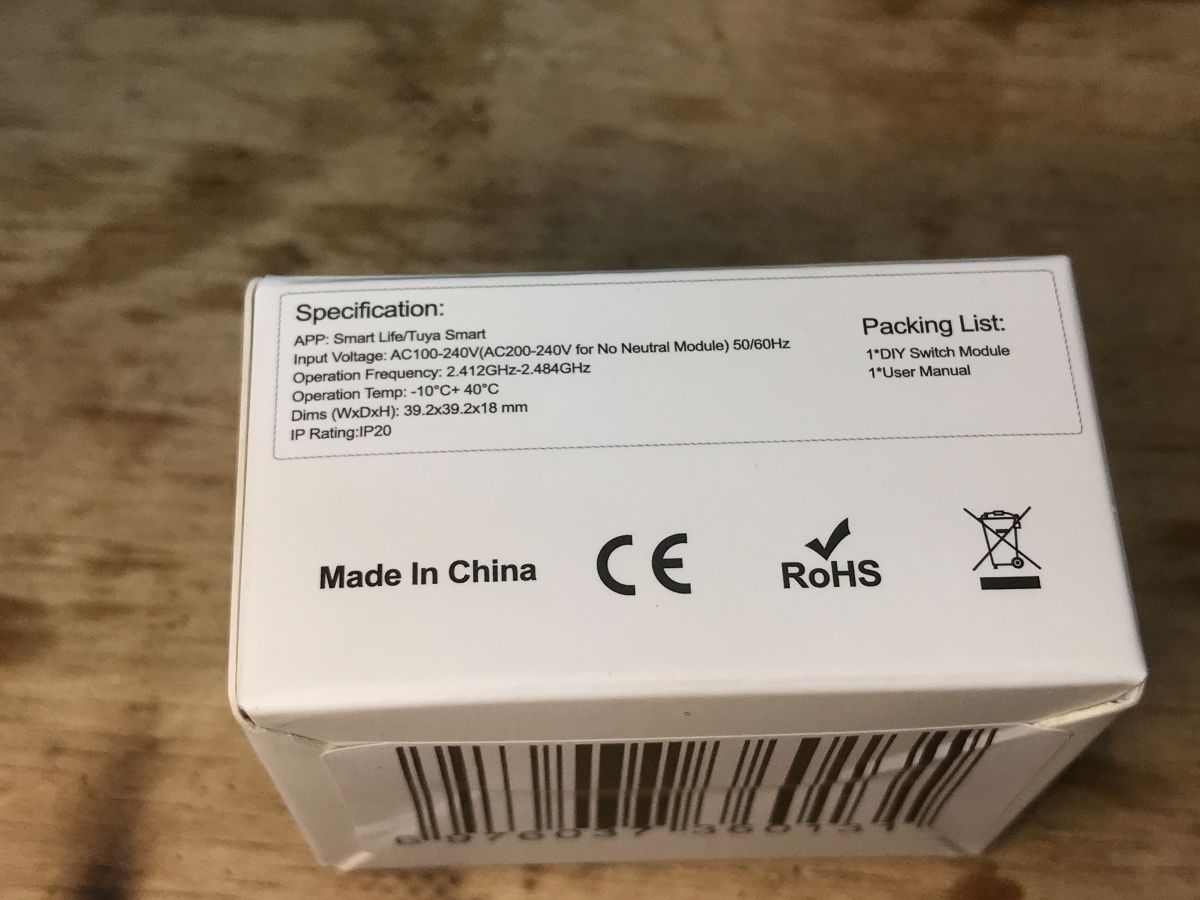
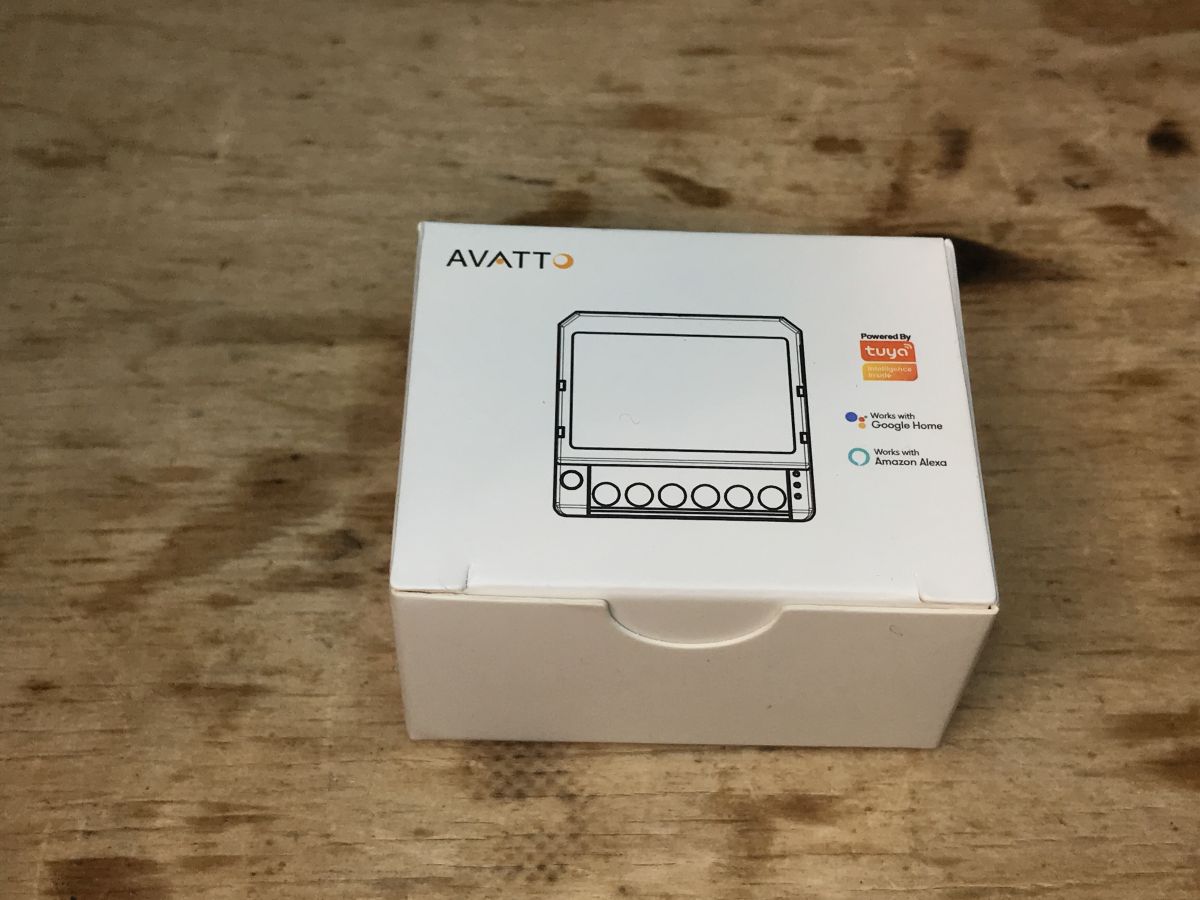
In practice, we get a small box:
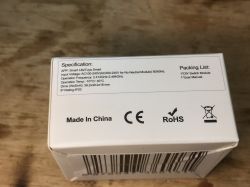
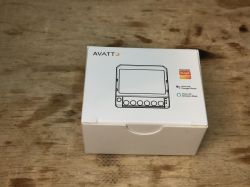
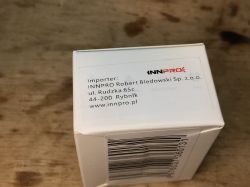
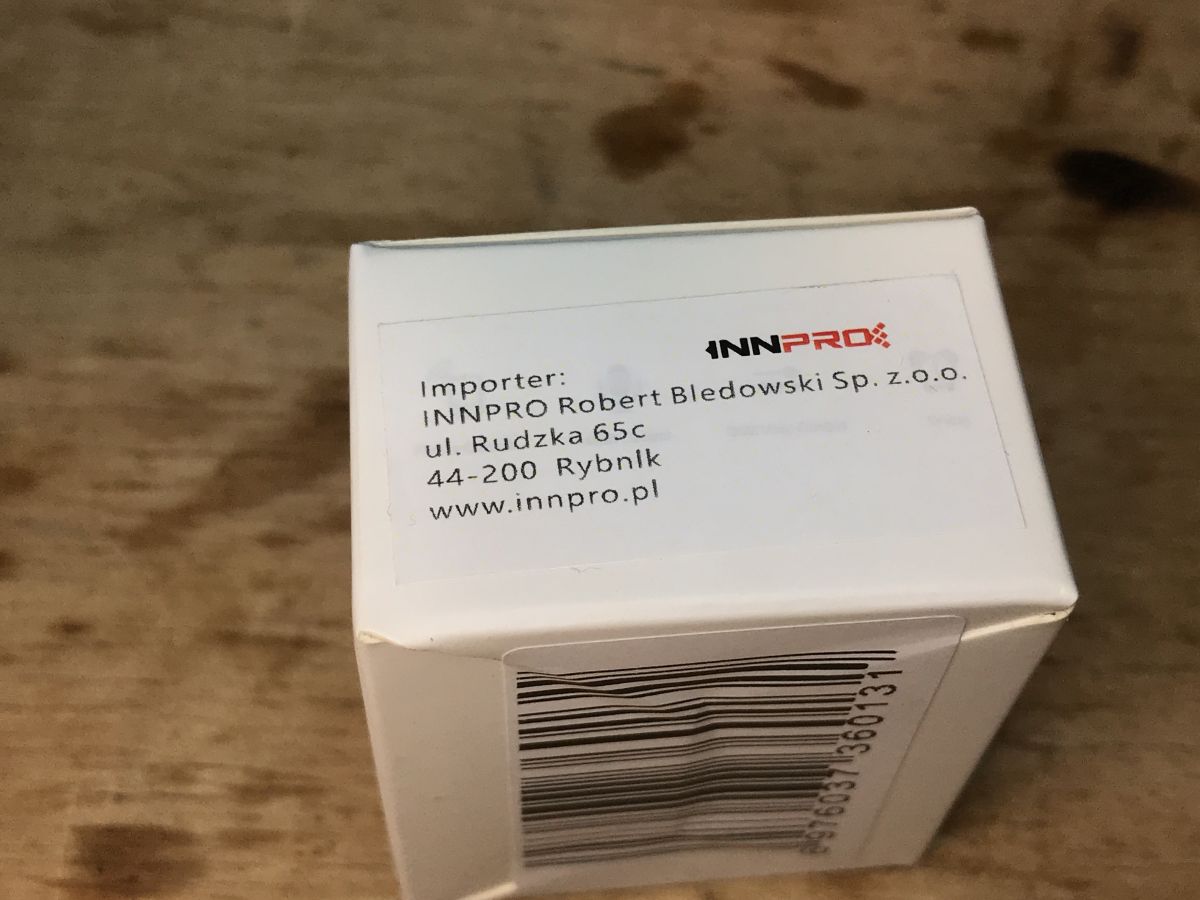
Technical specifications on the packaging of the AVATTO WSM16-W2 relay module. Box of the AVATTO WSM16-W2 module with logo and compatibility information with Tuya Label on the box with information about INNPRO importer.
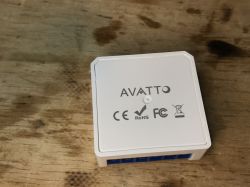
There is even an importer`s logo on the switch:
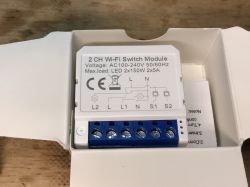
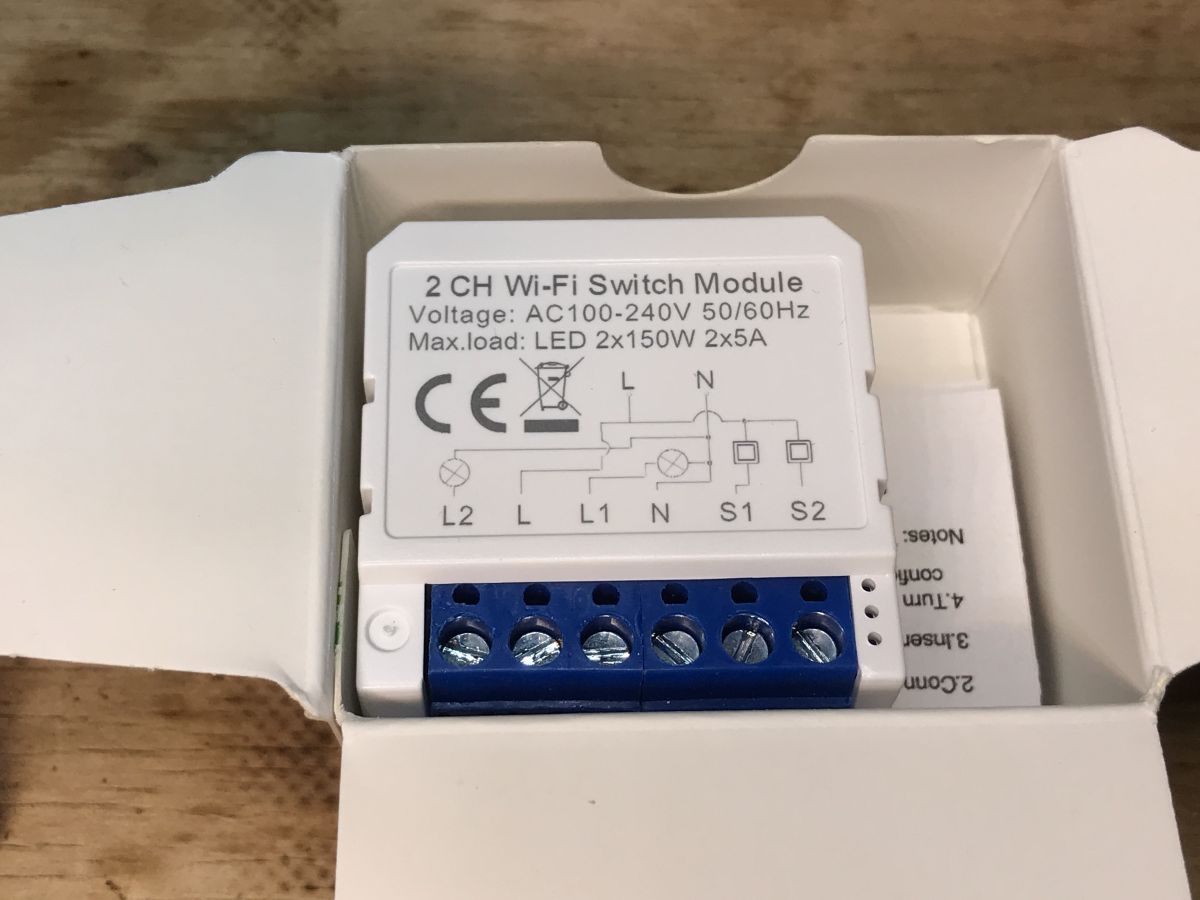
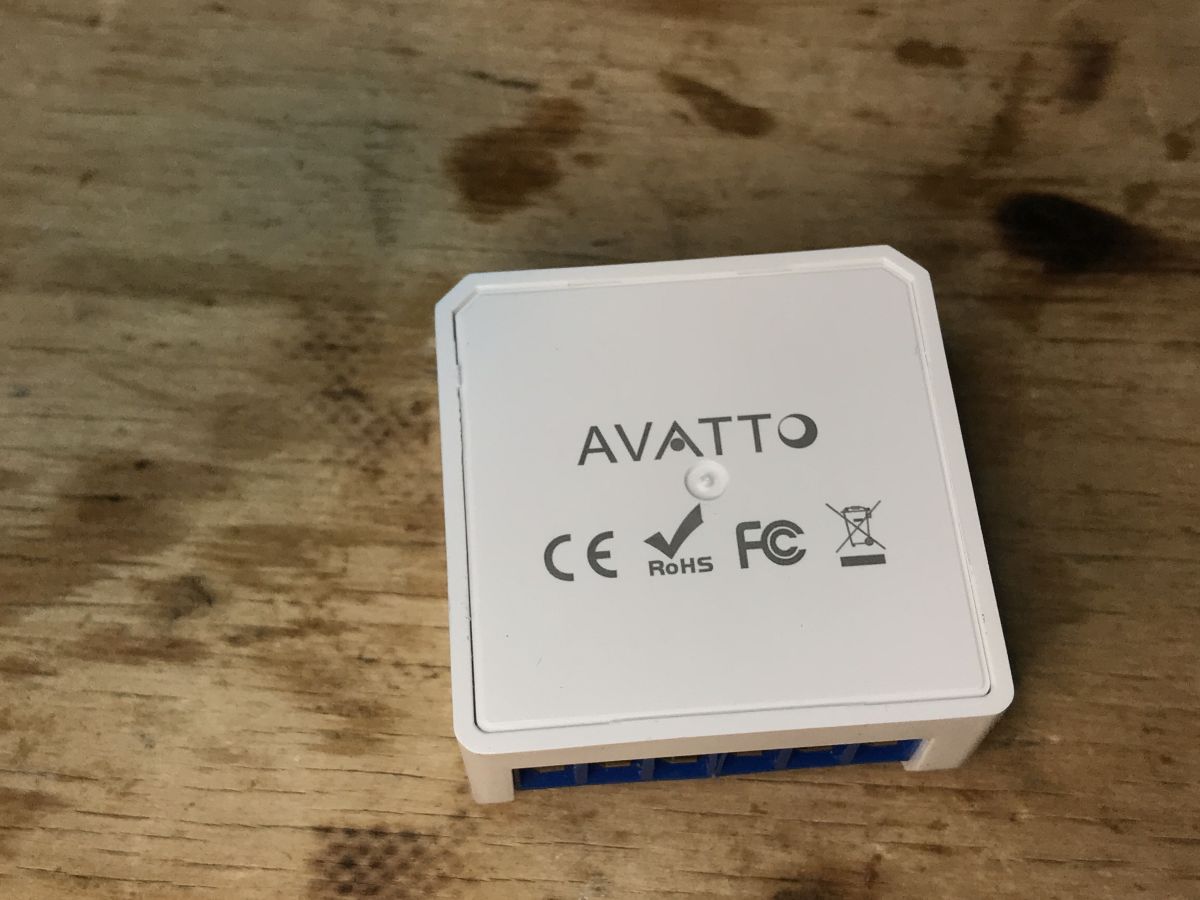
View of AVATTO dual relay Wi-Fi switch module in an open box. View of the AVATTO WSM16-W2 module with branding and certifications on top.
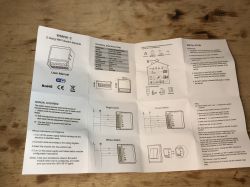
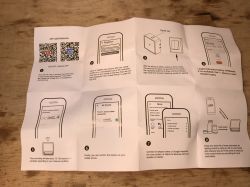
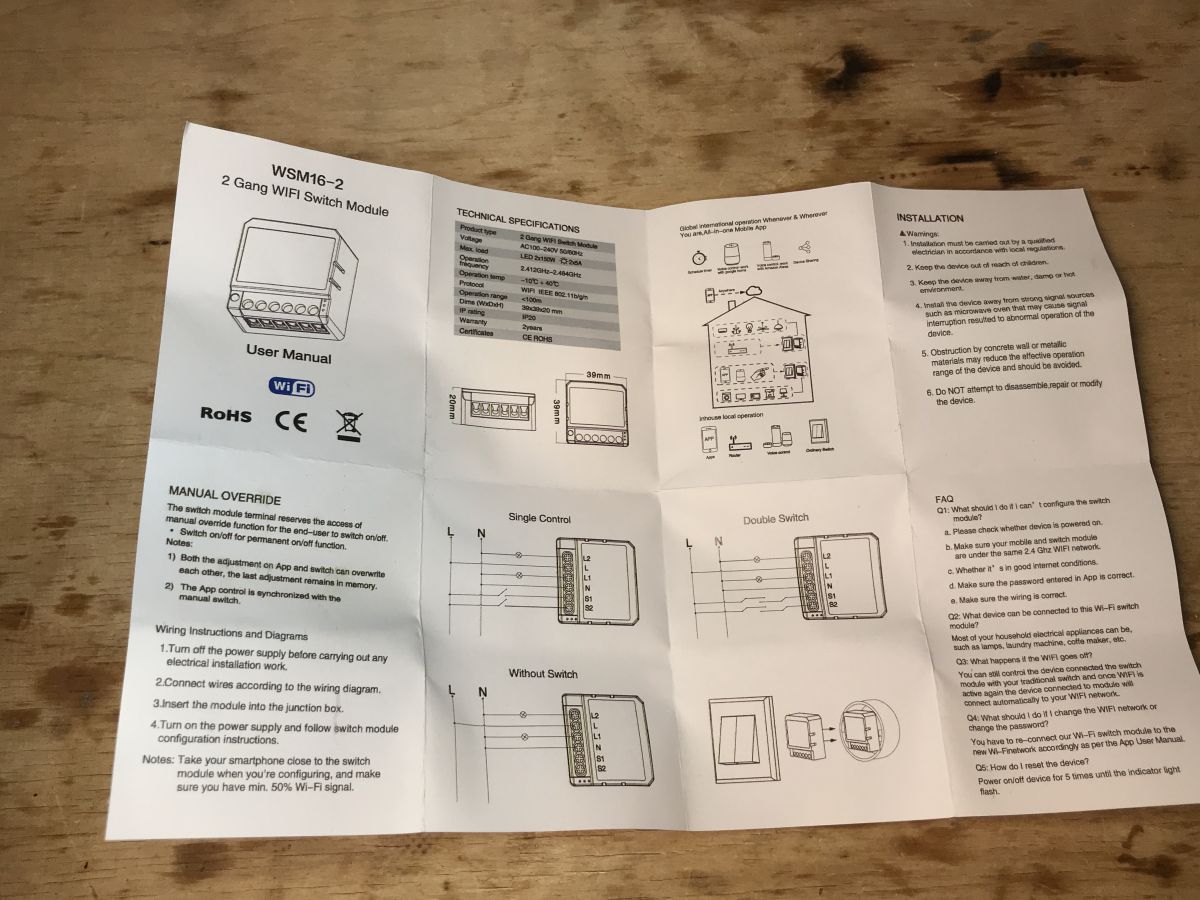
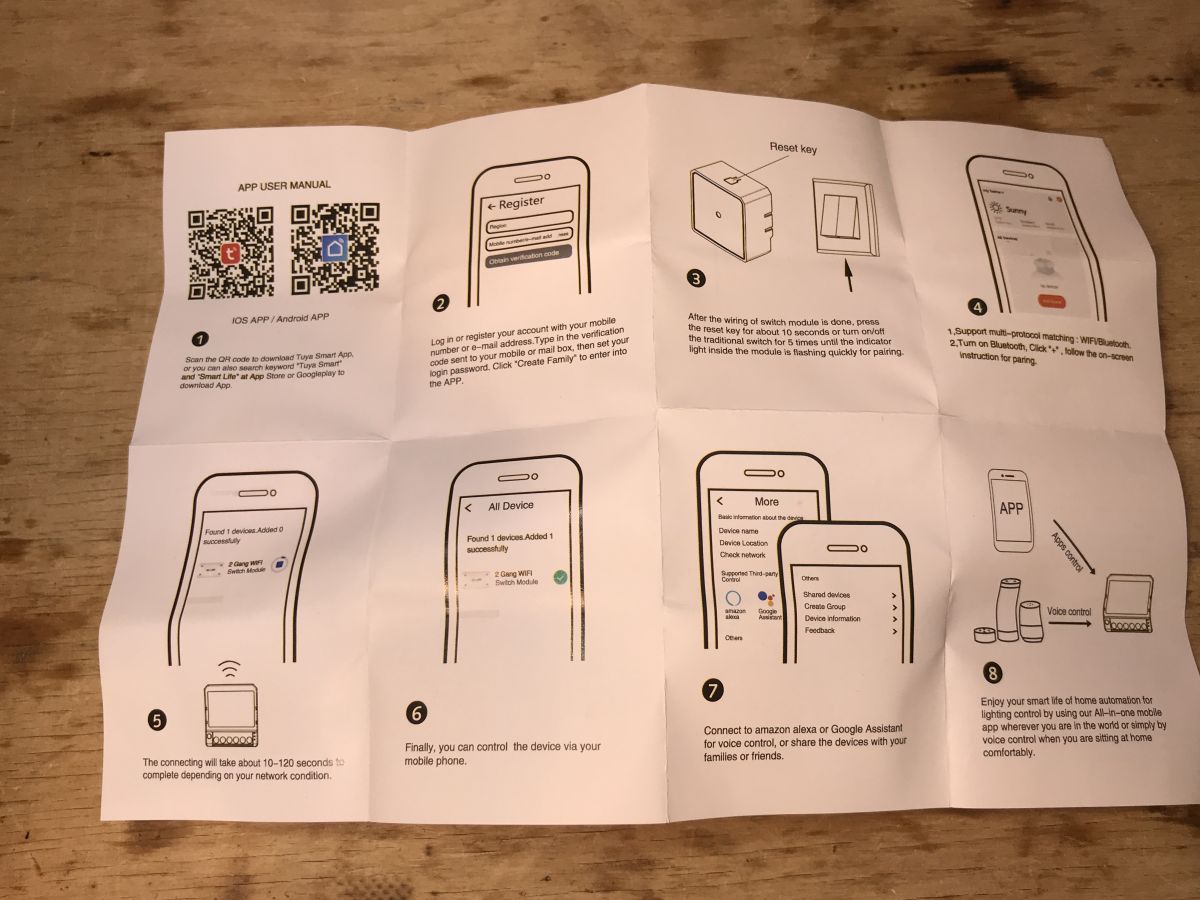
Instruction:
User manual of the AVATTO WSM16-W2 WiFi switch module with diagrams and technical specifications. User manual for pairing the AVATTO WSM16-W2 module with an app
But I haven`t discussed pairing with Tuya for a long time, let`s look inside.

Interior of AVATTO WSM16-W2
I recommend comparing the interior of this product with its single version:
[CBU/BK7231N] AVATTO WSM16-W1 WiFi relay module for PLN 30 - firmware change
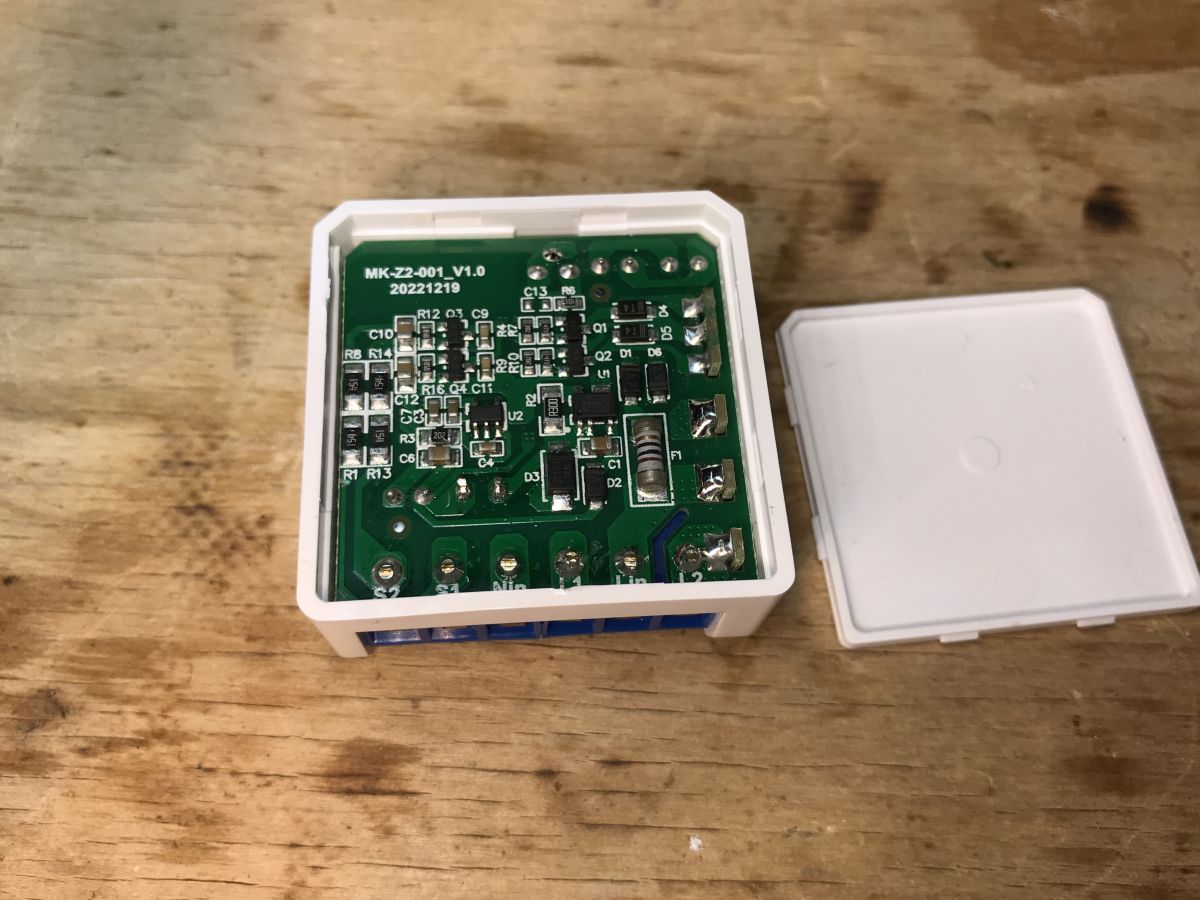
We remove the cover:
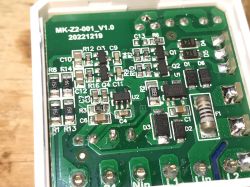
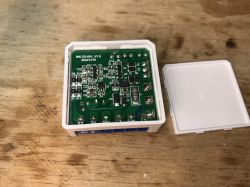
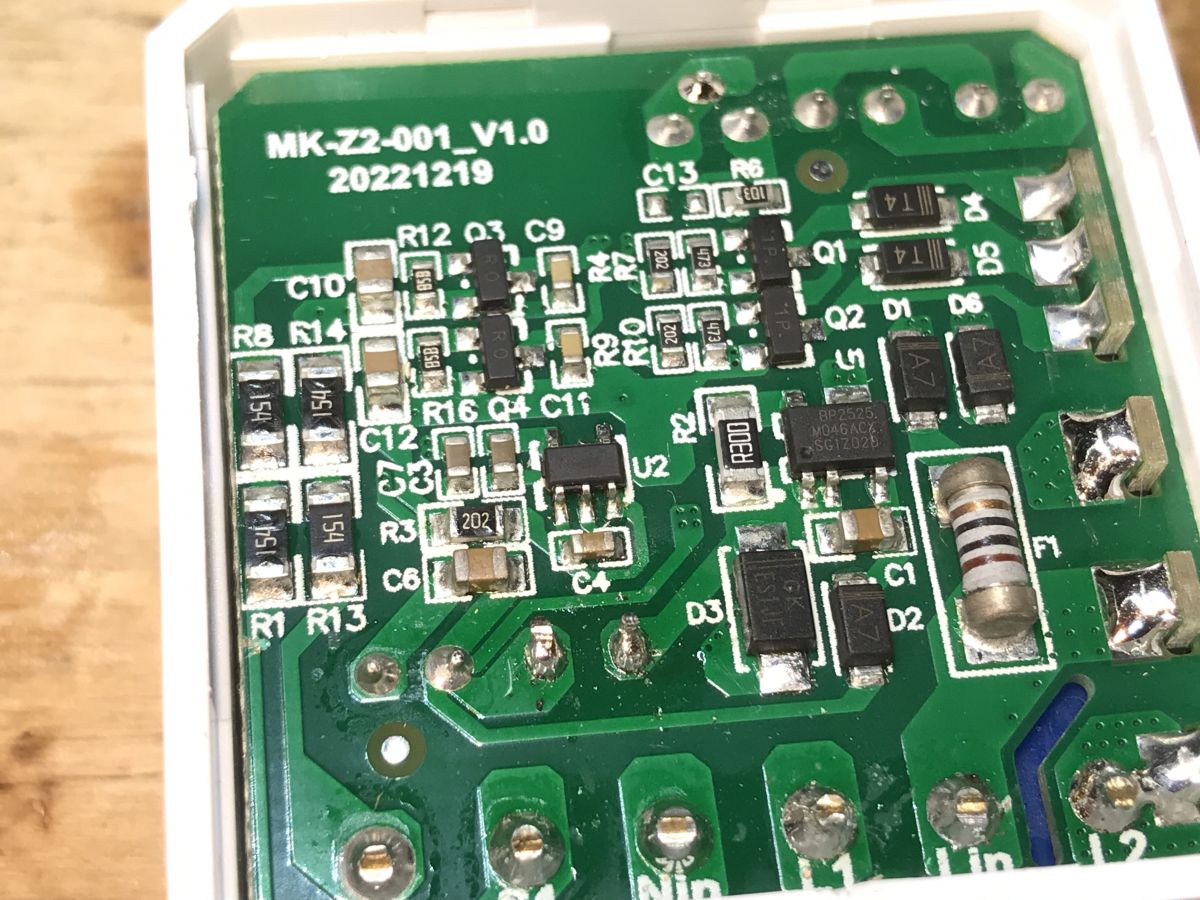
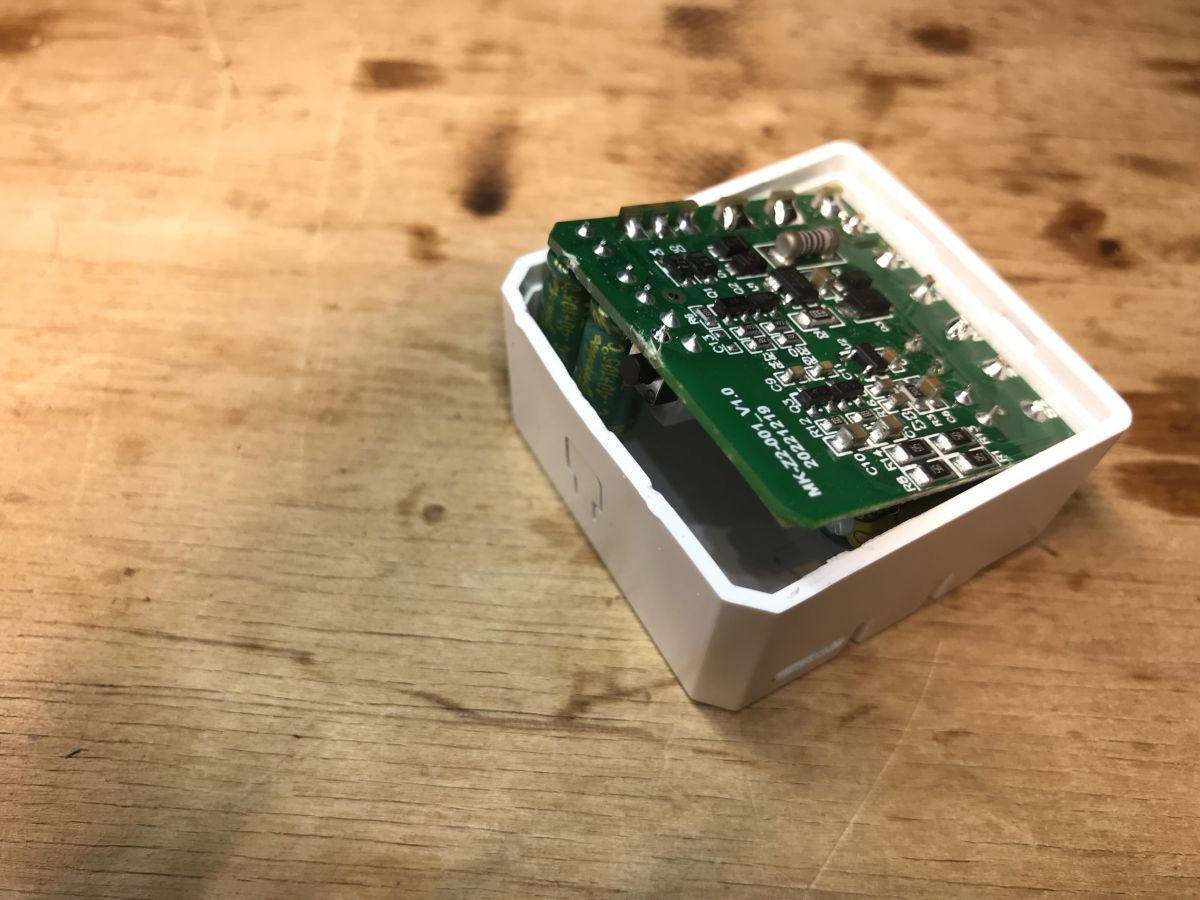
PCB of AVATTO WSM16-W2 model with electronic components. Interior of the AVATTO WSM16-W2 smart module with two relays.
PCB is practically the same. Even the date is correct - MK-Z2-001_V1.0 20221219
We take out the plate:
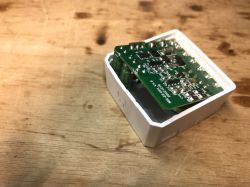
View of the interior of the AVATTO WSM16-W2 module in an open casing.
You can see the first difference:
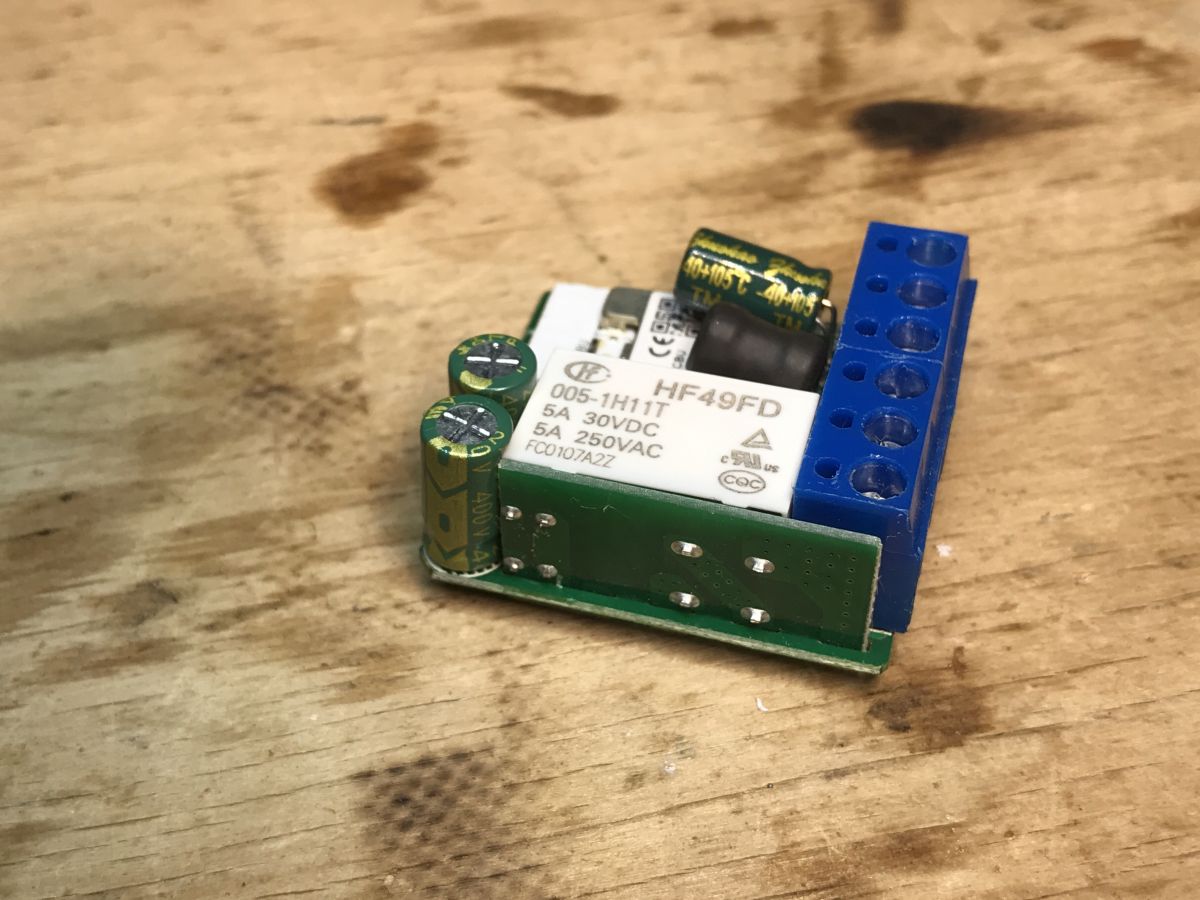
Close-up of the AVATTO WSM16-W2 relay module with two relays.
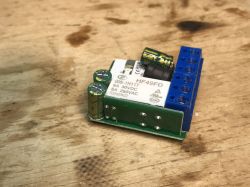
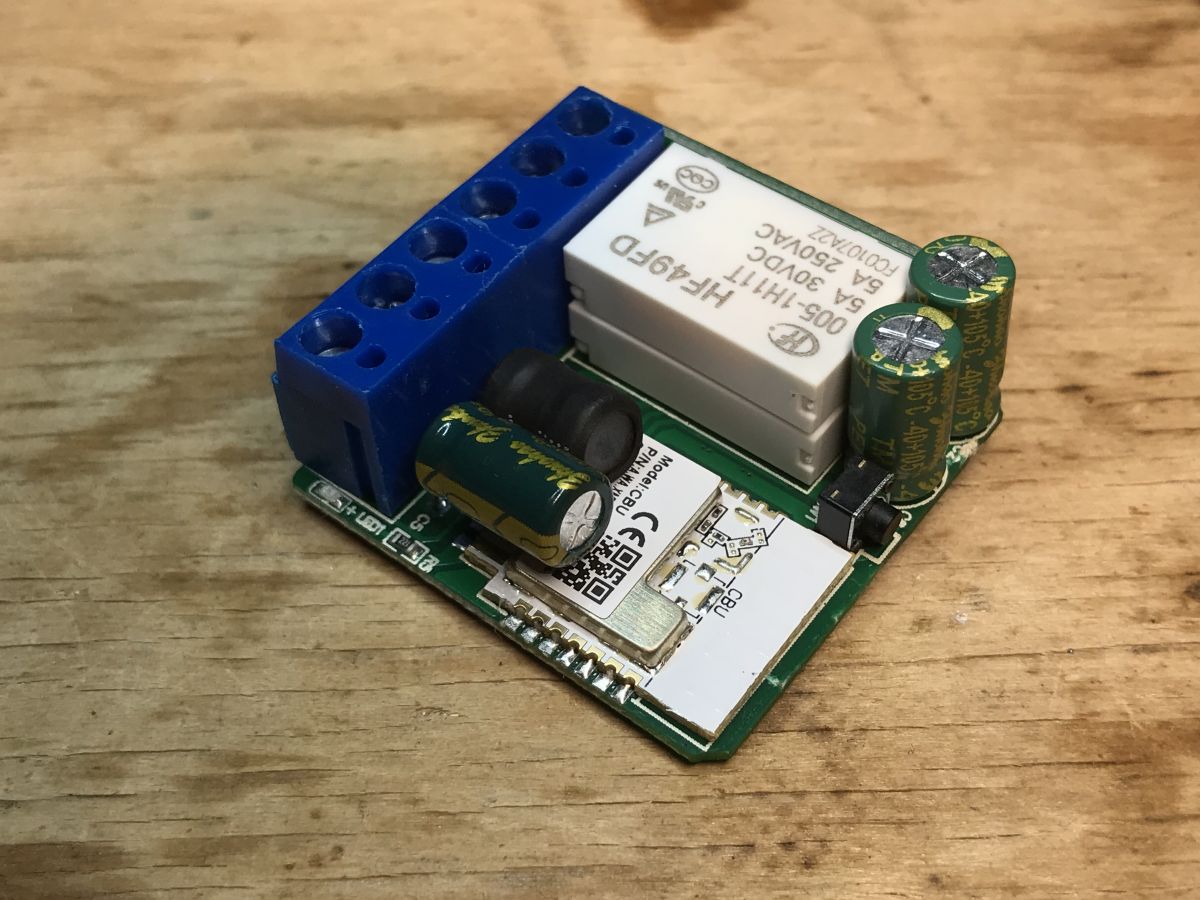
Yes, there are two relays and they are very narrow:
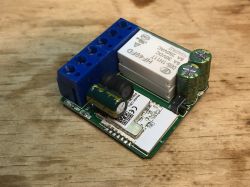
AVATTO WSM16-W2 module with two relays on a wooden surface.
The relay model is HF49FD 005-1H11T, 5A 250VAC.
The rest is the same as in the case of the single version.

Changing the AVATTO WSM16-W2 load
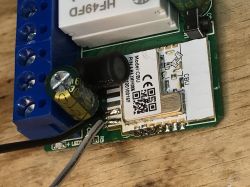
The CBU module and its location are the same as in the single version:
[CBU/BK7231N] AVATTO WSM16-W1 WiFi relay module for PLN 30 - firmware change
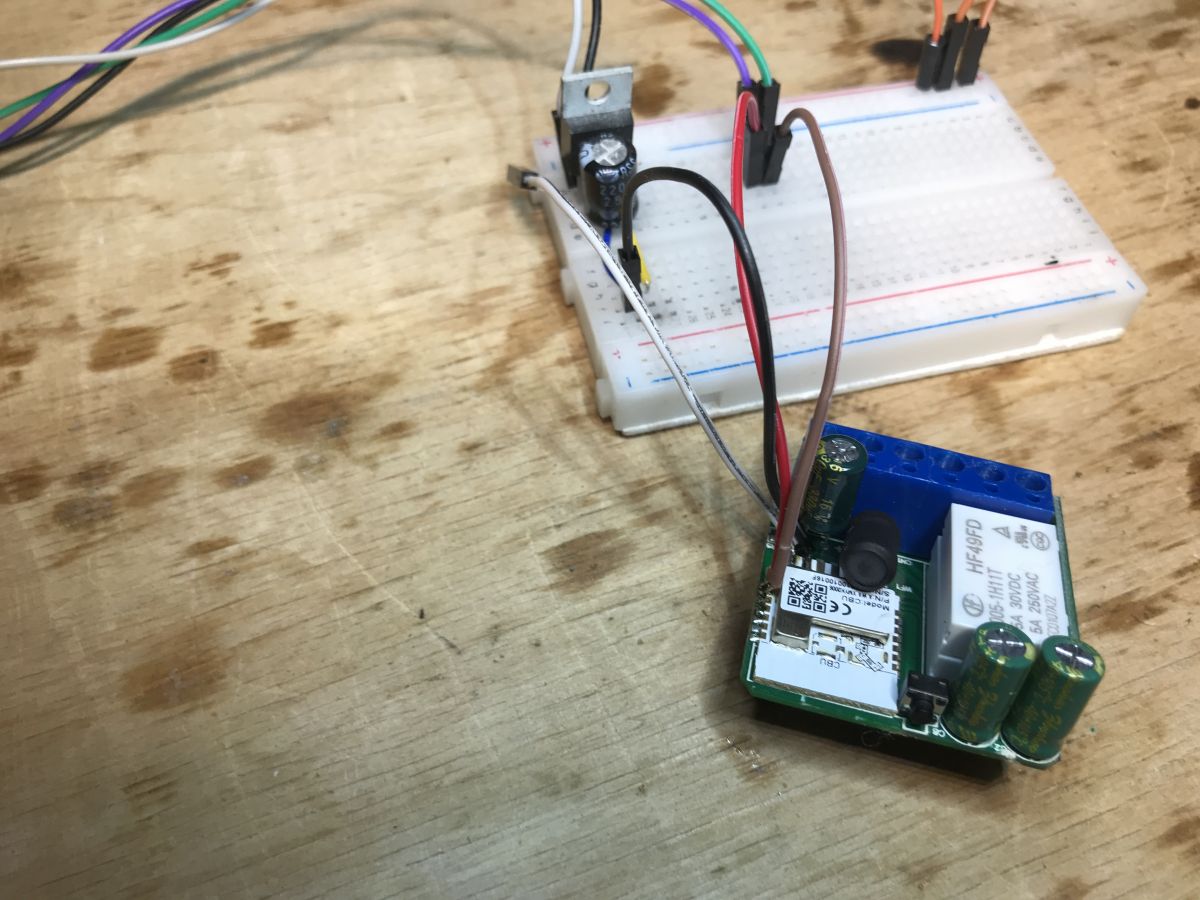
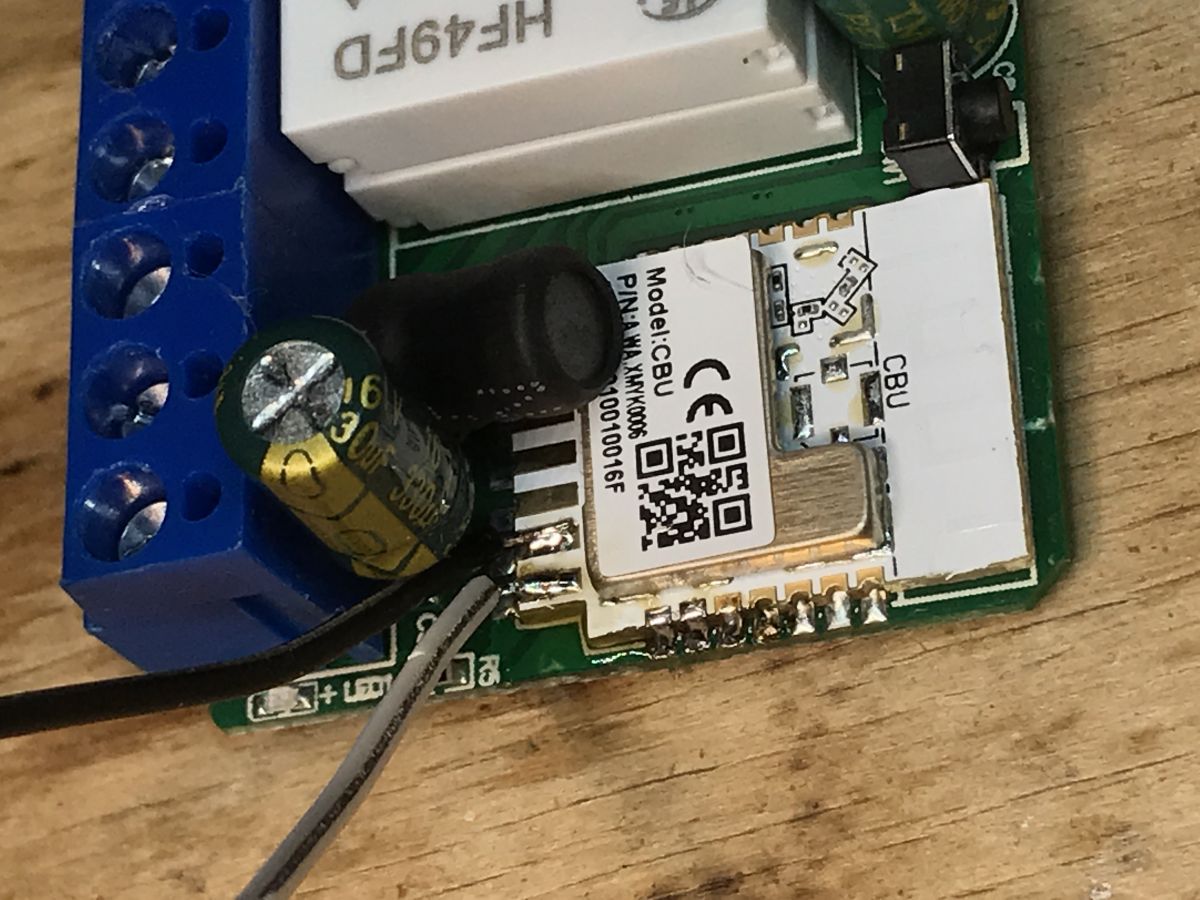
The procedure is also the same, so I will not describe it here again. Photos:
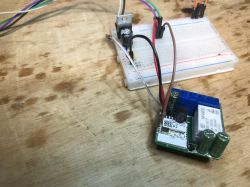
AVATTO WSM16-W2 module with two relays on a workbench. Close-up of the interior of the AVATTO WSM16-W2 module with electronic components.
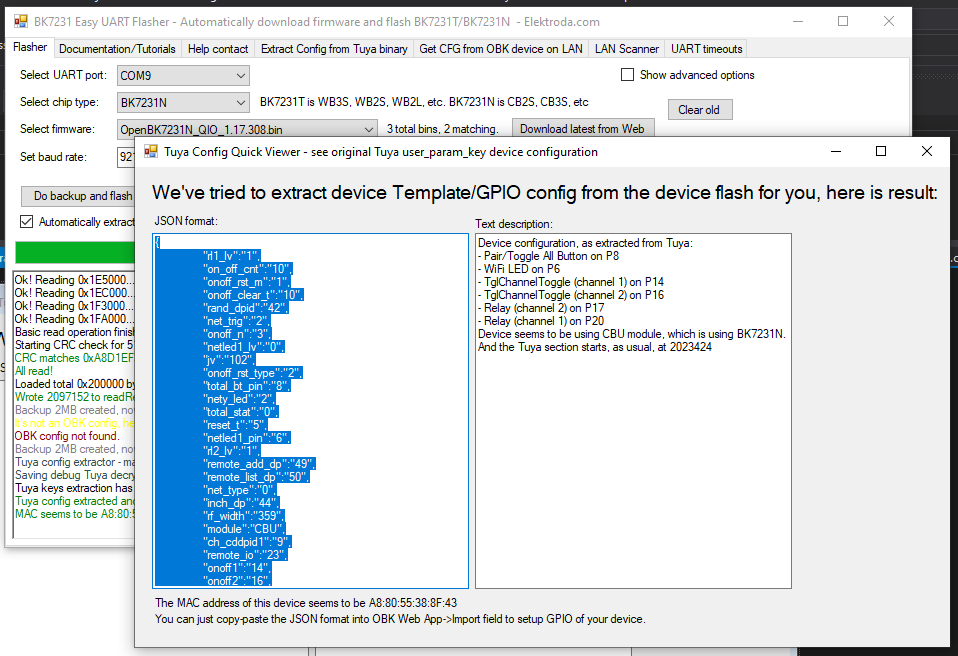
My flasher correctly detects configurations:
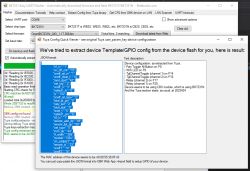
View of the screen of the Tuya device configuration application in JSON format.
Here is Tuya`s JSON:
Code: JSON
Log in, to see the code

Verbal description:

Device configuration, as extracted from Tuya: 
- Pair/Toggle All Button on P8
- WiFi LED on P6
- TglChannelToggle (channel 1) on P14
- TglChannelToggle (channel 2) on P16
- Relay (channel 2) on P17
- Relay (channel 1) on P20
Device seems to be using CBU module, which is using BK7231N.
And the Tuya section starts, as usual, at 2023424


OBK template:
Code: JSON
Log in, to see the code


Summary
This is one of the smallest two-channel switches I have tested so far. I just don`t know why it is so much more expensive than the single version, PLN 30 compared to almost PLN 60 is rather too much.
In addition, I would like to remind you to turn on PowerSave 1 (by entering this command into autoexec.bat in OBK), because without it we will probably repair this switch after half a year: How to fix a smart device that is chirping, squeaking and making strange sounds?
Is it worth buying? Your decision, but if you have little space and need to control something, maybe this is not such a bad option. An additional advantage is the presence of a CBU module inside, which has slightly more pins, so you could also connect DHT11, but in this situation you should be very careful because the power supply of this module does not isolate it from the network...


About Author
p.kaczmarek2
p.kaczmarek2 wrote 14403 posts with rating 12336 , helped 650 times. Been with us since 2014 year.

Comments

omniron 29 Mar 2024 21:51

This unit is a perfect candidate in case you would like to see how relays work with straight 3.3V (as mentioned here ) . Relay: That relay company also has 3V relays, a bit wider but should fit easily. https://www.hongfa.com/en/Product/Item/HF46F. AC/DC The... [Read more]

zakdma 08 Dec 2024 23:15

Hi! I just tried to do the same with my devices which are the same as yours. AVATTO WSM16-W2 There are photos https://obrazki.elektroda.pl/9538598800_1733689981_thumb.jpg https://obrazki.elektroda.pl/1270398600_1733689981_thumb.jpg... [Read more]

FAQ

TL;DR: AVATTO WSM16-W2 crams two 5 A relays into a 39 × 39 × 19 mm shell—“one of the smallest two-channel switches” [Elektroda, p.kaczmarek2, post #21023178] Flashing OpenBeken is possible via the BK7231N CBU module with 921 600 baud access. Why it matters: You gain dual-relay control in places where a standard wall box simply will not fit.

Quick Facts

How does the WSM16-W2 differ from the single-relay WSM16-W1?

WSM16-W2 keeps the same PCB footprint but squeezes in a second HF49FD relay by using ultra-narrow packages. Firmware pins, enclosure, and BK7231N radio remain identical, so flashing and wiring guides from W1 apply directly [Elektroda, p.kaczmarek2, post #21023178]

What load can each relay safely switch?

Each channel is rated for 5 A at 250 VAC, limited in the datasheet to 150 W resistive load to curb heating inside the small plastic case [Elektroda, p.kaczmarek2, post #21023178]

Why does the dual-relay version cost nearly double?

Forum buyers paid PLN 56 for W2 versus PLN 30 for W1. Added BOM includes a second relay and slightly more robust power stage, but no other hardware upgrades—so the premium is mainly marketing and low-volume pricing [Elektroda, p.kaczmarek2, post #21023178]

Which SoC is inside, and is it open-source friendly?

The module uses a CBU board with Beken BK7231N, fully supported by OpenBeken and Tuya CloudCutter. Community templates are available; flashing does not require soldering if pins are exposed [Elektroda, p.kaczmarek2, post #21023178]

How do I flash OpenBeken when the GUI tool hangs at “Reading 0x00…”?

User zakdma succeeded after multiple power-cycle attempts; CEN pin was not needed. Persistence plus correct BK7231N mode at 921 600 baud finally opened the bus [Elektroda, zakdma, post #21339306]

Three-step flashing guide?

  1. Connect RX/TX/GND/3.3 V to the CBU header.
  2. In BK7231 GUI Flash Tool select BK7231N, 921 600 baud, press Start, then quickly toggle power.
  3. Once reading succeeds, write the OpenBeken binary and verify. [Elektroda, zakdma, post #21339306]

Can the relays run on 3.3 V to save energy?

Yes; Hongfa HF46F 3 V relays fit the footprint. Coupled with a BP2525 buck altered for 3.3 V, relay holding power drops from 360 mW to about 240 mW—33 % savings [Elektroda, omniron, post #21025112]

What power-supply edge case should I watch?

Without the PowerSave 1 firmware flag, the capacitive supply may over-stress and emit chirping sounds, sometimes failing within six months [Elektroda, p.kaczmarek2, post #21023178]

Are the two relays galvanically isolated from mains?

No. The low-voltage logic shares the non-isolated buck converter, so sensor add-ons like DHT11 must stay inside insulated enclosures [Elektroda, p.kaczmarek2, post #21023178]

Are the relays wired in parallel or independent?

PCB tracks keep channels electrically independent, but the mechanical layout positions both relays side by side without 180° rotation. Close proximity can raise thermal coupling yet remains within Hongfa spec for 5 A loads [Elektroda, omniron, post #21025112]

How do I reset or pair the device with Tuya?

Hold the P8 button for 5 s until the Wi-Fi LED on P6 blinks rapidly. The module enters EZ-mode for Tuya pairing; long-press again toggles AP-mode [Elektroda, p.kaczmarek2, post #21023178]
Generated by the language model.
%}