logo elektroda
logo elektroda
X
logo elektroda

Closing Water Valve Issue: Winterizing Plot, Valve Fails to Close, Ad Hoc Solutions Needed

marcinsgdz 71031 16
Best answers

How can I temporarily stop a leaking water shutoff valve that still lets water through when closed?

No tightening will fix it; the valve head or gasket is worn, so the head or seals need to be replaced, but only after the upstream/main valve is shut off [#17525513] The visible nut is only for tightening or replacing the seals if the valve leaks, not for restoring a valve that no longer closes [#17525513] On larger pipes, changing the head under pressure usually does not work, so you need access to the main shutoff on the plot or help from the allotment board/water utility to close the water first [#17525513][#17528766][#17529467] To drain the indoor installation, use a drain tap if one exists, or blow the pipes out with a compressor [#17525531][#17525616] If you are replacing it anyway, some replies recommend fitting a complete new head or a brass wedge-gate/steam-type valve once the supply is off [#17525531][#17529467][#17530066]
Generated by the language model.
ADVERTISEMENT
Treść została przetłumaczona polish » english Zobacz oryginalną wersję tematu
  • #1 17525463
    marcinsgdz
    Level 9  
    Posts: 72
    Help: 1
    Rate: 60
    I have to close the water for the winter on the plot.
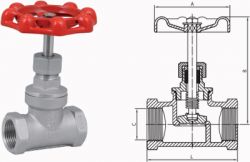
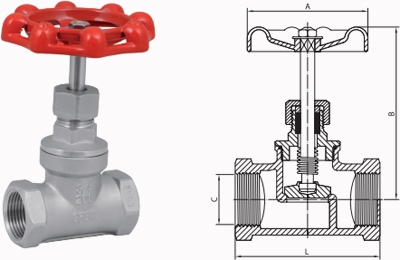
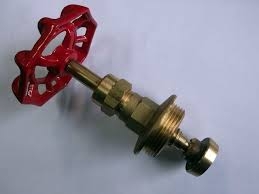
    I have such a valve.

    Closing Water Valve Issue: Winterizing Plot, Valve Fails to Close, Ad Hoc Solutions Needed

    Unfortunately, water continues to flow after it is closed. How to deal with it ad hoc, can you tighten something?
  • ADVERTISEMENT
  • #2 17525496
    leonov
    Level 43  
    Posts: 8906
    Help: 1038
    Rate: 2232
    If it's water, you won't do anything, wait until the water is turned off on the main valve and then replace it with a ball valve.
  • ADVERTISEMENT
  • #3 17525513
    E8600
    Level 41  
    Posts: 8858
    Help: 525
    Rate: 2474
    No tightening will work. The valve head has worn out (the gasket has broken) and needs to be replaced, but to do so, turn off the water on the connection.
    With this pipe diameter, it is impossible to do it under pressure - I tried. :)
    The visible nut is only used to replace / tighten the seals when the valve leaks.

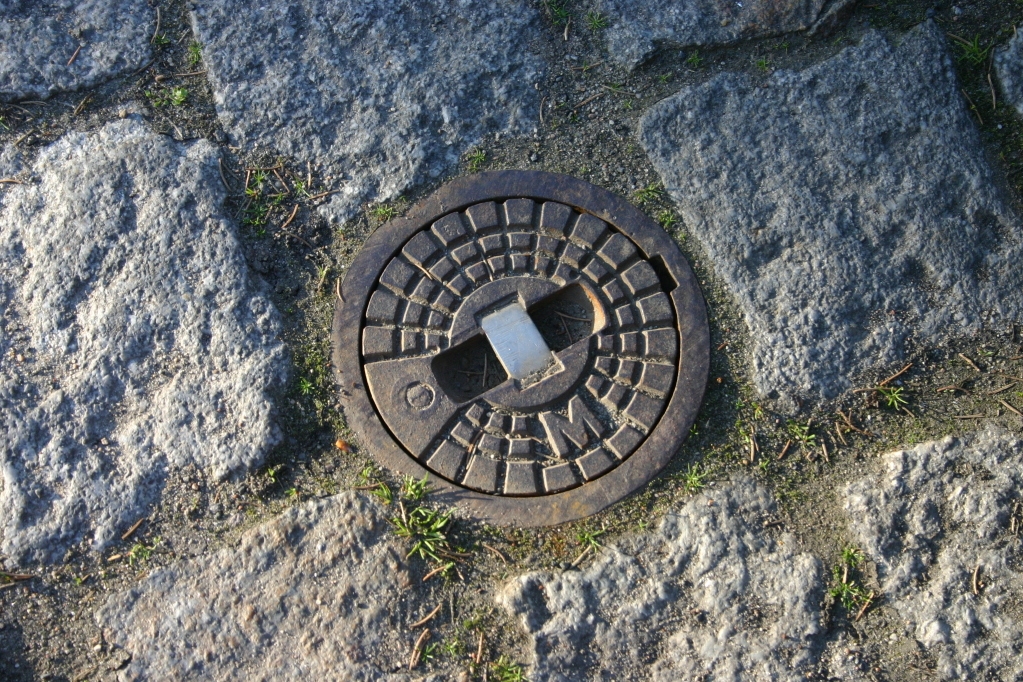
    Look on the plot, maybe you have a sump somewhere with the main valve.

    Closing Water Valve Issue: Winterizing Plot, Valve Fails to Close, Ad Hoc Solutions Needed

    Closing Water Valve Issue: Winterizing Plot, Valve Fails to Close, Ad Hoc Solutions Needed
  • #4 17525522
    marcinsgdz
    Level 9  
    Posts: 72
    Help: 1
    Rate: 60
    So when they turn off the water, I have to unscrew the entire head and screw in a new one?
    How do I get rid of the water in the gazebo from the tap, toilet and boiler pipes?
  • #5 17525531
    E8600
    Level 41  
    Posts: 8858
    Help: 525
    Rate: 2474
    marcinsgdz wrote:
    So when they turn off the water, I have to unscrew the entire head and screw in a new one?
    How do I get rid of the water in the gazebo from the tap, toilet and boiler pipes?


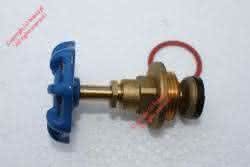
    If the head is in decent condition, you can replace the gasket but it's better to put the whole head on a new one if you don't want to fix it in a moment.
    How can I get rid of the water? In the past, plumbers installed a tap on such a valve just so that the water could be drained from the installation. If someone makes an ill-considered installation, then there are such flowers.
  • ADVERTISEMENT
  • #6 17525616
    wojtek1234321
    Level 36  
    Posts: 3553
    Help: 306
    Rate: 1118
    marcinsgdz wrote:
    How do I get rid of the water in the gazebo from the tap, toilet and boiler pipes?

    "Blow out" with a compressor when you are "renovating" the valve.
  • #7 17528766
    saskia
    Level 39  
    Posts: 5714
    Help: 174
    Rate: 1085
    Ask at the allotment garden management board and they should help in this matter, or explain when the main valve will be closed and when it will be possible to repair or modify it.
  • #8 17529011
    Anonymous
    Level 1  
  • #9 17529467
    E8600
    Level 41  
    Posts: 8858
    Help: 525
    Rate: 2474
    Buddy, the water supply is always a larger diameter and the distribution is smaller. The tap open patent may work well with a 1/2 inch diameter. As I wrote personally, I tried on a 1 1/2 inch pipe and it was not possible to screw it under pressure, despite open 2 taps. When I saw a stream of water after unscrewing the head, I already saw that it would not work, but I tried.

    So do not advise solutions that can lead to flooding.
    Someone advised to replace it with a ball valve, which in my opinion is more problematic because if it is damaged, you need more work to replace it (you have to play with screw fittings).

    Another solution is to install a metal head (steam valve).
    Closing Water Valve Issue: Winterizing Plot, Valve Fails to Close, Ad Hoc Solutions Needed

    The author reminded me about the fact that I should replace the jumper in the house on the plot that has been passed for several years. Hope to do it before winter this year. :) I have the convenience that I have a well with a valve and I don't have to fly anywhere and ask to close the water.
  • ADVERTISEMENT
  • #10 17530030
    Anonymous
    Level 1  
  • #11 17530057
    leonov
    Level 43  
    Posts: 8906
    Help: 1038
    Rate: 2232
    E8600 wrote:
    Someone advised to replace it with a ball valve, which in my opinion is more problematic because if it is damaged, you need more work to replace it (you have to play with screw fittings)
    I wonder how this "mushroom" is wound onto the pipes ;-)

    Point out the difference ;-) Closing Water Valve Issue: Winterizing Plot, Valve Fails to Close, Ad Hoc Solutions Needed
  • #12 17530066
    E8600
    Level 41  
    Posts: 8858
    Help: 525
    Rate: 2474
    101pawel wrote:
    In which post did you read the diameter of this faulty valve?

    Valves of this type are very rarely installed on small diameters.

    101pawel wrote:
    This is what a professional is writing to you, not a water and sewage installer, but also an installer.

    All the more so, as a professional, you should not give such advice to the author of the topic.

    101pawel wrote:
    I opt for the latter, because if a professional changes under pressure, sometimes not only the head, but the element sealed with hemp, and it's only because he does not want to turn off the supply valve


    It is not so easy to turn off the valve because in the present day of "pseudo" plumbers there are such installations that sometimes you have to turn off the water all over the street. So the plumbers are forced to replace under pressure what they can otherwise they would have to waste several hours locating the valve.

    It is another thing to replace the valve without draining the water from the system, even in a high block (water is also pouring, but the pressure is much lower) and doing it under full pressure.

    leonov wrote:
    I wonder how this "mushroom" is wound onto the pipes

    The main difference is that the ball valve starts to leak, you need to replace the entire valve, but the head leaks / leaks the head, you replace the head or the seals themselves - a flat wrench is enough to repair.




  • #13 17530070
    Anonymous
    Level 1  
  • #14 17530083
    leonov
    Level 43  
    Posts: 8906
    Help: 1038
    Rate: 2232
    I have a big difference, I have a ball valve on my plot for five years and ... it works :-)
  • #15 17530088
    E8600
    Level 41  
    Posts: 8858
    Help: 525
    Rate: 2474
    101pawel wrote:
    not a ball valve and not a valve, but a wedge gate valve, of course brass.

    I will agree here. Formerly there were wedge valves resembling modern ball valves that could be pulled on the wedge when it started to leak and it was quiet.

    leonov wrote:
    I have had a ball valve on my plot for five years and ... it works

    Five years is no achievement. Old installations / valves can be 40-50 years old and do not leak.
    Balls are very sensitive to limescale and sand, if the Teflon is wiped, it is only a replacement.
  • #16 17530159
    jerry1960
    Level 37  
    Posts: 3013
    Help: 283
    Rate: 1549
    Ask your local water supply, maybe they have a portable pipe freezer kit and for a six pack of golden liquor they will help you replace that valve.
  • #17 17530340
    zimny8
    Level 33  
    Posts: 3654
    Help: 26
    Rate: 502
    Sublimating dry ice can be used to freeze the pipe.

Topic summary

✨ The discussion revolves around a malfunctioning water valve that fails to close properly, leading to continuous water flow. Users suggest that the valve's head may be worn out, necessitating replacement once the main water supply is turned off. Various solutions are proposed, including replacing the entire valve head, tightening seals, or using a compressor to blow out water. Some participants recommend consulting local allotment management for assistance and suggest methods for draining water from the system, such as installing a tap for drainage or using dry ice to freeze the pipe temporarily. The conversation highlights the challenges of working under pressure and the differences between valve types, specifically ball valves and wedge gate valves.
Generated by the language model.

FAQ

TL;DR: For a globe valve that won’t fully close, some claim a head swap takes 6 seconds and “It has to work.” Safest route: shut the main, replace the head, then drain/blow out lines; pipe‑freezing is another ad‑hoc option. [Elektroda, Anonymous, post #17529011]

Why it matters: Allotment owners winterizing outdoor plumbing need practical, low‑risk ways to stop flow and avoid freeze damage.

Quick Facts

How do I fix a plot water valve that won’t fully close?

Shut the water at the connection and replace the worn globe‑valve head. The packing nut won’t restore closure. Swap the complete head for a reliable seal once the supply is off. This addresses a failed seat or broken gasket causing continued flow. [Elektroda, E8600, post #17525513]

Can I stop the flow by tightening the visible nut?

No. “No tightening will work.” That nut only tightens or replaces packing to stop stem seepage. It will not seal a worn seat or failed head gasket. Plan to replace the head after the main is shut. [Elektroda, E8600, post #17525513]

How do I replace the head once the main is off?

Shut the main. Remove the old head and hand‑thread a complete new head first, then finish with a wrench. One installer advises to “practice screwing the head in ‘dry’” and fit it in the fully unscrewed position before tightening. Test for leaks after reopening. [Elektroda, Anonymous, post #17529011]

Is it safe to change the valve head under pressure?

It carries flood risk. On a 1 1/2 inch line, the swap failed even with two taps open and a strong stream. As noted, “it was not possible to screw it under pressure.” Prefer a shutoff or freezing isolation instead. [Elektroda, E8600, post #17529467]

If I must attempt an under‑pressure head swap, how do I minimize risk?

This method is contested. 1) Practice the swap “dry.” 2) Coordinate helpers to open nearby taps to reduce pressure. 3) Swap fast—about 6 seconds (3 off, 3 on)—and keep eyes protected; fit the new head fully unscrewed. “Just remember to screw in the new head in the fully unscrewed position.” [Elektroda, Anonymous, post #17529011]

Who can shut the main water and when?

Ask the allotment garden management board. They “should help in this matter, or explain when the main valve will be closed” so you can schedule repair or modifications safely. [Elektroda, saskia, post #17528766]

Where do I find the main shutoff on a plot?

Search for a buried sump or valve box on the plot. It often houses the main valve used to isolate your installation for service and winterizing work. [Elektroda, E8600, post #17525513]

How do I drain taps, toilet, and boiler lines for winter?

“Blow out” lines with a compressor during the valve repair window. Open fixtures while blowing to evacuate trapped water and prevent freeze damage. This is a common ad‑hoc winterizing step for exposed or seasonal plumbing. [Elektroda, wojtek1234321, post #17525616]

Can a pipe‑freezing kit help avoid shutting the whole street?

Yes. Ask your local water utility; they may have a portable pipe freezer kit and can help you isolate the pipe to replace the valve without upstream shutdown. This can be a practical ad‑hoc solution. [Elektroda, jerry1960, post #17530159]

Can I use dry ice to freeze the pipe for a quick repair?

Yes. Sublimating dry ice can be used to freeze the pipe and stop flow temporarily. That allows a controlled head or valve swap when a shutoff isn’t accessible. Consider safety and ventilation when handling dry ice. [Elektroda, zimny8, post #17530340]

What’s the better replacement: ball valve, wedge gate, or stay with globe?

Opinions vary. Older wedge gate valves were serviceable, and some last 40–50 years. “Balls are very sensitive to limescale and sand,” so a leaking ball valve usually means replacement. Choose durability and serviceability for outdoor use. [Elektroda, E8600, post #17530088]

Is replacing a ball valve harder than servicing a globe valve head?

Yes. If a ball valve leaks, you typically replace the entire valve and deal with fittings. With a globe valve, you can often restore operation by replacing the head or seals using a flat wrench. [Elektroda, E8600, post #17530066]

Can I replace just the gasket instead of the whole head?

Sometimes. If the head is still decent, a gasket swap can work. However, replacing the complete head is more reliable and avoids another quick repair. It’s the preferred approach when you already have the supply shut. [Elektroda, E8600, post #17525531]

What if there’s no accessible shutoff due to poor installation?

Installers sometimes face systems where shutting water affects an entire street. They may work under pressure as a last resort. Plan for freezing isolation or schedule with management when possible to avoid emergency under‑pressure work. [Elektroda, E8600, post #17530066]
Generated by the language model.
ADVERTISEMENT