I've been looking through some of the Lightning Semi bits again recently. I saw a couple of UART flashers in the ftp/gitee dumps a couple of months ago and wondered about them again.
I've also been in contact with someone at Lightning Semiconductor who has kindly sent me the latest Windows GUI flasher for LN882H chips as well as a handy GIF and a translation of the main UI, There is no English version of the program but the steps are all pretty self-explanatory.
I know we already have a command line tool wrapped in a Python script we can use to dump/flash firmware (see the full LN flashing guide
here) but it's always nice to have the option of using something with a GUI. The GUI flasher does not support dumping existing firmware, only flashing new.
I attach version 3.0.1 of the program. The older version we have is 1.0.5.
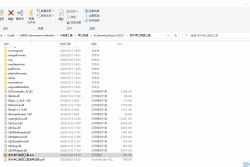
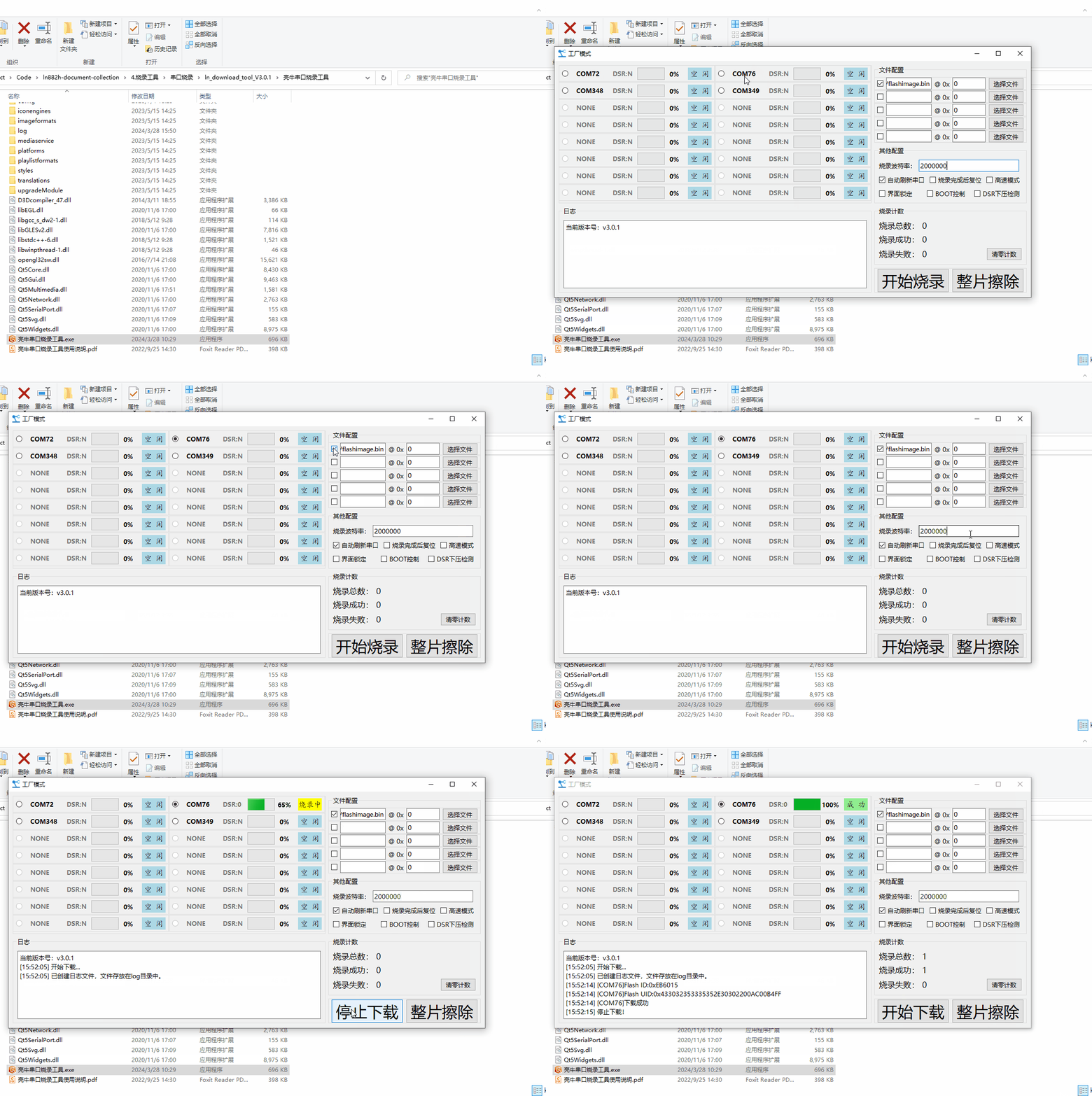
Launch and flashing GIF supplied by contact
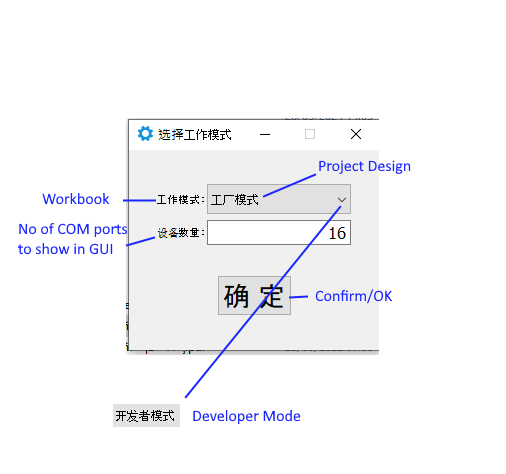
A
rough translation of the first window
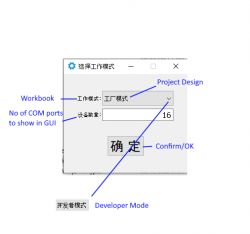
I've not yet explored the developer mode GUI.
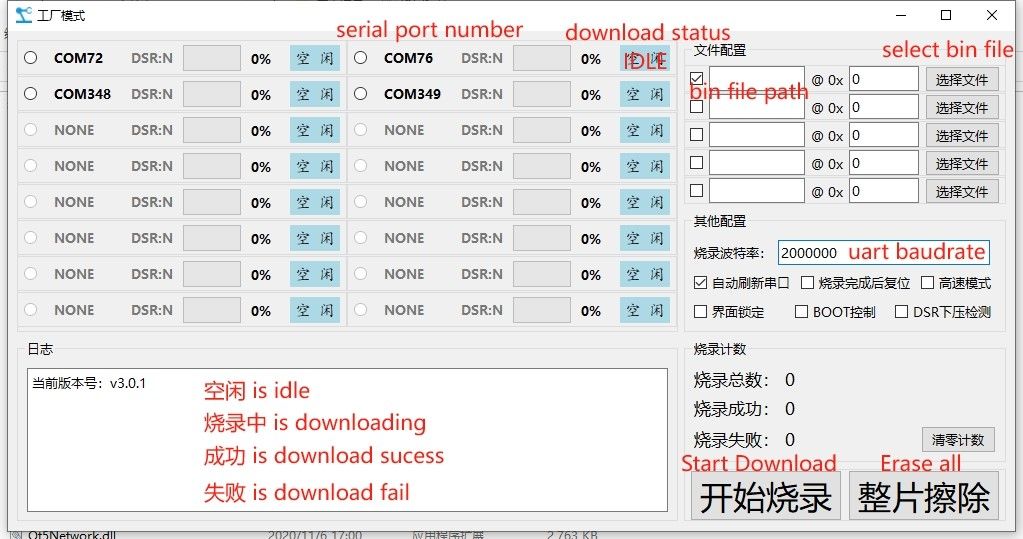
Translation of main GUI supplied by contact
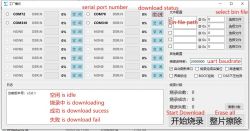
Onto my experience. All the steps needed to put the LN chip into UART download (flashing/programming) mode still apply, which is in summary:
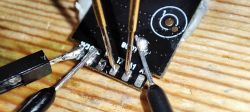
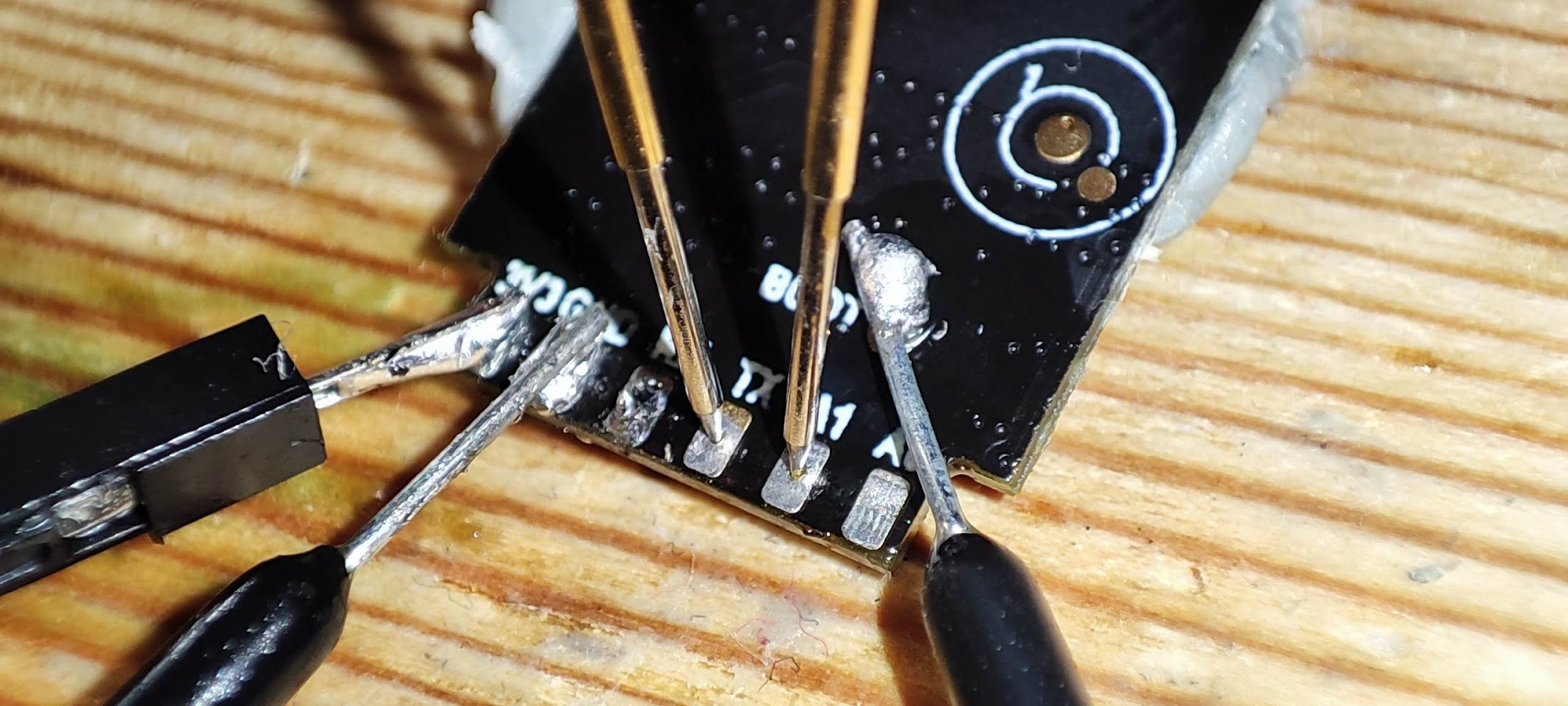
My test setup with an LN-02 (LN882HKI) module
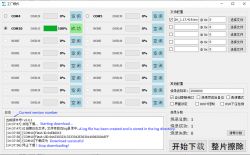
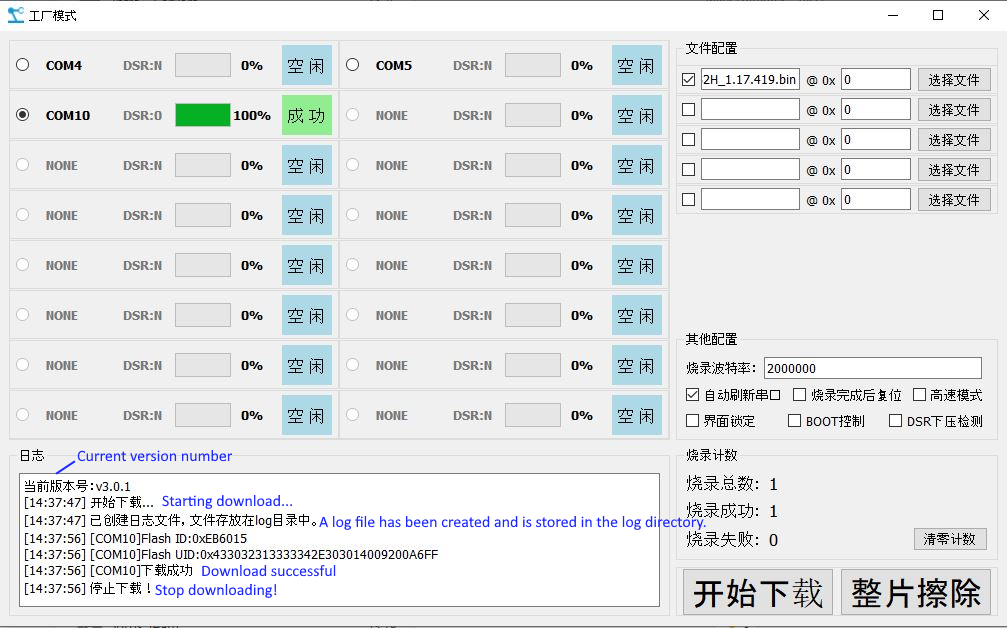
At this point the GUI flasher can be used to download OpenBeken OpenLN UART firmware onto the device. My test was successful on first attempt. This is my completed flash with some added translations.
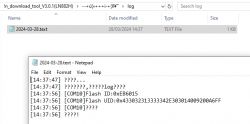
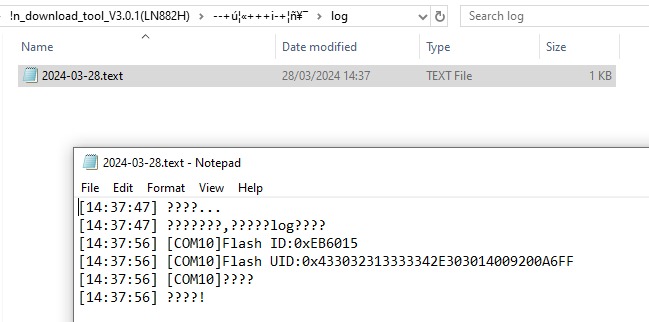
A log file is output to \log subdir of the main program
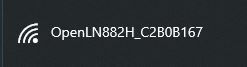
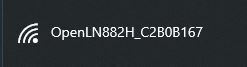
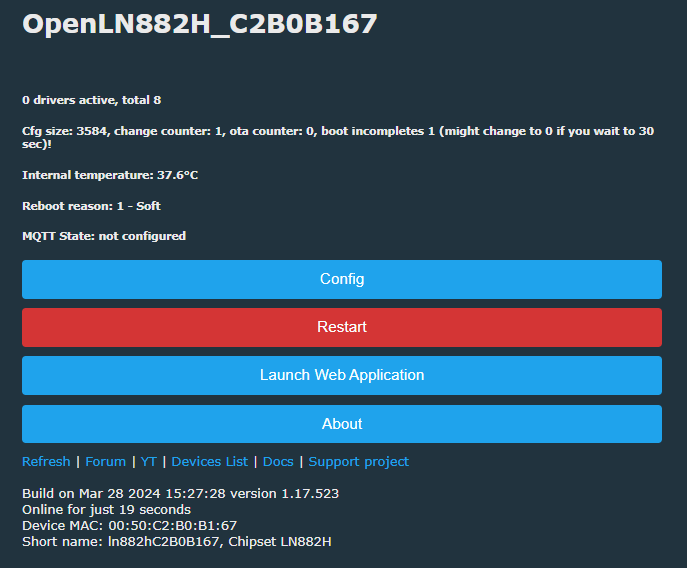
After disconnecting the grounded BOOT/GPIOA9 pad and power cycling the module, the OBK AP started broadcasting, as expected
and
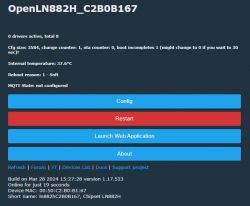
That's it. Would be good to have others try it out and post their experiences.
Happy flashing!
Update 2026
As of 2026, this platform read/write is also supported by our flash tool:
https://github.com/openshwprojects/BK7231GUIFlashTool
The connection (soldering, wires), is the same, but you can use our tool instead of the legacy one.
Please check it out and use it instead of legacy tools, let us know how it works for you!








Comments
That's a very nice finding! So, which LN chips are supported by this tool? Can it support LN8825 as well? I am also wondering, could the UI be translated to English by a simple application resource... [Read more]
sadly no. But have no fear, I've posted the other flasher, available in English, here https://www.elektroda.com/rtvforum/topic4023264.html#21024297 Added after 12 [minutes]: Just LN882Hxx as far... [Read more]
@ElektrodaBot can I somehow change the buttons labels of already compiled application? Maybe by editing resource file? I don't have source code and the application is in the chinese, I would like to translate... [Read more]
Ah, undertaking a task to change button labels in an already compiled application without access to the source code can certainly be a challenging yet interesting project! Let's break down what you're... [Read more]
I did wonder about those qm Qt linguist files in the translations folder. I assume the Lightning Semi contact would have said there was a way to switch to English if it was a straight-forward option. A... [Read more]
and maybe LN8210 if this file is any indicator https://obrazki.elektroda.pl/7734344500_1711957461_thumb.jpg [Read more]
I don't recall seeing this before. Ai-Thinker have an LN882H dev board. The Ai-WB3-12F-Kit. https://obrazki.elektroda.pl/6746952800_1712153458_thumb.jpg [Read more]
Does not appear to be sold anywhere yet, but I now found you can buy Ai- WB2 -12F-Kit with BL602 [Read more]
Yes indeed. Ali Express and Farnell's in the UK, to name a couple https://www.aliexpress.com/item/1005004911645385.html [Read more]
@miegapele re LN882H dev board - I've ordered a couple of these MQ-12Fs from Taobao via Pandabuy in the hope I can transplant one onto a NodeMCU. https://item.taobao.com/item.htm?id=768439707730&scene=taobao_shop&spm=a1z10.1-c-s.w5003-25326152495.1.27133bfdu34uX3&skuId=5274297133333 ... [Read more]
some slightly nicer translations. Google Translate output text size/resolution could be better though. https://obrazki.elektroda.pl/1460981500_1712640709_thumb.jpg https://obrazki.elektroda.pl/9395425400_1712640718_thumb.jpg... [Read more]
Please keep in mind the right bound rate for this specific chip: 921000 https://obrazki.elektroda.pl/2849821000_1725232663_thumb.jpg [Read more]
OK. Where are you seeing statement of 921000 as being the correct baud in official documentation? I've been flashing successfully at 2000000 and I note this in the LN882H datasheet https://ob... [Read more]
I have just tried flashing multiple times with the original stated speed unsuccessfully and them follow the bound rate defined in the command line tool process and got it flashed the first time. [Read more]
Slower baud rates are more reliable. When flashing fails, lowering the baud rate is the first thing to try. [Read more]
Yes and I agree, but did not know this chip could accept different baud rates [Read more]
Hello. Could you please share the translated program? [Read more]
I am not aware of an English translation of the program. The images above were made manually to aid use. [Read more]
Any ideas thats wrong?I also have a problem with not getting this Tuya socket flashed. It's my first Tuya device. In the past I only flashed ESPs with Tasmota. So OpenBeken is completely new to me. This... [Read more]