logo elektroda
logo elektroda
X
logo elektroda

How to check if the BTA12 triac is good?

arkadiusz.n6 42852 10
Best answers LABEL_AI_GENERATED

How can I tell whether a BTA12 triac is working correctly from a simple lamp-and-gate test or with a multimeter?

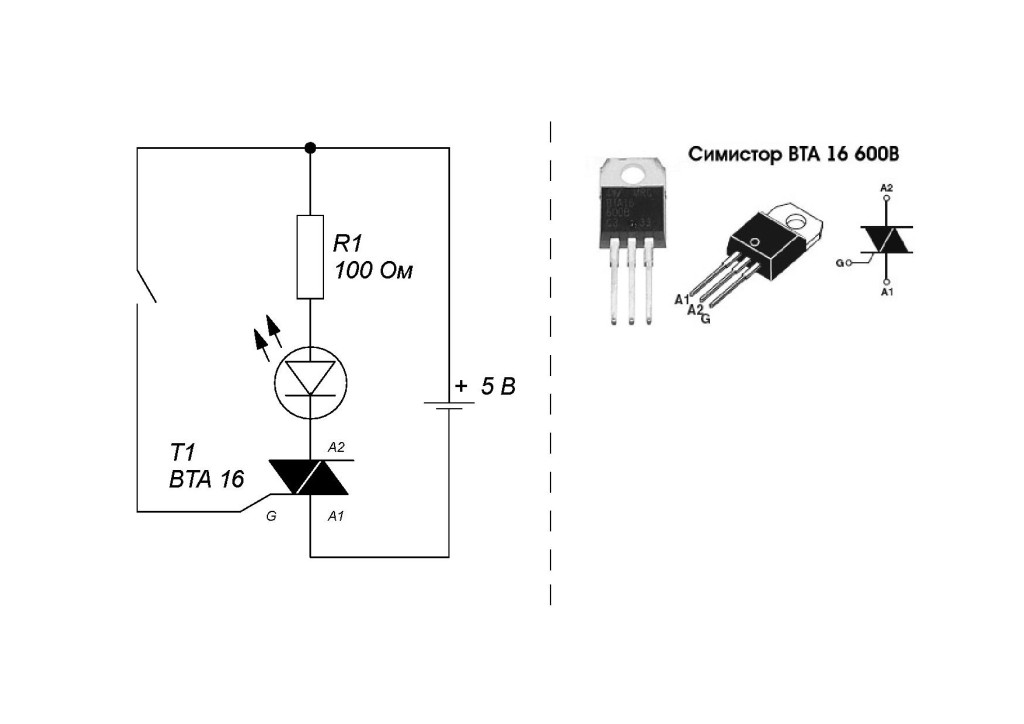
A good triac should turn the lamp on with a brief gate pulse and then keep it on after the gate signal is removed, only going out when the supply is disconnected [#15239198] If the lamp lights only while the gate is held and goes out immediately when you release it, the triac is faulty or the test setup is not allowing proper latching [#15239198] Another reply says that if the lamp is not permanently on when A1 and A2 are connected and it does react to the gate potential, the triac can be considered OK [#15236580] For a meter check, there should be no short between A1 and A2 in either direction, and there should be some junction reading between one anode and the gate, but a multimeter test is often inconclusive because it usually cannot supply the required gate current [#15237095][#15239198]
AI summary based on the discussion. May contain errors.
ADVERTISEMENT
Treść została przetłumaczona polish » english Zobacz oryginalną wersję tematu
  • #1 15236445
    arkadiusz.n6
    Level 7  
    Posts: 53
    Rate: 7
    Hello, can you tell me if this triac is broken or not?

    I wanted to check if the triac is good BTA12.

    I connected to the bulb +12 V from the power supply, from the bulb to one Anode of the triac, and to the other negative anode. With the plus from the first Anode, I shorted to the gate - the bulb is on.

    I did the opposite: I connected the plus to the bulb from the bulb to the second anode, I connected the minus to the first anode. And I shorted the gate + , the bulb does not light.

    But when I gave a minus not to the first anode but to the gate, it lit up.

    Please tell me if this triac is working or not?
  • ADVERTISEMENT
  • #2 15236580
    Piko
    Level 22  
    Posts: 693
    Help: 47
    Rate: 110
    Hello.
    If your light bulb is not on all the time by connecting A1-A2 and in addition it reacts to the gate potential, it can be assumed that the triac is ok. However, it is easier to measure it with a meter, but you can also do it as you do. This is a strong triac and I don't think it will lose anything by such a measurement?
    Regards.
  • ADVERTISEMENT
  • #3 15236598
    arkadiusz.n6
    Level 7  
    Posts: 53
    Rate: 7
    And how to measure it?
  • #4 15237095
    Piko
    Level 22  
    Posts: 693
    Help: 47
    Rate: 110
    What instrument do you have, analog or electronic? If the multimeter is on the range with the symbol of a diode (i.e. for measuring semiconductors) or an ohmmeter (which is not fully authoritative) there should be nothing between the Anodes.. neither A1 + A2- and vice versa, the measurement should also be the same, while Between one of the anodes and the gate should be something ie around 700mV or around 100 ohms? And here the variants are different depending on what is in the housing and what meter are you measuring? But there should be something :)

    PS It is important that there is no obvious short-circuit, i.e. a transition with negligible resistance or a gap in each side. Triacs and thyristors most often fall into a short-circuit, i.e. anode - cathode or with a gate.
  • ADVERTISEMENT
  • #5 15237387
    aksakal
    Tube devices specialist
    Posts: 8946
    Help: 1669
    Rate: 3002
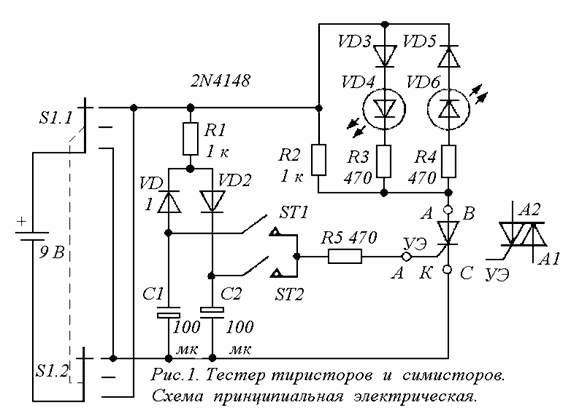
    Scheme of thyristors and triacs serviceability meter. How to check if the BTA12 triac is good?
  • #6 15237939
    Piko
    Level 22  
    Posts: 693
    Help: 47
    Rate: 110
    aksakal wrote:
    Scheme of thyristors and triacs serviceability meter.


    just ask how many "do you have" thyristors to check, because if 1, 2 or 3, it's probably not much to take such a miracle?
  • #7 15238357
    arkadiusz.n6
    Level 7  
    Posts: 53
    Rate: 7
    I checked all the elements on the electronics board and in my opinion they are good, except for the triac because I am not sure about it. I tested it in a different way, connecting + 12V to one anode and to the bulb minus to the other anode, and from a separate 12V source I connected minus to the gate and plus to one of the anodes. Well, the light bulb is on, but when I disconnect the potential from the gate, the light bulb goes off and this is what I think is wrong, because the light bulb should be on all the time after giving an impulse to the gate.
  • ADVERTISEMENT
  • #8 15239198
    aksakal
    Tube devices specialist
    Posts: 8946
    Help: 1669
    Rate: 3002
    Triac check scheme. When the button is pressed briefly, the LED (bulb) must light up. After releasing the button, the bulb should be on. The bulb will only go out when the power is disconnected. If not, the triac is faulty. Just don't be a dogmatist like some theoreticians on the forum. It is not mandatory to use an LED and a voltage of 5 V. You can use a voltage of 5-15V and a bulb for the appropriate voltage for power supply. When using the LED and the voltage more 5V increase the resistor denomination accordingly. I write so perfectly because the theoreticians on the forum have already tired their pedantry, as soon as you indicate which parameter of the element or regime with a tolerance of 0.5 percent - the discussion begins until the loss of voice. I also want to warn you that checking the triac or the thyristor with an electronic multimeter is usually not possible - you must not secure the necessary gate current. How to check if the BTA12 triac is good?
  • #9 21863387
    basstek1
    Level 18  
    Posts: 454
    Help: 6
    Rate: 41
    >>15239198 Thanks for this diagram. I just wanted to check the bta20 this way. The led does NOT light up continuously when switched on. Only when the G gate is shorted. The triacs are new. Does this mean they are faulty?

Topic summary

LABEL_AI_GENERATED
The discussion explains how to verify whether a BTA12 triac is functional using a lamp and a low-voltage supply. A triac is considered good if the lamp turns on when a gate pulse is applied and then remains latched on after the gate signal is removed, only turning off when the supply is disconnected. Several replies recommend checking the device with a multimeter in diode-test or ohmmeter mode by looking for no direct short between A1 and A2 in either polarity and a measurable junction between the gate and one main terminal. It is also noted that triacs and thyristors often fail as shorts, and that electronic multimeters may not always provide a reliable gate-current test. Later comments mention similar testing for BTA20 triacs and suggest alternative test setups and video references.
AI summary based on the discussion. May contain errors.
ADVERTISEMENT