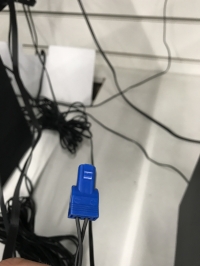
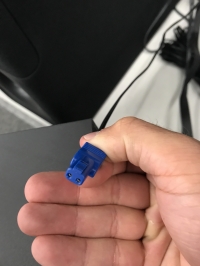
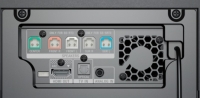
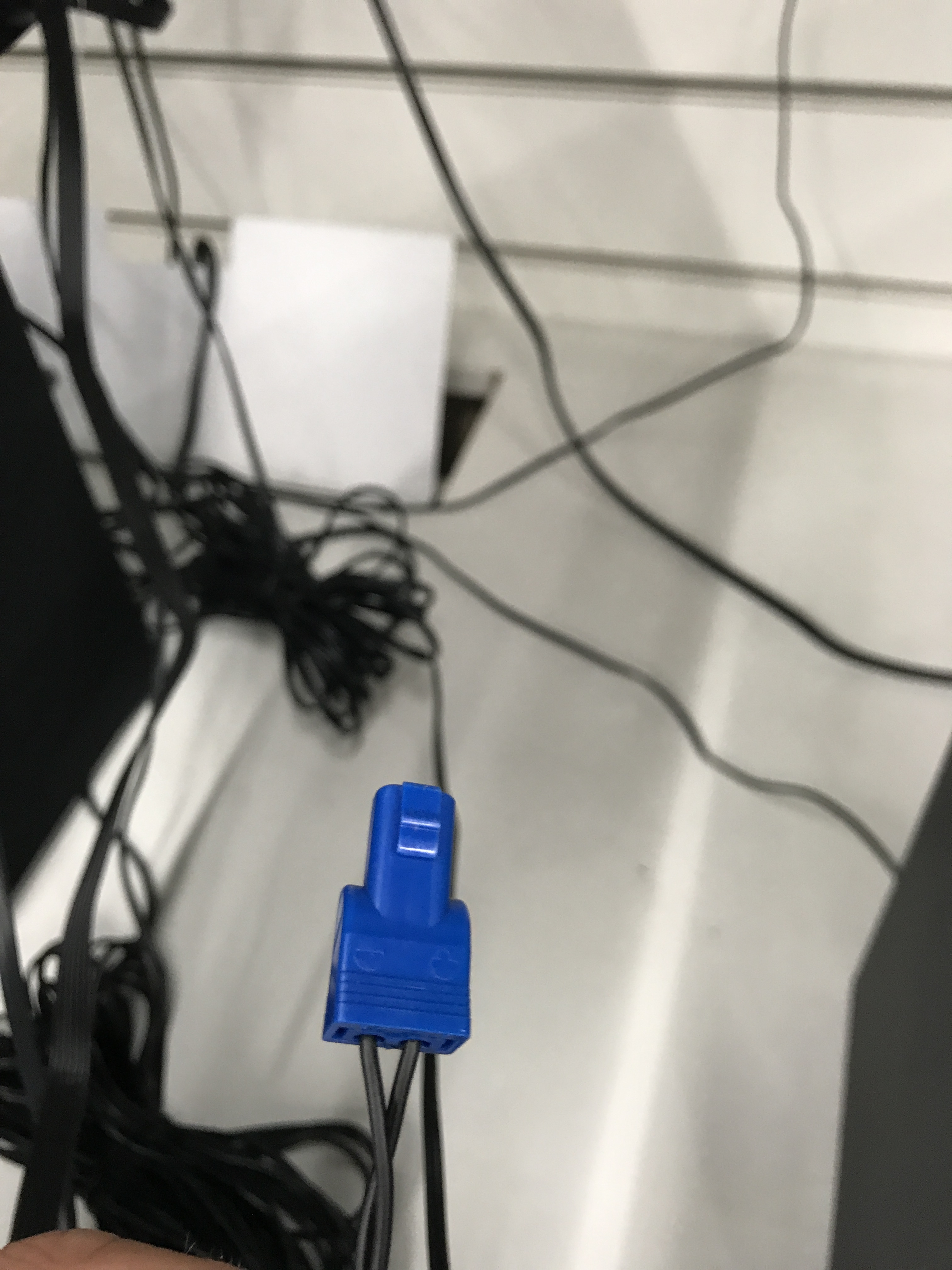
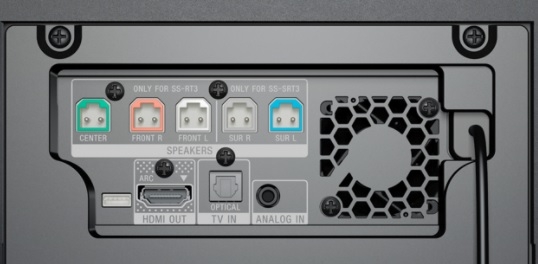
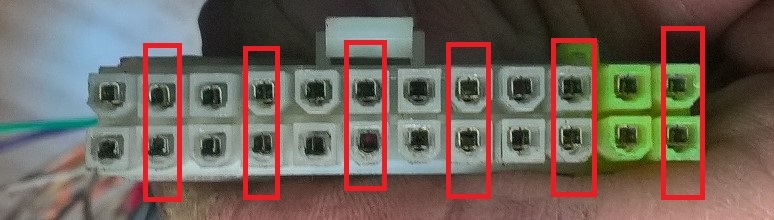
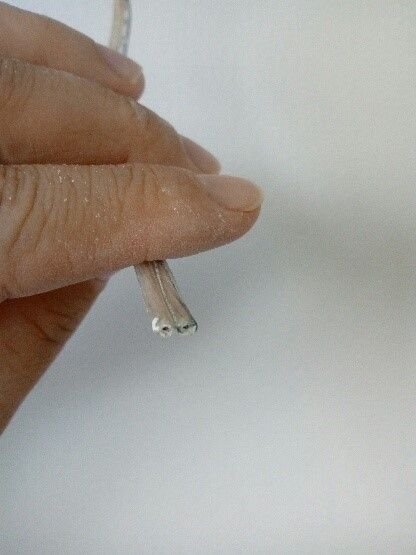
You can easily connect these cables coming from the wall with the cables coming from the REAR loudspeakers - here it will definitely be a two-wire cable. You just need to keep the polarity, i.e. + the cable from the wall + the column cable and the same with -.
How you combine them is a matter of your invention and skills, but according to the easiest way for me is to remove the original plugs from the column cables and connect the cable from the column to the cable from the wall using ordinary, twisted electric cubes, for example:
https://www.gotronik.pl/kostka-elektryczna-12-pol-r6mm2- white-p-5812.html
Of course, you can use a more sophisticated connection, e.g. a banana plug and socket for a cable, and if you do not like the disassembly of the original plugs from the speaker cables, for example, fit a model of male connectors to their female connectors. But as I wrote above: "it is a matter of your invention and skills".
 https://www.google.com/search?source=univ&tbm...%253BqZONaPzL3N4F7M%252CnuPhPQDctOrK6M%252C_%
 253Bqw-zZhEOd0p_LM% 252CpdErAq5Cunab5M% 252C_% 253BAnAVYYsM6Kh1tM% 252Cfh9ZvhuOaUZUaM% 252C_% 253B0tIZhKYz6xSHcM% 252CWUAYGyaVsrXUeM% 252C_% 253B_GqwpRrU_gqpEM% 252CvPuVyiVyWjZXdM% 252C_% 253BWKa52JSj9tiCBM% 252C9-fZkYKh6FlFjM% 252C_% 253BYhX3IFi2SSSFpM% 252C-h6K93tF_rb0GM% 252C_% 253BxUYIoWQW_l1WrM% 252C3qUEkvcc-nPWWM% 252C_% 253Bd5oGDonQTla3EM% 252CSoMrzfLTYW3z8M% 252C_ 253BQFJzmb2aR1HIAM%%% 252CTtMBqRabuAfg5M 252C_ 253BRiTMdAmx9ZN3cM%%% 252CVDB7600juePaGM 252C_ & ultrasound = AI4_-kT524De-XFzp5gr6PWPJR_7owmZdg & sa = X & ved = & b and 2ahUKEwiBhPb_7Kv0AhXttYsKHfJGDuUQjJkEegQIAhAC = 1280 & BH = 628 & dpr = 1
https://www.google.com/search?q=Gniazda,+wtyk...M%252C_%253BcVIJMQoc1EanOM%252CfHikKQl280UjYM % 252C_% 253BxWCrkHw0oU2yiM% 252CcEgFcK_m8yco-M% 252C_% 253BOPcLrbTePfy7eM% 252C17NTuYPE8Nb2GM% 252C_% 253Bmk-8mccY_pEeXM% 252C0SNGwiC5bUzbFM% 252C_% 253BAathhNta32RlEM% 252CYdYXgOQdfdfunM% 252C_% 253BpTaS__o0D0HDvM% 252CwcmrXJLlT6G20M% 252C_% 253BRX_TOIjUmn-F7M% 252CnrijJqk0xBFRuM% 252C_% 253BWZLn9Sai0thLHM% 252CfHikKQl280UjYM% 252C_ & vet = 1 & usg = AI4_-kRdkMJCftN3m2At289rEIU77QfckA & sa = X & ved = 2ahUKEwiO9teg7qv0AhW1AhAIHb2nAwAQ9QF6BAgvEAE # imgrc = pyvHttk4xJuh6M & OsJuh6M
Regards.