FAQ
TL;DR: For a 2 amps rectified supply, use a ready bridge, filter capacitors, and an L78S15 regulator. “At 2 amps, you'll probably need a small heat sink.” [Elektroda, jgorsk, post #16771211]
Why it matters: This FAQ helps beginners convert an adjustable AC output to a stable 14–15V DC, safely and with off‑the‑shelf parts.
Quick Facts
- Input/Output goal: 18–36V AC at 2A to 15V/14V DC at 2A, ready-made parts preferred. [Elektroda, Wiejuk, post #16769721]
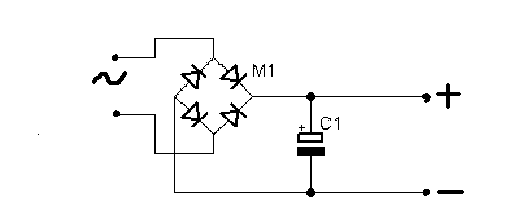
- Use a rectifier bridge instead of discrete diodes; add filtering capacitors and a stabilizer. [Elektroda, marekhab, post #16769825]
- Typical stabilizer setup: L78S15 with 0.33µF at input, 0.1µF at output, plus ~100µF in and 470–1000µF out. [Elektroda, marekhab, post #16770060]
- The regulator dissipates excess voltage as heat; attach a heat sink. [Elektroda, jdubowski, post #16771245]
- Skipping the regulator yields about 24V DC after rectification, which is too high for 15V loads. [Elektroda, marekhab, post #16770069]
How do I convert 18–36V AC at 2A to a stable 15V DC using ready parts?
Rectify with a ready bridge, smooth with electrolytics, then regulate with an L78S15. Use 0.33µF input and 0.1µF output capacitors on the regulator, plus ~100µF at input and 470–1000µF at output. Mount the stabilizer on a heat sink. [Elektroda, marekhab, post #16770060]
Can I avoid soldering individual diodes for rectification?
Yes. Use an off‑the‑shelf rectifier bridge module. Add two capacitors for filtering and a voltage stabilizer to reach 15V. This keeps wiring simple and reliable for beginners. [Elektroda, marekhab, post #16769825]
What exact capacitors should I pick around the L78S15 regulator?
Use 0.33µF at the input and 0.1µF at the output of the L78S15. Add an electrolytic of about 100µF at input and 470–1000µF after the regulator. Select appropriate voltage ratings. [Elektroda, marekhab, post #16770060]
Do I need a heat sink on the stabilizer, and why?
Yes. The linear stabilizer turns excess voltage into heat during regulation. “The stabilizer converts excess voltage into heat,” so a heat sink prevents overheating at 2A. Ensure good thermal contact. [Elektroda, jdubowski, post #16771245]
Which bridge rectifier works for 2A, and should it be cooled?
A KBPC‑style bridge (e.g., KBPC5010) is suitable and can bolt to a small heat sink. At 2 amps, added cooling improves reliability and temperature margins. [Elektroda, jgorsk, post #16771211]
What happens if I skip the voltage regulator after rectification?
Without the stabilizer, the DC after the bridge and filter will be around 24V. That exceeds 15V device limits and risks damage. Always regulate to the target voltage. [Elektroda, marekhab, post #16770069]
Does AC frequency matter when choosing the rectifier?
Yes. For frequencies over 400 Hz, use a bridge made from fast diodes. Standard bridges can overheat or fail at high switching frequencies. [Elektroda, jdubowski, post #16771245]
Do I need Schottky diodes when the source is an inverter?
It can be necessary. A contributor warned that Schottky diodes may be required for converter outputs. They reduce losses and handle faster waveforms better. [Elektroda, 398216 Usunięty, post #16770077]
Where can I buy all the parts in one go?
Any electronics store should stock an L78S15, a rectifier bridge, and capacitors. One poster listed sample shop links and reminded to heat‑sink the stabilizer. [Elektroda, marekhab, post #16771227]
Quick 3‑step: How do I wire the bridge, capacitors, and L78S15?
- Connect AC leads to the bridge’s “~” terminals, then bridge “+” to the filter input.
- Add ~100µF and 0.33µF at the regulator input; wire L78S15 input to the smoothed “+”.
- From regulator output, add 0.1µF and 470–1000µF, then feed the 15V load. [Elektroda, marekhab, post #16770060]
My source says 18–36V and 2A—will a 2A regulator be enough?
Yes for current, but ensure thermal design. L78S15 is a 2A class part; use a heat sink because drop times current equals heat. Add adequate airflow if enclosed. [Elektroda, marekhab, post #16770060]
Is the converter’s output truly AC or unstabilized DC?
Clarify this first. A participant found AC at a converter output unusual and asked whether it was unstabilized DC instead. Verify with a meter before rectifying. [Elektroda, Strumien swiadomosci swia, post #16773412]
What if my AC frequency is unknown?
Measure it or check the converter’s datasheet. If it exceeds 400 Hz, choose fast‑recovery diodes or Schottky types for the bridge. This avoids excessive heating. [Elektroda, jdubowski, post #16771245]
Can I get 14V instead of 15V from this setup?
The thread solution centers on 15V using L78S15. It does not detail a 14V regulator choice. If 14V is essential, seek a regulator rated for 14V output. [Elektroda, marekhab, post #16770060]
Any beginner mistakes to avoid with this build?
Do not skip the regulator, or the output sits near 24V after rectification. Always add the small 0.33µF and 0.1µF capacitors close to the regulator pins. Heat‑sink the stabilizer. [Elektroda, marekhab, post #16770069]