logo elektroda
logo elektroda
X
logo elektroda
Dostępna jest polska wersja

Czy wolisz polską wersję strony elektroda?

Nie, dziękuję Przekieruj mnie tam

Main Water Valve or Clogged Tee/Muff? Identifying Flat's Plumbing Component (Photos Attached)

wiliwi 12030 17
ADVERTISEMENT
Treść została przetłumaczona polish » english Zobacz oryginalną wersję tematu
  • #1 16824393
    wiliwi
    Level 7  
    Hello.
    I have a flat to take care of, without the possibility of asking about technical matters of the person who previously lived there.
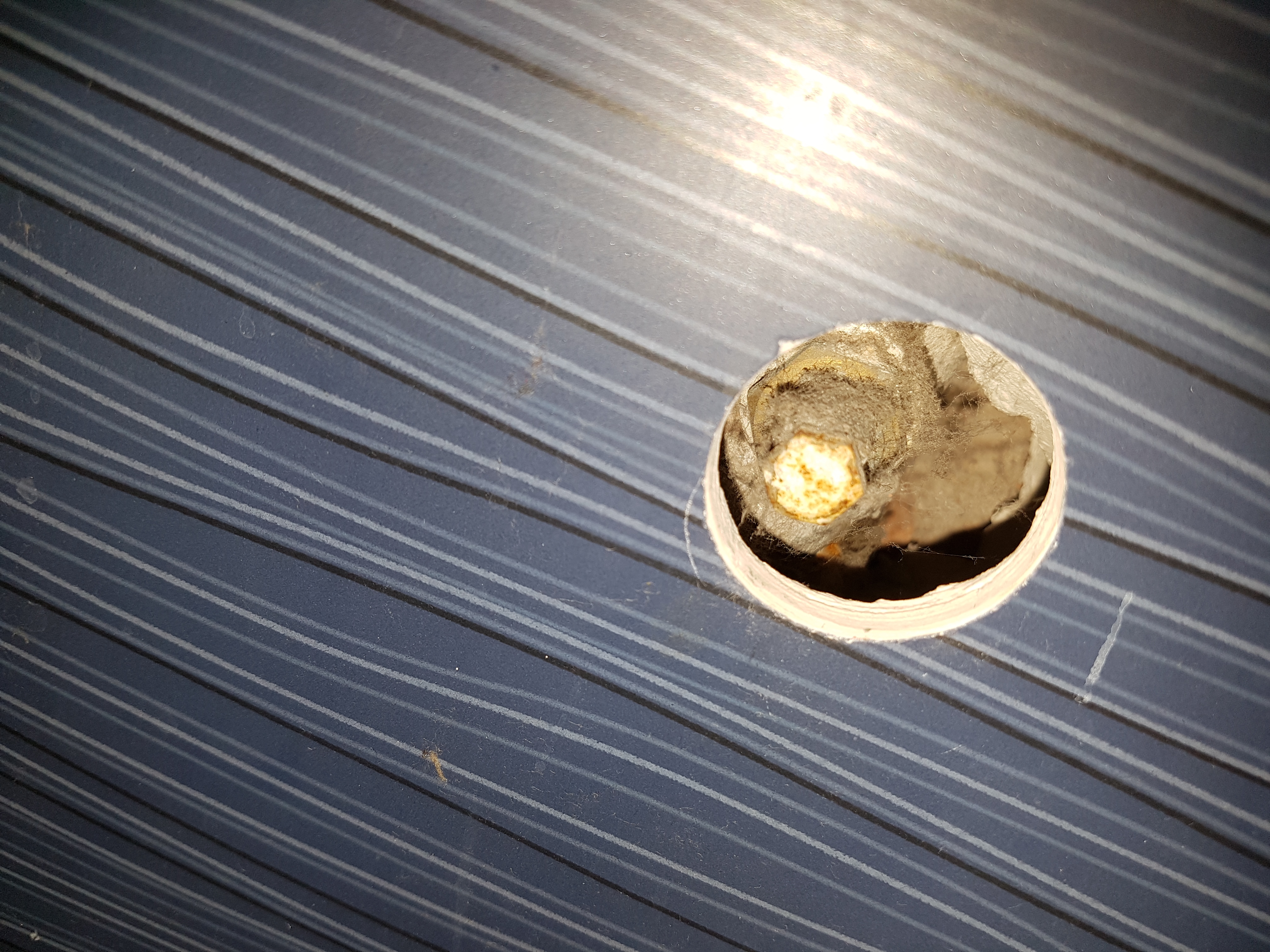
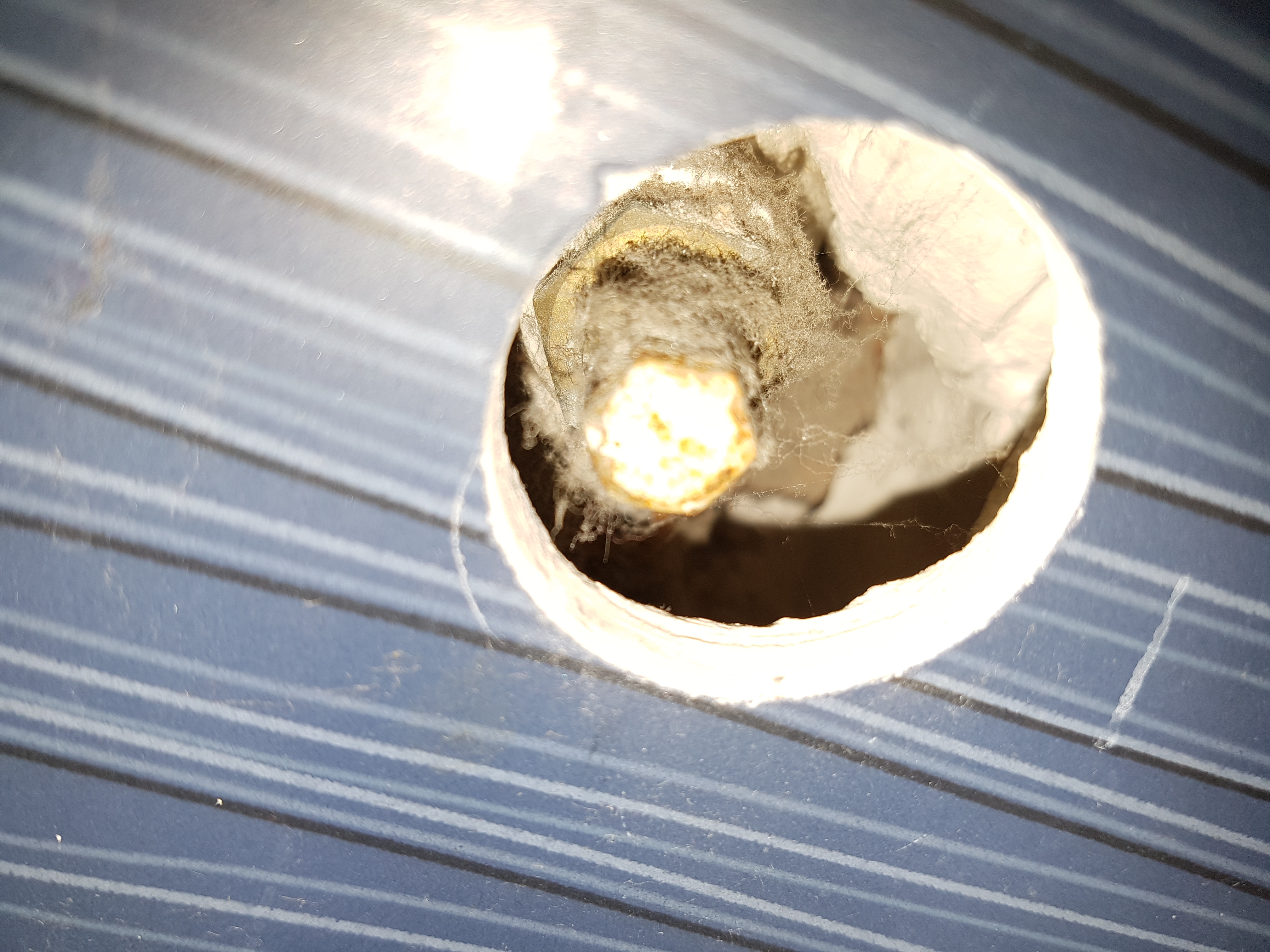
    I found something like this (as pictured) and I wonder what is it? My first idea is that it is the main water valve (I haven't found another candidate for the main valve, but maybe there is something else somewhere behind the cupboards).
    Unfortunately, I did inquire at a few plumbing stores, and a few people said it didn't look like a valve, rather a clogged tee / muff.
    I would be grateful for your thoughts, what in your opinion could it be? And if the water tap, has anyone seen a similar one (I would then like to buy the same one to have a handle)?
    Main Water Valve or Clogged Tee/Muff? Identifying Flat's Plumbing Component (Photos Attached)
    Main Water Valve or Clogged Tee/Muff? Identifying Flat's Plumbing Component (Photos Attached)

    Thank you in advance for your help!
  • ADVERTISEMENT
  • #2 16824440
    marving
    Level 15  
    Maybe if you scraped it a little and dug into the right shape, you could recognize something more. So far, it is more of a tee with a screw-in cork, wrapped in tow, slightly plastered ...
  • #3 16824546
    leonov
    Level 43  
    The valve is not 100%, keep looking ;-)
  • #4 16824548
    malpek
    Level 18  
    Where is this item located? Kitchen, bathroom, low to the floor, or maybe at the level of the sink?
  • #5 16824612
    wiliwi
    Level 7  
    The element is 15 cm above the ground, behind the toilet. 40 cm. on the left is a wash basin. There is a wall on the right and a kitchen on the other side.
    I'm going to do it, but it requires removing the toilet and perhaps removing the tile.
  • ADVERTISEMENT
  • #6 16824619
    marving
    Level 15  
    If you are looking for valves and it is, for example, a studio apartment, usually the valves are in the kitchen under the sink or behind a cabinet. Maybe it's easier to slide the cabinets apart first.
  • #7 16824621
    wiliwi
    Level 7  
    Yes, it's a tiny studio - I also plan to dive behind the cupboards. But it's a fairly inaccessible place, and I thought the main valve was getting in a more convenient location.
  • #8 16824675
    jarcecz
    Level 17  
    The main valve is somewhere near the meter.
  • #9 16824685
    wiliwi
    Level 7  
    Well, there is no meter there, there is one main one for the entire tenement house (unfortunately it is the construction from the 1950s).
  • ADVERTISEMENT
  • #10 16824726
    Tommy82
    Level 41  
    Dust it a little before taking another photo.
    There it looks like it has a head, it can be a valve, but also a radiator ;) .
    What water do you have (hot you heat yourself), maybe you should have two from warm and one second from colder?
    You got a meter out there somewhere. Maybe the main valve and the meter is outside the apartment.
  • #11 16825064
    wiliwi
    Level 7  
    One riser with cold water enters the apartment, central and hot water from the stove.
    There is no water meter in the apartment.

    I got the water and sewage plan from the administrator and it looks like the riser goes directly after this valve from the photo, so it's probably the main valve ...
  • #12 16825189
    jalop
    Level 24  
    It seems to me that someone simply could not close the valve with a standard lever and screwed a hexagonal screw into the head.
  • ADVERTISEMENT
  • #13 16825199
    Tommy82
    Level 41  
    And it will turn the valve in one direction and the screw in the other ;)
    The patent is potentially quite one-way action.
  • #14 16828314
    Parowy
    Level 22  
    Welcome.

    It looks to me like a "former" water valve with a brass plug on a hexagonal key.

    The valve was no longer needed so someone blinded it.

    However, as already mentioned, dusting and taking a picture would help :)

    best regards

    Edit:
    It was not needed or it was leaky.
    If you need to get to know the details of the installation, it will probably not be without a visit from a decent plumber.
    Somehow I can't imagine an apartment without the possibility of shutting off the water supply only to this premises, closing the water to the entire tenement house in the event of a failure in one apartment is a bit pointless :)
  • #15 16828684
    Ture11
    Level 39  
    Maybe when you drain the water from one of the faucets you will be able to hear the sound of water - if it's a valve. It would be important not to hear the water coming from the tap (eg put a sponge in the sink?). Besides, after a long draining of the water, maybe this part of the pipe will become cooler (and / or condensation will appear on it)?
  • #16 16829028
    wiliwi
    Level 7  
    Thanks. I will get to the "valve" in some time (I have to take off the toilet). Unfortunately, the option that the cut-off is only possible in the basement is also possible (it is a tenement house from the 1950s, I talked to a neighbor yesterday who said that it used to be that way, then people started making valves for themselves, although probably not all of them). Another thing is that if I find this valve in the basement, it will not be a tragedy either, because there are four floors there, so before cutting off you only need to talk to three neighbors :)
  • #17 16829168
    cirrostrato
    Level 38  
    Warsaw, house near Plac Bankowy (apartment above the Gerard cinema, in the movie ADVENTURE ON MARIENSZT, a house under construction) construction in the 1950s, once at my friend I changed something in the plumbing and had to turn off the main plumb (the installation in the apartment was practically falling apart, we replaced the whole thing ), we went down to the basement, my friend almost did not get a heart attack (neither did I) when we saw the main hydrophore, everything was pouring junk, water on the floor several cm and there were several dozen kg of rust ... Good luck and courage in action.
  • #18 16829279
    wiliwi
    Level 7  
    The visit to the basement is still ahead of me :)

Topic summary

✨ The discussion revolves around identifying a plumbing component found in a flat, suspected to be either a main water valve or a clogged tee/muff. The user describes the component's location, which is behind the toilet and above the ground, and mentions the absence of a water meter in the apartment. Responses suggest that the component may be a former valve that has been sealed off, possibly with a brass plug, and that further investigation is needed to confirm its function. Suggestions include checking for water flow sounds when draining faucets and exploring behind kitchen cabinets for additional valves. The conversation highlights the challenges of plumbing in older tenement buildings, particularly regarding access to main shut-off valves.
Generated by the language model.

FAQ

TL;DR: Photos show a low-mounted fitting (15 cm above floor); “The valve is not 100%, keep looking.” Likely a plugged tee or a blinded former shutoff near the WC, not a working main valve. [Elektroda, leonov, post #16824546]

Why it matters: Misidentifying a main shutoff can delay leak response and increase water damage.

Quick facts:

Quick Facts

How can I tell if this is a main water valve or just a plugged tee?

Scrape clean and inspect for a stem or handle boss. A corked tee shows a hex/brass plug wrapped in tow and plaster. A true valve shows a spindle/packing gland. Multiple users identified your photos as a tee with a screw-in plug, not a working valve. [Elektroda, marving, post #16824440]

Where should I look first for an apartment’s main shutoff?

Start near the water meter or under the kitchen sink/behind a base cabinet. In older walk-ups, a flat-level shutoff may be missing, and the only control is in the basement. “The main valve is somewhere near the meter.” [Elektroda, jarcecz, post #16824675]

Could the handle have been replaced with a hex screw?

One poster suggested someone removed a lever and inserted a hex screw, making it act like a plug. Another noted this makes operation one-way and unreliable. This supports the plugged/blinded fitting theory rather than a serviceable valve. [Elektroda, jalop, post #16825189]

Is the location (15 cm above the floor, behind the toilet) typical for a main valve?

No. The OP confirmed the fitting sits 15 cm above the floor behind the WC. Contributors doubted it is a main shutoff in that spot. Main flat valves are usually accessible, not buried behind a toilet. [Elektroda, wiliwi, post #16824612]

What quick test can I do to check if it’s connected to flowing water?

Open a faucet to drain water and listen at the fitting; dampen sink noise with a sponge. Over time, the pipe may cool or show condensation if water flows. This noninvasive test helps confirm it’s on an active line. [Elektroda, Ture11, post #16828684]

What if my building has no in-flat shutoff?

Several posters described 1950s tenements where flats rely on basement valves. You may need to coordinate with neighbors to close a shared riser; one user mentioned four floors affected. Plan access and notifications before any work. [Elektroda, wiliwi, post #16829028]

Could this be a former valve that was blinded (plugged) later?

Yes. A contributor identified it as a “former” valve with a brass plug on a hex key. Reasons include redundancy or leakage. Quote: “It was not needed or it was leaky.” [Elektroda, Parowy, post #16828314]

What do the building plans imply if the riser passes this fitting?

The OP’s plan shows the cold-water riser continuing after this point, so the fitting is on the line but not necessarily a shutoff. That supports the idea of a tee/plug or a decommissioned valve body. [Elektroda, wiliwi, post #16825064]

Why do people say “keep looking” if it isn’t the valve?

A responder stated clearly: “The valve is not 100%, keep looking.” The consensus was to search under kitchen units or by the meter or in the basement if the flat lacks its own shutoff. [Elektroda, leonov, post #16824546]

What’s a practical 3-step method to confirm whether it’s a valve?

  1. Dust and scrape the fitting to reveal shape and any spindle head.
  2. Perform the drain-and-listen test while observing for cooling/condensation.
  3. Trace the riser path at cabinets or basement to locate an accessible shutoff. [Elektroda, Ture11, post #16828684]

Is there any safety downside to a hex-plugged fitting?

Yes. A hex-plug cannot regulate flow safely like a valve and may encourage forced turning, risking one-way action or damage. One user warned this “patent is potentially quite one-way action.” [Elektroda, Tommy82, post #16825199]

What should I expect in a 1950s basement hydrophore room?

A poster recalled heavy rust, leaks, and standing water near the main hydrophore in a similar-era Warsaw building. Expect difficult, corroded hardware and plan for protective gear and help. [Elektroda, cirrostrato, post #16829168]

Does every flat have both cold and hot risers?

The OP noted one cold-water riser enters the flat; central and hot water come from a stove. Not all flats have separate hot risers, so fixture counts vary by retrofit. [Elektroda, wiliwi, post #16825064]

Why is the main valve rarely behind a toilet?

Main shutoffs should be accessible. Hiding one behind a WC complicates emergencies and maintenance. Contributors advised checking under kitchen cabinets or near the meter instead. [Elektroda, marving, post #16824619]

If I still can’t find the shutoff, who should I call?

Call the building administrator for plans and a licensed plumber for identification. “If you need to get to know the details of the installation, it will probably not be without a visit from a decent plumber.” [Elektroda, Parowy, post #16828314]
Generated by the language model.
ADVERTISEMENT