FAQ
TL;DR: One relay replacement fixed the Whirlpool AWO/C 61010 F08 fault; “The relay was shorted.” Delivery-to-fix took a day. [Elektroda, Python013, post #16982042]
Why it matters: This FAQ helps DIYers quickly diagnose F08 heater-circuit faults and decide when to replace the control-board relay.
Quick Facts
- F08 on this model is tied to the heater circuit; start by checking the heater first. [Elektroda, Anonymous, post #16975590]
- Disconnect power leads before measuring; check element resistance and for insulation “puncture.” [Elektroda, Chupacabra, post #16975350]
- Example reading reported: 26.1 Ω across heater contacts on a working element. [Elektroda, Python013, post #16976661]
- If the heater tests OK, inspect/replace the heater relay on the control module. [Elektroda, falo22, post #16978208]
- Leakage testing needs a megohmmeter; a basic multimeter can miss breakdown faults. [Elektroda, bubu64, post #16978339]
What does error F08 mean on a Whirlpool AWO/C 61010?
In this thread, F08 pointed to a heater-circuit problem. Users verified the element, then focused on the control-board relay. Replacing the relay cleared F08 and restored heating. Treat F08 as a heater path issue: element, wiring, or relay drive. [Elektroda, falo22, post #16978208]
How do I check the heater with a multimeter?
First, test resistance between the two working heater terminals with an ohmmeter. Then, in the meter’s highest range, check for any continuity between either working terminal and the heater casing. Any breakdown indicates a faulty element. If you feel unsure, ask for help. [Elektroda, Anonymous, post #16975590]
Do I need to disconnect wires before measuring the heater?
Yes. “Make measurements with a meter with unfastened power cables.” Measure the element’s resistance and check for insulation puncture to ground. This avoids parallel paths that skew readings and keeps you safe while testing. [Elektroda, Chupacabra, post #16975350]
What resistance should I expect across the heater?
Expect a finite resistance, not open or short. In this case study, a working element read 26.1 Ω across its contacts. Use this as a ballpark check; large deviations suggest issues with the element or wiring. [Elektroda, Python013, post #16976661]
Is a multimeter enough to catch insulation leakage to chassis?
Not always. A standard multimeter may miss marginal insulation faults. Use an insulation resistance meter (megohmmeter) for a proper leakage test between terminals and the heater casing. That tool stresses the insulation to reveal breakdowns. [Elektroda, bubu64, post #16978339]
My leakage test looks fine, but F08 persists—what next?
A clean multimeter test can still miss a fault. Verify whether the control module actually sends voltage to the heater. If not, inspect the board and focus on the heater relay and its drive. Photos help diagnosis. [Elektroda, Chupacabra, post #16977637]
Which relay controls the heater, and what’s the part marking?
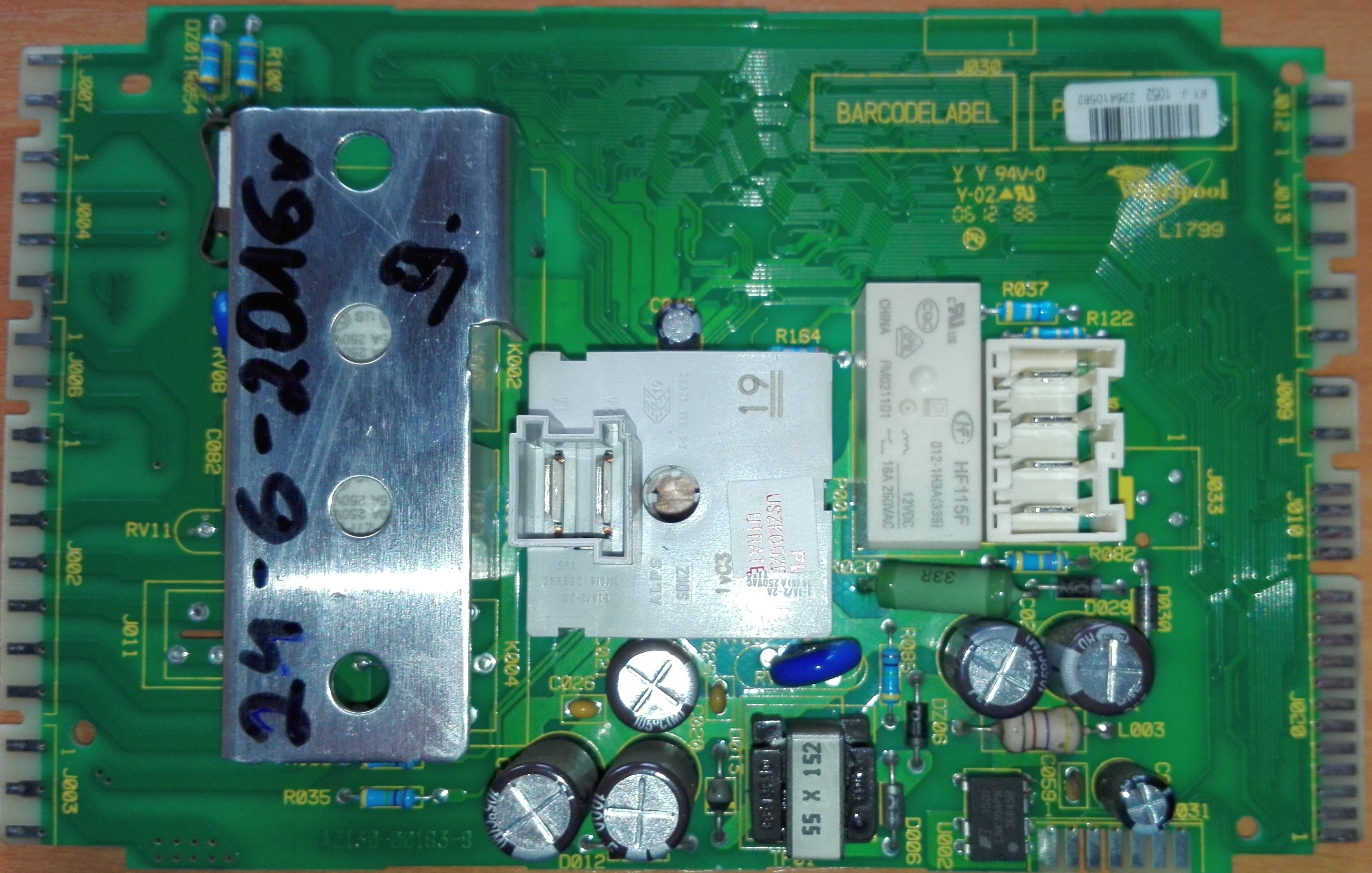
On the control board, the heater relay in this case was marked HF115F 012-1H3A; another available marking was HF115F 012-1H3AF. These are the rectangular components near the heatsinked area on the module. [Elektroda, Python013, post #16979152]
Can I use HF115F 012-1H3AF in place of HF115F 012-1H3A?
Yes. The thread author sourced HF115F 012-1H3AF, installed it, reset the programmer, and the washer worked. This substitution resolved F08 because the original relay had shorted contacts. “The relay was shorted.” [Elektroda, Python013, post #16982042]
How do I perform a quick 3‑step heater test?
- Unplug the washer and disconnect heater power leads.
- Measure resistance between the two heater terminals.
- On the highest range, check between each terminal and the heater casing for breakdown.
If leakage appears, replace the element. [Elektroda, Anonymous, post #16975590]
What’s a relay in this context?
It’s the control-board switch that applies mains power to the heater. If the element tests good yet F08 remains, the relay can be the culprit. Technicians in the thread recommend checking or replacing it when heater checks pass. [Elektroda, Chupacabra, post #16979055]
How long does the relay fix take, realistically?
In this case, the replacement relay arrived the next morning. After a brief soldering session and a programmer reset, the washer ran normally. This shows the repair can be quick once the part is in hand. [Elektroda, Python013, post #16982042]
What if I’m not confident using meters or soldering?
Do the visual checks, then stop. As one helper put it, if insulation testing or board work exceeds your comfort, ask someone experienced for help to protect you and the machine. [Elektroda, Anonymous, post #16975590]
My module shows soot near L003—does that confirm the fault?
Discoloration hints at heat or contamination, but it’s not conclusive. Proceed to electrical checks. Verify heater readings and whether the relay switches power before deciding on board repair. Share module photos if seeking advice. [Elektroda, Python013, post #16978926]
Why did my F08 clear after replacing only one component?
Because the heater relay had shorted contacts, preventing proper switching. Replacing that single relay restored control of the heater circuit and cleared F08 after a reset. One component change solved the fault in this thread. [Elektroda, Python013, post #16982042]