logo elektroda
logo elektroda
X
logo elektroda

TME expands U.S. presence with key leadership appointments

(Sponsored) magic9 1401 33
ADVERTISEMENT
Treść została przetłumaczona polish » english Zobacz oryginalną wersję tematu
  • #31 21893146
    max-bit
    Level 34  
    And meanwhile
    Mouser
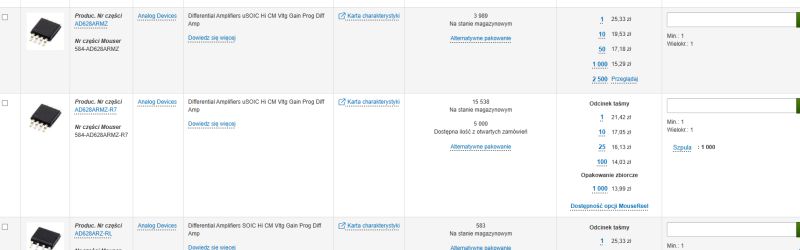
    TME expands U.S. presence with key leadership appointments
    i

    TME expands U.S. presence with key leadership appointments

    This is the difference
    Like some fiddly simple components without "requirements" then TME

    But if in most cases something more, then abroad

    I used to farnell very often but after the quality of service ...
    now USA 3-4 days and I have at home and I do not have to ask and prices are often lower ... not to mention free shipping.

    Interesting fact
    Recently I needed to buy something on ebay (something not available in Poland or the EU) and I bought it on ebay but that's not the point, the core of the issue is the shipping as ebay charges an awful lot of money for shipping, so I used the services of PolAmer (based in the US and Poland) and that's how it went....
    And so the cost of shipping in the USA $ 13 from the USA to PL probably $ 27 (USA - Polamer) and to PL. The shipment arrived on Thursday, I had it on Wednesday of the following week, and in total it took 1.5 weeks from the seller. So, express.

    So, if you are buying something more expensive (and not even necessarily), I recommend this way so far (and I am picky in this respect) I give 9/10 for what -1 point a yes, but overall really solid fast and basically cheap.
  • ADVERTISEMENT
  • #32 21893207
    oscil1
    Level 23  
    jarek_lnx wrote:
    While shopping for a project I could write a wall of text with what the competition does better and what is wrong at TME

    Well, but they do have a "unique value proposition", which I see you haven't noticed.
  • ADVERTISEMENT
  • #33 21893299
    jarek_lnx
    Level 43  
    oscil1 wrote:
    Well, they have a "unique value proposition", which I see you haven't noticed.
    Somehow I'm weird ;) that in an electronic parts shop, the most important thing to me is electronic parts. I can't appreciate marketing campaigns, business plans or growth strategies when I can't buy what I need.
    The professionals would say that I don't know the business and you can't look at it so one-sidedly, because the shop is not just for buying.

    Quote:
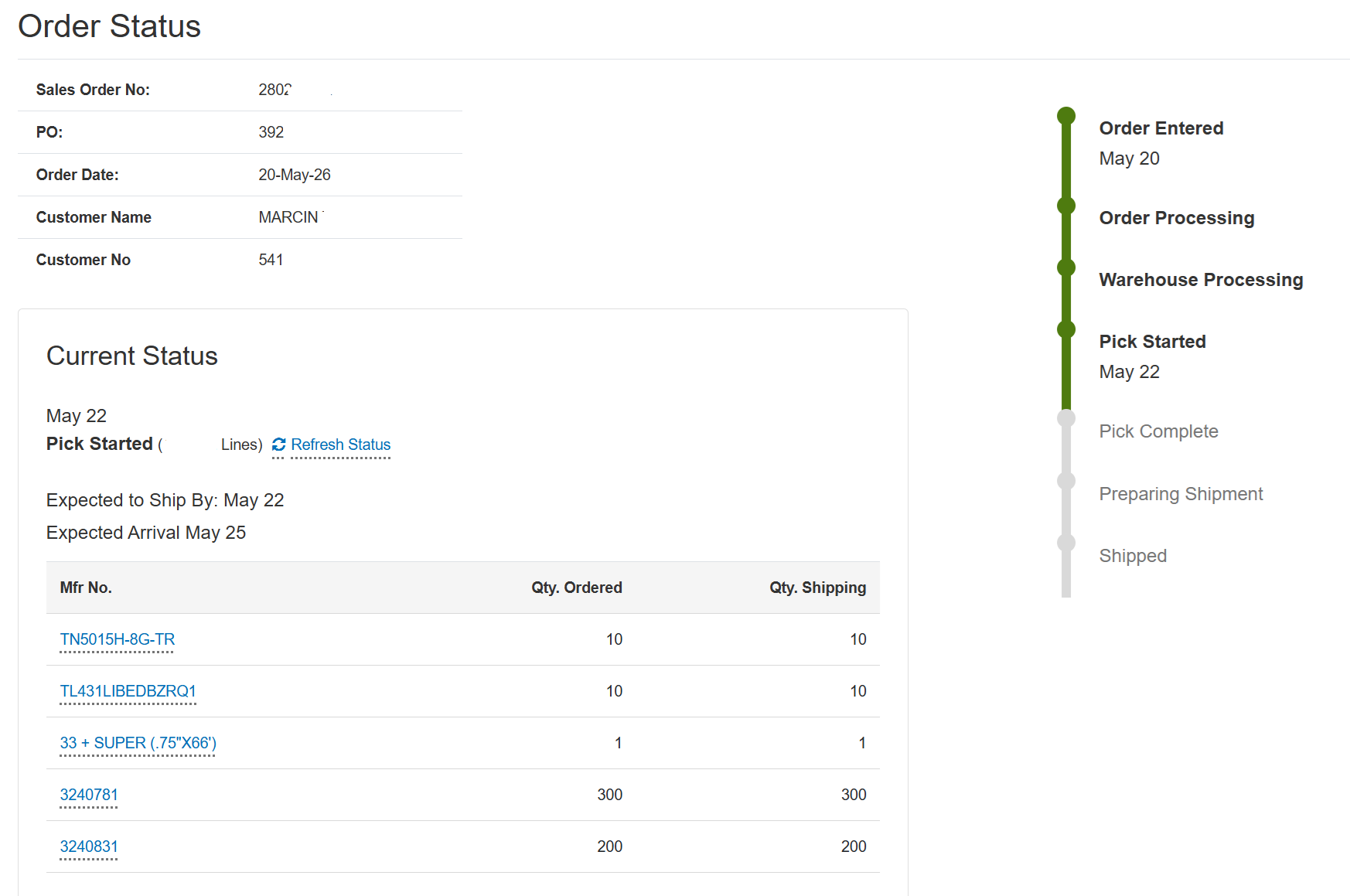
    And this time
    Mouser
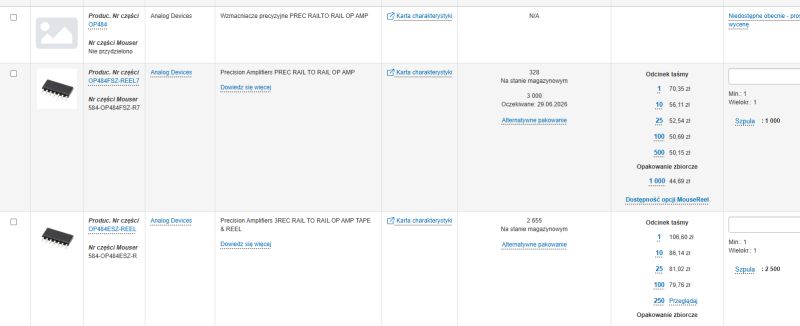
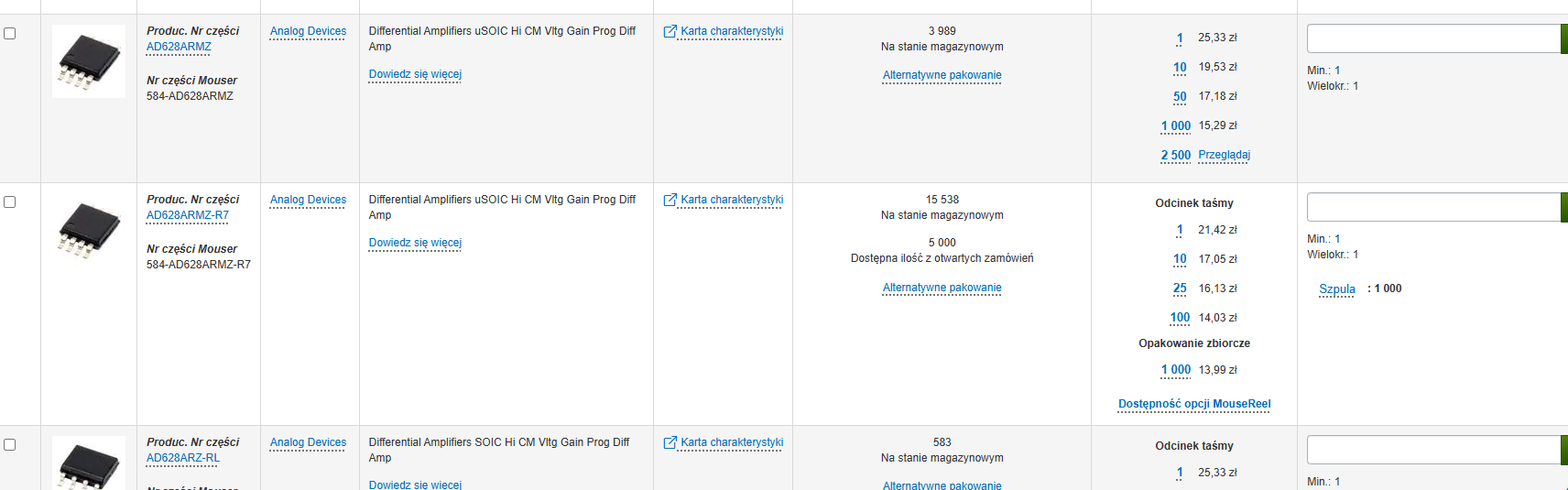
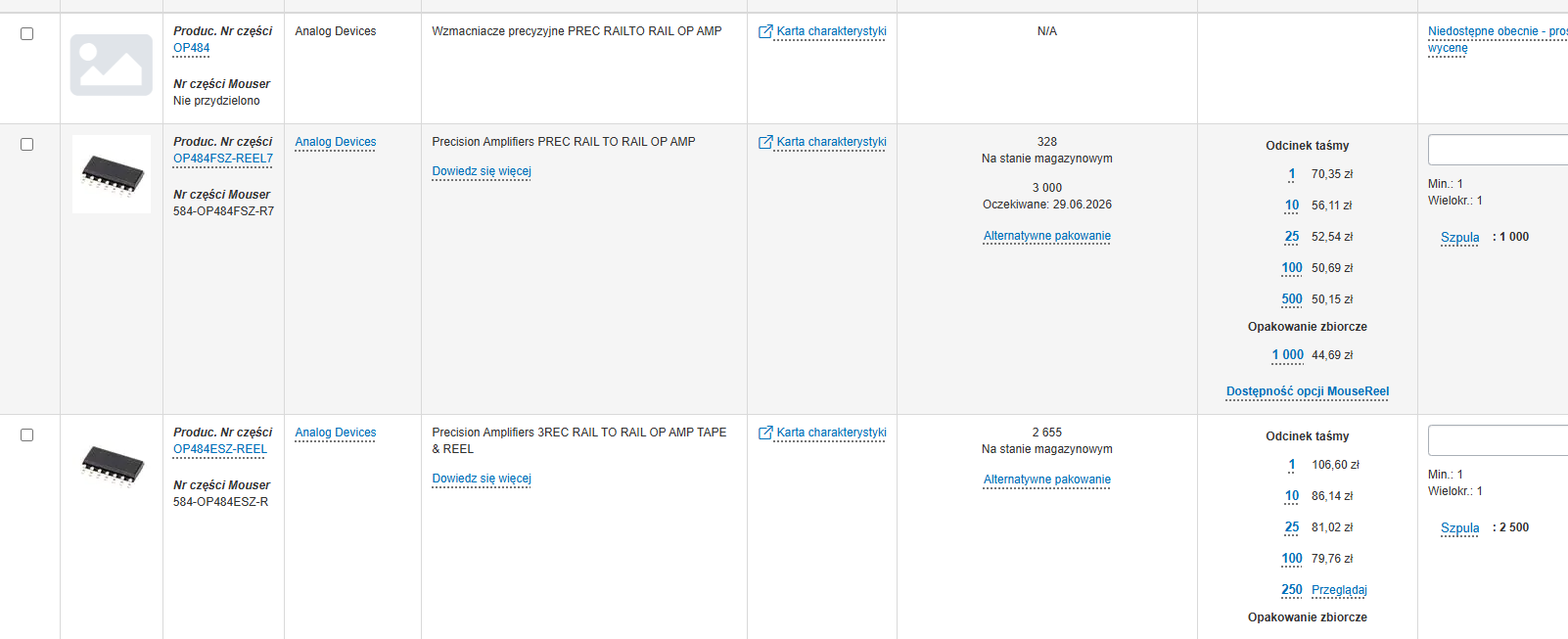
    And it can still be found, with a search engine, by parameters.
  • #34 21893449
    oscil1
    Level 23  
    jarek_lnx wrote:
    Some kind of weird I am

    You are simply behind the Americans. They're already ready for the "unique value proposition", and unfortunately you're not (neither am I). Shame

FAQ

TL;DR: TME says it serves 150+ countries and ships about 6,000 orders daily, but forum engineers still ask for proof behind the phrase "unique value proposition" in the U.S. This FAQ helps buyers compare TME with Mouser and DigiKey on stock depth, shipping, local execution, and production-order risk. [#21883018]

Why it matters: Electronics buyers switch distributors for hard reasons: stock, speed, price, compliance, and whether a part is actually ready to ship.

Criterion TME Mouser DigiKey
U.S. expansion signal New U.S. CEO, advisor, market-development hire Established giant in thread discussion Established giant in thread discussion
Semiconductor example ~20,000 new parts; 376 available now ~20,000 discrete parts; 4,200 available now Treated as major incumbent competitor
Perceived strength in thread Price opportunities, EU base, growing local presence Broad stock, strong U.S. position Broad stock, strong U.S. position
Main concern raised Stock depth and delayed shipping Higher benchmark to beat Higher benchmark to beat

Key insight: The thread shows that leadership hires alone will not win U.S. buyers. Engineers want measurable proof: stocked parts, fast local delivery, clear pricing, and a concrete USP.

Quick Facts

  • TME describes itself as a distributor with 1,300,000+ products from 1,300 manufacturers, serving customers in 150+ countries. That scale matters only if stocked items match real demand. [#21883018]
  • TME says its logistics centers dispatch about 6,000 shipments per day from Łódź and Rzgów. Forum users still report that some deliveries now ship a day later than expected. [#21883018]
  • One user says that after selecting "available in stock," about 80% of products disappear. That makes the filter a readiness check, not just a catalog view. [#21883139]
  • In one semiconductor snapshot, TME showed almost 20,000 newly introduced products, but only 376, or under 2%, were immediately buyable. The same user counted about 4,200 buyable parts at Mouser in a comparable category. [#21883139]
  • Another user notes Mark Burr-Lonnon previously spent 16 years at Mouser as a Vice-President responsible for the Eurasian market. That experience matters because TME is entering the exact competitive arena discussed in the thread. [#21884241]

What is TME's value proposition in the U.S. market, and what exactly is its unique selling proposition compared with Mouser and DigiKey?

The thread does not state a concrete U.S. USP for TME. TME describes a customer-first North American approach, digital expansion, and stronger local execution, but forum users explicitly ask what TME does better than Mouser or DigiKey. That means the value proposition is still presented as a strategy, not yet as a measurable differentiator such as deeper stock, faster local delivery, or lower pricing. [#21884475]

How does TME plan to compete in the United States against large electronics distributors like Mouser, DigiKey, and Farnell?

TME plans to compete by building a local U.S. team and combining that with its existing global scale. On April 13, 2026, it announced Mark Burr-Lonnon as CEO of TME US, Krister Haggstrom as strategic advisor, and Levy Olson for U.S. market development. The stated playbook is local leadership, digital growth, customer proximity, and North American expansion rather than a pure catalog-size battle. [#21883018]

Why do so many products disappear when I select "show only available in stock" on TME, and how should I interpret those stock filters?

They disappear because the filter removes catalog items that are listed but not currently available for immediate shipment. One user says an average of about 80% of products vanish after applying the stock-only view. Read that filter as a same-order or near-term availability check, not as a measure of TME's total catalog breadth. [#21883139]

What's the difference between TME and Mouser for semiconductor availability, especially for newly introduced parts?

In the thread's example, Mouser shows much deeper immediate availability for newly introduced semiconductor parts. The user reports that TME lists almost 20,000 new semiconductor products, but only 376 are buyable off the shelf, or less than 2%. In a comparable Mouser view, about 4,200 parts are available immediately. [#21883139]

How can I compare TME, Mouser, and DigiKey for price, stock, shipping speed, and product range before placing a production order?

Use a three-step check before you release a production order. 1. Filter each distributor to in-stock parts only. 2. Compare the exact manufacturer part number, price breaks, and shipping date. 3. Confirm that the part is actually purchasable, because engineers in the thread say orders go to the competitor if the needed chip is missing. This method fits production buying better than comparing headline catalog size. [#21888861]

What does "value proposition" mean in electronics distribution, and how is it different from normal marketing language?

"Value proposition" is a business concept that explains why a buyer should choose a supplier, including service, price, availability, and delivery performance. In this thread, users accept the term itself but reject vague phrasing. They want evidence-backed claims, not slogans, because purchasing decisions depend on stocked parts and execution. [#21884438]

What is a USP (Unique Selling Proposition), and how would it apply to a component distributor like TME?

"USP" is a market-positioning concept that identifies one clear advantage a supplier delivers better than competitors, and that advantage must be specific enough to guide buying decisions. In this thread, users say a distributor's USP would need to be something concrete, such as stronger stock, lower prices, or faster local service. [#21884475]

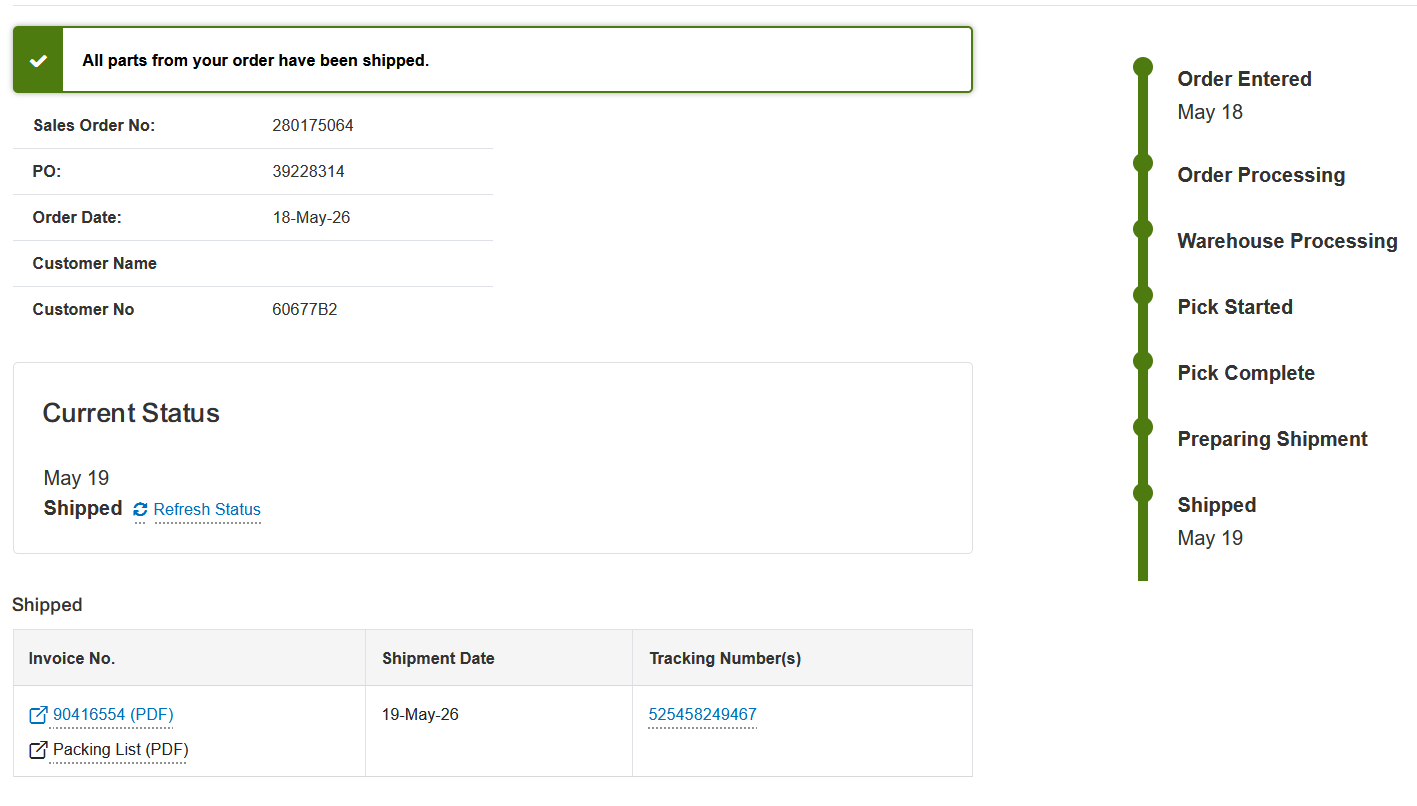
Why would an electronics order be marked "couldn't be fulfilled" and refunded by a distributor like TME?

An order gets closed and refunded when the distributor decides it cannot complete it under its internal rules. In the thread, the user reports that the order was marked "couldn't be fulfilled," closed, and refunded, and says terms and conditions may explain why. The key failure fact is practical: the buyer had to reorder from a competitor because time was pressing. [#21887755]

How do export controls, compliance checks, or "dual-use" rules affect orders for electronic components from distributors?

They can trigger extra verification, order refusal, or tighter access for private buyers. One user says wholesalers may verify orders and buyer details with partners, and warns that more products may be treated as dual-use over time. In the thread, that is presented as a real purchasing risk, especially when rules tighten faster than customer expectations. [#21888892]

In what ways does having a local U.S. warehouse change delivery times, costs, and customer support for an electronics distributor?

A local U.S. warehouse can shorten delivery paths, support faster fulfillment, and make local service more credible. In the thread, a user says TME would need a warehouse in the United States if it wants to compete seriously there, and adds that such a move costs real money. That makes warehousing a strategic investment, not a cosmetic market-entry step. [#21884162]

Who is Mark Burr-Lonnon, and why is his previous experience at Mouser seen as important for TME's U.S. expansion?

Mark Burr-Lonnon is the new CEO of TME US, and forum users highlight his Mouser background as a serious competitive asset. One post says his CV shows 16 years as a Mouser Vice-President responsible for the Eurasian market. That matters because TME is entering a U.S. distribution market where Mouser is already treated as a benchmark competitor. [#21884241]

What role does a strategic advisor focused on digital strategy play in growing an electronics distributor in the U.S.?

A strategic advisor focused on digital strategy helps turn market reach into measurable customer acquisition. TME says Krister Haggstrom will strengthen digital presence, use data-driven growth models, and support scalable U.S. expansion. In a market where engineers compare distributors online by stock and speed, digital execution directly affects lead flow and conversion. [#21883018]

How important are local invoicing, local shipping options, and regional market knowledge when expanding electronics distribution into India or the U.S.?

They are critical because market fit depends on operational details, not just catalog size. The India example in the thread points to four hard requirements: low prices, large-quantity availability, acceptance of Chinese-branded IC demand, and local invoicing that works without delays. The same post also says the hobby market is not huge there, so regional knowledge changes target-customer strategy. [#21884451]

Why might TME package simple connectors like sensitive electronic components, and what does that say about standardized packing processes?

It likely reflects a standardized packing process designed for consistency across many product types. One user says connectors are sometimes wrapped as if they were sensitive electronic components and suggests this comes from packaging-process standardization. That choice can improve handling discipline, but it can also feel excessive for simple mechanical parts. [#21883337]

Which market segments should TME target first in North America if hobbyists are less important than business and production customers?

TME should target companies placing business and production orders first. The thread says amateur electronics is effectively not a meaningful U.S. segment for this strategy, while companies are the realistic opportunity. That points TME toward OEM, contract manufacturing, and professional purchasing teams that will switch only for strong reasons such as stock, pricing, or service. [#21883146]
Generated by the language model.
ADVERTISEMENT