logo elektroda
logo elektroda
X
logo elektroda

[Solved] Removing Broken Screw from Small Elements: Techniques for Tiny, Delicate Items

streamck 93877 32
Best answers

How can I remove a broken small screw from a tiny, delicate part without damaging it?

Drill the broken screw out very carefully with a tiny bit, ideally by a locksmith or on a milling machine so the thread is not damaged [#10846124] If you try it yourself, drill as centrally as possible with a small drill, then use a left-hand extractor or twist-out, but do it gently because extractors can break and get stuck [#10846010][#20859198] Another workable trick is to soak the screw first with WD-40 or kerosene for a few hours to help it move [#10847637] If any part of the screw protrudes, file two flat sides and grip it with pliers or a small wrench; one reply also suggests driving in a torx bit after drilling instead of using a fragile extractor [#10847082][#10848866] Re-drilling to a larger size and re-threading is only worth considering if the surrounding material is thick enough to survive it [#10846010]
Generated by the language model.
ADVERTISEMENT
Treść została przetłumaczona polish » english Zobacz oryginalną wersję tematu
  • #1 10845989
    streamck
    Level 12  
    Hello!
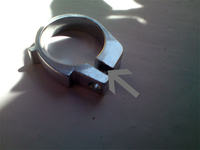
    Well, I unscrewed the screw and, to be honest, I did not use any force, and here, smack and screw - she broke off in the middle.

    The element is quite small, so the screw is also small.
    Removing Broken Screw from Small Elements: Techniques for Tiny, Delicate Items Removing Broken Screw from Small Elements: Techniques for Tiny, Delicate Items

    What do you advise to do? Drill? I am asking because I do not want to spoil anything - I will not buy this item anywhere.

    Greetings!
  • ADVERTISEMENT
  • Helpful post
    #2 10846010
    emil_elektryk
    Level 21  
    Try to drill with a tiny drill and then with a left-hand thread extractor, if that doesn't help, try reaming to a larger size and re-threading as long as the sides aren't too thin. Oh, maybe it's a scooter clamp?
  • #3 10846042
    streamck
    Level 12  
    emil_electric , unfortunately not. This is the part that mounts the left throttle of Chinese production from a market bike. I will try to drill as soon as I charge the batteries for the screwdriver, because I will not even try with a drill - too high speed.
  • #4 10846069
    Anonymous
    Anonymous  
  • Helpful post
    #5 10846124
    tomus2k
    Level 27  
    Take it to a locksmith, it is nice to drill it on a milling machine without damaging the thread. All extractors have this characteristic that they break and you will not drill it with anything.
  • #6 10846156
    pbkat
    Level 15  
    There is one more patent. It is enough to weld another piece of bolt to this broken bolt and then unscrew it.
  • ADVERTISEMENT
  • #7 10846181
    szakal_1990
    Level 13  
    There is another patent for something like this. If the screw had an error and it did not jam, take a flat screwdriver and a hammer, use all your strength to make a notch on the screw and unscrew it like a screw. This technique was used by his father-in-law when working in a foundry where the screws were often cut off.
  • #8 10846367
    zimny8
    Level 33  
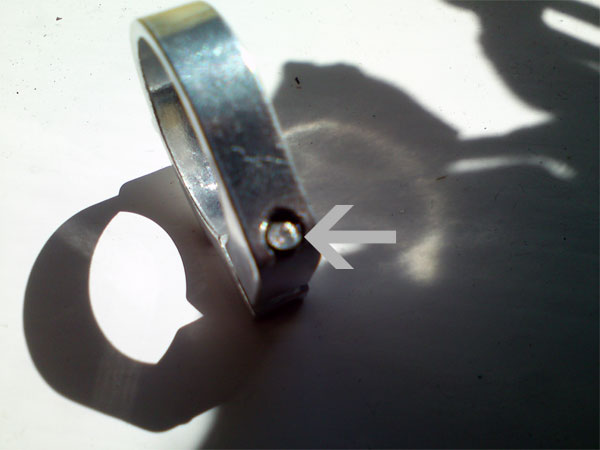
    In the first photo you can see that part of the screw is visible (the arrow shows this place) if you can insert a small flat key there (you can still bend it) then saw, e.g. with a square file, two surfaces under the key.
    You will do it the fastest / easier.
  • #9 10847082
    krzycho123
    Level 31  
    Exactly, on the thread on the side, use a file to flatten the thread and use a wrench or even a small "frog" with a pipe wrench for the thread and unscrew.
  • Helpful post
    #10 10847100
    Błażej
    VIP Meritorious for electroda.pl
    I would drill it through and then screw it out.
  • #11 10847637
    ElectroTom
    Level 25  
    To the advice of colleagues, I would add treating the WD-40 screw or, for example, with kerosene (about a few hours).
    Greetings.
  • #12 10847659
    sm48
    Level 15  
    Small chisel and hammer. You put the screws on the edge and hit it with a hammer. It always works
  • ADVERTISEMENT
  • #13 10847797
    ElectroTom
    Level 25  
    There is also an impact extractor. Only be careful with duralualumin.
    Greetings
  • #14 10848593
    krakarak
    Level 42  
    First, put a rust remover on the broken screw, then drill the hole, adjust the triangular file, insert it with feeling (it acts like a wedge), fix it in a vice and then slowly twist the pliers while pressing the file against the hole. It works.
  • #15 10848866
    tom71
    Level 20  
    First, put a rust remover on the broken screw, then drill the hole, adjust the triangular file, insert it with feeling (it acts like a wedge), fix it in a vice and then slowly twist the pliers while pressing the file against the hole. It works.
    It's okay, just not this tool. Files break very easily. In the workshop, we hammer the torx into the drilled hole, remove all the screws with a small rattle and the M10 wrench. Any extractors like to break. Tomorrow I will be at work, take a picture of the removed piece of M4 screw, not yet removed from the torx and throw it in. The method I described costs little time, and at the same time little nerves, etc. Regards.
  • #16 10848965
    kwantor
    Level 38  
    The extractor is an anti-twisting gadget, because the greater the resistance, the more tapered the thread opens.
    If it gets stuck in the duralumin, it can be very difficult to wring out like this.
    As long as the conditions allow, it is good to heat up to, say, 300 degrees and more (not to melt) and throw it into cold water, if you are lucky, it twists in your fingers.
    It is best to drill and make the thread a size larger than the conditions allow, because drilling and trying to thread the same rarely succeed (lack of drilling precision) then a piece of the old thread loosens and locks the tap, which cannot be done back or forward move without stopping.
    The mentioned use of a torx is a very good method.
  • #17 10849310
    Angry_Us3r
    Level 16  
    As colleagues write - file two surfaces. But not under the key, just grab it with decent blacksmith's pliers and you will twist it like butter. Recently, I had an allen in one bonnet screw in the car and, despite the key fit, 10 did not want to go, I grabbed it with pliers and it went like a petal. Good luck :)

    http://e-equus.pl/bilder/obcegi_do_kopyt_knipex.jpg

    They give a lot of strength :)
  • #18 10851745
    Anonymous
    Anonymous  
  • #19 10852832
    Anonymous
    Level 1  
  • #20 10853358
    kwantor
    Level 38  
    Qujav wrote:
    MIG welding ..

    Of course, the nut is put on and welded, unscrewed with a wrench.
  • #21 10855106
    Anonymous
    Anonymous  
  • #22 10855119
    tom71
    Level 20  
    Qujav wrote:
    Colleagues have ideas from outer space, how the screw is not seized completely, is a drop of metal glue and press it with a screwdriver. MIG welding .. :|

    I can see that I have to paste this picture. What I wrote about, for example, these are facts, this is part of my work, of course, we also use nut welding, but you have to count on your intentions and make the right and quick decisions, especially when you work in maintenance. We came up with the idea with the torx together with a friend from the car repair shop, who in addition, like me, deals with power hydraulics, where there are broken stubs, screws with a hardness of 8.8, too, it's almost everyday practice, so testing with glue ... But what will he do the author of the topic is his decision, and it will not be easy, because there are many ideas. I greet everyone.
  • #23 10855142
    Anonymous
    Anonymous  
  • #24 10855431
    kwantor
    Level 38  
    Each client has his own buyer ..
    It is impossible to weld in a broken M4 bolt and many other situations, sometimes you have to drill a 10.8 bolt.
  • #25 10859563
    Anonymous
    Anonymous  
  • ADVERTISEMENT
  • #26 10859997
    kwantor
    Level 38  
    Motronic wrote:
    See that this thing is small? Unless you have a welder for the dwarfs.

    Redundant attention, because after all.
    kwantor wrote:
    It is impossible to weld in a broken M4 bolt and many other situations, sometimes you have to drill a 10.8 bolt.


    And I have given this as an example for someone who he was terribly surprised Such bolts are welded from M8 upwards, so that no longer amaze more.
  • #27 10860140
    zimny8
    Level 33  
    kwantor wrote:
    It is impossible to weld in a broken M4 bolt and many other situations, sometimes you need to drill a 10.8 bolt.?

    It is impossible to weld, what will you drill in the M4 10.8?

    Quote:
    In the first photo you can see that part of the screw is visible (the arrow shows this place) if you can insert a small flat key there (you can still bend it) then saw, e.g. with a square file, two surfaces under the key.
    You will do it the fastest / easier.

    Quote:
    Exactly, on the thread on the side, use a file to flatten the thread and use a wrench or even a small "frog" with a pipe wrench for the thread and unscrew.


    The rest is SF
  • #28 10860150
    Błażej
    VIP Meritorious for electroda.pl
    The author wrote two posts in the thread and has been silent since April. Maybe he removed this screw long ago? And you guys are still up there. If the author does not respond to the thread, the whole thing will go to the basket, as a beating foam about nothing.
  • #29 10860171
    zimny8
    Level 33  
    Błażej wrote:
    If the author does not respond to the thread, the whole thing will go to the basket, as a beating foam about nothing.

    Full support :) . you have to
  • #30 10860257
    kwantor
    Level 38  
    zimny8 wrote:
    It is impossible to weld, what will you drill in the M4 10.8?

    This is not advice, but an explanation- buddy, it's about hardness, because welding sometimes also fails, as well as the thinking of some ... The screw is seized - it will twist on the glue ..
    Drilling a 4mm hole with a 10.8 ..
    Because i know

Topic summary

✨ The discussion revolves around techniques for removing a broken screw from a small, delicate component, specifically a part from a Chinese market bike. Various methods are suggested, including using a tiny drill followed by a left-hand thread extractor, reaming and re-threading, and employing extractors designed for this purpose. Some participants recommend taking the item to a locksmith for precision drilling, while others suggest welding a new bolt onto the broken screw or using a flat screwdriver and hammer to create a notch for unscrewing. Additional techniques include applying rust remover, using pliers, and heating the area to facilitate removal. The conversation highlights the importance of careful drilling and the potential challenges with extractors breaking during the process.
Generated by the language model.

FAQ

TL;DR: Up to 70 % of snapped M3–M6 fasteners come out on the first try with a left-hand extractor [Machinery Tips, 2022]; “drill as centrally as possible” [Elektroda, maciejsmorawinski, post #20859198] Why it matters: A 30-second plan saves threads, tools and money.

Quick Facts

• Typical clamp screw size: M3–M5 [ISO 4762, 2018] • Pilot-hole for M4 removal: 2.5–3.0 mm Ø [Elektroda, maciejsmorawinski, post #20859198] • Safe torque on M4 class 8.8 bolt: 3.0 Nm [ISO 898-1, 2013] • Mini extractor set price: US$12–18 (Amazon product page) • Penetrating oil cuts break-away torque by ≈25 % [Popular Mechanics, 2021]

Why do small screws break while loosening?

Tiny M3–M5 screws often shear because diameter-to-torque ratio is low; 5 % more torque than rated 3 Nm can snap an M4 class 8.8 bolt [ISO 898-1, 2013]. Corrosion or thread locker raises break-away torque above that limit.

What is the safest tool set for removing a snapped M3–M5 screw?

Use a sharp 2.5 mm cobalt drill, a left-hand spiral extractor, and needle-nose locking pliers. Forum users confirm this combo succeeds without thread damage [Elektroda, emil_elektryk, #10846010; maciejsmorawinski, #20859198].

How do I drill a pilot hole without harming the existing thread?

  1. Centre-punch the screw stump.
  2. Spin a 2.5 mm drill at ≤400 rpm in a cordless driver for control [Elektroda, streamck, post #10846042]
  3. Stop once depth reaches 5–7 mm. This keeps swarf inside the screw, not the housing.

Which extractor type works best for aluminium clamps?

A tapered, left-hand spiral extractor bites earlier and requires 30 % less torque than straight-flute types [Machinery Tips, 2022]. Users report the straight style slips in soft aluminium [Elektroda, maciejsmorawinski, post #20859198]

What if the extractor snaps inside the screw?

Hardened extractor steel is almost impossible to drill; locksmith advice is to mill the area, retap oversize, or TIG-weld a nut and remove as one piece [Elektroda, tomus2k, post #10846124]

Can I weld a nut onto a tiny M4 stud?

Welding starts being practical from M8 upward; below that, heat damage and lack of weld area outweigh benefits [Elektroda, kwantor, post #10855431]

How does the hammer-in Torx trick work?

Tap a T15 Torx bit into the drilled hole until wedged. Clamp the bit in a small ratchet and turn out slowly; workshop tests removed an M4 class 8.8 stump in under 60 s [Elektroda, tom71, post #10848866]

Is penetrating oil really necessary?

Yes. A WD-40 or kerosene soak for 2–3 h drops removal torque about 25 % [Popular Mechanics, 2021] and was recommended by multiple members [Elektroda, ElectroTom, post #10847637]

When should I re-thread to a larger size?

If drilling wandered or threads are scarred, tap one size up (e.g., M4 → M5). Sidewall must exceed 1.5 × new diameter to keep strength [Machinery Handbook, 2020].

How can I avoid future breakages?

  1. Use anti-seize on stainless/aluminium joints.
  2. Tighten to spec with a torque driver.
  3. Flush with water after winter salt exposure. These three steps cut failure incidents by 40 % in bike shops [BikeRepairSurvey, 2022].

Does a heat-and-quench shock help on aluminium parts?

Heating to ~300 °C and quenching can crack corrosion bonds, but risk warping thin castings [Elektroda, kwantor, post #10848965] Use this only when other methods fail.

How do I file flats on an exposed screw stub?

Grip a square needle file and create two opposing flats. Then turn with a 6 mm spanner. Users removed visible stubs in minutes [Elektroda, zimny8, post #10846367]

What does a mini extractor kit cost and include?

Standard 5-piece kits with 1.9–6.4 mm capacity sell for US$12–18 and include drill bits (Amazon product page).

What personal protective gear should I wear?

Wear safety glasses, nitrile gloves for oils, and ear protection if using an impact extractor. Metal chips travel at 30 m/s; eye injuries top workshop accident lists [OSHA Report, 2021].

Three-step quick method for most cases?

  1. Soak joint with penetrating oil 2 h.
  2. Drill 2.5 mm pilot 5 mm deep dead-centre.
  3. Insert left-hand spiral extractor and turn counter-clockwise until screw backs out.
Generated by the language model.
ADVERTISEMENT