






A warm hello
I’m looking for someone who, as a hobby, could help me with this.
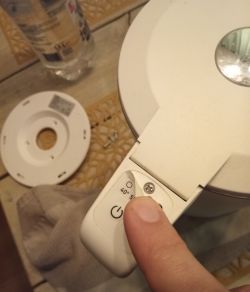
With winter approaching, I’ve finally decided to tackle the faulty heater controller on my bathroom radiator.
After taking the controller apart, it turned out that the circuit board, although very simple in design, is completely corroded and burnt. Admittedly, after cleaning it and removing the (probably) damaged components, it turned out that none of the tracks were broken and it could probably have been salvaged, but I’ve come up with another idea.
Since I want to use an external thermostat to control the temperature in the bathroom anyway, I don’t really need this controller, but…
I could, in fact, connect the heater directly to the mains and fit a thermostat along the way, but there’s still the matter of controlling the temperature of the heating medium (water).
Theoretically, during a very cold winter with a window open in the bathroom, a situation could arise where the water in the radiator would boil and the radiator itself would be damaged by the pressure build-up inside (at best, only the heater itself )
)
To get to the point, I need a simple circuit that would switch off the heater when the temperature of the fluid inside reaches 90 degrees. There are five wires coming out of the heater itself – three for powering the heater and two from the capillary tube measuring the temperature of the fluid. It would be great if the circuit included two LEDs to indicate the device’s operating status (power supplied from the thermostat and the heater’s operation).
Whilst I do have some manual skills and preparing the circuit board wouldn’t be a problem, I have absolutely no knowledge of designing this type of circuit, which is why I’m asking all hobbyists for help
I’m also not sure if this is the right section; I hope no one will take offence at this. Thank you in advance, and have a lovely evening.
I’m looking for someone who, as a hobby, could help me with this.
With winter approaching, I’ve finally decided to tackle the faulty heater controller on my bathroom radiator.
After taking the controller apart, it turned out that the circuit board, although very simple in design, is completely corroded and burnt. Admittedly, after cleaning it and removing the (probably) damaged components, it turned out that none of the tracks were broken and it could probably have been salvaged, but I’ve come up with another idea.
Since I want to use an external thermostat to control the temperature in the bathroom anyway, I don’t really need this controller, but…
I could, in fact, connect the heater directly to the mains and fit a thermostat along the way, but there’s still the matter of controlling the temperature of the heating medium (water).
Theoretically, during a very cold winter with a window open in the bathroom, a situation could arise where the water in the radiator would boil and the radiator itself would be damaged by the pressure build-up inside (at best, only the heater itself
) To get to the point, I need a simple circuit that would switch off the heater when the temperature of the fluid inside reaches 90 degrees. There are five wires coming out of the heater itself – three for powering the heater and two from the capillary tube measuring the temperature of the fluid. It would be great if the circuit included two LEDs to indicate the device’s operating status (power supplied from the thermostat and the heater’s operation).
Whilst I do have some manual skills and preparing the circuit board wouldn’t be a problem, I have absolutely no knowledge of designing this type of circuit, which is why I’m asking all hobbyists for help
I’m also not sure if this is the right section; I hope no one will take offence at this. Thank you in advance, and have a lovely evening.
