
logo elektroda
logo elektroda
X
logo elektroda

Selection of a 12V contactor for 10W 230V LED lighting with delayed switch-off

gigi1988 3297 13
Best answers LABEL_AI_GENERATED

How can I switch 230 V, 10 W LED lights with delayed switch-off using a 12 V sensor output?

Use a 12 V time relay/relay for the timing function, not a plain contactor, and do not try to switch the 230 V lamps and 12 V control circuit through the same working contacts [#13470936][#13471088] The PCA-512 UNI works by grabbing its relay when it is powered and then counting down; it must be powered for at least the set delay, so it is not a direct fit if your sensor signal disappears sooner [#13469678][#13469523] A capacitor is not a good solution because it will not give a useful delay and can overload the detector contacts during charging [#13469895] If you use the PCA-512 UNI, trigger it from the sensor but keep it on a proper 12 V DC supply, and switch the 230 V lighting only through a separate relay/contact on the output side [#13472091][#13473069] If the PCA-512 has only one switching contact, add another relay for the 230 V circuit [#13473069]
AI summary based on the discussion. May contain errors.
ADVERTISEMENT
Treść została przetłumaczona polish » english Zobacz oryginalną wersję tematu
  • #1 13468447
    gigi1988
    Level 9  
    Posts: 28
    Rate: 1
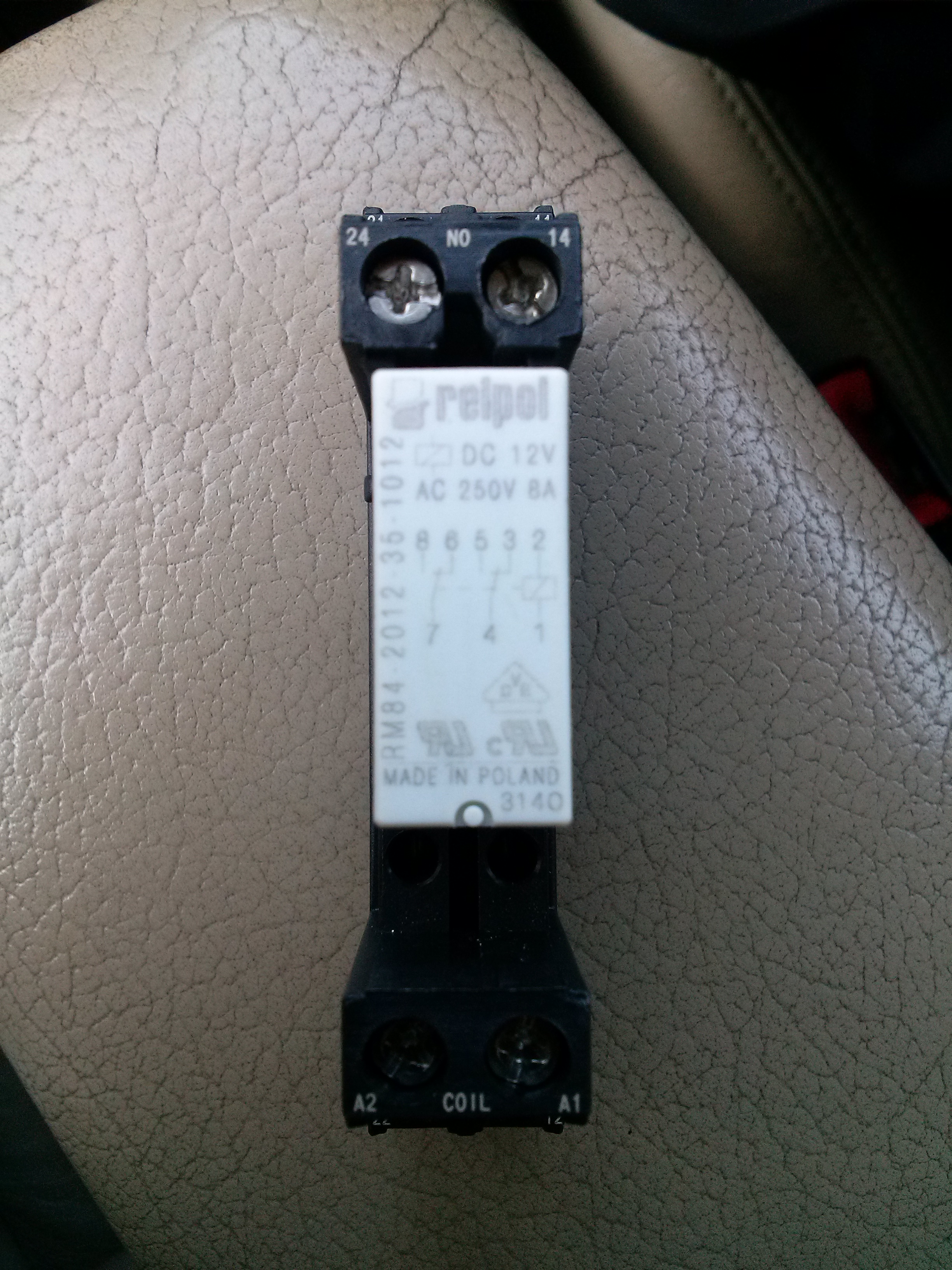
    Hello, I have a problem with selecting a contactor for lighting around the house. The led lights something like halogens 10 W,230 V are to be activated with a time delay contactor with delayed switch off. The contactor has to be controlled by 12 volts, because that is what I have on the output of the sensors. I have searched there is a lot to choose from but I don't quite understand what I am reading. Will something like the PCA512 UNI fit?
  • ADVERTISEMENT
  • #2 13469523
    pafciowaw
    Automation specialist
    Posts: 2439
    Help: 480
    Rate: 365
    This component is just a 'light at the end of the tunnel' ;)
    But you still need to consider sustaining the operation of the PCA-512 after the control signal from the sensor has disappeared - if the lighting time is to be longer than the time from the sensor.
  • #3 13469617
    gigi1988
    Level 9  
    Posts: 28
    Rate: 1
    That's what I don't understand now :) in the shop they told me that it has a delayed switch-off adjustable by a knob and after the disappearance of these 12v it maintains the contact still for this specified time.
  • ADVERTISEMENT
  • Helpful post

    PCA-512 relay timer provides delayed switch-off after power-up

    #4 13469678
    pafciowaw
    Automation specialist
    Posts: 2439
    Help: 480
    Rate: 365
    Data sheet - I recommend ...reading
    http://fif.com.pl/pub/File/download/INSTRUKCJ...asowe/FF%20PCA-512%20UNI%20inst%20B100607.pdf
    It works in such a way that, when powered, it "grabs" the relay (built in) and from that moment counts down the time; after the countdown, it "lets go" of the relay (while the power supply must be at least as long as the set time - I recommend the PCA-512 operation diagram in the materials mentioned above)
  • ADVERTISEMENT
  • #5 13469805
    gigi1988
    Level 9  
    Posts: 28
    Rate: 1
    But it just needs a suitable capacitor before the contactor, am I right? It needs about a minute delay
  • Use PCA-512 contacts for self-latching delayed switch-off

    #6 13469895
    pafciowaw
    Automation specialist
    Posts: 2439
    Help: 480
    Rate: 365
    This is an inelegant solution: a small capacitor will not extend the time significantly, while one with a large capacity will either not have time to charge or will very quickly destroy the detector contacts with a significant charging current.
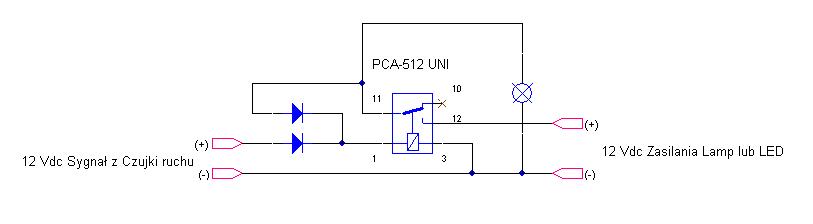
    The only advice I can see is to power (excite) the tripping of the PCA-512 with a signal from the detector and, through its contacts, to sustain its own power supply (i.e. from the detector to supply a switching signal and a 12V constant power supply).
  • Use a 12 V relay, not a contactor, and avoid mixed contact voltages

    #7 13470936
    retrofood
    VIP Meritorious for electroda.pl
    Posts: 31317
    Help: 1140
    Rate: 4798
    Don't look for a contactor for this, but a relay, controlled by 12V. For example, take a look at the Relpol range.

    Added after 1 [minute]:

    pafciowaw wrote:

    The only advice I can see is to use the signal from the detector to power (excite) the tripping of the PCA-512 and through its contacts to sustain its own power supply (i.e. from the detector to supply the switching signal and 12V DC power).


    This is a big mistake. Different voltages must not be applied to the working contacts of the relay.
  • #8 13471028
    gigi1988
    Level 9  
    Posts: 28
    Rate: 1
    Well, theoretically it is not allowed, but what could be the result? Of course, no one can do that on machines costing hundreds of thousands of zloty, but when used for backyard lighting, it should be possible. Am I a bit right?
  • Helpful post

    Relay lacks arc quenching and may short circuits

    #9 13471088
    retrofood
    VIP Meritorious for electroda.pl
    Posts: 31317
    Help: 1140
    Rate: 4798
    gigi1988 wrote:
    Well, theoretically it's not allowed, but what could be the result? The contactor will switch off the 12 volts after a set time, of course no one will do that on machines costing hundreds of thousands of zlotys, but when used for backyard lighting it should be possible. Am I right?


    You don't. The relay has no quench chambers and at any time the resulting arc can cause a short between circuits. Thus, never allowed!
    When the need arises to switch different circuits simultaneously, of course either two relays or one contactor can be used, and please distinguish between these two apparatus, as these terms cannot be used interchangeably. A contactor and a relay are different things.
  • ADVERTISEMENT
  • #10 13471201
    gigi1988
    Level 9  
    Posts: 28
    Rate: 1
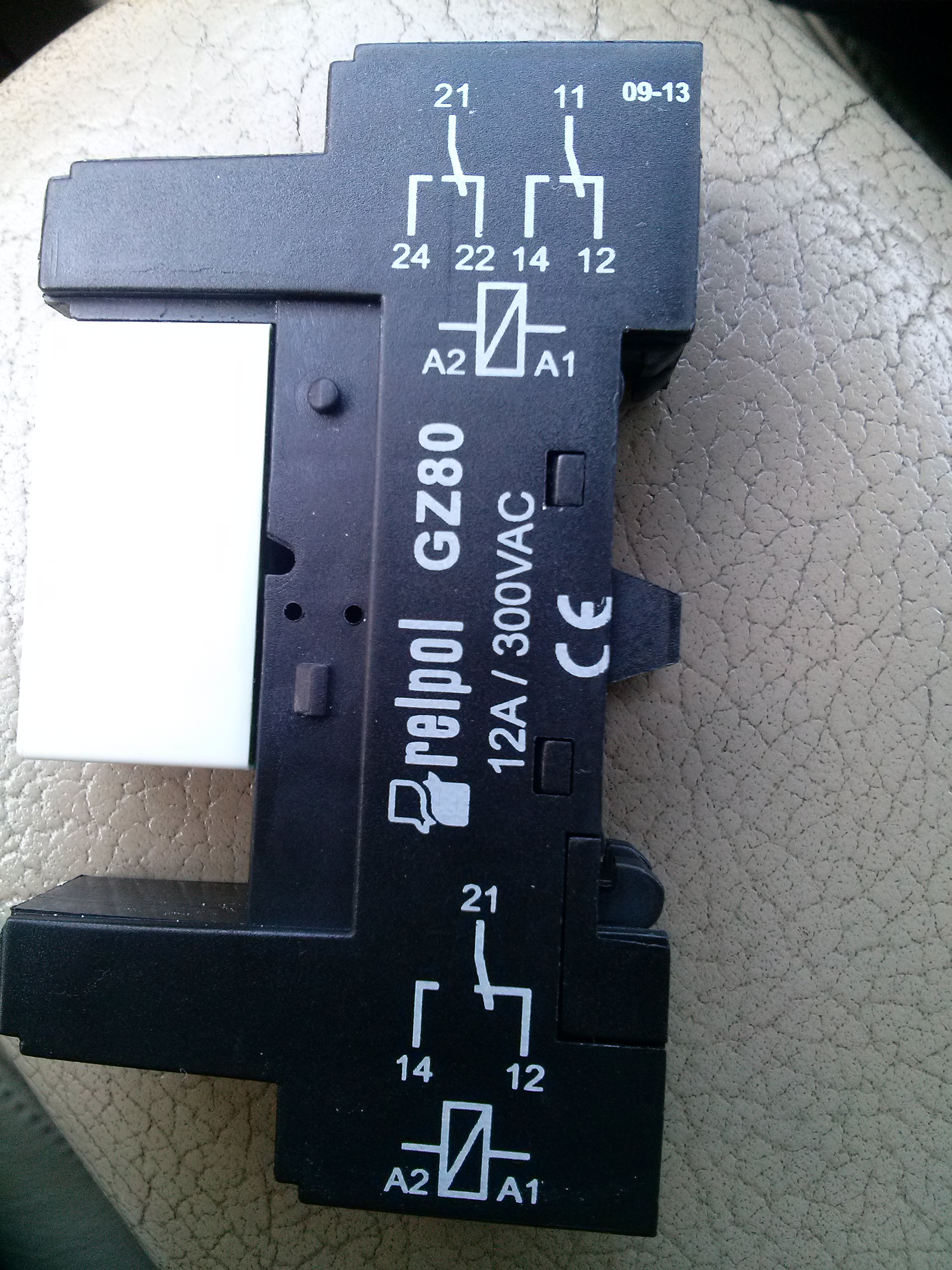
    That's not good, I have a relpol 3140 contactor with a gz80 base, is it possible to do a delayed switch-off?

    Selection of a 12V contactor for 10W 230V LED lighting with delayed switch-off Selection of a 12V contactor for 10W 230V LED lighting with delayed switch-off
  • #11 13472091
    pafciowaw
    Automation specialist
    Posts: 2439
    Help: 480
    Rate: 365
    Col. retrofood: all my solutions revolve around the PCA-512 UNI being powered on 12 Vdc (12-264 V AC/DC), so both power and switching can be done on the same supply. To the PCA-512 UNI, all you need to do is feed the signal from the detector, the 12 Vdc power supply (to the LED), and separate the voltages with a rectifier diode (or diodes).
  • PCA-512 UNI requires separate control and LED voltages

    #13 13472902
    retrofood
    VIP Meritorious for electroda.pl
    Posts: 31317
    Help: 1140
    Rate: 4798
    pafciowaw wrote:
    Col. retrofood: all my solutions revolve around the PCA-512 UNI being powered on 12 Vdc (12-264 V AC/DC), so both power and switching can be done on the same supply. To the PCA-512 UNI, all you need to do is feed the signal from the detector, the 12 Vdc power supply (to the LED), and separate the voltages with a rectifier diode (or diodes).


    Let them circulate, just how does this relate to the Author's assumption?
    Quote:
    LED lights something like halogens 10 W,230 V should be run...


    Therefore mine revolve around two tensions.
  • #14 13473069
    pafciowaw
    Automation specialist
    Posts: 2439
    Help: 480
    Rate: 365
    Indeed...mea culpa....
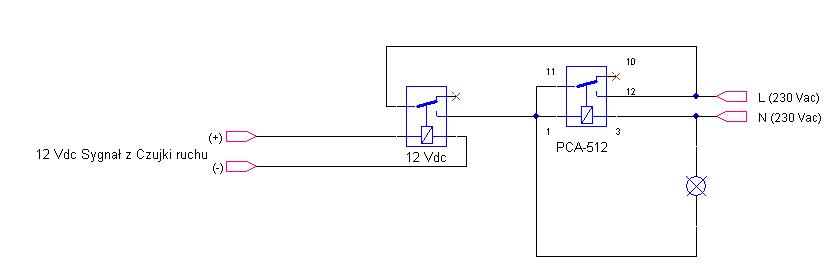
    As the PCA-512 has only one working contact: you have to add a relay and only from its contact supply the 230 Vac circuit.
    Selection of a 12V contactor for 10W 230V LED lighting with delayed switch-off
ADVERTISEMENT