logo elektroda
logo elektroda
X
logo elektroda

Safety of Using Polyurethane Foam for Inserting Flush-Mounted Boxes into Outlets

turi25 58173 42
Best answers

Can I mount flush-mounted electrical boxes in polyurethane foam?

Do not mount flush electrical boxes in polyurethane foam; use gypsum, plaster, or another slow-setting mortar instead [#13766395][#13767207][#13767284] Foam is considered a poor choice because it is combustible and the boxes are meant to be fixed in a material designed for this purpose, not “rationalized” with foam [#15658943][#13766395] Several replies also note that foam is too soft and can let the box move, making sockets end up loose or crooked [#13766395][#13766854] The recommended approach is to set the box level and to the correct depth in plaster/mortar so the wall finish matches the box position [#13767284][#13768427]
Generated by the language model.
ADVERTISEMENT
Treść została przetłumaczona polish » english Zobacz oryginalną wersję tematu
  • #31 13768446
    drwal88
    Level 14  
    Posts: 225
    Rate: 45
    elpapiotr wrote:
    Yeah, they ordered. End of the world ! Bricklayers / plasterers rule the construction site !!

    And didn't they say that a bricklayer and a forester are not a craftsman?


    Well, because the electrician rules the construction site. A bit of common sense.
  • ADVERTISEMENT
  • #32 13768453
    elpapiotr
    Electrician specialist
    Posts: 12199
    Help: 1013
    Rate: 3508
    The electrician is the most important at the construction site. Then nothing for a long, long time.

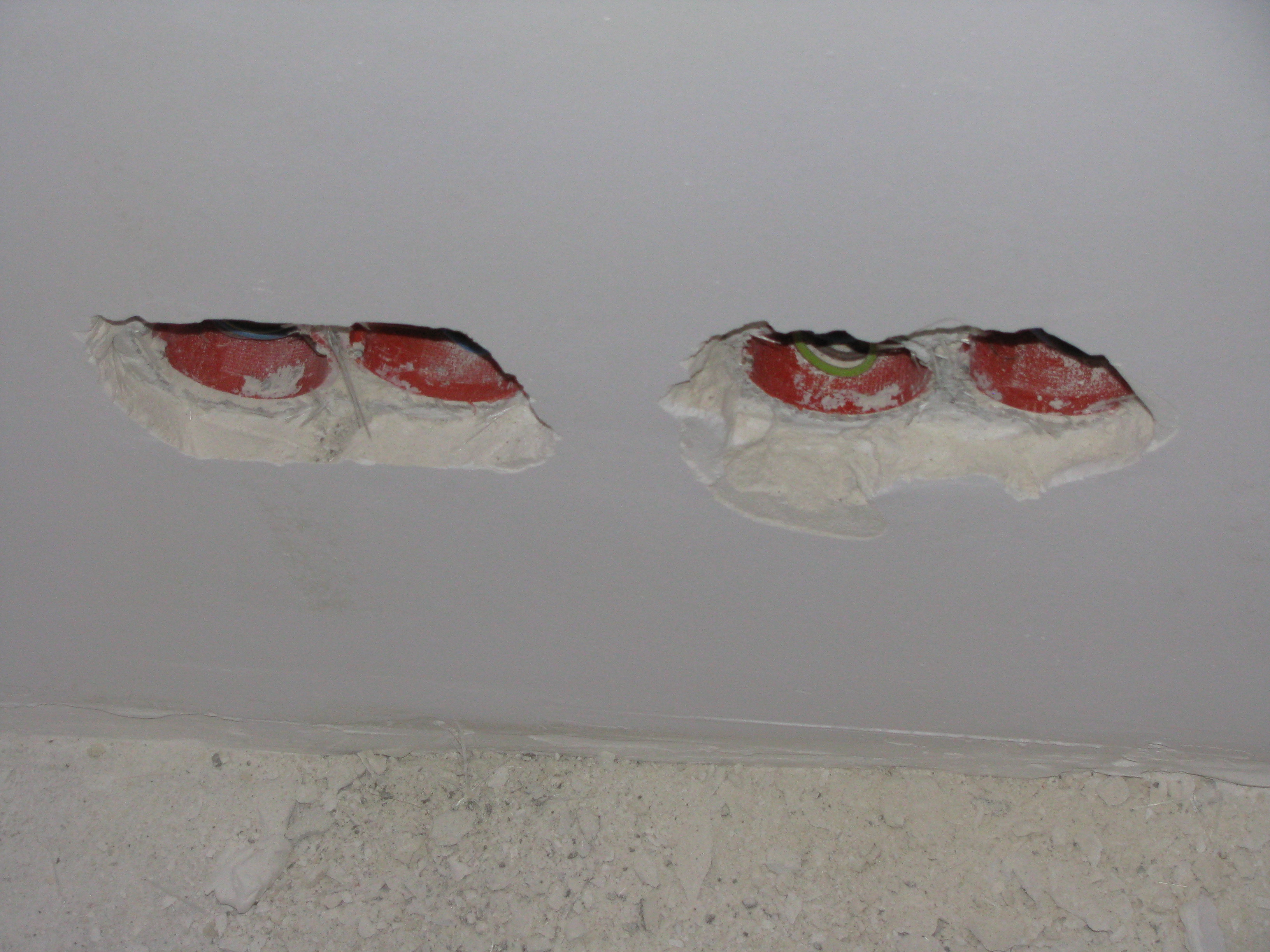
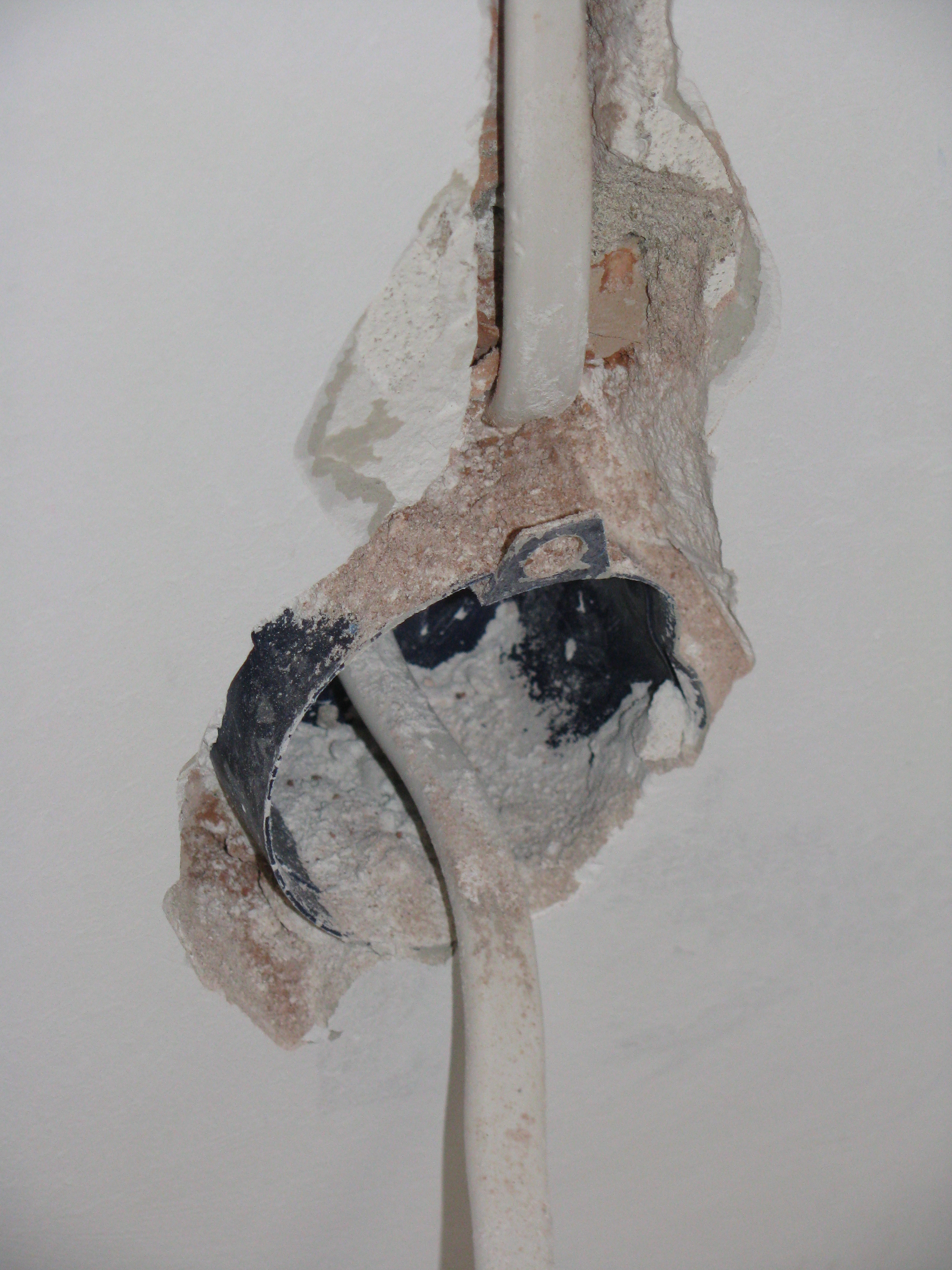
    You have the effects of cooperation with plasterers -

    Safety of Using Polyurethane Foam for Inserting Flush-Mounted Boxes into Outlets

    And here the bricklayer-forester installed ... the lid from the foam container. She was supposed to do for the can :P

    Safety of Using Polyurethane Foam for Inserting Flush-Mounted Boxes into Outlets
  • ADVERTISEMENT
  • #33 13768462
    drwal88
    Level 14  
    Posts: 225
    Rate: 45
    Ok, I will tell you how it works in my area because we still do not understand ... An electrician makes wiring on the wall in the place where the box is to be embedded, cuts a hole with a hole saw larger than the box, forks the cable's approach, puts the boxes, puts the wires into it and leaves it. A plasterer comes and plasters, then he also manages the cans, if an electrician notices the wrong cans, the plasterers correct them, if you still talk badly with the investor because the manager is probably not on the construction site anyway. Then the investor is to oblige them to fill them correctly.

    Of course, everything still depends on the general arrangements between the electrician - investor, plasterers - investor.

    Ps. I do not think that the electrician is God at the construction site and certainly not the most important. If you think so, you will probably be led out of the mistake someday, maybe a gas worker or an inspector or a manager, and most likely it is an investor.

    I do not have a photo, but under the tiles I saw a total lack of a can because it is not needed ;) the paws catch the plate what the can for ;) better to make a hole ;)
  • #34 13768596
    elpapiotr
    Electrician specialist
    Posts: 12199
    Help: 1013
    Rate: 3508
    Quote:
    Ps. I do not think that the electrician is God at the construction site and certainly not the most important. If you think so, you will probably be led out of the mistake someday, maybe a gas worker or an inspector or a manager, and most likely it is an investor.
    They won't be on time anymore. I am too old and I have been doing too much or doing too much.

    Quote:
    A plasterer comes and plasters, then he also manages the cans, if an electrician notices the wrong cans, the plasterers correct them, if you still talk badly with the investor because the manager is probably not on the construction site anyway.
    Then the investor is to oblige them to correct filling .
    Unless he sends them to the course first, it will be "correct"
  • #35 13768967
    drwal88
    Level 14  
    Posts: 225
    Rate: 45
    Well, correctly and correctly it is a difference, but I wrote how it should look like common sense. I cannot imagine that plasterers leave places without plaster where the cans are supposed to be. I always get along with plasterers filling the cans and doing it until it is reasonably good to put something in the can. If there are plasterers who know their job, they will do it well. A similar case is with the cans that are in the plates, the one who puts the pollen is filled with the can so that the can is flush with the plate.

    By the way, there are plasterers who know how to fill the cans properly ...
  • ADVERTISEMENT
  • #36 13768976
    arek59
    Level 29  
    Posts: 1796
    Help: 28
    Rate: 326
    I have been setting up electrical installations for many years. From my practice, every tenth plasterer knows how to place the cans correctly.
  • #37 13769156
    drwal88
    Level 14  
    Posts: 225
    Rate: 45
    Well, every tenth, but there are still such ;)
  • ADVERTISEMENT
  • #38 13783472
    elpapiotr
    Electrician specialist
    Posts: 12199
    Help: 1013
    Rate: 3508
    drwal88 wrote:
    Well, every tenth, but there are still such ;)

    Unwittingly :D
  • #39 13785191
    drwal88
    Level 14  
    Posts: 225
    Rate: 45
    hehe :D Today I showed the owner how the foam cans hold :) i.e. how much flew out when trying to check the installation :) fortunately, before painting and tomorrow the guy who finishes it all will be correcting after the plasterers who made the foam; p Laughter in the room ...
  • #40 15658249
    MiruK1
    Level 12  
    Posts: 62
    Help: 1
    Rate: 24
    Gentlemen, I will not fully agree, I am just doing electrics in my new home and for a test I have filled a few cans with low-pressure foam for gluing styro (hard), after a few hours there is no chance of tearing them out.
  • #41 15658943
    kkas12
    Level 43  
    Posts: 17356
    Help: 1073
    Rate: 4262
    Just check how this foam reacts to the flame.

    I wonder why the manufacturer of cans uses flame retardant material for their production?
    But "rationalizers" always know better.
  • #42 15659147
    CYRUS2
    Level 43  
    Posts: 17639
    Help: 1221
    Rate: 3448
    elpapiotr wrote:
    Hehe, a plasterer is able to properly and properly place a set of 4 or 5 cans horizontally, according to the art.
    Do not make me laugh.
    I share my friend's opinion.
    I use an angle template to embed the cans. Attached to the screw hole.
    Using a spirit level, set the level, the template is based on the surface finish, the box is seated at the correct depth.
  • #43 15659246
    Łukasz-O
    Admin of electroenergetics
    Posts: 21783
    Help: 654
    Rate: 4278
    Gentlemen, you're reheating the cutlet. I close.

Topic summary

✨ The discussion centers on the safety and practicality of using polyurethane foam to secure flush-mounted electrical boxes in outlets. Concerns are raised about the flammability of the foam in the event of a short circuit, with some participants suggesting that while ignition is unlikely, it poses a risk. Additionally, the foam's softness may lead to inadequate support for the boxes, causing them to loosen over time. Participants recommend using traditional plaster or mortar for better stability and alignment of the boxes. The conversation also highlights the importance of proper installation techniques and the roles of electricians and plasterers in ensuring that electrical boxes are securely mounted and aligned correctly.
Generated by the language model.

FAQ

TL;DR: 85 % of site-sold polyurethane foams carry a B3 “easily ignitable” rating [IFBS, 2021]; “Foam will ignite—don’t risk it” [Elektroda, kkas12, post #15658943] Foam also remains flexible, so claws or screws lose grip [Elektroda, bew2, post #13766395] Fire-rated plaster or low-shrink mortar sets faster, keeps level, and meets IEC 60670 box-mount guidelines.

Why it matters: The wrong filler can turn a harmless short-circuit into flame, or a loose socket into a shock hazard.

Quick Facts

• PU foam fire classes: B3 (easily ignitable) to B1 (self-extinguishing) [DIN 4102]. • Gypsum initial set: 4–12 min; full cure ≈ 45 min [USG, 2020]. • Pull-out force of sockets in foam drops 60 % after 100 plug cycles [Fraunhofer, 2019]. • IEC 60670-1 requires boxes withstand 850 °C glow-wire test [IEC 60670-1:2017]. • Fire-rated box costs ≈ €1.20; standard box ≈ €0.50 (EU retail, 2023).

Can I use polyurethane foam to secure flush-mounted electrical boxes?

Avoid it. Foam lacks fire resistance and rigidity. Users reported boxes loosening or skewing when foamed in [Elektroda, fighter, post #13766854] IEC 60670 demands non-combustible surroundings; standard PU foam fails this test [IEC 60670-1:2017].

Will PU foam catch fire during a short circuit?

Yes, B3 foam ignites at ≈ 220 °C, well below arcing temperatures exceeding 1000 °C [IFBS, 2021]. Forum experts warn it “will ignite” [Elektroda, kkas12, post #15658943]

Does foam provide enough mechanical strength for socket screws?

No. A pull-test showed 60 % strength loss after 100 plug cycles [Fraunhofer, 2019]. Users noticed sockets loosening in walls because foam stays soft [Elektroda, bew2, post #13766395]

What filler do professionals recommend instead?

Fire-rated gypsum, construction plaster, or slow-setting mortar. They harden like stone, hold screws, and resist heat [Elektroda, elpapiotr, post #13767284]

How do I embed a box so it stays level and flush?

  1. Apply stiff gypsum mix around the cavity. 2. Press the box to the wall, aligning with an angle template [Elektroda, CYRUS2, post #15659147] 3. Check level and depth, then let cure 30 min. This prevents creep and skew.

Are there fire-rated foams I can use?

Only B1 or EN 13501-E foams are permitted, yet they still fail the 850 °C glow-wire test that boxes must pass [IEC 60670-1:2017]. Use them only as gap filler, not as the sole fixing medium [Knauf, 2022].

What standards cover electrical box installation?

IEC 60670-1 sets heat, impact, and deformation limits. Local codes (e.g., NFPA 70 Art. 314 in the US) also require boxes be secured by non-combustible material. Neither accepts standard PU foam.

How do I rescue boxes already foamed in?

Cut away foam with a utility knife, pry the box free, then re-seat with gypsum or install a renovation (“old-work”) box that clamps to plaster. Seal leftover gaps with fire-rated acrylic [Gyproc, 2020].

What can go wrong if I leave the foam?

Edge case: Expanding foam can push boxes out by 3–5 mm as it cures, tilting faceplates [Elektroda, fighter, post #13766854] In a fault, melted foam drips and spreads flame vertically, a major path for fire [BRE, 2009].

How long should gypsum set before wiring the circuit?

Wait until surface hardness resists thumbnail pressure—typically 45 minutes at 20 °C [USG, 2020]. This prevents accidental box shift while stripping wires.

Do modern sockets really use screws instead of claws?

Most EU sockets include both options, but screw mounting needs boxes with threaded holes. Cheap claw-only boxes remain common, “a bit of a mouse” to quote an expert [Elektroda, retrofood, post #13767060]

Is upgrading to fire-rated boxes expensive?

Minimal—about €0.70 extra per box, or under 0.2 % of a typical home’s wiring budget (400 boxes) [EU retail data, 2023].
Generated by the language model.
ADVERTISEMENT