logo elektroda
logo elektroda
X
logo elektroda

Calculating Rectifier Diode Voltage in Forward Direction for E=0.3V: Comparing Multisim Results

elektraelektra 10305 9
ADVERTISEMENT
Treść została przetłumaczona polish » english Zobacz oryginalną wersję tematu
  • #1 16422809
    elektraelektra
    Level 1  
    Posts: 1
    Hello :)
    Calculating Rectifier Diode Voltage in Forward Direction for E=0.3V: Comparing Multisim Results
    I fight this task in different ways and the results do not match the simulations in Multisim.
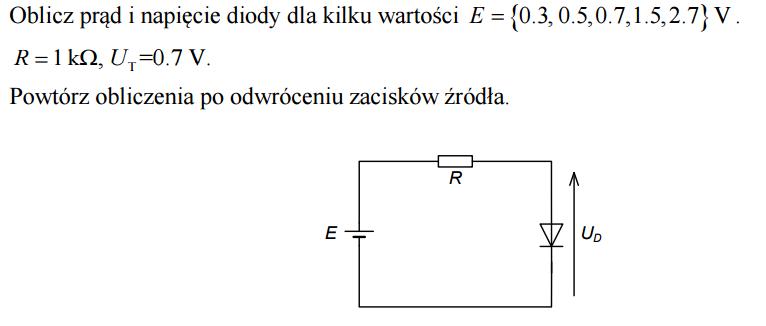
    Let's say I want to calculate the diode voltage in the forward direction for the value E = 0.3 V. In the circuit the current will not flow while multisim shows the voltage drop across the diode. How to calculate for such a task?
    From the second Kirchoff's law I make the equation E-IR - Ud = 0, but what next?
    Greetings!
  • ADVERTISEMENT
  • #2 16424668
    Anonymous
    Level 1  
  • ADVERTISEMENT
  • #3 16424706
    Anonymous
    Level 1  
  • #4 16424802
    Anonymous
    Level 1  
  • #5 16425308
    Anonymous
    Level 1  
  • ADVERTISEMENT
  • Helpful post
    #6 16425640
    Anonymous
    Anonymous  
  • #7 16426116
    Anonymous
    Level 1  
  • #8 16427180
    Anonymous
    Level 1  
  • #9 16427330
    Anonymous
    Level 1  
  • ADVERTISEMENT

Topic summary

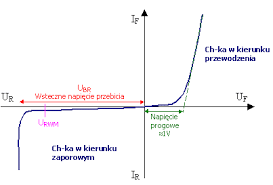
✨ The discussion revolves around calculating the forward voltage drop across a rectifier diode when the applied voltage (E) is 0.3V. The user notes discrepancies between their calculations and the results from Multisim simulations. Responses highlight that for voltages less than or equal to the diode's forward voltage (typically 0.7V), the diode does not conduct, and thus the voltage drop across it equals the applied voltage (UD = E). When the voltage exceeds 0.7V, the diode behaves as a constant voltage drop of 0.7V. The conversation also touches on the non-linear characteristics of diodes and suggests that Multisim likely uses a real diode model, which may account for the differences observed. The Shockley equation is recommended for precise current calculations.
Generated by the language model.
ADVERTISEMENT