logo elektroda
logo elektroda
X
logo elektroda
Dostępna jest polska wersja

Czy wolisz polską wersję strony elektroda?

Nie, dziękuję Przekieruj mnie tam

VW Bora 2000 1.9 TDI: Troubleshooting Passenger Seat Heating Issue - Pin Voltage & Switch

pedro1971 7716 12
ADVERTISEMENT
Treść została przetłumaczona polish » english Zobacz oryginalną wersję tematu
  • #1 16682907
    pedro1971
    Level 11  
    Hello forum users.
    Please help. My problem is the lack of passenger seat heating. I checked the simplest thing - mats (I connected the passenger seat to the driver's seat harness and it's ok)
    I focused my attention on the switch regulating the heating power of the chair.
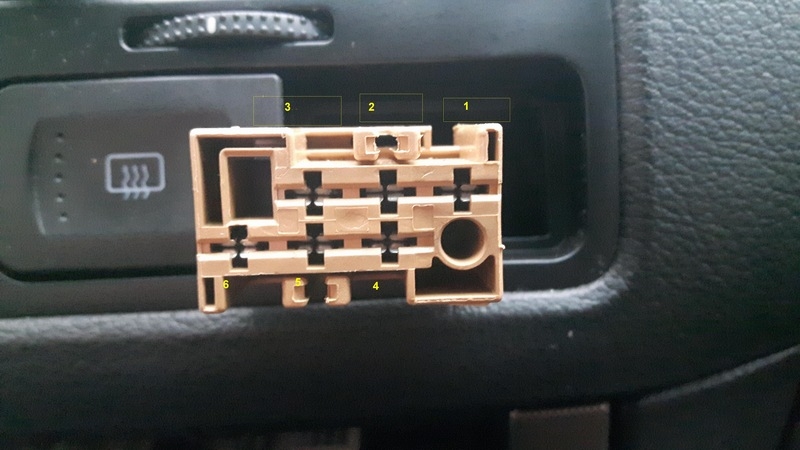
    Measuring the tension on the ankle, I found that
    pin 1 no voltage
    pin 2 no voltage
    pin 3 no voltage
    pin 4 + plus 12 v
    pin 5 + plus 12v
    pin 6 - minus (ground)
    And so the voltage on the ankle looks without the switch plugged in.
    However, after plugging in the switch, pin 3 appears + plus 4.7v.
    I also checked the cube for heating the driver's seat and the voltage looks similar with the only difference that after plugging in the switch No. 3 there is + plus 12v voltage and the seat heats up.
    Thinking that the switch might be broken I swapped them. Unfortunately, it did nothing. Still on the passenger ankle on pin No. 3 is + plus 4.7v.
    Does anyone with forum members have any idea where the problem lies?
    Below is the photo of the cube itself
    VW Bora 2000 1.9 TDI: Troubleshooting Passenger Seat Heating Issue - Pin Voltage & Switch
  • ADVERTISEMENT
  • #2 16682926
    Ireneo
    Level 42  
    Not with the meter and the control, measure to see the load response and wanting to give up a diagram, because hardly anyone will know what pin 1 is responsible for, etc.
  • #3 16682971
    T5
    Admin of Cars group
    Thermistor to check.
  • #4 16683085
    pedro1971
    Level 11  
    It has no pattern.


    Thermistor or element on the heating mat. But the mats are good because as I wrote above, I connected the passenger seat under the driver's seat beam and began to heat. So no thermistor in mats and no mats
  • ADVERTISEMENT
  • #5 16683121
    T5
    Admin of Cars group
    I'm sorry, I didn't read.
  • ADVERTISEMENT
  • #6 16683227
    pedro1971
    Level 11  
    Cool, nothing is happening. I'm just afraid that something could happen to the beam under the dashboard and that would be the worst that could happen.
  • #7 16685157
    Ireneo
    Level 42  
    There is a diagram in the network, or someone on the network will help.
  • #8 16685227
    pedro1971
    Level 11  
    That's why I wrote here asking for general help. If I could handle it, I had a diagram and any idea of the cause of the failure would not write a post
  • ADVERTISEMENT
  • Helpful post
    #10 16686337
    grala1
    VAG group specialist
    Remove both heated seat switches. You are not sitting in any armchair and they both have the same temperature.
    You are making a measurement with the switches removed from the installation plug between 3 and 6.
    The results should be similar.
    If they are not a damaged thermistor in the seat and usually a broken wire at the thermistor, although you say that there is something or something not connecting on the wire between the thermistor and the switch, e.g. broken wire coming from the floor or rotten wire.
    I would also measure the resistance on the seat plugs after disconnecting them between the brown and black and white wires.
    After these two measurements you will see exactly where the problem is.
    You have different voltages between 3 and 6 between the seats because the switch has a different resistance from the seat so the passenger side switch does not heat the seat because it thinks it has the right temperature to set.
    If you cut the cable from pin 3 between the plugs of the switches, the driver's seat will stop heating.
    I hope you understand what I mean.
  • #11 16686468
    pedro1971
    Level 11  
    Thanks for the hint. I will cover everything you wrote on Saturday and let you know what the situation is. I just still don't get one thing. Why on pin 3 there is plus 4.7v in the passenger seat and in driver's seat on pin 3 is plus 12V. Both seats are disconnected from the bundles of wires coming out of the floor so the voltage does not flow on the heating mats in the seats
  • #12 16686698
    abart64
    Level 33  
    pedro1971 wrote:
    plus 4.7v appears in the passenger seat and in the driver's seat on pin 3 there is plus 12V

    Maybe it sticks to the ground somewhere, even due to moisture in the floor.
    Unplug the switch and check with a small light bulb to see if it will come on connected to
    pin3 and plus. Disconnect the seat of course.
  • #13 16689435
    pedro1971
    Level 11  
    Hello.
    The case is resolved.
    The harness wire was just behind the floor grommet. Probably from moving the chair.
    Thanks to everyone for help

Topic summary

✨ The discussion revolves around troubleshooting a passenger seat heating issue in a 2000 VW Bora 1.9 TDI. The user confirmed that the heating mats are functional by connecting the passenger seat to the driver's seat harness. Voltage measurements at the switch revealed that pins 1, 2, and 3 had no voltage, while pins 4 and 5 showed +12V. After connecting the switch, pin 3 displayed +4.7V, indicating a potential issue with the switch or wiring. Suggestions included checking the thermistor, measuring resistance, and inspecting for damaged wires. Ultimately, the problem was resolved by identifying a harness wire that was pinched behind the floor grommet, likely due to chair movement.
Generated by the language model.

FAQ

TL;DR: VW Bora 2000 seat heat fault traced to a broken wire after the floor grommet; pin 3 showed 4.7 V instead of 12 V. “Thermistor to check.” [Elektroda, T5, post #16682971] Why it matters: This FAQ helps Bora/Golf IV owners quickly isolate no-heat issues without guesswork or parts swapping.

Quick Facts

How do I fix a VW Bora 2000 passenger seat heater that doesn’t warm up?

Verify mats by swapping to the driver’s harness. Check switch connector: pins 4 and 5 should have +12 V, pin 6 ground. With switches removed, compare resistance between pins 3 and 6 on both sides. Load‑test power using a 21 W bulb. If power is good but pin 3 reads low (≈4.7 V), inspect the loom near the floor grommet; repair any broken wire. Confirm operation after reassembly. [Elektroda, pedro1971, post #16689435]

What voltages should I see on the seat heater switch pins?

With the switch unplugged, typical readings are: pins 4 and 5 at +12 V, pin 6 ground, and pin 3 is the thermistor/sensor line. On a healthy circuit, pin 3 rises to about +12 V with the switch connected. A drop to about +4.7 V indicates a sensor-line issue. “You have different voltages between 3 and 6 because the switch sees different resistance.” [Elektroda, grala1, post #16686337]

What does pin 3 actually do on the Bora heated seat switch?

Pin 3 carries the feedback from the seat’s thermistor to the control. The switch regulates heat based on this resistance. If the line is open or partially grounded, the switch can think the seat is warm and refuse to heat. Measuring between pins 3 and 6 with both switches removed helps pinpoint mismatches between seats. [Elektroda, grala1, post #16686337]

How do I load-test the seat heater power feed?

Use a 12 V, 21 W bulb as a test load. Connect it across the suspected power and ground at the switch connector. The bulb should light fully if the supply and ground can provide current. This reveals weak connections that a multimeter might miss. “Check the power supply, not a meter, just a 21 W bulb or larger.” [Elektroda, milejow, post #16685412]

Why do I see only about 4.7 V on pin 3 instead of 12 V?

A partial ground or high-resistance fault in the sensor circuit drags pin 3 down. Moisture or damaged insulation in the floor area can cause leakage. Disconnect the seat, unplug the switch, and use a small bulb between pin 3 and +12 V to check for unintended current paths. Repair wiring as needed. [Elektroda, abart64, post #16686698]

Could the heating mats or thermistor be bad if they heat on the other harness?

No. If the passenger mats heat when connected to the driver’s harness, the mats and thermistor are functional. The fault lies in the passenger-side wiring, connector, or control path to the switch, often near the floor grommet where the loom flexes. [Elektroda, pedro1971, post #16683085]

What’s the most common failure point on Bora/Golf IV seat heaters?

A broken wire in the harness just after the floor grommet due to seat movement. This creates sensor or power open-circuits, leading to no heat or incorrect voltage at pin 3. Inspect, repair, and strain‑relieve the loom. [Elektroda, pedro1971, post #16689435]

How do I compare both seats to isolate the fault?

Remove both heated seat switches. Measure resistance between pins 3 and 6 on each connector with switches removed and seats unplugged. Readings should be similar because both seats sit at the same ambient temperature. Differences point to a wiring or sensor path issue on the side with the odd value. [Elektroda, grala1, post #16686337]

Is swapping the left/right seat heater switches a valid test?

Yes. Swap the rotary switches to rule out a bad control. If the symptom stays with the passenger side, the switch is fine and the issue is in wiring or the sensor line. If it moves with the switch, replace the switch. In the thread, swapping did not change the fault. [Elektroda, pedro1971, post #16682907]

What’s a quick 3-step how-to to trace the passenger-side fault?

  1. Verify mats by connecting the passenger seat to the driver’s harness; confirm heating.
  2. With both switches removed, compare resistance between pins 3 and 6; note discrepancies.
  3. Load-test pins 4/5 to 6 with a 21 W bulb and inspect wiring at the floor grommet; repair breaks. [Elektroda, milejow, post #16685412]

Could moisture in the floor affect the heater sensor line?

Yes. Moisture can create partial grounding on the sensor wire, lowering pin 3 voltage and preventing heating. Unplug the switch and seat, then test with a small bulb across pin 3 and +12 V to check for leakage. Dry, clean, and repair insulation as needed. [Elektroda, abart64, post #16686698]

Why does the driver’s seat heat while the passenger’s does not, even with similar voltages?

The control interprets different sensor resistances. If the passenger sensor line reads low voltage or open, the switch believes the seat is already warm and reduces output. Equalize diagnostics by measuring between pins 3 and 6 with switches removed. Fix wiring to restore correct feedback. [Elektroda, grala1, post #16686337]

What reading indicates the issue is solved?

After repair, pin 3 should return to about +12 V when the switch is connected and calling for heat. The seat will warm normally. The final fix in the thread was repairing a broken wire just after the floor grommet, restoring proper function. [Elektroda, pedro1971, post #16689435]

Do I need a wiring diagram to complete this repair?

A diagram helps, but you can diagnose using pin functions, a 21 W bulb, and comparative measurements. The critical checks are feeds on pins 4/5, ground on 6, and sensor feedback on 3. Follow the compare‑both‑sides method to localize faults efficiently. [Elektroda, milejow, post #16685412]

What’s an edge case I should watch for after repair?

A repaired loom may fail again if strain relief is poor. Add protective sleeving and secure the harness to minimize flex at the grommet. Recheck pin 3 voltage under seat movement to confirm stability. “The harness wire was just behind the floor grommet.” [Elektroda, pedro1971, post #16689435]
Generated by the language model.
ADVERTISEMENT