logo elektroda
logo elektroda
X
logo elektroda

Golf 4 1999 1.6sr: Warm Alternator Cable, Dimming Lights, ESP & ABS Warning After Electrical Use

grze21 14409 16
Best answers

Why do the alternator cable, dimming lights, and ESP/ABS warnings appear after electrical loads are switched on, and what should I check first?

A poor ground or high-resistance connection in the charging path is the most likely cause, especially the engine/body/battery negative earth strap rather than the alternator itself [#16724822][#16722978] Measure the voltage drop between the alternator output and the input to the fuse box, because a warm alternator cable points to loss in that link [#16722746] Also inspect the battery-top fuse box plate fuses and their connections, since bad contacts there can cause the same symptoms [#16723004] Check and clean all main positive and negative connections, including the battery clamps, body ground points, and the gearbox/engine ground strap [#16722978][#16724822] If the charging still cuts in and out after that, test the alternator itself, including brushes/slip rings [#16727599]
Generated by the language model.
ADVERTISEMENT
Treść została przetłumaczona polish » english Zobacz oryginalną wersję tematu
  • #1 16722721
    grze21
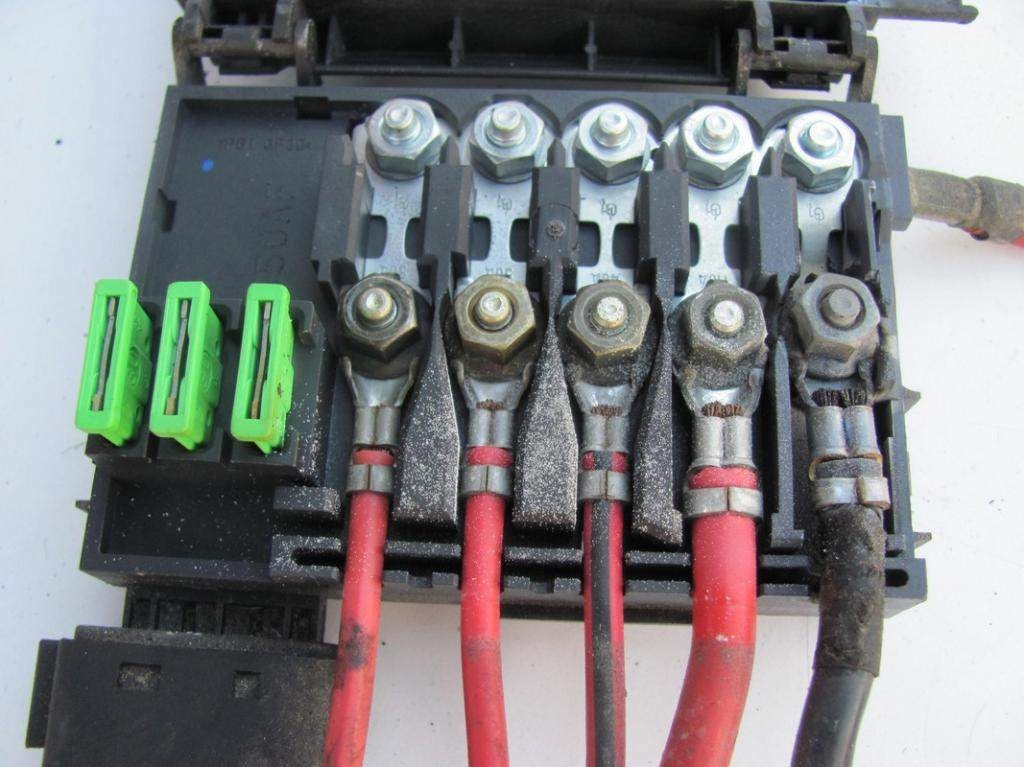
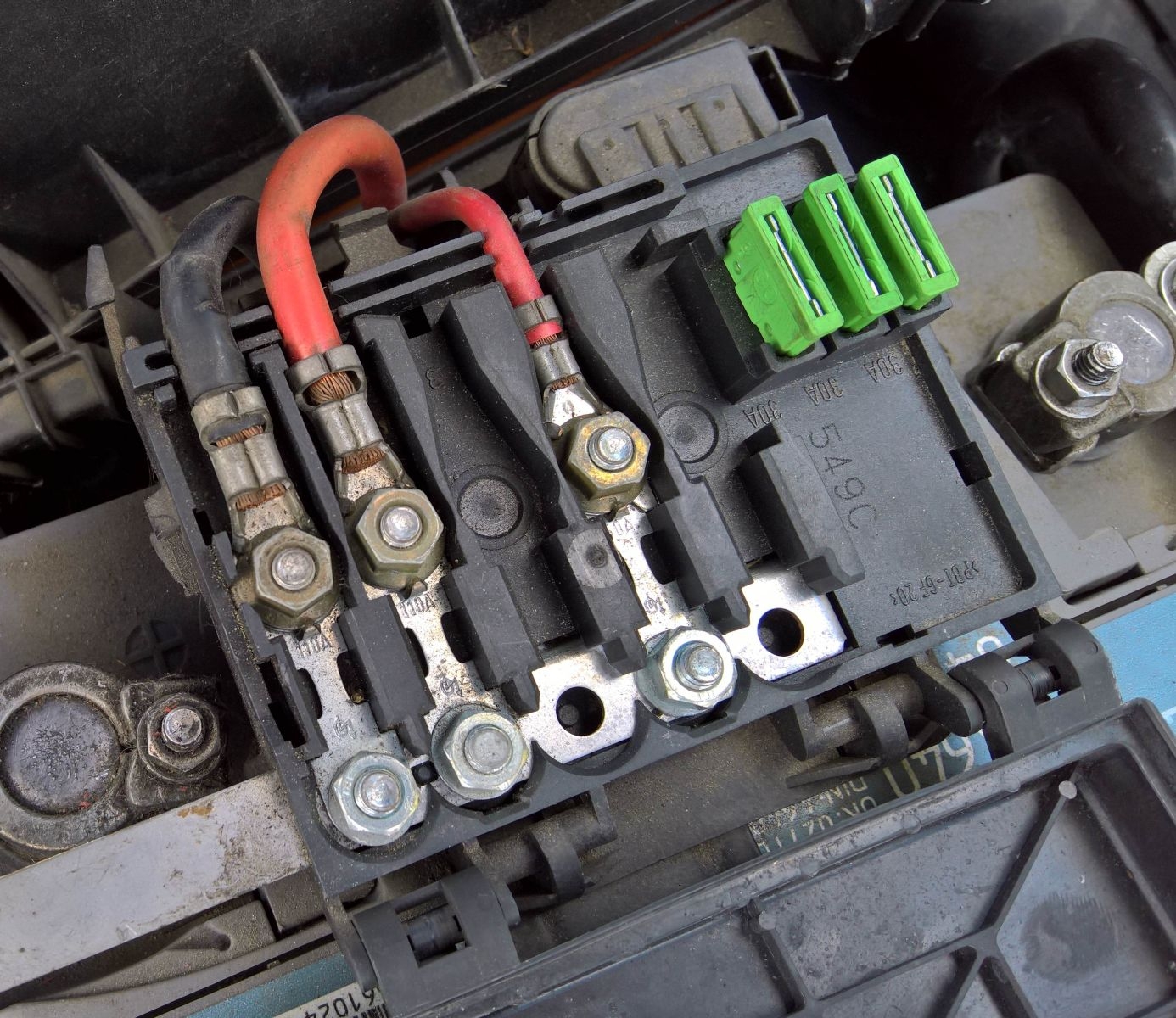
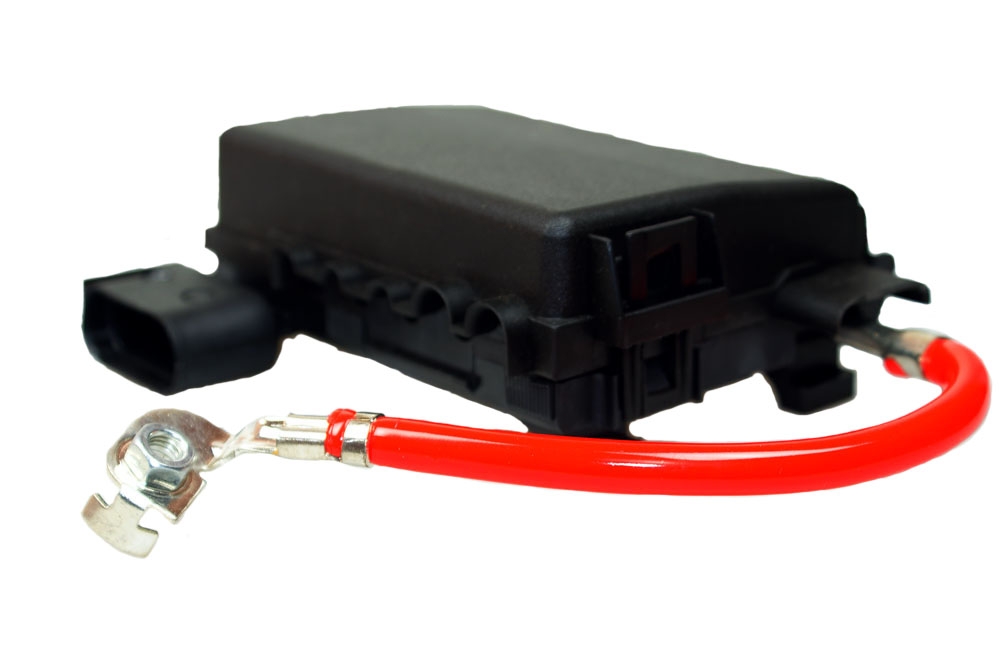
    Level 13  
    Posts: 120
    Help: 1
    Rate: 11
    Hello. I've been struggling with it for some time and can't find the reason. I searched the forum but found nothing similar. Well, at the very beginning, I noticed that the cable that runs from the alternator to the main fuse box gets very warm, which should not be the case. There was also that the lights dim and the Esp and ABS lights up after closing the el. windows or switching on high beam lights. No battery light is on and I will add that after turning off the engine and restarting it is fine. What could it be?
  • ADVERTISEMENT
  • #2 16722746
    ptr92
    Level 19  
    Posts: 559
    Help: 27
    Rate: 247
    Check the voltage drop on this wire between the alternator output and the input to the safety box.
  • #3 16722813
    grze21
    Level 13  
    Posts: 120
    Help: 1
    Rate: 11
    When the lights started to dim, I measured the battery and showed 12.97V and 14.03V on the alternator terminal. After the engine is turned off and restarted, 14.09V on the battery and 14.18V on the alternator terminal
  • ADVERTISEMENT
  • #4 16722978
    Staszek49
    Level 35  
    Posts: 2421
    Help: 228
    Rate: 1137
    Check, buddy, if the plus cables from the battery to the starter and alternator are of the required parameters, i.e. original. Are these connections secure and corrosion-free? Then check the connection of the negative terminal of the battery with ground, i.e. the car body, which may be corroded, especially in contact with the body. Examine the condition of the cable (thin blue) supplying the alternator, it tends to break and the alternator does not wake up. If these tests do not work either, check the belt tension and the diodes (each separately) in the alternator.
    The dimming of the lights may be related to the periodic undercharging of the battery, the reaction of the ABS system, airbags, lights and other "larger" receivers.
  • #5 16723004
    moto-kord
    Level 28  
    Posts: 800
    Help: 137
    Rate: 501
    Check the connections in the fuse box on the battery (those plate fuses).
  • #6 16724688
    vogelek1
    Level 21  
    Posts: 332
    Help: 35
    Rate: 113
    Connections on the mass and plus car should first be checked to exclude things
  • #7 16724723
    grze21
    Level 13  
    Posts: 120
    Help: 1
    Rate: 11
    I have checked all the cables and they are intact, in factory shirts. But there is one thing that put me on the trail, so I measured the voltage at the alternator terminal today and it showed 12.87V, it was similar to the battery terminal, but I caught the ground from the engine and charging started to show 14.24V, I grabbed the ground again from the negative terminal of the battery, charging 12.87V.
  • #8 16724822
    vogelek1
    Level 21  
    Posts: 332
    Help: 35
    Rate: 113
    grze21 wrote:
    I have checked all the cables and they are intact, in factory shirts. But there is one thing that put me on the trail, so I measured the voltage at the alternator terminal today and it showed 12.87V, it was similar to the battery terminal, but I caught the ground from the engine and charging started to show 14.24V, I grabbed the ground again from the negative terminal of the battery, charging 12.87V.


    I bet on a poor transition of one of the masses to the car body

    check all the ends of all the masses and it will be hurray: "-)
  • ADVERTISEMENT
  • #9 16724875
    grze21
    Level 13  
    Posts: 120
    Help: 1
    Rate: 11
    I cleaned all the masses that are under the battery. Where else to look for them?
  • #10 16726717
    vogelek1
    Level 21  
    Posts: 332
    Help: 35
    Rate: 113
    I did not read, did you check the alternator?
  • ADVERTISEMENT
  • #11 16727599
    carrot
    Moderator of Cars
    Posts: 8375
    Help: 1304
    Rate: 3540
    Alternator brushes / slip rings probably running out and charging once and not
  • #12 16727651
    kortyleski
    Level 43  
    Posts: 12262
    Help: 957
    Rate: 3833
    Weight between the hood and the engine.
  • #13 16727802
    andrzej20001
    Level 43  
    Posts: 17695
    Help: 1568
    Rate: 6610
    Golf 4 1999 1.6sr: Warm Alternator Cable, Dimming Lights, ESP & ABS Warning After Electrical Use
    fix this
  • #14 17364191
    mayer25
    Level 11  
    Posts: 106
    Rate: 11
    andrzej20001 wrote:
    I cleaned all the masses that are under the battery. Where else to look for them?


    kortyleski wrote:
    Weight between the hood and the engine.


    I may be wrong, but whether the weight from the body and the engine block are connected "together" to the base of the battery and from there it goes with a common cable to the negative battery terminal.

    I also have a separate question, not wanting to start a separate thread. Is there any breakdown of what are the cables at the box on the battery?

    The black on the left goes directly to the alternator. It is protected by a 110A strip fuse. What can the other two red cables be from (protected respectively 110A and 50A).


    Golf 4 1999 1.6sr: Warm Alternator Cable, Dimming Lights, ESP & ABS Warning After Electrical Use


    Someone was replacing the box visible in the photo with a "newer" type, which has a cable instead of this plate. So the newer version should theoretically be better. and more durable. It's always a cable, not a metal plate.

    Golf 4 1999 1.6sr: Warm Alternator Cable, Dimming Lights, ESP & ABS Warning After Electrical Use
  • #15 17364297
    ociz
    VIP Meritorious for electroda.pl
    Posts: 15844
    Help: 1378
    Rate: 3468
    Weight on the gearbox. In this box on the battery, if they do not connect it under the same fuses, check that they do not heat up.
  • #16 17364340
    mayer25
    Level 11  
    Posts: 106
    Rate: 11
    Nothing is overheating for me (knock on). OK. I'm going to start cleaning all contacts from the power supply, battery clamp. I was temporarily thinking about replacing the box. Apparently there are often problems with the first type. This badge is so unprofessional. Although what is the box for cable problems, if the contact points are often tarnished, are the cables themselves in poor condition and they call for replacement.

    Coming back .. what are the other two cables I wrote about. I found a graphic according to which the first from the left is the alternator cable, which is easy to check organoleptically, the second - red (110A) - the interior of the car, the fourth - red (50A) - engine control. Can someone confirm to be sure?
  • #17 17365166
    moto-kord
    Level 28  
    Posts: 800
    Help: 137
    Rate: 501
    Fuse 1
    30A radiator fan control unit
    Fuse 2
    ABS 30A
    Fuse 3
    30A ABS pump
    FL1 fuse
    Alternator
    (110A also used) 90A
    FL2 fuse
    Interior 110A
    FL3 fuse
    40A radiator fan control unit
    FL4 fuse
    50A engine management system
    FL5 fuse
    Coolant heater 50A

Topic summary

✨ The discussion revolves around a 1999 Golf 4 1.6SR experiencing issues with a warm alternator cable, dimming lights, and ESP & ABS warning lights activating after electrical use. The user notes that the alternator cable becomes excessively warm, and the lights dim when using electrical components like windows and high beams. Various responses suggest checking for voltage drops, ensuring secure and corrosion-free connections, and examining the alternator's condition, including brushes and slip rings. The importance of checking ground connections and the integrity of battery cables is emphasized, as well as the potential for undercharging the battery affecting the vehicle's electrical systems. The user also inquires about the wiring in the fuse box and the function of specific fuses related to the alternator and other components.
Generated by the language model.

FAQ

TL;DR: On a Golf 4 (1999 1.6 SR), dimming lights and ESP/ABS after electrical loads often trace to high resistance at grounds or the battery-top fuse box; key stat: 110A alternator feed; expert: "Alternator (110A also used) 90A." [Elektroda, moto-kord, post #17365166]

Why it matters: These symptoms mimic alternator failure but are frequently simple connection or fuse-box issues you can diagnose quickly.

For: VW Golf Mk4 owners troubleshooting warm alternator cables, voltage drop, or warning lights after using windows, fans, or high beams.

Quick Facts

Why do my lights dim and ESP/ABS lights appear after using windows or high beams?

High current loads expose resistance at grounds or the battery-top fuse box. The system voltage sags, triggering ESP/ABS warnings. Fix poor ground straps and clean the fuse-box lugs before condemning the alternator. “Check all the ends of all the masses and it will be hurray.” [Elektroda, vogelek1, post #16724822]

What charging voltages should I see on a healthy Mk4 with the 1.6 SR?

Expect about 14.1–14.3 V at the battery when charging normally. Readings near 12.8–13.0 V under load suggest drop or weak excitation. Compare alternator terminal to battery terminal to spot losses. A restart restoring 14.1 V points to intermittent connection issues. [Elektroda, grze21, post #16722813]

How do I check for a voltage drop between the alternator and the fuse box?

Measure voltage at the alternator output and at the fuse-box input under load. A significant difference means a bad connection. Use headlights and rear defogger to load-test. “Check the voltage drop on this wire between the alternator output and the input to the safety box.” [Elektroda, ptr92, post #16722746]

Which battery-top fuses feed what on the Golf 4?

Layout reference: FL1 alternator (90–110 A), FL2 interior (110 A), FL4 engine management (50 A). Additional slots feed ABS pump and fan control. Knowing this helps target heat and drop points when symptoms appear during cabin or engine loads. [Elektroda, moto-kord, post #17365166]

Could a bad ground cause no-charge or low voltage only at the battery?

Yes. If the alternator shows ~14.2 V to engine ground but the battery shows ~12.9 V, the battery ground path is resistive. Clean and retorque the engine/body grounds and the negative battery cable to body. Re-test after load. [Elektroda, grze21, post #16724723]

Where are the critical grounds to clean on a Mk4?

Service the negative battery to body, the engine/gearbox to body strap, and the clusters under the battery tray. Also inspect the hood-to-engine bonding if fitted. Remove corrosion, brighten metal, and tighten. [Elektroda, kortyleski, post #16727651]

What is a strip (link) fuse, and why does it heat up?

A strip fuse is a bolted, flat metal link rated for high current (e.g., 110 A). Heat indicates resistance at the bolted joints or a fatigued link. Clean both mating surfaces and ensure proper torque. Replace if discolored or cracked. [Elektroda, ociz, post #17364297]

Could worn alternator brushes or slip rings cause intermittent charging?

Yes. Brushes wearing short or rough slip rings can make charging start-stop with vibration or load. If grounds and fuse-box joints check out, inspect brushes and rings next and verify belt tension. [Elektroda, carrot, post #16727599]

What is the exciter (thin blue) wire and its failure symptom?

It feeds the alternator field to start charging. If it breaks, the alternator may not wake up, causing low voltage and warning cascades. Inspect continuity and connector fit at the alternator. [Elektroda, Staszek49, post #16722978]

How do I fix a warm alternator cable at the battery fuse box?

  1. Load the system and measure alternator vs. fuse-box input voltage.
  2. Remove the battery-top fuse box, clean lugs, links, and studs.
  3. Reassemble, torque, and re-test under load for <0.2 V drop. “Check the connections in the fuse box on the battery.” [Elektroda, moto-kord, post #16723004]

My readings improve when I ground to the engine, but drop when I ground to the battery. What does that prove?

It proves the negative battery-to-body path is resistive. The engine block ground is intact, but the battery ground cluster needs cleaning or repair. Service the under-battery grounds and retest under load. [Elektroda, grze21, post #16724723]

Do the interior and engine-management feeds share the same main fuse values?

Interior feed is 110 A, and engine management is 50 A on the referenced layout. Map your box to confirm positions, then check those joints for heat or tarnish during the fault. [Elektroda, moto-kord, post #17365166]

Edge case: Can ABS/ESP warnings appear with no battery light on?

Yes. A localized drop at the fuse box or grounds can sag module voltage without triggering the charge lamp. After a restart, contact pressure can improve temporarily, masking the issue. [Elektroda, grze21, post #16722721]

Should I upgrade the early plate-style battery fuse box to the later cable-bridge type?

Owners report the later box uses a cable bridge instead of a rigid plate. Any swap must retain correct fuse ratings and clean, low-resistance joints. Inspect and clean first; replacement follows evidence of damage. [Elektroda, mayer25, post #17364191]

What else should I check before replacing the alternator?

Verify belt tension, clean all grounds, check the battery-top fuse box for heat, confirm exciter wire integrity, then test brush length. Replace parts only after drop tests and visual inspections fail. [Elektroda, Staszek49, post #16722978]
Generated by the language model.
ADVERTISEMENT