logo elektroda
logo elektroda
X
logo elektroda

Finding 230V Cable Route in Wall: Tips, Tools & Methods for Tracing Live Wires & Unknown Paths

szczukot 50145 28
Best answers

How can I trace the route of an unknown 230V cable hidden in a wall when I only have access to one live conductor?

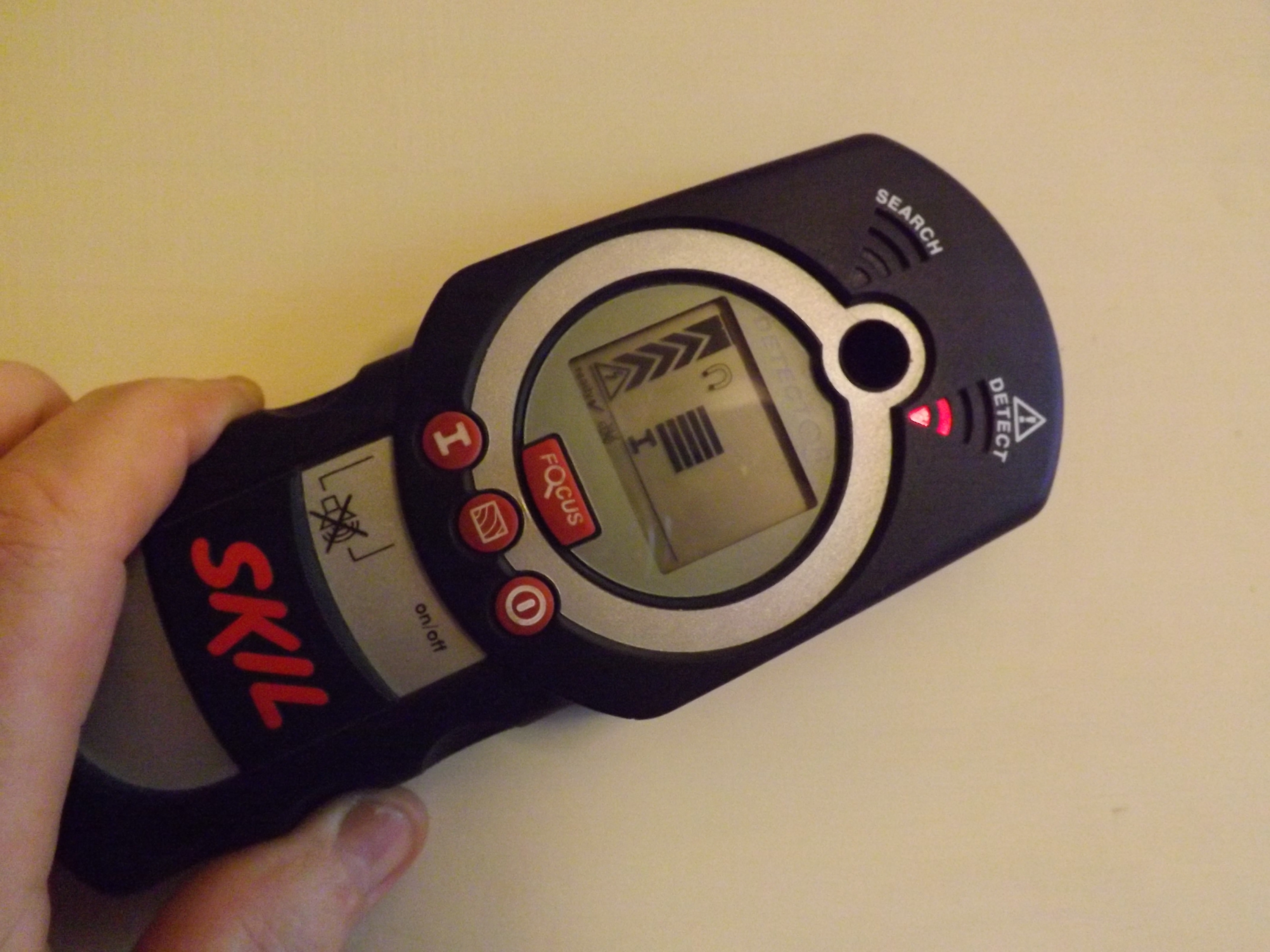
Use a wire detector/cable tracer, preferably a proper one rather than a cheap unit, because low-end detectors often fail; if this is a one-time job, it may be better to hire someone who already has such equipment [#16816016] If you can isolate the other circuits and leave only the target cable energized, an inexpensive detector such as FAZER777 was reported to be enough to trace it through plaster, and another user said it can catch a wire with about 30 cm of cable exposed [#16816066] [#16817341] One alternative method mentioned is to de-energize the line, feed it from the secondary side of a switching power supply before the rectifying diode, and use an AM radio to listen for the signal along the wall, with detection reported up to about half a meter, but this was explicitly described as not suitable for a layman [#16820483]
Generated by the language model.
ADVERTISEMENT
Treść została przetłumaczona polish » english Zobacz oryginalną wersję tematu
  • #1 16815978
    szczukot
    Level 14  
    Posts: 820
    Help: 6
    Rate: 82
    Hello.
    Can anyone tell me how I can find the 230V cable route in the wall?
    One cable comes out of the switchgear box and I have no idea where it is going. All in all, I only have access to one of his veins (because the zero and the ground are plugged in so that I won't get which one). And I'm curious what I missed - I have no idea what the cable is.
    Several dozen other live wires leave the box.
    And the question: how to find the route of this one cable?

    I understand that the metal detector rather comes off.
    So it probably remains:
    1) Searching for a live cable. Theoretically, I can disconnect all the other cables and leave only this one energized. And then what sensor can I use? Will you recommend one (which will break through brick walls and does not cost a fortune)?
    2) Broadcasting of some high frequency and sensor. Will you recommend a prefab (as above)?

    It is not about any accuracy. Just where it just goes. :)

    Best regards.
    Phantom
  • ADVERTISEMENT
  • #2 16815999
    zbich70
    Level 43  
    Posts: 17116
    Help: 1164
    Rate: 6568
    szczukot wrote:
    One cable comes out of the switchgear box and I have no idea where it is going.

    Disconnect it and check where there is no voltage.
  • Helpful post
    #3 16816016
    krzysiek7
    Moderator of Electricians group
    Posts: 4835
    Help: 676
    Rate: 1910
    You will find the wire with a wire detector. There is a lot of it on the market, but avoid the cheap ones because you won't detect anything. Unfortunately, good equipment costs money. If it is to be used only once, I suggest that you entrust this search to someone who has such a detector.
  • #4 16816066
    MonikaMarcin
    Level 20  
    Posts: 393
    Help: 32
    Rate: 103
    It seems to me that in this case FAZER777 could be enough.
    Turn off the rest of the circuits and try to trace the wire.
    He has helped me many times.
  • #5 16816093
    szczukot
    Level 14  
    Posts: 820
    Help: 6
    Rate: 82
    zbich70 wrote:
    szczukot wrote:
    One cable comes out of the switchgear box and I have no idea where it is going.

    Disconnect it and check where there is no voltage.


    I did and ... found nothing ;)

    Phantom

    Added after 1 [minutes]:

    MonikaMarcin wrote:
    It seems to me that in this case FAZER777 could be enough.
    Turn off the rest of the circuits and try to trace the wire.
    He has helped me many times.


    I saw that a lot of people recommended it as cheap and often working. What is the real range through the walls?

    Phantom
  • #6 16816127
    zbich70
    Level 43  
    Posts: 17116
    Help: 1164
    Rate: 6568
    szczukot wrote:
    I did and ... found nothing ;)

    After all, are you interested in the route of this wire or its purpose?
    Since you've disconnected it and you have voltage wherever it should be, leave it there.
  • ADVERTISEMENT
  • #7 16816130
    szczukot
    Level 14  
    Posts: 820
    Help: 6
    Rate: 82
    zbich70 wrote:
    szczukot wrote:
    I did and ... found nothing ;)

    After all, are you interested in the route of this wire or its purpose?
    Since you've disconnected it and you have voltage wherever it should be, leave it there.


    I prefer to find its end. Or maybe it is hanging in a lamp or a tin and "scheming". I will not remove the neutral one because I do not know which one it is. Then it turns out that some fuse will shoot or something because it has something to do with the neutral.
    Secondly, when he goes to some "cool" place, I will use him :)

    Phantom
  • ADVERTISEMENT
  • #8 16816144
    zbich70
    Level 43  
    Posts: 17116
    Help: 1164
    Rate: 6568
    Is it a house, a flat in a block of flats, tenement house?
    Are you the first owner of this property?

    And since you plan to find the other end of this unidentified wire / cable and use it, first treat it with a Riso meter, you will know if it is useful.
  • #9 16816257
    Akrzy74
    Rest in Peace
    Posts: 7910
    Help: 363
    Rate: 1497
    szczukot wrote:
    I prefer to find its end

    So read the quote from my colleague krzysiek7 again. If this is not the case, what remains is a search engine or professional equipment, that is, a generator.
  • #10 16816476
    Anonymous
    Level 1  
  • #11 16816512
    MonikaMarcin
    Level 20  
    Posts: 393
    Help: 32
    Rate: 103
    MonikaMarcin wrote:
    What is the real range through the walls?

    It's going to be hard through the walls. ;-)
    In the wall, through the plaster, it should be able to trace a single live wire.
  • #12 16816882
    szczukot
    Level 14  
    Posts: 820
    Help: 6
    Rate: 82
    15kVmaciej wrote:
    Oh, right there, a professional .. mastech is enough. :)


    This MS6812?
    Who has the greater sensitivity (i.e. the chance of penetrating the plaster)? Mastech or Fazer777?

    Phantom
    ps. There are some of these models: http://mastech.com.pl/index.php?category_rewr...ontroller=category&orderby=price&orderway=asc

    Added after 1 [minutes]:
    MonikaMarcin wrote:
    MonikaMarcin wrote:
    What is the real range through the walls?

    It's going to be hard through the walls. ;-)
    In the wall, through the plaster, it should be able to trace a single live wire.


    I will buy it and it will be clear. Just a little more fun to disconnect the whole house except one cable and go.

    Phantom
    ps. By the way, I was looking through the box, and it seems to me that I can see two such cables. Only one is in the safe and the other is not. Ah, those professionals :(
  • #13 16817102
    CYRUS2
    Level 43  
    Posts: 17639
    Help: 1221
    Rate: 3447
    I sometimes use such an inexpensive device.
    VTTEST11 Vellman
    It then works when the signal closes over 2 wires - not just one.
    I did not check on the wall.
    I was looking for a signal in a multi-pair telecommunications cable.
    There was a question - in which of several CT wires are the veins searched.
    I paid 100 - 150 PLN for the device.
    I can put the signal into the extension cord and see how far it "takes".

    The device is not "high-end" but a virulent price.
  • ADVERTISEMENT
  • #14 16817118
    Topolski Mirosław
    Moderator of Electrical engineering
    Posts: 7125
    Help: 354
    Rate: 1602
    szczukot wrote:
    15kVmaciej wrote:
    Oh, right there, a professional .. mastech is enough. :)


    This MS6812? (

    MS6818
  • #15 16817278
    szczukot
    Level 14  
    Posts: 820
    Help: 6
    Rate: 82
    CYRUS2 wrote:
    I sometimes use such an inexpensive device.
    VTTEST11 Vellman
    It then works when the signal closes over 2 wires - not just one.


    I have no such possibility

    Phantom

    Added after 3 [minutes]:

    Topolski Mirosław wrote:
    szczukot wrote:
    15kVmaciej wrote:
    Oh, right there, a professional .. mastech is enough. :)


    This MS6812? (

    MS6818


    Well, spending 700 zlotys is a bit too much to find this cable.
    If these cheap voltage sensors do not work for me, then I will see if I can borrow somewhere (although I can see that there are only cable detectors etc, not voltage)

    Phantom
  • #16 16817341
    kortyleski
    Level 43  
    Posts: 12262
    Help: 957
    Rate: 3833
    If everything except one circuit is turned off, the 777 with 30 cm cable will catch.
  • #17 16818352
    CYRUS2
    Level 43  
    Posts: 17639
    Help: 1221
    Rate: 3447
    CYRUS2 wrote:
    I sometimes use such an inexpensive device.
    VTTEST11 Vellman
    It then works when the signal closes over 2 wires - not just one.
    szczukot wrote:
    I have no such possibility
    Can't unplug the cable at the input?
  • #18 16818895
    elpapiotr
    Electrician specialist
    Posts: 12199
    Help: 1013
    Rate: 3508
    Immediately "huge laboratories"
    We have the usual instruments and meters - for example:

    Finding 230V Cable Route in Wall: Tips, Tools & Methods for Tracing Live Wires & Unknown Paths
  • #19 16819266
    szczukot
    Level 14  
    Posts: 820
    Help: 6
    Rate: 82
    CYRUS2 wrote:
    CYRUS2 wrote:
    I sometimes use such an inexpensive device.
    VTTEST11 Vellman
    It then works when the signal closes over 2 wires - not just one.
    szczukot wrote:
    I have no such possibility
    Can't unplug the cable at the input?


    I will push off and what next? I have no access to a second vein

    Phantom
  • #20 16820286
    elpapiotr
    Electrician specialist
    Posts: 12199
    Help: 1013
    Rate: 3508
    Because the lack of descriptions / markers on all wires of the installation cables is revenge, that's why.
    Little by little, people are learning what it is supposed to look like.
  • #21 16820326
    zbich70
    Level 43  
    Posts: 17116
    Help: 1164
    Rate: 6568
    szczukot wrote:
    I have no access to the second vein

    What is this "no access"?
    Is that such a terrible mess is there?
    But since someone did (laced up) it once, you can always do the same thing, only in reverse order.
  • #22 16820483
    klamocik
    Level 36  
    Posts: 3033
    Help: 332
    Rate: 715
    This will give you the answer, but not for a layman, because you need to disconnect your line from the voltage, connect to the secondary side of any switching power supply, but before the rectifying diode, turn on the AM radio to the receiving station and look for bumps up to half a meter.
  • #23 16821794
    gumisie
    Level 43  
    Posts: 17783
    Help: 1667
    Rate: 2472
    klamocik wrote:
    This will give you the answer, but not for the layman as you need to de-energize your line
    And you would be able to explain it to me a layman. Since I have to disconnect my "line from the voltage", what should I connect this power supply to, if I turned off the power to the apartment?
    klamocik wrote:
    connect to the secondary side of any switching power supply, but before the rectifying diode
    Approx. someone will say that I'm picking on, just check it out.
    Maybe I'm wrong, but wouldn't it be better to connect a simple AM generator tuned to 227 kHz instead of a switched-mode power supply (the cable you are looking for is, of course, the antenna connected to the generator), but how to find it, since "AM radio":
    klamocik wrote:
    works up to half a meter.
    Half a meter to the right or left, whatever.
    Best regards.
  • #24 16822129
    MonikaMarcin
    Level 20  
    Posts: 393
    Help: 32
    Rate: 103
    szczukot wrote:
    There is one cable coming out of the distribution box, which I do not have
    no idea where he is going. In fact, I have access to one of his veins

    gumisie wrote:
    Half a meter to the right or left, whatever.

    The author probably "approximately" wants to know where the cable "goes".
    He did not write that he was looking for which way exactly "goes".
    szczukot wrote:
    Several dozen other live wires leave the box.

    gumisie wrote:
    What should I connect this power supply to, since I turned off the power to the apartment?
    .
    Well, the voltage in the socket will probably be somewhere. :-D
  • #25 16827531
    szczukot
    Level 14  
    Posts: 820
    Help: 6
    Rate: 82
    So a small summary.
    I bought this phaser777. He found this one cable in the wall without any problems (I only connected the phase to it).

    From bad news (for me), the cable is "lost" in the housing behind the bathtub. I can't find where it goes next. Tiles everywhere, bathtub etc. I found it in the pictures. It is the only one that seems to be thrown loose (and probably its end hangs there), and not attached to the wall like other cables that run somewhere. The house is about 10 years old. Is it possible that the electrician led this cable to the bathtub as a future grounding? The only thing I can think of is why this cable could be thrown so loose in such a place.

    best regards
    Phantom
  • #26 16827700
    gkwiatkowski
    CCTV and Stationary Alarms specialist
    Posts: 4629
    Help: 645
    Rate: 1209
    szczukot wrote:
    So a small summary.
    I bought this phaser777. He found this one cable in the wall without any problems (I only connected the phase to it).

    From bad news (for me), the cable is "lost" in the housing behind the bathtub. I can't find where it goes next. Tiles everywhere, bathtub etc. I found it in the pictures. It is the only one that seems to be thrown loose (and probably its end hangs there), and not attached to the wall like other cables that run somewhere. The house is about 10 years old. Is it possible that the electrician led this cable to the bathtub as a future grounding? The only thing I can think of is why this cable could be thrown so loose in such a place.

    best regards
    Phantom


    Hot tub or other jacuzzi. :)
  • #27 16827768
    szczukot
    Level 14  
    Posts: 820
    Help: 6
    Rate: 82
    Well, it is also possible that some "electric" bathtub was supposed to be there.

    Phantom
  • #28 16828019
    beam_beer
    Level 23  
    Posts: 549
    Help: 49
    Rate: 135
    Needless to say, you should disconnect it from the power supply for your own good ...
  • #29 16828155
    szczukot
    Level 14  
    Posts: 820
    Help: 6
    Rate: 82
    beam_beer wrote:
    Needless to say, you should disconnect it from the power supply for your own good ...


    sure :)

    Phantom

Topic summary

✨ The discussion revolves around methods for tracing the route of a 230V cable within a wall, particularly when the cable's destination is unknown. The user seeks advice on tools and techniques to identify the cable's path without disconnecting multiple circuits. Recommendations include using wire detectors, with caution advised against cheaper models that may not be effective. Specific devices mentioned include the Fazer777 and Mastech models, which are noted for their ability to detect live wires through walls. The user ultimately purchased the Fazer777, which successfully located the cable but revealed that it was loose behind a bathtub, raising questions about its intended use, possibly for future grounding or connection to an electric bathtub. The importance of safety when dealing with live wires is emphasized throughout the discussion.
Generated by the language model.

FAQ

TL;DR: 62 % of DIYers mis-trace live wires when using sub-£20 testers [Electrical Safety First, 2021]. “Cheap probes won’t detect anything” [Elektroda, krzysiek7, post #16816016] Isolate the circuit, energise only the target phase, then scan with a mid-range detector like Fazer 777 or Mastech MS6818; expect reliable tracking through 15–25 mm plaster. Why it matters: accurate routing prevents accidental drilling, shock and wasted rewiring.

Quick Facts

• Fazer 777 sensitivity: ≈30 cm in air, 15–25 mm in brick plaster when only one live conductor remains [Elektroda, kortyleski, post #16817341] • Mastech MS6818 kit price: approx. €150–€180, transmitter 1 kHz, receiver 0–5 kHz band [Mastech Datasheet, 2023]. • Typical in-wall PVC cable insulation breakdown test: ≥1 GΩ at 500 V DC (IEC 60364) [IEC, 2020]. • Hiring a locator with pro gear costs €40–€60 per hour and cuts search time by 70 % [Fluke Study, 2020]. • Drilling damages 250 + UK homes weekly due to unseen wiring [Gas & Elec Safety Report, 2022].

How do I trace a single 230 V conductor if only the phase core is accessible?

  1. Turn off all other circuits at the main board. 2. Energise only the unknown phase with 230 V. 3. Hold the Fazer 777 or similar probe flat to the wall and follow the highest tone level. Users traced a wall run in under five minutes using this method [Elektroda, szczukot, post #16827531]

Will a generic metal detector locate live power cables?

No. Power cables carry weak alternating fields, while hobby metal detectors sense static metallic mass. The thread opener dismissed this option immediately [Elektroda, szczukot, post #16815978]

How deep through masonry can these detectors read?

Passive voltage sticks read 15–25 mm of plaster reliably. Beyond 30 mm signal drops sharply, especially in damp or reinforced walls [Mastech Datasheet, 2023].

Can I inject a high-frequency signal instead of leaving the wire live?

Yes. Connect an active generator (e.g., MS6818 transmitter) to the conductor and ground. The receiver then locks on to the 1 kHz tone even when the line is de-energised, reducing shock risk [Mastech Datasheet, 2023].

What safety checks before re-using a found spare cable?

Measure insulation resistance with a Riso meter; accept only values ≥1 GΩ at 500 V DC per IEC 60364 [IEC, 2020]. Zbich70 advised this before repurposing the run [Elektroda, zbich70, post #16816144]

Why did the cable disappear behind my bathtub?

Installers often pre-run a feed for future whirlpool tubs or equipotential bonding. Loose placement behind sanitary housing is common in 10–15 year builds [Elektroda, gkwiatkowski, post #16827700]

Edge cases where tracing fails?

Signal can vanish in walls with metal mesh, foil insulation, or damp zones; the probe may show false peaks. Shielded cable or earthed conduits block electromagnetic coupling [Fluke Study, 2020].

How-To: trace with Fazer 777 in three steps

  1. Isolate and energise only the target phase. 2. Set Fazer 777 to maximum sensitivity, start at the distribution box. 3. Slide along the wall; reduce sensitivity when tone peaks to refine the route [Elektroda, kortyleski, post #16817341]

When should I hire a professional locator?

If you need depth accuracy under tiles or concrete, or must avoid cutting structural steel, hire a specialist. Pro gear locates to ±10 mm and cuts tracing time by 70 % versus DIY sticks [Fluke Study, 2020].

Is the AM-radio trick practical for beginners?

No. It requires injecting RF into a de-energised conductor via an exposed SMPS secondary and tuning a portable radio within 0.5 m—complex and unreliable, as forum members noted [Elektroda, gumisie, post #16821794]

Can I trace neutral or protective earth conductors the same way?

Yes, if they form a closed circuit and you inject an external tone. Passive voltage pens detect only live phase; neutrals need an active transmitter for localisation [Mastech Datasheet, 2023].
Generated by the language model.
ADVERTISEMENT