


logo elektroda
logo elektroda
X
logo elektroda

- BIOS Settings for SSD Boot After Migration from HDD: Troubleshooting Disk Order & SATA Options

Arystotelefones 20799 12
ADVERTISEMENT
Treść została przetłumaczona polish » english Zobacz oryginalną wersję tematu
  • #1 16847901
    Arystotelefones
    Level 8  
    Posts: 184
    Rate: 22
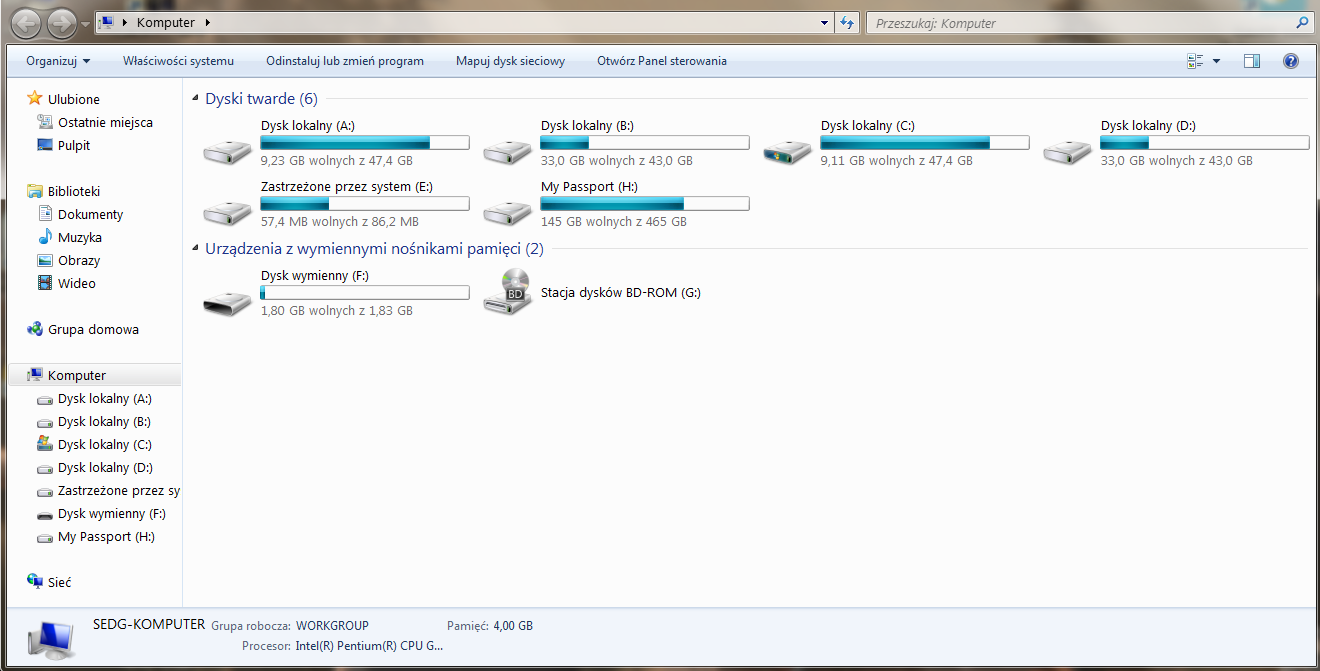
    Hello, I copied the partitions from HDD to SSD, everything is visible in the window of my computer, but I can not set up the BIOS so that the computer after data migration fired with the SSD. Either it starts HDD or it does not move at all - when I disconnect the HDD (message on a black background asking for a disc for boting). The order of the disks changed some of the BIOS options there - no result. Now the only changed option is "enabled" for SATA 2 (SSD), I did not move anything anymore.
    Attachments:
    • - BIOS Settings for SSD Boot After Migration from HDD: Troubleshooting Disk Order & SATA Options IMG20171124_001.jpg (788.74 KB) You must be logged in to download this attachment.
    • - BIOS Settings for SSD Boot After Migration from HDD: Troubleshooting Disk Order & SATA Options ssd.png (141.43 KB) You must be logged in to download this attachment.
  • ADVERTISEMENT
  • #2 16847941
    safbot1st
    Level 43  
    Posts: 21951
    Help: 2719
    Rate: 1583
    Arystotelefones wrote:
    I copied partitions from HDD to SSD

    What? How? So you just copied the partition / e? and you count on it to booze itself?
    And system, start-up where?
    EDIT
    Use disk management to know where you are and clone your partitions instead of "copying".
    You did not deign to even specify what OS. From the screen we have to guess that it's W7.
  • ADVERTISEMENT
  • #3 16848017
    Arystotelefones
    Level 8  
    Posts: 184
    Rate: 22
    safbot1st wrote:
    Arystotelefones wrote:
    I copied partitions from HDD to SSD

    What? How? So you just copied the partition / e? and you count on it to booze itself?
    And system, start-up where?
    EDIT
    Use disk management to know where you are and clone your partitions instead of "copying".
    You did not deign to even specify what OS. From the screen we have to guess that it's W7.


    But why so hard? :( Well, in any case, I cloned with the help of EaseUse Todo Backup Home, so here, for example: http://www.chip.pl/2016/02/poradnik-bezpieczna-przesiadka-z-hdd-na-ssd/. Yes, the system is Windows 7. I've copied all partitions. The problem is at the stage of disconnecting the unnecessary HDD and replacing it with SSD.
  • #4 16848090
    safbot1st
    Level 43  
    Posts: 21951
    Help: 2719
    Rate: 1583
    Arystotelefones wrote:
    But why so hard?

    I do not know, it worked out. I still do not know what partitioning HDD and SSD you have. Where is the boot partition and where the system partition.
    Arystotelefones wrote:
    I cloned using EaseUse Todo Backup Home, here I am here:

    There is nothing exactly described here only visually.
    So you used to clone the same system that was cloned?
    This does not always work.
    Arystotelefones wrote:
    The problem is at the stage of disconnecting the unnecessary HDD and replacing it with SSD.

    Are you sure? By. me this is a problem with booting SSD, not "detection":
    Arystotelefones wrote:
    on a black background with a request for a disc for botting

    You can combine and do so to boot from SSD, or re-clone properly from outside the system that you're cloning . Use a bootable clonezilla. It has not let me down yet.

    Added after 4 [minutes]:

    You ask me why, I still do not know what device I have to deal with, not to mention how to set the BIOS in it ... ;)
    If you have properly cloned, you want to boot exactly the same with SSD as it was booted from HDD.
  • ADVERTISEMENT
  • #5 16848104
    Matuzalem

    Level 43  
    Posts: 17279
    Help: 1651
    Rate: 1079
    What are the A and B discs I would learn as readily as Mr Safbot1st would have resolved his doubts related to partitioning. By the way and about what disks specifically - HDD and SSD are not enough - I would also address my curiosity.

    PS
    That it would not work out, that it is enough to empty A and B so that everything will start working.
    Company Account:
    Doradztwo podatkowe
    Wilczyńskiego 25/13, Olsztyn, 10-686
  • #6 16848840
    Arystotelefones
    Level 8  
    Posts: 184
    Rate: 22
    HDD - old Samusng HD120IJ, SSD - ADATA SU800 128 GB. The MSI H81M-P33 motherboard.
    I cloned this way: https://www.youtube.com/watch?v=VO11kbB7gTk.
    The system partition is C, there is still drive D. A and B are their clones in turn. I do not know what E disk is, probably the side effect of this cloning. There are also some Linux partitions not visible from the Windows level.
    I do not know very well what is going on with this boot and what information I should give.
    If I succeed, I will try this Clonezilla. I prefer, however, to try it this way.
  • ADVERTISEMENT
  • #7 16851490
    Arystotelefones
    Level 8  
    Posts: 184
    Rate: 22
    https://www.elektroda.pl/rtvforum/topic3339447.html
    https://www.elektroda.pl/rtvforum/topic3117906.html

    Watching the above topics - a lot of drinking, a bit more than my really modest skills. But I have another idea - to make a Paragon system picture and "restore" it not on HDD - as I did before - but on SSD. Maybe in this way, that I disconnect HDD (after taking the image), I will install fresh XP or Seven + Paragon on SSD and I will restore it? Is it good idea? Will the system not lose performance and speed? What do you think about it? :P

    Unfortunately, such a "party" only the next weekend - now 5 days of grind and a complete lack of time for such operations.
  • #8 16852556
    safbot1st
    Level 43  
    Posts: 21951
    Help: 2719
    Rate: 1583
    Arystotelefones wrote:
    I do not really know what's going on with this boot

    If you do not have such basic knowledge about proskjonowanie contemporary OS, it will be difficult to advise you.
    I've already written - do cloning disk to disk by boot clonezilla .
    Especially that the target SSD disk is larger than the source one.
    This can not go wrong and there is no "pitolization".
    You have from outside the system that you're cloning do it, not such combinations:
    Arystotelefones wrote:
    I have another idea - to make a Paragon system picture and "restore" it not on HDD - as I did before - but on SSD. Maybe in this way, that I disconnect HDD (after taking the image), I will install fresh XP or Seven + Paragon on SSD and I will restore it?

    Where would this image come from then? Make a clonezilla - I promise an "effect".
    ps. I wish you a nice, fruitful job. Do as I write - you will have zero effort, and the operation will last max. half-hour.
  • #9 16853863
    Arystotelefones
    Level 8  
    Posts: 184
    Rate: 22
    Okay, the program looks megan-intuitive, but I will fight on the weekend. If you promise the effect ... :)
  • #10 16853899
    safbot1st
    Level 43  
    Posts: 21951
    Help: 2719
    Rate: 1583
    Not at all! The basis is to run the tool from outside the system on the source disk.
    1. Take the prepared clonezilla from USB.
    2. You pick the first option from the edge - default settings.
    3. You choose English and "dont`t touch" (this is mainly about the keyboard layout and characters - completely irrelevant to our goals).
    4. You choose Start
    5. Select device -> device (drive to drive ;)
    6. You select the Begginer mode
    7. You select disk_to_local_disk
    8. You choose the source (disks are described as in linux - sda, sdb, sdc, etc.)
    9. Choose the destination
    10. Skip the check - Skip
    11. Choose the selection of actions after finishing ;)
    12. Confirm three times.
    13. Observe and select the action upon completion. Poweroff (turn off) to unplug the source disk in advance.

    http://clonezilla.org/show-live-doc-content.p...pic=clonezilla-live/doc/03_Disk_to_disk_clone
    The Polish tutorial some "non-teges" is and refers to the pictures, and we do "on the otro".
  • #11 16862791
    Arystotelefones
    Level 8  
    Posts: 184
    Rate: 22
    safbot1st wrote:
    Not at all! The basis is to run the tool from outside the system on the source disk.
    1. Take the prepared clonezilla from USB.


    I fell in the first stage. After booting - no configuration file found. These bootable programs do not like me, I used to consult in another topic, how to check the "condition" of my HDD - two boot programs were recommended and none of them could be launched. Well, maybe it's just not my skill ...

    At night, I simply installed everything on the SSD again. It was not a lot of fun in the end. I hope that the new equipment will serve several (coming) years.

    In any case - thanks for wanting :)
  • #12 16862831
    safbot1st
    Level 43  
    Posts: 21951
    Help: 2719
    Rate: 1583
    Maybe you just do not have the pen as needed or some broken one. Well, you've done it without cloning, let's close ... ;)
  • #13 16863871
    Arystotelefones
    Level 8  
    Posts: 184
    Rate: 22
    We're closing :)

Topic summary

✨ The discussion revolves around troubleshooting BIOS settings to enable booting from an SSD after migrating data from an HDD. The user initially copied partitions instead of cloning, leading to boot issues. Responses suggest using proper cloning software like Clonezilla or EaseUS Todo Backup to ensure the boot partition is correctly set on the SSD. The user mentions specific hardware, including an MSI H81M-P33 motherboard, a Samsung HD120IJ HDD, and an ADATA SU800 SSD. Various methods and tools for cloning and restoring the system are discussed, with emphasis on the importance of booting from the SSD and configuring BIOS settings correctly.
Generated by the language model.

FAQ

TL;DR: Cloning to SSD from a bootable tool takes about 30 minutes; “from outside the system” is the key. [Elektroda, safbot1st, post #16852556] Why it matters:** It fixes “won’t boot from SSD” after HDD→SSD migration for Windows 7 users on boards like MSI H81M-P33.

Quick Facts

How do I make my PC boot from the SSD after cloning the HDD?

Clone the HDD to the SSD using a bootable tool, then set the SSD first in BIOS boot order. Avoid cloning from the running system. If the SSD still won’t start, redo the clone from outside Windows. The issue is almost always SSD booting, not detection. [Elektroda, safbot1st, post #16848090]

What BIOS settings should I check on an MSI H81M-P33?

Enable the SATA port with the SSD and move the SSD to the top of Boot Priority. After a correct clone, it should boot the same way it booted from the HDD. No exotic options are needed for SATA AHCI. [Elektroda, safbot1st, post #16848090]

What does “from outside the system” mean in cloning?

It means you boot a separate USB tool and run the clone without starting the installed Windows. This avoids locked files and bootloader mismatches. In the author’s words, do it “from outside the system.” [Elektroda, safbot1st, post #16852556]

Is cloning while Windows is running a bad idea?

Yes. Cloning the same system that’s running can fail to produce a bootable SSD. Do disk‑to‑disk clones using a bootable environment instead. “This does not always work” when attempted from within Windows. [Elektroda, safbot1st, post #16848090]

How do I clone HDD→SSD with Clonezilla in three steps?

  1. Boot Clonezilla USB and pick device→device in Beginner mode.
  2. Choose source HDD (sda) and target SSD (sdb), skip checks if you wish.
  3. Confirm prompts, wait, then power off and set SSD first in BIOS. “Clonezilla Live: disk_to_disk clone”

Why did I get A, B, C, D, and an unexpected E drive after cloning?

Those letters reflect multiple partitions that were copied, including any data and system volumes. After migration, disconnect the old HDD before first boot to avoid duplicate volume letters, then reconnect only if needed. [Elektroda, Arystotelefones, post #16848840]

What causes “no configuration file found” when booting a USB tool?

It typically indicates a faulty or incorrectly prepared USB drive. Recreate the bootable media with a reliable tool and try a different USB stick or port. As one reply notes, the pen drive may be broken. [Elektroda, safbot1st, post #16862831]

Should I reinstall Windows instead of cloning?

You can. One user reinstalled onto the SSD when the USB tool failed and reported success, though it took extra effort. Cloning remains faster when the USB boots correctly. [Elektroda, Arystotelefones, post #16862791]

How long should a Clonezilla disk‑to‑disk clone take?

On typical SATA SSD upgrades, expect roughly 30 minutes for the cloning operation. This estimate assumes a straightforward HDD→SSD process without verification. [Elektroda, safbot1st, post #16852556]

What is Clonezilla?

Clonezilla is a bootable, free disk‑imaging and cloning tool. Use the device→device mode to copy an entire HDD to an SSD so the bootloader and partitions migrate together. “Clonezilla Live: disk_to_disk clone”

My SSD is larger than my HDD. Is that okay for cloning?

Yes. Cloning from a smaller HDD to a larger SSD is supported and straightforward with a bootable cloner. The advisor even called it a reason to use the method. [Elektroda, safbot1st, post #16852556]

After cloning, can I disconnect the HDD and boot only from the SSD?

Yes. Power off, unplug the HDD, leave only the SSD, and boot. If it fails, your SSD lacks a proper boot setup; re‑clone from a bootable environment and retry. [Elektroda, safbot1st, post #16848090]

EaseUS Todo Backup Home cloned my drives, but the SSD won’t boot—what now?

Re‑clone using a bootable tool instead of Windows. The recommended path is Clonezilla disk_to_disk. As the helper put it, “It has not let me down yet.” [Elektroda, safbot1st, post #16848090]
Generated by the language model.
ADVERTISEMENT