logo elektroda
logo elektroda
X
logo elektroda

SM72442 I2C Register Read Returns 6 Bytes Instead of 7 With Arduino—Why?

183 11
ADVERTISEMENT
  • #1 21683393
    Justin Huebner
    Anonymous  
  • ADVERTISEMENT
  • #2 21683394
    Maurizio Di Paolo Emilio
    Anonymous  
  • ADVERTISEMENT
  • #3 21683395
    Elizabeth Simon
    Anonymous  
  • ADVERTISEMENT
  • #4 21683396
    John Beetem
    Anonymous  
  • #5 21683397
    Justin Huebner
    Anonymous  
  • #6 21683398
    Rose Eden
    Anonymous  
  • #7 21683399
    Elizabeth Simon
    Anonymous  
  • #8 21683400
    Rose Eden
    Anonymous  
  • #9 21683401
    Justin Huebner
    Anonymous  
  • #10 21683402
    Paul Reds
    Anonymous  
  • ADVERTISEMENT
  • #11 21683403
    John Swinehart
    Anonymous  
  • #12 21683404
    eva poppy
    Anonymous  

Topic summary

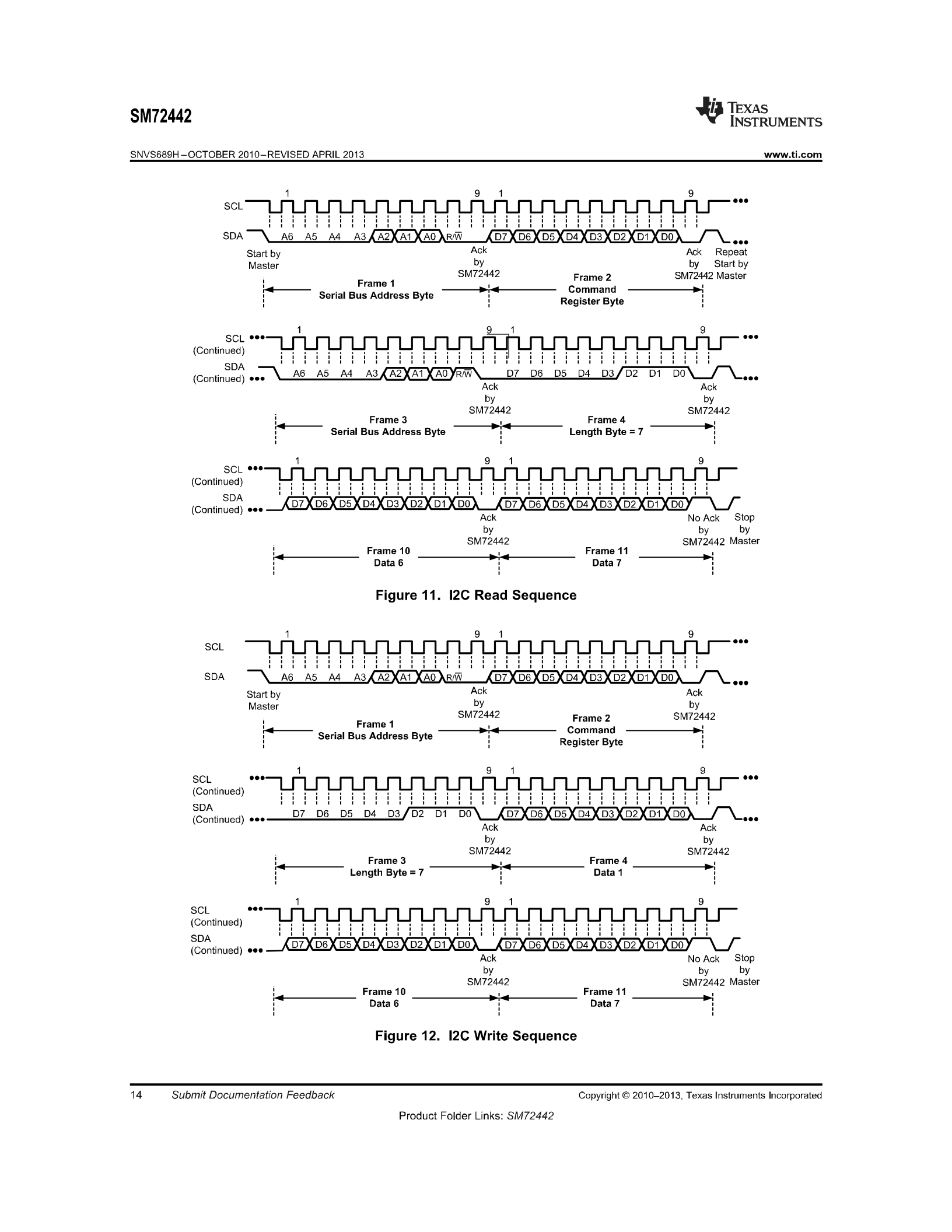
✨ The discussion addresses an issue with reading I2C registers from the SM72442 MPPT power management IC using an Arduino. The datasheet specifies 7 bytes per register, but only 6 bytes are received consistently, with the first byte always being 0x07 and subsequent bytes after the sixth returning 0x00, even when requesting more bytes or writing maximum values (0xFF) to registers. The Arduino acts as the I2C master, generating the clock (SCLK) during data reads, but the last byte appears missing or replaced by zeros. Troubleshooting steps include verifying I2C speed (noted that SM72442 supports only 100 kHz), using an oscilloscope to monitor signal integrity and timing, and considering Arduino Wire library behavior where the number of bytes returned may not match the number requested. The problem may relate to the I2C communication protocol nuances, clock pulsing, or library limitations rather than hardware faults. No definitive solution was reached, but suggestions emphasize scope analysis and careful timing and protocol verification.
Generated by the language model.

FAQ

TL;DR: On the SM72442, users report "only sending 6 bytes" when 7 are requested—14% of data missing. Fix by validating I2C speed, reads, and clocking. [Elektroda, Anonymous, post #21683397]

Why it matters:** Incorrect I2C handling can hide a full byte of configuration/telemetry, breaking MPPT accuracy and safety during prototyping.

Quick Facts

Why do I only read 6 bytes when the SM72442 register is 7 bytes?

A scope capture showed the device replying with only six data bytes after a seven‑byte request. Confirm SCL continues through byte 7 and that Wire.available() reflects actual bytes. If the device NACKs earlier, you will read fewer bytes. [Elektroda, Anonymous, post #21683397]

Could I2C speed cause the missing 7th byte on Arduino?

Yes. Set Wire clock to 100 kHz to match the SM72442’s typical speed. Mismatched timing can truncate transfers or cause NACKs on late bytes. Reinitialize Wire after changing speed to apply it before transactions. [Elektroda, Anonymous, post #21683395]

Is Arduino Wire.requestFrom reporting bytes received or requested?

On AVR cores, users observed requestFrom returning the number requested, not the number received. Validate the real count using Wire.available() and a logic analyzer. Quote: "...is not returning the number of bytes returned..." Use this to guard loops. [Elektroda, Anonymous, post #21683402]

What does the first byte always reading 0x07 mean?

In the reported setup, the first byte consistently appeared as 0x07, suggesting software interpreted a length field or stale buffer value. Since later bytes past six were 0x00, investigate read framing and buffer handling in your code. [Elektroda, Anonymous, post #21683401]

How do I verify whether the slave or my code is dropping the last byte?

Use a digital oscilloscope or logic analyzer. Check that seven full data bytes and ACK/NACK cycles appear on SDA/SCL. If only six bytes clock, the slave stopped early; if seven clock but code sees six, review buffering and reads. [Elektroda, Anonymous, post #21683396]

Does the Arduino provide SCL while the SM72442 sends data back?

Yes. In I2C, the master always supplies SCL even during reads. If the seventh byte is missing, ensure the master continues clocking and does not prematurely NACK/STOP before byte seven. [Elektroda, Anonymous, post #21683399]

How can I reproduce the forum test where bytes 7+ are 0x00?

Write 0xFF to each register byte, then perform a multi‑byte read. In the reported case, byte 1 read 0x07 and bytes after the sixth read 0x00, indicating read truncation or framing issues. [Elektroda, Anonymous, post #21683401]

Quick 3‑step: how do I read all 7 bytes reliably?

  1. Set Wire clock to 100 kHz and restart Wire.
  2. Request 7 bytes, loop on Wire.available() to read exactly available bytes.
  3. Confirm seven bytes and ACKs on a scope; adjust STOP/NACK timing if needed. [Elektroda, Anonymous, post #21683395]

What is I2C in simple terms?

I2C is a two‑wire serial protocol using SDA for data and SCL for clock. The master controls SCL; data moves bit‑by‑bit on SDA. You can connect multiple devices and address them by ID. [Elektroda, Anonymous, post #21683398]

Why does requesting 8 bytes still show 0x07 then zeros?

The capture showed the device returned only six meaningful bytes. Extra bytes delivered as 0x00 likely reflect unread or defaulted buffer positions when the slave stopped sending. Validate with Wire.available() and analyzer traces. [Elektroda, Anonymous, post #21683397]

What’s an edge case that breaks reads even at 100 kHz?

If the master issues STOP or NACK too early, the slave won’t output the final byte. Ensure the code performs the final ACKs correctly, then a NACK on the very last byte before STOP. [Elektroda, Anonymous, post #21683399]

How big is the data loss when 6 of 7 bytes arrive?

You lose 1 of 7 bytes, or about 14.3% of the register payload. That missing byte can corrupt scaling, checksums, or status bits critical for MPPT control. [Elektroda, Anonymous, post #21683397]

How do I confirm the SM72442 actually sends seven bytes?

Probe SDA/SCL and count bytes between the read address ACK and STOP. You should see seven byte times plus ACK/NACK bits. If you see six, the device or command framing is wrong. [Elektroda, Anonymous, post #21683397]

Could the symptom be pure software even if the bus looks fine?

Yes. If requestFrom reports the requested length, your loop may overread or misreport. Always gate reads by Wire.available() and log actual counts to serial for proof. [Elektroda, Anonymous, post #21683402]

What’s the best first tool to debug this on Arduino?

Use a logic analyzer or scope. Quote: "I usually need a digital 'scope to debug I2C problems." It reveals timing, ACKs, and byte counts instantly, saving hours. [Elektroda, Anonymous, post #21683396]

Does changing Wire speed on the fly help?

Set the speed before transactions and reinitialize if needed. Once configured to 100 kHz, verify on the scope that SCL is correct and stable during the entire read. [Elektroda, Anonymous, post #21683395]
Generated by the language model.
ADVERTISEMENT