Hi,
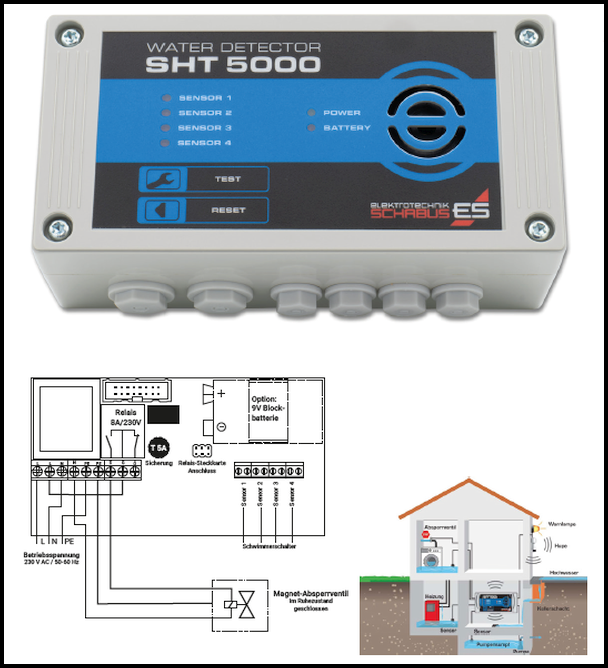
this post will cover the topic of installing flood sensors in a flat in a block of flats. Before I ask any specific questions, here’s a brief introduction to my situation – I’m about to finish fitting out a new flat in a ‘developer’s finish’ state. I’m currently at the stage of designing the various rooms, where I’m still considering certain changes to the installations, whether plumbing or electrical. Safety is a key concern for me, hence my interest in flood sensors, which are one example of solutions used within the Smart Home concept. In this post, I’d primarily like to focus on the feasibility and practicality of implementing such a solution in my case. So, moving on to the specific questions:
1. In my flat, the service shaft is located outside the property. From what I’ve seen, an automatic shut-off valve for the water supply is usually fitted behind the water meter. Looking at the most optimistic scenario, where a specific flood sensor is on the other side of the wall from this valve and communication takes place via the Z-Wave protocol – which guarantees the best penetration through obstacles in commonly known solutions – is there a chance that this communication will be reliable in the vast majority of cases? I’ll state straight away what the wall is made of – a 25 cm Porotherm hollow brick (AKU), with 1.5 cm of cement-lime plaster on both sides and 8 mm thick porcelain stoneware tiles on the bathroom side.
2. Turning straight to the reliability of communication, I’d like to raise the issue of powering the flood sensors – assuming I opt for a device that uses Z-Wave communication, to ensure the highest possible reliability, shouldn’t I prioritise connecting the device to the mains rather than relying on a battery-powered solution?
3. Where have you installed the sensors – behind the bath, next to the washing machine, next to the Geberit frame, under the washbasin, under the sink, behind the dishwasher? I’m particularly interested in cases involving a freestanding wall-mounted bath and a concealed frame installation.
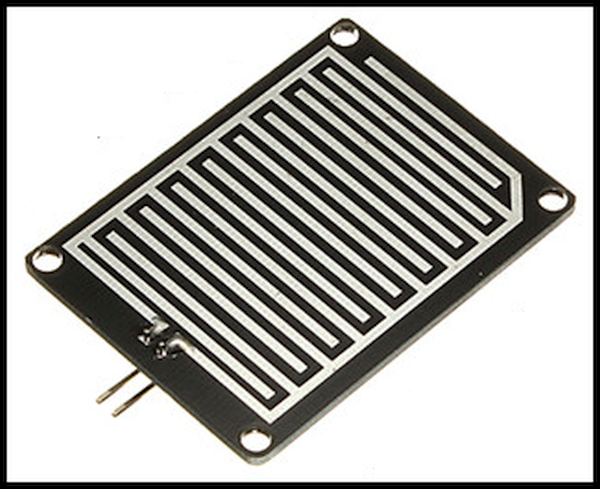
4. As for the specific design of the device – did you use devices with a probe on a cable, or the so-called ‘leak sensor cable’, where the entire cable acts as a detector?
5. Moving on to the valve itself – you need to ensure it has a suitable power supply and make alterations to the existing pipework in the service shaft. Now, regarding your experiences – was this not a problem in the case of a block of flats? I suppose I should ideally discuss this with the building manager, look into warranty and guarantee issues with the developer, and so on, but to start with, I’d like to find out if anyone has faced a similar dilemma with a service shaft outside their own flat? I should also mention straight away that the building has been occupied for some time now; the developer has completed the work and most residents have moved into their flats. To further justify this question, I’d like to point out that the possibility of installing this valve is probably the critical aspect of the whole solution, as it seems to me there’s no point in investing in an elaborate flood detection system – complete with mains power supply – if there’s no way to automatically shut off the water supply.
6. Finally, perhaps a rather general question for those who have decided to install flood sensors – are you happy with this solution? Do you experience many false alarms?
Thank you in advance for all your replies.
Is Could you provide more details on the planned system topology: where the Z-Wave hub/gateway would be located, what the approximate distance would be from it to the sensors and the valve in the shaft, and whether there are any additional obstacles along the way, such as the shaft door, a metal casing, service risers or more than one wall?
The Z-Wave gateway would probably be located in the hall, the maximum distance from any given sensor would probably be up to 10 metres in a straight line, and between them there would either be a 25 cm thick Porotherm wall with AKU insulation and 1.5 cm thick, or an 8 cm Porotherm partition wall with 1.5 cm thick plaster on both sides. The shaft is most likely encased in some sort of veneer-type cladding. In the worst-case scenario, there could be both a communal stairwell wall and a partition wall in the way.
Have you already chosen specific devices or at least an ecosystem, e.g. Home Assistant + a specific Z-Wave gateway, Fibaro/Aeotec/other sensors, and a specific type of valve/actuator? And do you have a 230 V power supply available in the shaft, or the possibility of legally connecting one?
I haven’t chosen any specific devices or an ecosystem yet, but I think I’d go with the Z-Wave protocol, and I’ve seen examples of devices from Fibaro and Aeotec. From what I’ve seen, a ball valve with an actuator would be best, and I’m currently trying to work out whether I’ll be able to provide power to this valve.
this post will cover the topic of installing flood sensors in a flat in a block of flats. Before I ask any specific questions, here’s a brief introduction to my situation – I’m about to finish fitting out a new flat in a ‘developer’s finish’ state. I’m currently at the stage of designing the various rooms, where I’m still considering certain changes to the installations, whether plumbing or electrical. Safety is a key concern for me, hence my interest in flood sensors, which are one example of solutions used within the Smart Home concept. In this post, I’d primarily like to focus on the feasibility and practicality of implementing such a solution in my case. So, moving on to the specific questions:
1. In my flat, the service shaft is located outside the property. From what I’ve seen, an automatic shut-off valve for the water supply is usually fitted behind the water meter. Looking at the most optimistic scenario, where a specific flood sensor is on the other side of the wall from this valve and communication takes place via the Z-Wave protocol – which guarantees the best penetration through obstacles in commonly known solutions – is there a chance that this communication will be reliable in the vast majority of cases? I’ll state straight away what the wall is made of – a 25 cm Porotherm hollow brick (AKU), with 1.5 cm of cement-lime plaster on both sides and 8 mm thick porcelain stoneware tiles on the bathroom side.
2. Turning straight to the reliability of communication, I’d like to raise the issue of powering the flood sensors – assuming I opt for a device that uses Z-Wave communication, to ensure the highest possible reliability, shouldn’t I prioritise connecting the device to the mains rather than relying on a battery-powered solution?
3. Where have you installed the sensors – behind the bath, next to the washing machine, next to the Geberit frame, under the washbasin, under the sink, behind the dishwasher? I’m particularly interested in cases involving a freestanding wall-mounted bath and a concealed frame installation.
4. As for the specific design of the device – did you use devices with a probe on a cable, or the so-called ‘leak sensor cable’, where the entire cable acts as a detector?
5. Moving on to the valve itself – you need to ensure it has a suitable power supply and make alterations to the existing pipework in the service shaft. Now, regarding your experiences – was this not a problem in the case of a block of flats? I suppose I should ideally discuss this with the building manager, look into warranty and guarantee issues with the developer, and so on, but to start with, I’d like to find out if anyone has faced a similar dilemma with a service shaft outside their own flat? I should also mention straight away that the building has been occupied for some time now; the developer has completed the work and most residents have moved into their flats. To further justify this question, I’d like to point out that the possibility of installing this valve is probably the critical aspect of the whole solution, as it seems to me there’s no point in investing in an elaborate flood detection system – complete with mains power supply – if there’s no way to automatically shut off the water supply.
6. Finally, perhaps a rather general question for those who have decided to install flood sensors – are you happy with this solution? Do you experience many false alarms?
Thank you in advance for all your replies.
Is Could you provide more details on the planned system topology: where the Z-Wave hub/gateway would be located, what the approximate distance would be from it to the sensors and the valve in the shaft, and whether there are any additional obstacles along the way, such as the shaft door, a metal casing, service risers or more than one wall?
The Z-Wave gateway would probably be located in the hall, the maximum distance from any given sensor would probably be up to 10 metres in a straight line, and between them there would either be a 25 cm thick Porotherm wall with AKU insulation and 1.5 cm thick, or an 8 cm Porotherm partition wall with 1.5 cm thick plaster on both sides. The shaft is most likely encased in some sort of veneer-type cladding. In the worst-case scenario, there could be both a communal stairwell wall and a partition wall in the way.
Have you already chosen specific devices or at least an ecosystem, e.g. Home Assistant + a specific Z-Wave gateway, Fibaro/Aeotec/other sensors, and a specific type of valve/actuator? And do you have a 230 V power supply available in the shaft, or the possibility of legally connecting one?
I haven’t chosen any specific devices or an ecosystem yet, but I think I’d go with the Z-Wave protocol, and I’ve seen examples of devices from Fibaro and Aeotec. From what I’ve seen, a ball valve with an actuator would be best, and I’m currently trying to work out whether I’ll be able to provide power to this valve.
 In my opinion, these flood, gas and carbon monoxide detectors don’t trigger false alarms in the same way as motion detectors do when they’re set off by falling leaves or bats flying by...