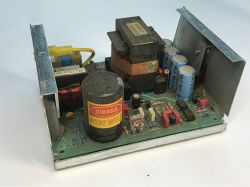
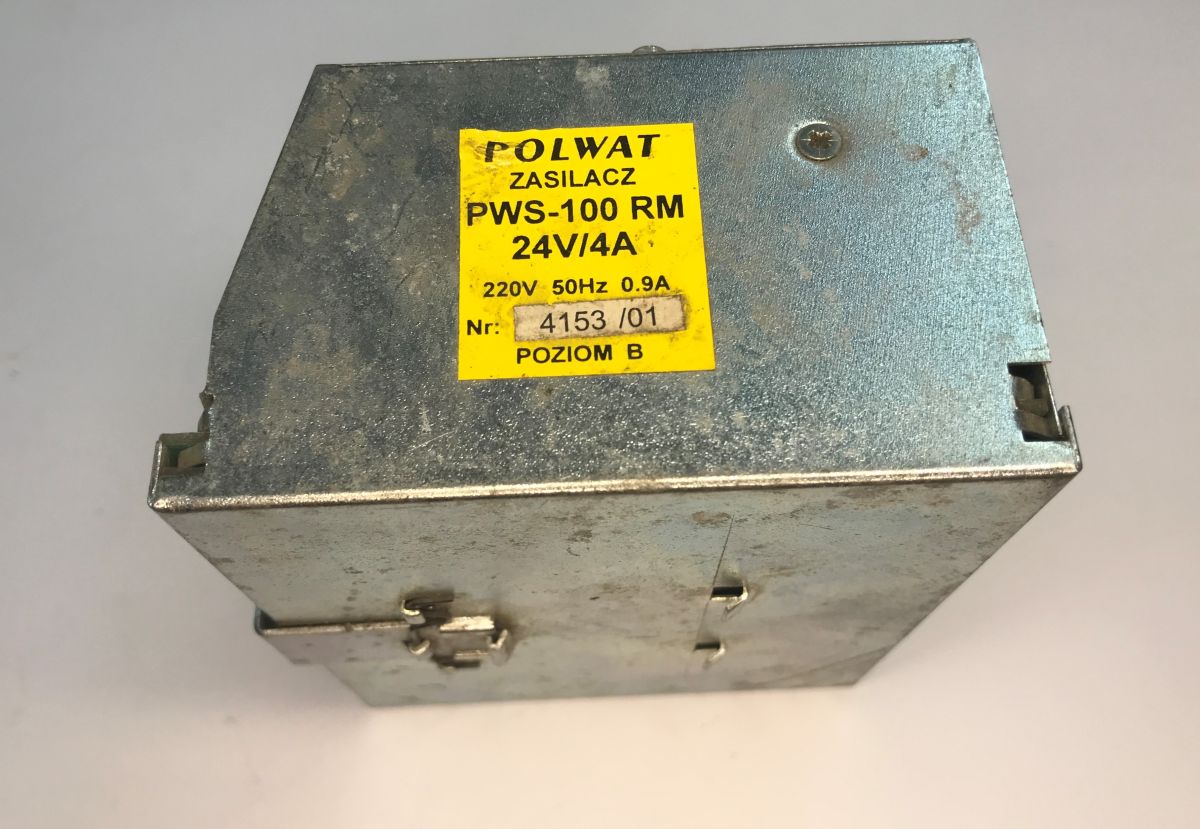
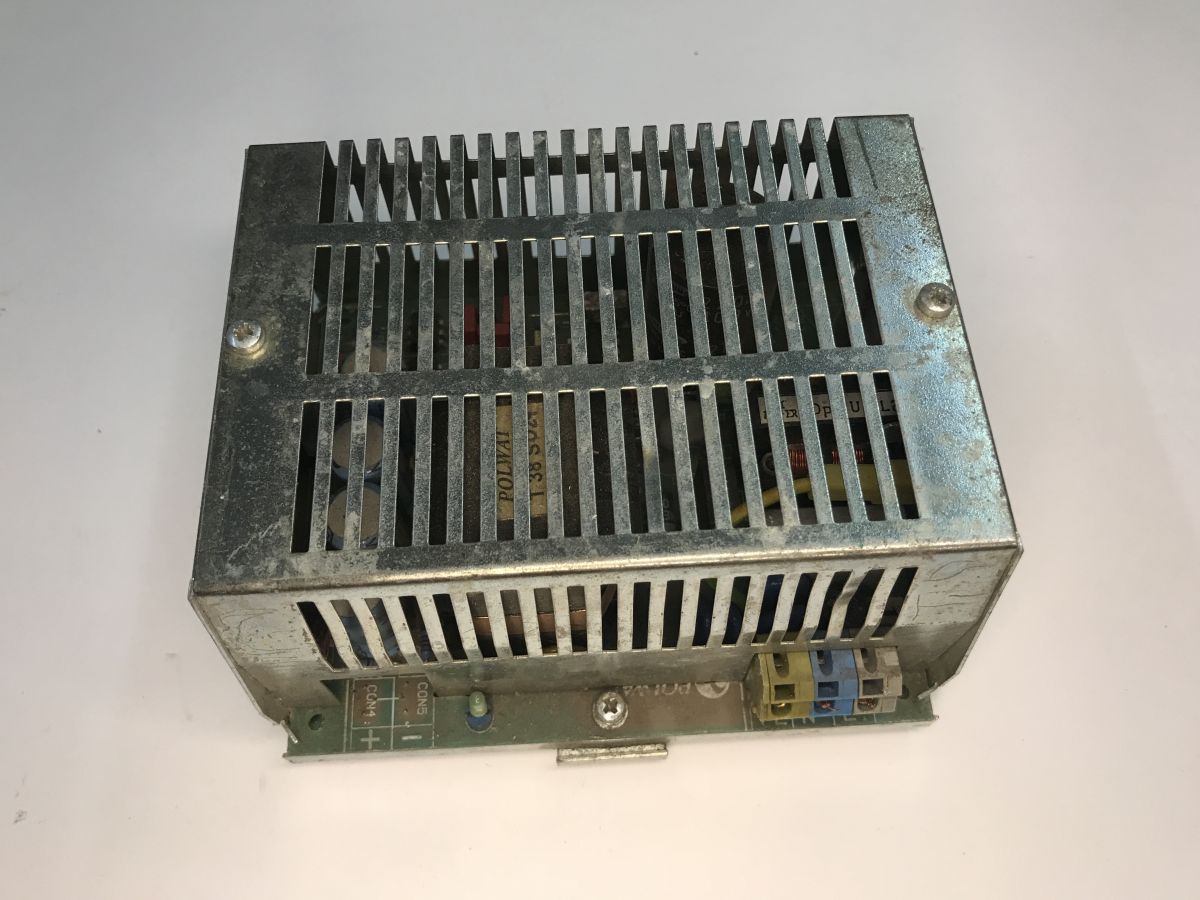
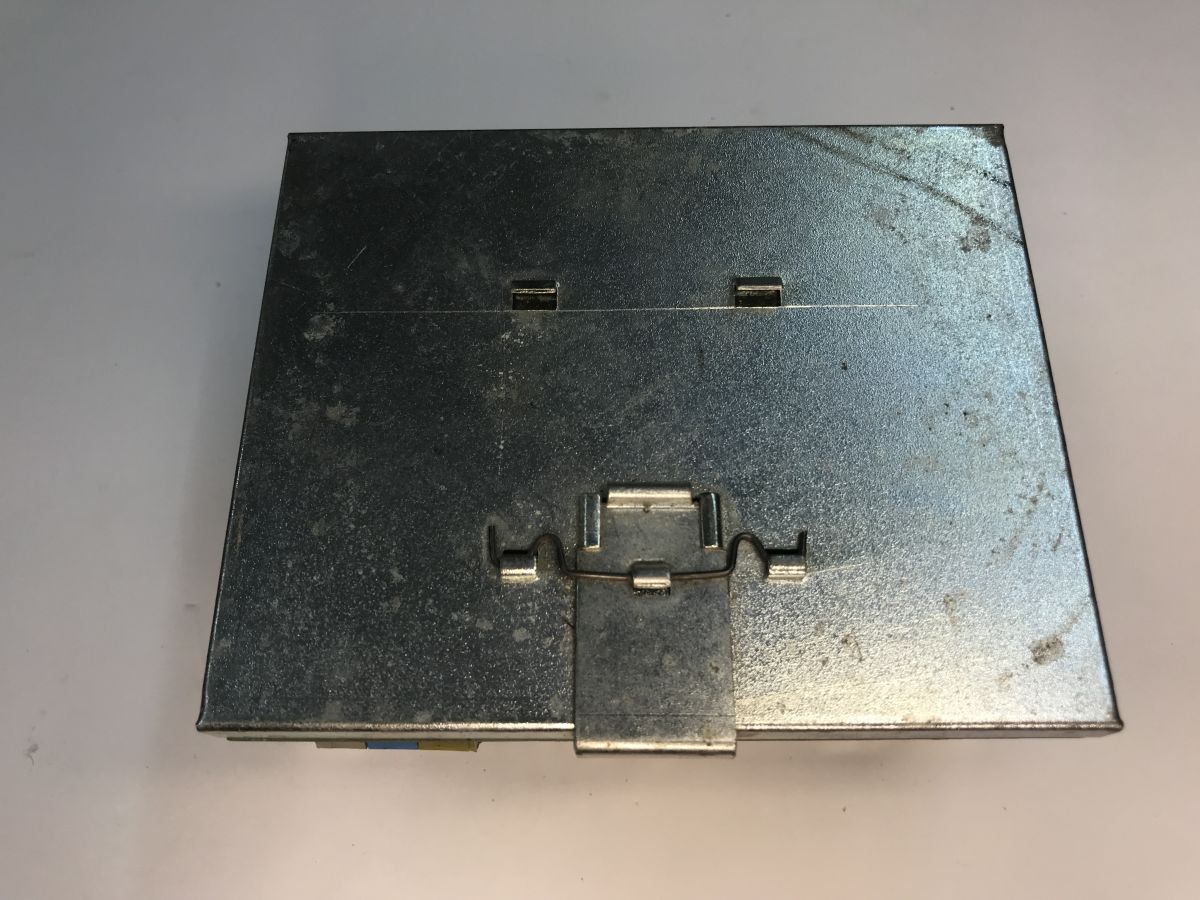
Today we take a look inside an old power supply made by a Polish company from Gliwice. I recovered the whole thing from scrap metal, so I'm going to check how this power supply has coped with years of use in an industrial device, examine whether it's still in working order at all, and finally show what heats up the most in it. The power supply shown here is the PWS-100RM model and is mounted on a TS-35 rail. It comes in different versions differing in output voltage, these include 5, 12, 24 and 48 V, although the documentation shows that the manufacturer is also happy to make a version with a different voltage.
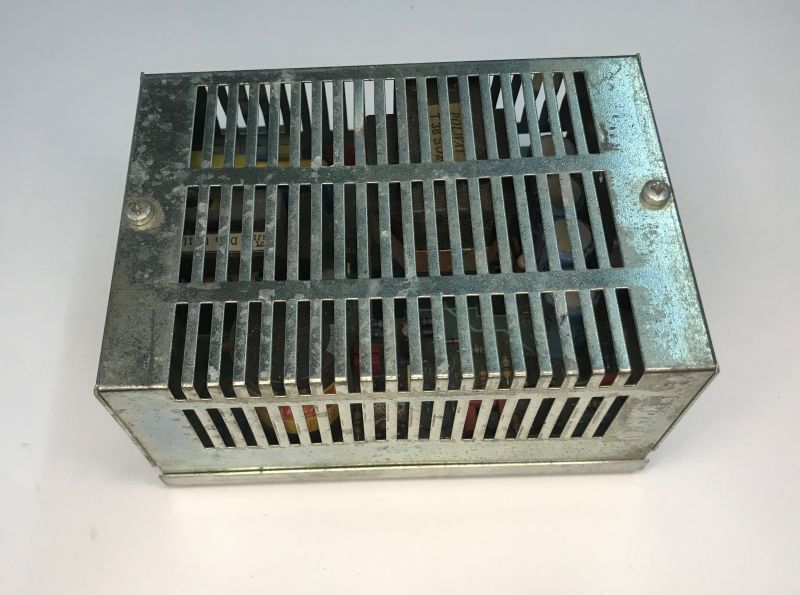
The whole thing is designed to work as a stand-alone module. The label on my copy seems to suggest that this is piece number 4153 from 2001, so potentially this equipment is a good 25 years old! That could be right, as the manufacturer's company, as far as I can see, started in 1991.
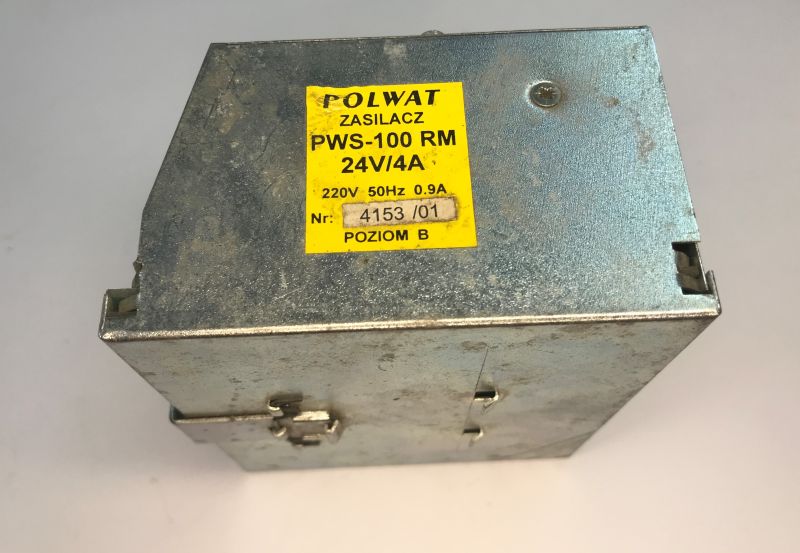
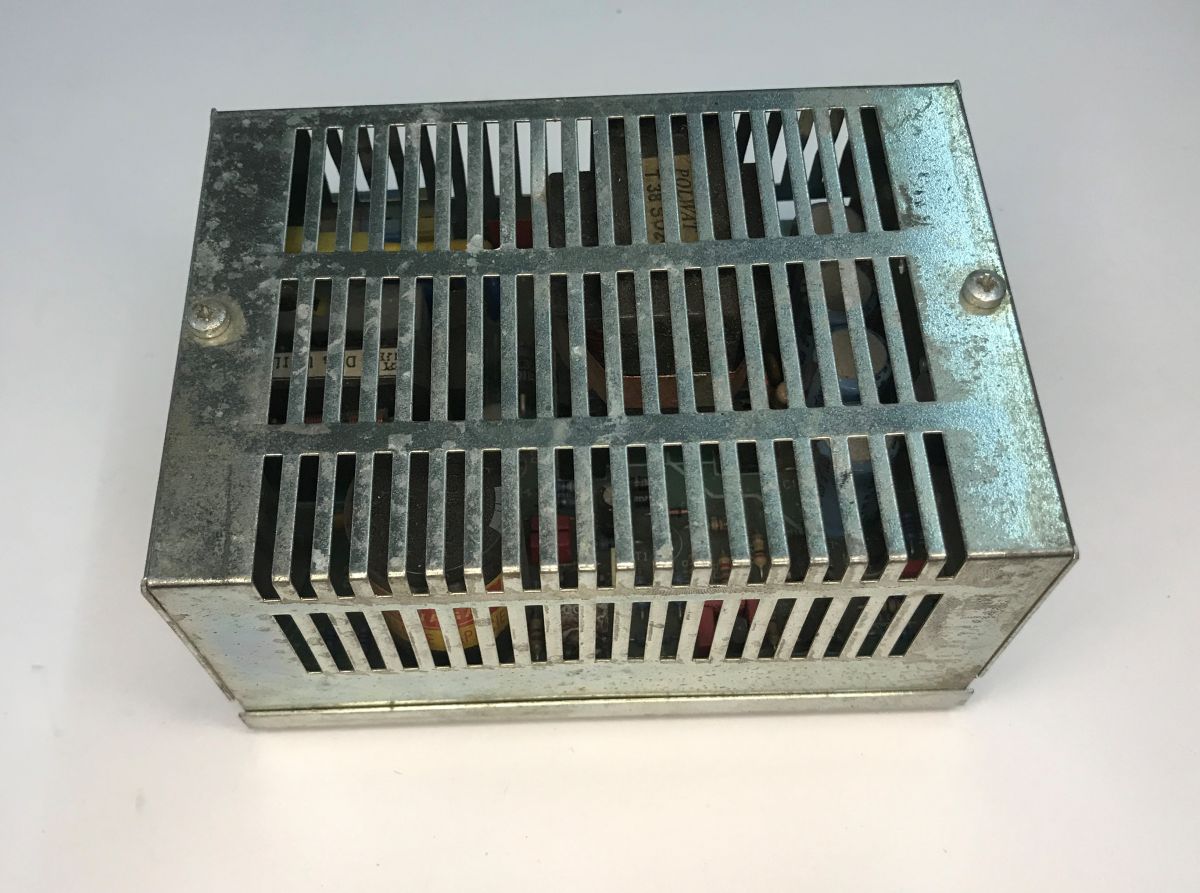
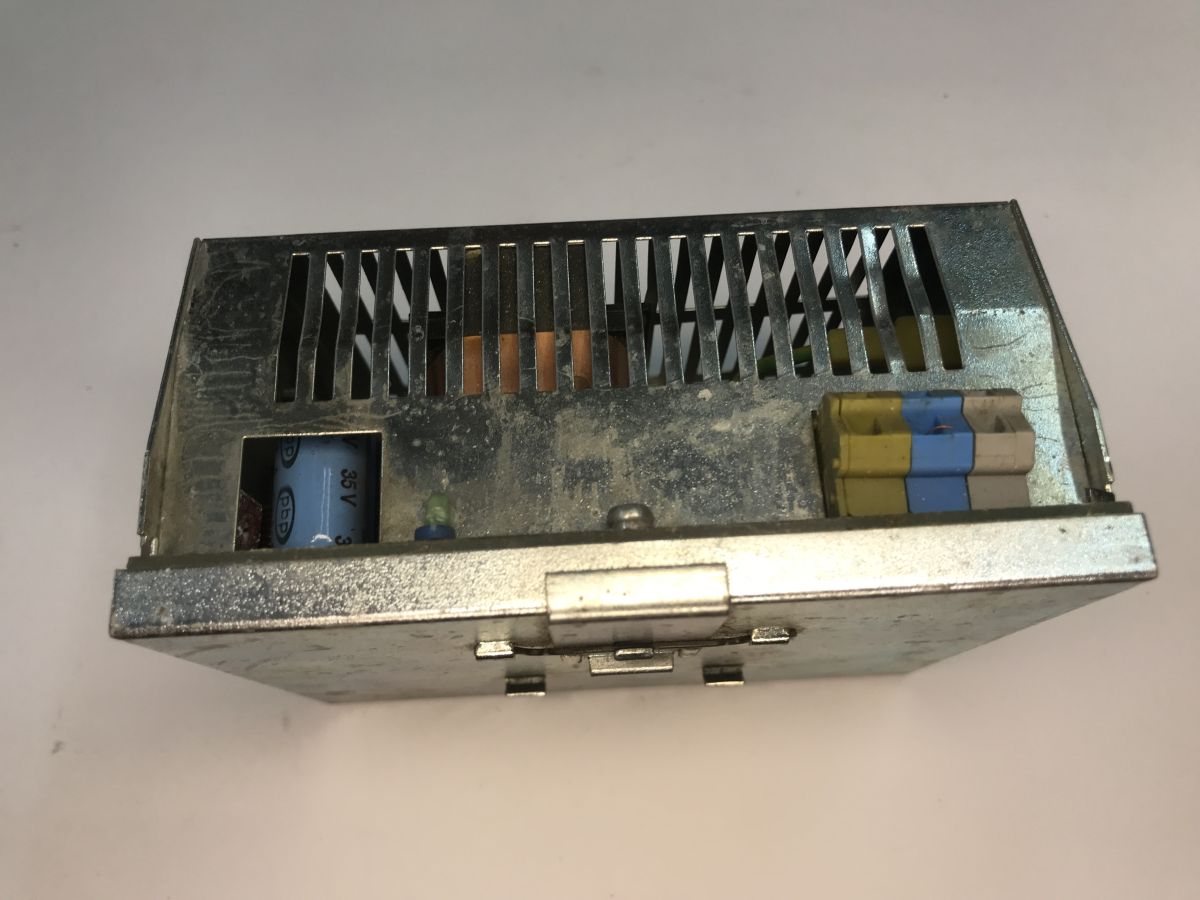
Externally the whole thing is quite modest, one of the terminals (terminals) is broken off in my copy. Apart from that, there is only an LED indicating the presence of power. The hardware is fully passively cooled, which in an industrial environment, however, can be a plus, as it eliminates the problem of fans seizing and clogging up over time.
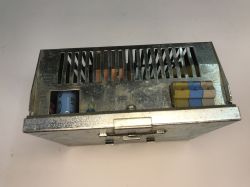
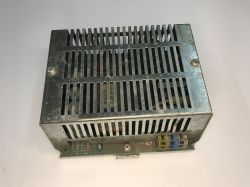
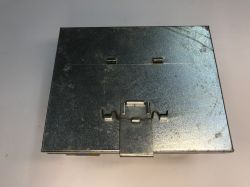
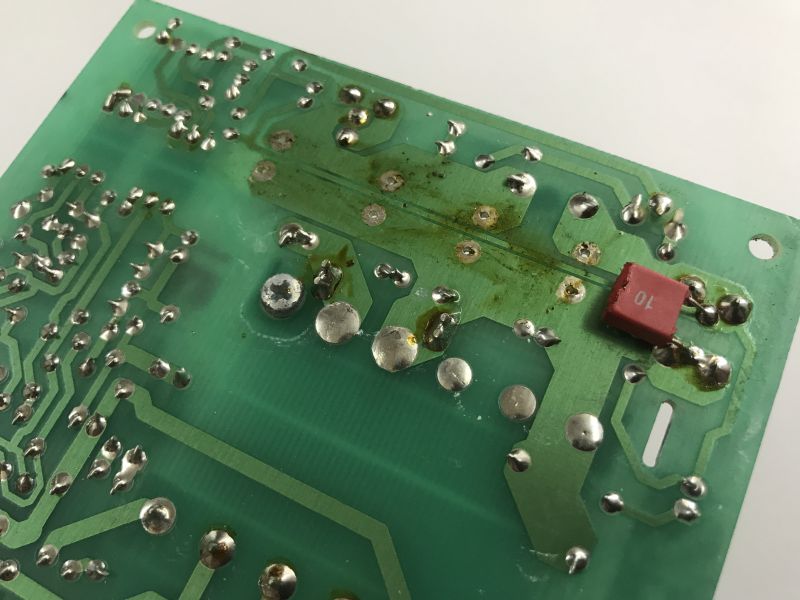
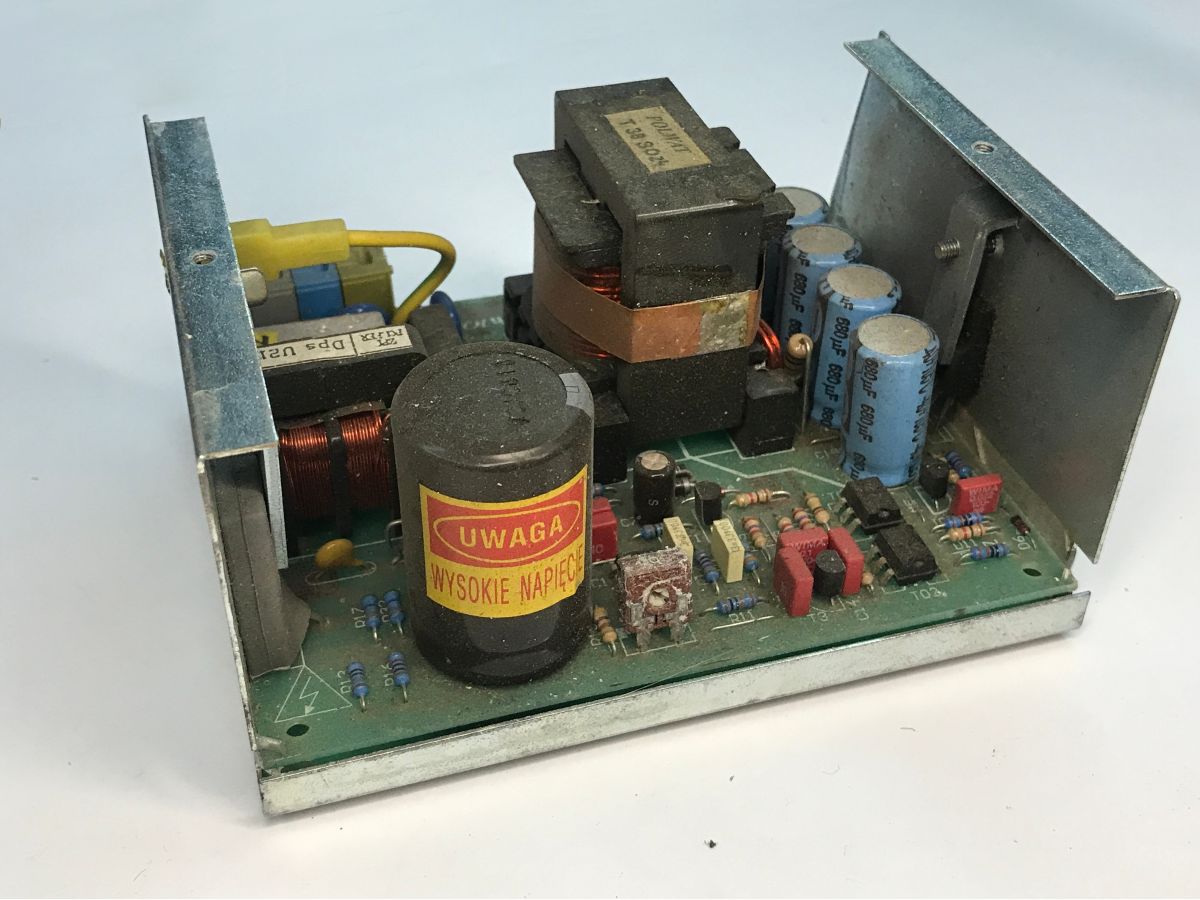
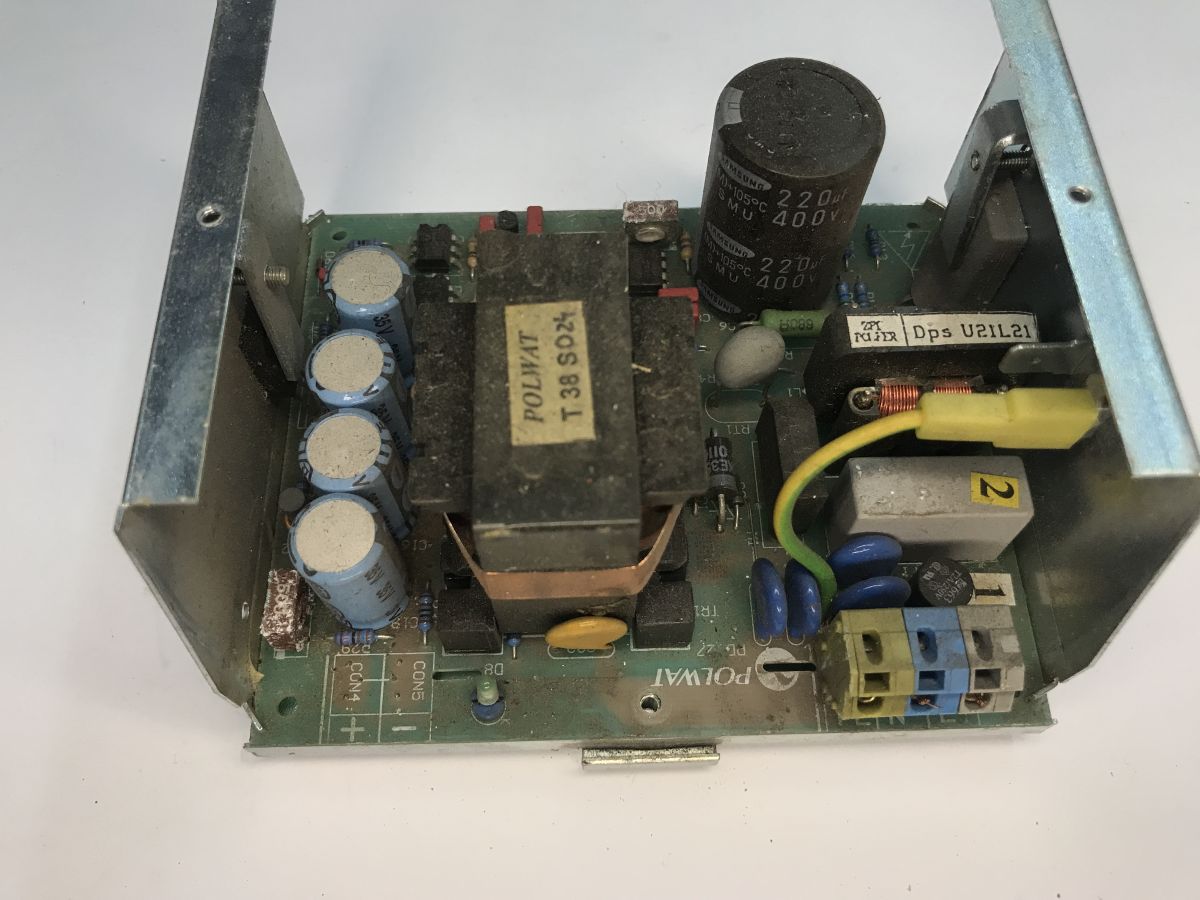
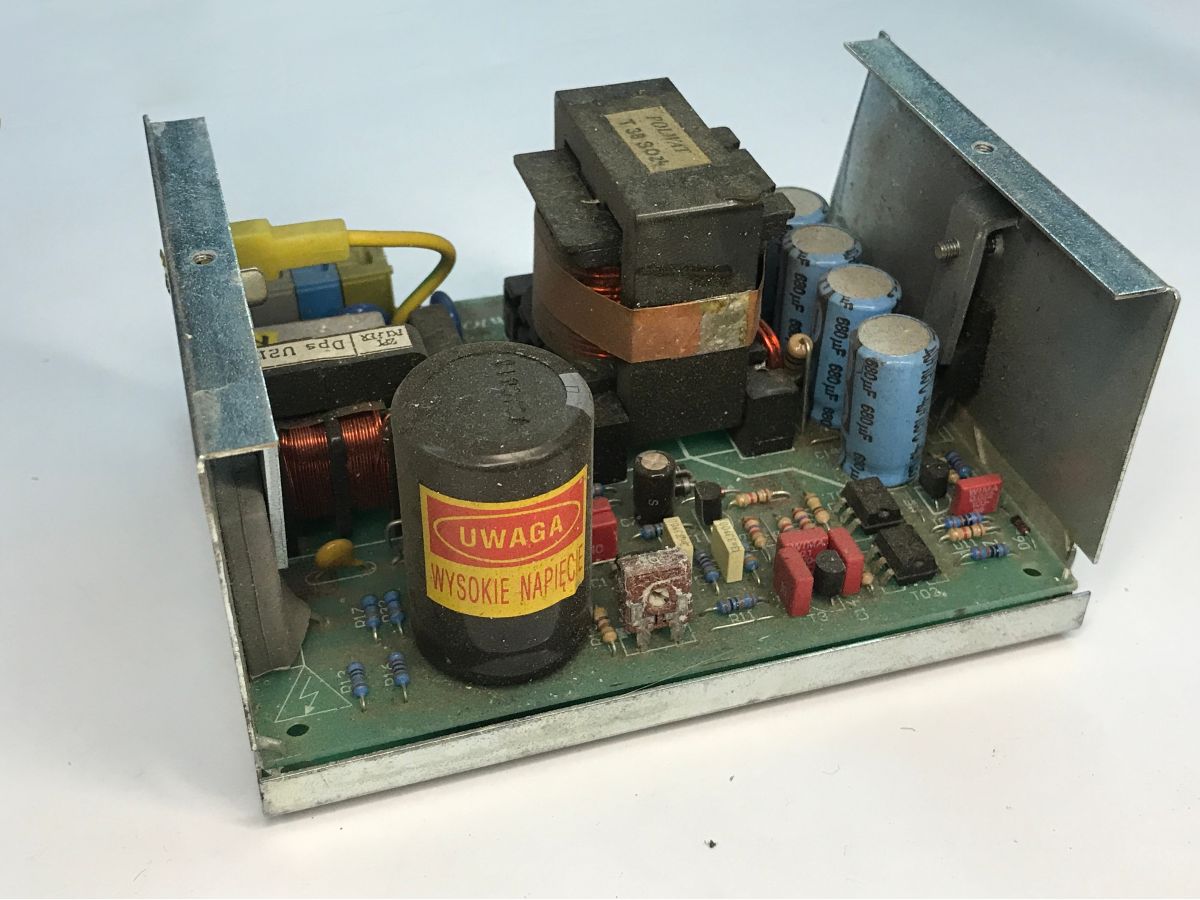
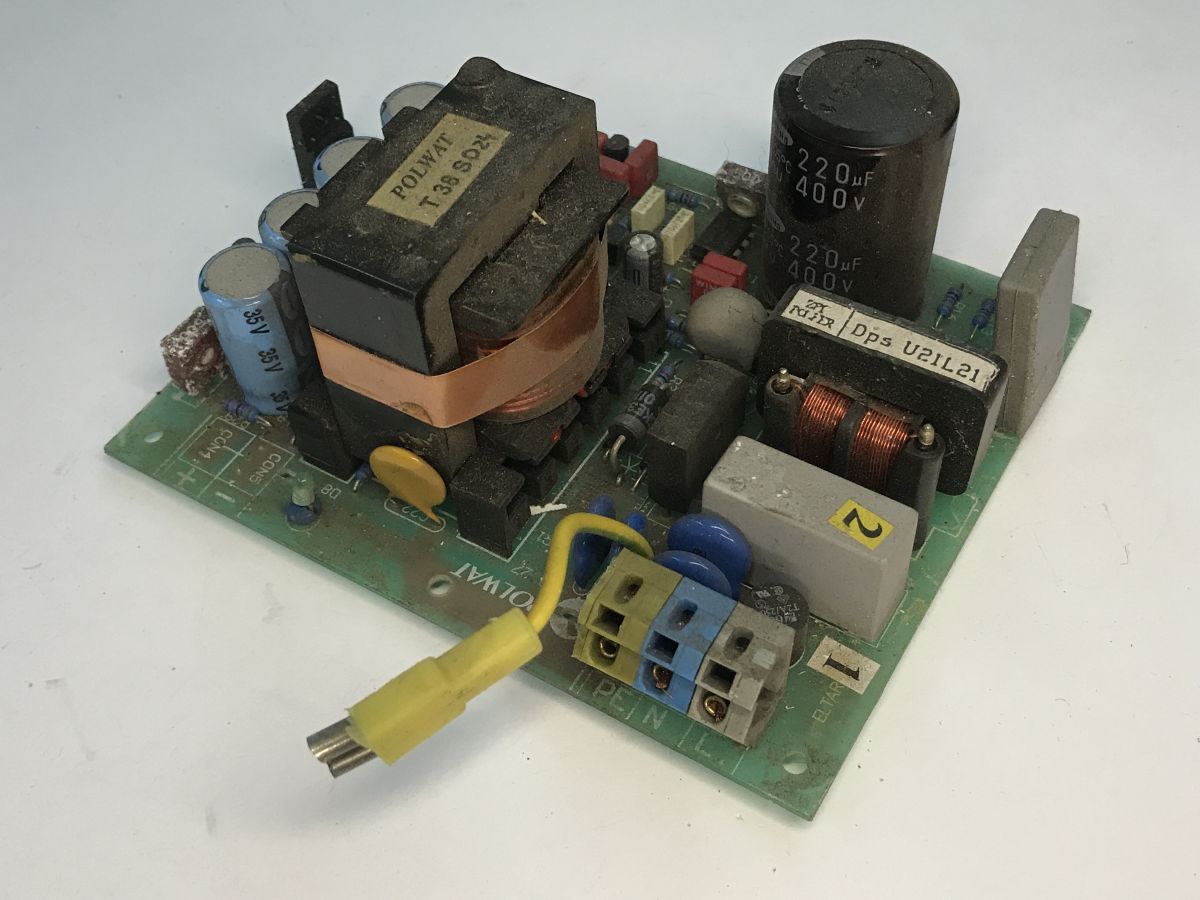
We remove the casing. You can immediately see that this is no budget Chinese power supply. No one has spared the copper here, the EMI filters seem to be fully present. You can also see significant dirt and traces of moisture.
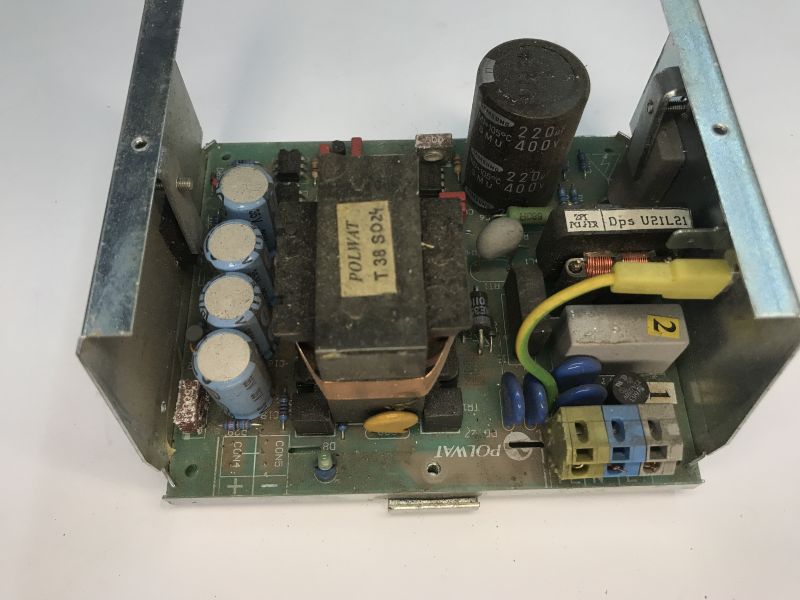
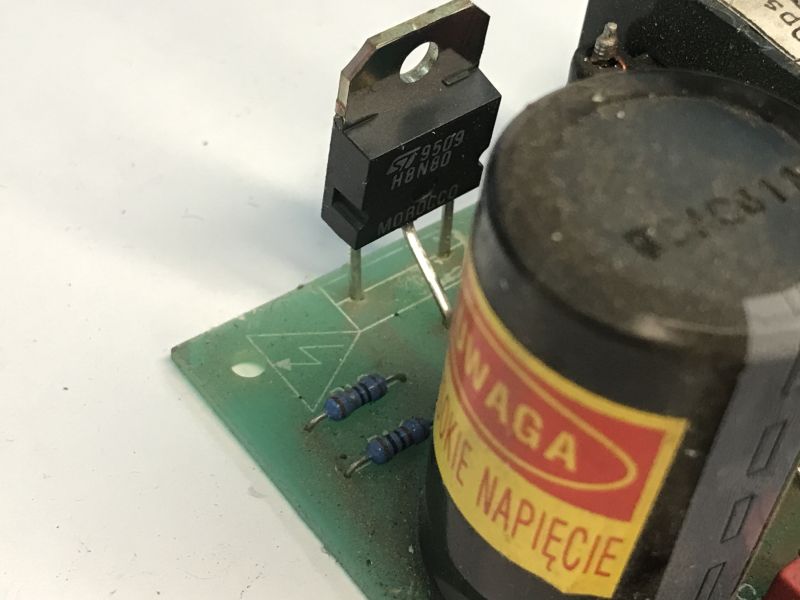
It's been a long time since I've seen a Polish "caution" sign on a 400 V mains voltage filtering capacitor.
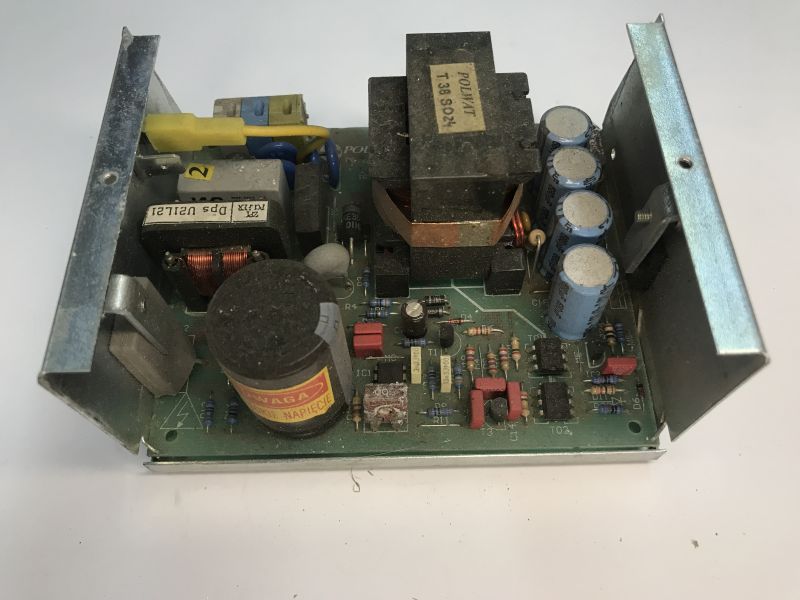
The board is single-sided, simple but fulfilling. The thicknesses of the current paths and the appropriate insulation spacing instantly inspire confidence. There is a manufacturer's logo on the description layer.
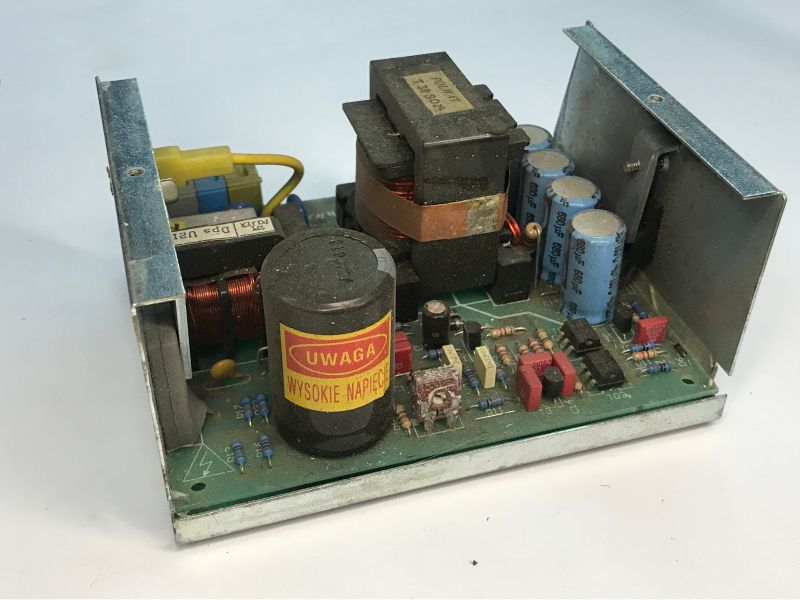
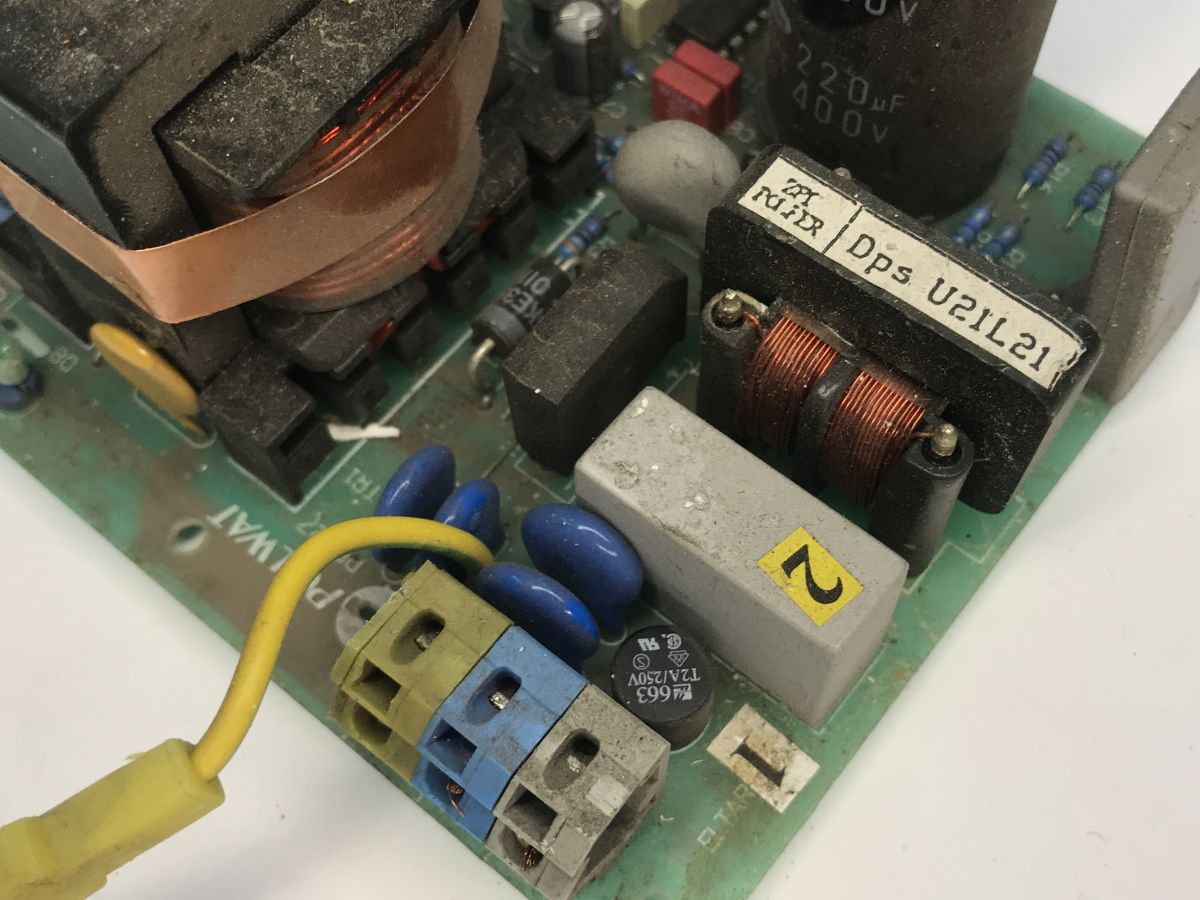
I like the fact that the PE is connected to the chassis by a connector rather than soldered. It looks like the whole thing has been thought out for servicing. In cheaper power supplies they would just solder it on.
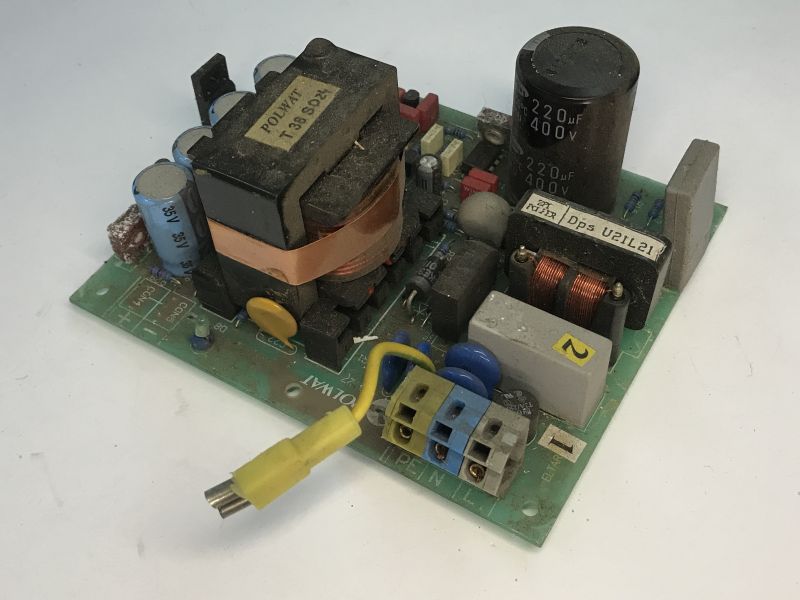
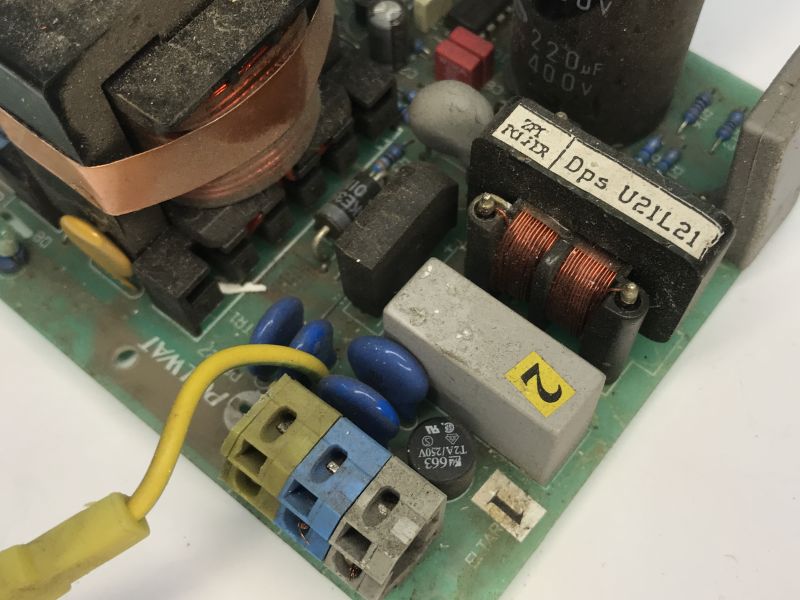
There is, of course, adequate protection on the input - a T2A/250V fuse and varistors to protect against surges from the mains:
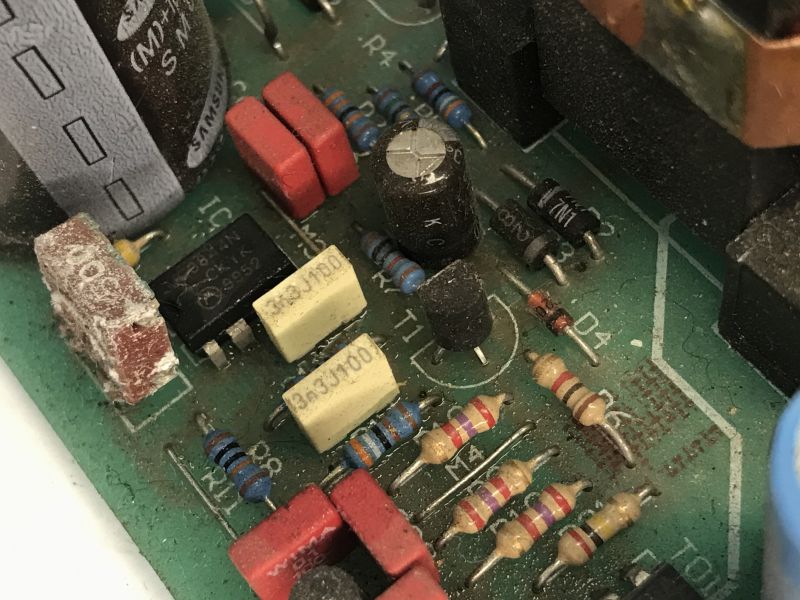
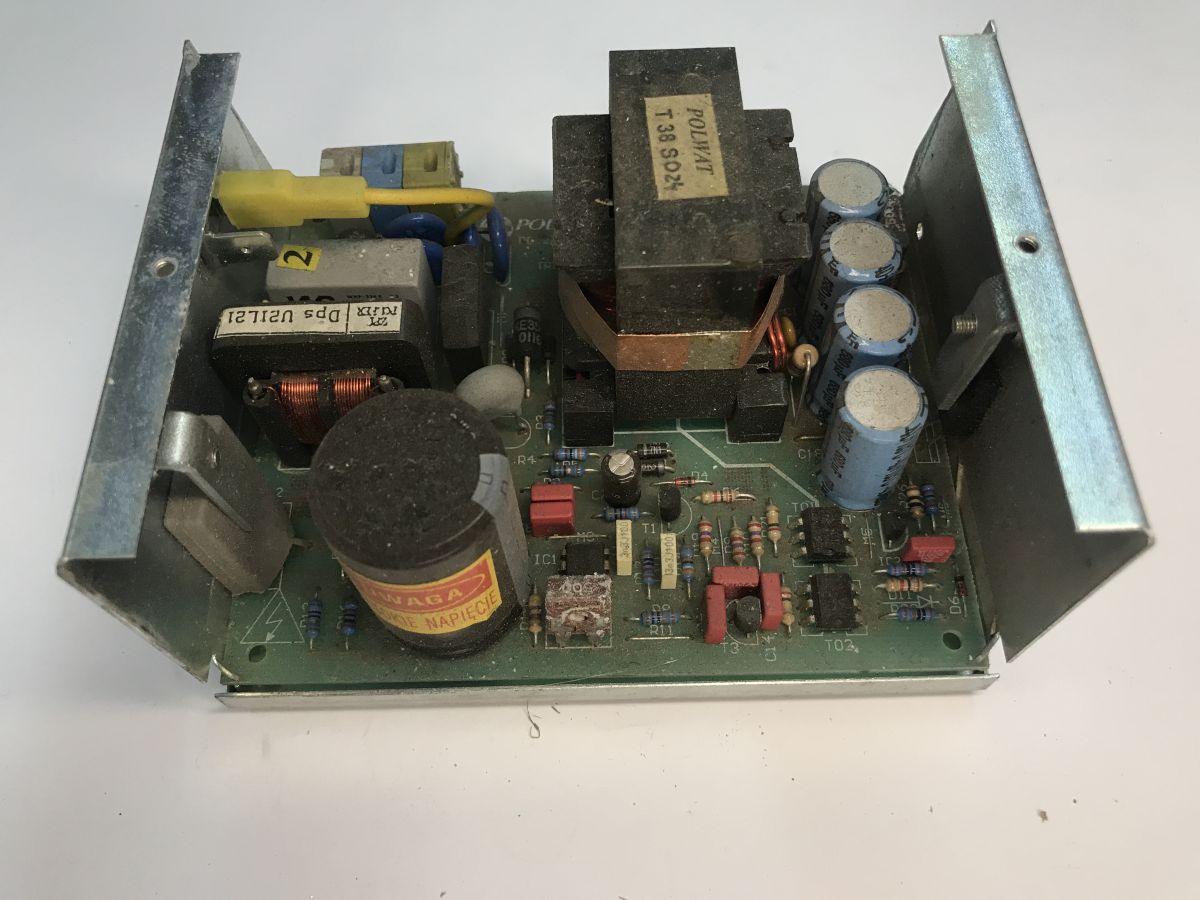
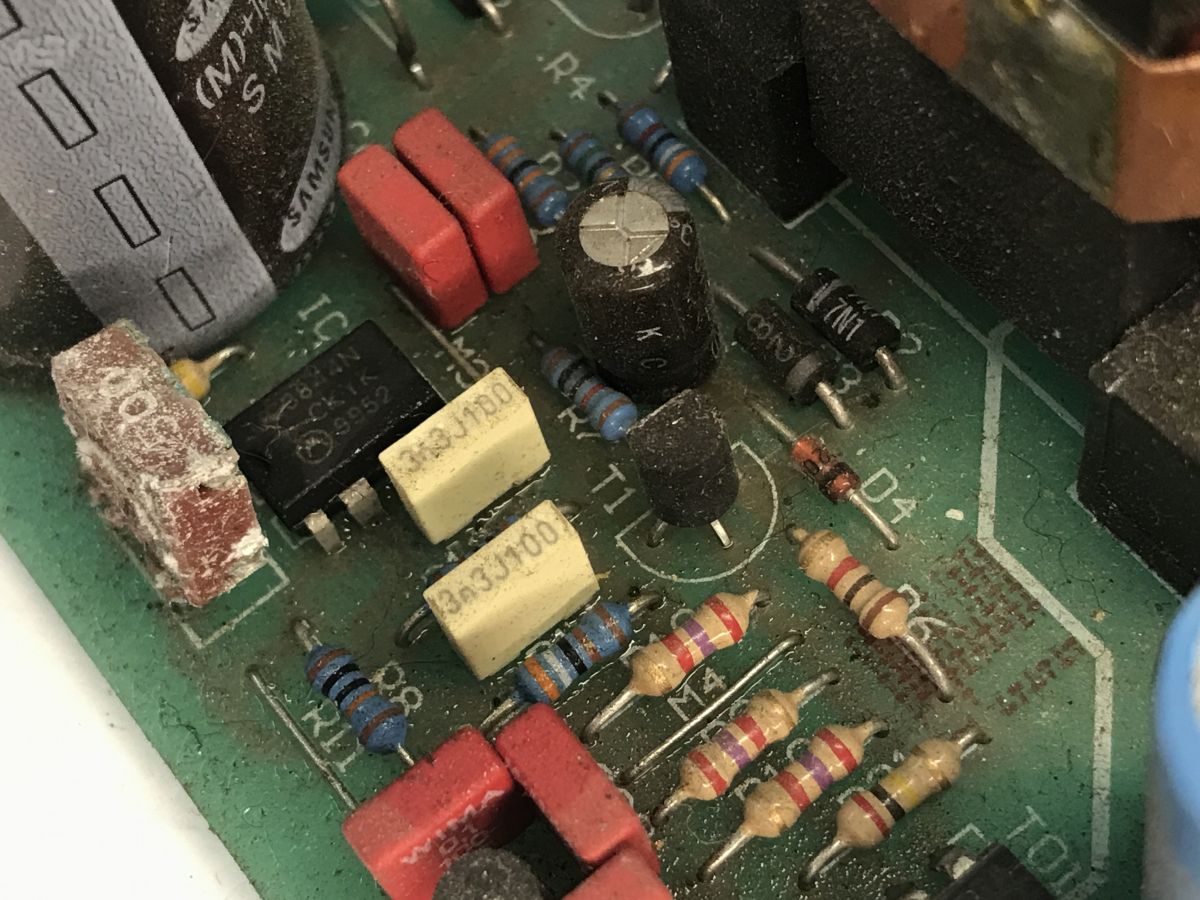
The power supply is based on the immortal UC3844 chip and is realised in flyback topology.
On the primary side, the RT, or thermistor resistor (NTC) limiting the inrush current, is conspicuous; it is soldered after the rectifier bridge, before the primary winding.
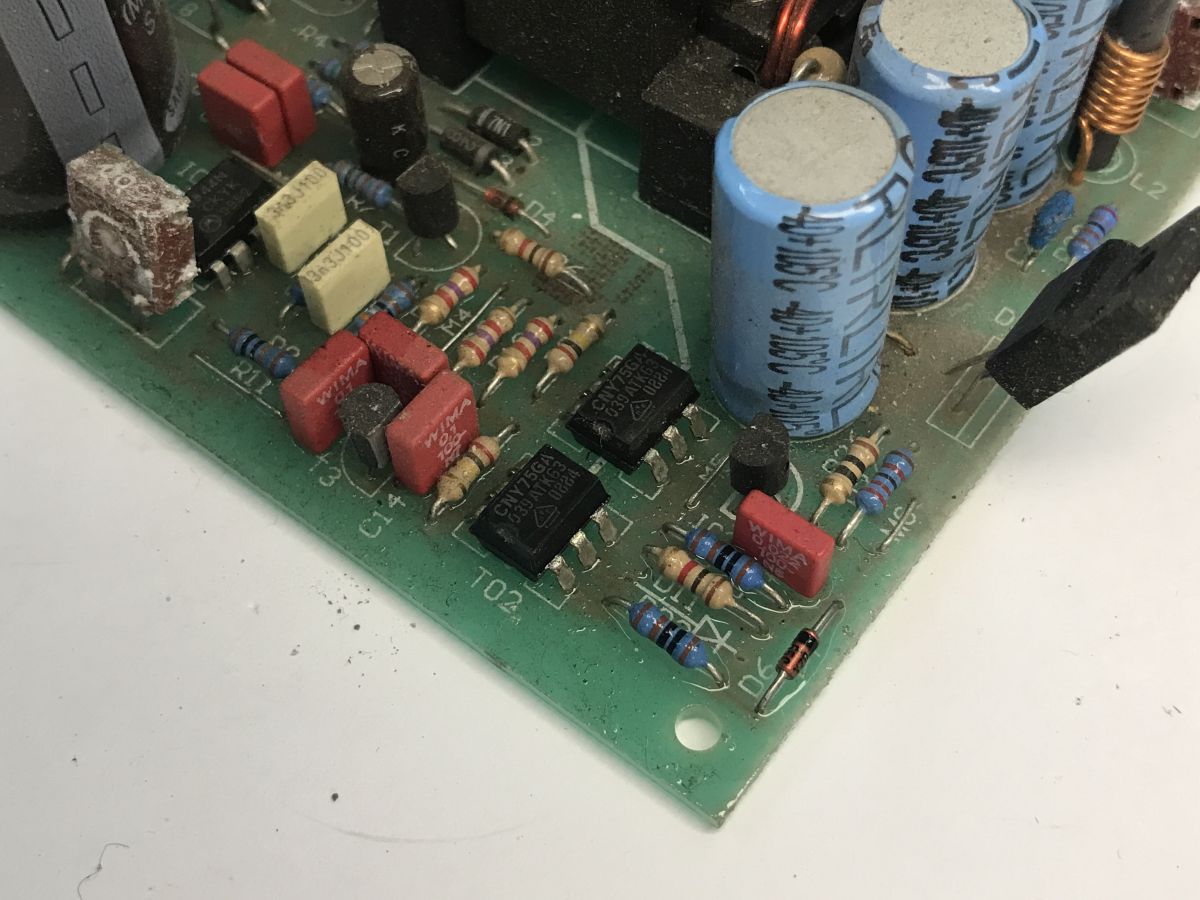
Feedback is provided by CNY75GA optocouplers, and I also see a TL431 (reference voltage) circuit there:
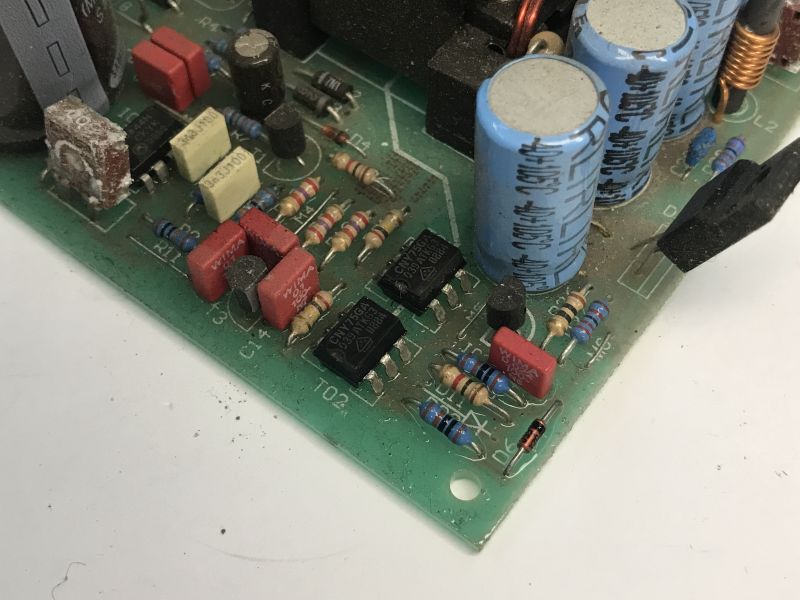
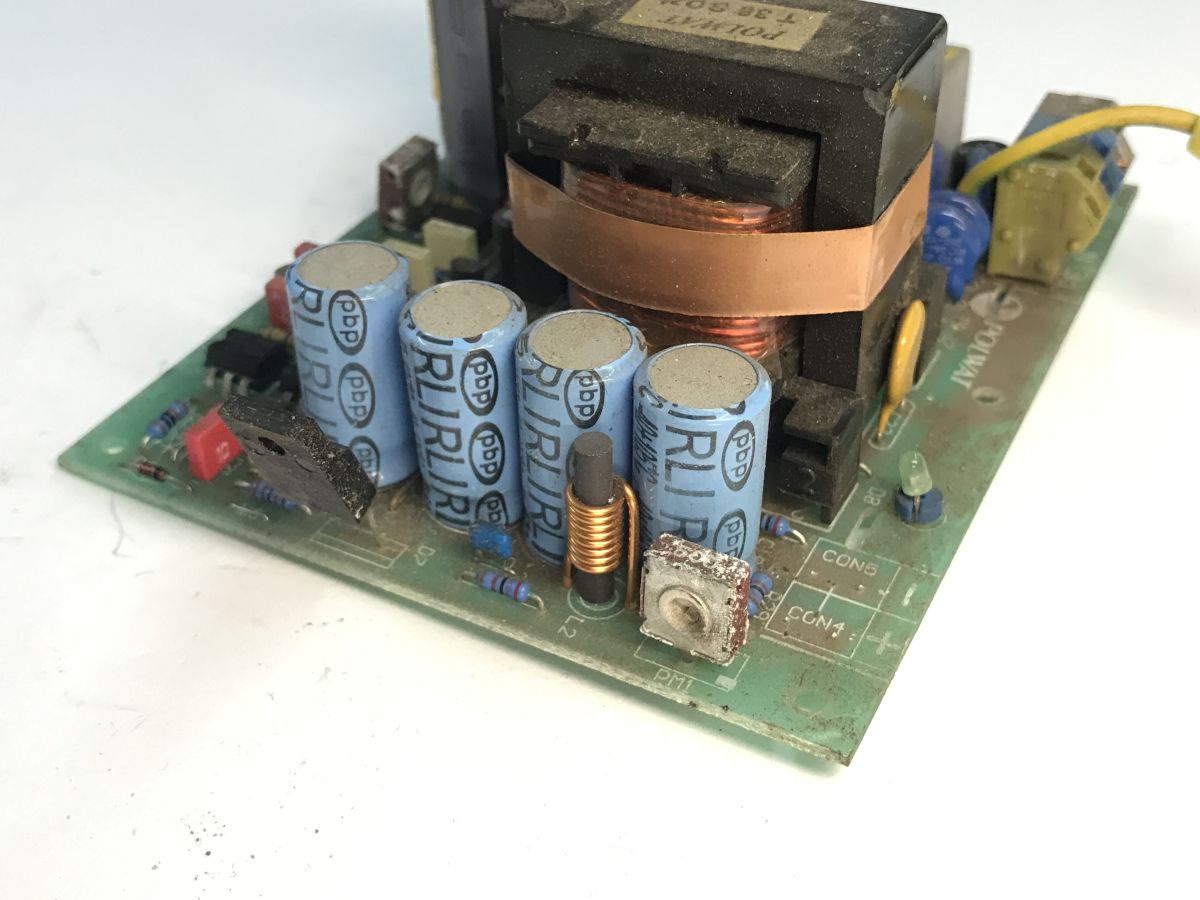
On the secondary side we have a small choke, a Schottky diode in a TO-220 housing and as many as four electrolytic capacitors. A potentiometer is used to adjust the output voltage over a small range.
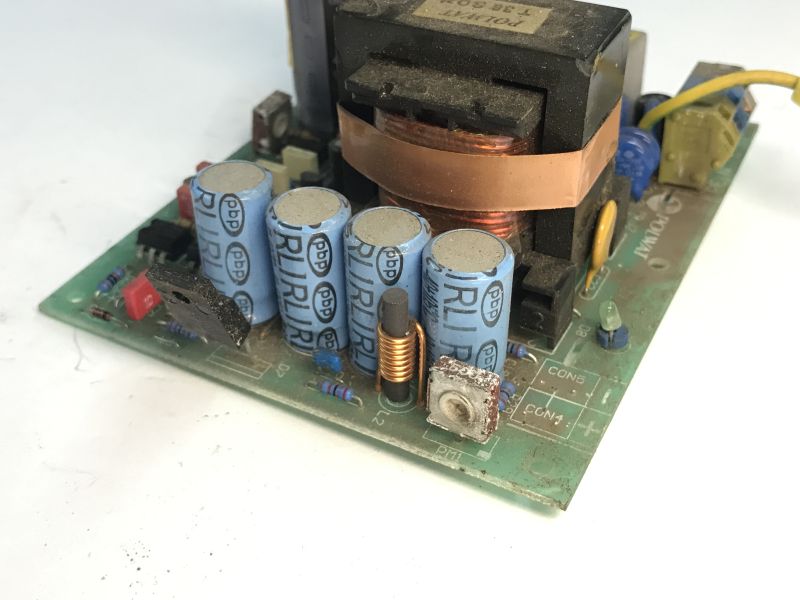
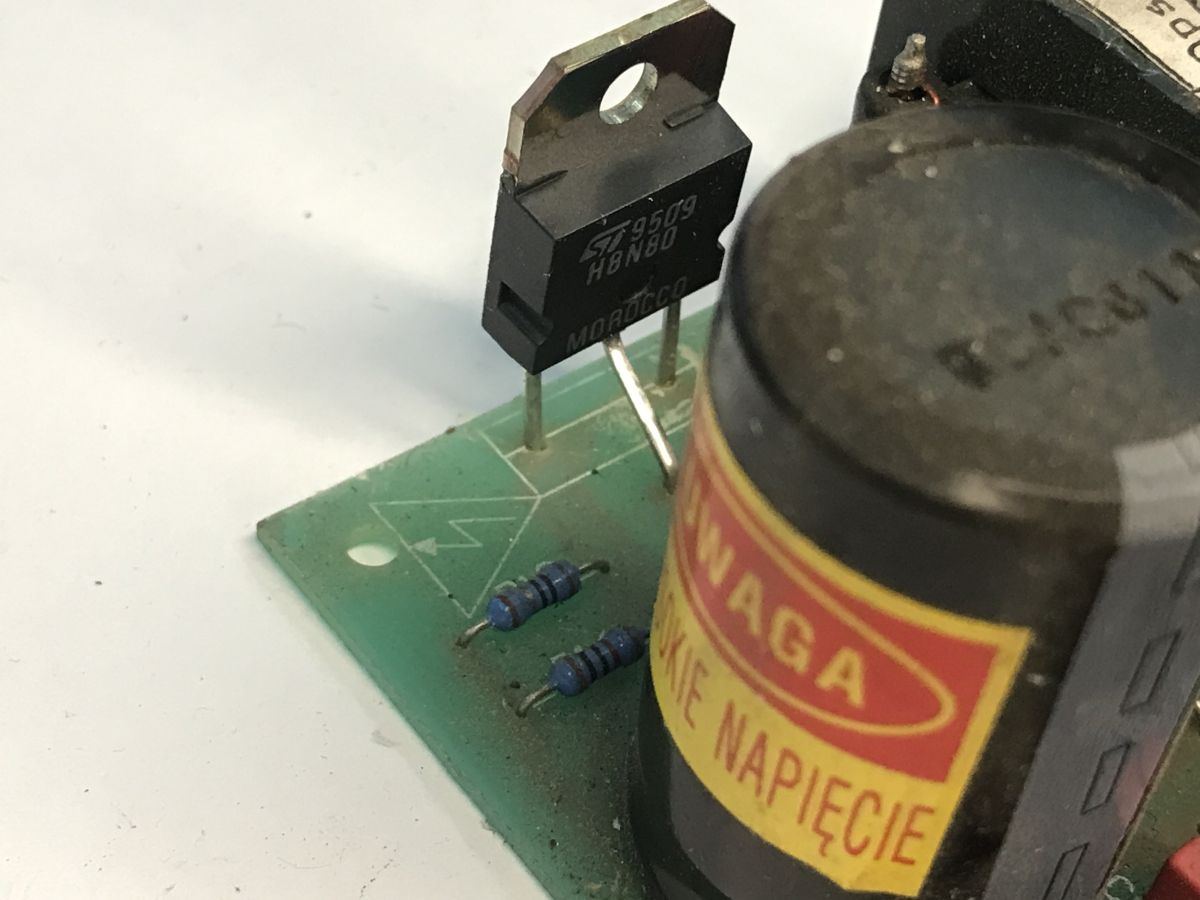
It remains to determine the keying transistor - it appears to be an ST Microelectronics H8N80 N-MOSFET (800 V, 8 A).
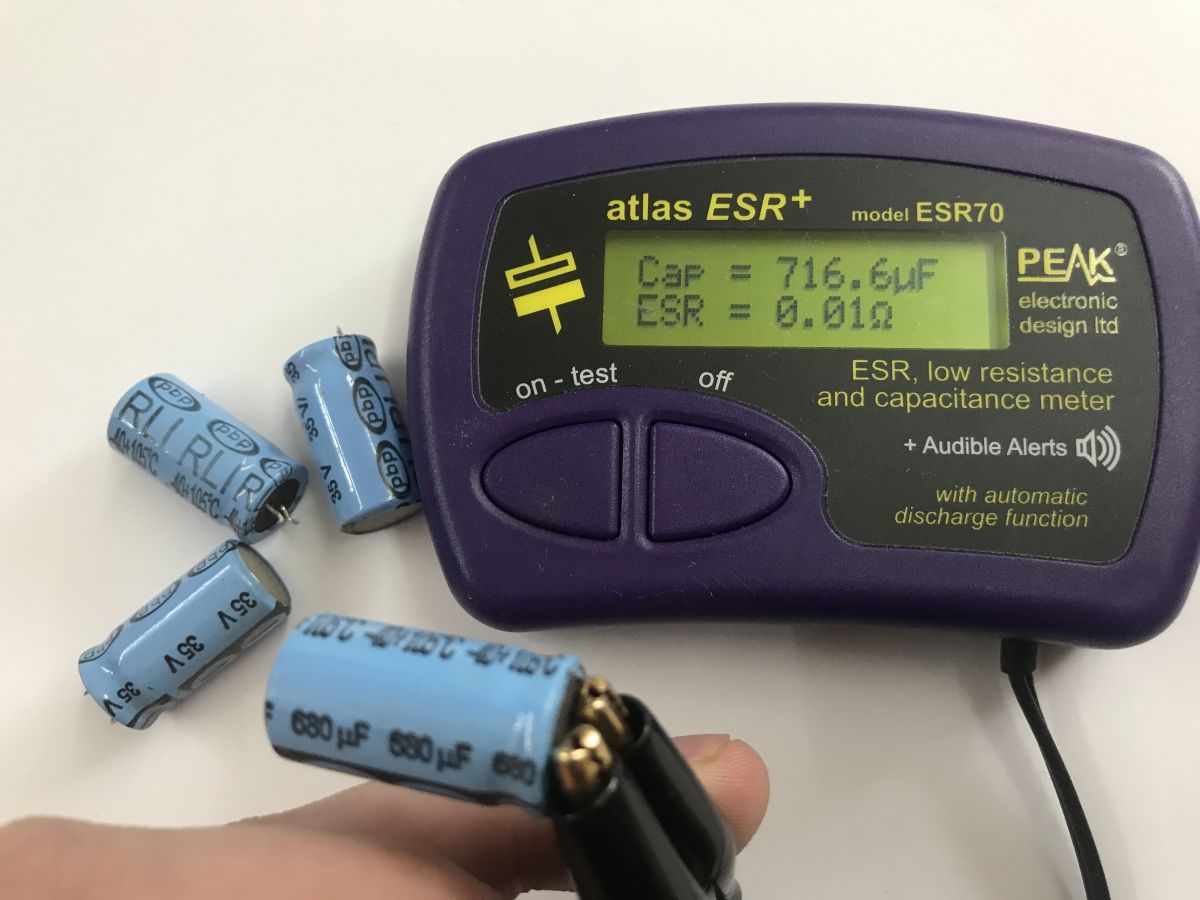
Out of curiosity, I checked the most fail-safe component of such power supplies - the capacitors. They are not swollen, but perhaps they have lost their performance? I used my
ESR70 for this.
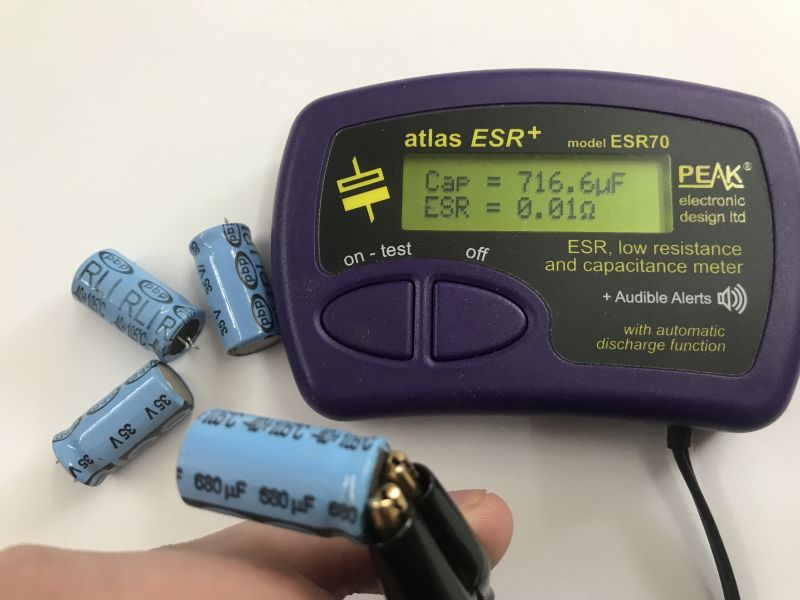
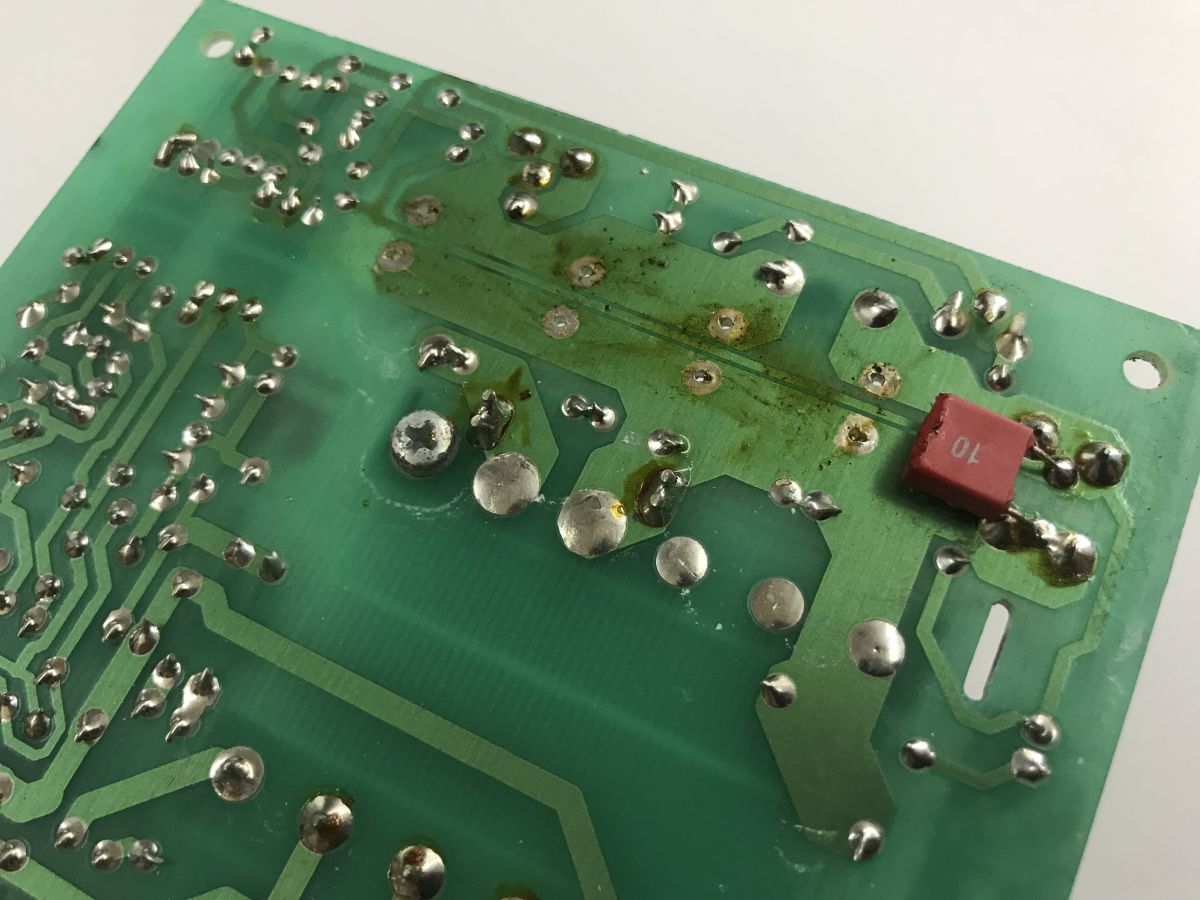
All the capacitors are fine, they can be soldered in place. By the way - that fix, the fine decoupling capacitor, is not from me, it was like that from the factory.
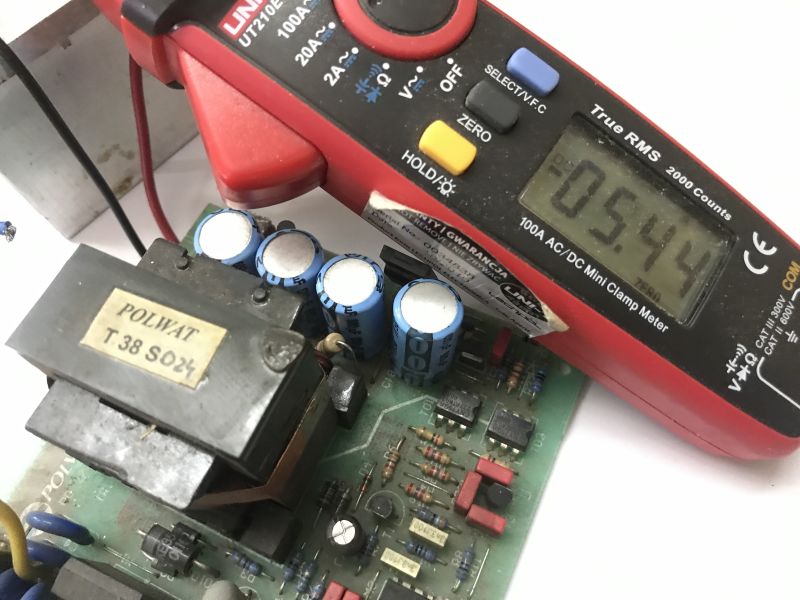
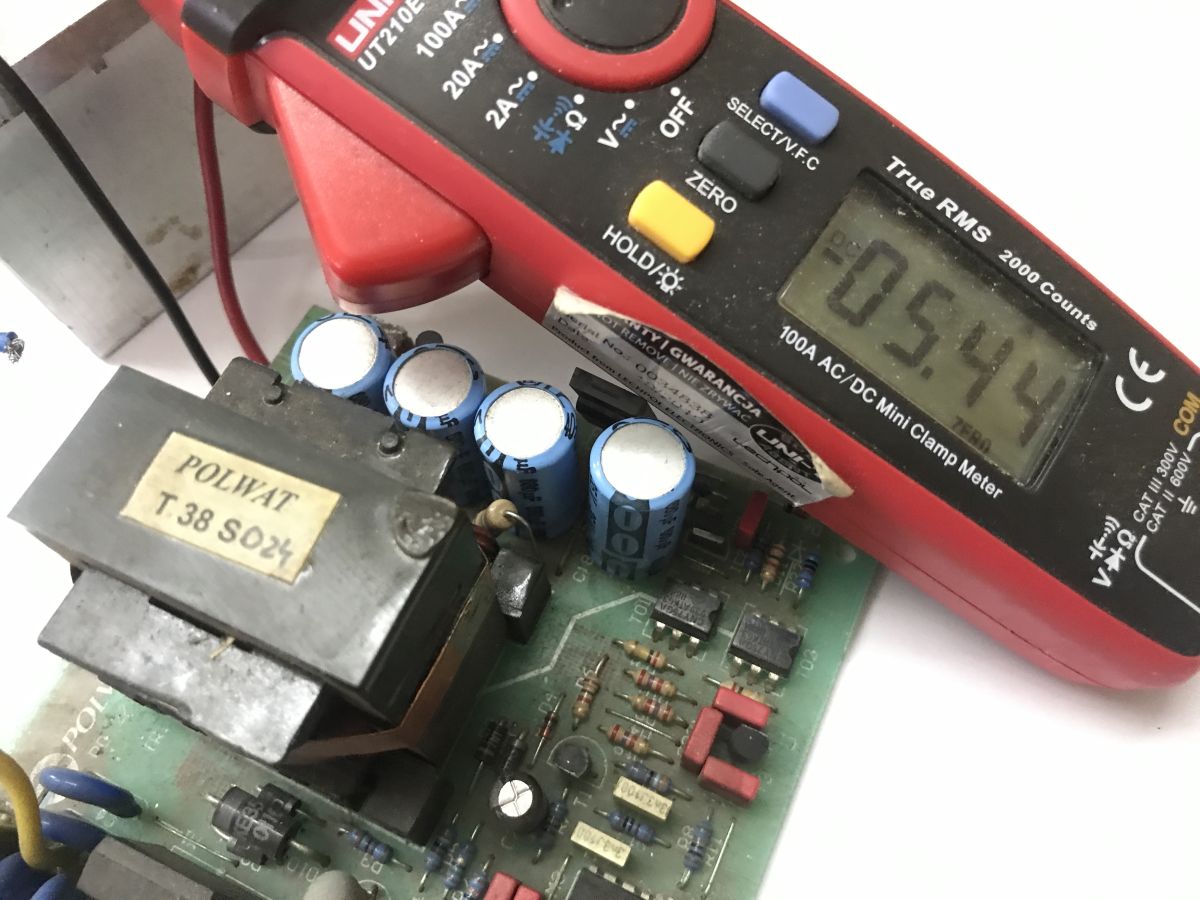
Time then for a more serious test. The power supply is scrap, I didn't expect it to be in working order, and I wasn't prepared to test it, so I loaded it with an exorbitant 5.44 A and saw what would happen. The no-load voltage is 24 V, with four 1 Ω power resistors each connected it drops to about 21.75 V.
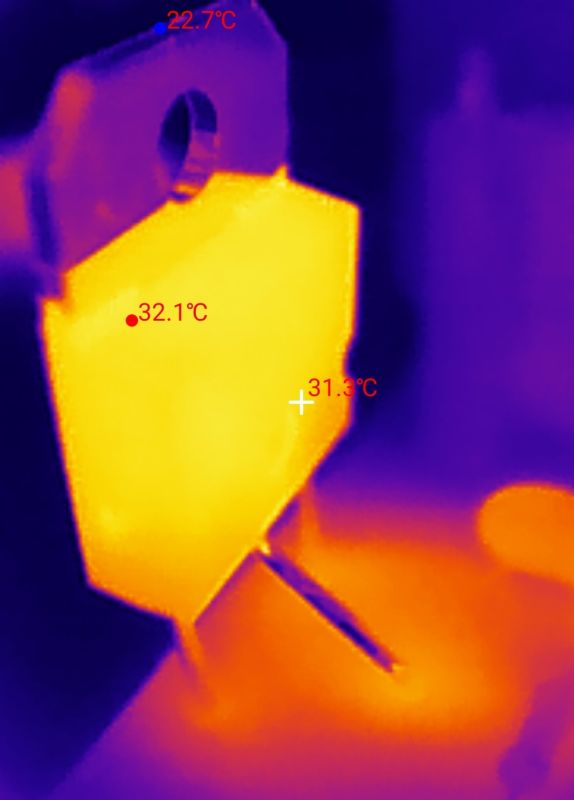
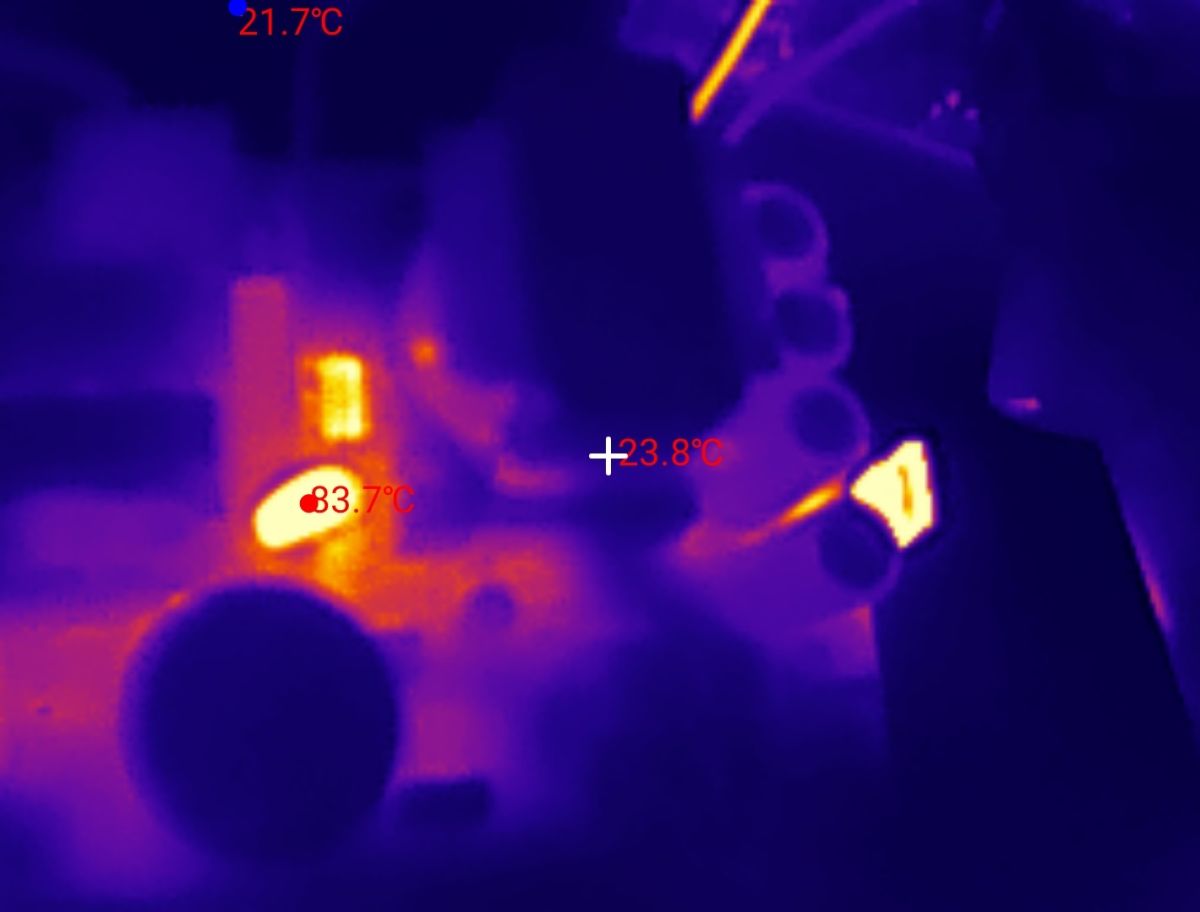
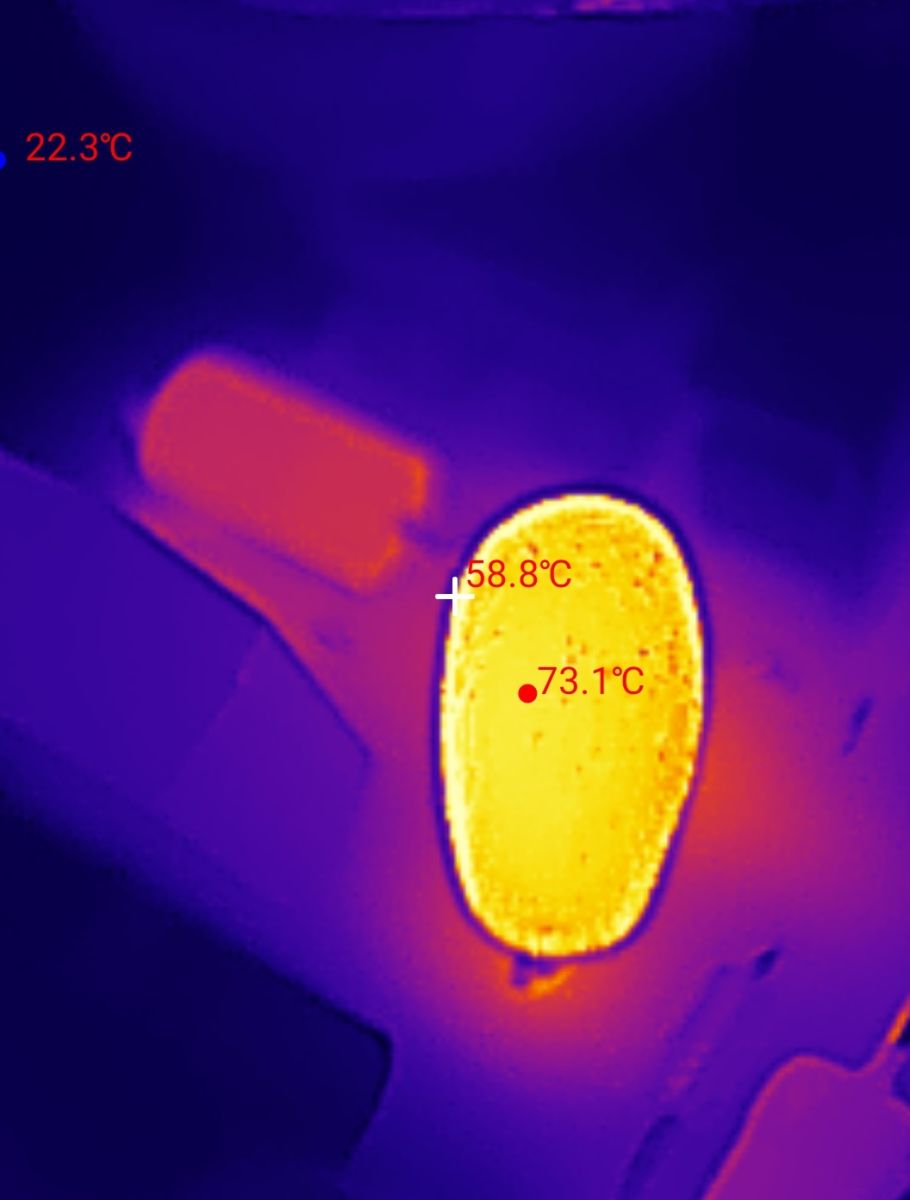
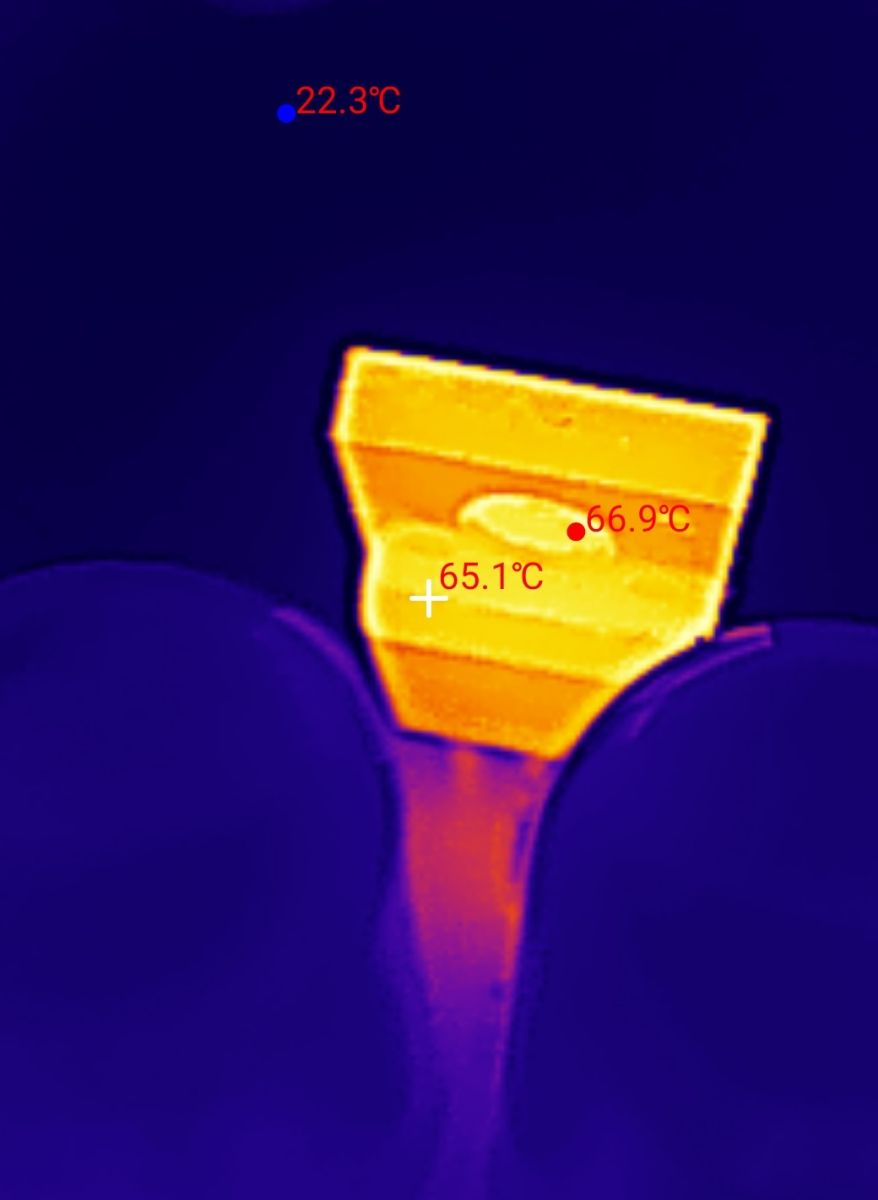
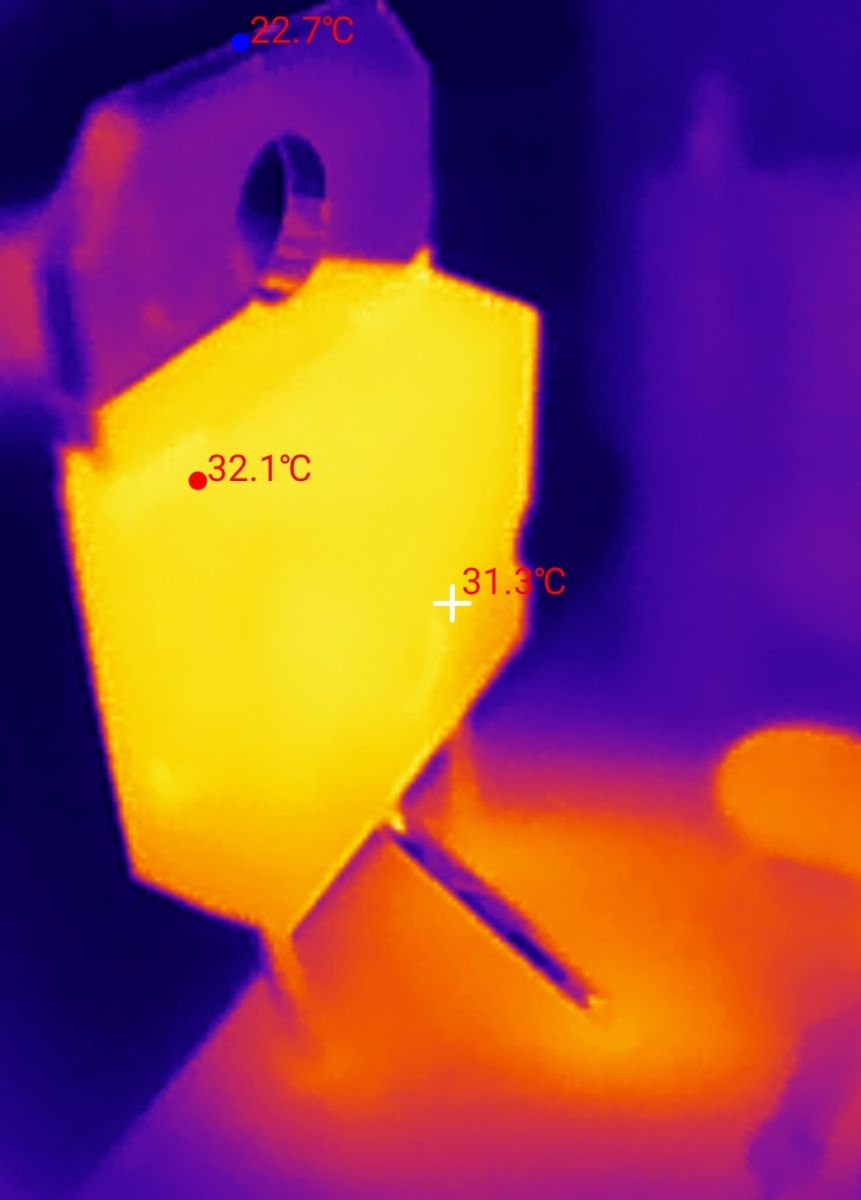
The most heated ... schottky diode and the thermistor (NTC) resistor. The keying transistor itself heats up slightly less.
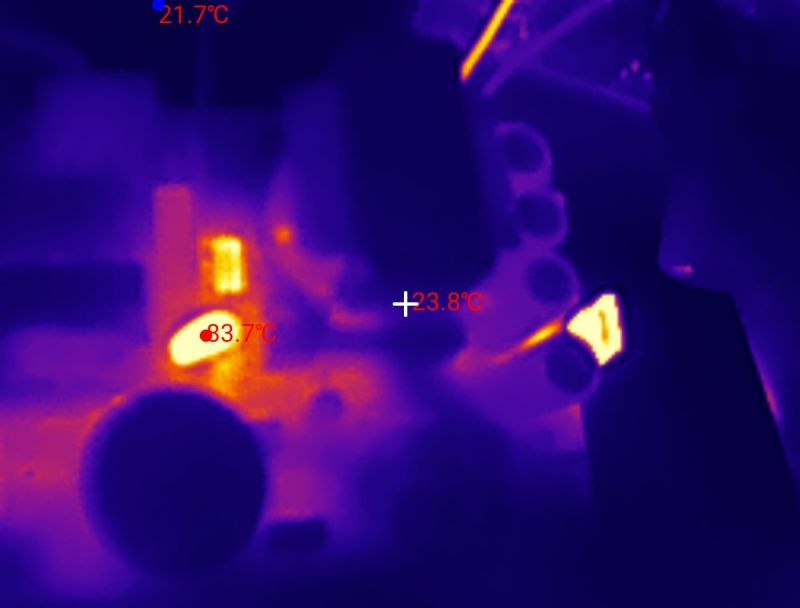
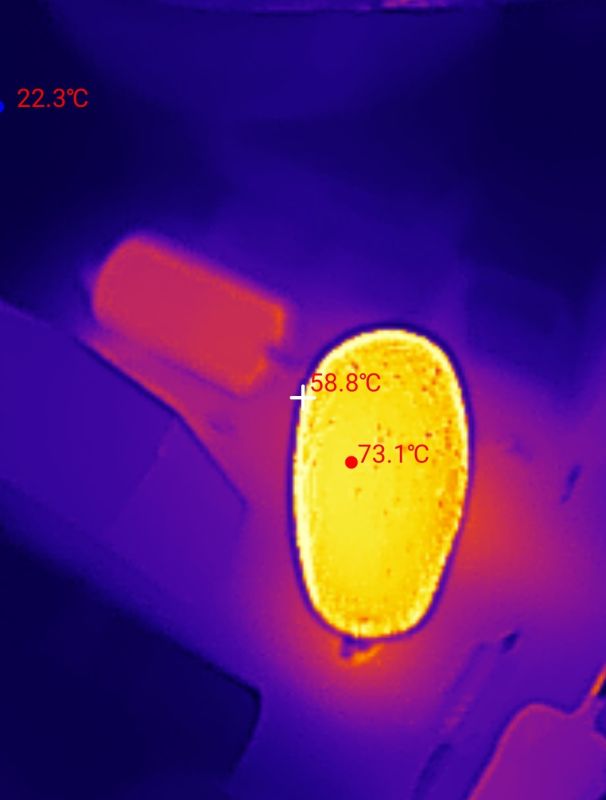
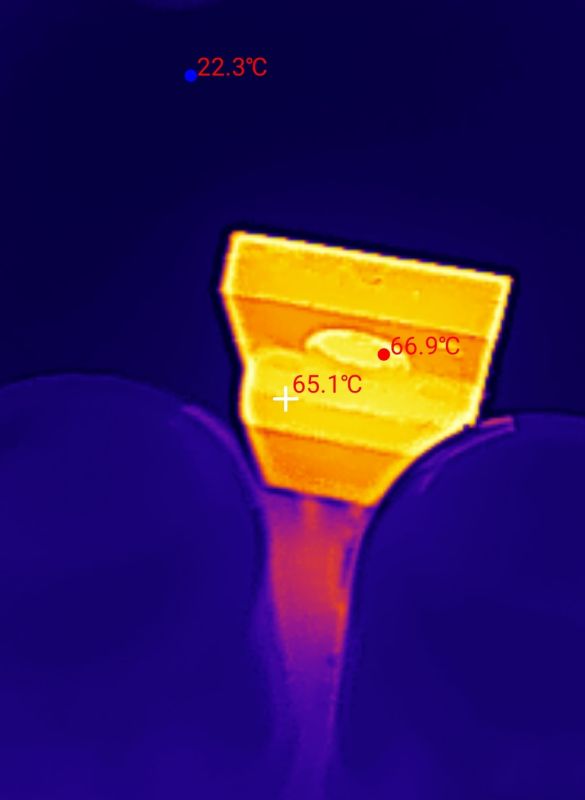
The thermal imaging camera images above clearly show the temperature distribution after load. The main transistor heats up significantly less:
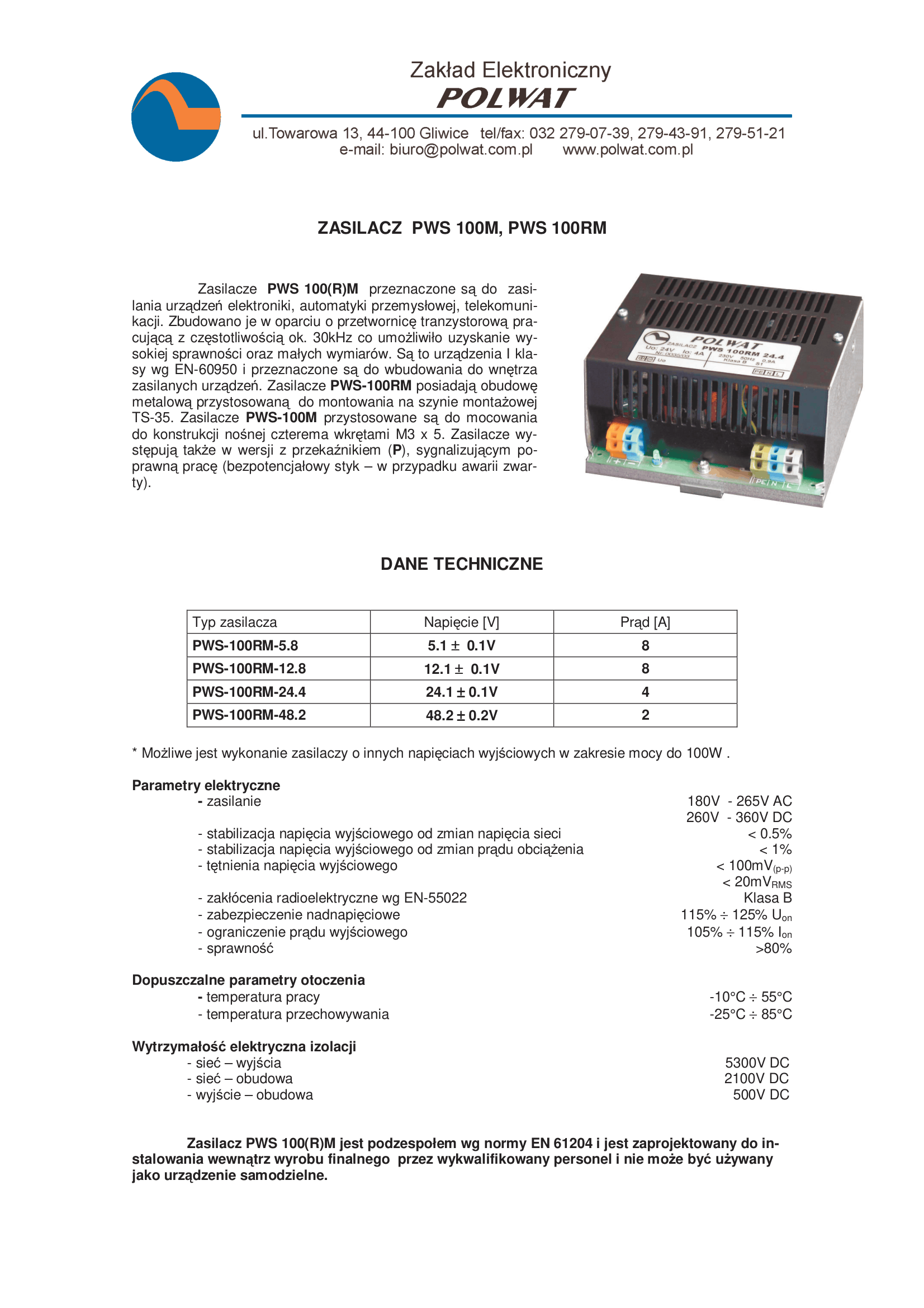
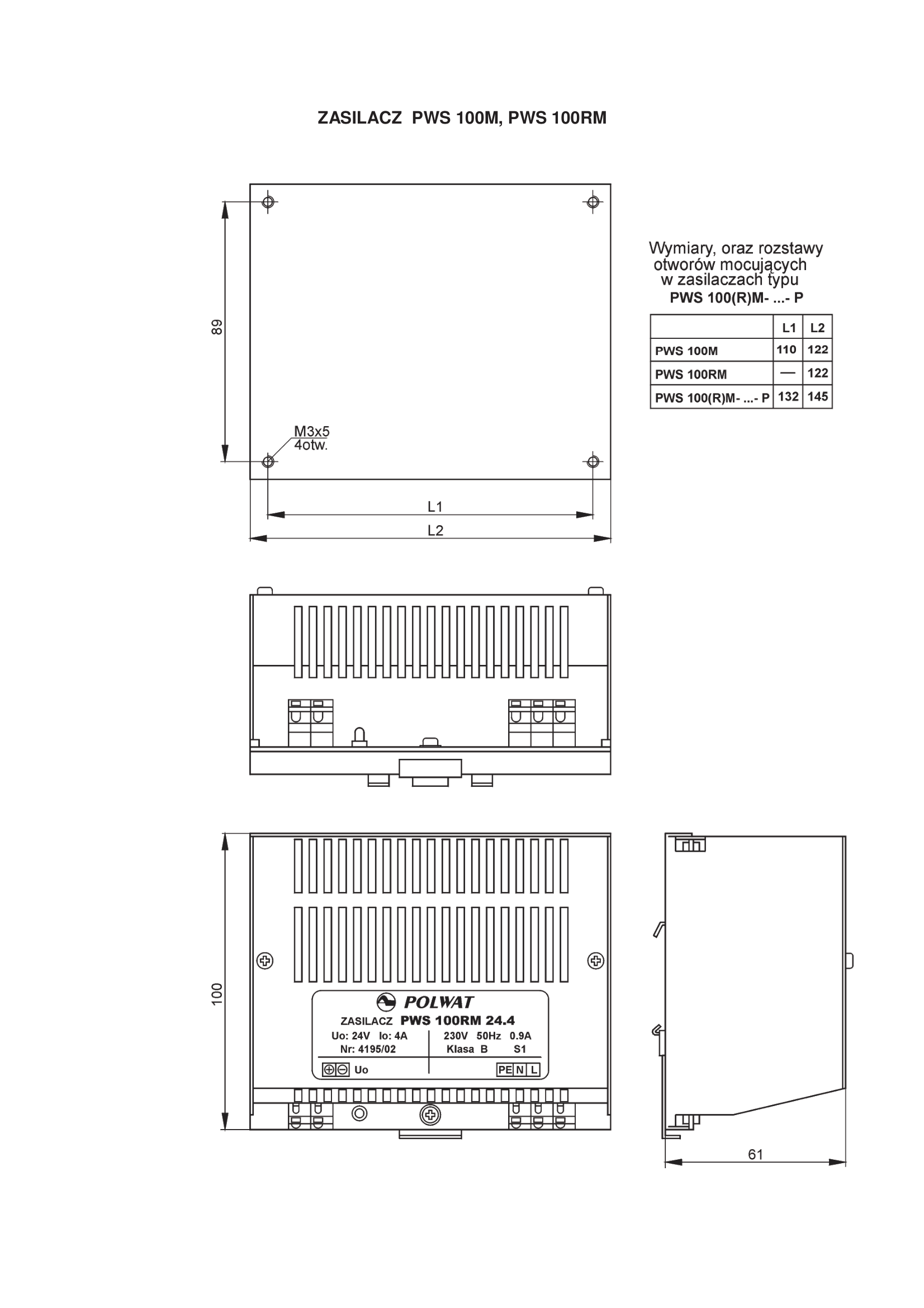
Finally, it is still worth taking a look at the power supply parameters from the original manufacturer's documentation:
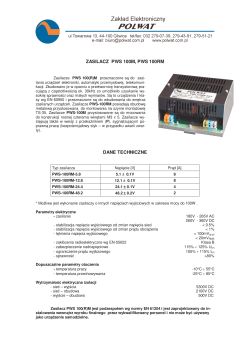
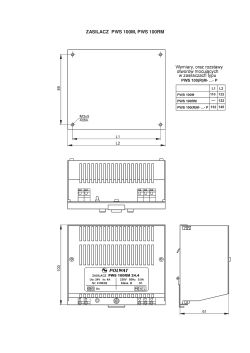
It is well apparent that this is no ordinary no-name power supply from China. The manufacturer specifies its parameters in detail, including ripple levels, radio interference and the electrical insulation strength of the mains-to-housing, mains-to-output and output-to-housing.
In summary, it appears that the power supply, despite its poor visual condition, is fully operational. A longer test would be useful, already with the appropriate heatsinks in place and at a lower current, but I do not currently have such a load at hand.
The design seems very solid and well thought-out, confirming the good reputation of older, industrial devices of Polish manufacture. If, after years of service, and probably some time spent on the scrap heap, the equipment is still working and holding its parameters, this testifies to the selection of good quality components and an adequate safety margin in the design.
My plans are to clean the board thoroughly, apply thermal conductive paste and perhaps use this power supply in one of my projects.
And have you guys had the opportunity to use this type of power supply in your factories or home workshops? How do you rate their failure rate? 






Comments
Well designed equipment when refreshed can last another 25 years, unlike today's inverters made in china, not to mention EMC. [Read more]
After removing the chassis, I checked the solders to see if I could see traces suggesting a previous component replacement. This time, however, it was not possible to draw a firm conclusion as many of... [Read more]
Capacitors in surprisingly good shape. MeanWell from https://www.elektroda.pl/rtvforum/viewtopic.php?p=19586151#19586151 refused to work after ~5 ciu years. Symptoms indicate dried out electrolytes. [Read more]
Impressive, heavyweight equipment :) I once came across a switch mode power supply from a Polish TV receiver Jowisz 04 it was an even bigger monster. I found a photo on elektroda.pl https://www.elektroda.pl/rtvforum/topic1454462.html The... [Read more]
Decent power supply, now something in this class of build quality costs a bit. Simple forward 1T, easily repaired and as you can see has stood the test of time very well :) I would also wash and keep,... [Read more]
You've got me worried. I also "bet" on these power supplies hoping they would live a long time. If you fix it then describe it on the electrode - I wonder what screwed up. [Read more]
I had a similar 12V 10A beautiful design until it was nice to look in there. [Read more]
I've already repaired two of these, post #27 from the same Arthur topic: https://www.elektroda.pl/rtvforum/topic3827629.html And as for the title power supply, you can see that we can make solid stuff... [Read more]
Yes this Jupiter power supply was a nuisance, it had two high power resistors, in the form of a ceramic plate, which were damaging themselves by making a break. I guess the synchronicity was supposed... [Read more]
But from where, it was all about interference, if the power inverter was running loose it would have to be very carefully disconnected and tightly sealed in a metal cage otherwise it would seep, stripes... [Read more]
Interesting, I hadn't seen that. All in all, this power supply was enclosed in a metal hollow cage made of thin sheet metal. [Read more]
Great power supply. When I look at these idiotic EU regulations and the artificial and also idiotic generation of whole masses of electro-waste - it drives me nuts.... ABSOLUTELY EVERYTHING there contradicts... [Read more]
As I started reading your message, I thought you were going to write about the capacitor at the flyback converter controller, the one that is usually fed from the additional winding (and via resistors... [Read more]
Hello Similar power supplies were produced by other Polish companies, here a 24V found in a scrap yard in 2014. I do not currently own it. It was intended for powering collective antenna systems. Pulse... [Read more]
Cool stuff, I love the teardown of professional electronics, especially the slightly older ones. I just wonder how much this power supply cost in 2000 - I suspect it wasn't cheap. No wonder it doesn't... [Read more]
Right. I was confused by the UC3844, rather more common with forward topologies and this transistor at 800V, these are also often found in forwards. I didn't look at that the output choke is indeed tiny.... As... [Read more]
@ p.kaczmarek2 measure the capacitance of the class X capacitors. I've been struggling with them a lot lately, because with the current amount of "inverters" generating harmonics to the grid these capacitors... [Read more]
I used to use MW power supplies when a repetitive unit was hitting more locations. I checked on http://www.polwat.com.pl/ and PWS-40 and PWS 40RM look interesting. Does Polwat have a sales network... [Read more]
@TechEkspert Merawex yet there is Alker (they make transformers) and all originated from ZDEMP and the polytechnic. [Read more]