logo elektroda
logo elektroda
X
logo elektroda

Two tiny UPS for router, camera or Raspberry Pi - capacity test

p.kaczmarek2 1245 4

TL;DR

  • Two tiny UPS units were tested for routers, cameras, or Raspberry Pi: a black 5 V USB model and a larger 5/9/12 V unit.
  • Each unit was fully charged and measured with a USB Doctor and 1 A load to compare real capacity against the seller’s Wh and mAh claims.
  • The black £100 unit delivered about 1.6 Ah at 5 V, roughly 8 Wh, far below the claimed 20 Wh / 5000 mAh.
  • The white £150 unit reached about 6 Ah at 5 V, or 30 Wh, which was within about 7% of the promised 32.56 Wh.
  • Neither device impressed on value; the black model especially disappointed, while both showed no excessive heating and the cases are not meant for easy battery replacement.
Generated by the language model.
ADVERTISEMENT
This content has been translated flag-pl » flag-en View the original version here
📢 Listen (AI):
  • Two tiny UPS for router, camera or Raspberry Pi - capacity test
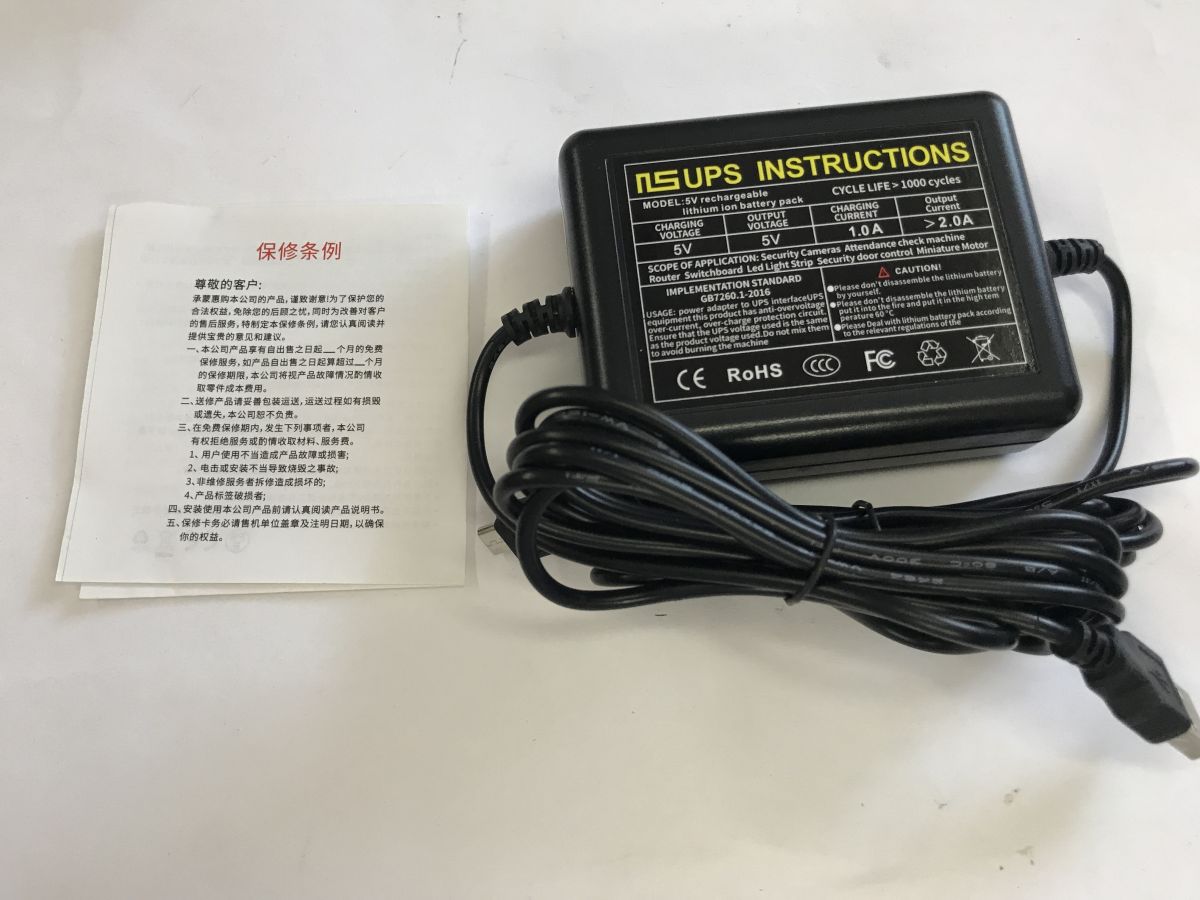
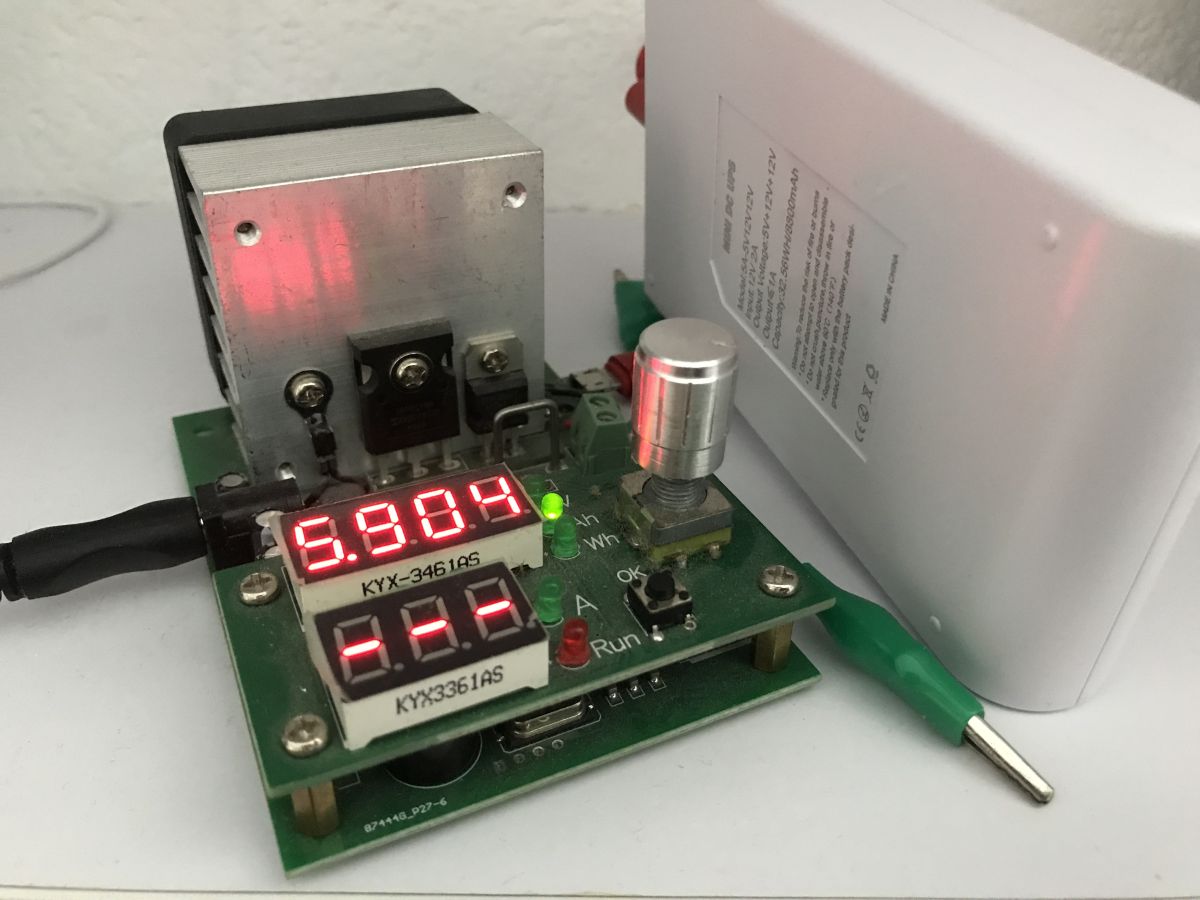
    Today I am testing two small devices capable of temporarily backing up the power supply of a 5 or 12 V receiver in the face of an unexpected power outage. The first is a distinctive black box plugged into a USB cable, necessarily operating on 5 V only. The second is slightly larger, resembles the router itself in size, operates on 12 V and has 5, 9 and 12 V outputs.

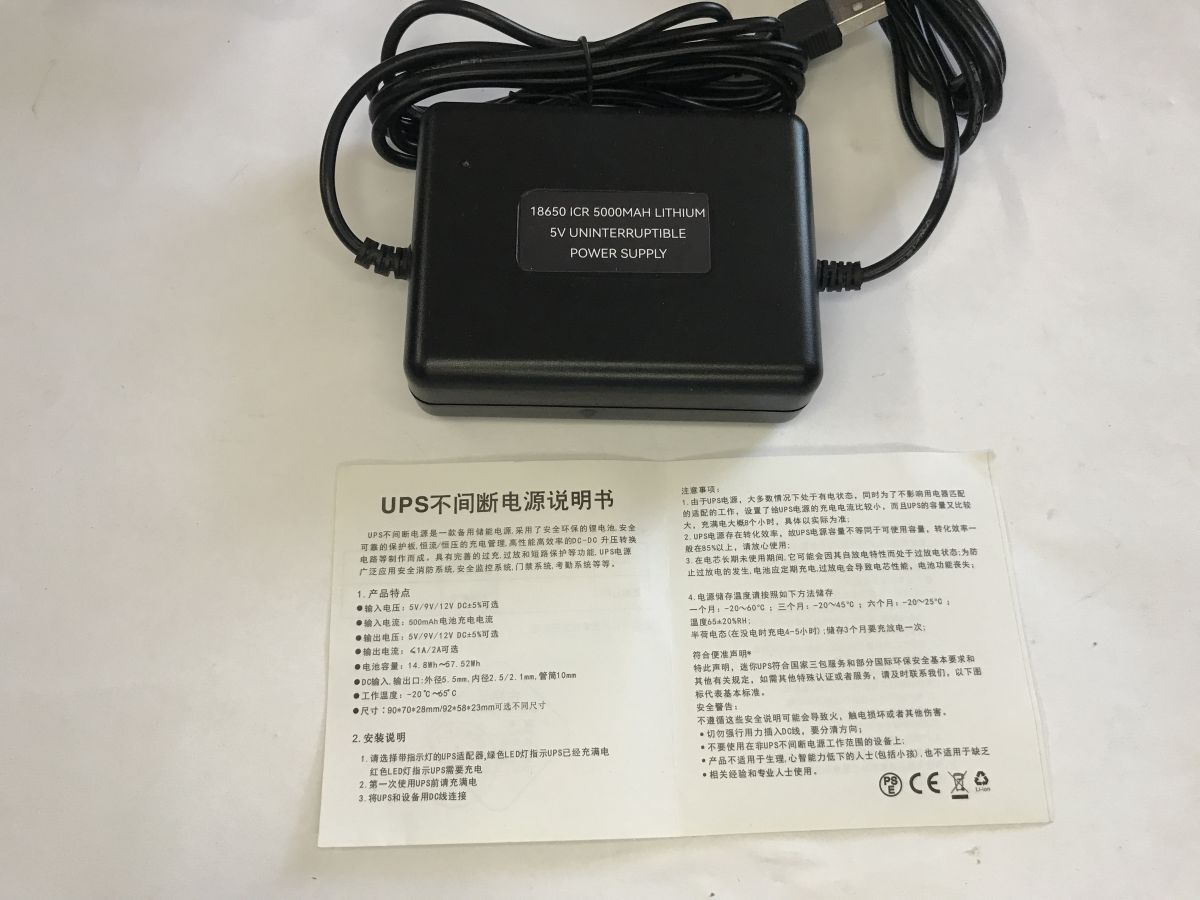
    Let's start with the first one - you can vainly find the model name here, but you can also judge a lot by its appearance. The whole thing is quite expensive, costing £100, and advertised as it is as a "UPS for alarms". The rated capacity is 20 Wh, according to the seller.

    Two tiny UPS for router, camera or Raspberry Pi - capacity test Two tiny UPS for router, camera or Raspberry Pi - capacity test Two tiny UPS for router, camera or Raspberry Pi - capacity test
    The manual is in Chinese, although it manages to read something about a 500 mAh battery capacity. This is strange, on the case it says 5000 mAh. I also see separately the capacity given in Wh, but how come it is from 14.8 Wh to 57.52 Wh?

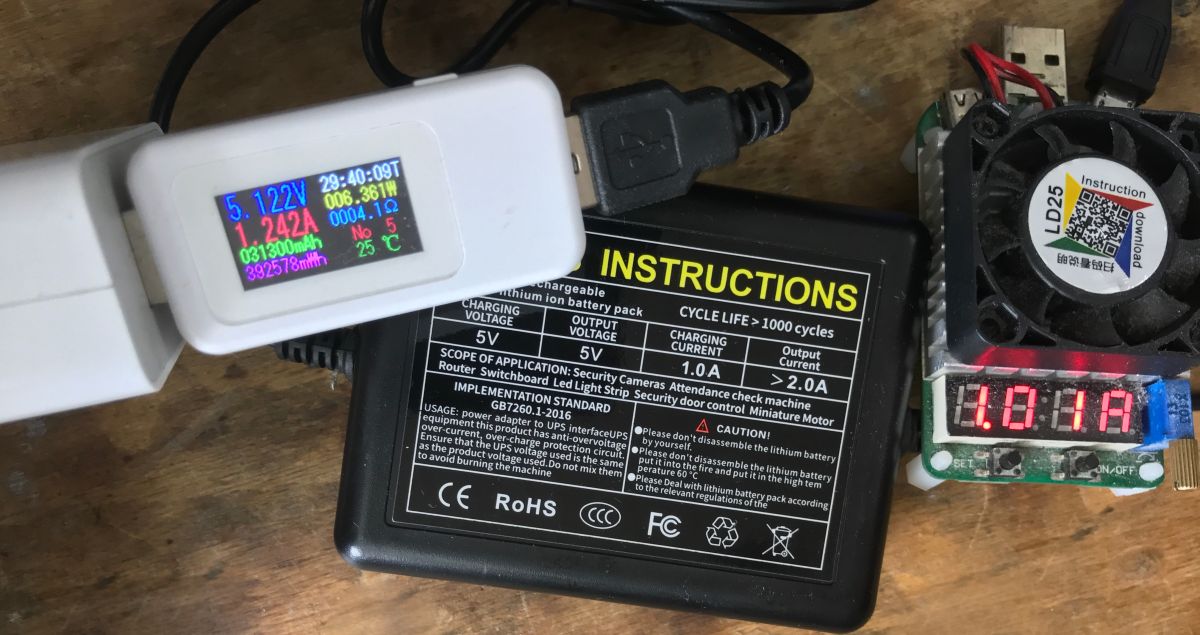
    I charged the whole thing to full, still checking with a USB Doctor meter that I was sure the current draw had dropped significantly. I additionally left it overnight and then measured the capacity with a test load at 1 A.
    Two tiny UPS for router, camera or Raspberry Pi - capacity test
    The output is 4.5 V at 1 A current, the input is over 5 V and 1.25 A current. This already tells us about the efficiency of such a gadget. With no load (when charged), 0.05 A is drawn.
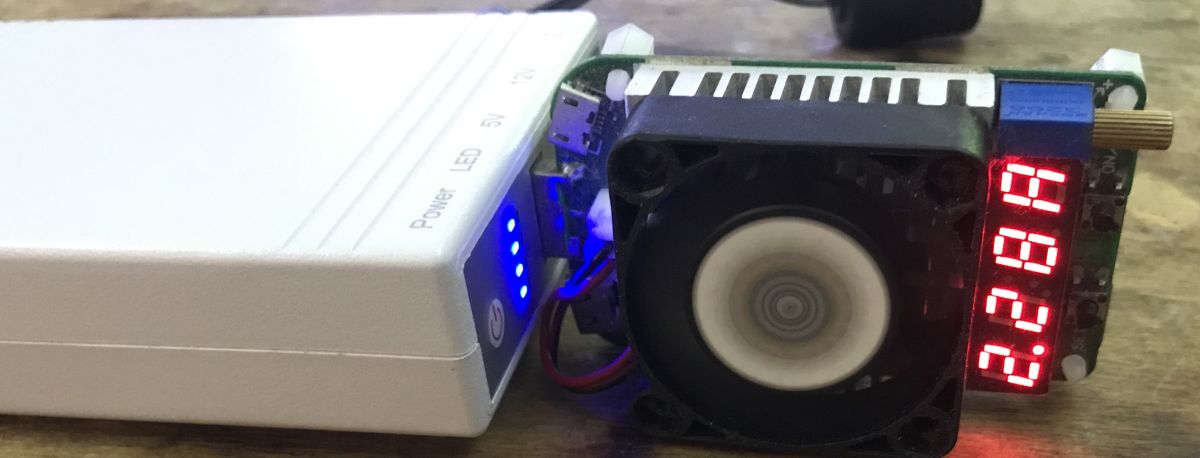
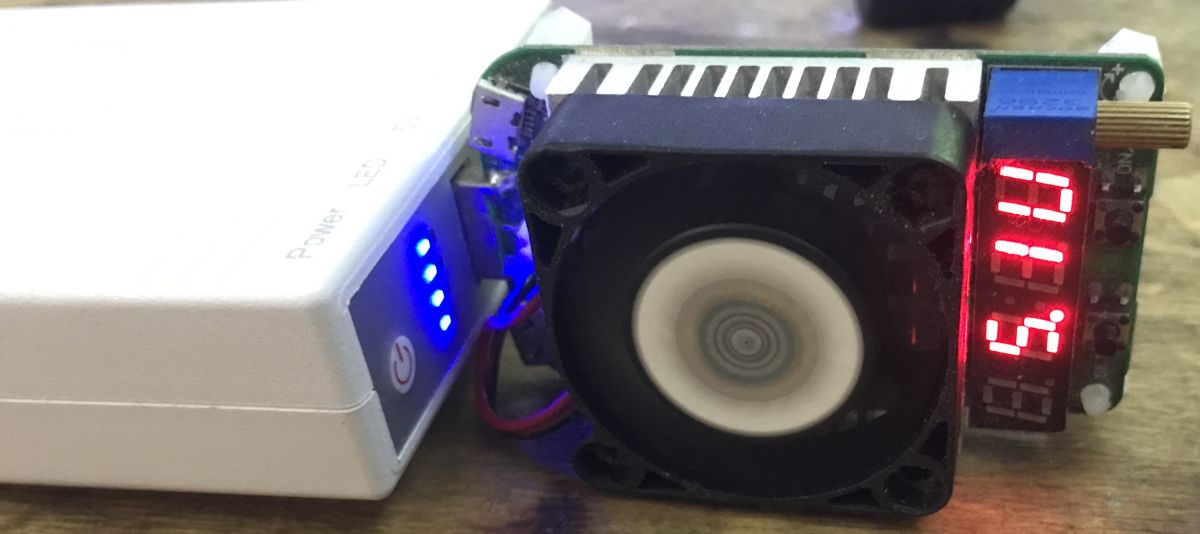
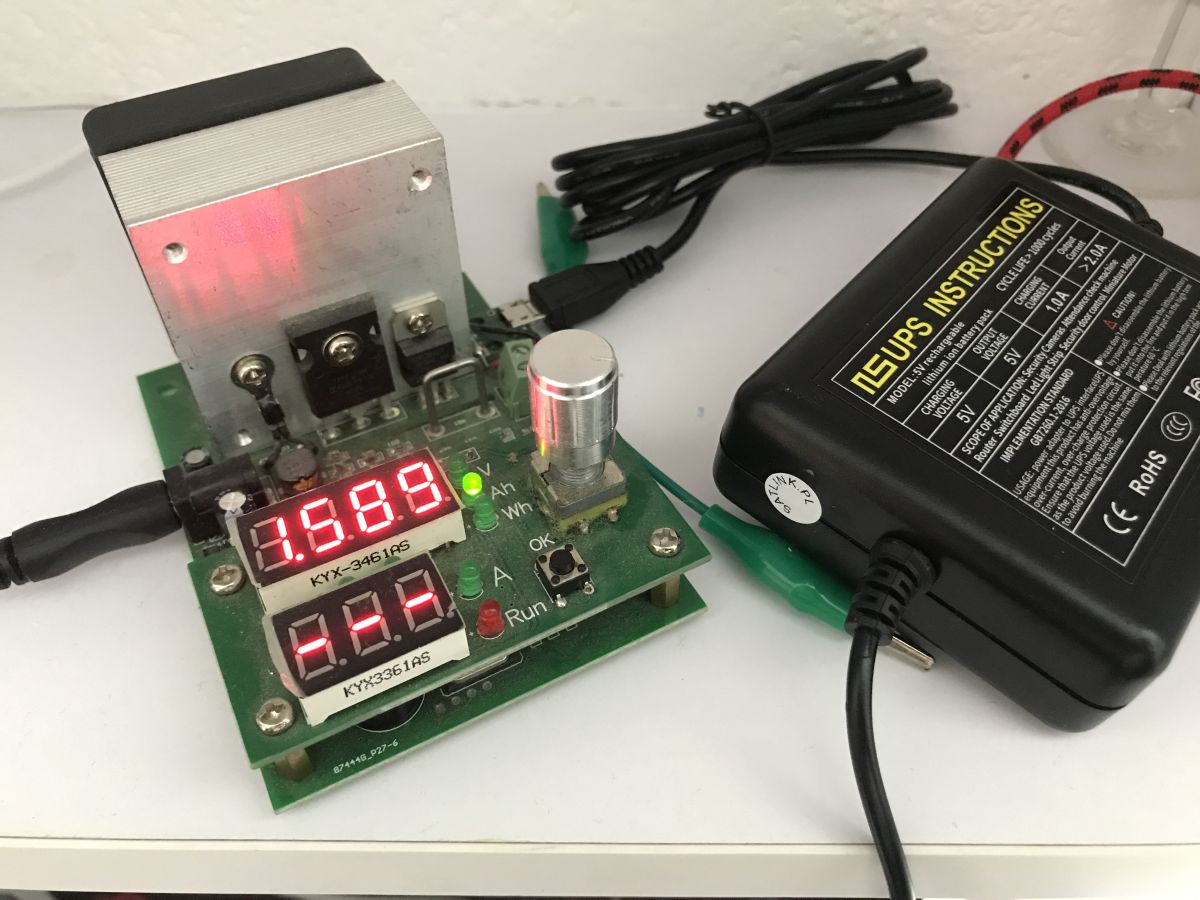
    I measured the capacitance in the same way, I repeated the test several times, but the results are unrelenting.
    Two tiny UPS for router, camera or Raspberry Pi - capacity test
    1.6 Ah at 5 V gives about 8 Wh. You could still convert to battery capacity at 3.7 V - 8 Wh/3.7 V ≈ 2.16 Ah, or about 2160 mAh on the cell side (ignoring losses on the inverter; in practice it will be a little less, e.g. 1900-2000 mAh available at the output). Well... that's less than half the promised 5000 mAh. Then again, the 500 mAh in the instructions is rather an error, as the translator suggests charging current.

    The first UPS didn't impress me, so maybe the second one will be better?

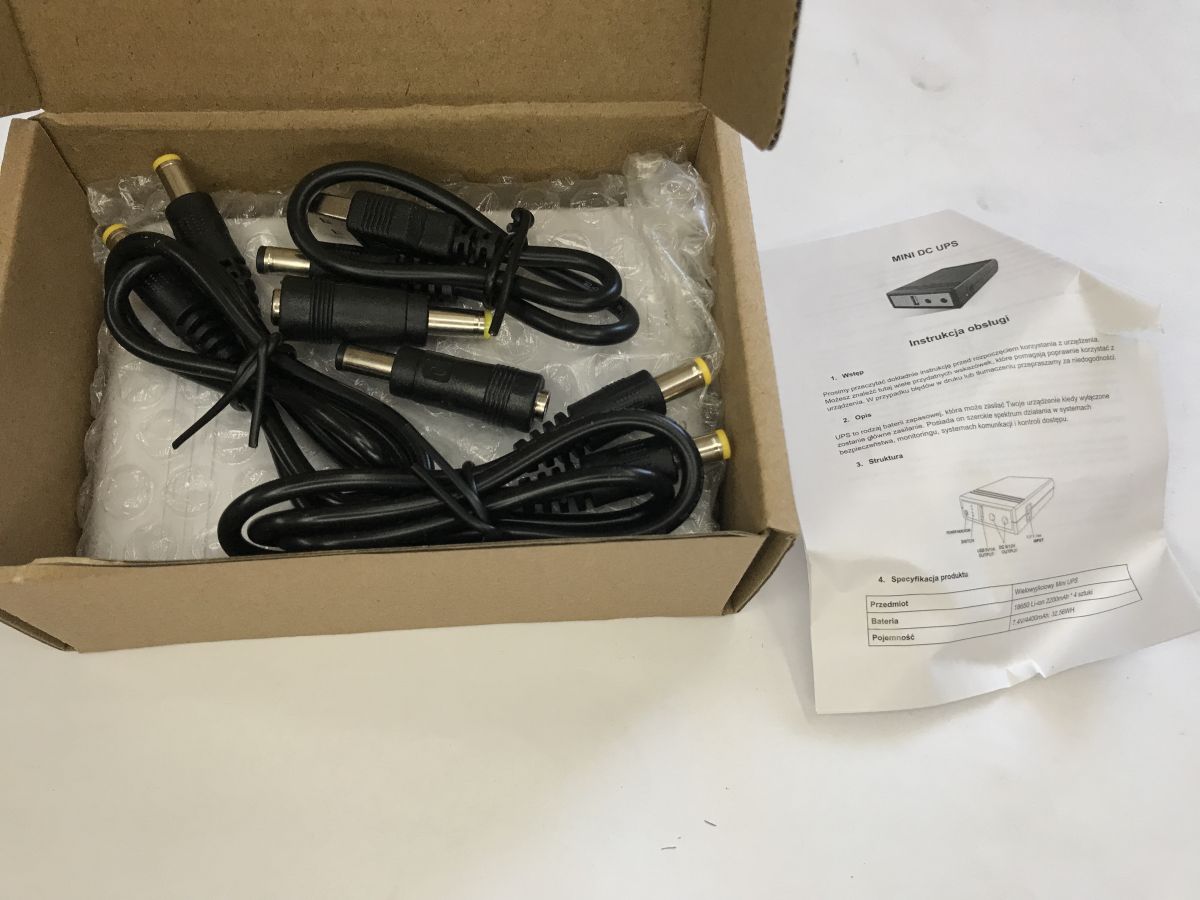
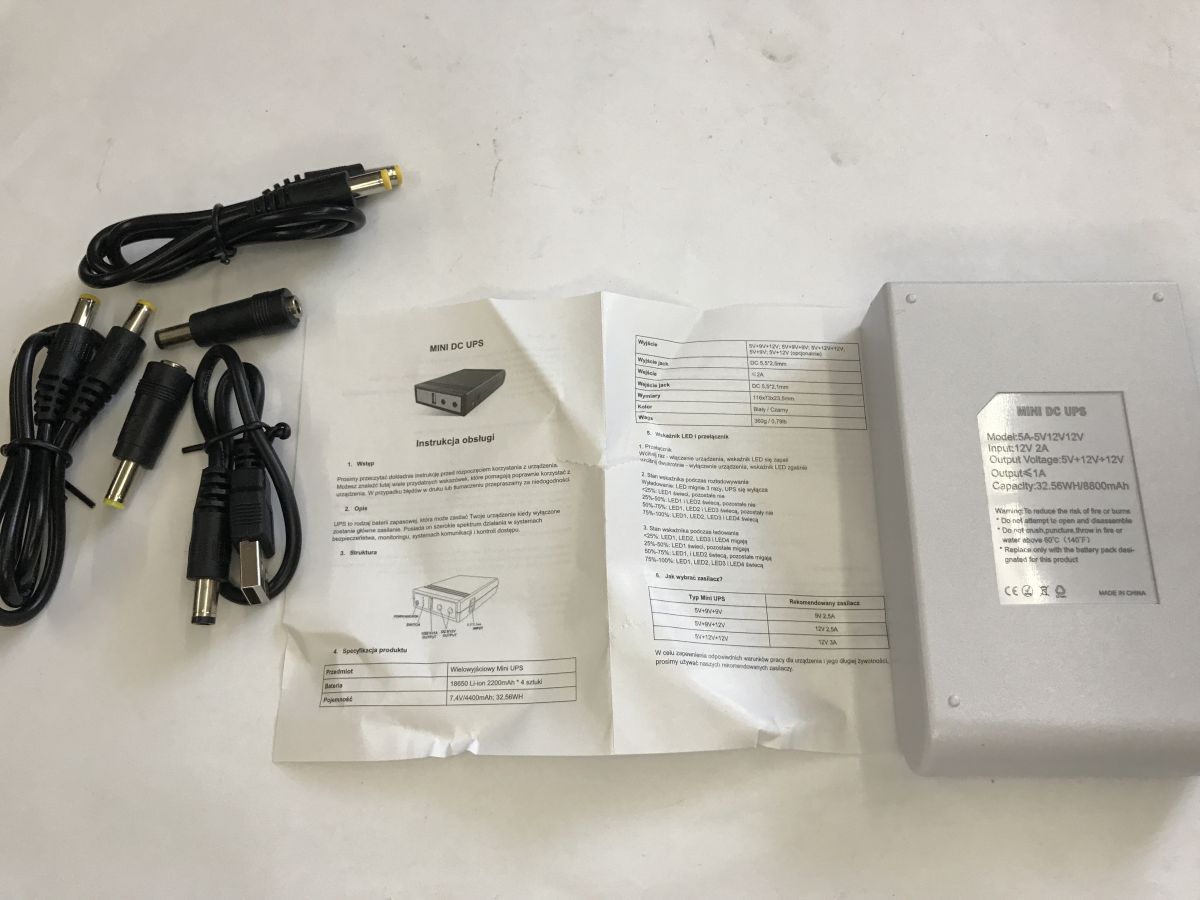
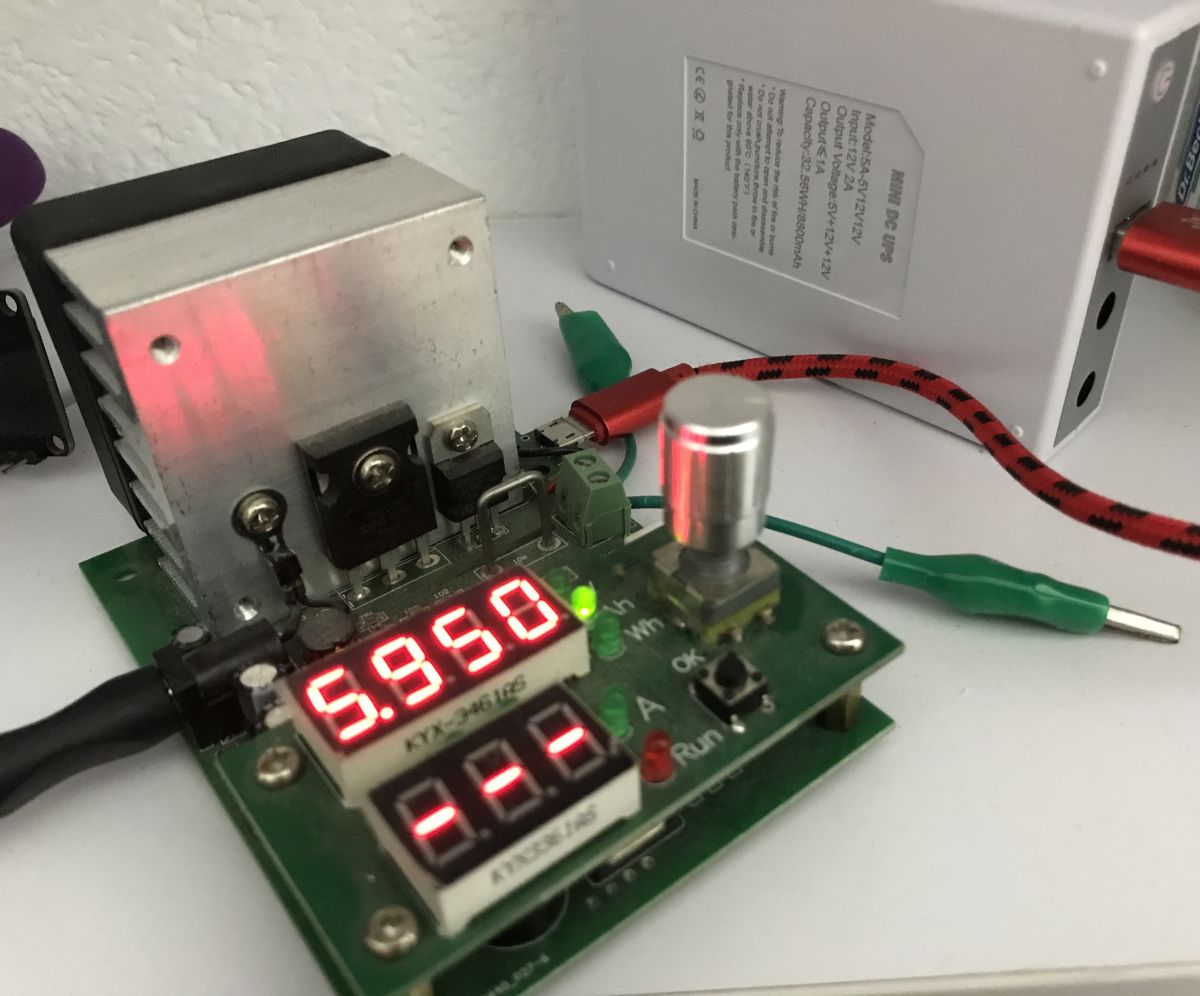
    The second model was even more expensive . We paid a good £150. The seller promises a capacity of 32.56 Wh - we will check.

    Two tiny UPS for router, camera or Raspberry Pi - capacity test Two tiny UPS for router, camera or Raspberry Pi - capacity test Two tiny UPS for router, camera or Raspberry Pi - capacity test
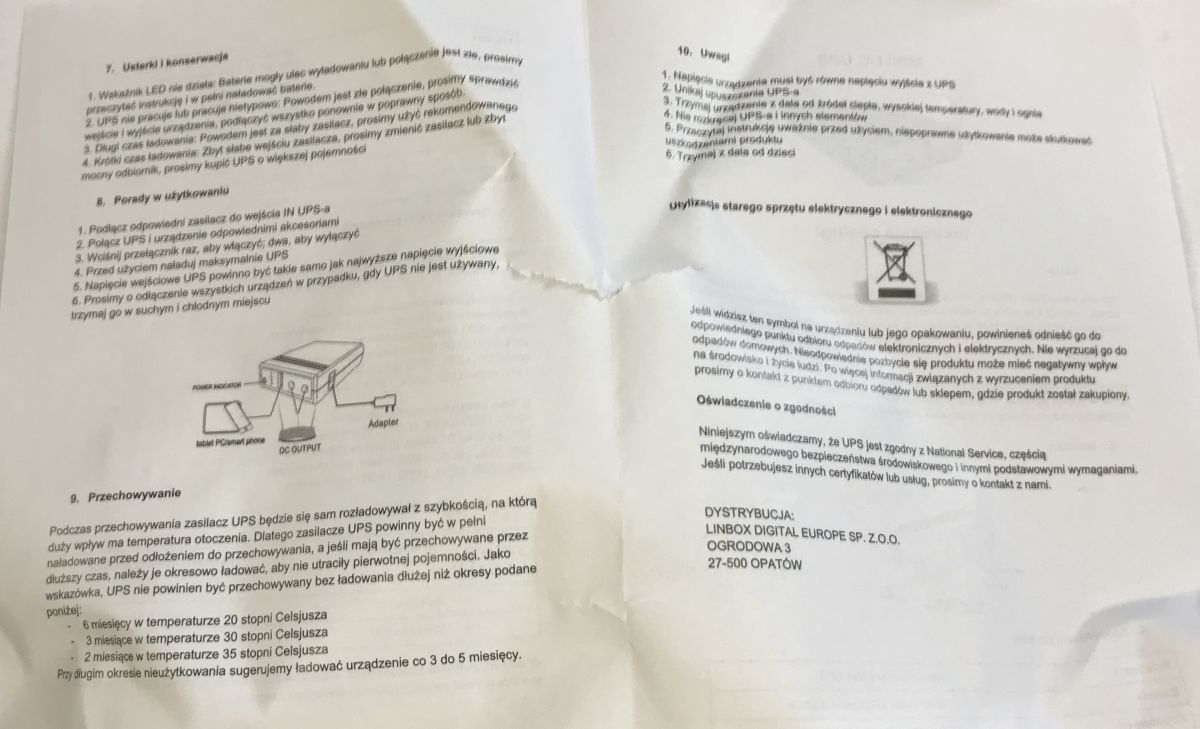
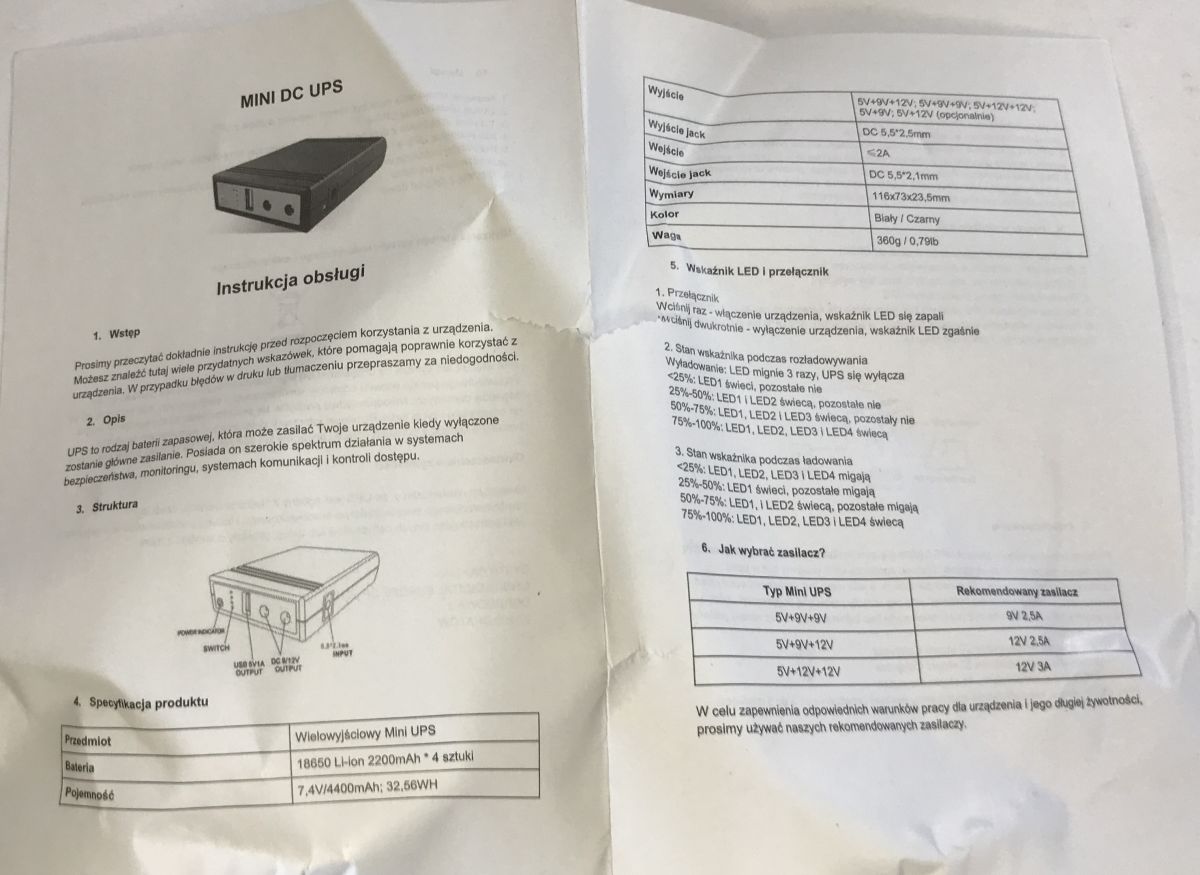
    The set is undoubtedly quite rich. Should that justify the price? In addition, there is also a Polish-language manual. The distributor's contact details are also given there, so we know who is responsible for importing this invention.
    Two tiny UPS for router, camera or Raspberry Pi - capacity test Two tiny UPS for router, camera or Raspberry Pi - capacity test
    The device draws up to 10 W from the mains when charging without a load:
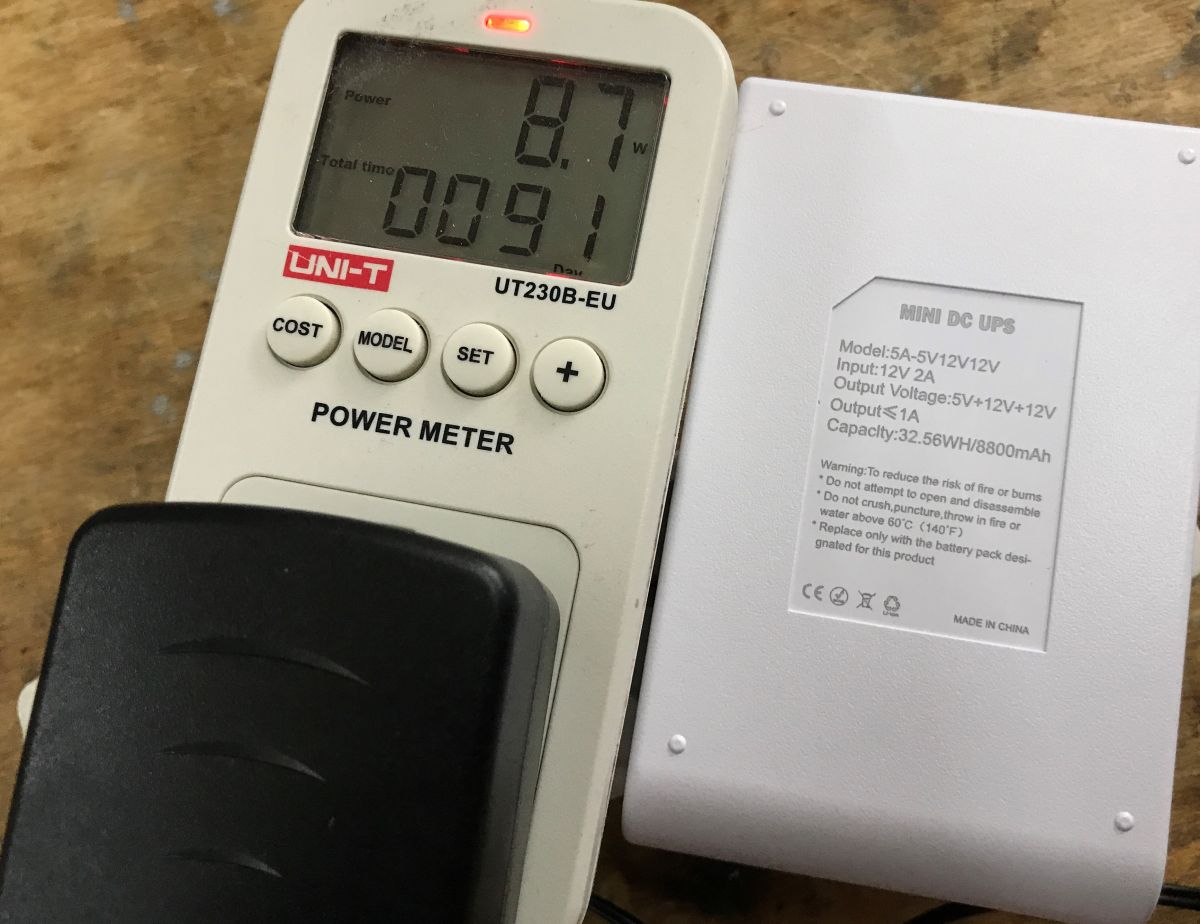
    Two tiny UPS for router, camera or Raspberry Pi - capacity test
    More than 2 A at 5 V can be drawn:
    Two tiny UPS for router, camera or Raspberry Pi - capacity test
    Two tiny UPS for router, camera or Raspberry Pi - capacity test
    As before - charging to full and testing. For consistency, test at 5 volts.
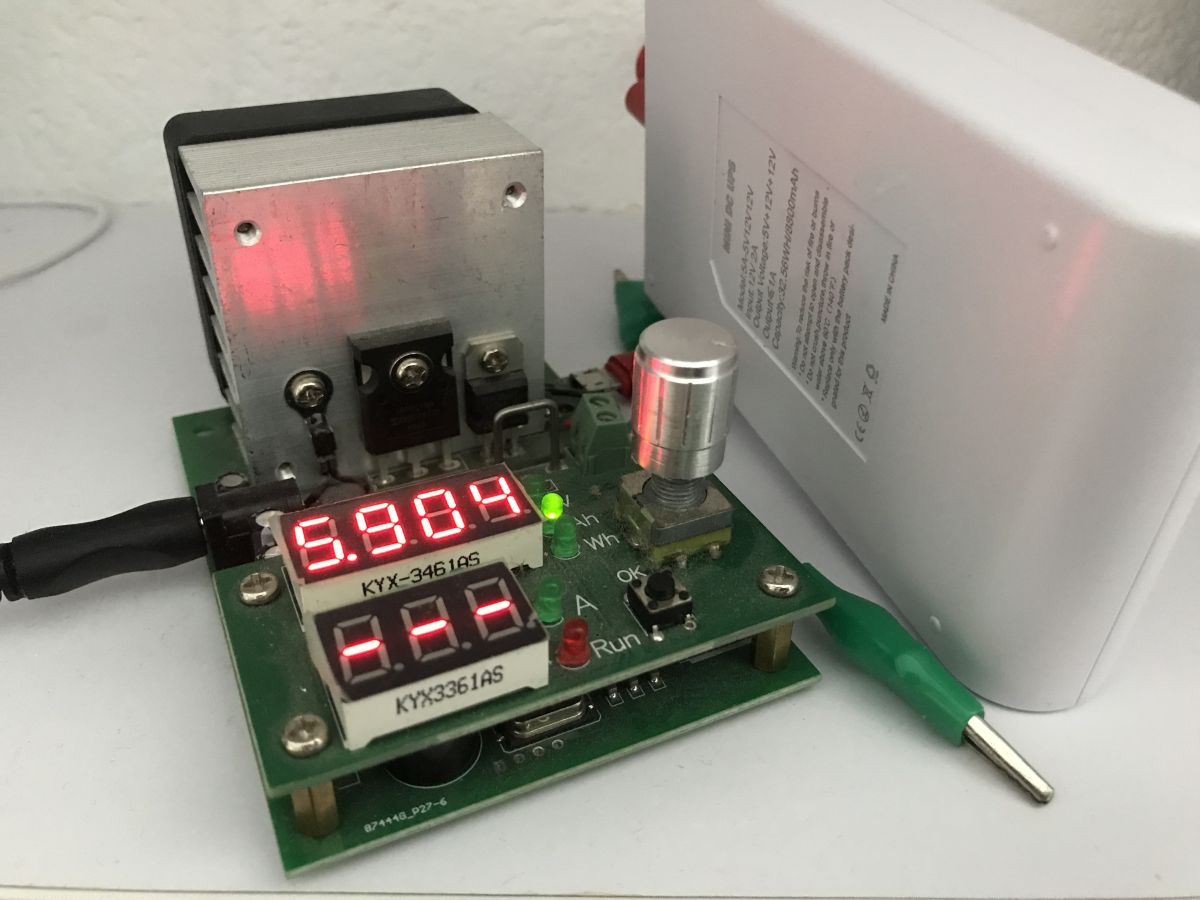
    Two tiny UPS for router, camera or Raspberry Pi - capacity test Two tiny UPS for router, camera or Raspberry Pi - capacity test
    Let's say - 6 Ah at 5 V, or 30 Wh. Here the result is already more in line with expectations, although also a little too small, the error being within 7%.

    In summary, a black UPS bought for £100, the one plugged into the USB cable, has a capacity of about 8 Wh, and a white one, for £150, the versatile one (5, 9, 12 V), has a capacity of 30 Wh. It seems to me that this was not a very good deal. In the case of the white one, it's not a tragedy yet, because I also basically knew what I am buying (the seller announced 32 Wh), while the black one has only 40% of the declared capacity, which I find unacceptable.
    As for the rest, I have no complaints, the current capacity is in line with the announcements, I also did not notice excessive heating. Inside the equipment I have not looked, because it would require a clear damage to the casing, there are no screws and the whole thing is not built to replace the cells, which in total I also consider a minus.
    Was it worth it? Well, probably not though.... anyway, now you know what to expect from the little black box.
    Or maybe I was just unlucky and came across a bad unit? What experiences have you had with UPSs for routers and alarms?

    Cool? Ranking DIY
    Helpful post? Buy me a coffee.
    About Author
    p.kaczmarek2
    Moderator Smart Home
    Offline 
    p.kaczmarek2 wrote 14459 posts with rating 12468, helped 650 times. Been with us since 2014 year.
  • ADVERTISEMENT
  • #2 21895173
    Jawi_P
    Level 36  
    Posts: 3207
    Help: 259
    Rate: 695
    And what is the difference between a PB and pass-through charging or whatever it is called that can buffer load and charge, and such a pseudo UPS invention? If the PB does not have e.g. a 12V output for the device, a module from ALi for 5 PLN takes care of the problem and we set the voltage negotiation with the USB PD and we basically have a UPS. Any output voltage, higher current capacity and versatility. Today it is a UPS, tomorrow a PB.
  • ADVERTISEMENT
  • ADVERTISEMENT
  • #4 21897342
    cranky
    Level 30  
    Posts: 2038
    Help: 68
    Rate: 375
    Jawi_P wrote:
    And what is the difference between PB

    No well there are PowerBanks that charge and give power to the output at the same time and such nits (let's say half duplexes) that when they charge, they no longer give voltage to the output.
  • #5 21898505
    p.kaczmarek2
    Moderator Smart Home
    Posts: 14459
    Help: 650
    Rate: 12468
    @Jawi_P from my testing, which I've been doing for over a year on Elektroda, it seems that by far most powerbanks with QC switch off the QC on the output as soon as you plug it in (i.e. the voltage drops to 5 V). This is a potential pitfall, so you would rather need that 5->12 V inverter in addition, as you wrote.
    Helpful post? Buy me a coffee.
📢 Listen (AI):

FAQ

TL;DR: 8 Wh from the black 5 V unit and 30 Wh from the white multi-voltage unit: "the results are unrelenting." This FAQ helps router, camera, and Raspberry Pi users judge whether a mini UPS capacity claim is realistic before buying or testing one. [#21894858]

Why it matters: Small backup-power boxes can cost £100-£150 yet deliver anywhere from about 40% to 93% of the claimed energy.

Device Claimed capacity Measured result Voltage/output notes Price
Black mini UPS 20 Wh / 5000 mAh marking about 8 Wh 5 V only; measured 4.5 V at 1 A output £100
White mini UPS 32.56 Wh about 30 Wh 5 V, 9 V, 12 V outputs £150

Key insight: The most important result is simple: measured watt-hours mattered more than the label. The black unit missed its claim badly, while the white unit stayed within about 7% of the advertised capacity. [#21894858]

Quick Facts

  • The black unit delivered about 1.6 Ah at 5 V, which is roughly 8 Wh, far below the seller's 20 Wh claim and the 5000 mAh case marking. [#21894858]
  • The white unit measured about 6 Ah at 5 V, or 30 Wh, versus a stated 32.56 Wh; that is an error of roughly 7%. [#21894858]
  • During one black-unit test, the output was 4.5 V at 1 A, while the input exceeded 5 V at 1.25 A, showing visible conversion loss. [#21894858]
  • After charging with no external load, the black unit still drew about 0.05 A, which indicates standby drain even when idle. [#21894858]
  • A forum commenter suggested a different route: a power bank with pass-through charging plus an about 5 PLN USB PD trigger module can provide flexible backup voltage and double as a normal power bank. [#21895173]

How was the capacity of these two mini UPS units for a router, camera, or Raspberry Pi tested in practice?

The capacity was tested by fully charging each unit, confirming charge current had dropped on a USB Doctor meter, leaving it overnight, and then discharging into a test load. 1. Charge to full. 2. Verify current falls significantly. 3. Run a load test at 5 V and record Ah or Wh. The black unit was checked at 1 A, and the white unit was also tested at 5 V for consistency. [#21894858]

Why did the black 5 V UPS deliver only about 8 Wh when the seller claimed 20 Wh and the case mentioned 5000 mAh?

Because the measured discharge result was only about 1.6 Ah at 5 V, which equals roughly 8 Wh. The author also saw conflicting markings: 500 mAh in the Chinese manual, 5000 mAh on the case, and separate Wh figures from 14.8 Wh to 57.52 Wh. That mismatch suggests labeling or listing confusion, while the practical output showed less than half of the promised 5000 mAh equivalent. [#21894858]

What is the difference between a power bank with pass-through charging and a dedicated mini UPS for routers or alarms?

A power bank with pass-through charging is a portable battery setup that can charge and buffer a load at the same time, while a dedicated mini UPS is sold specifically as backup power for devices like routers or alarms. In the thread, the commenter argues the power-bank route is more versatile because it can be a UPS today and a power bank tomorrow. The dedicated units tested were fixed-purpose products costing £100 and £150. [#21895173]

Power bank with USB PD trigger module vs router UPS: which solution is better for 5 V, 9 V, and 12 V backup power?

The thread favors the power-bank approach when you need flexibility. The commenter says a power bank plus a roughly 5 PLN module from Ali can set USB PD voltage negotiation and give the needed output, including when 12 V is missing on the power bank itself. The tested white UPS already offered 5 V, 9 V, and 12 V outputs, but it cost £150 and remained a sealed single-purpose box. [#21895173]

How do you calculate Wh from mAh when checking whether a UPS capacity claim is realistic?

Multiply amp-hours by volts, or divide milliamp-hours by 1000 first and then multiply by volts. In the test, 1.6 Ah at 5 V gave about 8 Wh, and 6 Ah at 5 V gave about 30 Wh. The author also converted 8 Wh at a nominal 3.7 V cell side to about 2.16 Ah, or roughly 2160 mAh before conversion losses. [#21894858]

What is pass-through charging in a power bank, and how does it work when powering a load during charging?

"Pass-through charging" is a power-bank operating mode that charges its internal battery while also buffering and powering an external load, with the key characteristic that one device can act as both charger-fed supply and backup source. In the thread, the commenter describes this as the practical difference versus a pseudo-UPS invention and treats it as a built-in way to keep a device running while the bank itself charges. [#21895173]

What is a USB PD trigger or voltage negotiation module, and how is it used to get 12 V from a power bank?

"USB PD trigger" is a small voltage-negotiation module that requests a chosen output level from a USB PD source, with the key characteristic that it lets a power bank provide voltages such as 12 V when the native output is not exposed directly. The commenter says a module from Ali for about 5 PLN solves the missing-12 V problem and lets the user set the negotiated voltage. [#21895173]

Why does a 5 V UPS show different capacity figures like 500 mAh, 5000 mAh, 14.8 Wh, and 57.52 Wh on the manual or casing?

Because the labeling appears inconsistent across the casing, manual, and seller description. The author could read 500 mAh in the Chinese instructions, 5000 mAh on the case, and separate Wh figures from 14.8 Wh to 57.52 Wh, then measured only about 8 Wh in practice. He concluded the 500 mAh line was likely an error, perhaps related to charging current rather than real battery capacity. [#21894858]

What efficiency losses should be expected when a mini UPS takes over 5 V input and delivers 4.5 V at 1 A output?

The thread shows clearly visible losses. During one test, the black unit delivered 4.5 V at 1 A, about 4.5 W, while drawing over 5 V at 1.25 A, more than 6.25 W. That gap means a substantial part of the input power was lost in conversion and charging electronics, which helps explain why measured usable energy was much lower than optimistic label numbers. [#21894858]

How much backup time should a 30 Wh mini UPS provide for a router, IP camera, or Raspberry Pi at typical loads?

The thread supports one safe rule: runtime equals stored energy divided by device power. With a measured capacity of about 30 Wh, the white unit gives about 30 hours at 1 W, 6 hours at 5 W, or 3 hours at 10 W. Those are calculation examples from the measured energy, not separate device tests, because the post reports capacity checks but does not list actual router, camera, or Raspberry Pi loads. [#21894858]

What should you check with a USB Doctor meter before starting a capacity test on a small UPS or power bank?

Check that the charging current has dropped significantly, because that indicates the battery is near full. The author used a USB Doctor meter for exactly that step, then left the unit overnight before starting the discharge test. Skipping this check can understate the measured capacity and make a good unit look weak simply because it was not fully charged yet. [#21894858]

Why might a mini UPS draw about 0.05 A with no load after charging, and what does that mean for standby losses?

It means the device still consumes current internally even when nothing external is powered. In the black unit, the no-load draw after charging was about 0.05 A, so some stored energy is lost to internal electronics instead of the backup load. That standby drain reduces real backup time, especially in small-capacity products where every fraction of a watt-hour matters. [#21894858]

What are the pros and cons of small sealed UPS units with no screws and non-replaceable cells?

The main advantage is compact, ready-to-use backup power with no obvious heating or current-limit issues during the test. The drawbacks are stronger: the author saw no screws, expected casing damage if opened, and noted that the cells were not designed for replacement. That makes inspection, repair, and battery renewal difficult, which hurts long-term value in £100-£150 products. [#21894858]

Which safety and reliability issues matter most when using cheap UPS devices for alarms, routers, and cameras?

Capacity honesty and predictable electrical behavior mattered most in this thread. The black unit claimed 20 Wh but delivered about 8 Wh, which is only around 40% of that figure, while the author reported no excessive heating and said current capability matched expectations. For critical loads like alarms or cameras, a large gap between label and measured energy is a reliability risk because backup time may be far shorter than planned. [#21894858]

What real-world experiences have users had with UPS devices for routers and alarms, especially regarding actual capacity versus seller claims?

The reported real-world experience was mixed and strongly cautionary. One tested unit, bought for £100, delivered about 8 Wh despite much higher markings, while the £150 white model reached about 30 Wh against a 32.56 Wh claim and looked far more honest. A commenter also argued that a pass-through power bank plus a low-cost PD module can be a more versatile alternative than a branded pseudo-UPS. [#21894858]
Generated by the language model.
ADVERTISEMENT