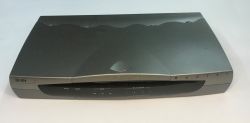
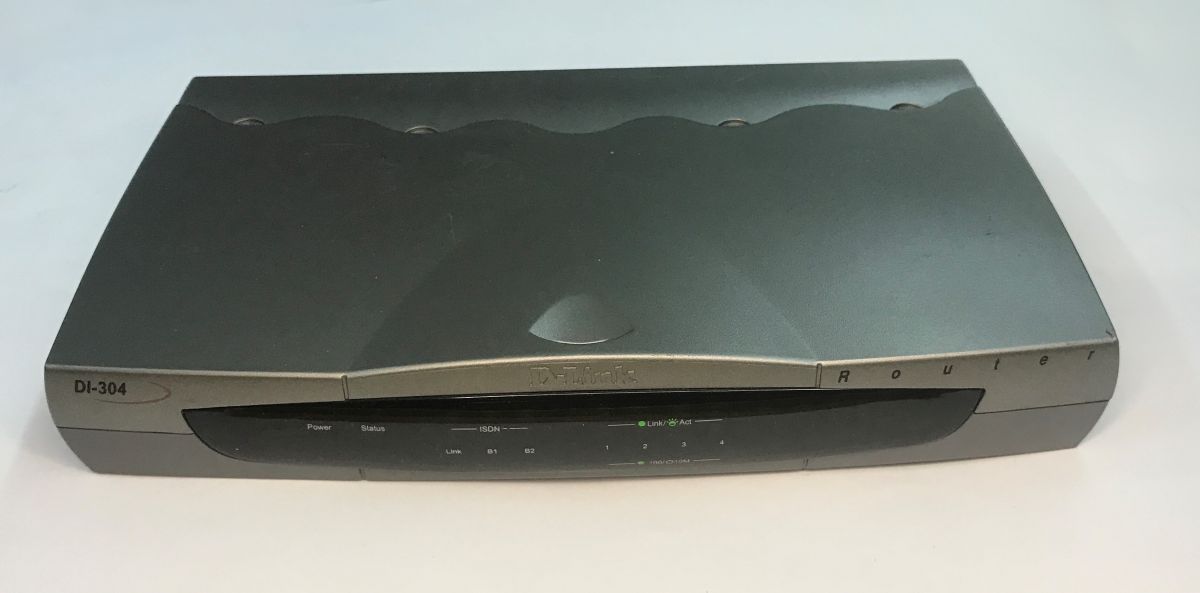
I'd like to invite you to a presentation of the inside of another old network equipment. Today we're taking a look inside the DI-304, an ISDN router designed for home networks and small offices from the early 2000s. The device combines the function of a router, ISDN terminal and four-port Ethernet switch, allowing several computers to share a single Internet connection. For ISDN, there are two channels of 64 kbps each, which can be combined for a maximum of around 128 kbps. For the local network, on the other hand, the device offers four 100 Mbps Fast Ethernet ports, which at the time provide much faster communication between computers than an Internet connection alone.
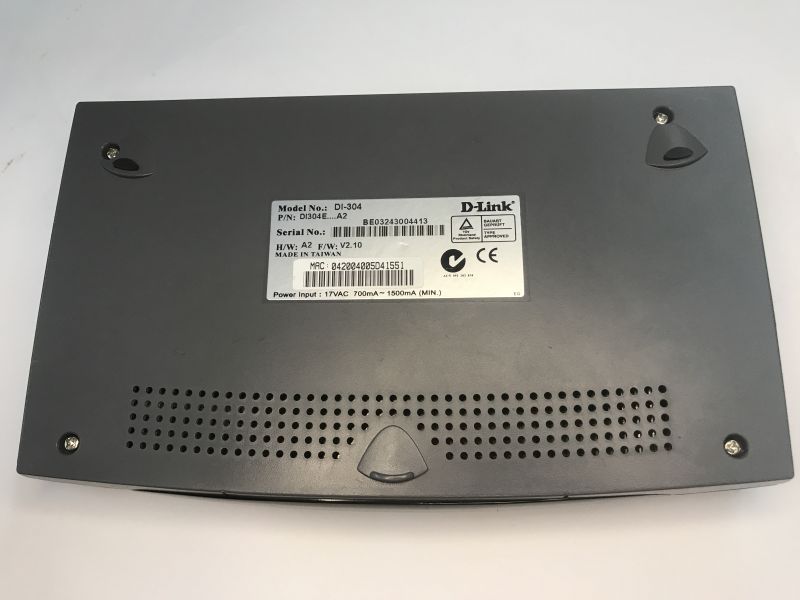
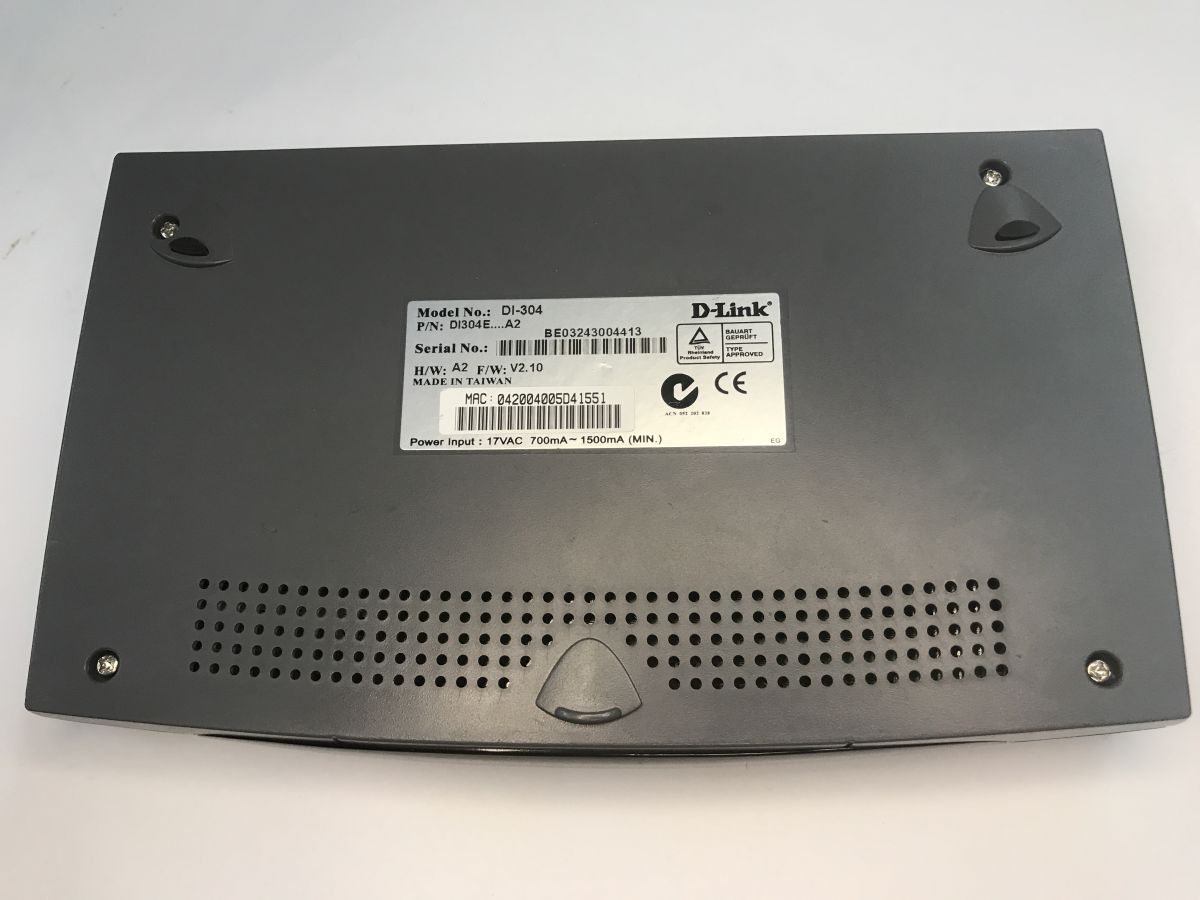
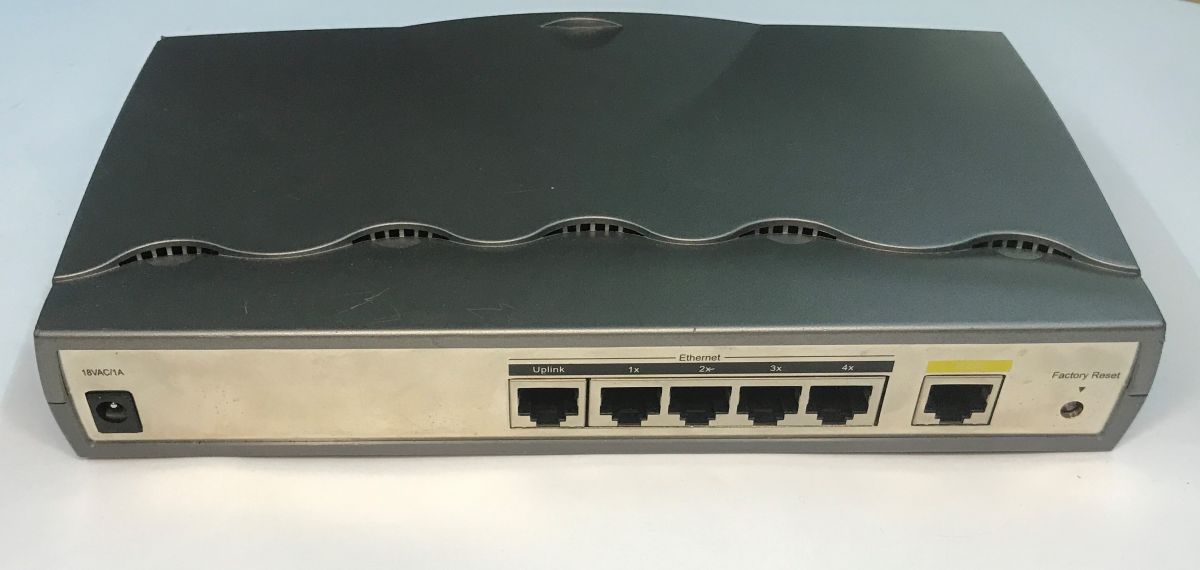
The first curiosity strikes the eye right from the rating sticker - a 17 VAC 700mA-1500mA input. An AC power supply with a classic DC Jack type connector, i.e. in my eyes a potential killer of other equipment. Not every piece of equipment with a DC jack is protected against reverse polarity, so someone not reading the labels with such an AC adapter poses a serious risk of damaging other equipment.
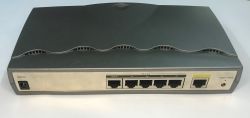
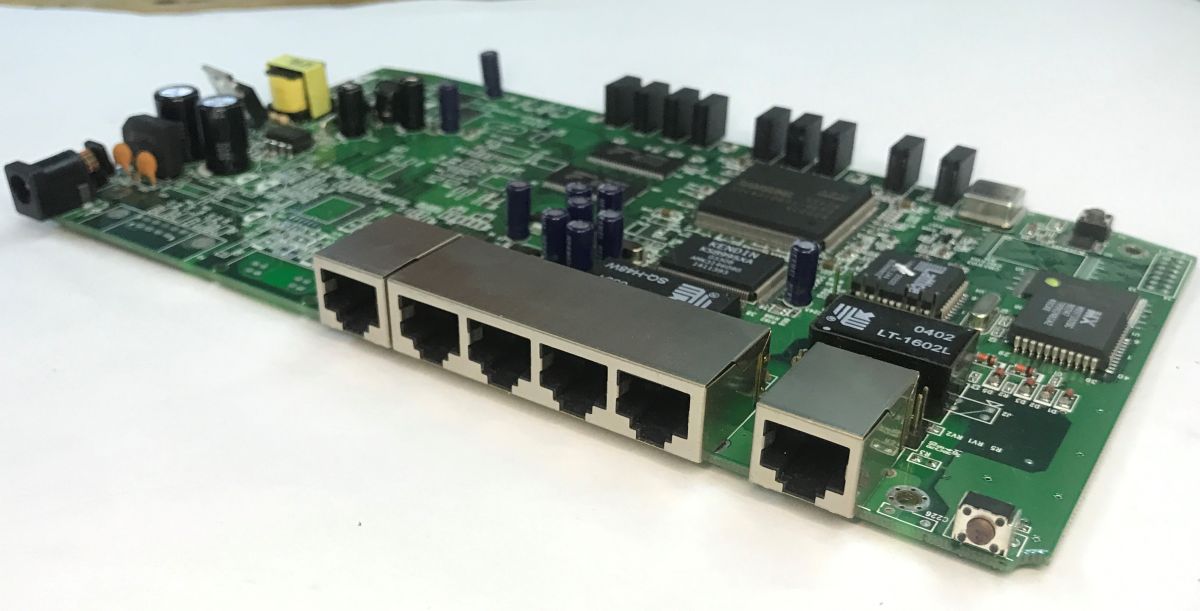
The back of the device is quite modest, but what more is needed? It's not yet the days when every router had an extra USB connector, for example. The reset button is there and that's enough for us.
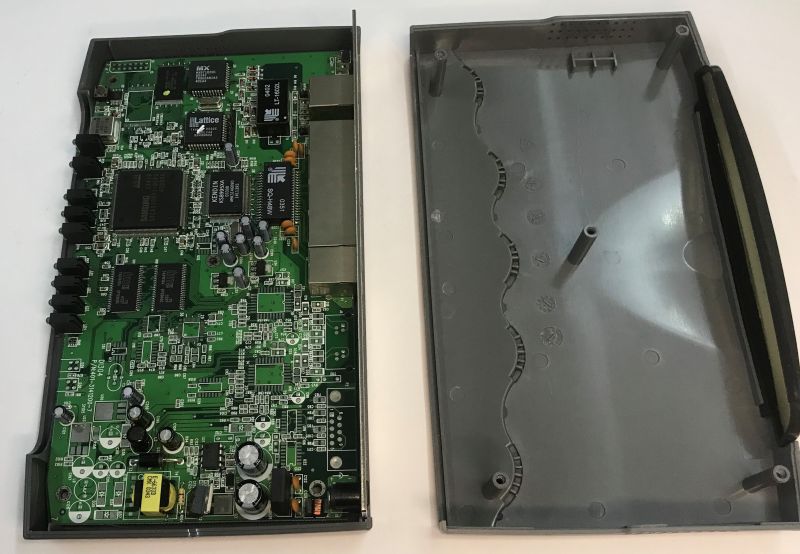
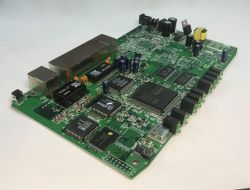
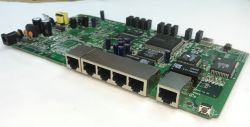
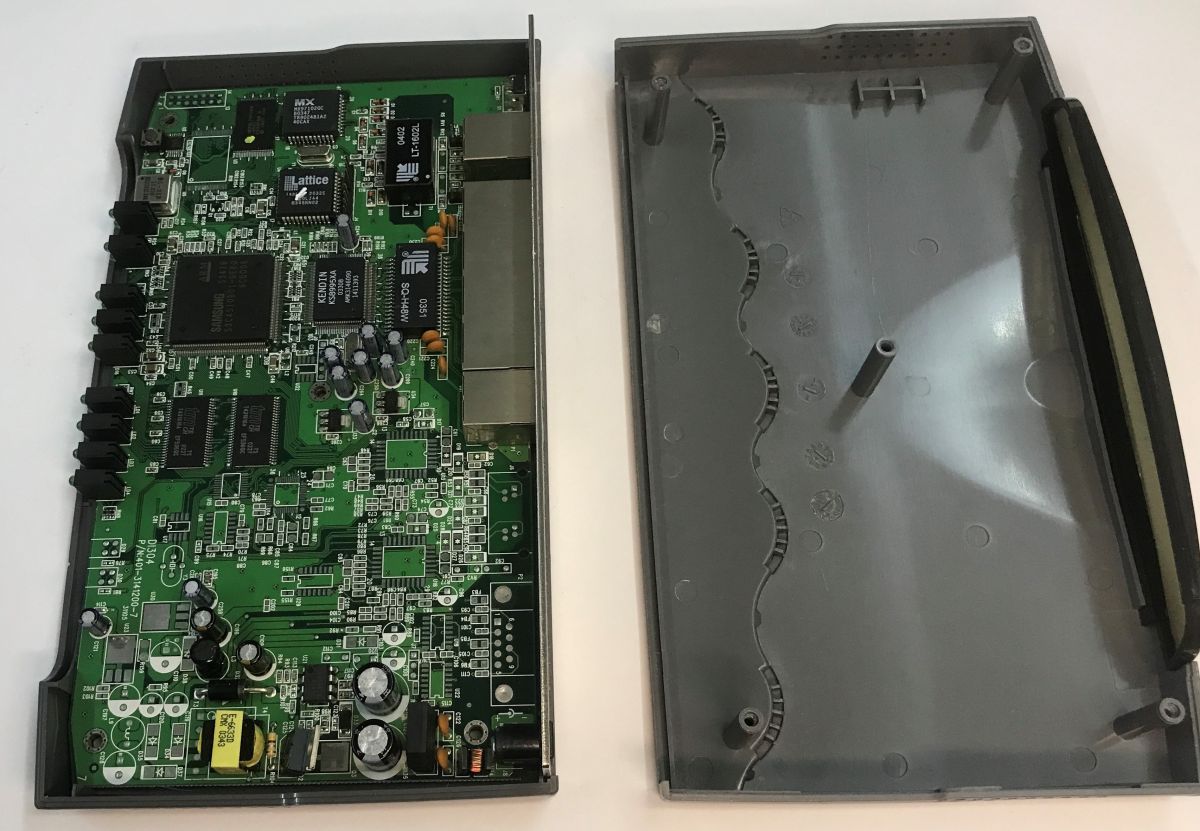
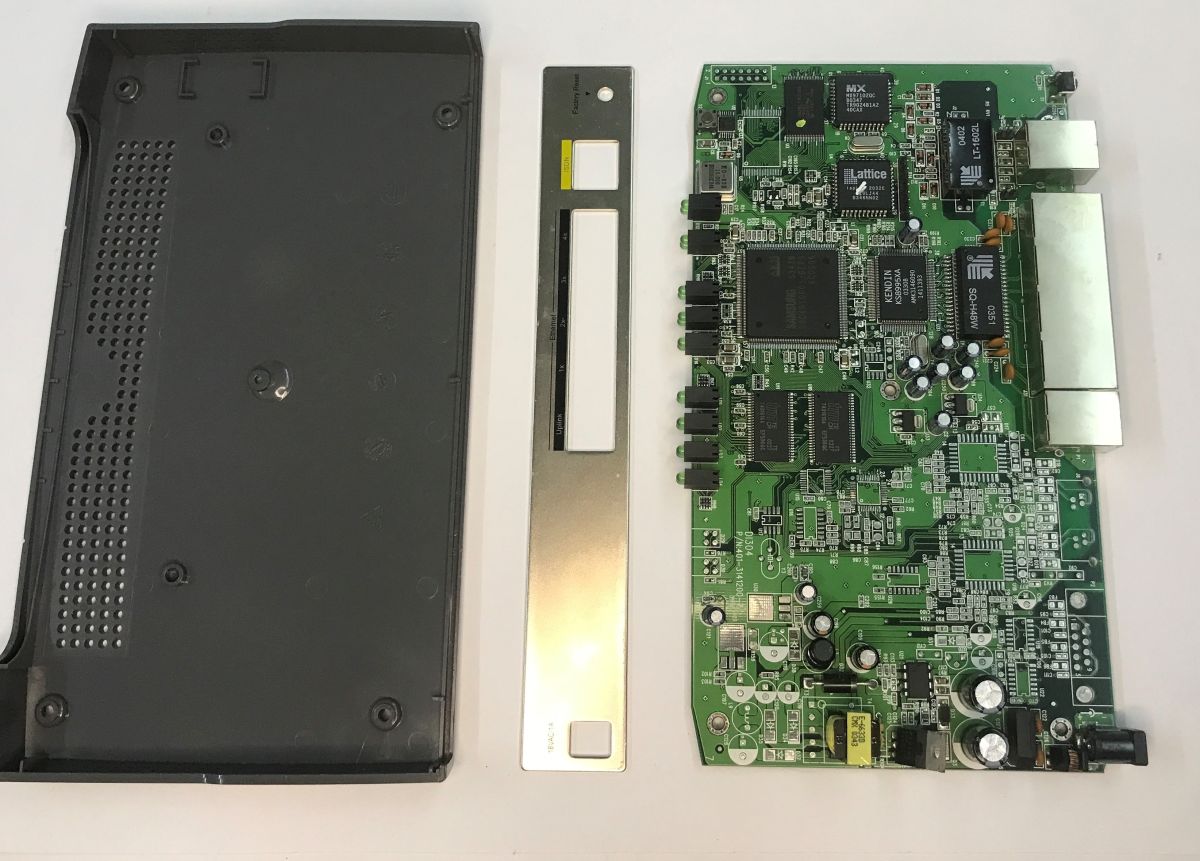
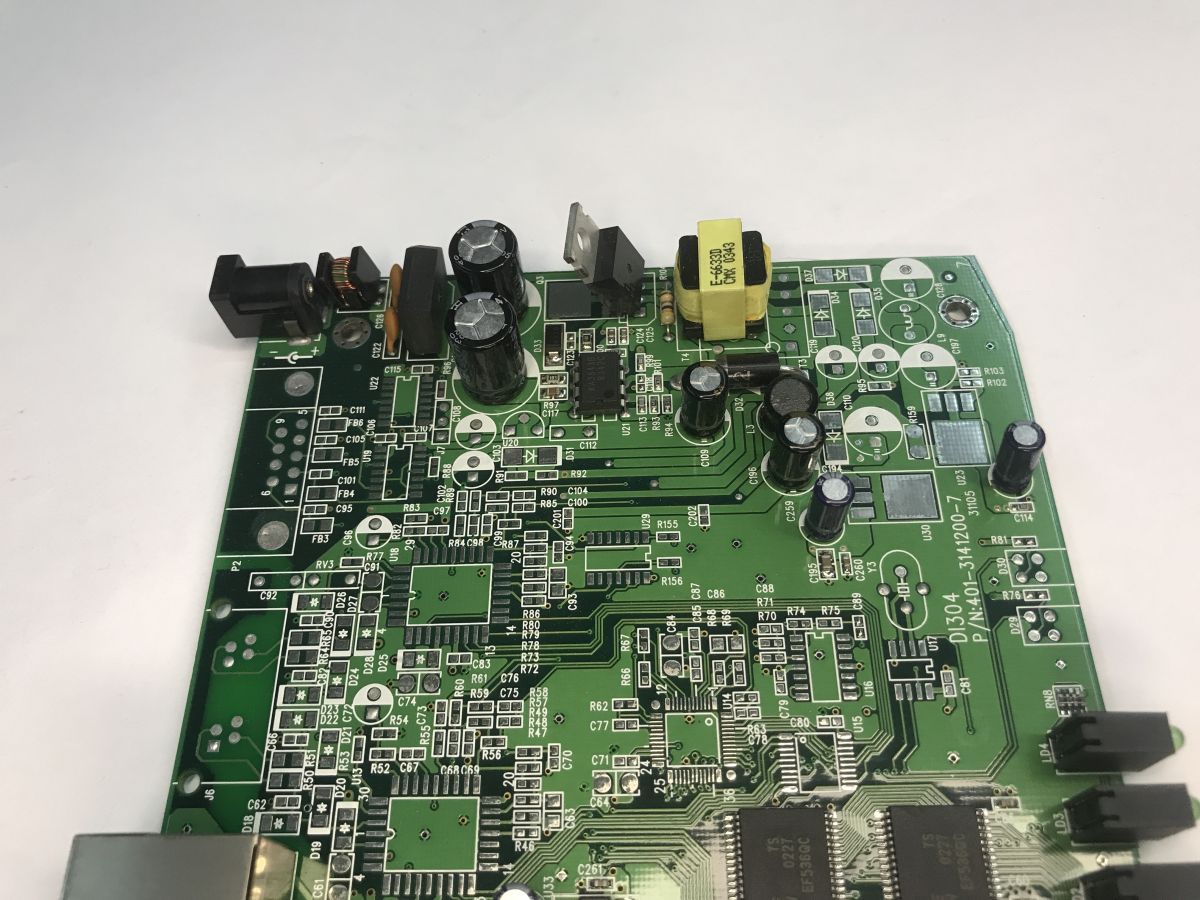
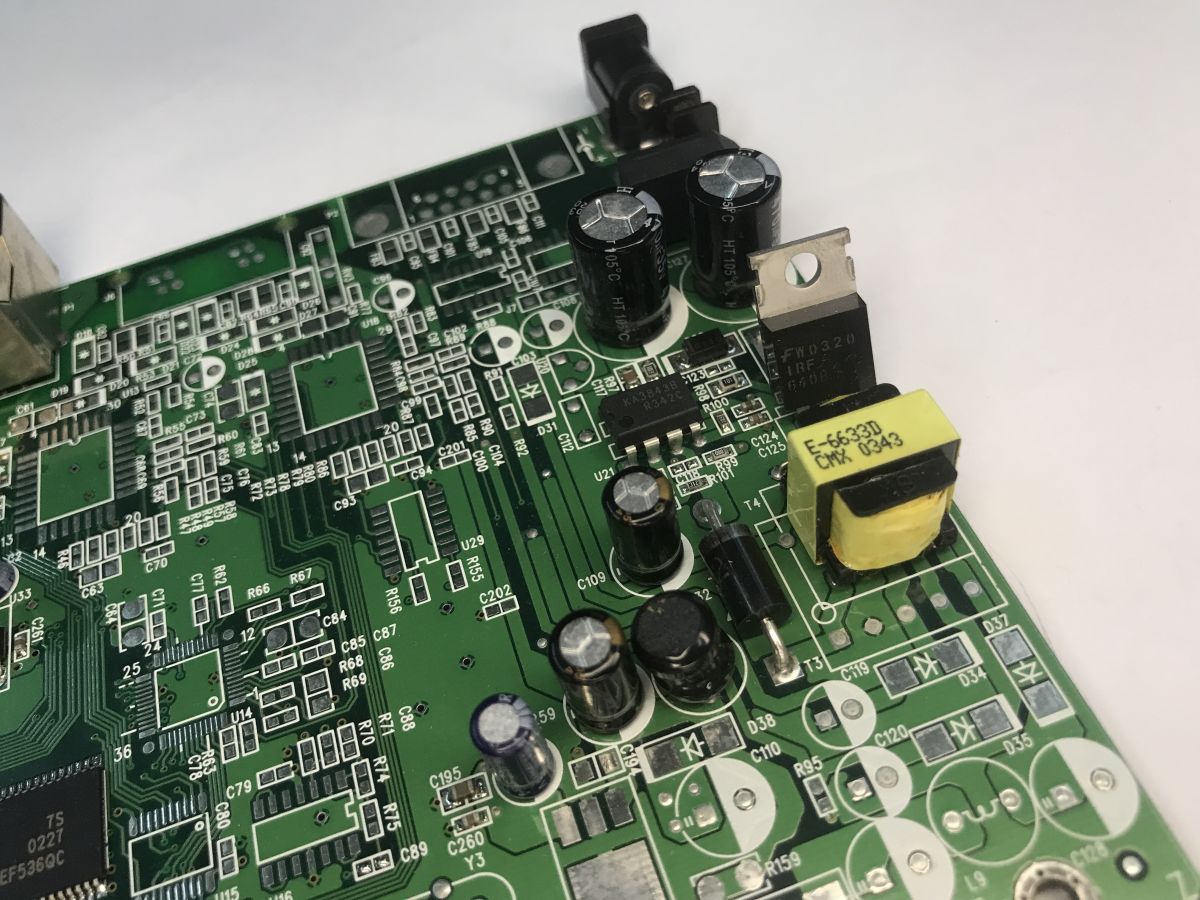
By the lesser degree of integration of components on the board, it is well apparent that this is not modern hardware. The power supply section is predominantly through-hole assembly and the rest of the router is largely surface-mounted.
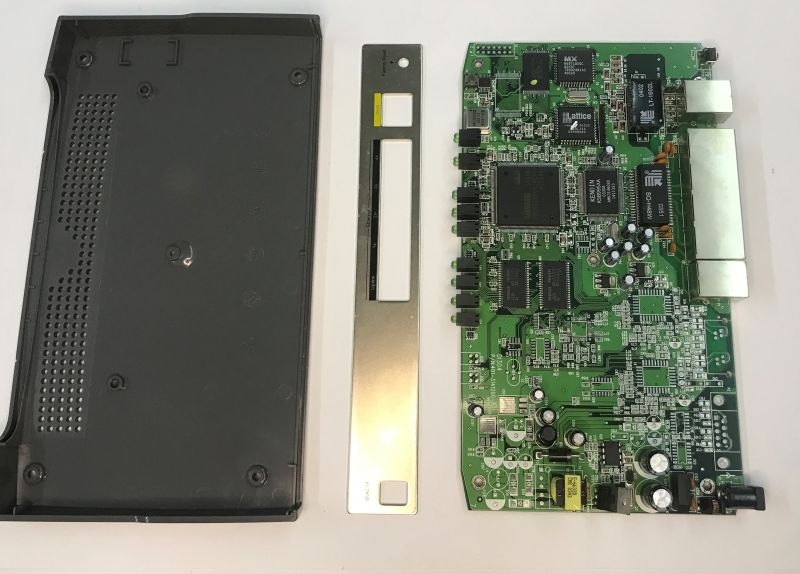
I was most surprised by the solid metal backs anyway. Still their thickness... in modern equipment they would rather not allow this, plastic is cheaper.
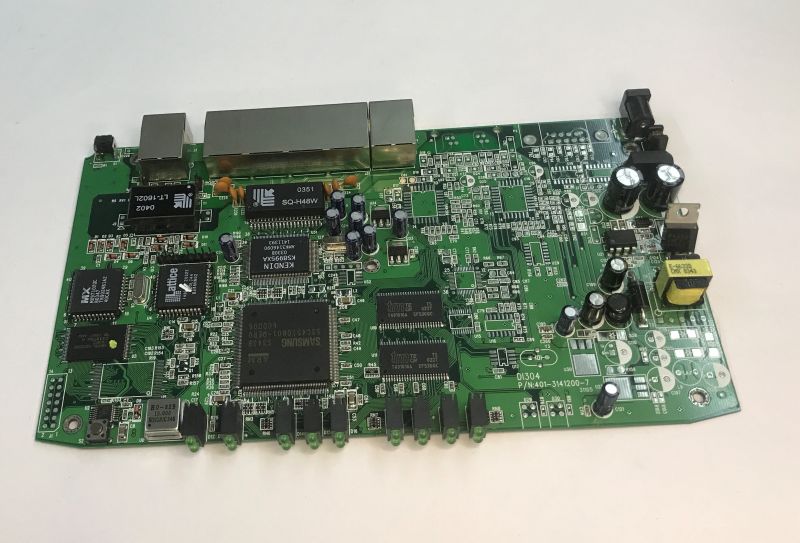
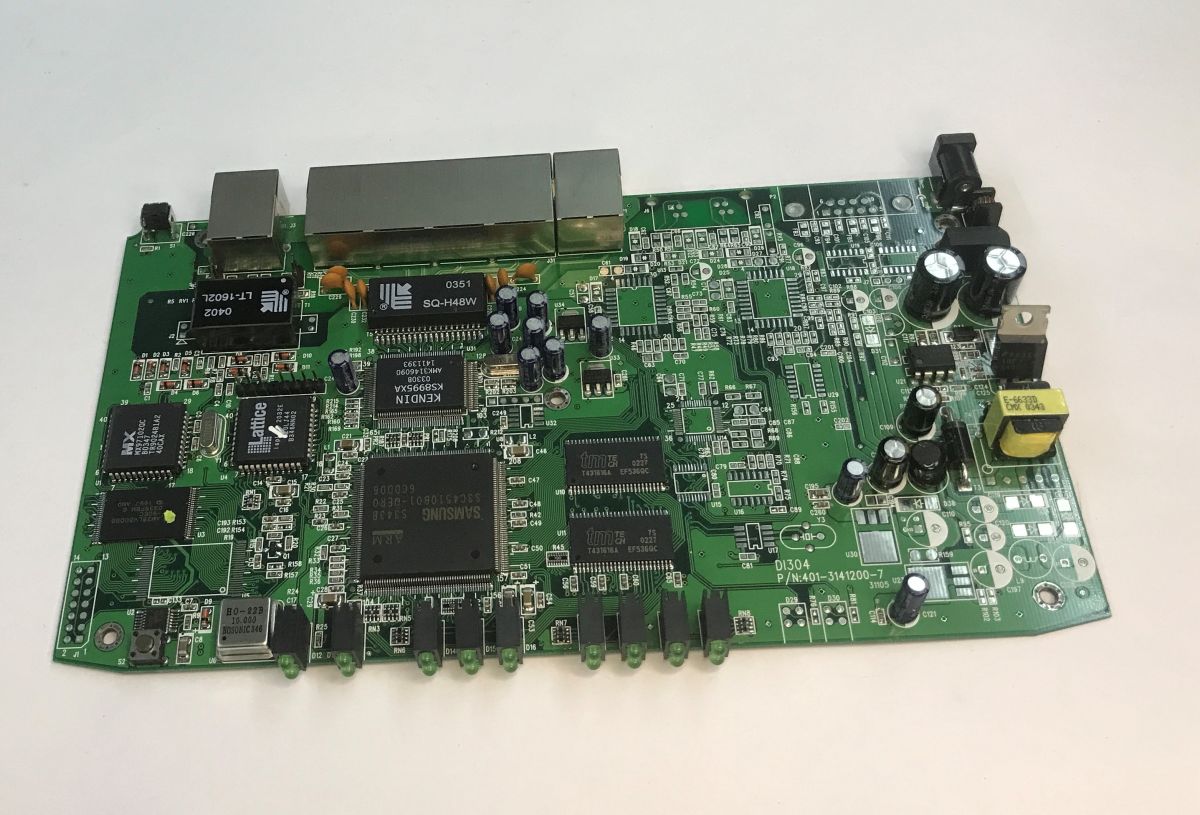
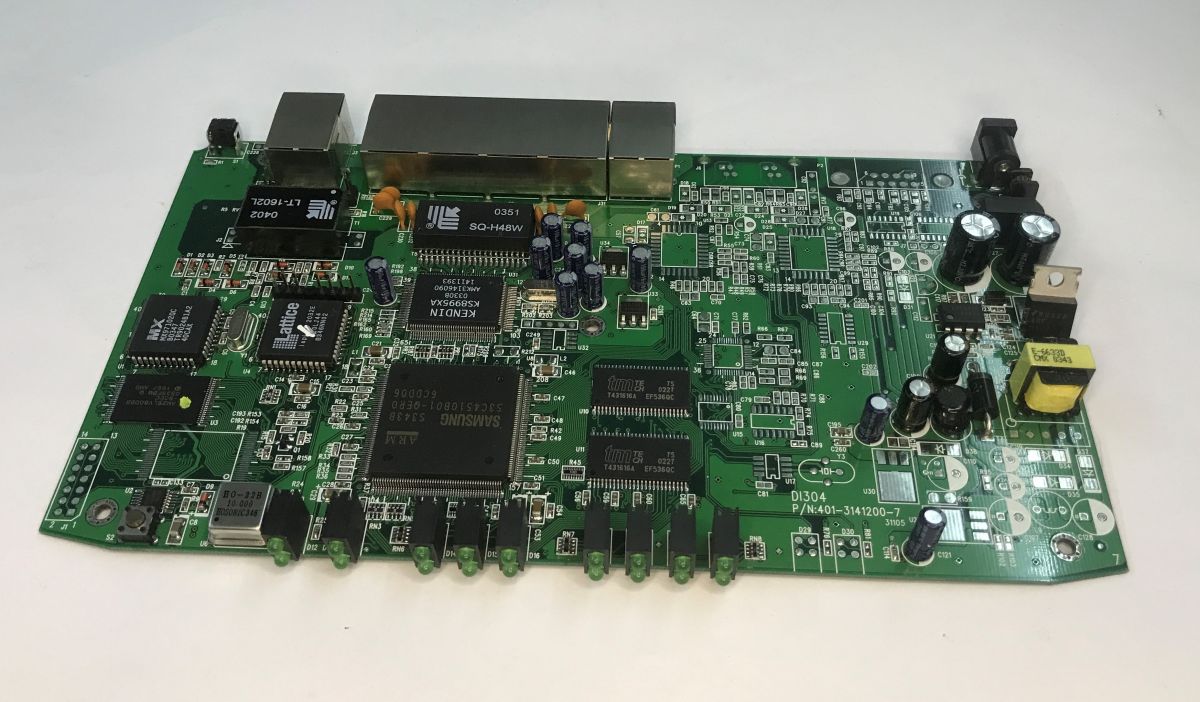
Let's take a look at the PCB. Many components are not present. For example, I can see the footprint of the RS232 connector. Right next to it probably sat a MAX232 or similar transceiver chip.
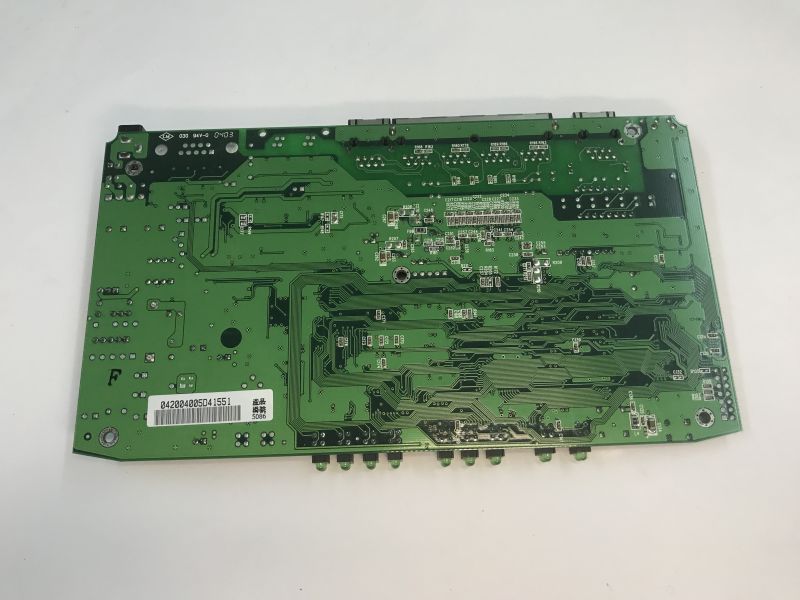
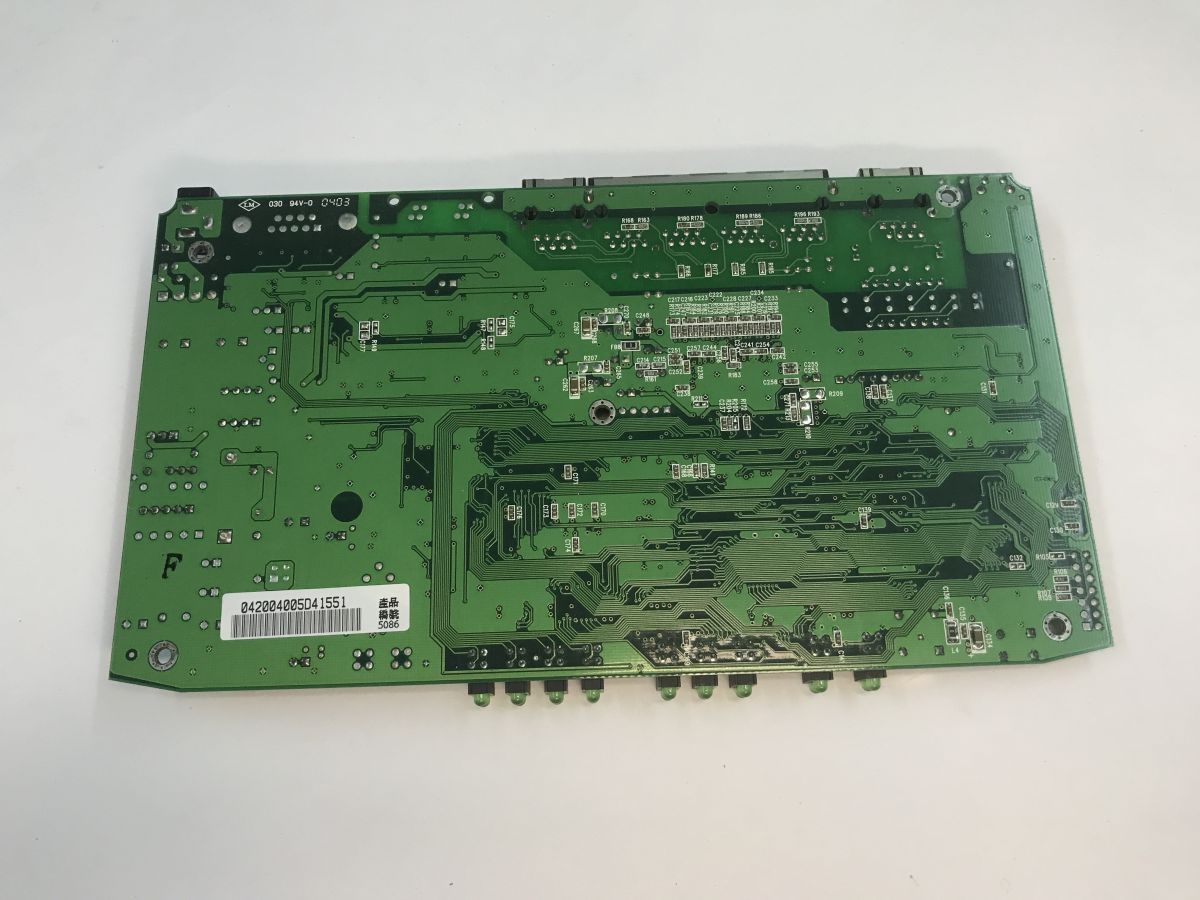
The PCB is double-layered, but on the underside we find only a few components in small enclosures such as the 0603. These are mainly resistors and capacitors.
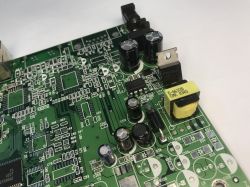
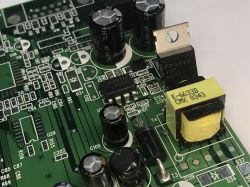
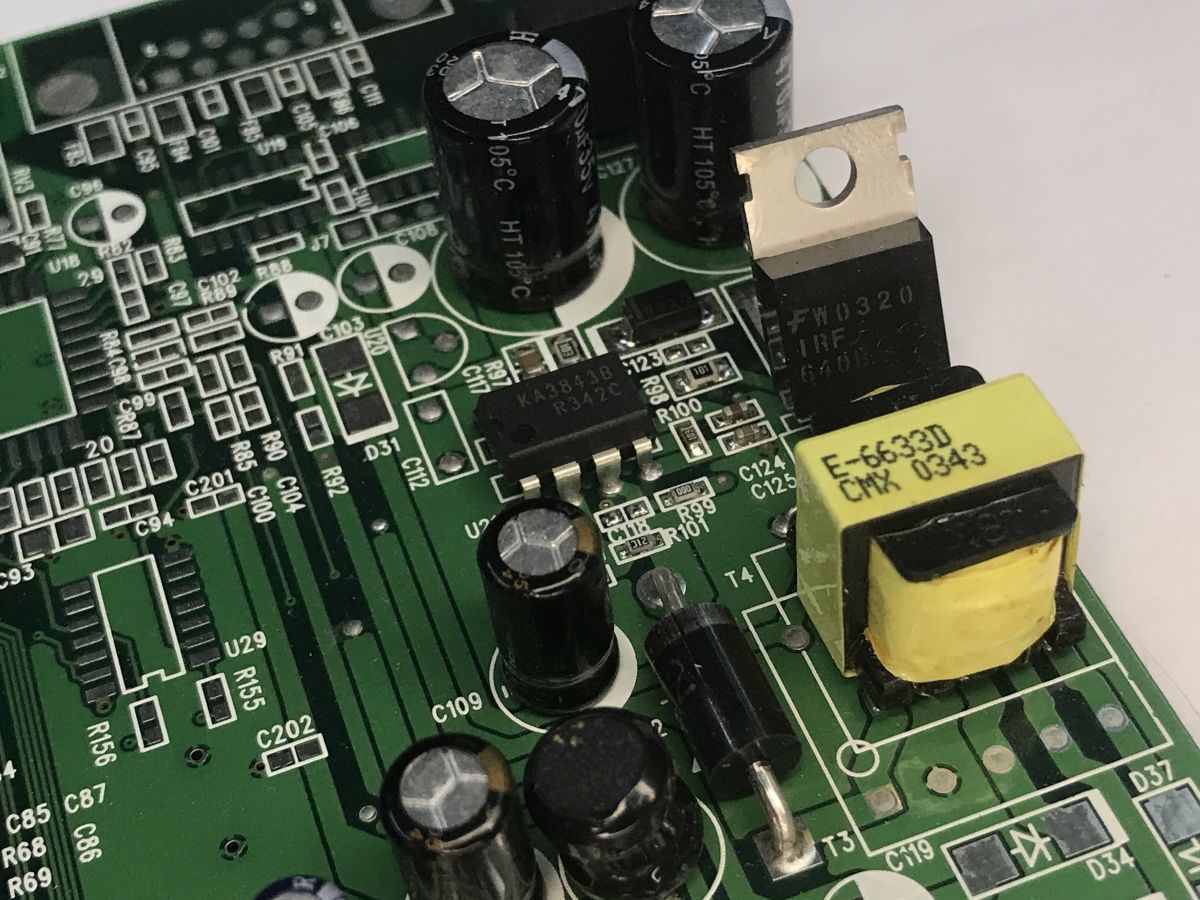
The input inverter is based on a KA3843B PWM controller and an IRF640 N-channel MOSFET.
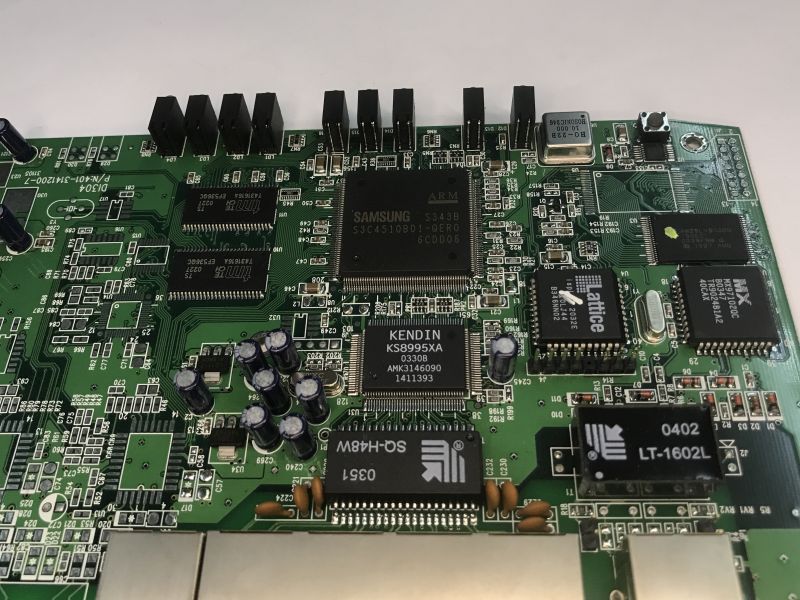
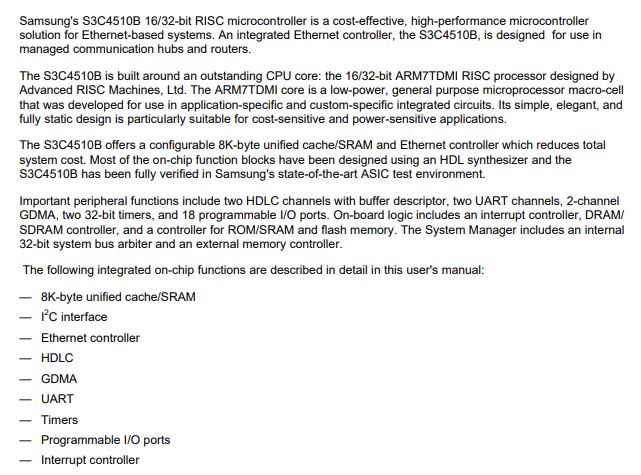
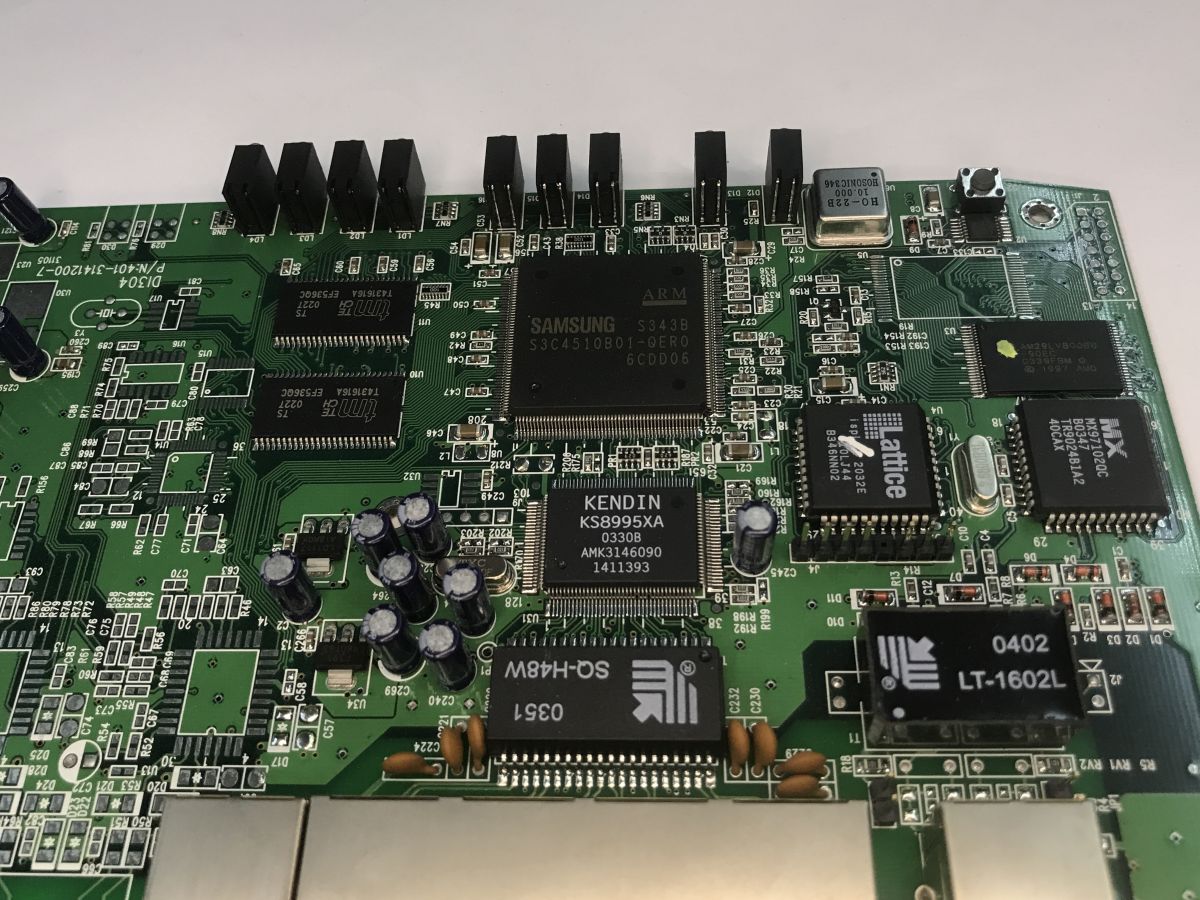
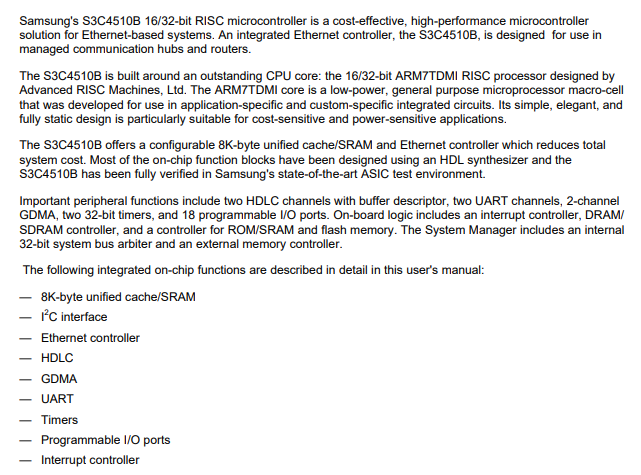
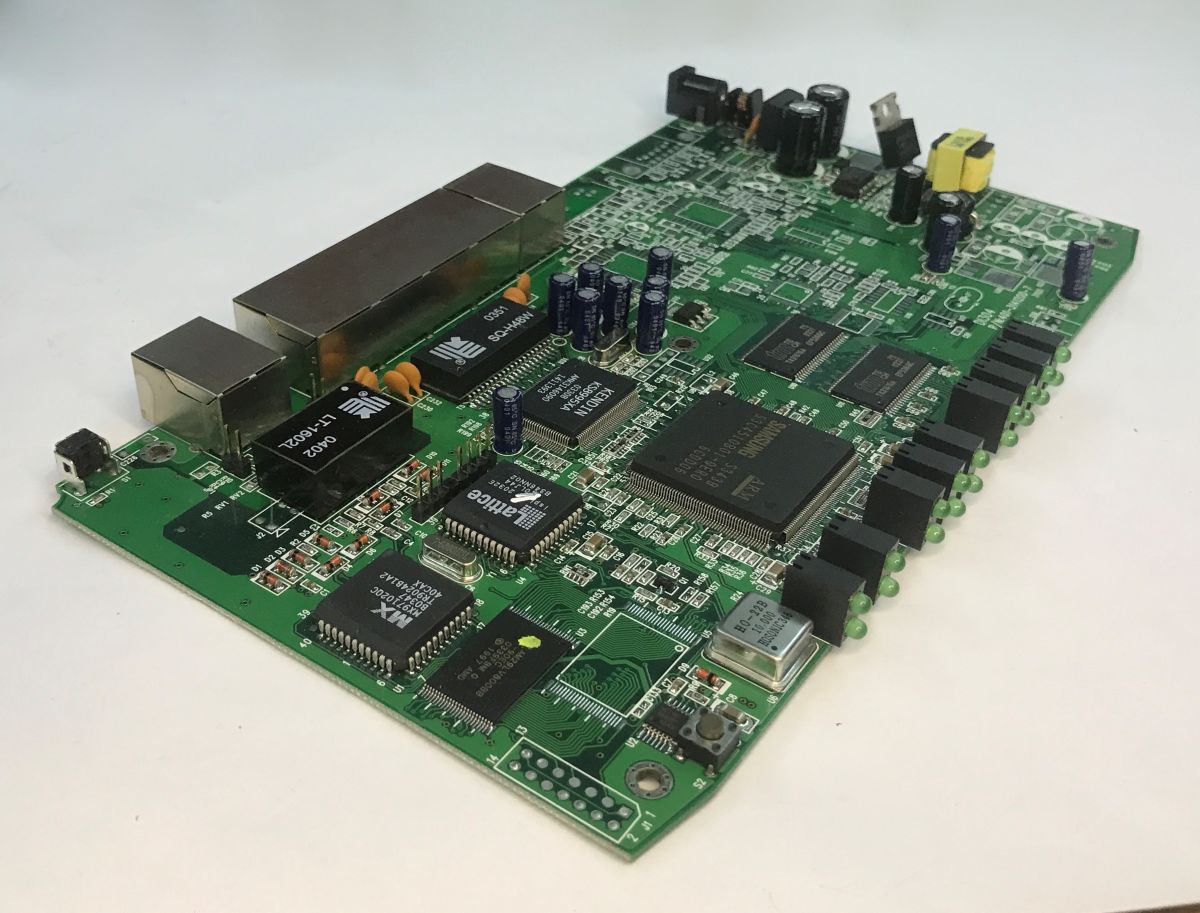
At the heart of the router appears to be a Samsung ARM chip - the S343B S3C4510B01-QERO. It is a 16/32-bit RISC designed for networking systems based on the ARM7TDMI core with rich peripherals.
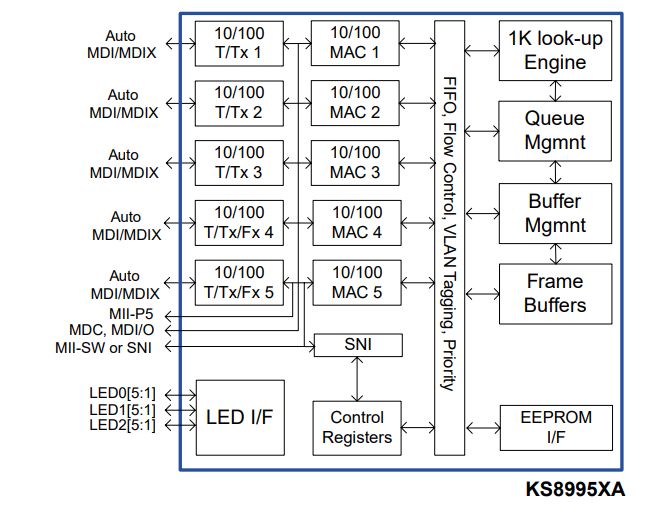
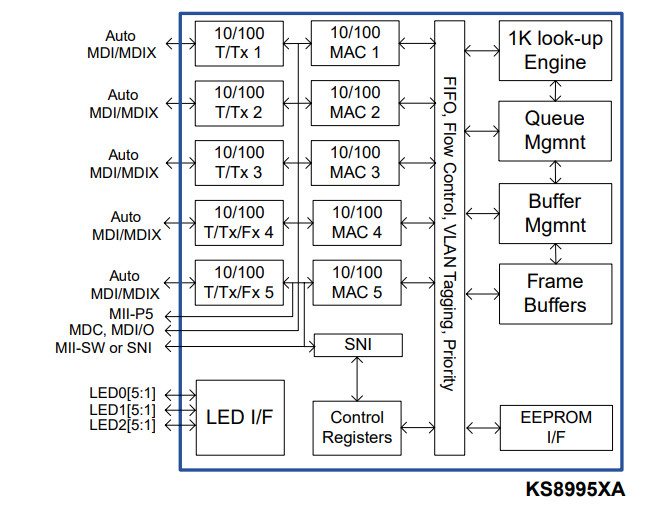
Right next door is the Kendin KS8995XA, which is a highly integrated 5-port Layer 2 switch with dual MII interface. Speed up to 100BaseTX/100BaseFX.
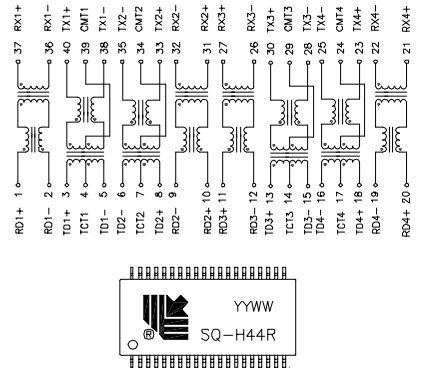
The Ethernet ports are connected to it via separate signal transformers, here in the form of a single SQ-H48W element, this primarily provides galvanic separation between the router's electronics and the Ethernet cables, as well as improving immunity to noise and surges occurring on the twisted-pair cable.
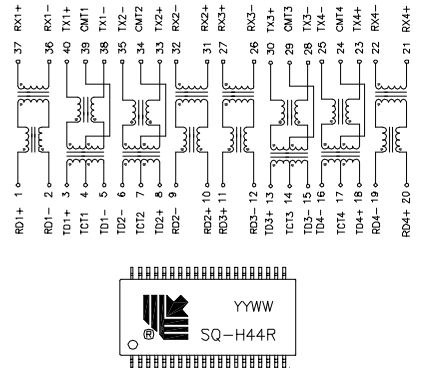
Now, more often I see magjack connectors (with an integrated transformer), but here we have everything separately.
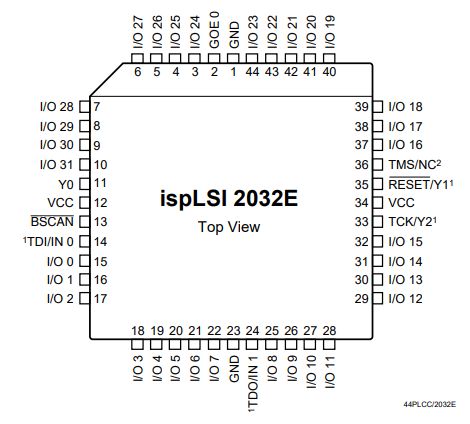
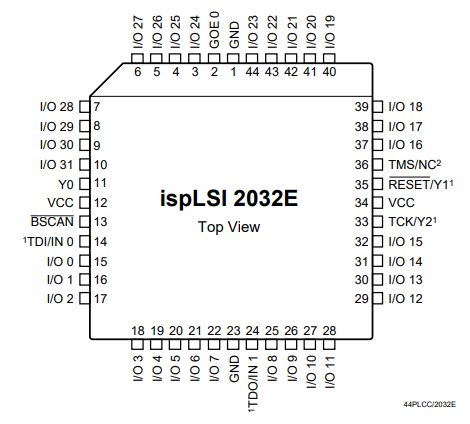
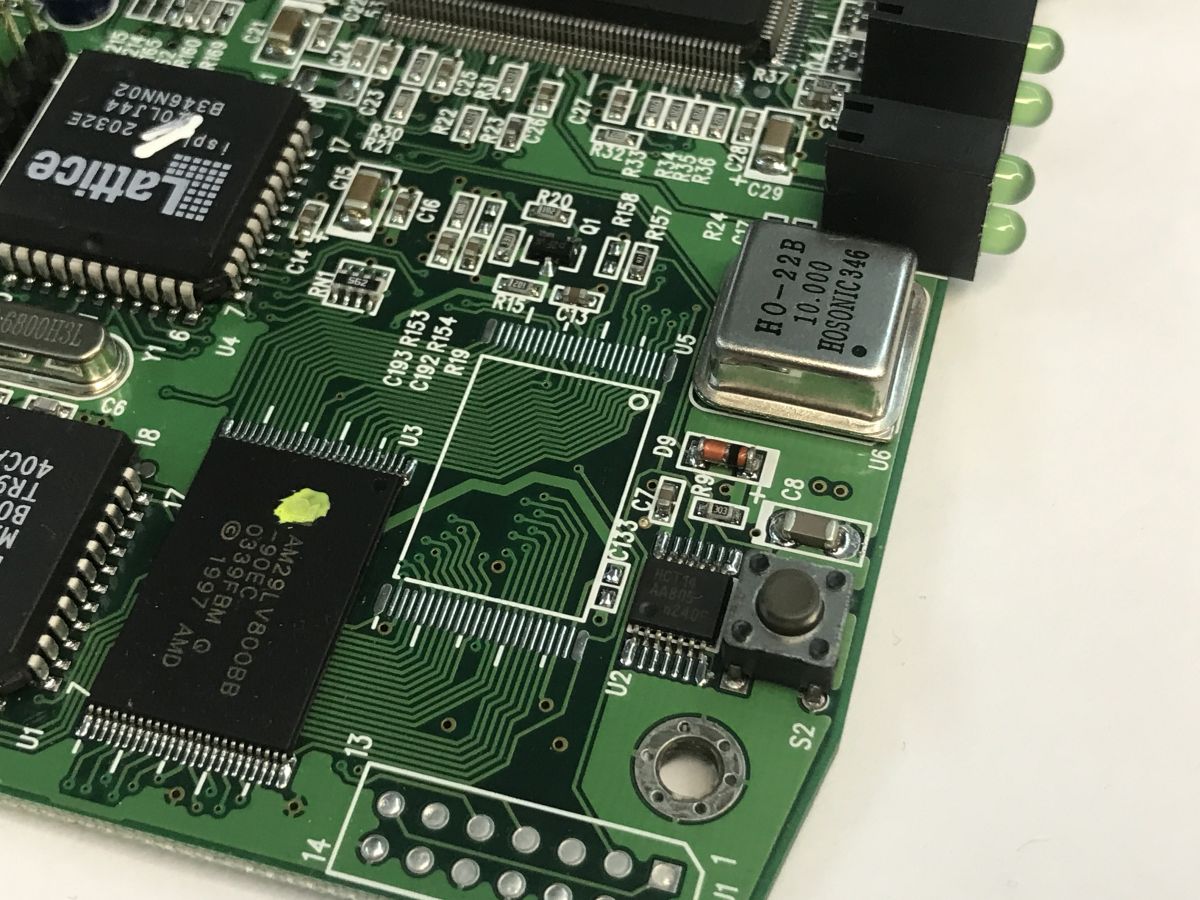
Right next to it we have the Lattice ispLSI 2032E - a bit of a surprise to me, but it's a Complex Programmable Logic Device (CPLD), so 32 GPIOs, 32 registers and 1000 programmable PLD gates.
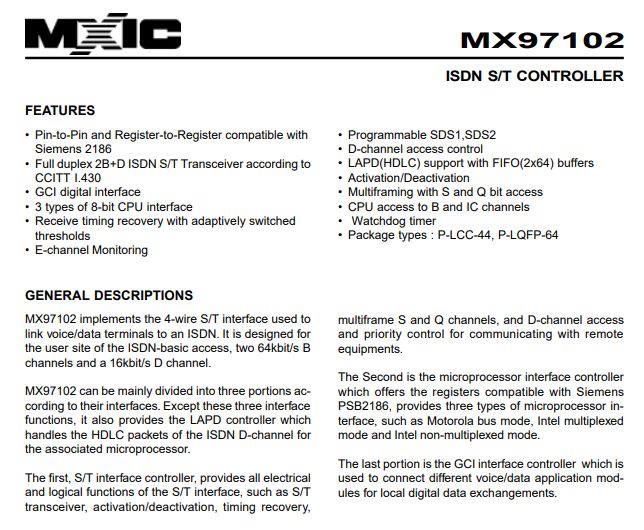
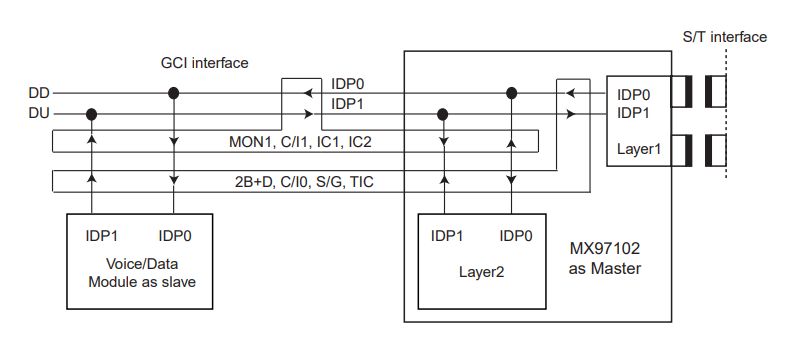
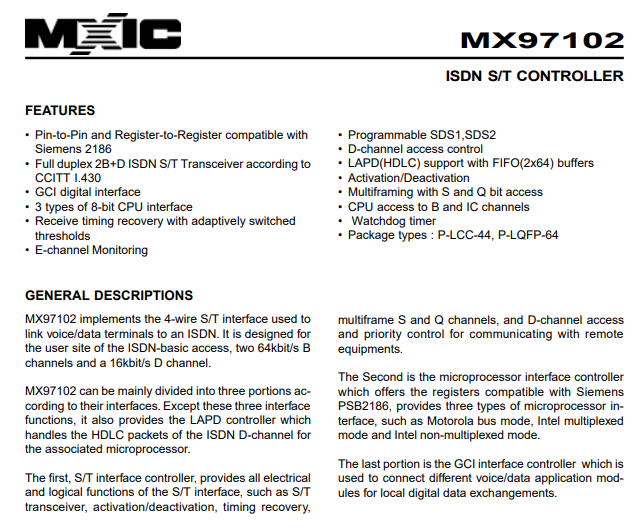
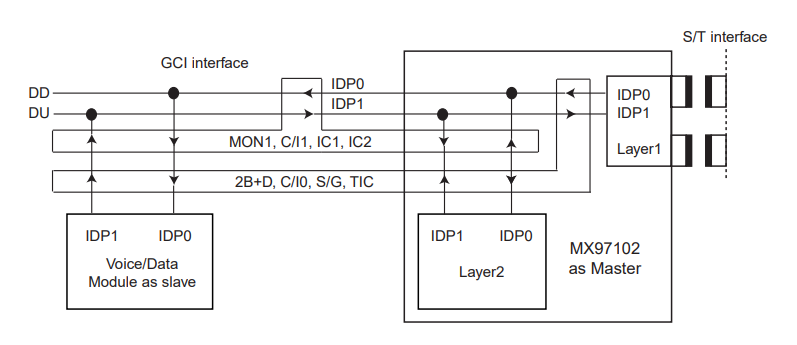
At the CPLD a separate component is the MX97102QC, which is a specialised S/T line controller from ISDN.
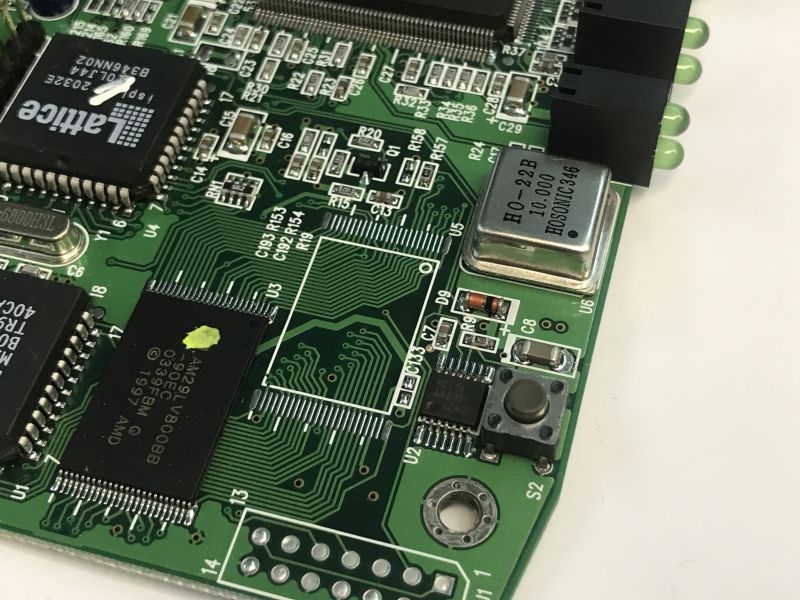
That leaves the AM29LV2800BB, which is an 8 megabit flash memory (1 M x 8-Bit/512 K x 16-Bit). It's a shame that this is the format, with a parallel interface, because if there had been a serial SPI there, I could have played it through the CH341.
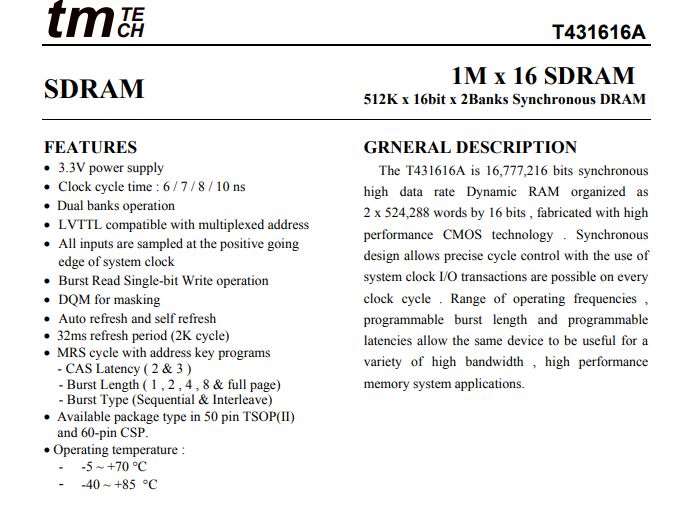
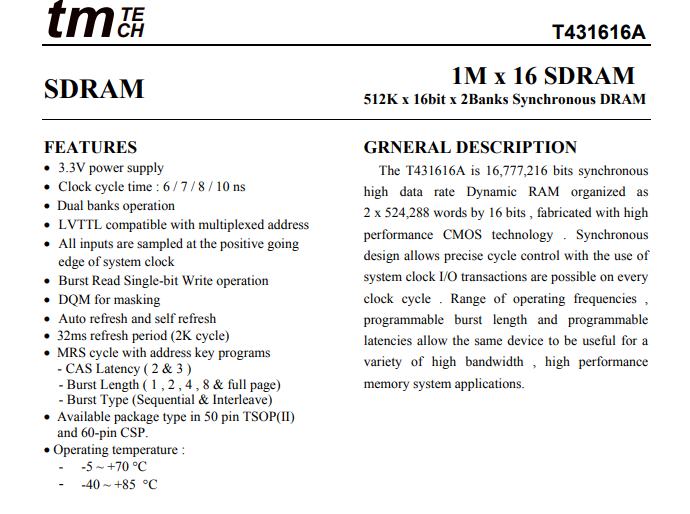
Next to the main processor, there's the RAM - two copies, T431616A, 16,777,216 bits, a gross 2 megabytes....
A button tucked away on the side and an HCT14 chip still caught my eye, but I did not specify their use:
That will be about it. Now for an additional gallery:
Manual:
https://ftp.dlink.de/di/di-304/documentation/DI-304_man_reva_Manual_en.pdf
In summary, the router appeared to be based on a 16/32-bit ARM Samsung S3C4510 chip, which acts as the main processor managing network traffic and interfaces. Switching support is provided by a dedicated Kendin KS8995XA switch, which relieves the CPU of Ethernet support. The whole is complemented by an ISDN controller and, surprisingly for me, a Lattice CPLD programmable logic chip. You can clearly see the separate building block approach here, where functions are performed by multiple specialised chips instead of a single SoC. The design is thus heavier and more complex, but also characteristic of the era in which it was created.







Comments
After ISDN BRI (BRA) I associate dial-up connections where charges were billed for the duration of the dial-up connection. If the modem of this router set up a connection every time it detected traffic... [Read more]