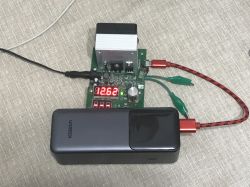
A whole 300 zł for a power bank with a tiny capacity of 20 Ah? What’s behind such a price? On the forum, I’ve already shown examples with the same capacity that I bought for as little as
for 80 zł , so this is quite a mystery – what are we paying almost four times as much for? Let’s find out!
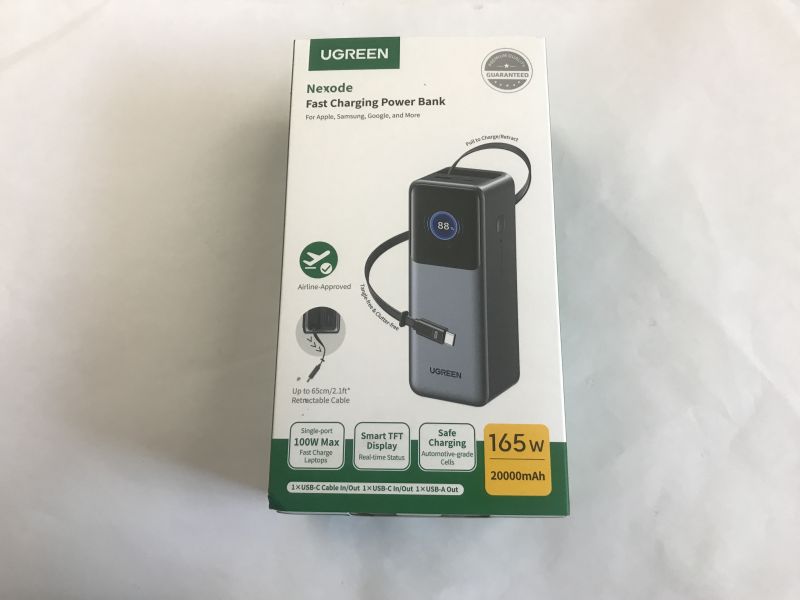
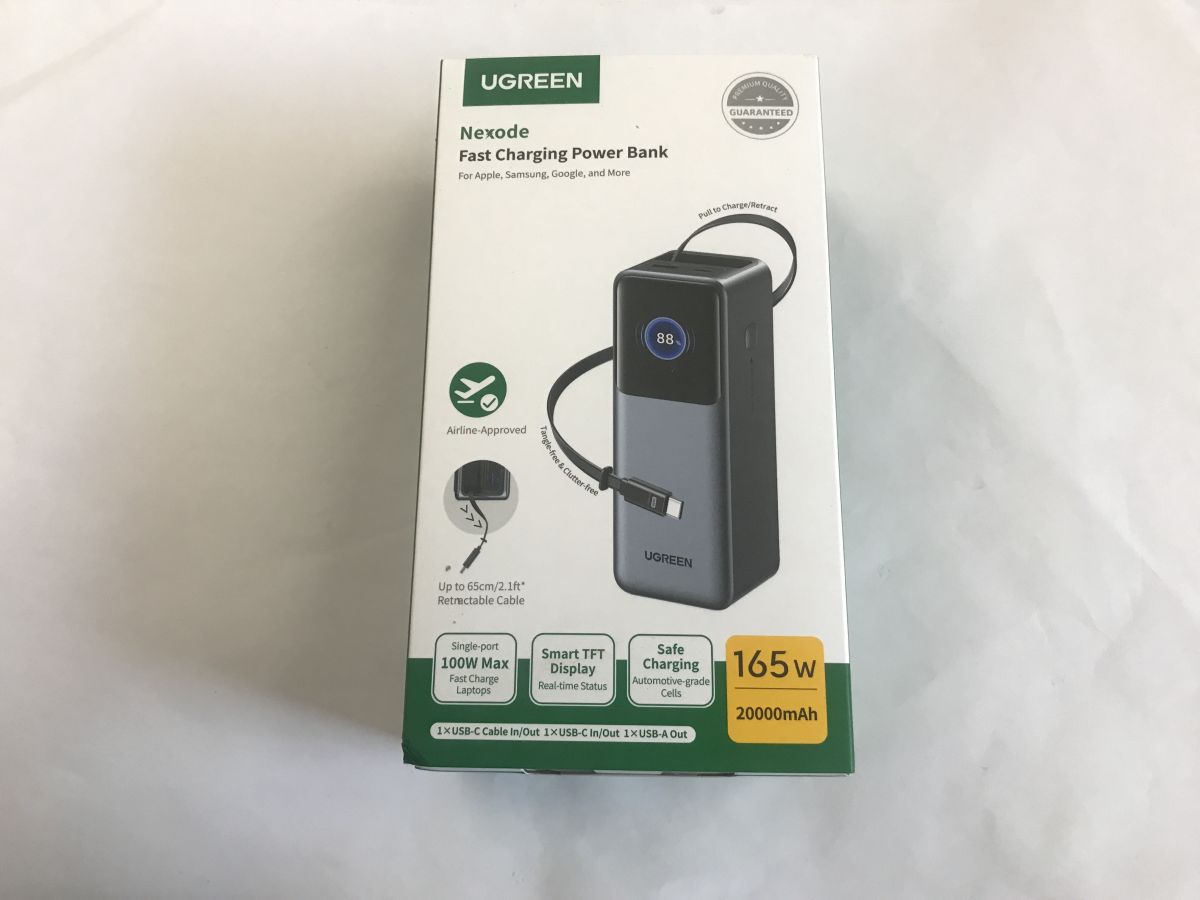
Let’s start with the packaging. The first thing that catches the eye, however, is the large number of additional features not found in cheaper models. We’ve got a claimed power output of up to 100 W, support for fast-charging protocols and a clear TFT display replacing the simple ‘four dots’ found on cheaper models. I’m a bit puzzled by this 165 W figure – where does it come from, when the text right next to it mentions a value that’s a third lower?
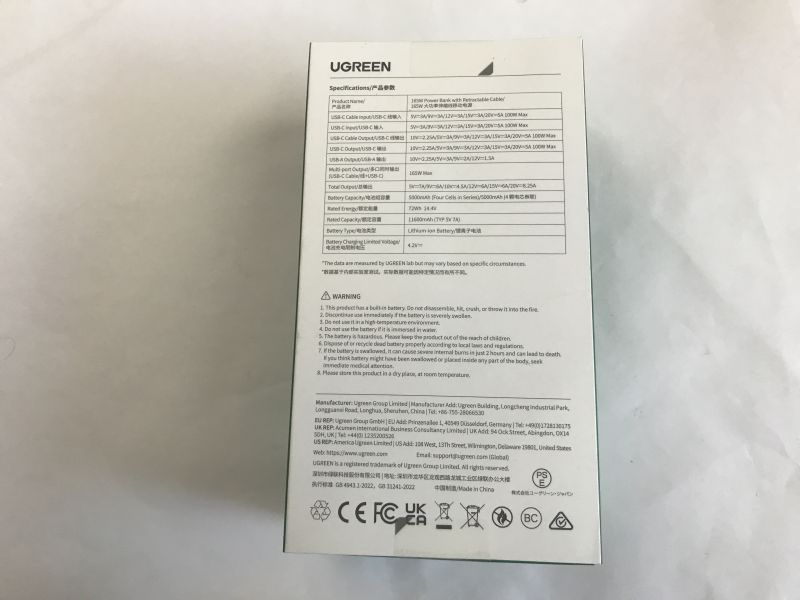
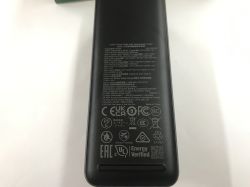
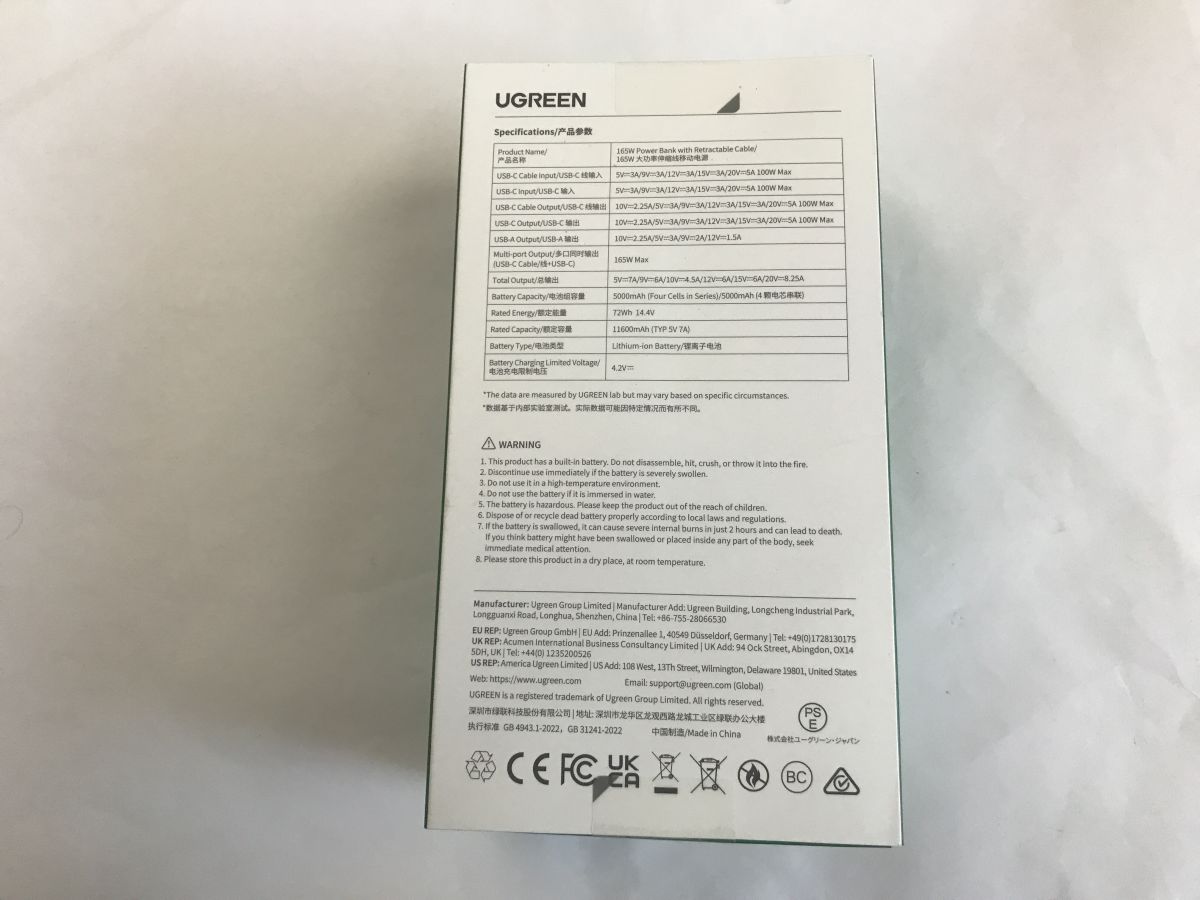
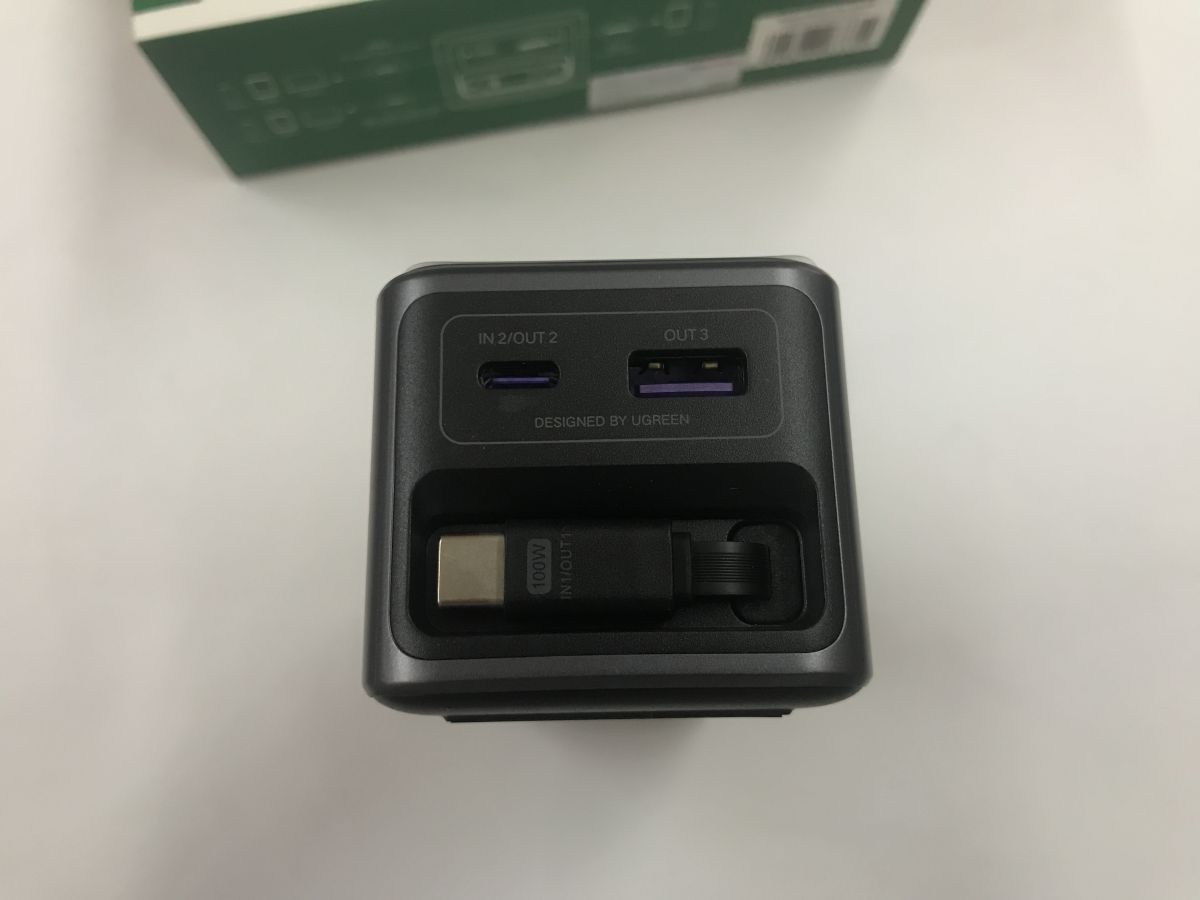
Everything on the back is also described in exemplary detail. This 165 W is supposedly the combined output from multiple ports; I’m afraid I won’t even be able to test that fully. In addition, the power bank supports voltages of up to 20 V on USB-C and up to 12 V on USB-A.
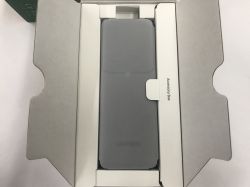
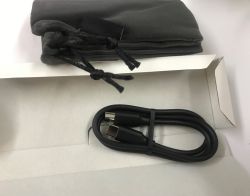
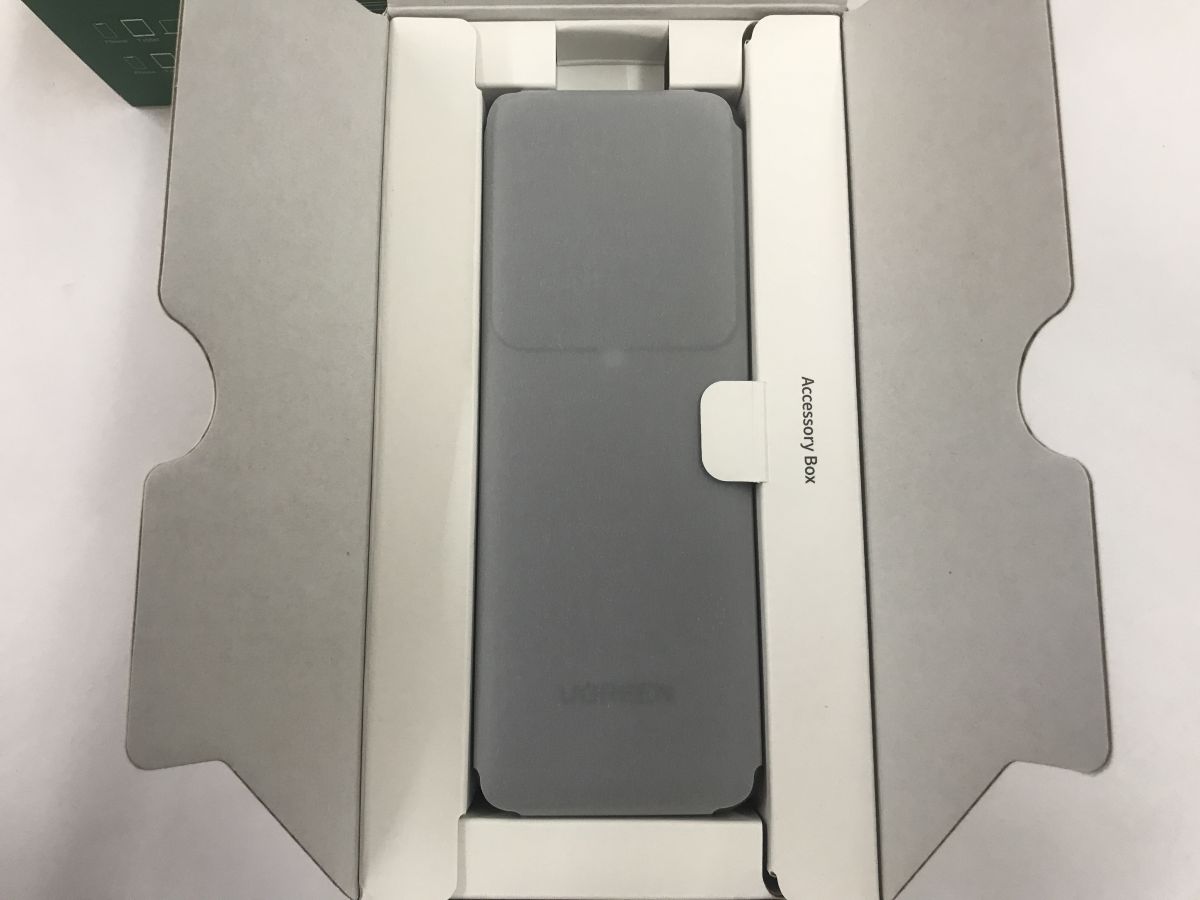
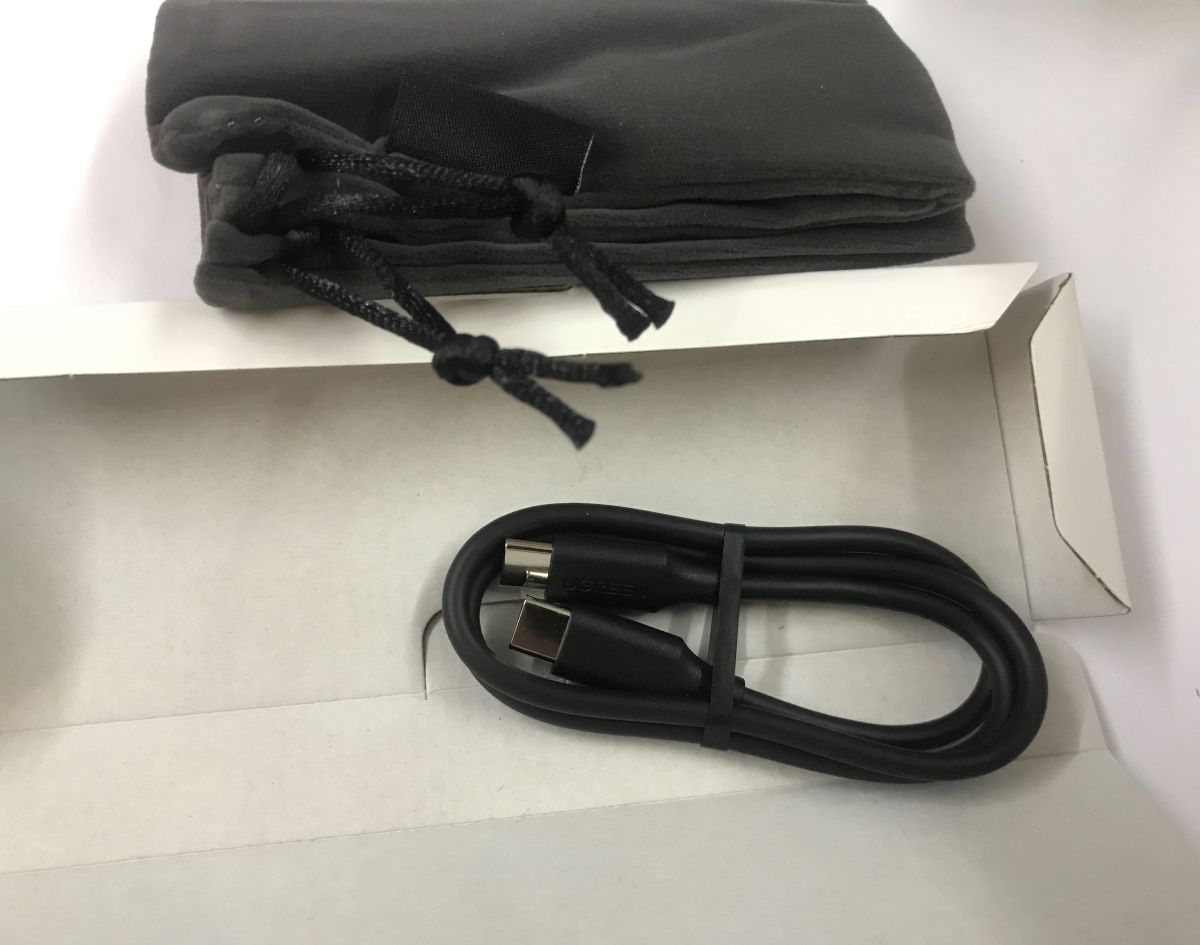
Everything is nicely packaged; it feels as though I’m unboxing a new mobile phone. The set also includes a modern USB-C cable.
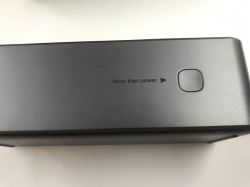
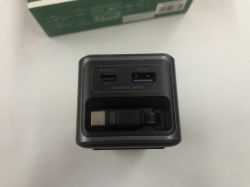
The power bank also has its own retractable cable with a spring-loaded mechanism; it also features a magnet to keep the cable end in the retracted position, so it doesn’t get caught on other items in your bag.
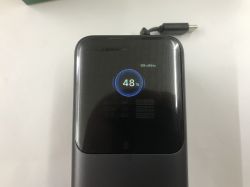
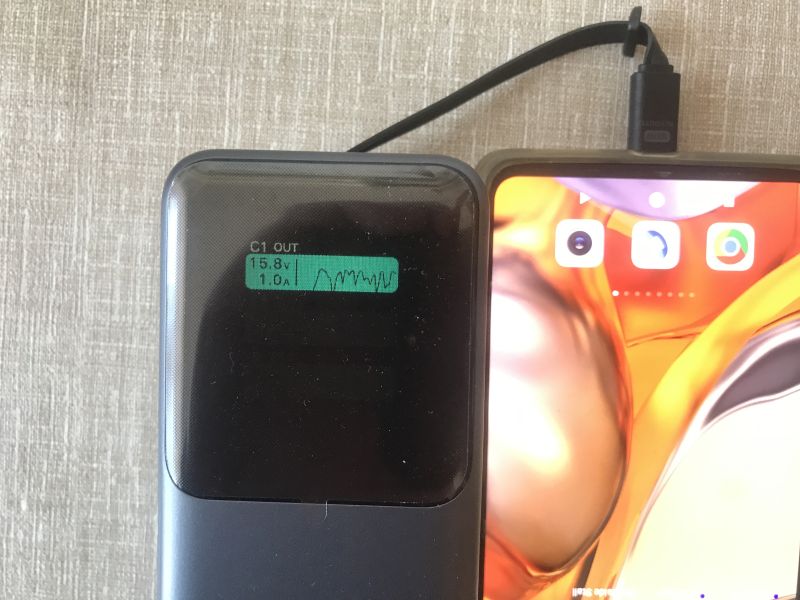
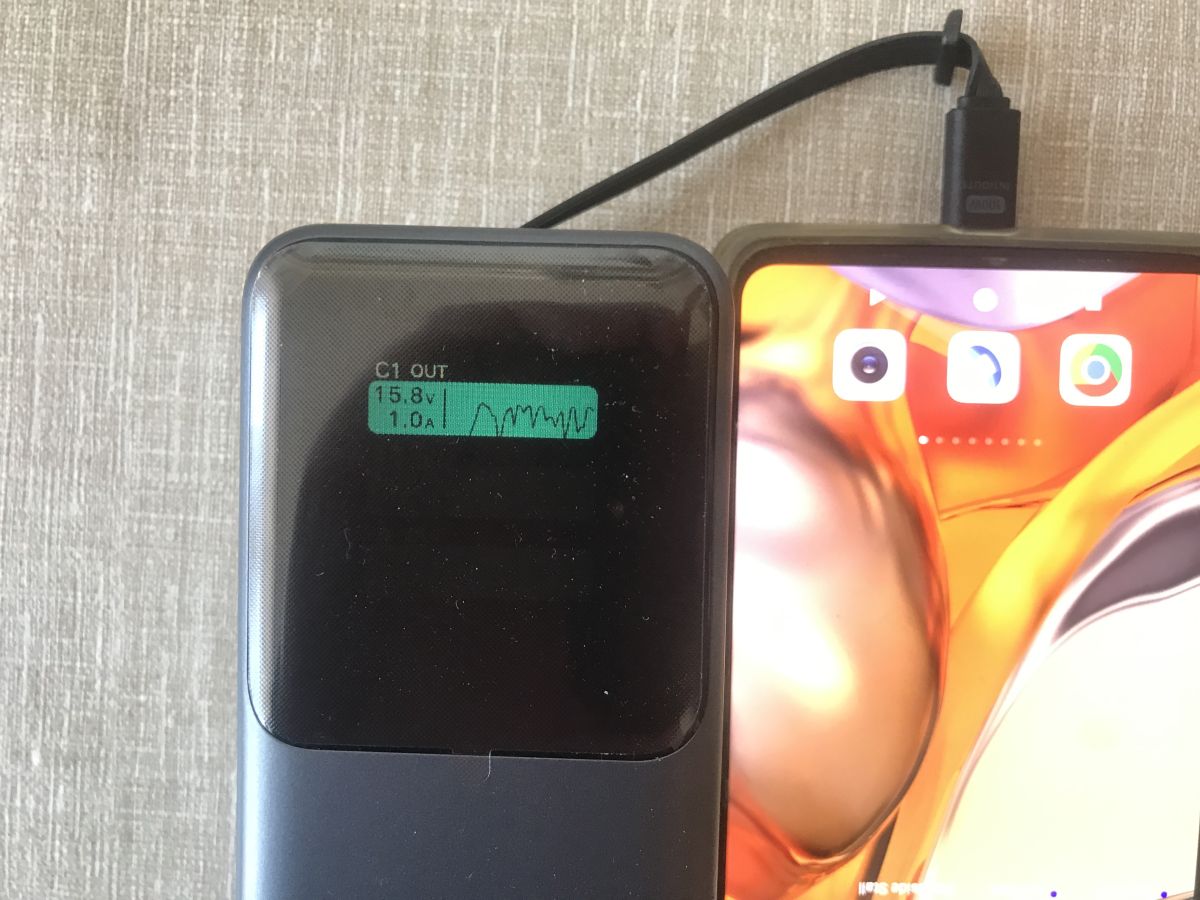
Time to move on to the tests. First, something simple: charging my Xiaomi phone. The unit supplies 16 V and the phone draws around 1 A, displaying ‘fast charging’. It’s not quite the same as with the original power supply, which could deliver several dozen watts, but it’s still not bad.
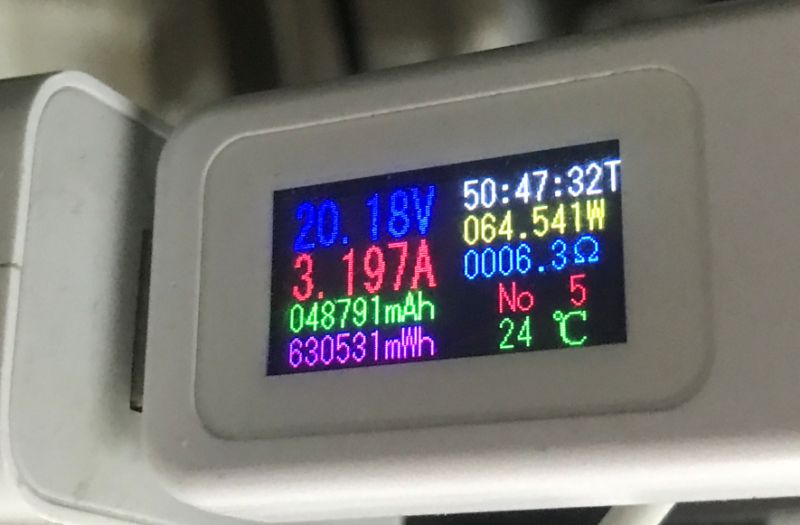
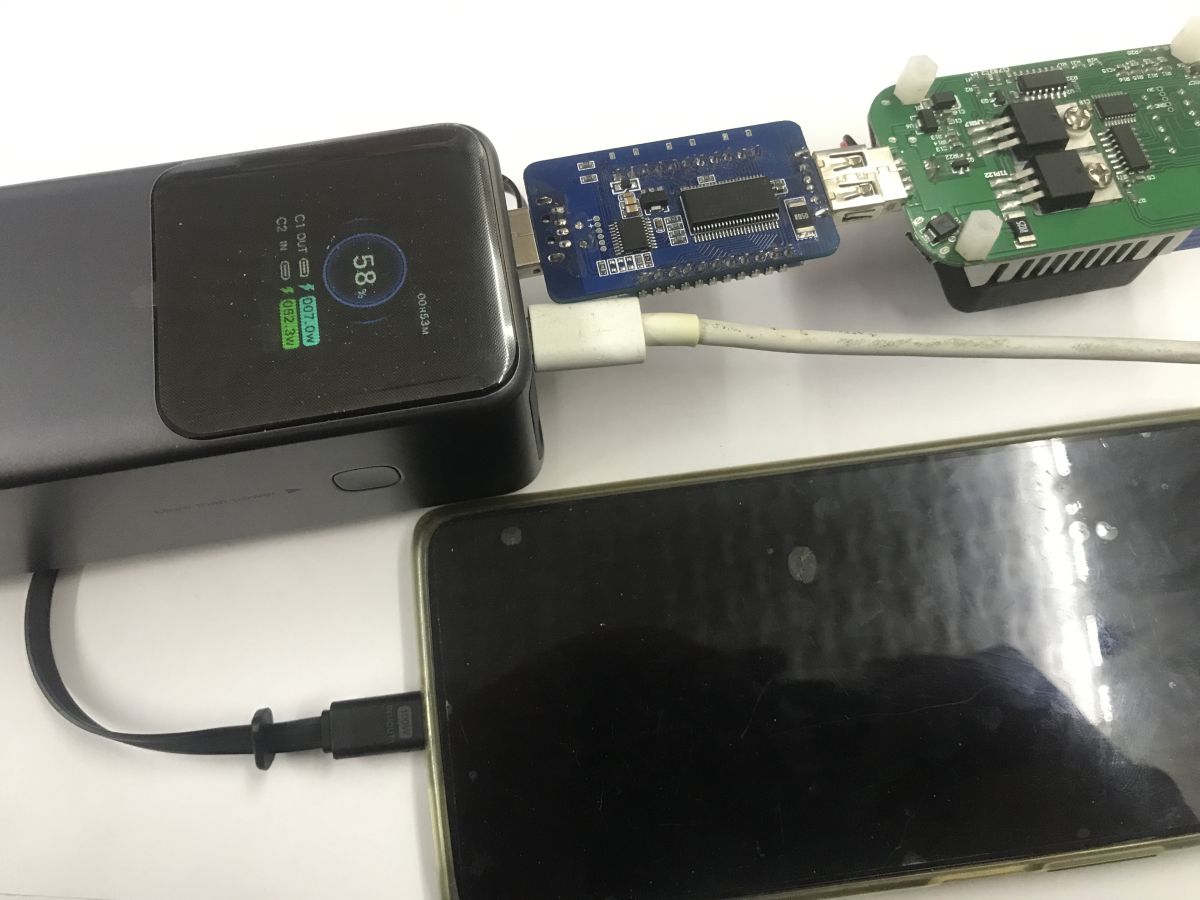
Now let’s try it the other way round. To make things a bit trickier, I’ve also loaded the output. Now I want to charge a power bank using my Xiaomi power supply:
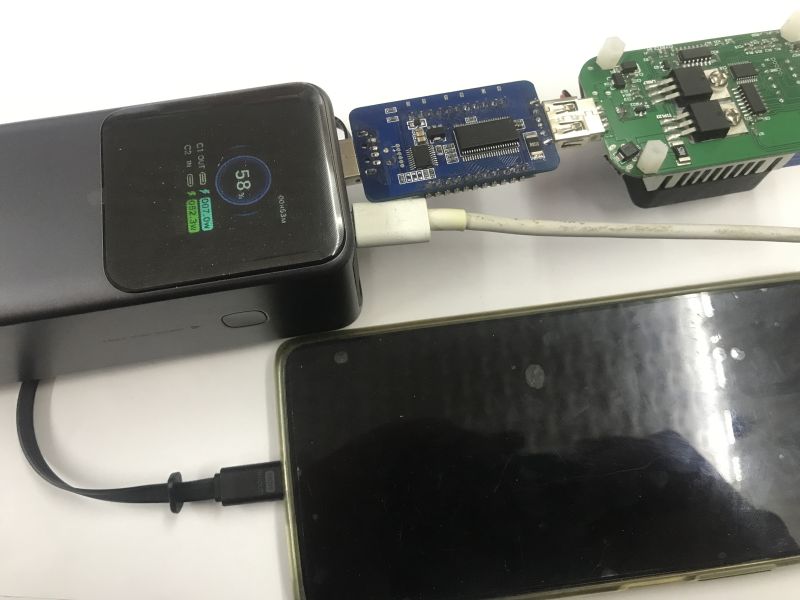
That’s impressive. My Xiaomi 11T is from 2021, yet its power supply still got on well with this power bank and delivers a good 60 W.
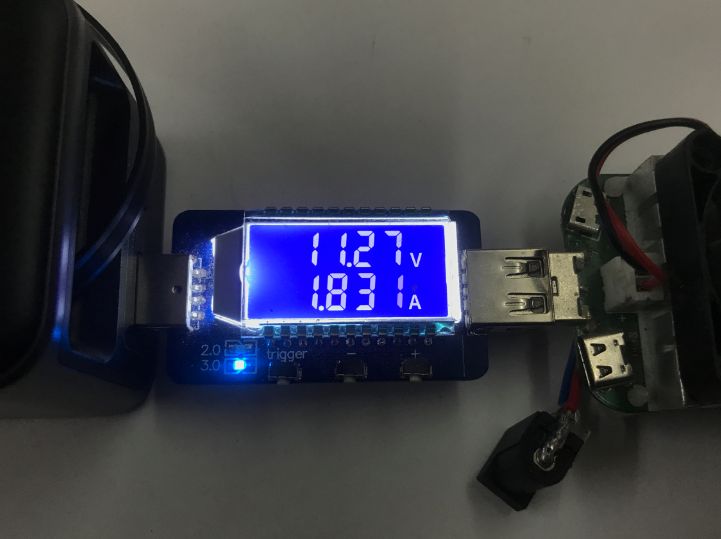
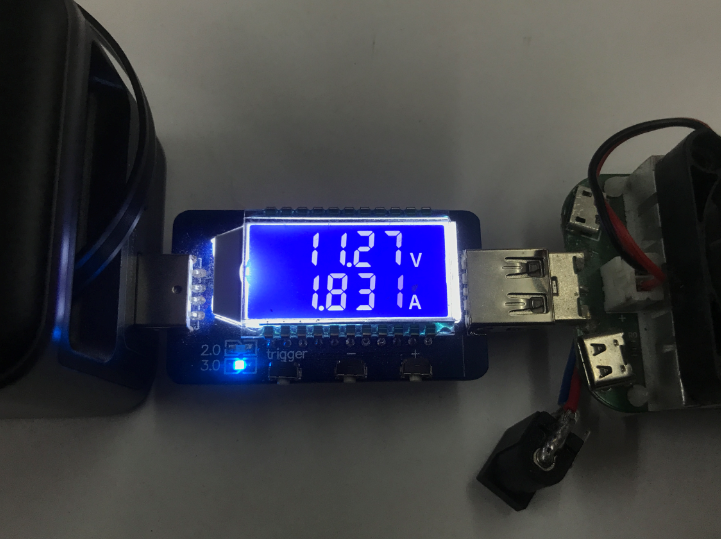
Now let’s check QC on port A – indeed, it’s exactly as stated on the label. You can draw up to 1.5 A at 12 V:
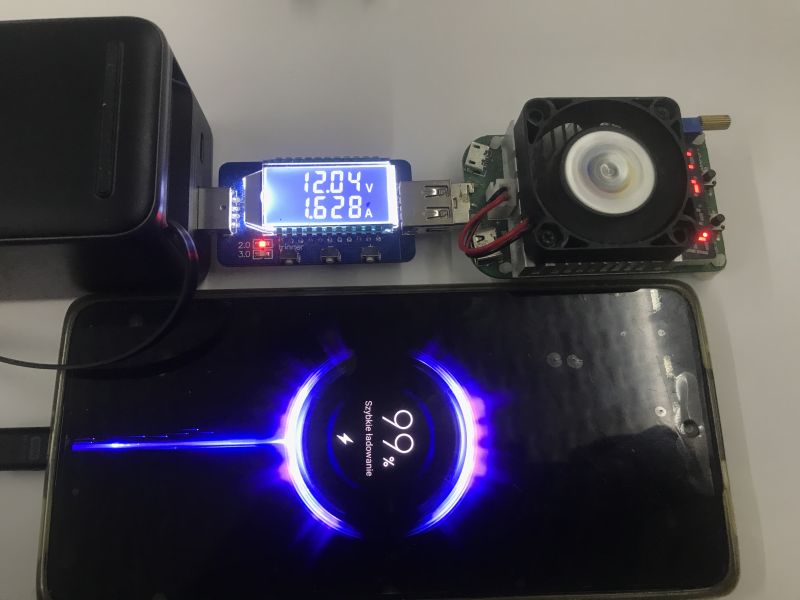
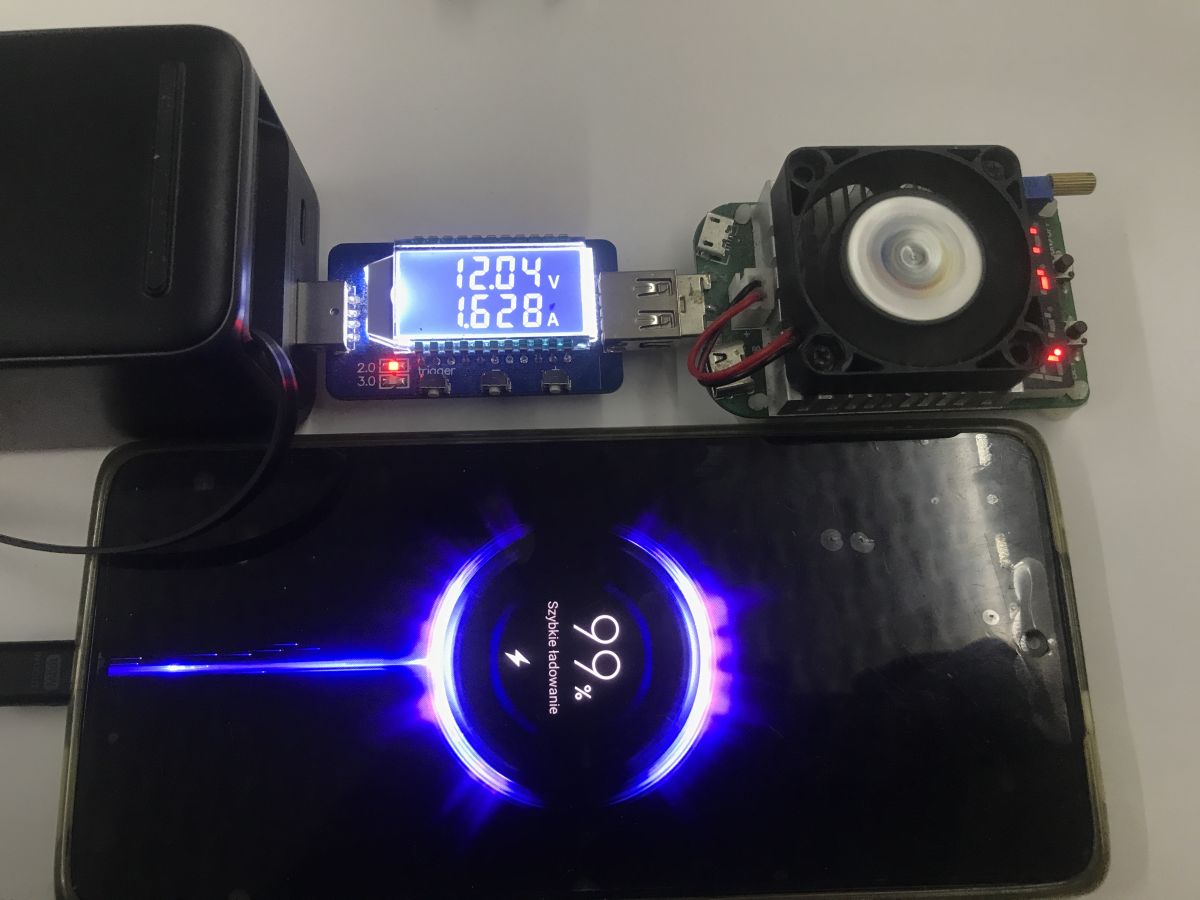
What’s more, you can continue to load it – so several ports can indeed operate at the same time. Here, the built-in cable is powering the phone at a higher voltage, whilst a separately connected QC Trigger is set to 12 V.
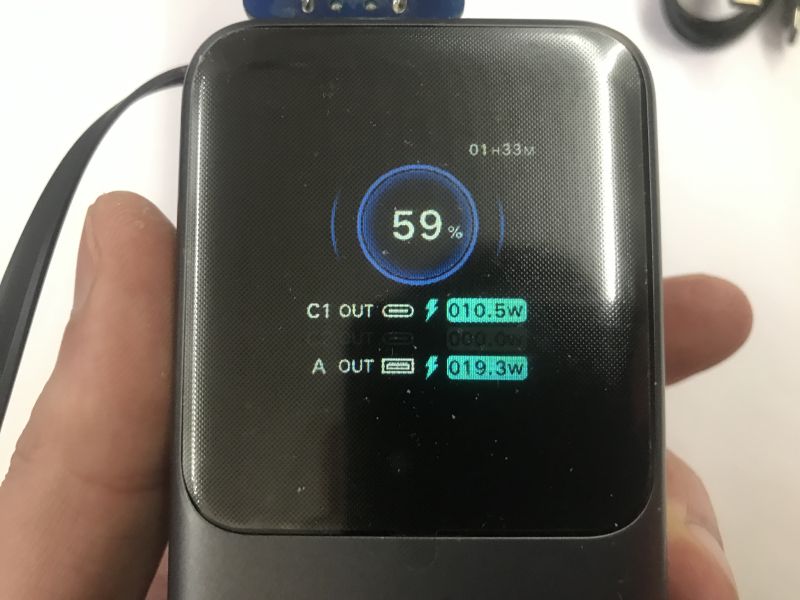
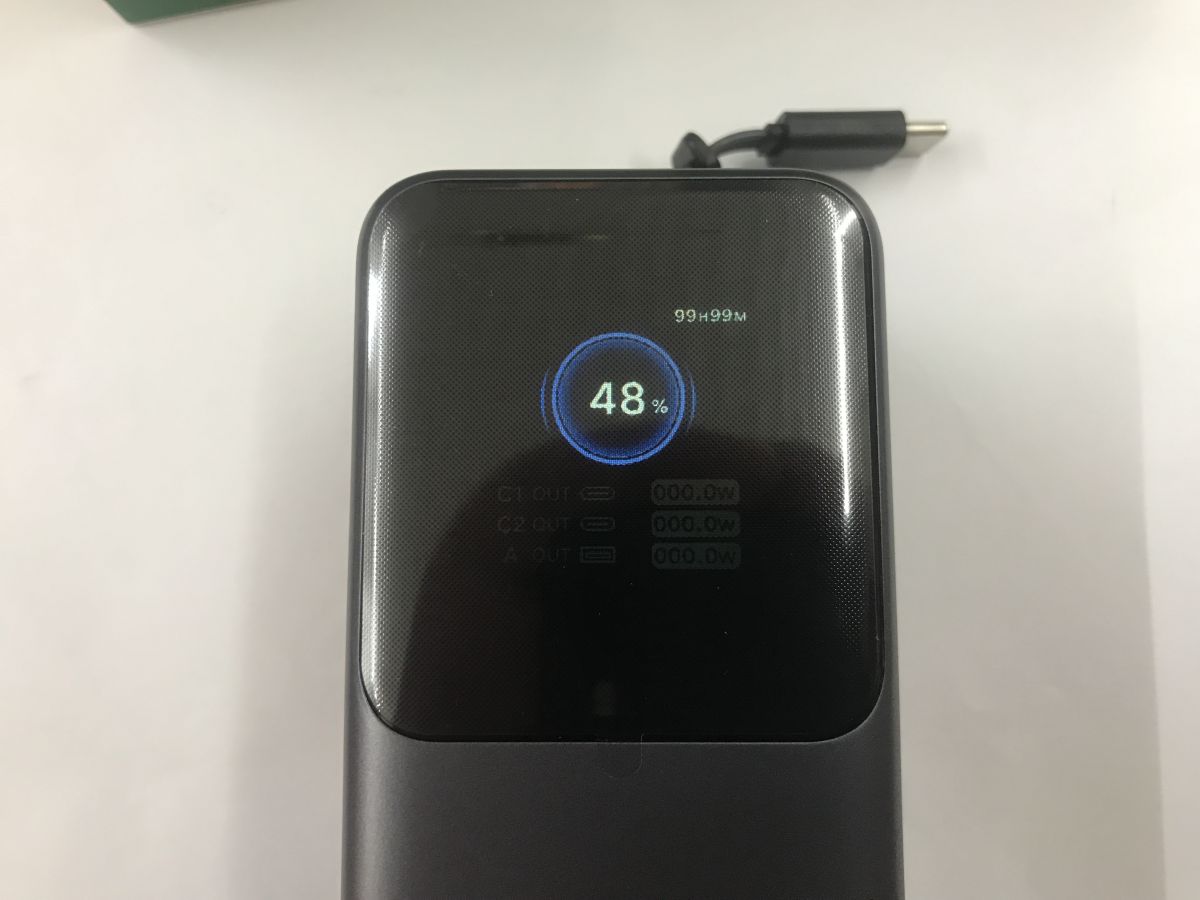
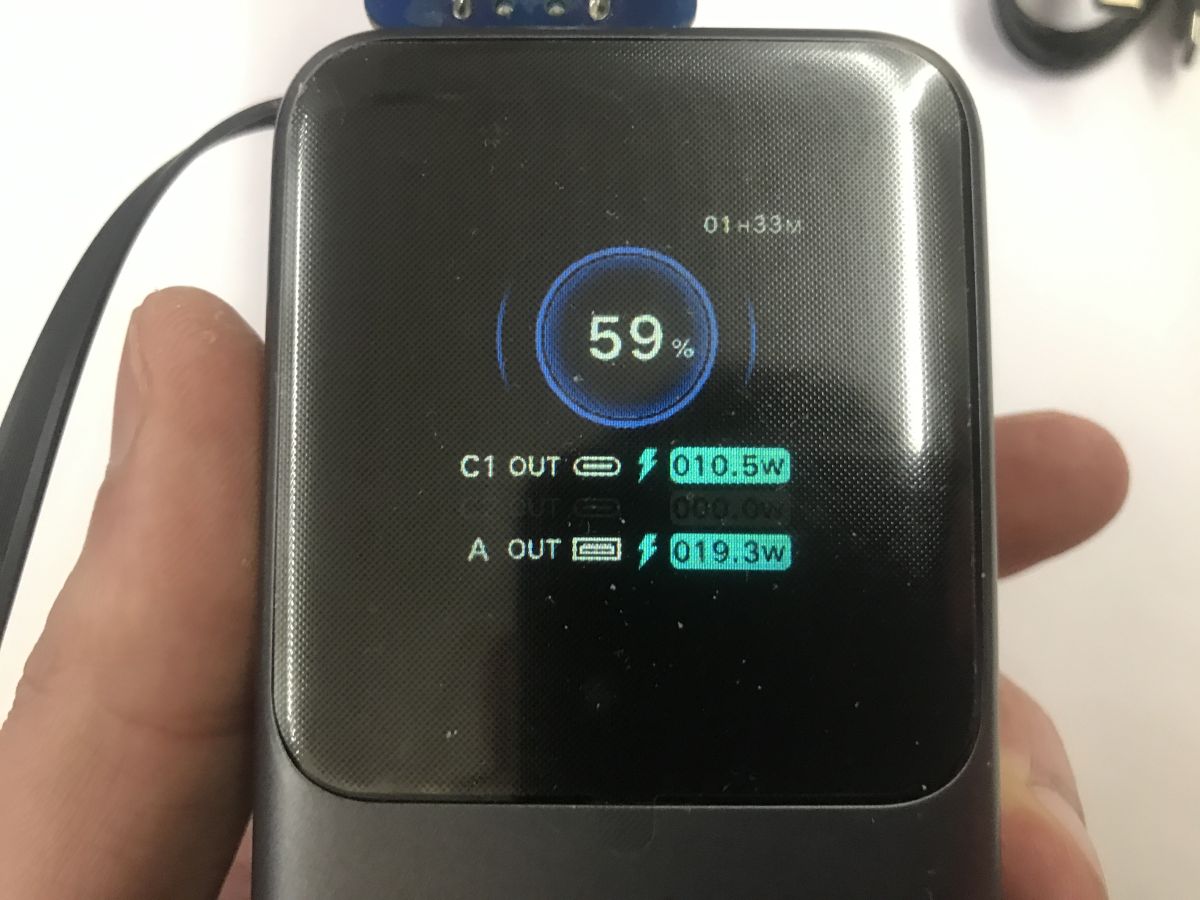
The display constantly shows the current voltages, currents and power levels, as well as the charge level, and also estimates how much time is left until the battery is fully discharged or fully charged.
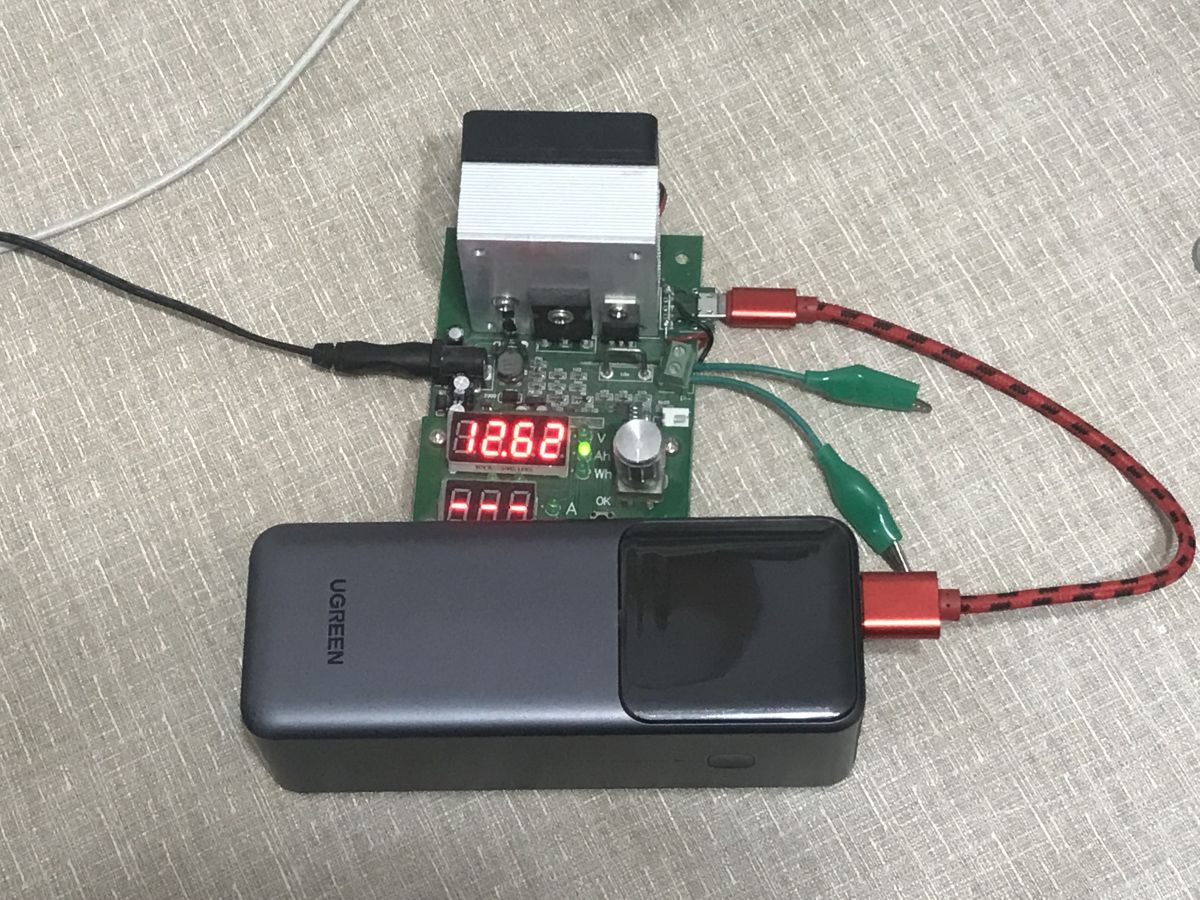
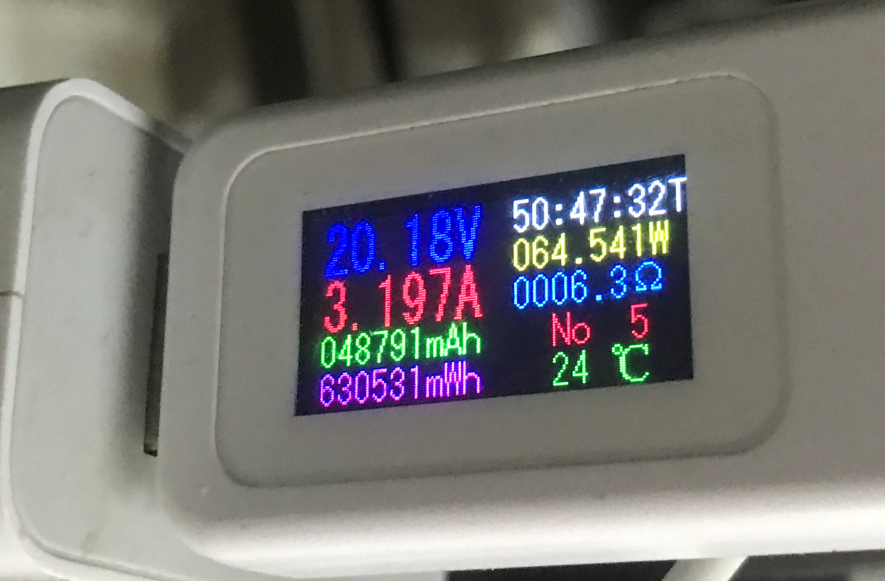
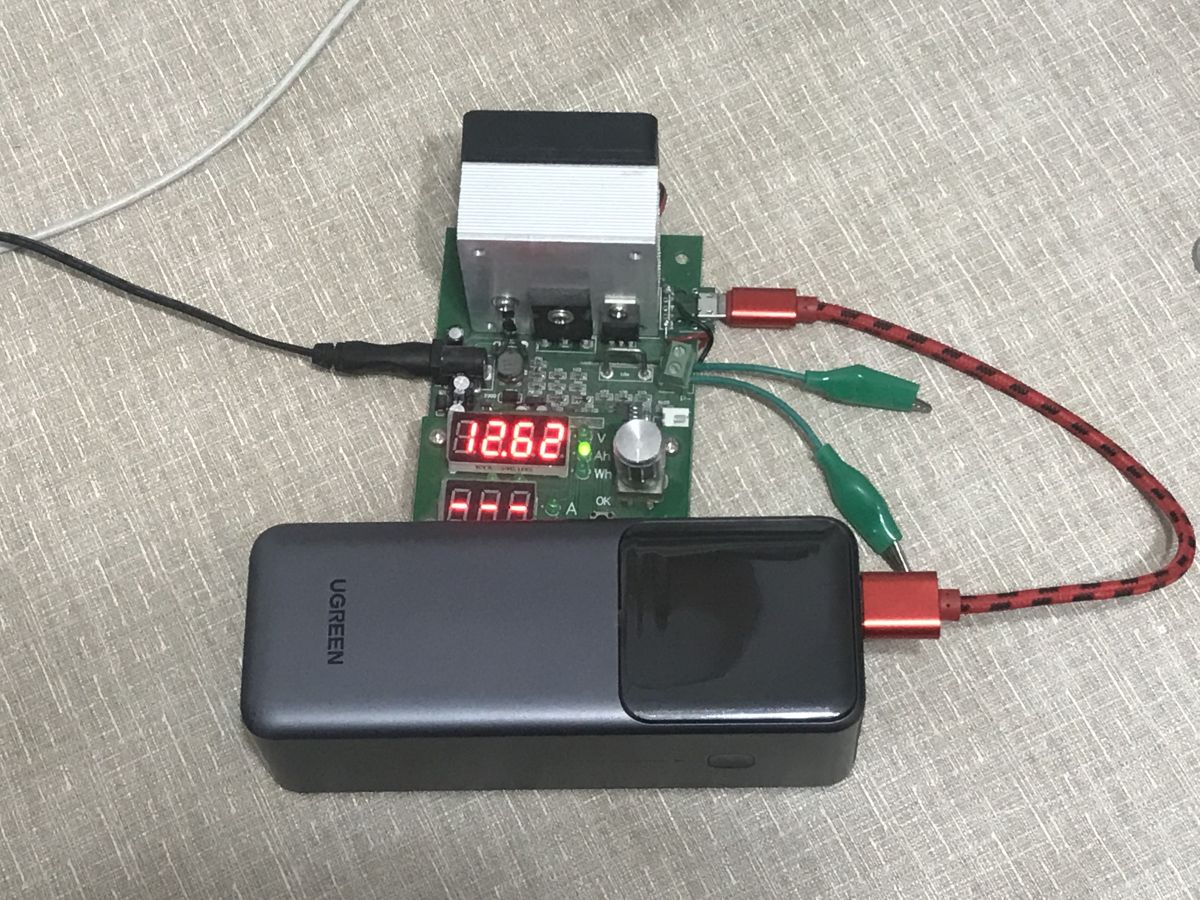
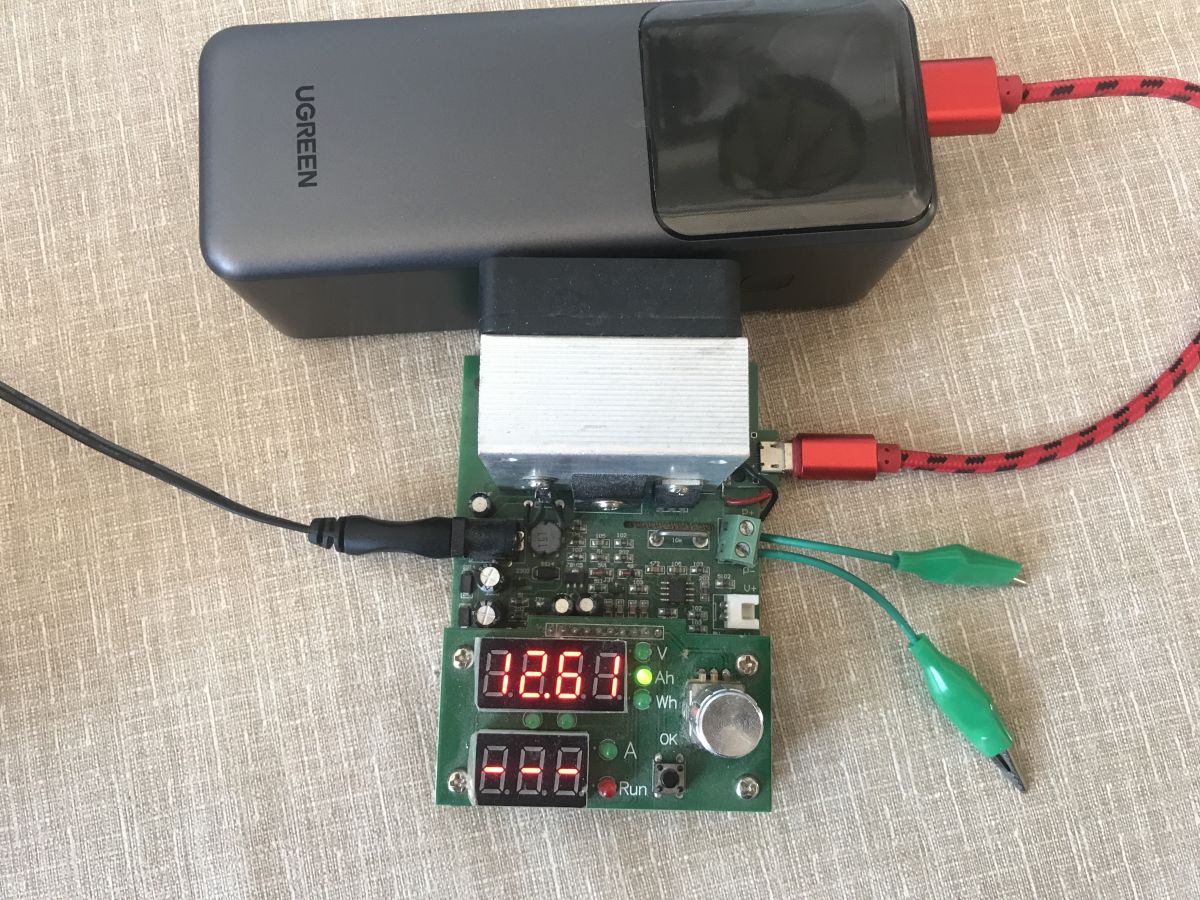
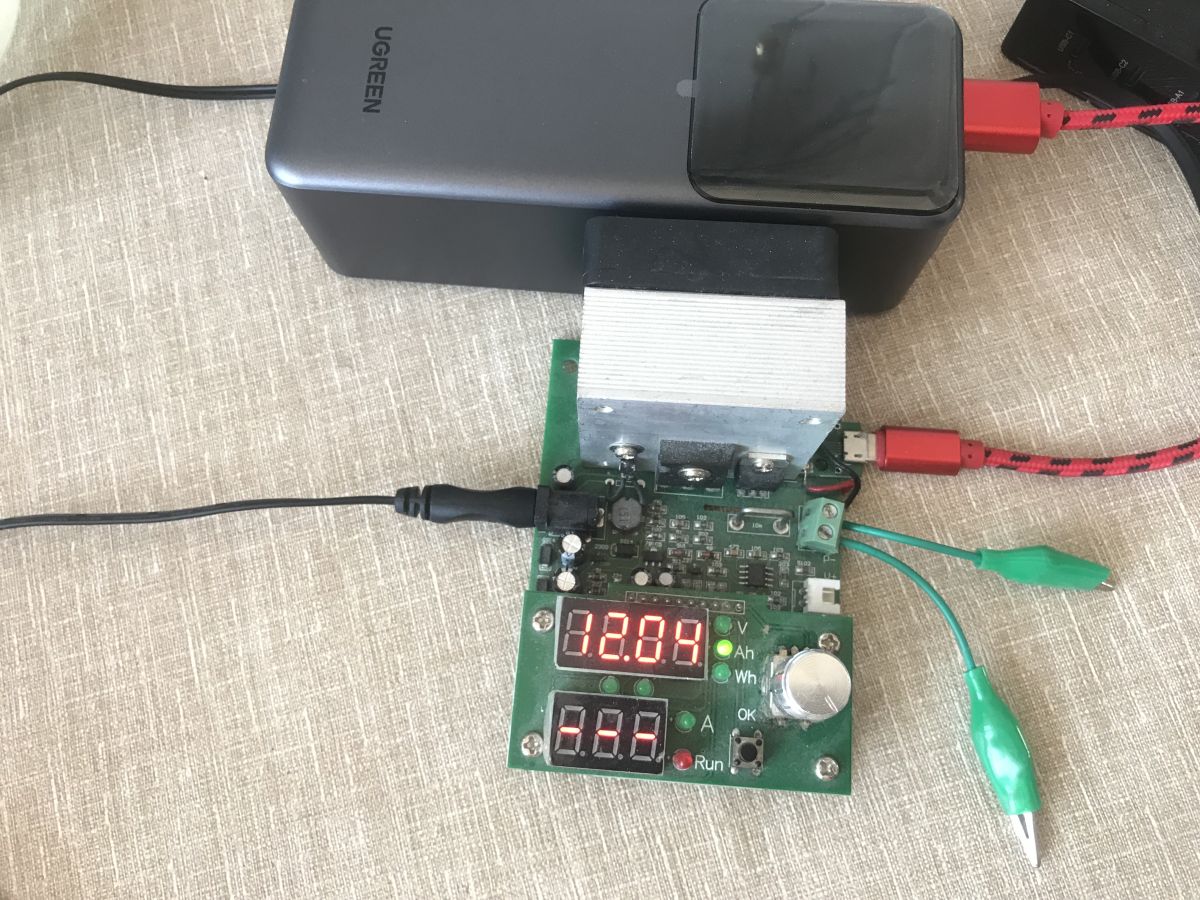
All that remained was to check the capacity – I opted for a load of 1.5 A at 5 V:
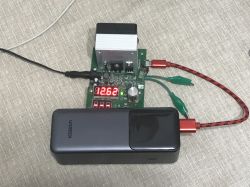
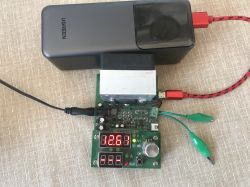
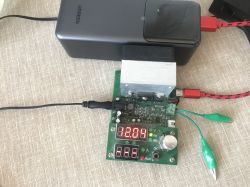
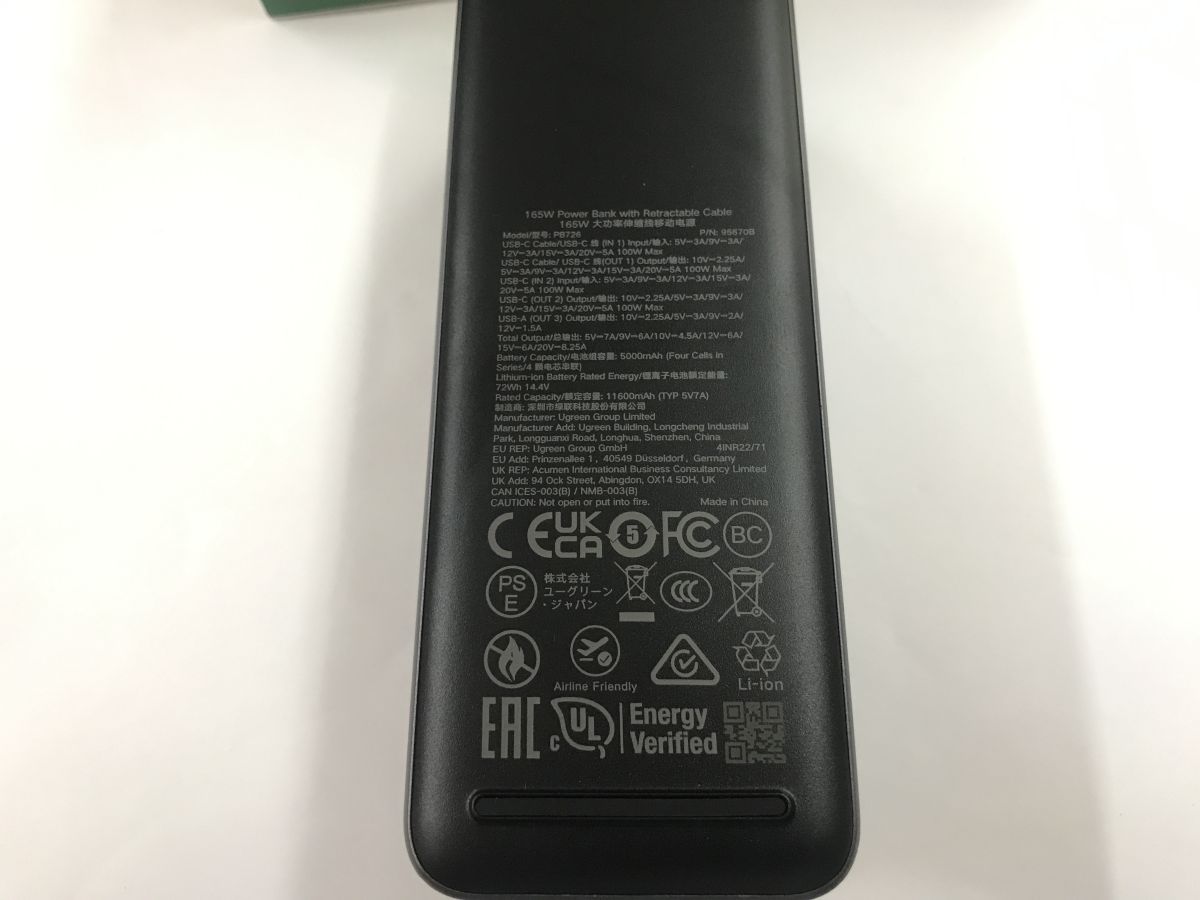
The label states a Rated Capacity of 11,600 mAh at 5 V. Internally, it consists of 4 × 5,000 mAh cells, but this is at 3.7 V per cell. My measurements show just over 12 Ah at 5 V, so everything adds up. You can also multiply: 12 Ah * 5 V = 60 Wh. The packaging mentions 72 Wh, but I think that’s before accounting for losses in the converters.
To sum up, this was a capacity test of the UGREEN PB726 power bank, bought for a whole 300 zł. Whilst I was at it, I also checked It’s also partly down to its ability to support QC and PD, although I was slightly short of the necessary kit to make it a complete success. That doesn’t change the fact that I can already give a partial verdict:
- the power bank under review really does leave cheaper models far behind, even those with QC
- I’ve never come across a power bank before that’s capable of charging at 65 W, and from my five-year-old Xiaomi power supply at that
- I was equally impressed that this model is capable of maintaining two high-voltage connections; cheaper models revert to 5 V in such cases (the controller inside doesn’t support this)
- Similarly, I also tested charging the power bank whilst simultaneously powering an additional device from it, which also worked successfully
- Finally, I might add that the display itself looks great and is useful for diagnosing and checking the power, voltage and current at which the ports are operating. It’s not just a superfluous gimmick.
I haven’t tested powering the device directly from 20 V, but based on my experience so far, I’d say that it probably works too. I may come back to this separately.
So I can finally conclude that, indeed, it’s worth the money. The only question is – is it worth that much? What do you think? Is it worth spending 300 zł on a power bank that supports voltages up to 20 V? 






Comments
I have to admit it’s a decent power bank; it charges a 16-inch MacBook Pro with an MX processor without any problems, however, it doesn’t support pass-through and must be connected to a single power adapter,... [Read more]
In an era when 18650 and 21700 INR-type cells from manufacturers such as Eve, LG and Samsung are so cheap, buying power banks at such astronomical prices is pointless. I’m currently on the verge of undertaking... [Read more]
It’s a bit pricey for something that’s only meant to charge your phone and not much else. [Read more]
It’s meant to charge a laptop, not a mobile phone. I’ve recently been looking for a power bank for my Dell, and wherever there’s a 20V output, it’s always for a laptop. [Read more]
How long does it take to charge fully? In theory, at 60 W, it should take just over an hour to charge, but I suppose it slows down a bit? I recently ‘discovered’ the UGREEN brand and it seems to stand... [Read more]
@RafalB – perhaps it depends on which port? There might be two separate circuits inside, and there are more ports. It’s hard for me to say. @waldekemer that’s quite a good idea; if you can manage it,... [Read more]
I have a Baseus 20,000mAh 65W power bank (240 zł in 2024), which I use frequently with a USB-C soldering iron and a Lenovo A285 laptop. The power bank delivers 20V/3A to both devices without any issues... [Read more]
@pkaczmarek2, another great test. For the sake of completeness, I’d like to know the weight (I can’t see it in the specifications on the box) and, as mentioned, the charging time. Whilst you’re at it,... [Read more]
By the way, here’s a powerful charger from this manufacturer featuring GaN technology. [Read more]
I’ve got a few devices from this brand. None of them have let me down. It’s got to the point where I even buy cables from them now, because I know they’ll be good. Of course, I’m aware that I’m paying... [Read more]