logo elektroda
logo elektroda
X
logo elektroda

Disco lighting from the pre-DMX era – what lies inside the analogue Trix BrokenSwing 501?

p.kaczmarek2 1914 10

TL;DR LABEL_AI_GENERATED

  • The analogue Trix BrokenSwing 501 is a Slovak-made pre-DMX disco effect that uses angled mirrors and a rotating dichroic-filter prism to split and animate a halogen beam.
  • A 0–10 V analogue control input on a jack socket drives its programmes, while two stepper motors move an aperture disc and the optical assembly.
  • Its electronics combine an obscured microcontroller, an LM324N quad op-amp, two L293D motor drivers, and a Tandon Motors KP4M2-203 1.8° stepper motor.
  • A massive core transformer, 24 V 250 W halogen lamp, cooling fan, and aluminium chassis explain the unit's 320 W consumption and 11 kg weight.
  • The halogen source lasts only 50–300 hours, and touching its glass with bare fingers can leave grease that may cause it to explode under extreme heat.
AI summary based on the discussion. May contain errors.
ADVERTISEMENT
This content has been translated flag-pl » flag-en View the original version here
Listen:
  • Disco lighting from the pre-DMX era – what lies inside the analogue Trix BrokenSwing 501?
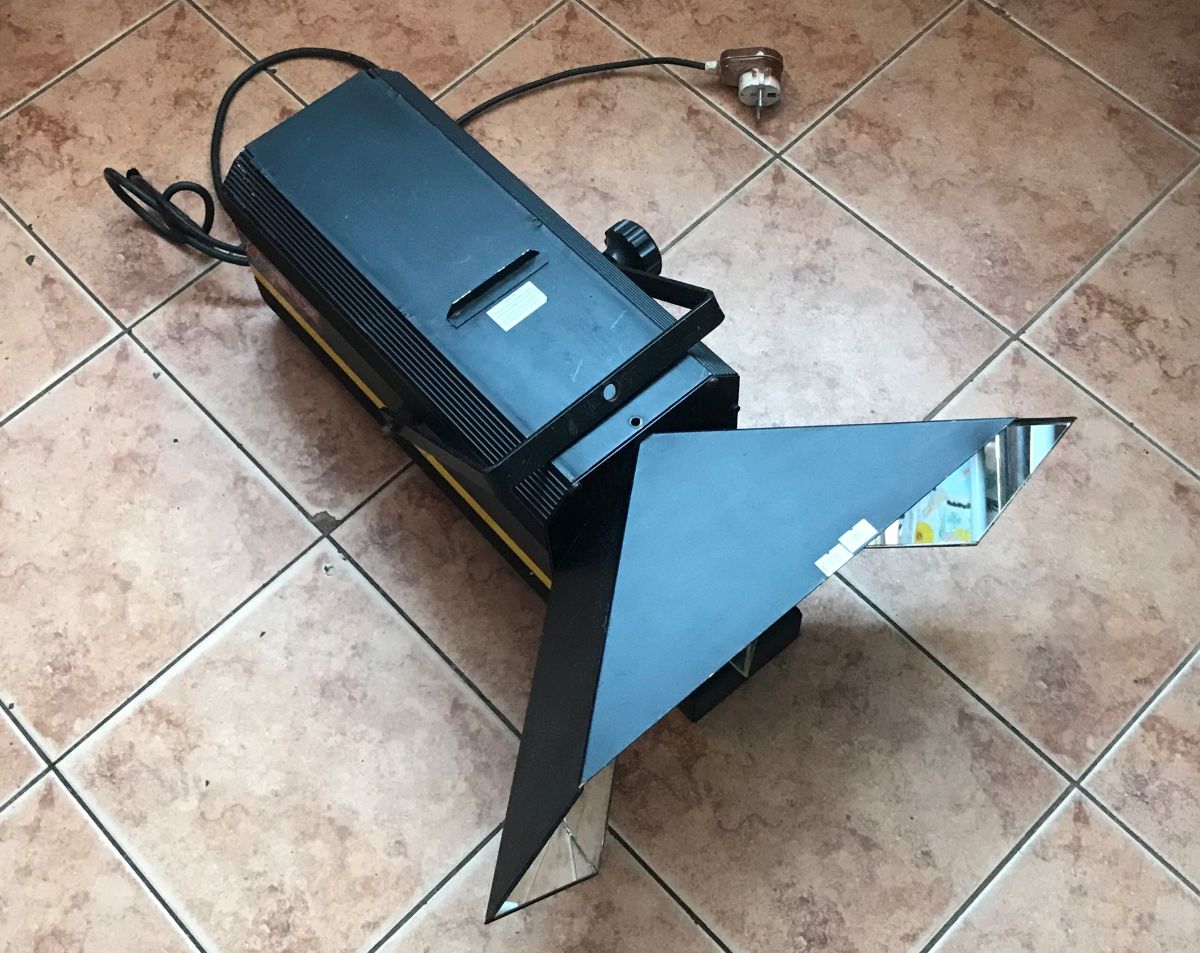
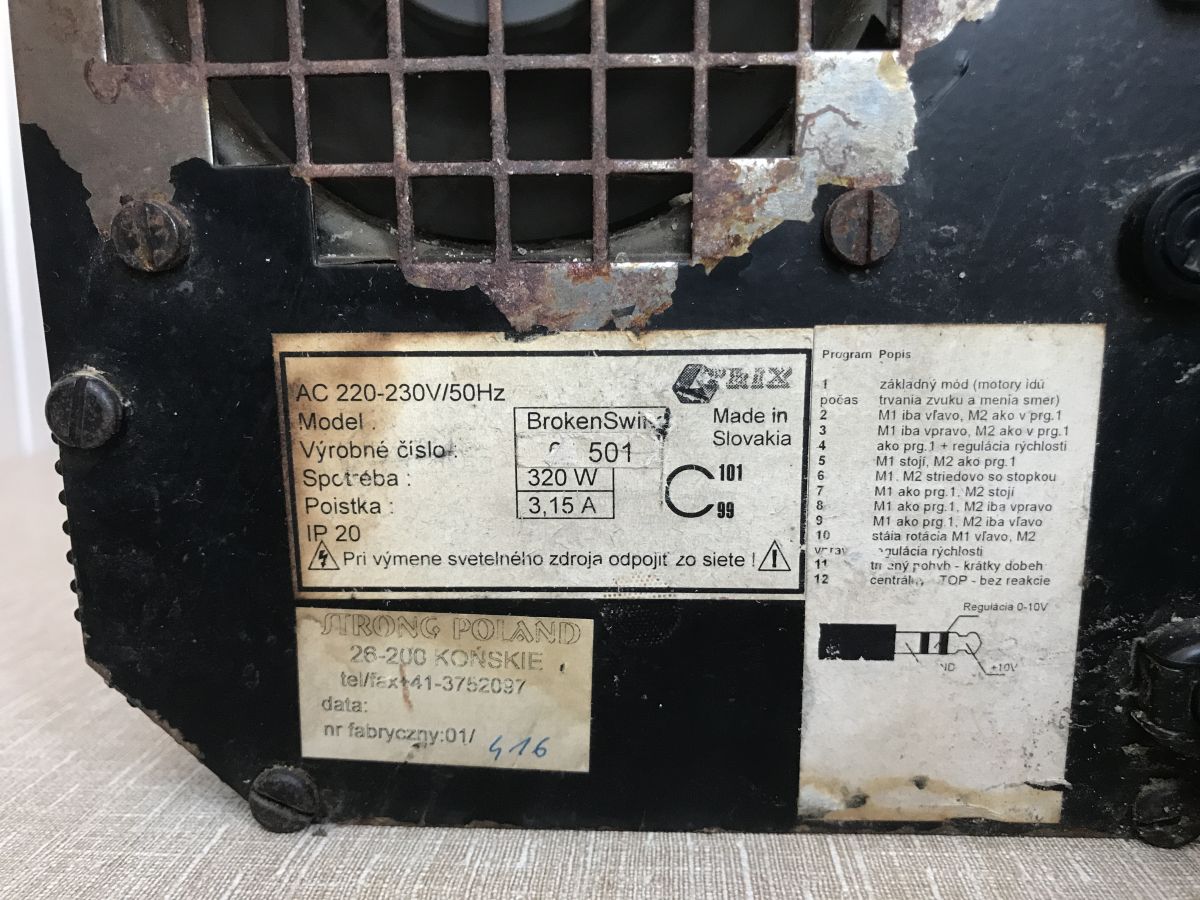
    Today we’re taking a look inside the Trix Broken Swing – a classic disco lighting effect that many of us may have enjoyed years ago in clubs. The nameplate immediately reveals a few interesting facts – the unit was manufactured in Slovakia, although it was imported by the Polish company Strong from Końskie.
    Disco lighting from the pre-DMX era – what lies inside the analogue Trix BrokenSwing 501?
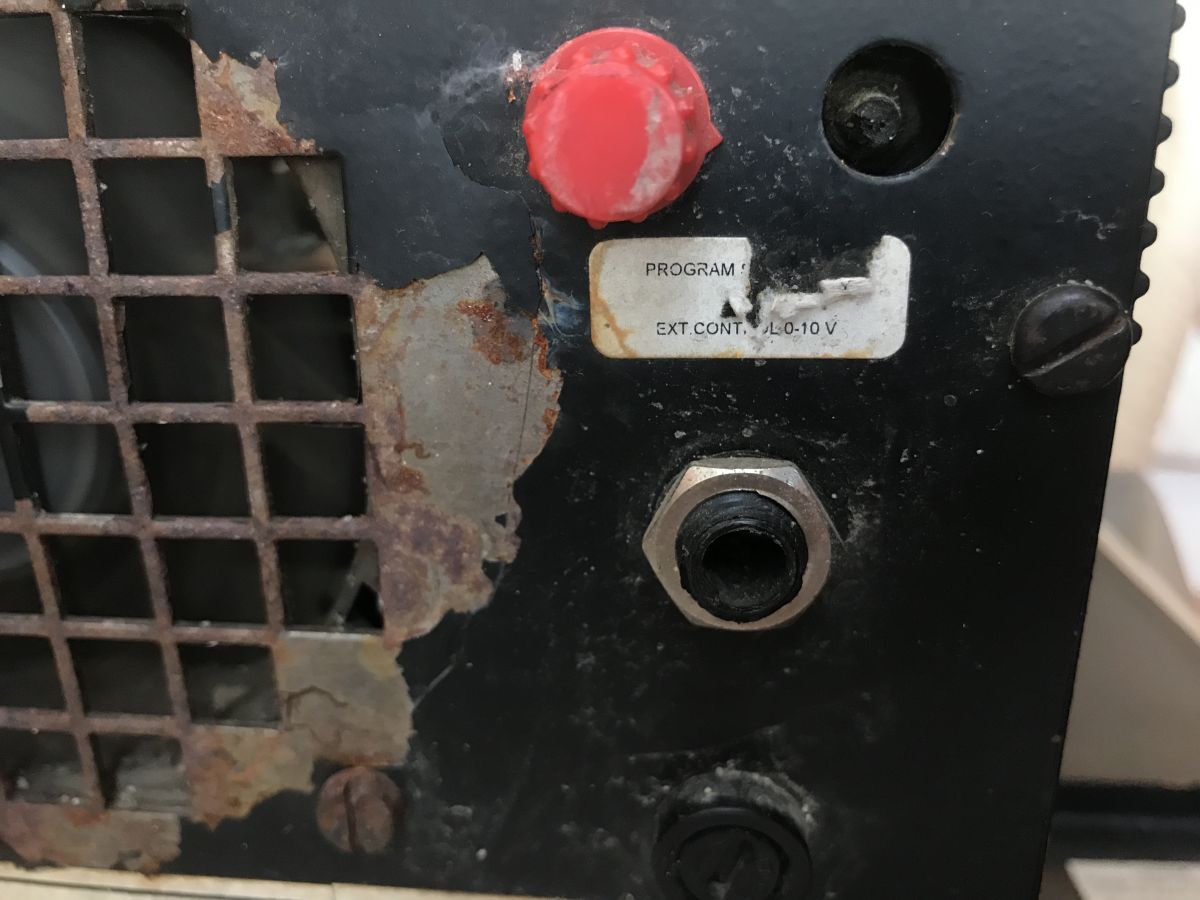
    The programme descriptions indicate the presence of two motors responsible for the movement or animation of the light. Interestingly, there is no DMX protocol here yet – the input is an analogue voltage signal of 0–10 V supplied via a jack socket. This was a very popular solution back then, before the digital standard came to dominate the market.
    Disco lighting from the pre-DMX era – what lies inside the analogue Trix BrokenSwing 501?
    The unit has certainly seen a fair bit of use over the years, but its 320 W power consumption and hefty 11 kilograms’ weight still make quite an impression. So let’s take a look at the components used to build this rugged classic.

    Disco lighting from the pre-DMX era – what lies inside the analogue Trix BrokenSwing 501?
    On the casing, there’s a telling Polish-language sticker warning that the power must be switched off when replacing the bulb, and that the glass itself must not be touched with bare fingers. As has rightly been pointed out, grease left on the bulb, combined with the extreme heat, poses a risk of explosion, so you need to be careful with your eyes.
    Disco lighting from the pre-DMX era – what lies inside the analogue Trix BrokenSwing 501?
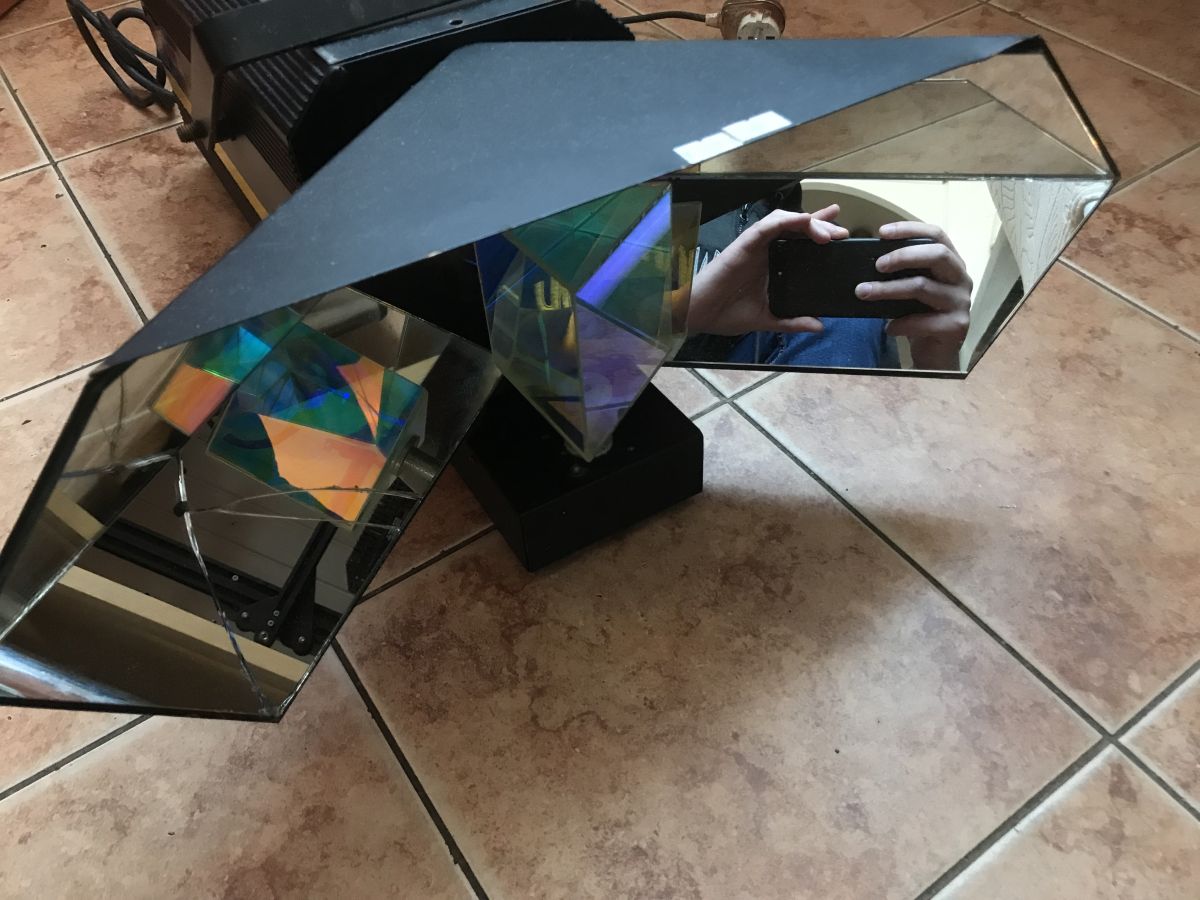
    At the front, we have the arrangement of angled mirrors characteristic of this model, along with a central, rotating prism fitted with dichroic filters. It is this assembly that is responsible for splitting and setting the main beam of light in motion, which gave the device its name (‘broken swing’). As you can see, one of the mirrors in my unit is cracked, which gives this name a very ironic, literal meaning.
    Let’s take a look inside – simply remove the cover:
    Disco lighting from the pre-DMX era – what lies inside the analogue Trix BrokenSwing 501?
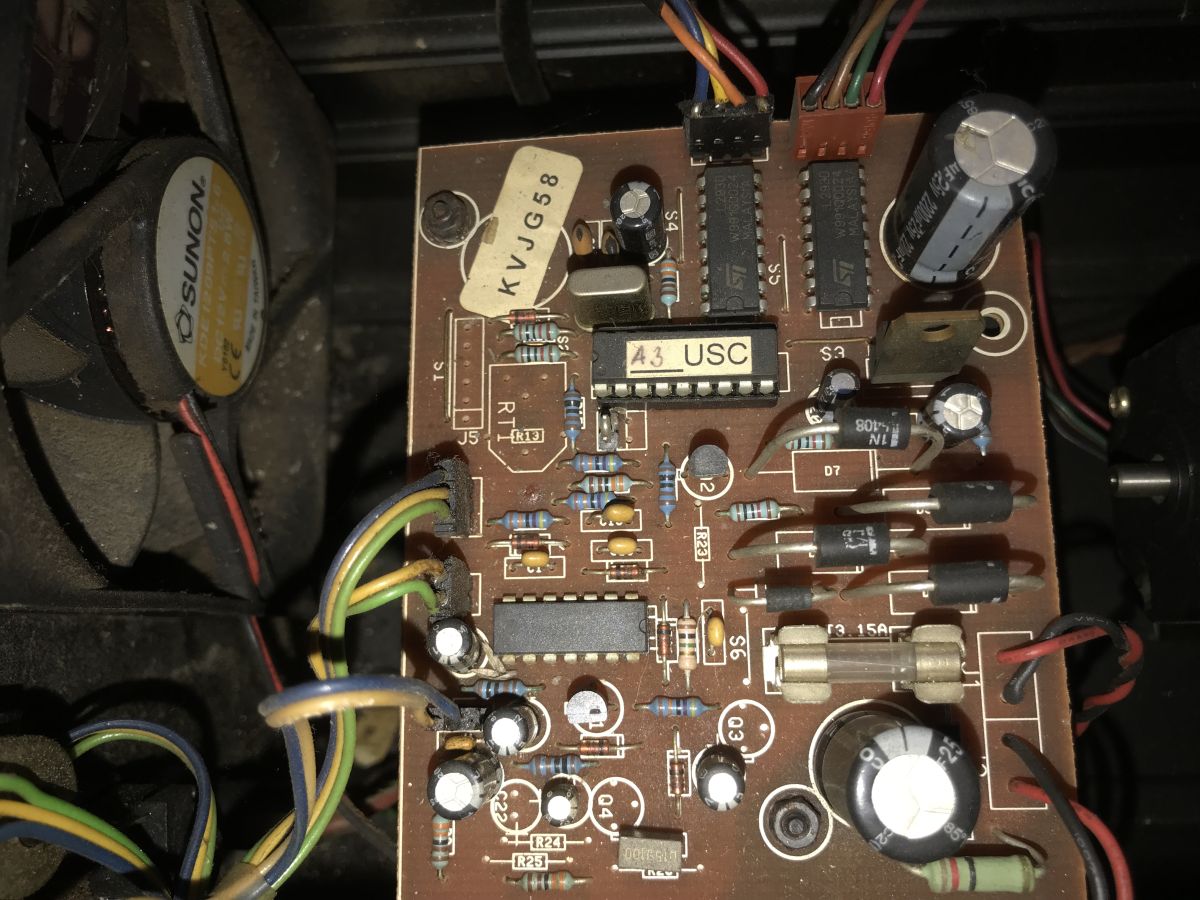
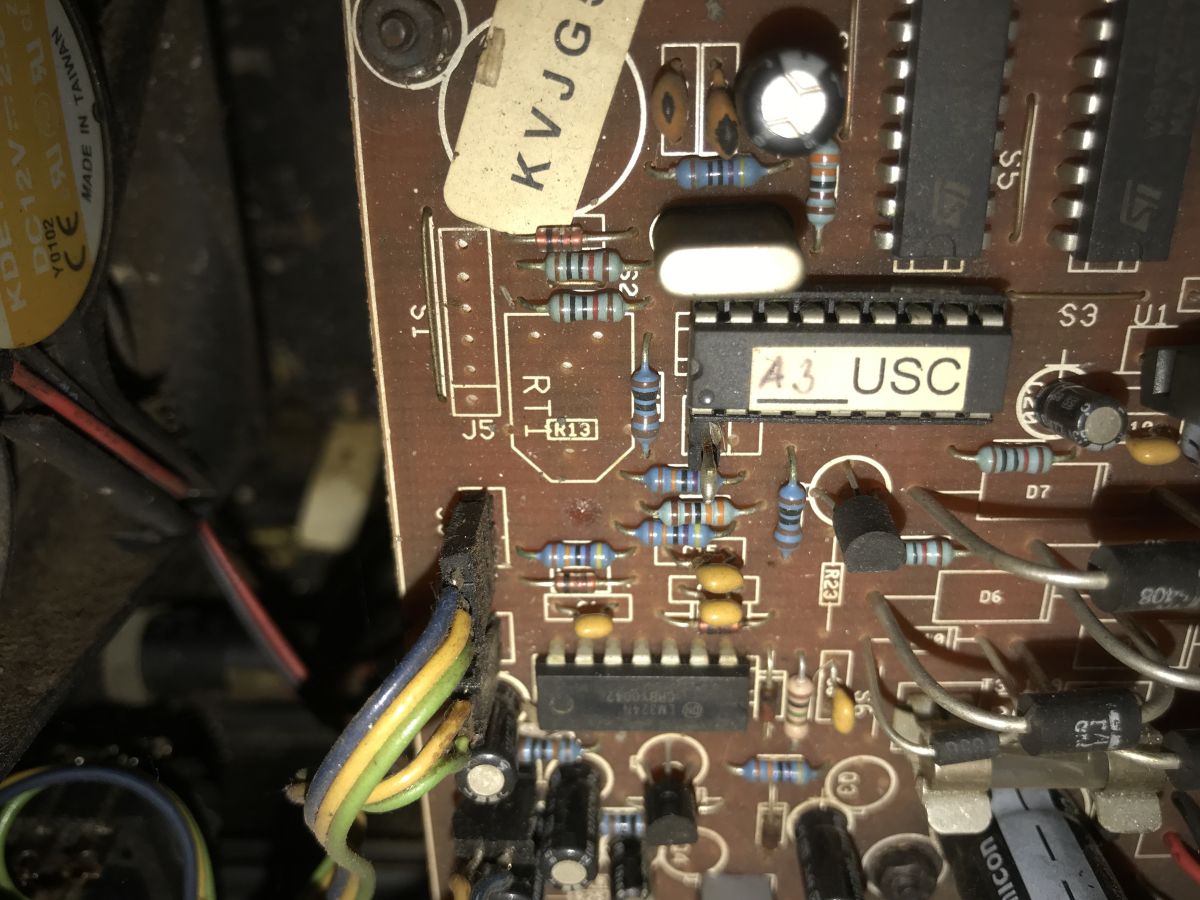
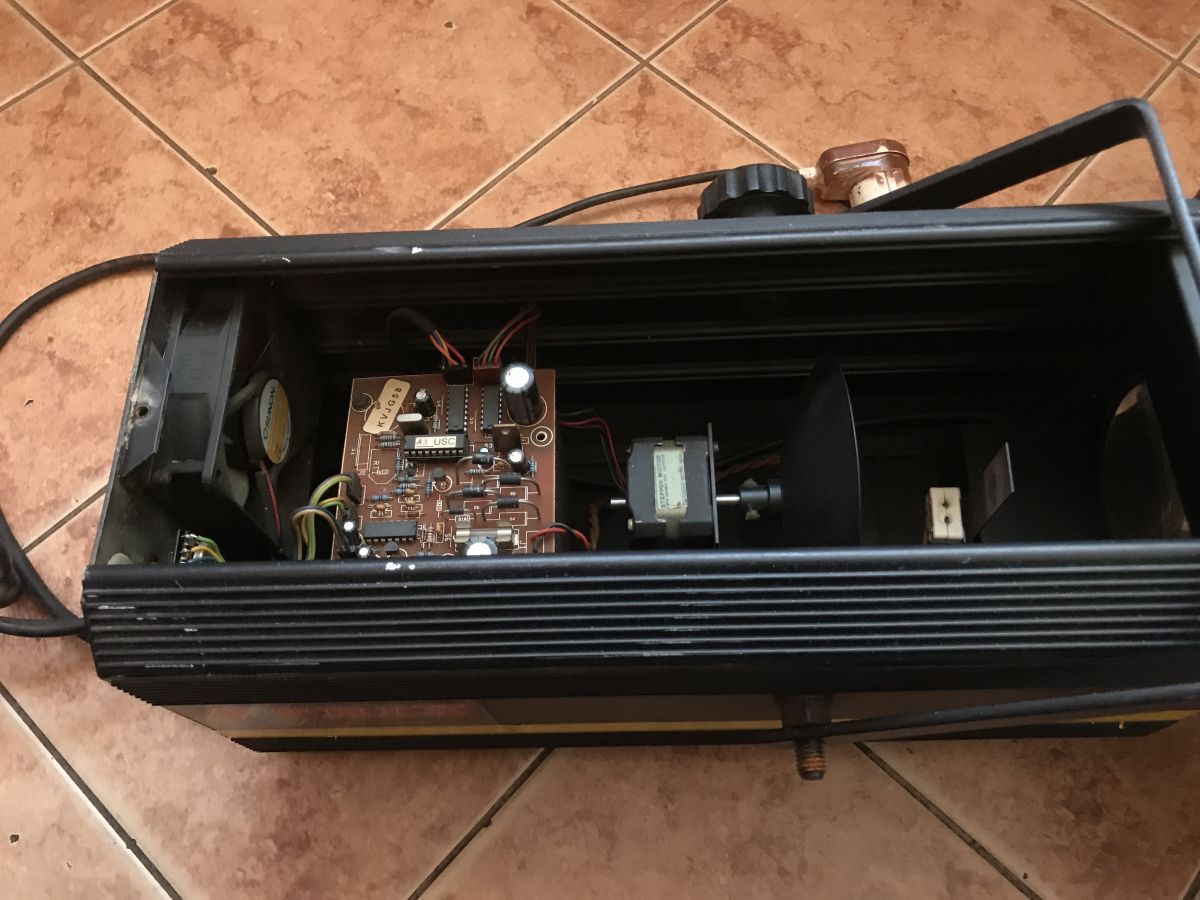
    Once the metal plate has been removed, we’re greeted by a very open interior housed within an aluminium profile. On the left-hand side is a sturdy Sunon cooling fan and the main circuit board containing the electronics and microprocessor. In the centre, you can see one of the stepper motors driving the internal disc with the apertures. On the right-hand side, at the very end, there is a ceramic socket for a power-hungry 24V 250W halogen bulb, complete with a reflector. The powerful transformer required to power this unit is concealed underneath.
    Disco lighting from the pre-DMX era – what lies inside the analogue Trix BrokenSwing 501? Disco lighting from the pre-DMX era – what lies inside the analogue Trix BrokenSwing 501? Disco lighting from the pre-DMX era – what lies inside the analogue Trix BrokenSwing 501?
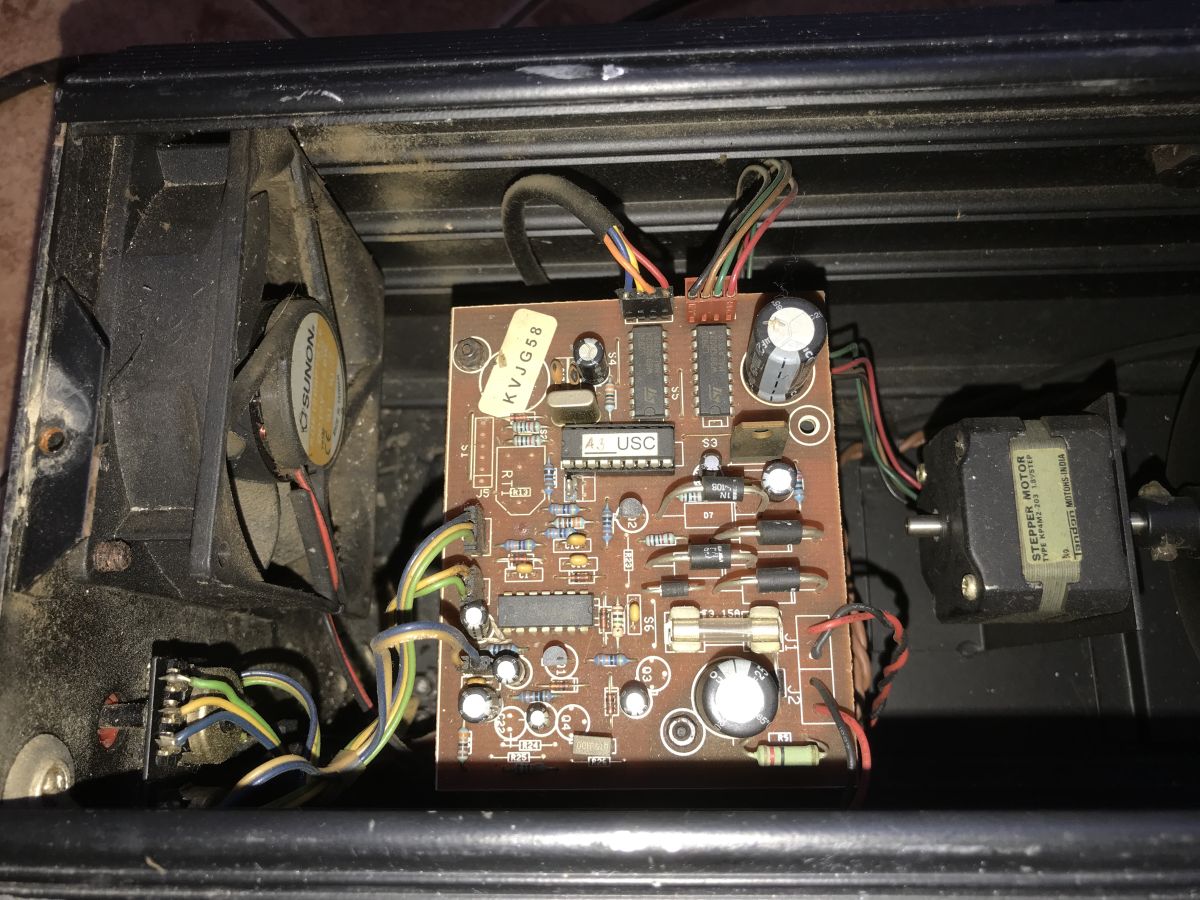
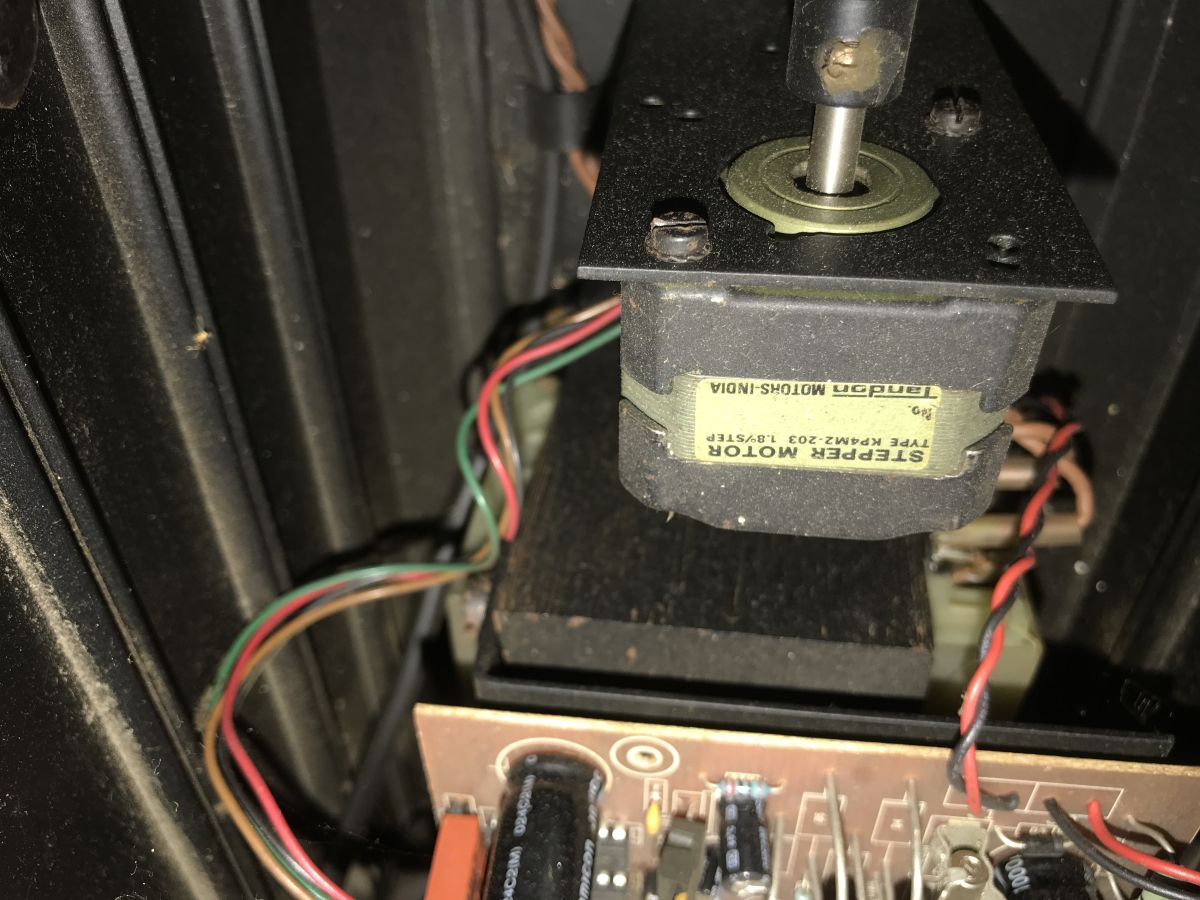
    Visible on the board are, amongst other things, a microcontroller with a sticker covering the actual markings (probably some classic model with pre-loaded software), a quad operational amplifier LM324N (presumably for the audio circuit of the built-in microphone) and two well-known and popular L293D motor drivers. The stepper motor visible next to it is the KP4M2-203 model with a 1.8-step stroke, manufactured by the Indian company Tandon Motors.
    Disco lighting from the pre-DMX era – what lies inside the analogue Trix BrokenSwing 501?
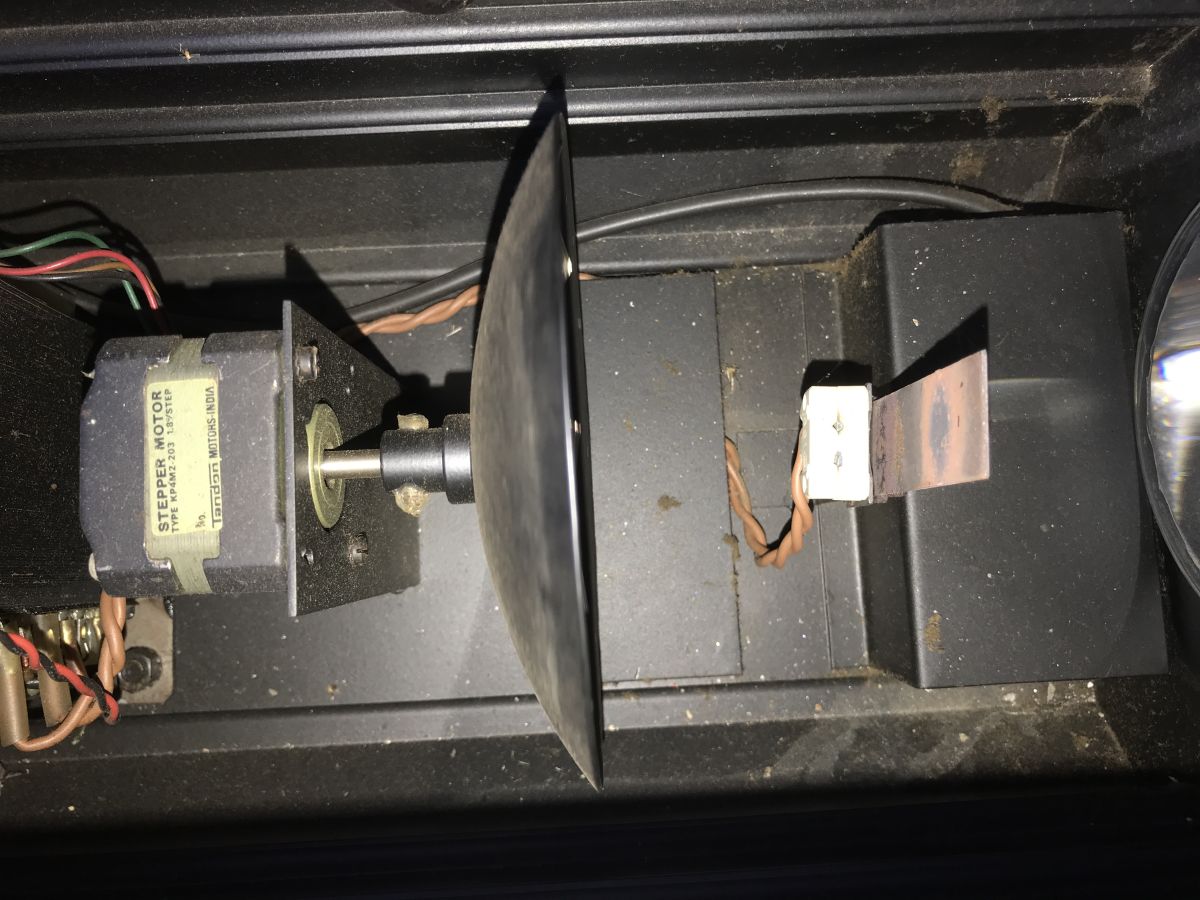
    The mystery of the device’s 11-kilogramme weight has been solved – hidden just beneath the main board is a gigantic, classic core transformer, whose main task is to power the power-hungry incandescent bulb. In the next shot, however, the second of the stepper motors is clearly visible, along with the fitted, contoured aperture disc and the ceramic holder itself.
    Disco lighting from the pre-DMX era – what lies inside the analogue Trix BrokenSwing 501?
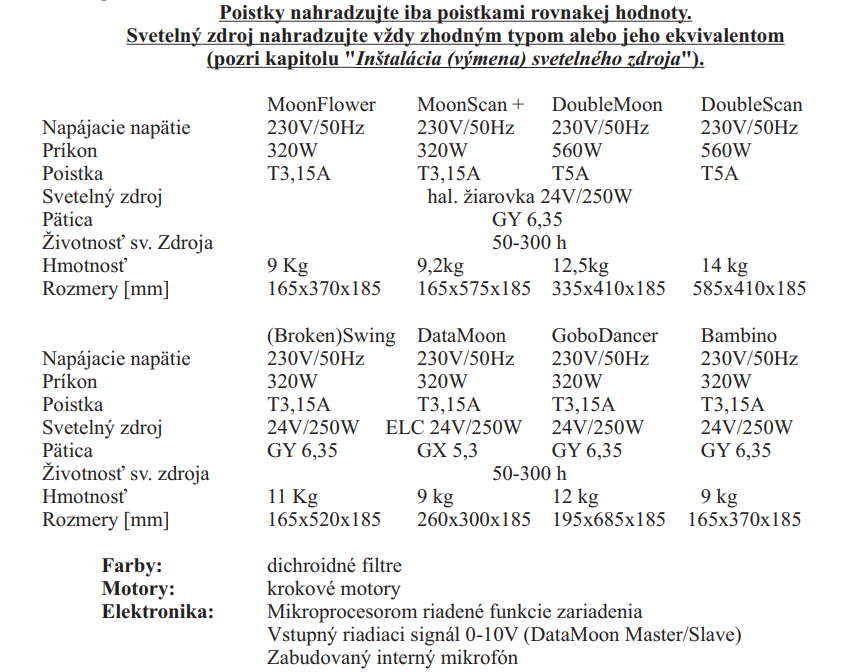
    Finally, a table from the documentation:
    Disco lighting from the pre-DMX era – what lies inside the analogue Trix BrokenSwing 501?
    The lifespan of the light source – 50–300 hours – really surprised me.

    To sum up, we have a transformer, a bit of electronics, a halogen bulb and two stepper motors, all cleverly packed into a robust aluminium profile. A simple, fully repairable and, in my opinion, rather charming design from the turn of the last century.
    Have you come across this type of device, or perhaps even serviced them? What tended to go wrong with them most often? Apart from those bulbs...
    Attachments:
    • moonefekty.pdf (211.74 KB) You must be logged in to download this attachment.

    Cool? Ranking DIY
    Helpful post? Buy me a coffee.

    About Author
    p.kaczmarek2
    Moderator Smart Home
    Offline 
    p.kaczmarek2 wrote 14803 posts with rating 12965, helped 659 times. Been with us since 2014 year.
  • ADVERTISEMENT
  • #2 21944983
    ArturAVS
    Moderator
    Posts: 26458
    Help: 2304
    Rate: 7864
    Ahhh… Those were the days. The era of ‘colourophones’ has come to an end, and we’ve entered an age of more spectacular stage effects. Huge power transformers and the early days of using stepper motors instead of DC motors. It brings a tear to the eye… Nowadays, it’s all about microcontrollers and high-power LEDs or lasers.
  • ADVERTISEMENT
  • #3 21945147
    szymon122
    Level 38  
    Posts: 4095
    Help: 302
    Rate: 765
    Why isn’t the light bulb simply designed for mains voltage? In the case of the light bulb, galvanic isolation was hardly the issue.
  • ADVERTISEMENT
  • #4 21945151
    Strumien swiadomosci swia
    Level 43  
    Posts: 27588
    Help: 1405
    Rate: 6435
    >>21945147 Light bulbs, 12th–24th May, short filaments. An essential feature for mirror control.
  • #5 21945183
    Mateusz_konstruktor
    Level 37  
    Posts: 4343
    Help: 272
    Rate: 1113
    p.kaczmarek2 wrote:
    The powerful transformer required to power this set is concealed underneath.

    p.kaczmarek2 wrote:
    The mystery of the device’s 11-kilogram weight has been solved – hidden just beneath the motherboard is a gigantic, classic core transformer, whose main task is to power the power-hungry light bulb.

    Post a photo of this transformer.
  • Small fibre diameter and halogen color explain bulb choice

    #6 21945405
    398216 Usunięty
    Level 43  
    Posts: 34326
    Help: 3925
    Rate: 9453
    szymon122 wrote:
    Why isn’t the bulb used simply rated for mains voltage?

    As my colleague Strumien swiadomosci mentioned, the effective diameter of the fibre should be as small as possible – this allows us to achieve a beam with a relatively small radius using such simple optics; which is particularly desirable when we want to produce rotating spots of light. If the effective area of the fibre were large, the spot would be too large and, consequently, its intensity (brightness) would be proportionally lower. The second reason is that, generally speaking, halogen bulbs (despite everything) powered directly from the mains produce a more yellowish light.
  • #7 21945432
    Strumien swiadomosci swia
    Level 43  
    Posts: 27588
    Help: 1405
    Rate: 6435
    Vapour-phase bulbs are expensive, bright and have a short lifespan.
  • #8 21945490
    p.kaczmarek2
    Moderator Smart Home
    Posts: 14803
    Help: 659
    Rate: 12965
    By the way, if anyone’s wondering what it looked like in practice, I found this video on YouTube:


    Helpful post? Buy me a coffee.
  • ADVERTISEMENT
  • #9 21955648
    p.kaczmarek2
    Moderator Smart Home
    Posts: 14803
    Help: 659
    Rate: 12965
    A similar device has appeared on the forum today, but this one features DMX – please do take a look at the new thread:
    Inside a classic disco effect: the American DJ RollerTron 250 with DMX protocol
    Helpful post? Buy me a coffee.
Listen:
ADVERTISEMENT