





The inner workings and repair of the DeWalt DCR019 radio: a device for which spare parts are availab
TL;DR
- A DeWalt DCR019 rugged workshop radio with a working display but no audio was repaired, highlighting unusually accessible original spare parts.
- Diagnosis ruled out radio and AUX modes before tracing the silence to the main speaker’s wire detaching from its diaphragm, likely after a fall.
- The original MSS408153-N25 speaker is rated at 8 Ω and 10 W, and a replacement costs 70 zł.
- Installing a new speaker restored normal operation, making the repair simple enough for beginners who avoid pulling out the connector.
- The radio uses 230 V mains or DeWalt XR 10.8 V, 14.4 V, or 18 V batteries, but original spare parts may be relatively expensive.
AI summary based on the discussion. May contain errors.
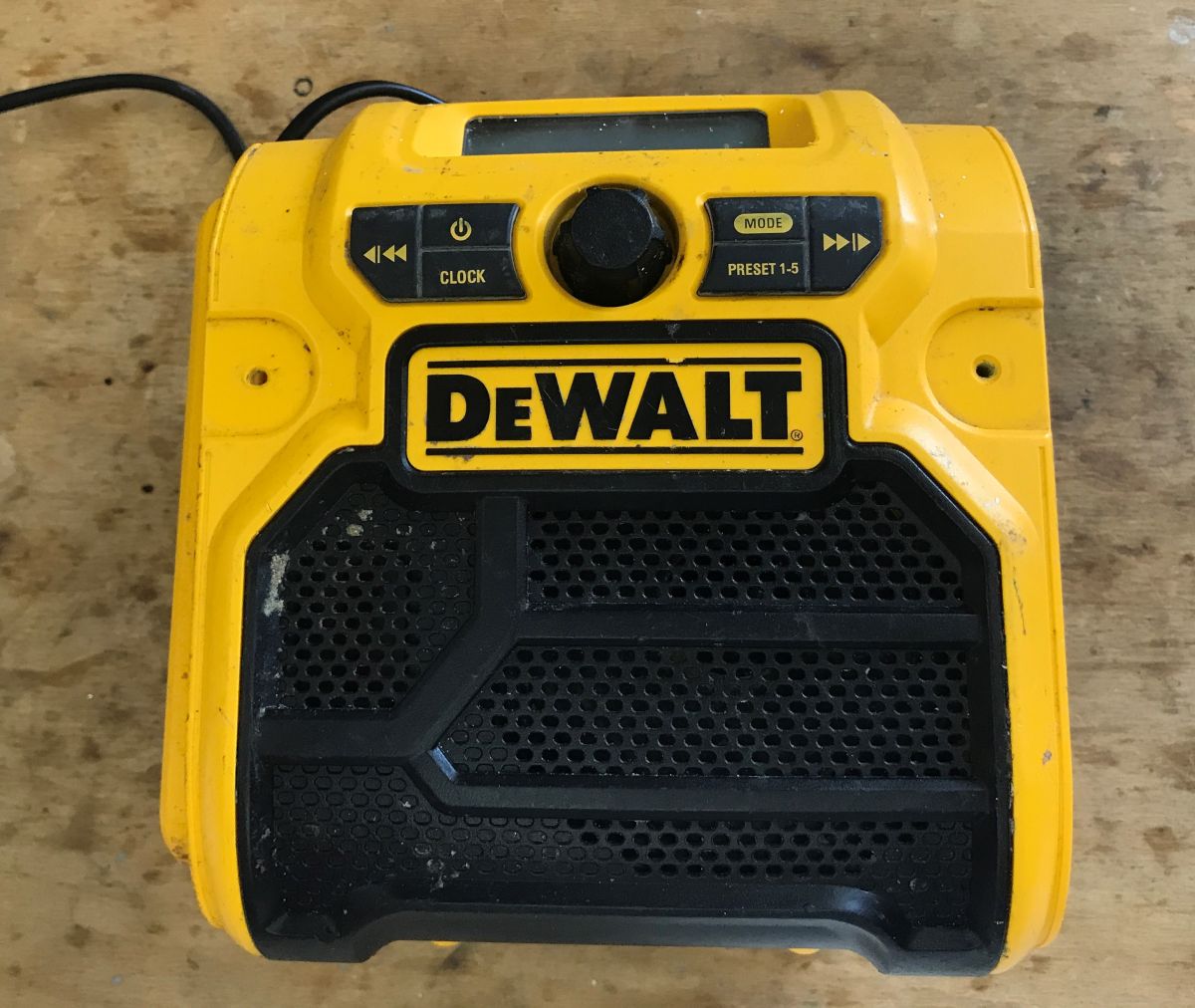
This time, I’ve got my hands on a DeWalt DCR019 rugged radio, which is presenting a rather interesting fault – the display works, but there’s no sound. In this post, I’ll walk you through a brief diagnosis of the problem, share a few photos of the interior, and highlight what sets this radio apart from typical mass-produced Chinese models: the availability of spare parts.
This radio offers versatile power options (230V mains or DeWalt XR Li-Ion 10.8V, 14.4V, 18V), FM/AM reception with the ability to store 10 FM and 5 AM stations, a 3.5 mm AUX socket for connecting external devices, and a highly durable cage-style housing that protects the unit in harsh workshop and construction environments. An additional advantage is the 1.8 m power cable, which can be conveniently wound around the built-in side hooks. The unit is fairly compact (240 x 245 mm) and weighs 2.8 kg. It is also worth noting that this radio is sold as a ‘body-only’ version as standard, meaning it does not come with a charger or battery included.
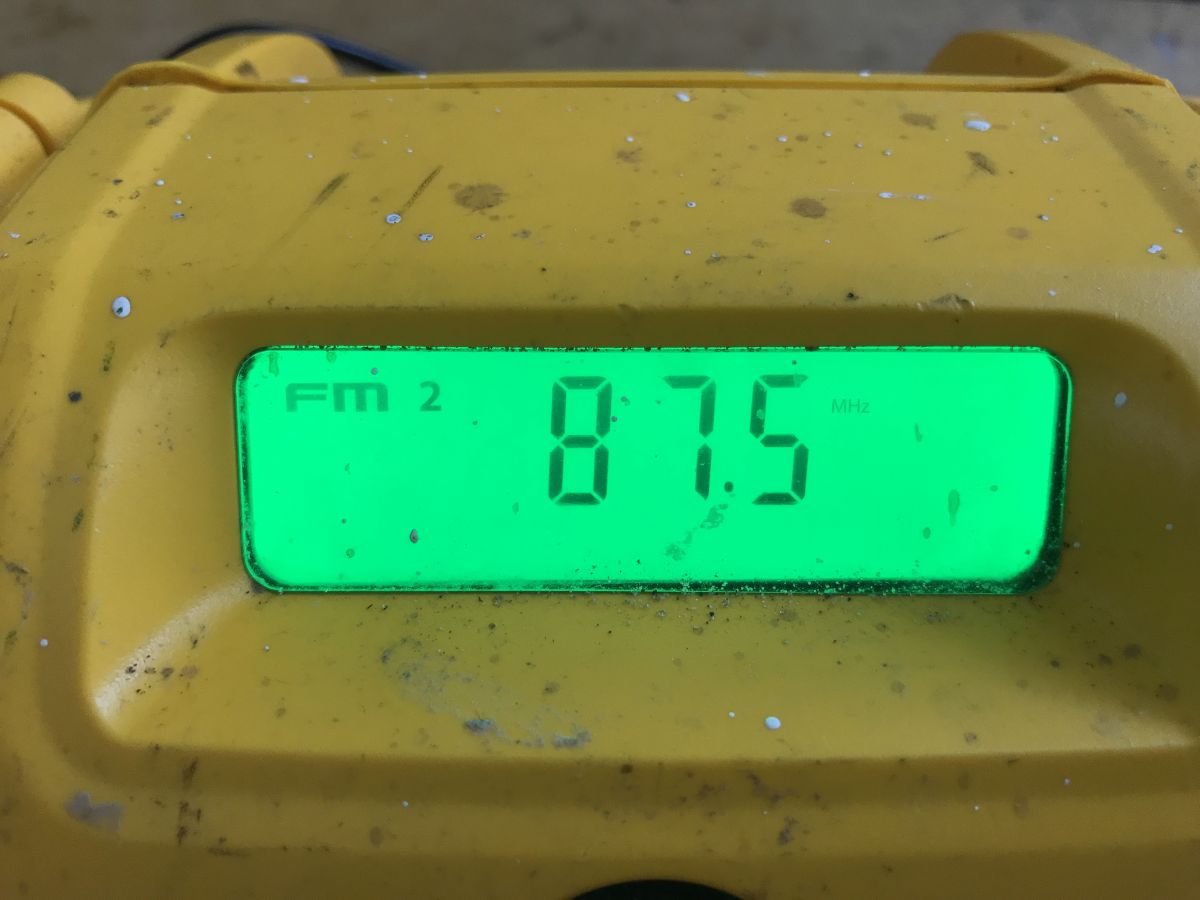
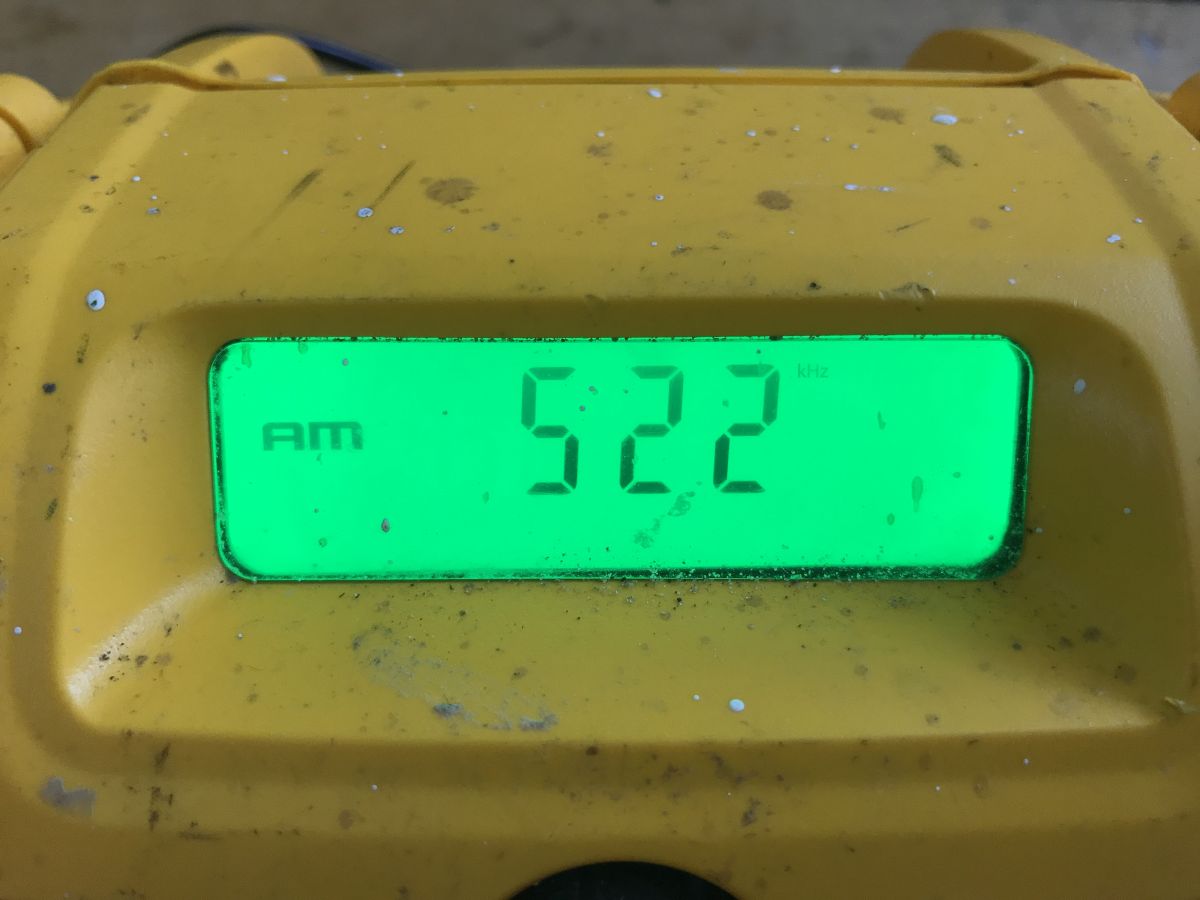
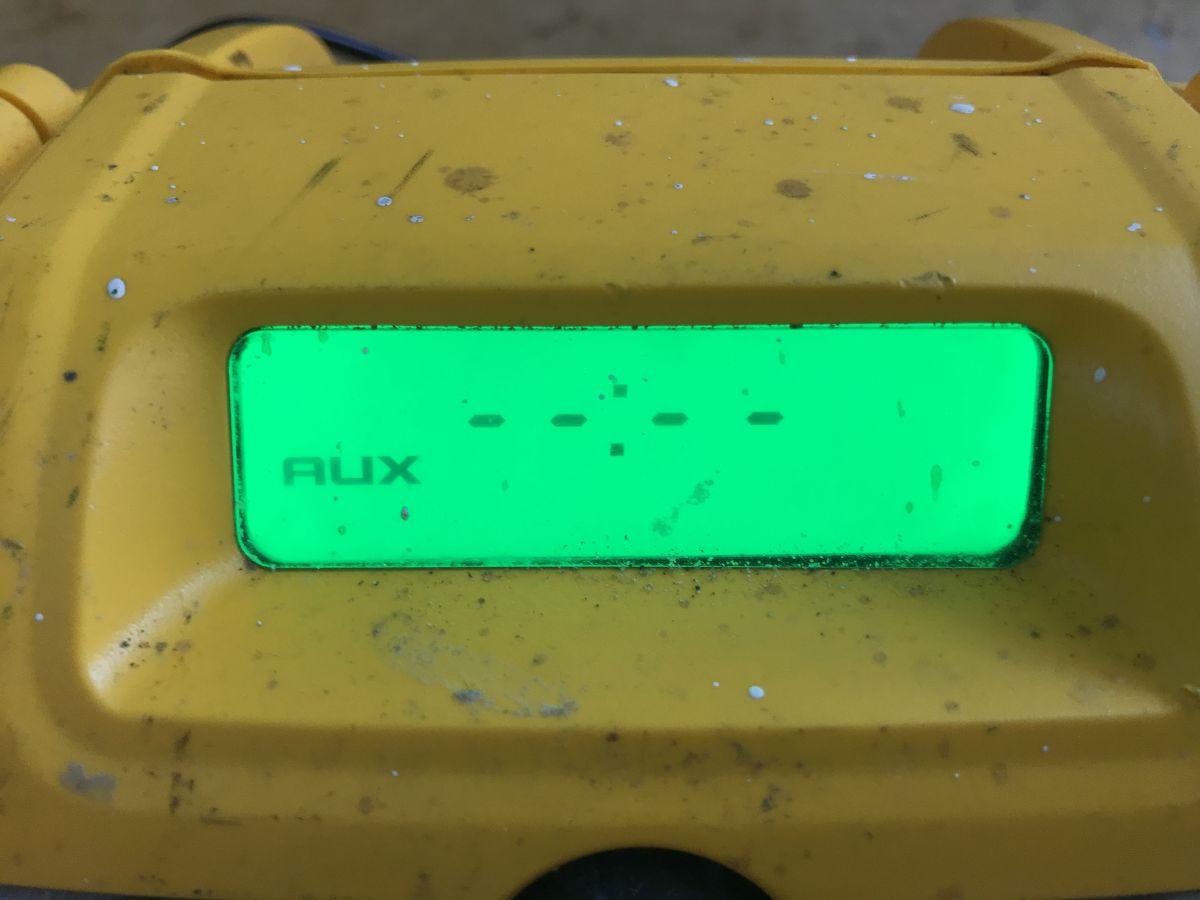
I began the diagnosis by quickly cycling through the operating modes, including an AUX test. The radio remains completely silent – could it be the amplifier or something simple?
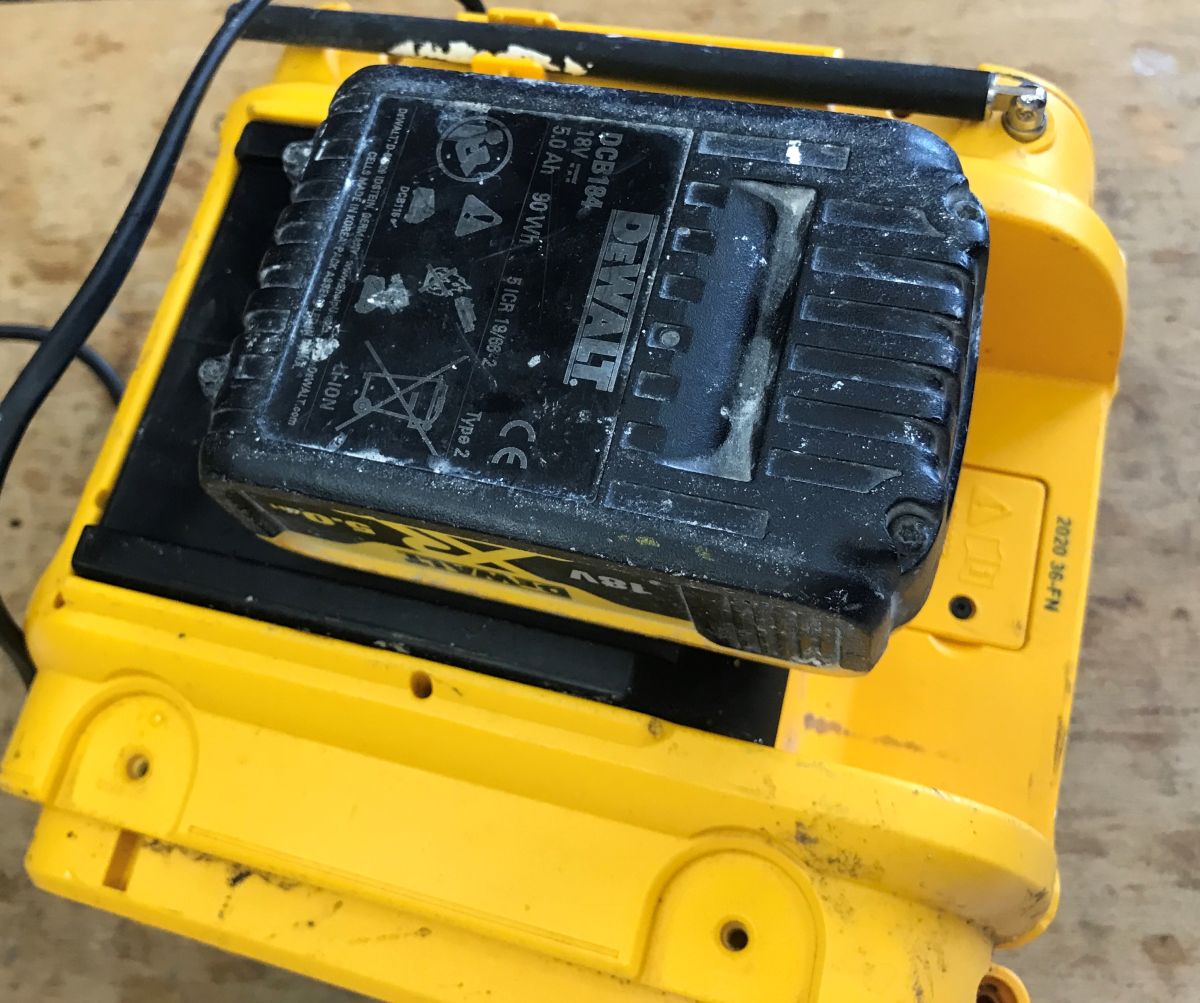
The unit stands out for its robust build quality and its ability to run on a DCB184 battery (18V, 5.0 Ah, 90Wh). This allows for around 8–12 hours of continuous music playback (depending on the volume setting), which is easily enough for a full day’s work on a building site.
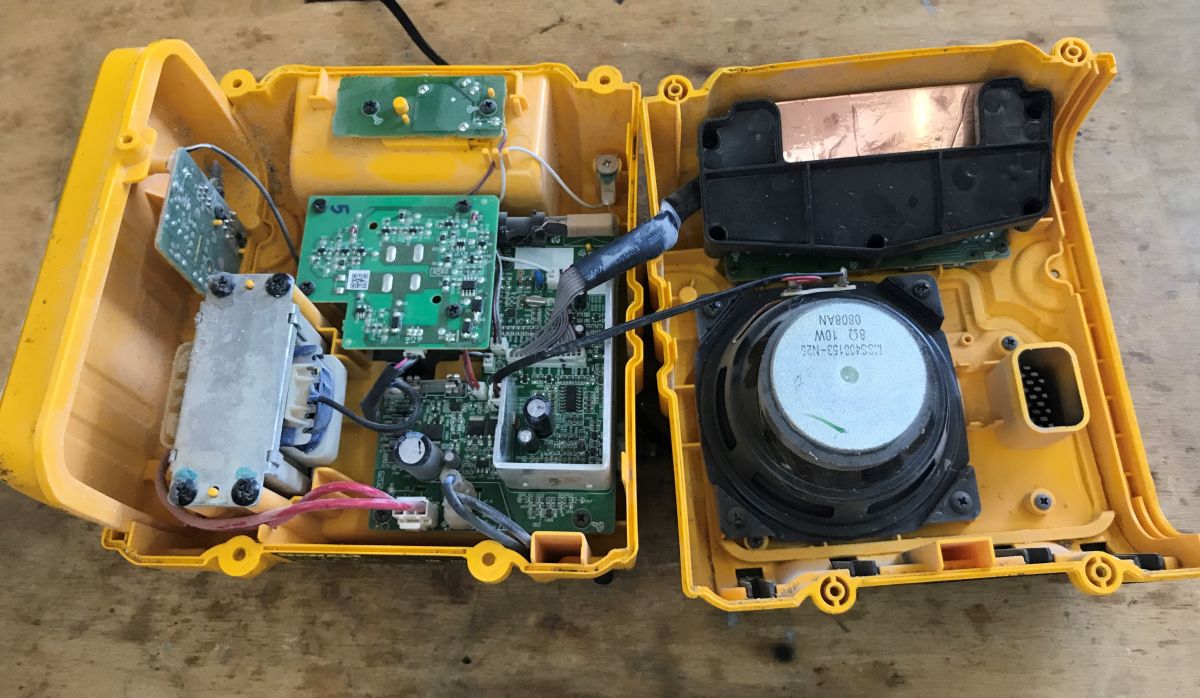
Let’s take a look inside. The interior surprised me a little. The transformer inside is a classic mains-type unit; there’s no switching power supply. They certainly didn’t skimp on this. At the same time, right next to it we have quite modern circuit boards, surface-mount components, and tightly packed parts. The speaker, although a single unit, is also quite substantial.
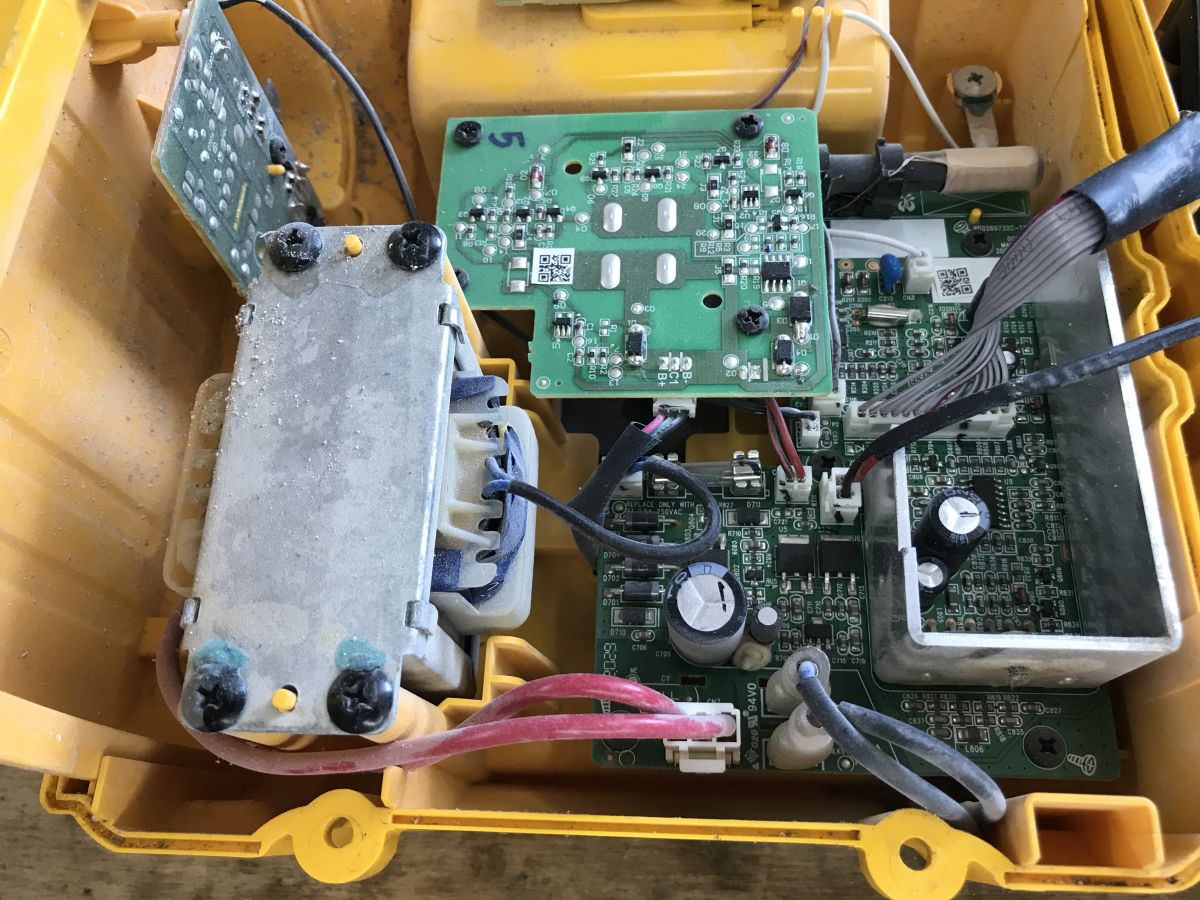
All in all, it’s hardly surprising – there’s bound to be a battery charging circuit inside, for a start. I can also see a fuse; someone has thought about serviceability, but to what extent?
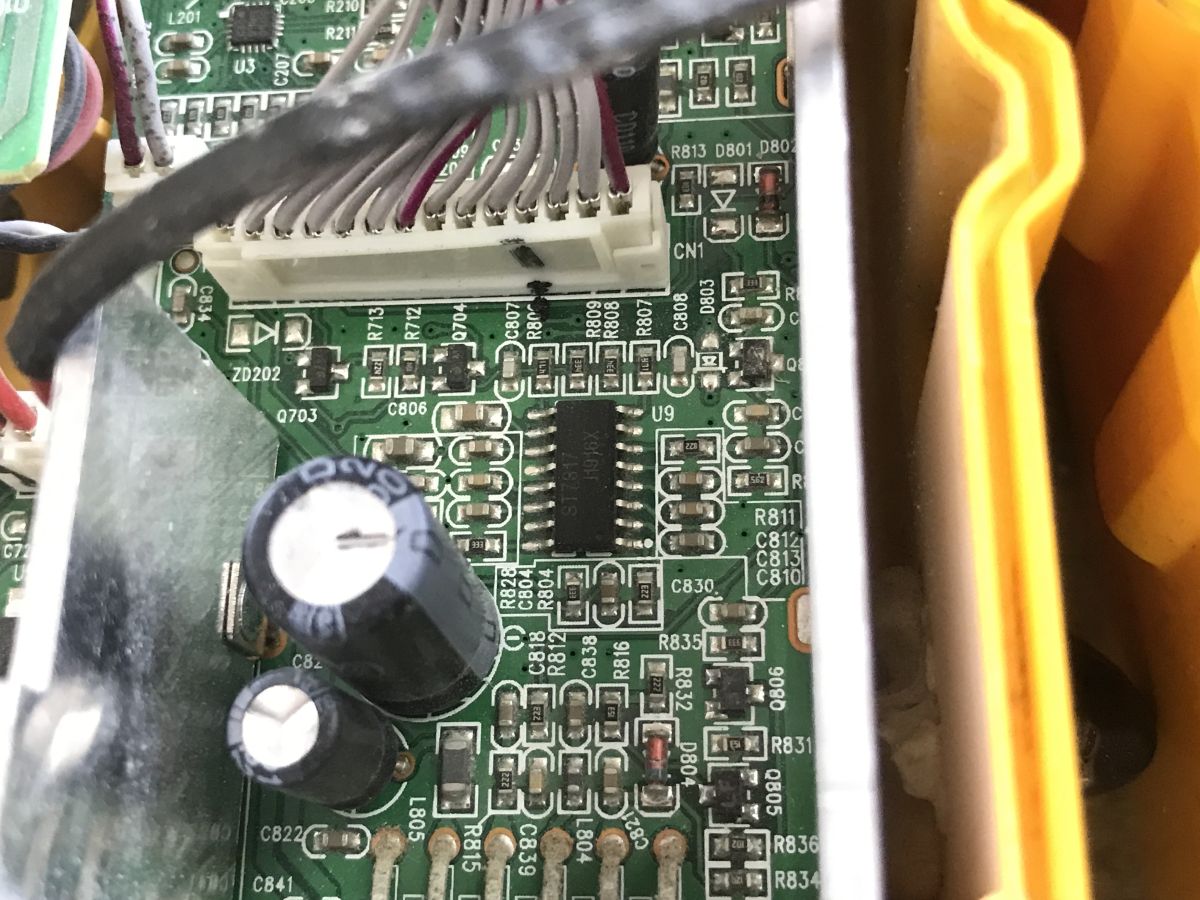
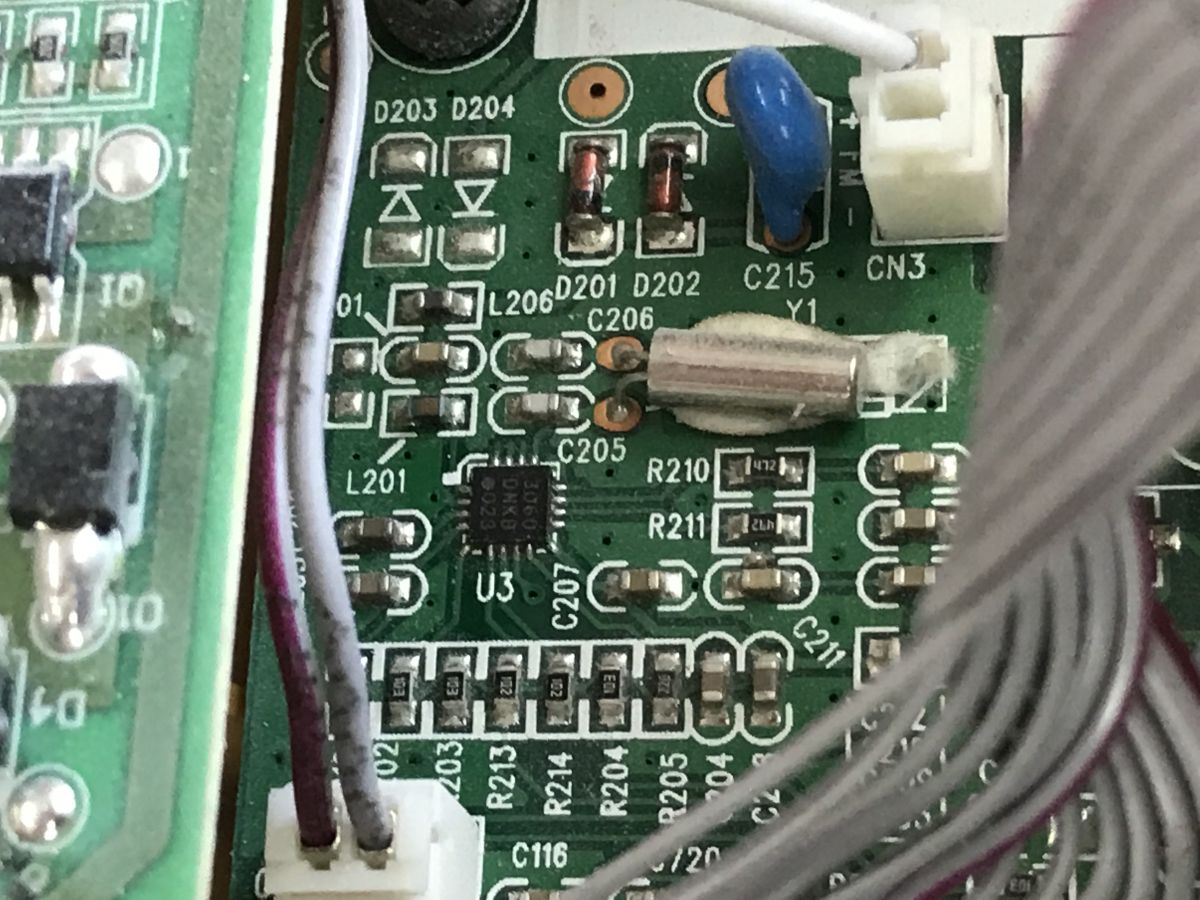
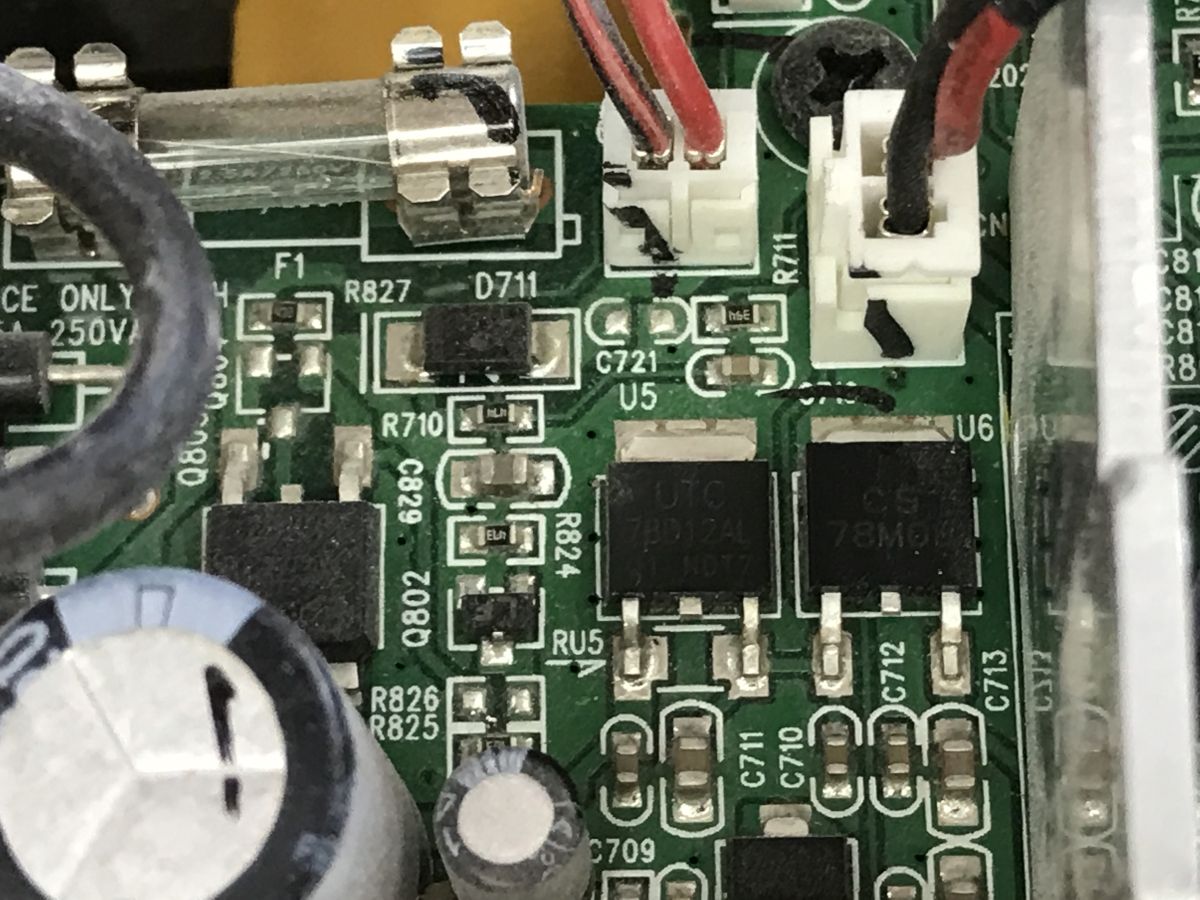
Several components also catch the eye, such as the digitally controlled ST TDA7317 audio processor (responsible for volume and equalisation), a component mounted on a large aluminium heat sink (presumably a power amplifier or the main voltage regulator), numerous electrolytic capacitors (e.g. 220µF 16V) and a large number of SMD transistors. The power supply and control electronics have been sensibly laid out on printed circuit boards connected by wires.
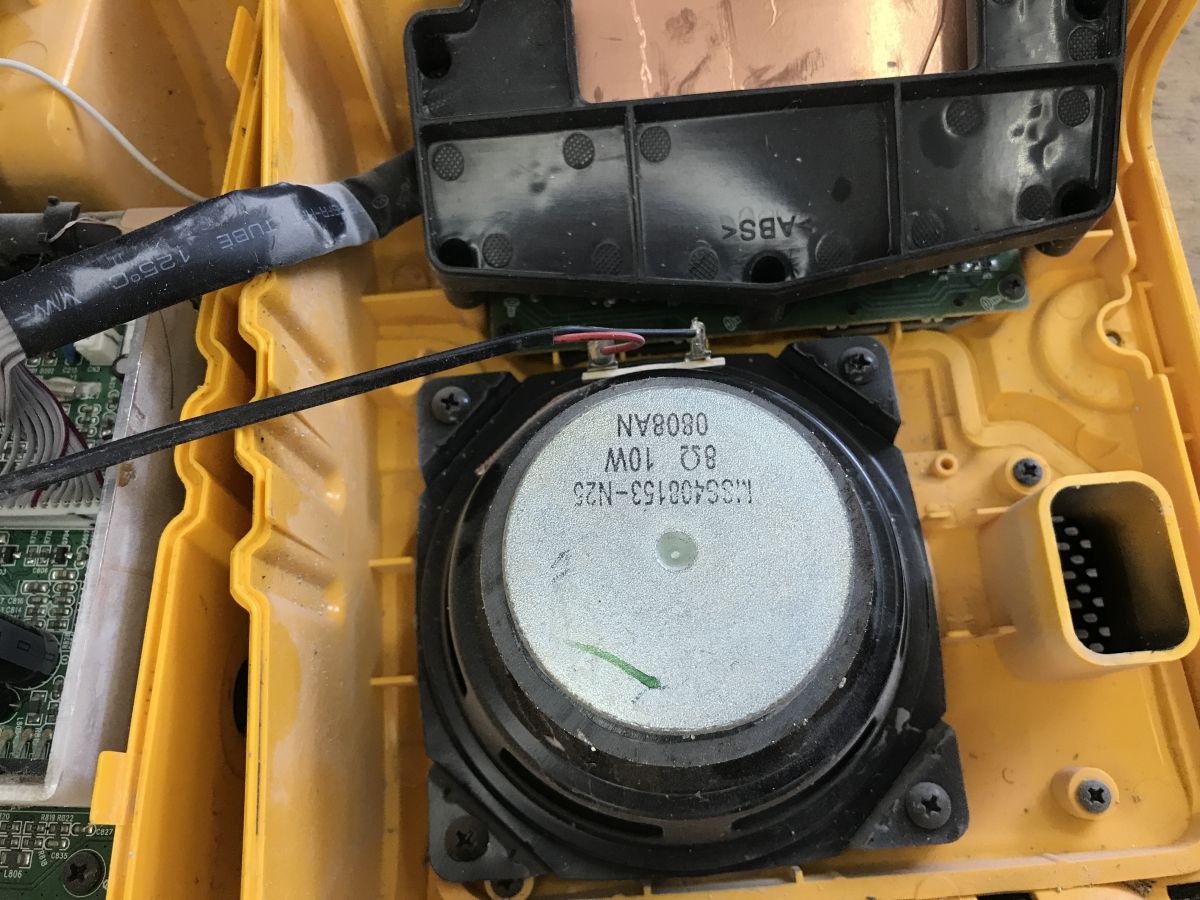
But let’s move on to the actual repair. The speaker is described as MSS408153-N25, 8Ω, 10W. Could there be something wrong with it?
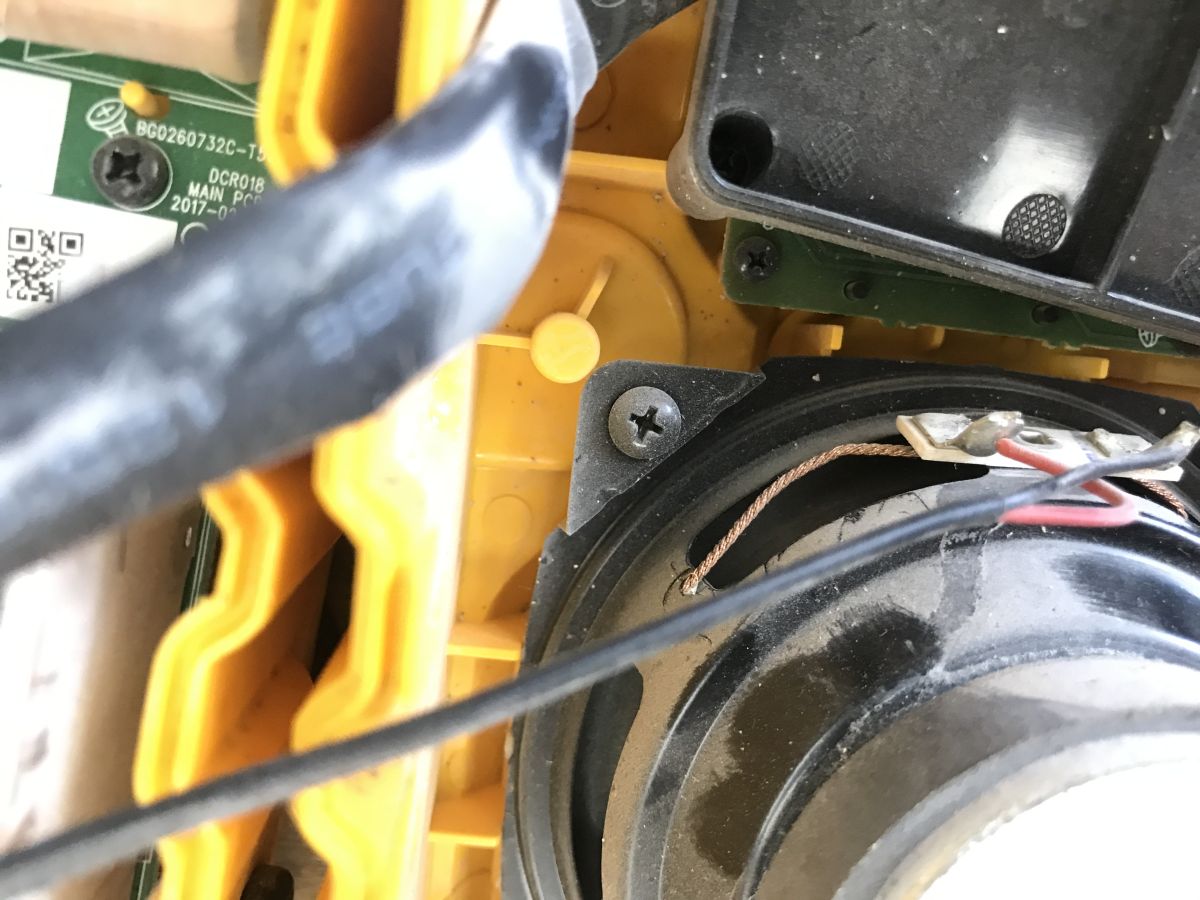
It turns out that the fault was simply in the main speaker itself, perhaps as a result of a fall. The wire had come loose from the diaphragm. I’m not likely to be able to solder that back on.
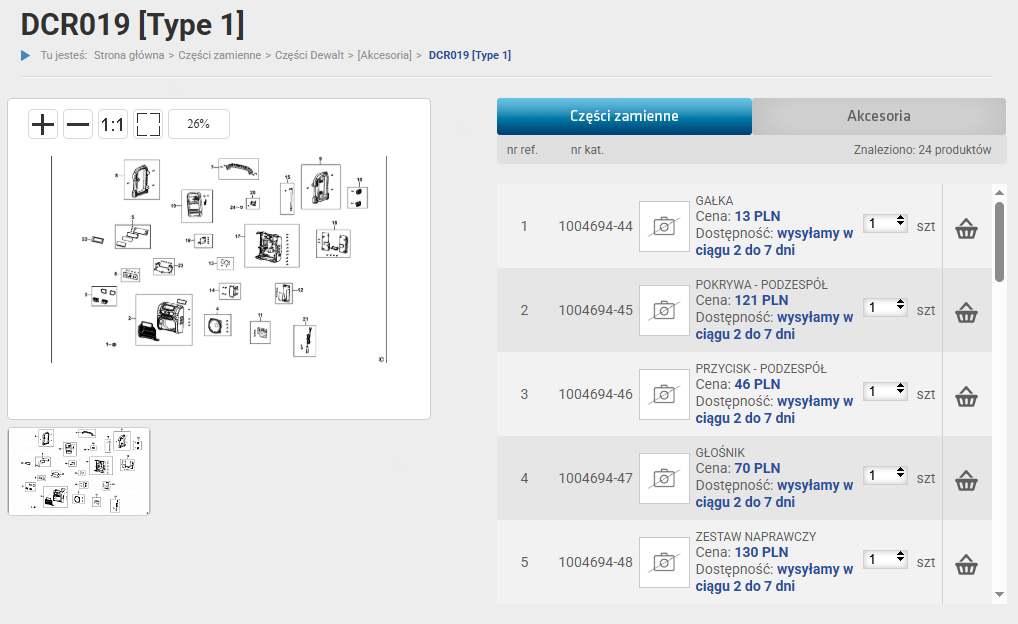
The speaker costs 70 zł – it’s expensive, but given that the radio itself costs several hundred zł… well, if worse comes to worst, you can always make a bit of a ‘modification’ and force a speaker of similar dimensions and compatible specifications into the space.
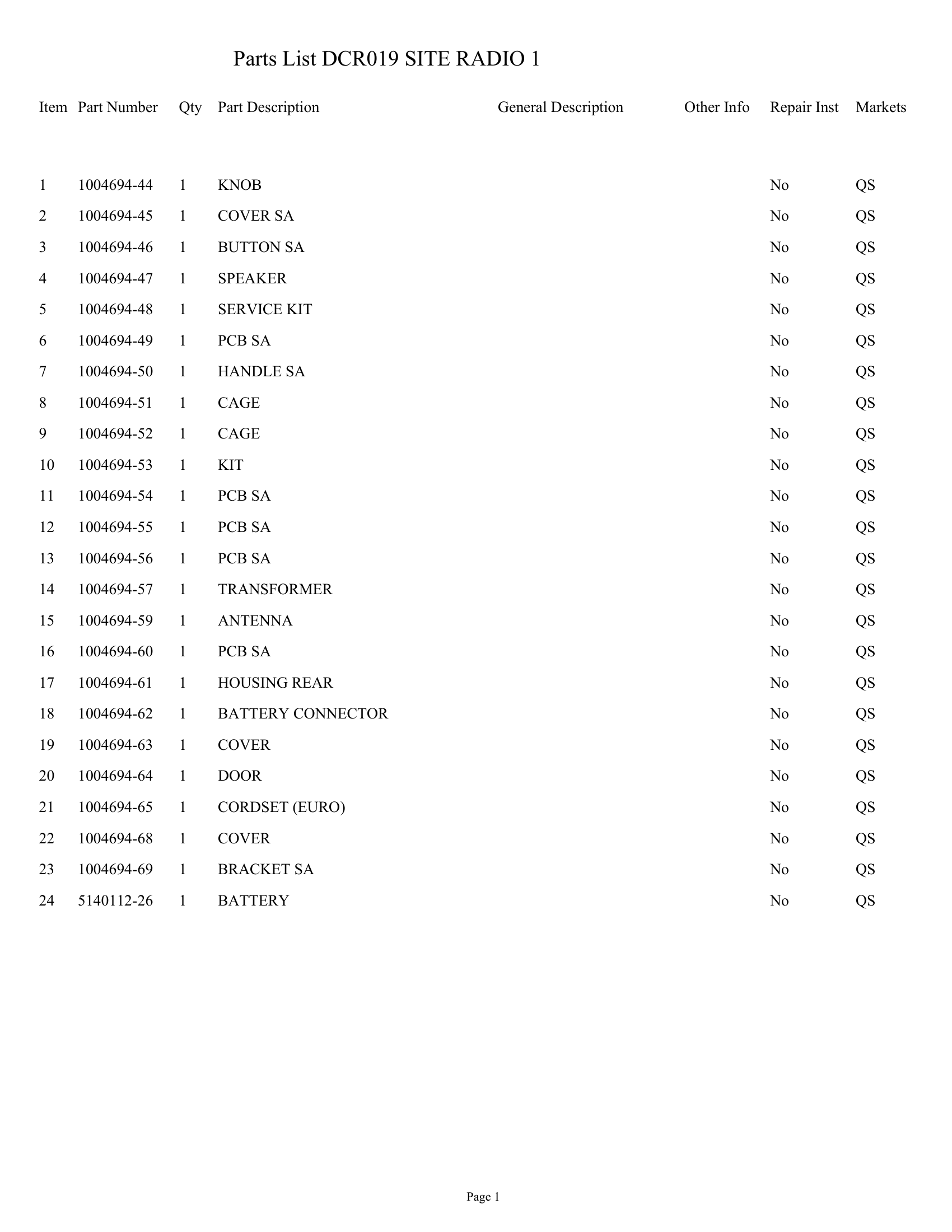
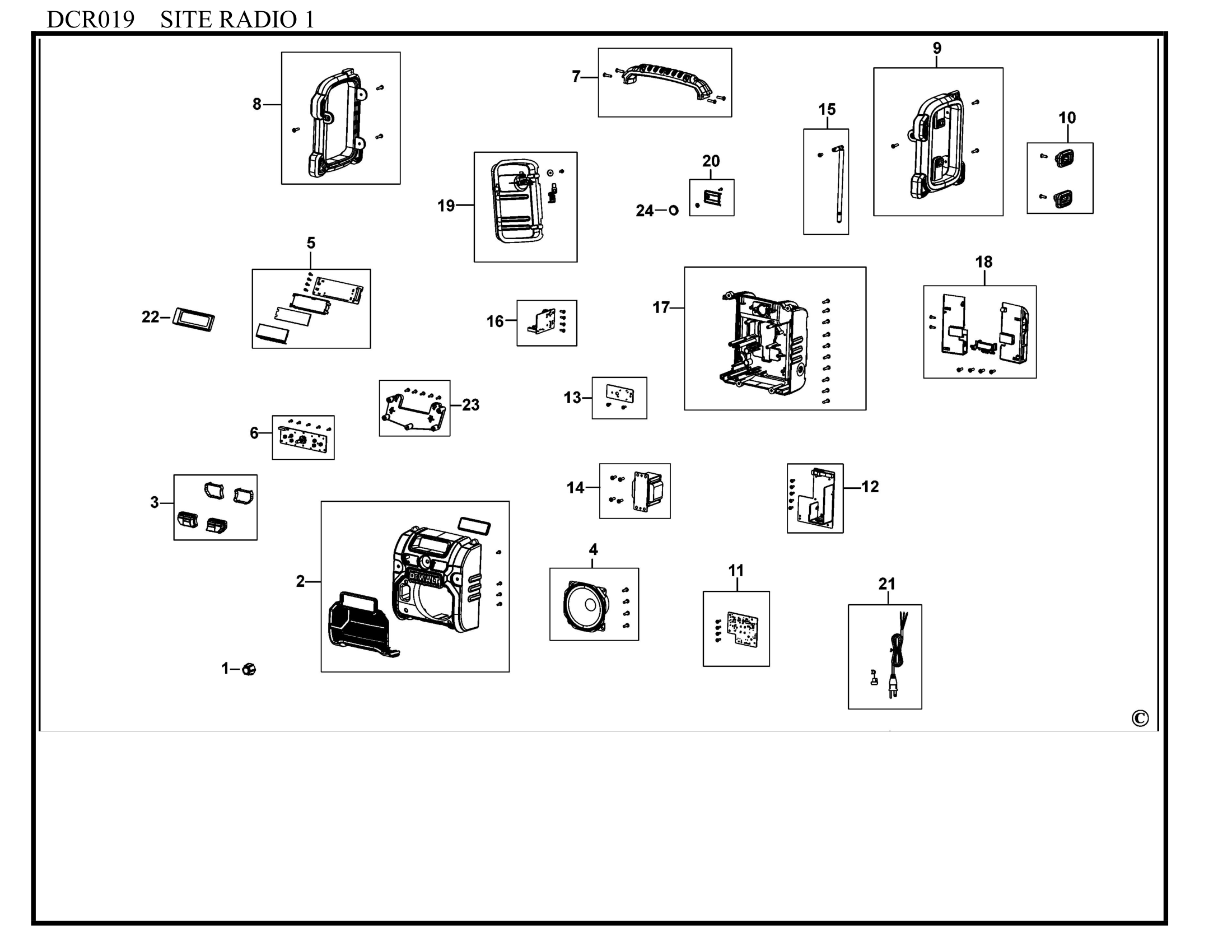
This clearly illustrates that, generally speaking, you can buy spare parts for this radio; there’s no need to chuck the whole thing on the scrap heap or waste time painstakingly searching for non-original ‘donor’ parts.
To sum up, I bought a new speaker and the radio started working again. It was an interesting change from those purely consumer-oriented, cheapest solutions, where you can’t really find a suitable replacement online and have to make do with what’s available. The whole repair was really very, very simple. Any beginner, or even someone with no background in electronics, could carry it out; you just need to be careful not to pull the connector out. That said, it’s a nice little find, and the availability of spare parts is something I often praise, hence this whole thread.
What do you think about the durability of this type of radio? Does it make sense to buy spare parts at such potentially high prices?
p.kaczmarek2 wrote 14765 posts with
rating 12899 , helped 659 times.
Been with us since 2014 year.
Comments