logo elektroda
logo elektroda
X
logo elektroda

Catalytic Gas Stove for Winter Room Heating: Safety, Exhaust Gas, and Gas Cylinder Efficiency

osik 123667 36
Best answers

Can I use a catalytic gas stove to heat the room I sit in, and what are the safety, exhaust-gas, and gas-cylinder efficiency issues?

A catalytic gas stove is not recommended as a main room heater: it burns LPG, consumes room oxygen, adds a lot of water vapor, and therefore needs strong ventilation, so it is better suited to a garage/car park or only temporary use [#5487330][#5487608][#5490858] One user reported that in a 17 m² attic room it used about 1 cylinder per week at 8-10 hours per day, while for additional spring/autumn heating it lasted about 1.5 months; a different stove of the same type used about 1 cylinder per month but heated less well [#5668044] For best efficiency, run it on the highest setting for about 5 minutes to warm the catalyst, then switch to the lowest setting; using the 2nd or 3rd level continuously was described as wasting gas and money [#5668044][#10447474] The stove can also shut off when oxygen becomes too low, and sleeping with it on was described as making breathing difficult, so opening a door or window briefly is better than relying on leaks [#5668044] If you need a safer fixed solution, one reply suggested a boiler with a closed combustion chamber and a radiator through the wall [#5492604]
Generated by the language model.
ADVERTISEMENT
Treść została przetłumaczona polish » english Zobacz oryginalną wersję tematu
  • #31 13012596
    tayson.82
    Level 10  
    Posts: 22
    Rate: 13
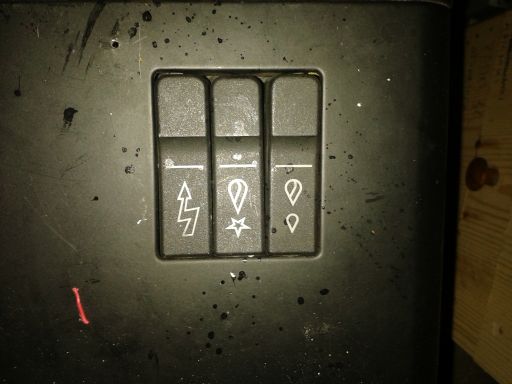
    what are the buttons for...
    the first one on the left for firing, and the rest?

    thanks a lot!
    Catalytic Gas Stove for Winter Room Heating: Safety, Exhaust Gas, and Gas Cylinder Efficiency
  • ADVERTISEMENT
  • #32 13041068
    drawer
    Level 2  
    Posts: 2
    Rate: 9
    Hello, I have a question, do all these types of stoves have catalytic converters? And what do you think about the Ravanson LD-168N model?
  • ADVERTISEMENT
  • #33 20486632
    Thisisover
    Level 2  
    Posts: 2
    Hello, if you want to know more about how gas stoves for cylinders with a catalyst on the website you can read such things as The main part of the stove is the housing made of good quality materials resistant to mechanical damage and the effects of high temperatures and by-products of the combustion process. The housing has a mesh on the front - often decorative, and on the back there is a place for a gas cylinder. Wheels are attached to the housing for easy transport of the stove.

    The stove is equipped with a flexible rubber hose, a reducer and a carbon dioxide concentration sensor in the air. It is worth paying attention to this last element - not all stoves are equipped with detectors. Thanks to the sensor, the fuel supply is cut off when the CO2 standards in the air are exceeded.
  • ADVERTISEMENT
  • #34 20486946
    Aaalbercik
    Level 20  
    Posts: 272
    Help: 38
    Rate: 81
    Thisisover wrote:
    carbon dioxide concentration sensor in the air.

    Are you sure
    Or just a bad translation
    Is it rather about CARBON MONOXIDE?
    So I'm asking out of curiosity :-)

    Selected from the manual ... The device is equipped with thermoelectric protection. If the combustion process is interrupted, it cuts off the gas supply, preventing the excessive accumulation of harmful carbon dioxide in the room.
    So simply a thermocouple, the flame goes out, it cuts off the gas supply
    Or maybe I don't understand something.
  • #35 20501006
    Domelski
    Level 19  
    Posts: 222
    Help: 30
    Rate: 111
    Overall, both are dangerous. Only a little carbon monoxide is enough, and there must be a lot of carbon dioxide.
    Carbon monoxide is toxic (strong binding to hemoglobin) TWA 20ppm (0.002%) TWA 100ppm (0.01%)
    Carbon dioxide displaces oxygen and accumulates in the lungs, preventing breathing (poor binding to hemoglobin) TWA 5000ppm (0.5%) TWA 15000 (1.5%)
    https://www.medonet.pl/zdrowie,hiperkapnia---symptoms--causes--leczenie,artykul,1730452.html
    https://www.youtube.com/watch?v=r3UIgbfJEVc - here an unpleasant case of carbon dioxide poisoning

    Also, not only carbon monoxide is a threat, but in this case I would prefer devices powered by electricity.
  • ADVERTISEMENT
  • #36 21712969
    BolesawZLublina
    Level 2  
    Posts: 2
    Related question: will unsealing the terrace doors and windows in a summer house provide sufficient oxygen supply for autumn reheating of an 18 m2 room?
  • #37 21712999
    sigwa18
    Level 43  
    Posts: 11918
    Help: 1180
    Rate: 3316
    Such cookers are pointless for two reasons.
    1) You need to ventilate, which means you heat and ventilate/cool.
    2) When gas burns, it creates water vapour, which raises the humidity in the air, once increasing the feeling of cold. 2. it condenses on colder surfaces (e.g. poorly insulated wall corners or under windows) and is a habitat for black mould.

    Better to buy an air conditioner with a heating function and heat with it. I know it is more expensive to buy, but heating is cheaper, more comfortable and safer.

Topic summary

✨ The discussion revolves around the use of catalytic gas stoves for room heating during winter, focusing on safety concerns, exhaust gas emissions, and gas cylinder efficiency. Participants express caution regarding the use of such stoves in enclosed spaces due to the consumption of oxygen and the production of water vapor. Ventilation is emphasized as crucial for safety, with recommendations for achieving adequate air exchange. Users share personal experiences with various models, noting issues like clogged catalytic converters and gas consumption rates. The Agni and DeLonghi brands are mentioned, with users reporting gas usage of approximately one cylinder per week for intermittent heating. Concerns about carbon monoxide and carbon dioxide emissions are raised, advocating for electric heating as a safer alternative.
Generated by the language model.

FAQ

TL;DR: One 11 kg LPG bottle can run a catalytic heater for ≈55 h [Elektroda, donpassatos, post #5668044]; “Ventilation must provide at least one full air exchange per hour” [Elektroda, serwisant73, post #5487608] Catalytic stoves give quiet, flameless heat but add moisture, consume oxygen and need proper safety checks.

Why it matters: This FAQ helps DIY-ers decide if a catalytic gas stove is a safe, cost-effective option for spot heating bedrooms, garages or workshops.

Quick Facts

• Runtime: 11 kg LPG → ~55 h on low (≈0.2 kg/h) [Elektroda, donpassatos, post #5668044] • Catalyst surface temperature: about 300 °C [Elektroda, donpassatos, post #5668044] • Minimum ventilation: ≥1 air change per hour [Elektroda, serwisant73, post #5487608] • CO exposure limit: 50 ppm over 8 h (OSHA) [OSHA, 2023] • Typical LPG energy cost: 0.25 €/kWh vs night-rate electricity 0.25 €/kWh [Eurostat, 2022]

Are catalytic gas stoves safe to use in a bedroom?

Only with constant ventilation and a working thermocouple. Combustion consumes oxygen and emits CO₂ and trace CO. A CO alarm is strongly advised [Elektroda, William Bonawentura, post #5487330] OSHA caps CO at 50 ppm over 8 h [OSHA, 2023].

How much oxygen does a catalytic heater use and how do I ventilate?

One stove burning 0.2 kg/h LPG consumes ≈0.5 m³/h oxygen. Provide at least one full room air change per hour via open vent or tilted window [Elektroda, serwisant73, post #5487608]

Is LPG cheaper than electric heaters for spot heating?

At 13.6 kWh/kg, 11 kg LPG delivers ≈150 kWh. At 0.25 €/kWh, cost equals €37.5, similar to night-rate electricity (€0.25 €/kWh) [Eurostat, 2022]. With extra ventilation heat loss, electric can edge cheaper [Elektroda, William Bonawentura, post #5490858]

Why does my stove smell of gas or shoot flames?

Likely causes: clogged catalyst, missing pressure reducer, or leaking connections. Missing reducer caused flame bursts in a 10-year-old Agni unit [Elektroda, desalutant, post #5989174] Replace the reducer and check joints with soapy water before relighting.

How do I ignite an Agni catalytic stove correctly?

  1. Open cylinder valve.
  2. Press main knob fully, hold 20 s to prime gas, then press piezo spark once.
  3. Keep knob depressed 20 s more; release slowly and set to Level I. This avoids flame-out noted by users [Elektroda, Lubiany1100, post #10450655]

The flame dies when I release the button—what’s wrong?

A failed thermocouple can’t hold the safety valve open. Clean or replace it; universal probes cost PLN 30–50 [Elektroda, piracik, post #10469027] Edge-case: cracked capillary makes replacement mandatory.

How do I unclog a burner nozzle?

Three-step fix:
  1. Disconnect gas and remove burner tray.
  2. Blow compressed air through the brass-glass nozzle; use a fine pin only if air fails.
  3. Reassemble and leak-test. This restored ignition in a 10-year-stored Agni [Elektroda, Szymon Tarnowski, post #12796503]

Does long storage ruin the catalyst?

Not necessarily. A unit stored 10 years in an attic lit instantly [Elektroda, piracik, post #12758454] Moist, dusty basements accelerate clogging; inspect surface for soot before use.

Do all portable LPG heaters have CO/CO₂ sensors?

No. Budget models rely solely on the thermocouple. Higher-end units add an ODS sensor that cuts gas at ~1.5 % CO₂ [DecusHome, 2023].

What temperature does the catalyst reach and is it a burn hazard?

Surface runs near 300 °C, hot enough to ignite paper [Elektroda, donpassatos, post #5668044] Keep at least 50 cm clearance and use child guards.

Can a fan improve room heating?

Yes. Placing a small desk fan behind the stove improved perceived warmth in a garage test [Elektroda, gkuba911, post #10450309] Aim airflow across the catalyst, not directly at the flame monitor.

What is a pressure reducer and why is it mandatory?

The reducer drops cylinder pressure from up to 8 bar to 30 mbar steady flow. Without it, gas jets violently, causing flare-ups and automatic shutdowns [Elektroda, Bobbo, post #6249717]

Is the Ravanson LD-168N a catalytic model?

No public spec confirms a catalytic mat; it uses ceramic radiant panels. Ceramic types glow red and have higher surface temperatures but similar ventilation needs [Manufacturer sheet, 2021].
Generated by the language model.
ADVERTISEMENT