
logo elektroda
logo elektroda
X
logo elektroda
Dostępna jest polska wersja

Czy wolisz polską wersję strony elektroda?

Nie, dziękuję Przekieruj mnie tam

4-channel radio control unit: what is the 18-pin IC, UL1958?

sofien 3054 13
Best answers

What is the unidentified 18-pin IC in my 4-channel radio receiver/controller, and is it really a UL1958 or a microcontroller?

It is probably not a UL1958; that part was an obsolete switching IC for RTV equipment, while an 18-pin chip in this kind of controller is more likely a microcontroller such as a PIC16F84 [#14435644] A replacement chip alone will not help unless it is properly programmed, because microcontrollers are shipped blank [#14435917] One reply also noted that the receiver likely has a 12 V supply section and that feeding it 24 V may have fried the 78L05 regulator/stabilizer [#14443363]
ADVERTISEMENT
Treść została przetłumaczona polish » english Zobacz oryginalną wersję tematu
  • #1 14435575
    sofien
    Level 12  
    Posts: 43
    Rate: 1
    welcome

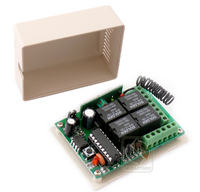
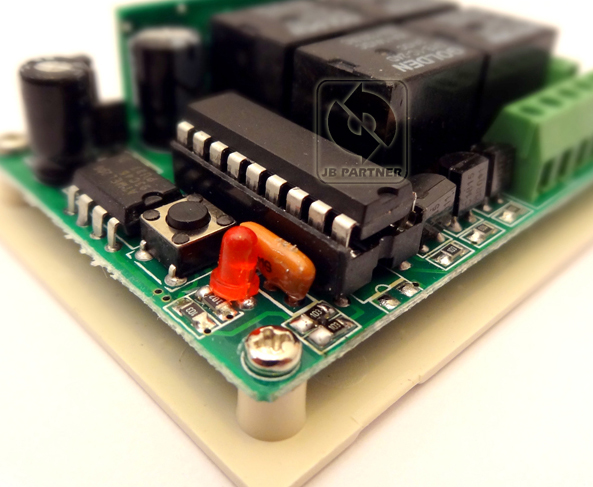
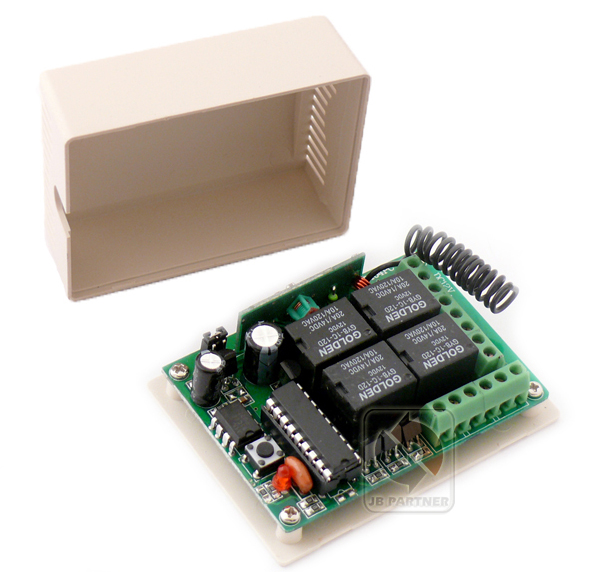
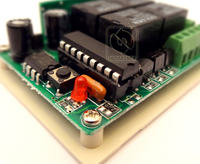
    what IC could be sitting in this controller ?? it is a ukaład with 18 legs . Unfortunately in all versions there is no inscription on these chips . The controller refused to work, so it does not respond at all, i.e. 4-channel radio
    bought on allegro .

    it may be an integrated circuit UL1958 ????
    4-channel radio control unit: what is the 18-pin IC, UL1958?

    4-channel radio control unit: what is the 18-pin IC, UL1958?
  • ADVERTISEMENT
  • #2 14435644
    ArturAVS
    Moderator
    Posts: 26265
    Help: 2297
    Rate: 7784
    UL 1958 is a no longer manufactured circuit for switching channels in RTV equipment.

    As 18 pins, you can guess that it is something from a PIC. E.g. PIC 16f84. Definitely a microcontroller of some kind.
  • ADVERTISEMENT
  • #3 14435698
    sofien
    Level 12  
    Posts: 43
    Rate: 1
    thanks , maybe it will somehow fit !!!

    another piece of information, underneath this IC there is the inscription " MIBEEG1448 " maybe there is something to be found out from this inscription.
  • #4 14435917
    ArturAVS
    Moderator
    Posts: 26265
    Help: 2297
    Rate: 7784
    Finding a chip will not get you anywhere. In order for a microcontroller to perform the functions you expect of it, you must first program it. They come out of the factory "clean".
  • ADVERTISEMENT
  • #5 14436143
    sofien
    Level 12  
    Posts: 43
    Rate: 1
    i was just thinking about that too , so all that remains is to buy a new one . thanks for the information .
  • ADVERTISEMENT
  • #6 14441362
    sofien
    Level 12  
    Posts: 43
    Rate: 1
    since the controller has no response it could be e.g. the ceramic resonator - orange cylinder ????
  • #7 14441418
    ArturAVS
    Moderator
    Posts: 26265
    Help: 2297
    Rate: 7784
    Hard to tell without any measurements. There could also be a defective remote control.
  • #8 14442601
    sofien
    Level 12  
    Posts: 43
    Rate: 1
    the remote controls are definitely not , they work fine . to be honest i didn't even have time to enjoy it because the controller was to be connected to the gate control unit . So I just plugged it in at 24 volts to see how it works and after two minutes it was gone hehe
  • #9 14443363
    ArturAVS
    Moderator
    Posts: 26265
    Help: 2297
    Rate: 7784
    Well, that's all clear. You should have written right away. This receiver has a 12V supply! (Even on the relays you have it written that the coil is 12V). The stabiliser is probably fried.

    Give a close-up photo of the board, and a wiring diagram.
  • #10 14443390
    TvWidget
    Level 39  
    Posts: 4403
    Help: 472
    Rate: 694
    A gate controller is usually powered by 24V AC !
  • #11 14443474
    ArturAVS
    Moderator
    Posts: 26265
    Help: 2297
    Rate: 7784
    TvWidget wrote:
    The gate controller usually runs on 24V AC !


    And where did the colleague read this? In the dozen or so that I have wired and repaired there was 24VDC output. To get to AC you have to combine. It does not change the fact that the author of the topic stoned the 78l05 stabilizer on the board, giving too high power supply. If AC had been there, chips would have been left of the electrolytic capacitors after a few minutes.
  • #12 14443542
    sofien
    Level 12  
    Posts: 43
    Rate: 1
    i replaced the 78l05 stabiliser on the board , I also replaced the ceramic resonator , I replaced all the transistors and a few resistors and it still doesn't work .
    It is likely that the integrated circuit - microcontroller with 18 legs - is dead. ok I can close the topic because it is no longer anything to save it ,

    Added after 3 [minutes]:

    arturavs wrote:
    Well, that's all clear. You should have written right away. This receiver has a 12V supply! (Even on the relays you have it written that the coil is 12V). The stabiliser is probably fried.

    Give a close-up photo of the board, and a wiring diagram.


    the controller is powered by 24v , the writing on the relays is 24V 30A

    Added after 47 [minutes]:

    oh i forgot to add thank you for your help . today i will buy a new controller i will be more careful now , i will put the stabilisation on the control unit and i think it will be fine
  • #13 14444398
    ArturAVS
    Moderator
    Posts: 26265
    Help: 2297
    Rate: 7784
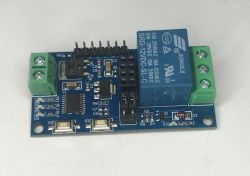
    You provide pictures inadequate to the state of your possession. The topic should not exist at all. You should post pictures of the controller you own, not some downloaded from the internet.

    Good luck in your battle with this thing!

    Added after 2 [minutes]:

    You are giving Fellow pictures that are not appropriate to the condition of the property. The topic should not be there at all. You should insert pictures of the controller you own, not some downloaded from the internet.

    Good luck in your battle with this thing!
  • #14 14850015
    sofien
    Level 12  
    Posts: 43
    Rate: 1
    i am closing the topic. I bought a new one
    however, the chip is gone so it's not worth it. thanks to all
ADVERTISEMENT