logo elektroda
logo elektroda
X
logo elektroda

High-Pitched Sound from Fuse Box when 3.5 kW Air Conditioner is On in a 12.5 kW Apartment

maniek998straz 26823 47
Best answers

Why does a high-pitched squeak come from the apartment fuse box when the air conditioner is switched on, and how can it be fixed?

The noise is coming from a protective device in the switchboard, not from the air conditioner itself, and it should be checked by an electrician because it is likely a buzzing/hissing breaker or RCD working near its limit or a poor-quality module [#15585003][#15591942] The thread points out that a B16 breaker can be too close to the edge with this load, and that the air conditioner should ideally have its own dedicated circuit with the protection recommended by the manufacturer [#15591942][#15592465] It was also clarified that the unit’s 3.5 kW figure is cooling capacity, not electrical power draw; the posted specs showed about 940 W cooling power and 4.4 A current [#15592491][#15592530] In the end, the author reported that the culprit was the device with the Test button in the fuse box, and replacing it with a Legrand unit solved the problem [#15596884]
Generated by the language model.
ADVERTISEMENT
Treść została przetłumaczona polish » english Zobacz oryginalną wersję tematu
  • #1 15584744
    maniek998straz
    Level 8  
    Posts: 25
    Rate: 7
    Hello.

    As this is my first time here, I'd like to say hello, so hello.

    I have a little problem:

    Well, I bought an apartment, there are 3 phases in the apartment - connection power 12.5 kW.

    I don't live there yet - I'm in the renovation phase.
    Last week I had a 3.5 kW air conditioner installed, and this is where the problem arises. When I turn it on, a slight squeak comes out of the fuse box, a high-pitched sound. He's not very loud, but from what he knows, it shouldn't be. When turned off, there is blissful silence...

    Does anyone of you have an idea how to solve this?

    Regards and thanks for the information :)
  • ADVERTISEMENT
  • #2 15584770
    radex324
    Level 24  
    Posts: 1248
    Help: 50
    Rate: 206
    Call an electrician, he'll sort it out.
  • #3 15584785
    Łukasz-O
    Admin of electroenergetics
    Posts: 21783
    Help: 654
    Rate: 4278
    Take a picture of the switchgear.
    Maybe it's the contactor.
  • #4 15584811
    maniek998straz
    Level 8  
    Posts: 25
    Rate: 7
    Unfortunately, but at the moment I'm already at home, I can't take a picture, but tomorrow, yes, can you use this electricity or rather wait for an electrician to check it???
  • #5 15584860
    sermarek
    Level 16  
    Posts: 193
    Help: 20
    Rate: 33
    Probably the squeak is caused by the operation of the inverter in the air conditioner.
  • ADVERTISEMENT
  • #6 15584891
    Łukasz-O
    Admin of electroenergetics
    Posts: 21783
    Help: 654
    Rate: 4278
    sermarek wrote:
    Probably the squeak is caused by the operation of the inverter in the air conditioner.


    We are talking about the switchgear in the apartment.
  • ADVERTISEMENT
  • #7 15584941
    sermarek
    Level 16  
    Posts: 193
    Help: 20
    Rate: 33
    From the question, it appears that yes. I have already encountered that due to poor filtering of the inverter supply, inverter operation can be heard in the switchgear. I suspect insufficient filtration on the inverter circuit supply - manufacturer's savings. If the author of the topic had listened to the air conditioner, he would probably have heard the same squeal. Perhaps it is being drowned out by the compressor operation.
  • ADVERTISEMENT
  • #8 15585003
    opornik7
    Electrician specialist
    Posts: 4494
    Help: 316
    Rate: 1556
    In my opinion, it "squeaks" or rather "hiss" the circuit protection. And what, how to beg is to beg :D
  • #9 15585024
    Łukasz-O
    Admin of electroenergetics
    Posts: 21783
    Help: 654
    Rate: 4278
    opornik7 wrote:
    In my opinion, it "squeaks" or rather "hiss" the circuit protection. And what, how to beg is to beg :D

    If Chinese modules were used, it's very likely.
    The question is whether "hissing", "squeaking", buzzing "always after switching on the switch, or only after switching on the switch and the air conditioning is working.
  • #10 15585078
    sermarek
    Level 16  
    Posts: 193
    Help: 20
    Rate: 33
    It's time for the author of the topic to check it out.
  • #11 15585095
    opornik7
    Electrician specialist
    Posts: 4494
    Help: 316
    Rate: 1556
    Łukasz-O wrote:
    The question is whether "hissing", "squeaking", buzzing "always after switching on the switch, or only after switching on the switch and the air conditioning is working.

    Luke, let's give him a few days until it gets warm. He will probably write that something stinks from the switchgear or that something has burnt. ;)
    Manik, take a photo and post it.
  • #12 15590095
    andrzej lukaszewicz
    Level 42  
    Posts: 7005
    Help: 622
    Rate: 2099
    Łukasz-O wrote:
    If Chinese modules were used, it's very likely.

    For example, the LC equipment beeps when the induction hob is turned on.
  • #13 15591547
    retrofood
    VIP Meritorious for electroda.pl
    Posts: 31317
    Help: 1140
    Rate: 4781
    I open the topic at the request of the author. Please correct the spelling of all your previous posts.
  • #14 15591680
    maniek998straz
    Level 8  
    Posts: 25
    Rate: 7
    I finally managed to write something, I just didn't know that there were requirements such as correct spelling, but to the point, the fuses squealed so squeaked, in response to earlier questions, squeaking, or what my wife called "sizzling '' starts about 2 minutes after turning on the air conditioner.

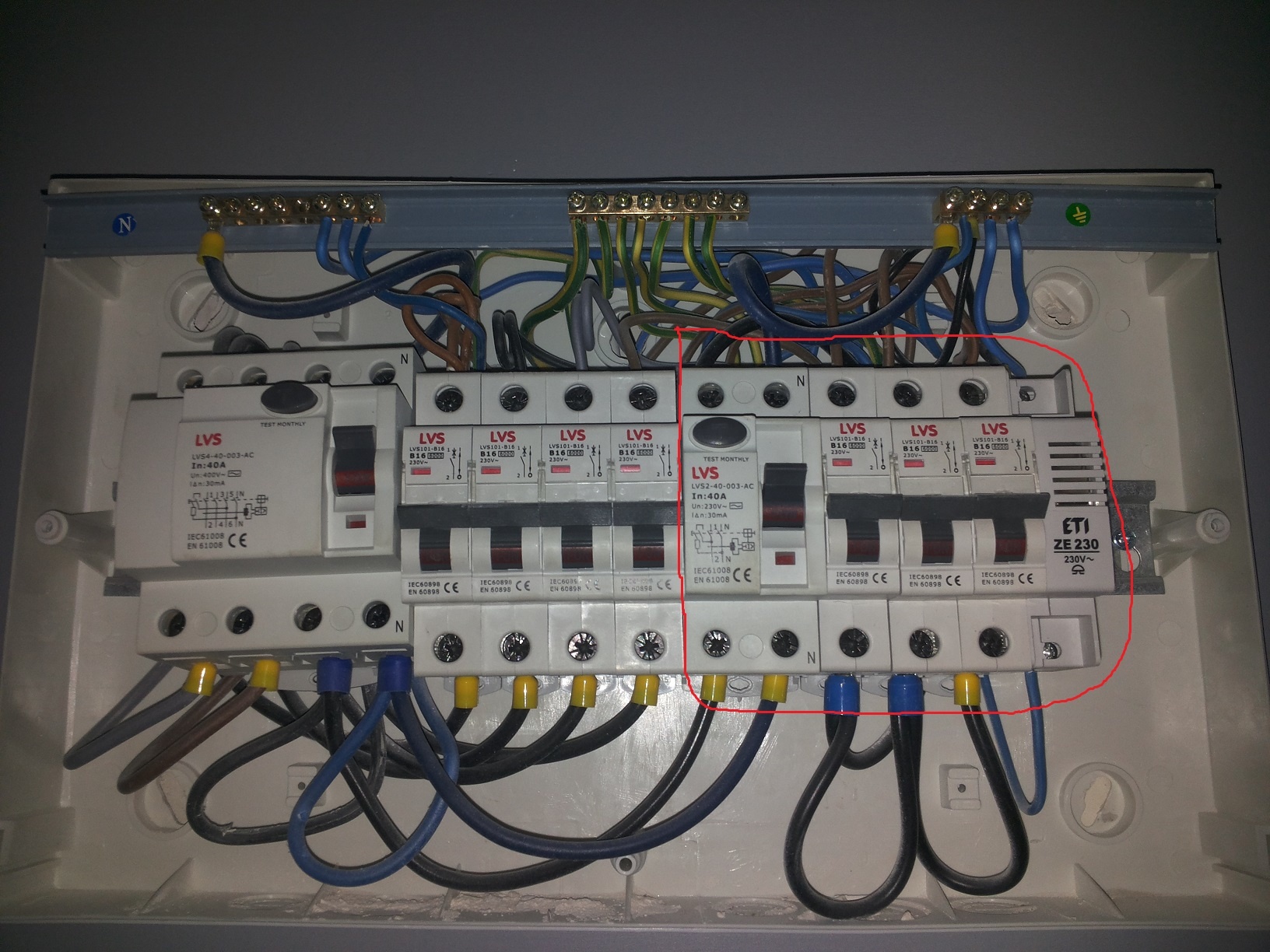
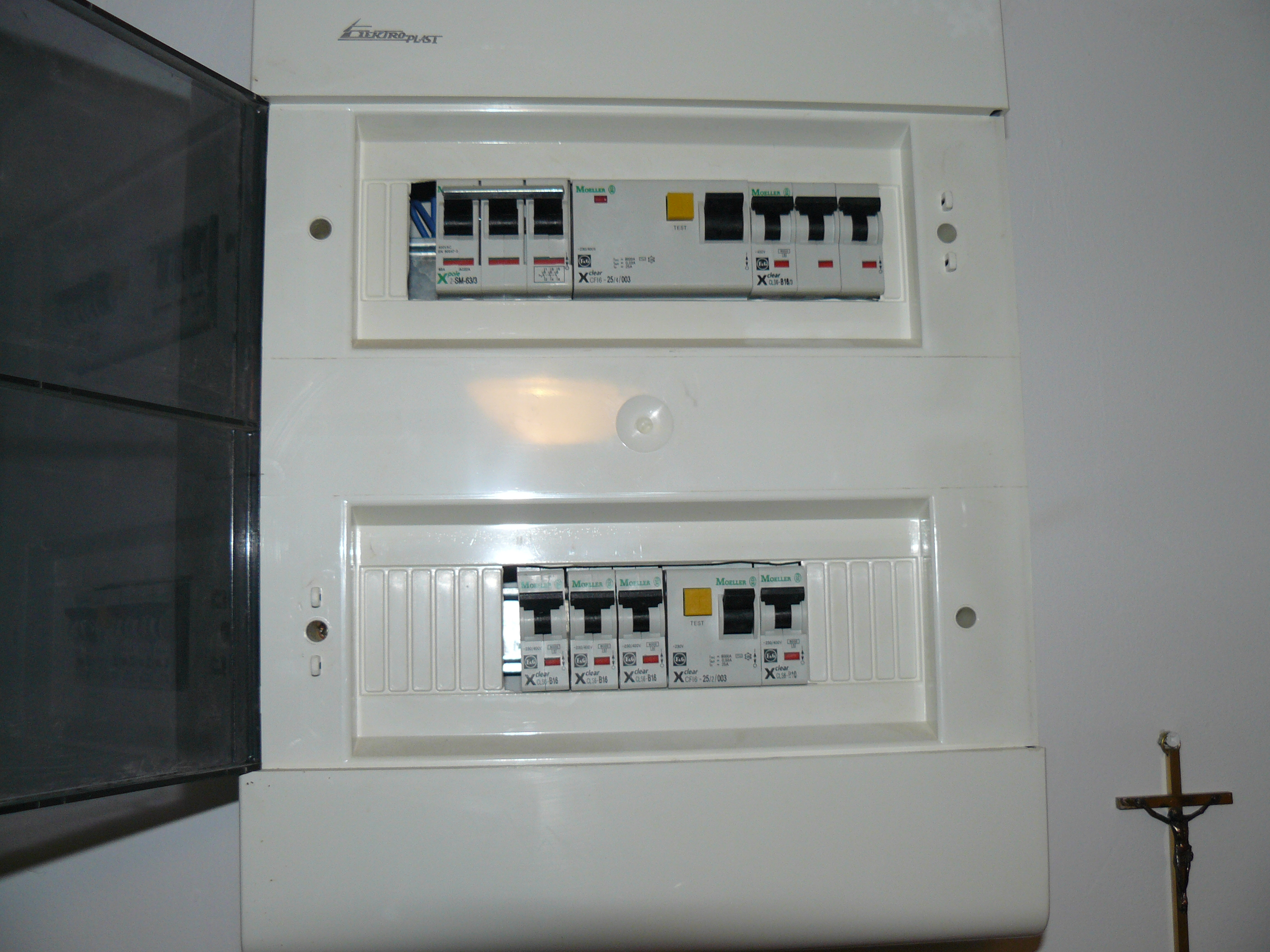
    And here is a photo of this invention, I circled the place from which this noise is probably coming from, the ear method :)

    High-Pitched Sound from Fuse Box when 3.5 kW Air Conditioner is On in a 12.5 kW Apartment
  • #15 15591746
    opornik7
    Electrician specialist
    Posts: 4494
    Help: 316
    Rate: 1556
    maniek998straz wrote:
    And here is a photo of this invention, I circled the place from which this noise is probably coming from, the ear method :)

    Didn't I say in post #8?
  • #16 15591757
    Łukasz-O
    Admin of electroenergetics
    Posts: 21783
    Help: 654
    Rate: 4278
    opornik7 wrote:

    Didn't I say in post #8?


    Well done you! :D

    For 12.5kW of power allocation and a new apartment, the switchgear and installation are very good.
  • #17 15591859
    maniek998straz
    Level 8  
    Posts: 25
    Rate: 7
    So what is it about??? :)

    If this installation is bad, what can be done to prevent it from being? Replace all these things???

    And can you use this current or wait until these gadgets are replaced??
  • Helpful post
    #18 15591942
    Łukasz-O
    Admin of electroenergetics
    Posts: 21783
    Help: 654
    Rate: 4278
    The B16 circuit breaker with a load of 3.5kW works almost at the edge of endurance, writing in a colloquial language. You can try to replace it with another one, from a different company, e.g. EATON.

    Switchgear made cheaply, with incorrect denomination of lighting protection. Scandalously small number of circuits for the current times. Such "expanded" installations were made in the early 90s.
    Somehow I do not see a separate circuit for the air conditioner or it is common with something or the cost of something.
    As far as I can see:
    1. 400V plate,
    2. Kitchen outlets?
    3. Bathroom outlets?
    4. Sockets rooms?
    5. Lighting and bell?

    Where are the circuits dedicated to loads above 2kW, such as a washing machine, dishwasher, oven (if separate) and air conditioner?
    There is no main switch in the switchgear, and the four-pole RCD looks as if it is going somewhere. General disorder, lack of comb rails, phase on the blue wire from the bell. N-controlled bell.
    No room for possible expansion.
    Who did the "electricity" for you?
  • #19 15591947
    opornik7
    Electrician specialist
    Posts: 4494
    Help: 316
    Rate: 1556
    Łukasz-O wrote:
    Who did the "electricity" for you?

    I did, sir. Alone. Unless the developer.
  • #20 15591969
    maniek998straz
    Level 8  
    Posts: 25
    Rate: 7
    The developer has just done such a marvel:(
    So in order for it to have at least some arms and legs it's a decent electrician and to change pretty much everything????

    And instead of these B16s can some more powerful ones be fitted???? The air conditioner is connected to the socket simply....

    And what happens if I switch on, a 7.2 kW induction????? Will it work???? 3 phase of course.
  • #21 15592116
    r-maniac
    Level 15  
    Posts: 155
    Help: 5
    Rate: 23
    maniek998straz wrote:
    The developer did just that :(


    This is how 90% of electrical installations in new apartments sold by developers look like nowadays.
  • #22 15592177
    mawerix123
    Level 39  
    Posts: 4143
    Help: 482
    Rate: 949
    Łukasz-O wrote:
    no comb rails


    Basically, I don't know what they would be useful for here ;)

    maniek998straz wrote:
    And instead of these B16s can some stronger ones be put on??


    Under no circumstances !!!

    maniek998straz wrote:
    Of course a 3 phase


    Obviously 2-phase :)
  • #23 15592364
    maniek998straz
    Level 8  
    Posts: 25
    Rate: 7
    So if I have an air conditioner on, and I turn on, for example, something else in the same circuit, let's say it comes out 5kW, 3.5kW from the air conditioner and plus something else there, what then? Will the overcurrent circuit breakers switch off? Even if I replace them with those made by Eaton, as my colleague wrote?


    And do I replace everything in this box with this Eaton????
  • #24 15592366
    haneb
    Level 24  
    Posts: 655
    Help: 61
    Rate: 213
    maniek998straz wrote:
    So if I have the air-conditioning on, and I turn on e.g. something else on the same circuit, let's say it comes out 5kW, 3.5 from the air-conditioning unit and plus something else there, then what?
    The overcurrent circuit breaker consists of an overcurrent and a short circuit component. The tripping time depends on the current.
    B16 should switch off in 0.4 seconds at 3-5 times the rated current, i.e. 48A to 80A.
    If you were to connect 5.5kW then the overload member would start to heat up and should switch off in 10 to 1000 seconds. At 5kW it would be about 100 to 5000 seconds.
    Of course, as if the thermistor was warmed up, it would be shorter.
    See the time-current characteristic curve.

    PS.
    At my place the Legrand buzzes when the oven or dryer is switched on ;)
  • #25 15592453
    maniek998straz
    Level 8  
    Posts: 25
    Rate: 7
    Or would it just be best to connect this air conditioner to the lighting circuit rather than the sockets? Then you'll be able to plug in all sorts of appliances like a hoover, TV, iron, without thinking about the fuse not being able to handle it, and the circuit with the lighting is all LEDs anyway, so there will be little load.

    Such layman's thoughts :)
  • #26 15592465
    mawerix123
    Level 39  
    Posts: 4143
    Help: 482
    Rate: 949
    maniek998straz wrote:
    And maybe it would just be best to wire this air conditioner to a lighting circuit rather than sockets??


    maniek998straz wrote:
    Developer did just such a marvel


    Following this line of thinking, you'll blow the installation in your apartment.... probably 1.5mm² B16 protection and about 3.7kW on the circuit....

    The only sensible solution is to run a separate circuit to the air conditioner, protected as recommended by the appliance manufacturer.
  • #27 15592491
    maniek998straz
    Level 8  
    Posts: 25
    Rate: 7
    These are the parameters of this air conditioner:

    Technical data
    PRESTIGE product series
    Model Number (Indoor/Outdoor) AR12HSSFAWKNEU/X
    Capacity, cooling, nominal (kW) 3.5
    Capacity, cooling, min-max (kW) 0.97~4.0
    Capacity, heating, nominal (kW) 4.0
    Capacity, heating, min-max (kW) 0.85~6.6
    Dehumidification (l/h) 1.2
    Fan capacity, maximum (m3/h) 720
    Sound pressure level, indoor unit, high/low (dB) 39/16
    Sound pressure level, outdoor unit, maximum (dB) 46
    Power supply (V, Hz, phases) 220~240/50/1
    Electrical power, cooling (W) 940
    Electric power, heating (W) 1050
    Current consumption, cooling (A) 4.4
    Current consumption, heating (A) 4.9

    Can a 3/3 wire and B20 protection be used when laying a new circuit???
  • #28 15592501
    mawerix123
    Level 39  
    Posts: 4143
    Help: 482
    Rate: 949
    maniek998straz wrote:
    Can a 3/3 wire and B20 protection be used when laying a new circuit???


    As it turned out, the device consumes 1kW and not 3.5kW as you declared earlier.

    maniek998straz wrote:
    Current consumption, heating (A) 4.9


    This is the maximum power that the device consumes.
  • #30 15592519
    Łukasz-O
    Admin of electroenergetics
    Posts: 21783
    Help: 654
    Rate: 4278
    maniek998straz wrote:
    So if I have the air conditioning on, and I turn on, for example, something additional on the same circuit, let's say 5kW, 3.5 from the air conditioner and plus something else, then what? Will these corks shoot??? Even if I replace it with what a colleague wrote Eaton???

    And what about this induction, will it work???

    And should I replace everything from this box with this Eaton???


    A separate circuit with separate protection should be connected to the air conditioner.
    The protection of the lighting circuits must also be replaced (use B10).
    It is worth bringing at least one additional circuit for the dishwasher to the kitchen.
    I do not want to comment on the LVS modular equipment, because I have never dealt with it.
    In your place, while you still have the opportunity, I would throw out the current switchgear and put in at least 2x18.
    Then the main switch, voltage presence indicators will fit and there will be a lot of space for connecting new circuits from the air conditioning and dishwasher, and maybe also from the washing machine (if it will be in the kitchen) and the oven (if it is separate). think it over.

    mawerix123 wrote:
    Łukasz-O wrote:
    no comb rails


    I don't really know what they could be used for ;)

    In the case of this "extended box", it will reduce the assembly time from 30 to 10 minutes ;)

    r-maniac wrote:


    This is how 90% of electrical installations in new apartments sold by developers look like nowadays.


    You're exaggerating the 90% a bit. Yes, some people fly at cost, but you can't generalize like that.
    A reliable developer is recognized not only by the high standard of finish, such as marble and gres tiles on the staircases, but also by the switchgear in the apartment.
    Show me the switchboards and I'll tell you how much a developer is worth. Whenever I am at a new facility, I always pay attention to the box in the apartment and immediately have an idea of \u200b\u200bthe developer. Unfortunately, people receiving apartments do not know what to look for. For them, visual effects are the most important, the whole general envelope, they can't see crap covered with plaster.
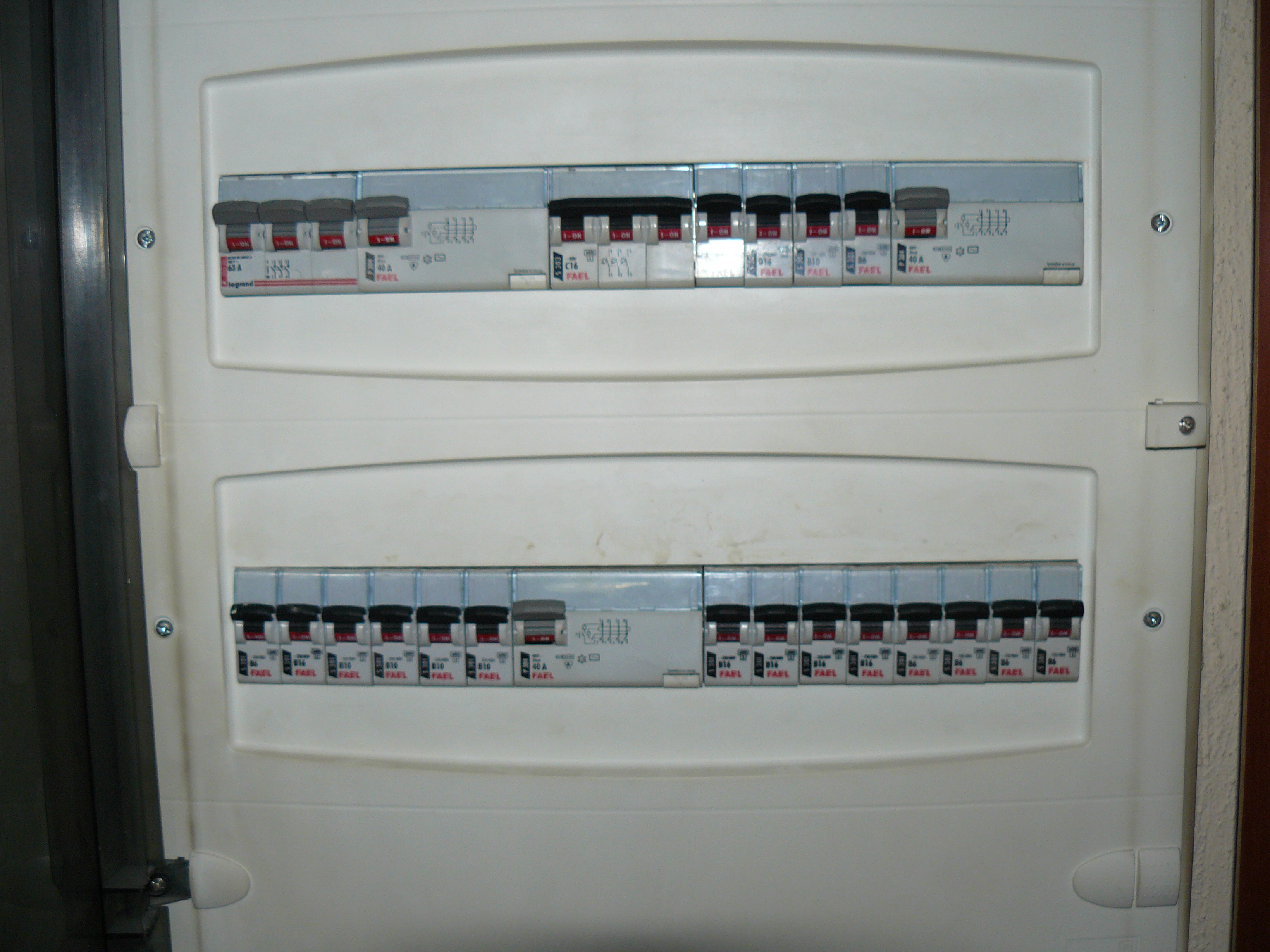
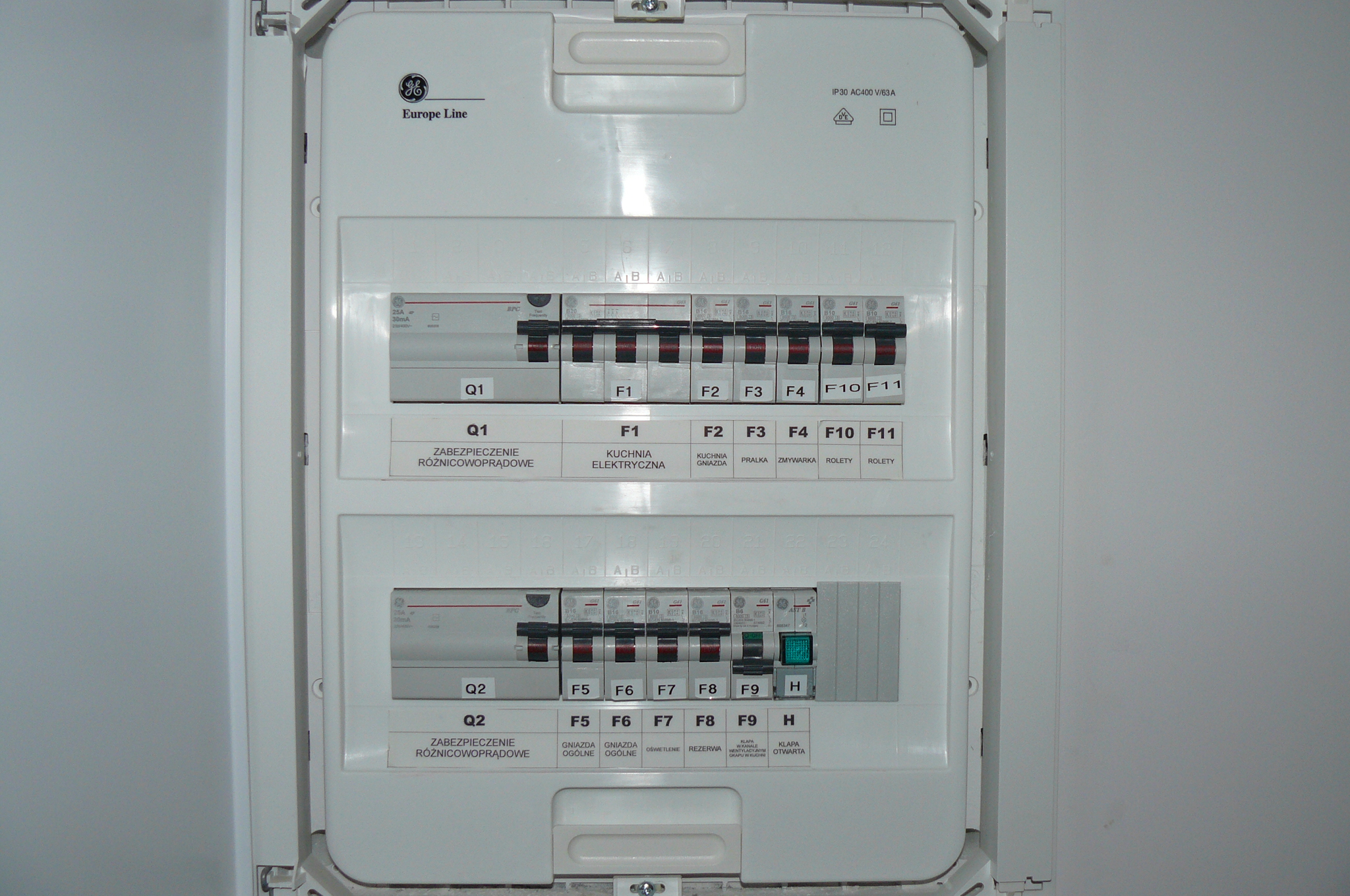
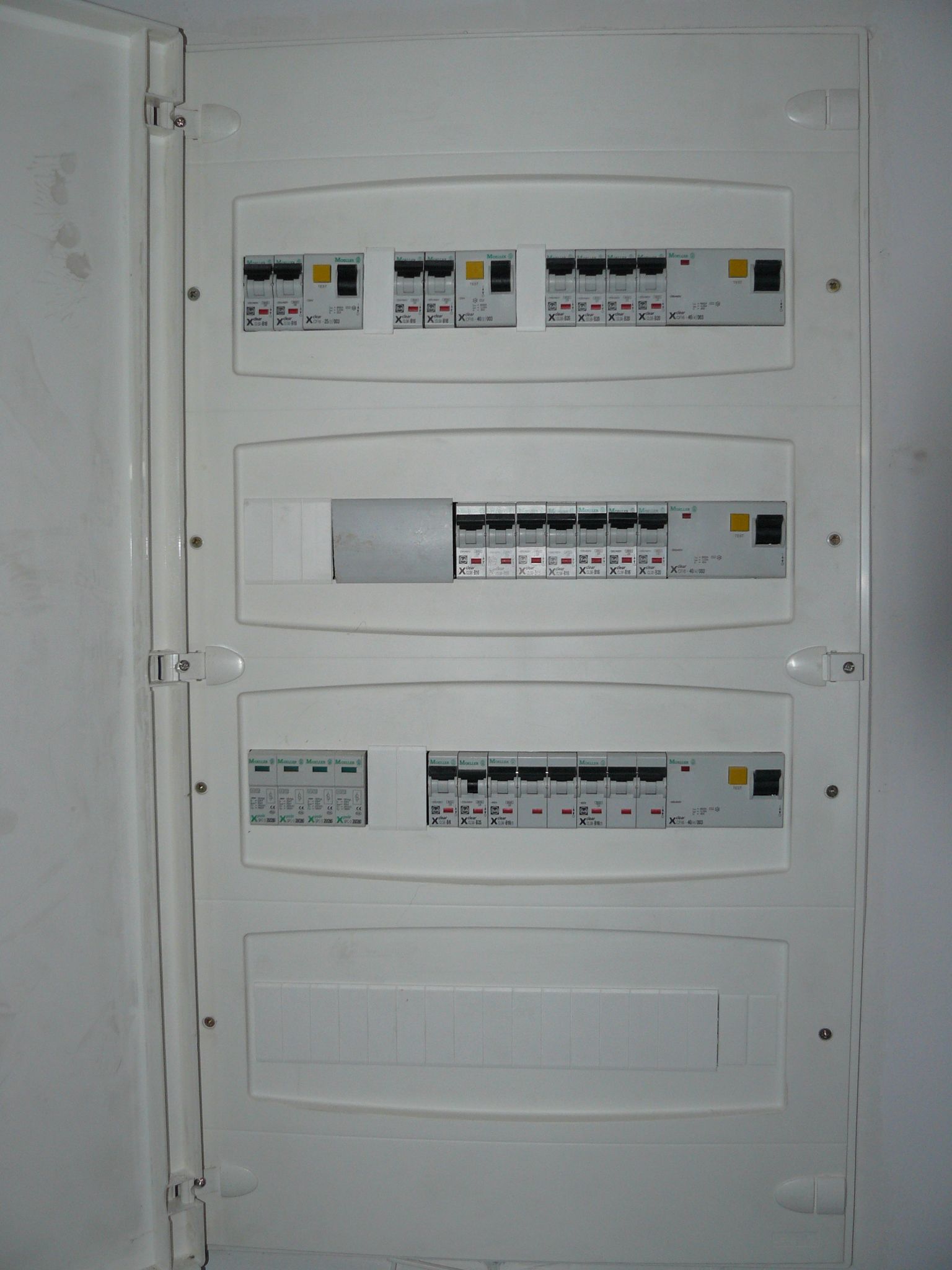
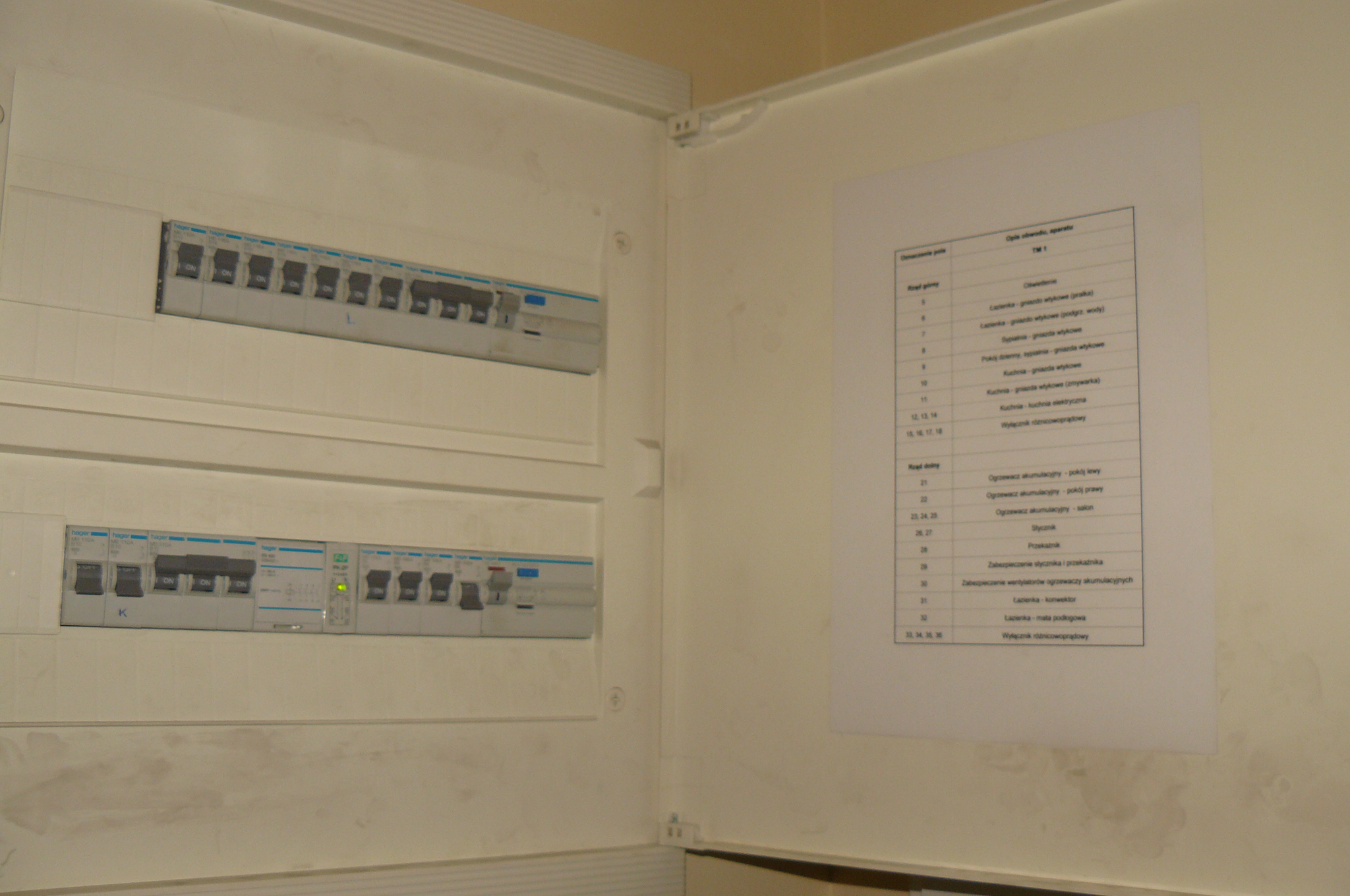
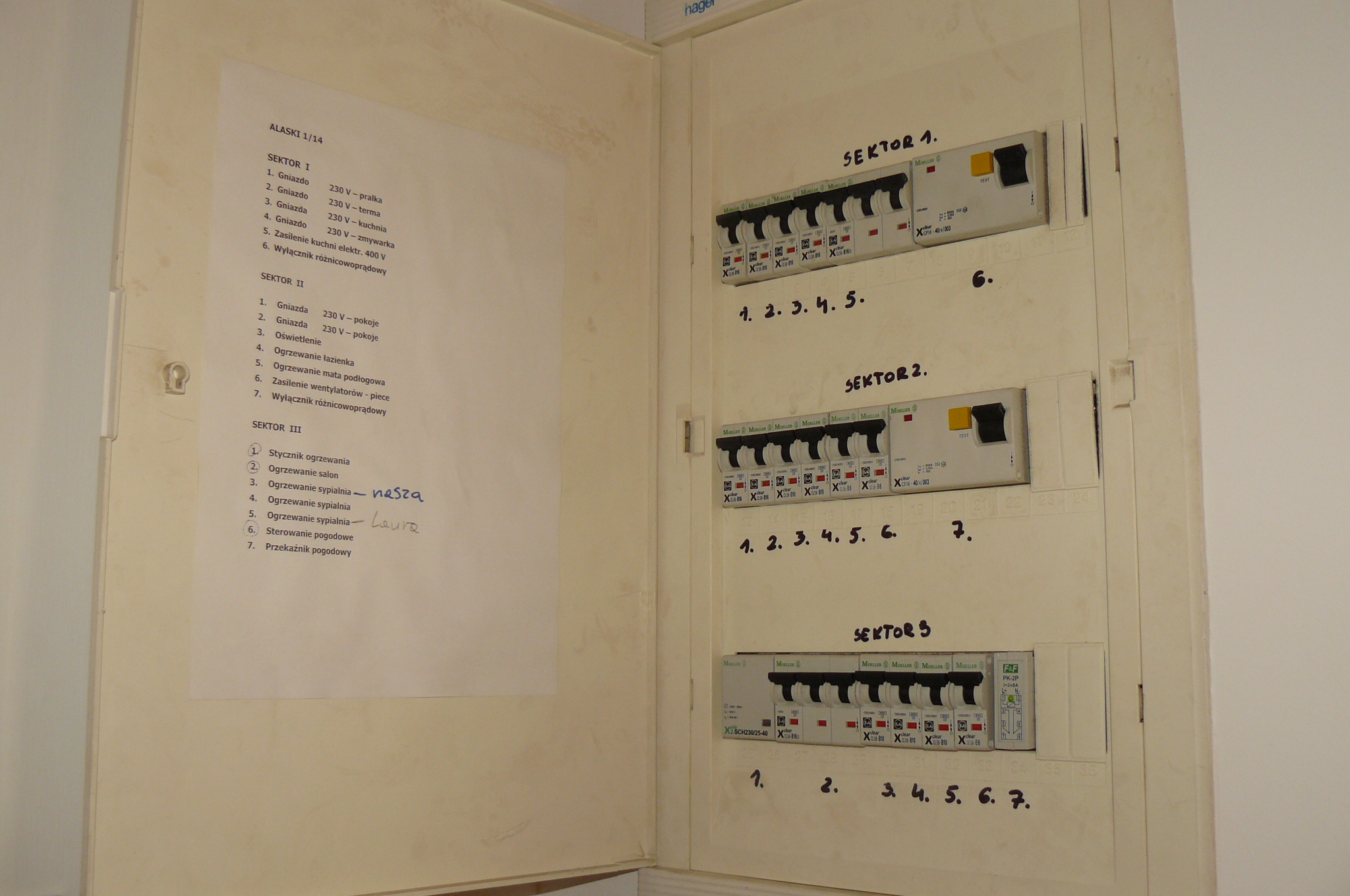
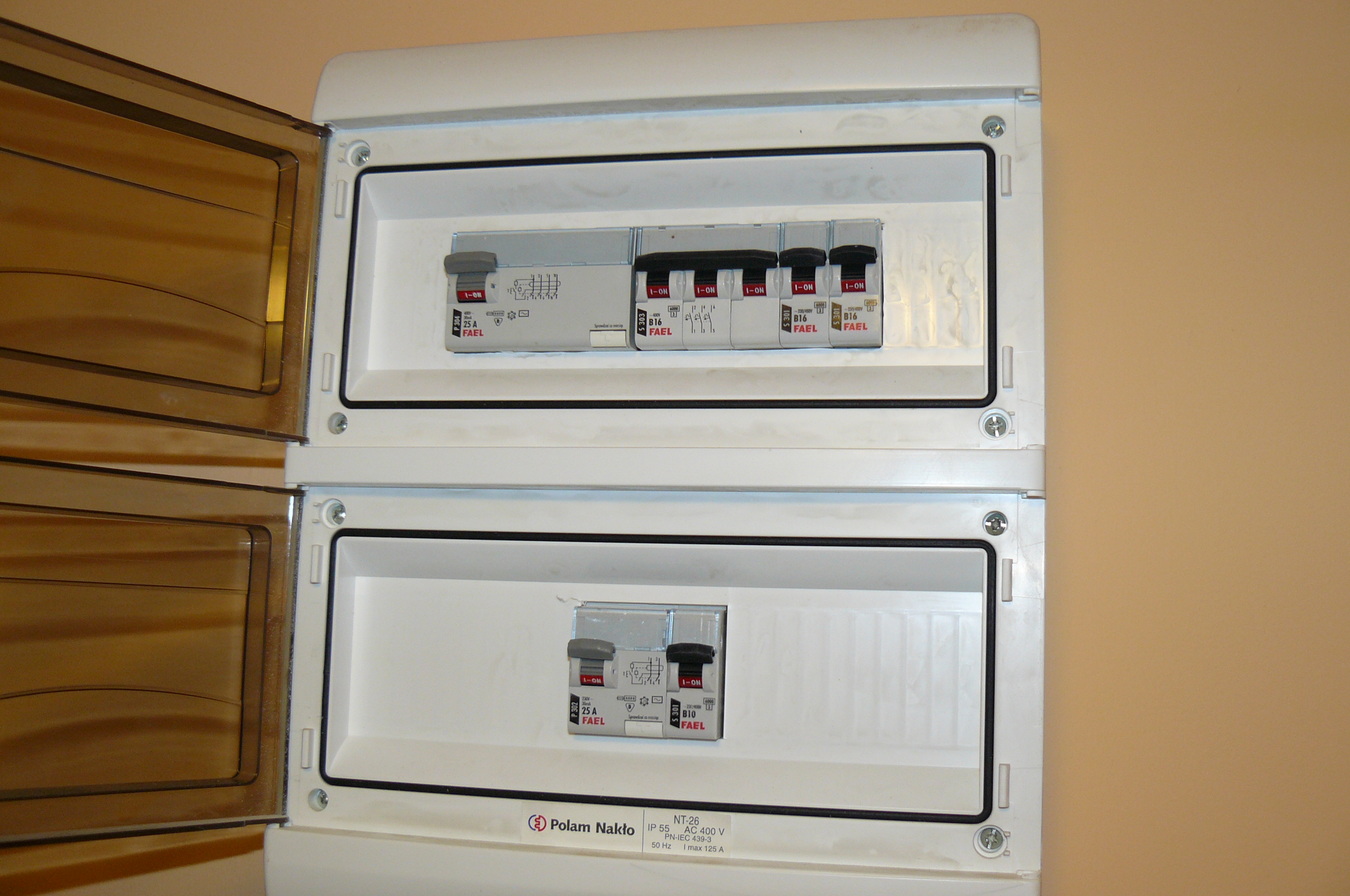
    Here the developers did not save on circuits:
    High-Pitched Sound from Fuse Box when 3.5 kW Air Conditioner is On in a 12.5 kW Apartment High-Pitched Sound from Fuse Box when 3.5 kW Air Conditioner is On in a 12.5 kW Apartment High-Pitched Sound from Fuse Box when 3.5 kW Air Conditioner is On in a 12.5 kW Apartment High-Pitched Sound from Fuse Box when 3.5 kW Air Conditioner is On in a 12.5 kW Apartment
    High-Pitched Sound from Fuse Box when 3.5 kW Air Conditioner is On in a 12.5 kW Apartment High-Pitched Sound from Fuse Box when 3.5 kW Air Conditioner is On in a 12.5 kW Apartment High-Pitched Sound from Fuse Box when 3.5 kW Air Conditioner is On in a 12.5 kW Apartment

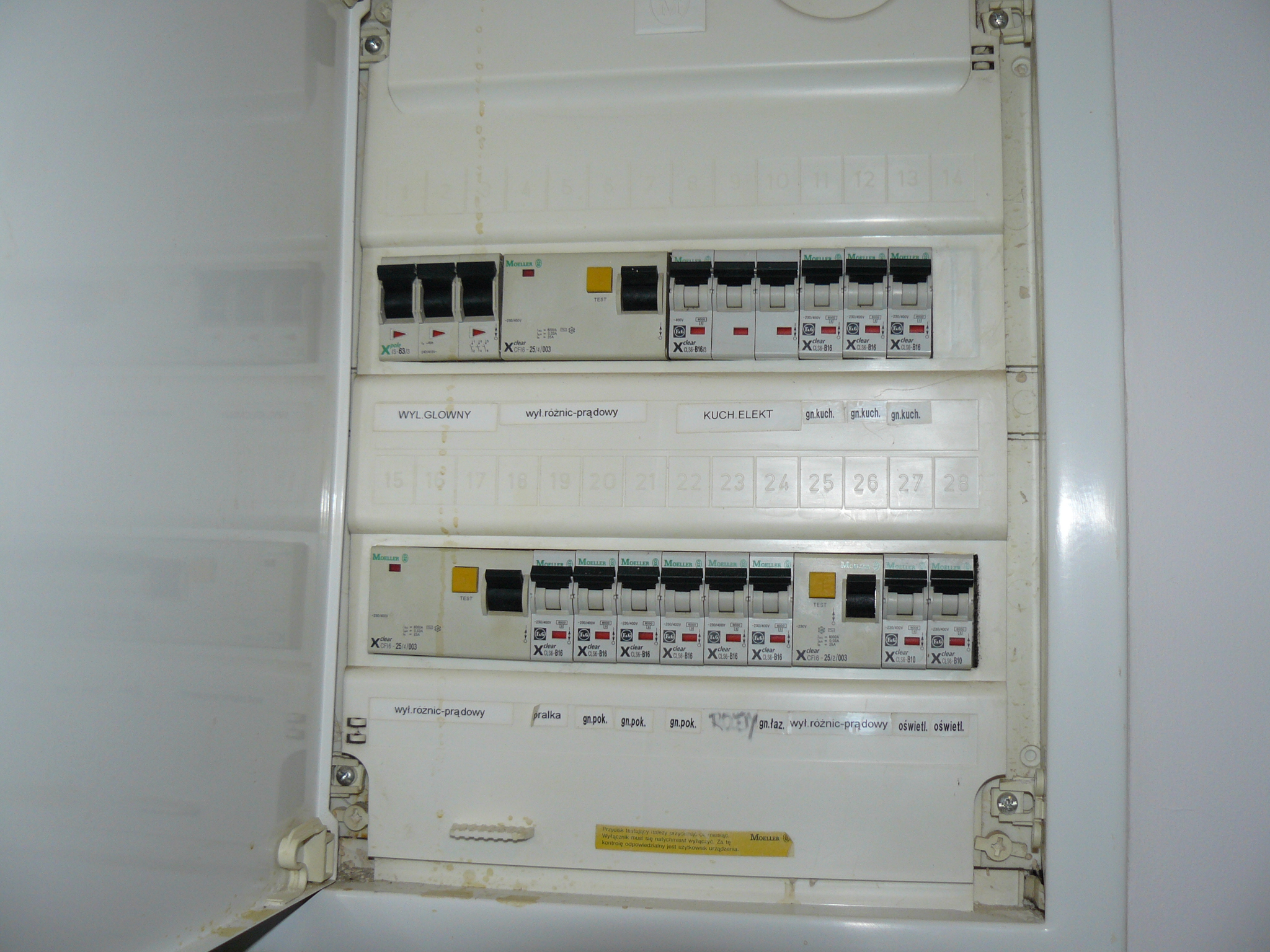
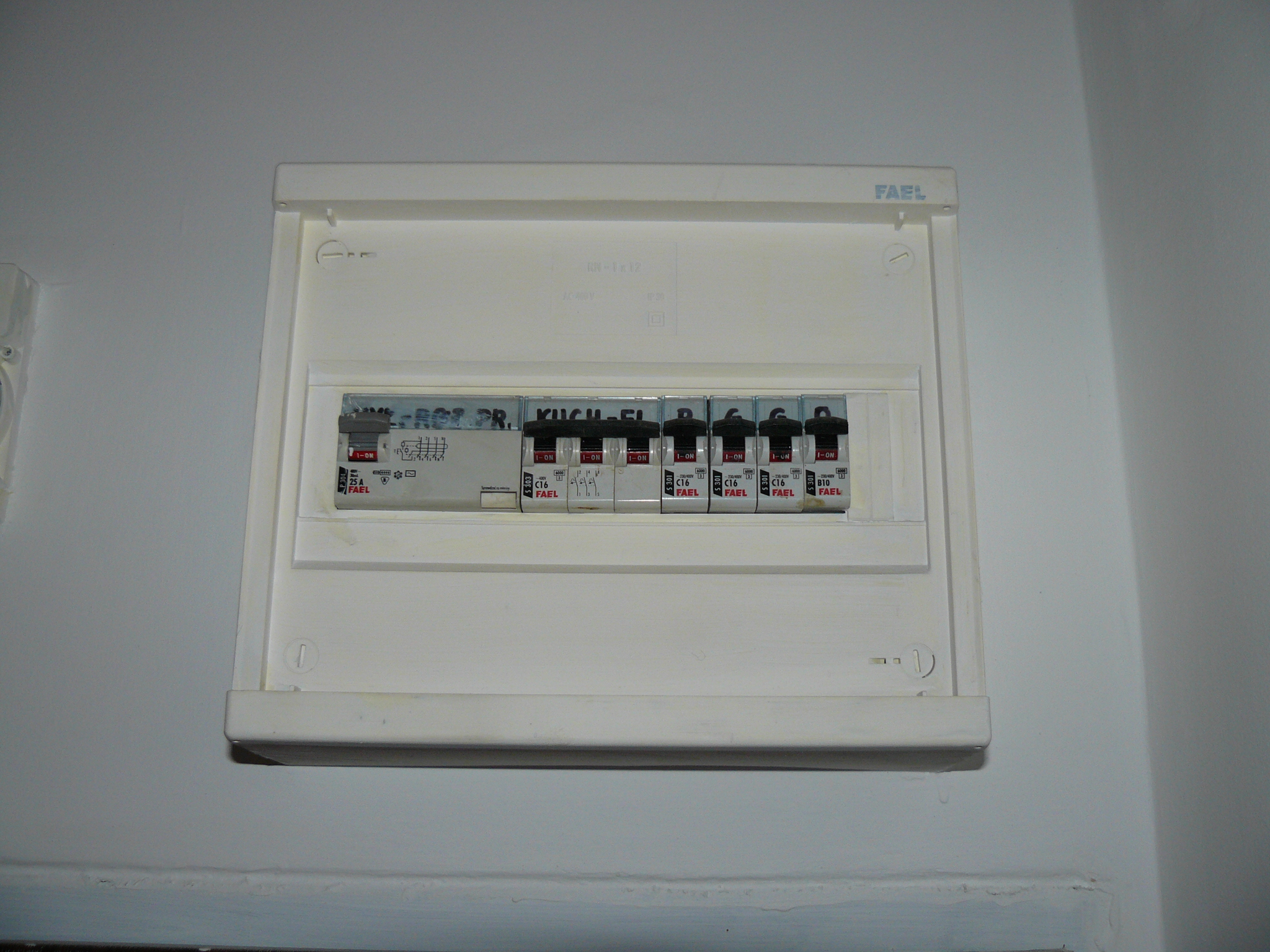
    But there are also these:
    High-Pitched Sound from Fuse Box when 3.5 kW Air Conditioner is On in a 12.5 kW Apartment High-Pitched Sound from Fuse Box when 3.5 kW Air Conditioner is On in a 12.5 kW Apartment High-Pitched Sound from Fuse Box when 3.5 kW Air Conditioner is On in a 12.5 kW Apartment High-Pitched Sound from Fuse Box when 3.5 kW Air Conditioner is On in a 12.5 kW Apartment


    P.S.
    At the time of writing this message, I have not seen posts with the actual electric power drawn by the author's air conditioner.

Topic summary

✨ The discussion revolves around a high-pitched sound emanating from the fuse box when a 3.5 kW air conditioner is activated in a 12.5 kW apartment. The user, currently in the renovation phase, seeks advice on the issue. Responses suggest potential causes, including the inverter operation of the air conditioner and issues with the switchgear, such as poor filtration or inadequate circuit protection. Recommendations include consulting an electrician, taking photos of the switchgear, and possibly replacing circuit breakers with higher-rated ones, such as B20 or from brands like EATON. The user later identifies the noise source as a faulty device related to the circuit protection, which was resolved by replacing it with a Legrand component.
Generated by the language model.

FAQ

TL;DR: Within 12.5 kW flats, a 3.5 kW split AC draws 940 W/4.4 A (73% below rating) [Elektroda, maniek998straz, post #15592491] “Culprit was the RCD with the TEST button” [Elektroda, maniek998straz, post #15596884] Swap cheap breaker modules for certified ones to silence squeal.

Why it matters: Persistent squealing signals arcing or vibration that can overheat protective gear and start a fire.

Quick Facts

• Apartment supply: 12.5 kW, 3-phase 400 V [Elektroda, maniek998straz, post #15584744] • AC electrical draw: 0.94 kW cool / 1.05 kW heat, 4.4–4.9 A [Elektroda, maniek998straz, post #15592491] • B16 breaker trips in 0.4 s at 48–80 A (curve B) [Elektroda, haneb, post #15592366] • Polish §188.2 requires separate circuits for >2 kW loads [Rozporządzenie MI, 2002] • Branded 2-pole 30 mA RCD ≈ €18–25 (retail 2023)

Why did the fuse box squeal when the air-conditioner ran?

The air-conditioner’s inverter created high-frequency current that made a low-quality residual-current device (RCD) vibrate; replacing that single module stopped the noise [Elektroda, maniek998straz, post #15596884]

Is it dangerous to keep using power while it squeals?

Yes. The sound means internal contacts vibrate or arc, which raises temperature and can weld or burn contacts [NFPA, 2019]. Switch off the circuit and call an electrician.

Which exact part was found faulty in the thread?

A four-pole RCD with a “TEST” button from an economy LVS line caused the squeal [Elektroda, maniek998straz, #15591680; #15596884].

How can I confirm which module is squealing?

  1. Turn on the AC and wait two minutes until the noise starts.
  2. Use a short insulated tube as a stethoscope; place it on each breaker body.
  3. The loudest module is the culprit—mark and replace it. [How-To]

What breaker size should a 1 kW split AC use?

A dedicated B10 A or B13 A breaker on 2.5 mm² wiring gives ample headroom (draw ≤5 A) and satisfies §188.2 for individual protection [Rozporządzenie MI, 2002].

Can I simply swap a B16 for a B20 to stop nuisance trips?

No. Up-rating hides overloads and violates design limits; instead add a new circuit or reduce simultaneous load [IEC 60364-4-43].

Why do appliances >2 kW need their own circuit?

Dedicated circuits limit voltage drop, prevent tripping shared loads, and meet Polish building code §188.2 [Rozporządzenie MI, 2002].

Which breaker brands are considered reliable replacements?

Eaton, Hager, Legrand and General Electric meet IEC 60898/61008 tests and carry CE + EN symbol; they cost ≈ €6–25 each (retail 2023).

Will a 7.2 kW induction hob work on my 12.5 kW allocation?

Yes if each phase supplies ~2.4 kW; ensure a 3-phase 16 A per phase connection and 5×2.5 mm² cable [Manufacturer datasheet, 2024].

Does an A+++ dishwasher draw little power?

Energy class reflects annual kWh per cycle mix; peak draw during heating can still hit 2 kW [EU Reg 2017/1369]. Provide its own 16 A circuit.

What failures happen with cheap breakers?

Lab tests show some no-name units fail to trip at 1.45 × In, and contacts hit 200 °C in 10 minutes—enough to ignite PVC insulation (edge-case) [UL Report, 2020].

Which standards govern apartment switchgear in Poland?

Design must follow PN-HD 60364 (EN 60364) and the Building Regulation Journal 2002 §183-191 covering RCD use and circuit count.

How do I check a breaker is EU-compliant?

Look for: CE mark, EN 60898 or EN 61009 reference, tripping curve letter, and a four-digit notified-body ID near the test button. Absence suggests counterfeit risk.

Could the squeal come from the AC itself?

Rarely. Poor inverter filtering can send audible frequencies into wiring, causing switchgear to buzz [Elektroda, sermarek, post #15584860] Replacing the RCD still cured this case.
Generated by the language model.
ADVERTISEMENT