logo elektroda
logo elektroda
X
logo elektroda

Intermittent Functioning of Kenwood KM 287 Prospero: Arm Maneuvers Required for Operation

Woly72 35940 54
Best answers

Why does my Kenwood KM287 only work after I move the arm to the top and back down, and then die when the speed knob reaches 0?

The most likely cause is a fault in the control board power supply, especially the X2 capacitor C1, which drops the processor/relay voltage and makes the robot start only after the safety/interlock is cycled [#19005585] [#19302031] Several users fixed the same symptom by replacing C1 (typically 330 nF or 470 nF, 275 VAC) and, as a precaution, the electrolytic capacitors on the board [#18711764] [#19302031] If that does not solve it, check the relay and the arm/attachment safety-switch wiring and connectors, because a hanging relay, a deformed connector, or a broken wire in the interlock circuit caused the same intermittent no-start behaviour in other cases [#18362259] [#21361227] [#20187622]
Generated by the language model.
ADVERTISEMENT
Treść została przetłumaczona polish » english Zobacz oryginalną wersję tematu
  • #31 19128486
    maryann
    Level 37  
    Posts: 5402
    Help: 342
    Rate: 332
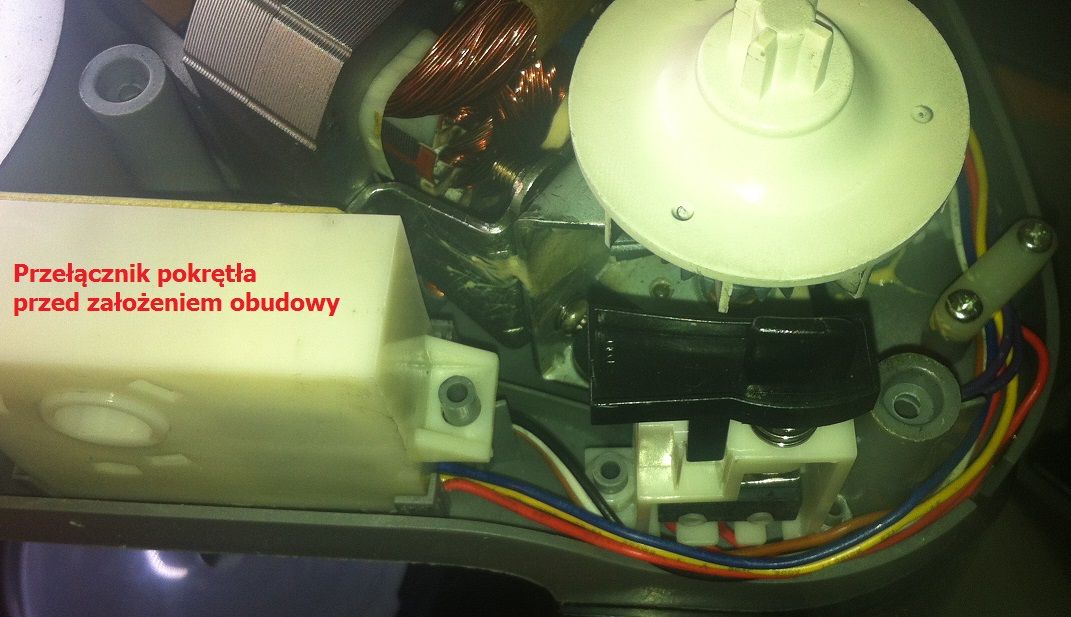
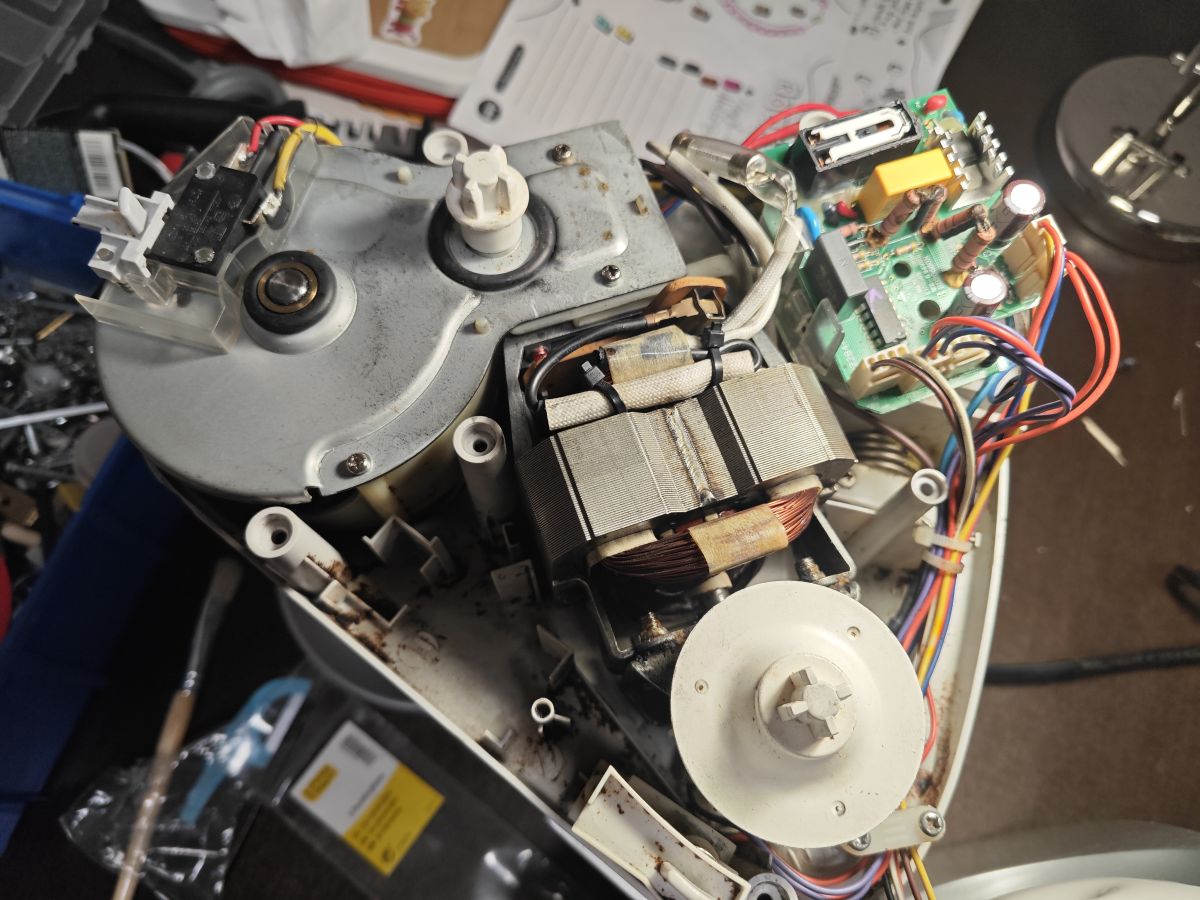
    Hello! Can anyone tell me where this three-wire sensor should be?
    Attachments:
    • Intermittent Functioning of Kenwood KM 287 Prospero: Arm Maneuvers Required for Operation IMG_20201221_1302456.jpg (923.09 KB) You must be logged in to download this attachment.
    • Intermittent Functioning of Kenwood KM 287 Prospero: Arm Maneuvers Required for Operation IMG_20201221_1302093.jpg (3.25 MB) You must be logged in to download this attachment.
  • ADVERTISEMENT
  • #32 19128534
    maryann
    Level 37  
    Posts: 5402
    Help: 342
    Rate: 332
    Found on Yout ..., It's almost here in the 1st photo, just inside- in the gasket under the planetary gear. Thanks.
  • #33 19302031
    dasej
    Level 32  
    Posts: 1905
    Help: 165
    Rate: 265
    Again, mine refused to obey.
    This time I had more time and I hope it will last longer.

    Intermittent Functioning of Kenwood KM 287 Prospero: Arm Maneuvers Required for Operation

    The processor did not have full power and taking into account that it "probably" measured the power level, it would not start.

    Intermittent Functioning of Kenwood KM 287 Prospero: Arm Maneuvers Required for Operation

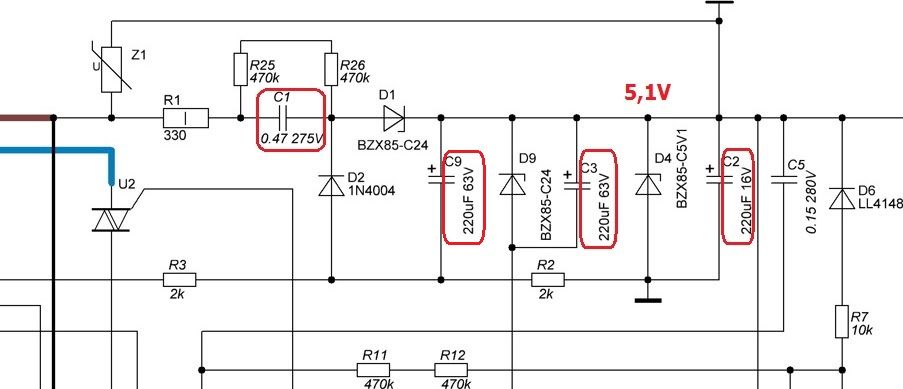
    I changed C1 (it was 330nF) to 470nF and the voltage on the zener diode returned to normal, according to the diagram.
    In addition, I replaced the electrolytes had half the value. Instead of 220uF it is only 100uF.

    Intermittent Functioning of Kenwood KM 287 Prospero: Arm Maneuvers Required for Operation

    Intermittent Functioning of Kenwood KM 287 Prospero: Arm Maneuvers Required for Operation

    Intermittent Functioning of Kenwood KM 287 Prospero: Arm Maneuvers Required for Operation

    Intermittent Functioning of Kenwood KM 287 Prospero: Arm Maneuvers Required for Operation
  • #34 20154867
    nosek1969
    Level 10  
    Posts: 6
    Help: 1
    Rate: 1
    Hello,
    I had a problem - sometimes the robot turned on, sometimes not, most often it started after a long stop, not necessarily after work (as if the reason was heating).
    I replaced C1 - 330nF, C9 - 100uF, C3 - 100uF, C2 - 220uF
    it did not work,
    I replaced the NT75 2C S 0.41 5 relay, unfortunately there was no such, I used RM85-2011-35-1024 (supposedly the same)
    after the change, it started, but it started being turned off - the potentiometer is set to '0', i.e. it gives power, although it should not.
    responds correctly to speed changes.
    on the processor power supply equal to 5.00V
    What could be wrong?
  • #35 20155781
    dasej
    Level 32  
    Posts: 1905
    Help: 165
    Rate: 265
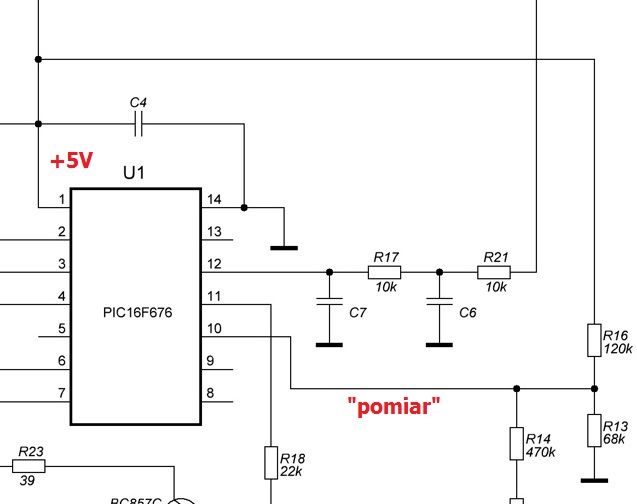
    Maybe check the pin11 output and pin6 transistor etc.
  • #36 20164506
    Cyrculator
    Level 11  
    Posts: 313
    Help: 2
    Rate: 86
    Hello. I also "fight" with KM28 which does not turn on. I checked all the limit switches, potentiometer etc. I bought a new module with electronics and nothing like that. However, I noticed some absurdity in the ATS137 hall sensor system. This sensor in the arm lowered position, i.e. working position, has a short-circuited output with the arm lifting and lowering limit switch. I thought that someone had repaired it before and made a mistake, but now I look at this diagram that it should be like that. He doesn't understand any of this. I have no idea what can be done here. The tacho generator produces an alternating voltage when it is turned manually. I do not replace the HALL SENSOR because it is short-circuited during operation, specifically the collector with the emitter of the output transistor. It only opens when the arm is raised. I changed the contacts of the lowering lifting limit switch from NC to NO but it also did not change anything. Rel 1 relay on the board does not turn on after turning the knob.
    Anyone have some ideas yet /
  • ADVERTISEMENT
  • #37 20164925
    dasej
    Level 32  
    Posts: 1905
    Help: 165
    Rate: 265
    Hello,

    from what I remember in this position, Hall should be open

    Intermittent Functioning of Kenwood KM 287 Prospero: Arm Maneuvers Required for Operation

    only after you put it on
    Intermittent Functioning of Kenwood KM 287 Prospero: Arm Maneuvers Required for Operation

    it should be compact.

    The KM287 Hall is used to identify the assumption of a meat grinder.
  • #38 20187622
    Cyrculator
    Level 11  
    Posts: 313
    Help: 2
    Rate: 86
    Thanks to Dasej for the explanation, and here my problem was that I did not know the manual or had these attachments from the customer.
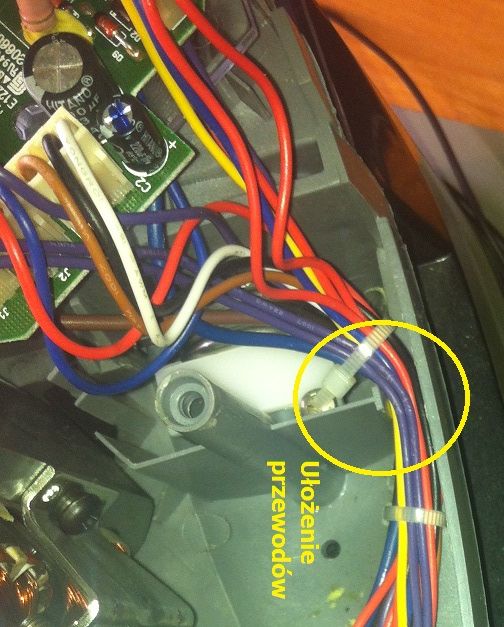
    On the other hand, the problem was that one wire in the circuit of the adapters presence switches was broken in the insulation by a sharp cut with the casing.
  • #39 20202472
    justynajarzabek2206
    Level 1  
    Posts: 1
    Rate: 1
    Hello, I have a Kenwood KHC29A, I can't regulate the speed, it works at 100% from the very beginning, does anyone know what's going on? Regards
  • #40 20207678
    rkowalik1
    Level 5  
    Posts: 5
    Rate: 6
    DzieX wrote:
    Everything is for sale along with new electronics. .

    Do you still have this control module for sale?
  • #41 21361227
    inar
    Level 18  
    Posts: 262
    Help: 40
    Rate: 38
    Good morning!
    My KM28 was switching on when it wanted to, there was no rule. To start with, I replaced electrolytes, checked the wires, the switches and nothing.
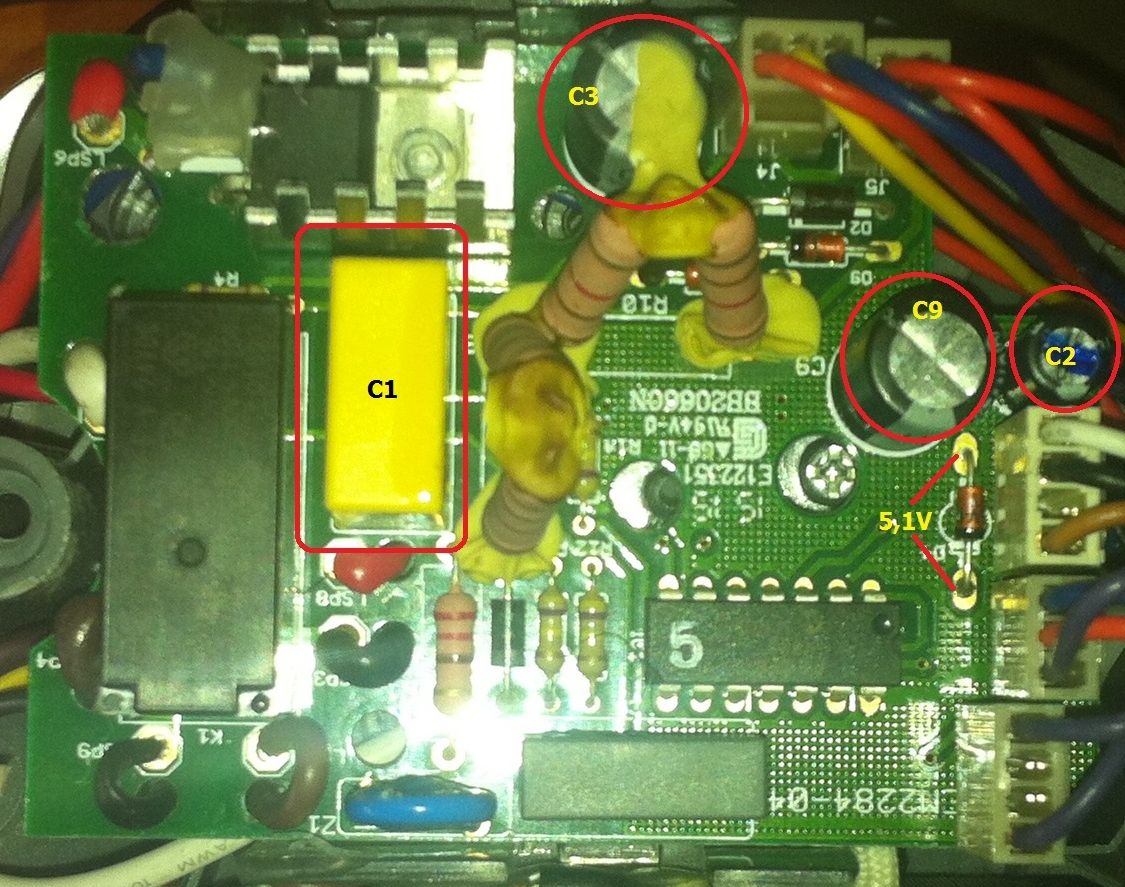
    On the advice of Col. dasej I measured the voltage on diode D4-it was undervoltage, replaced capacitor C1 and again the voltage is 5 volts and the robot starts when it wants. I locked the limiters, turned it on with the knob and started moving the wires coming to the board. It turned out that in the two-pin connector ( to the right of capacitor C3) the contact had deformed and the connection was when it wanted to. I disassembled the connector, tightened up the sheet metal and the unit works.
    By the way, the whole robot vibrates quite a lot during operation and the method of connection through these delicate connectors is not the happiest solution.
    Best regards and I wish you all a peaceful Christmas , and in the New Year 1925 good health and patience when repairing such malicious failures.
  • ADVERTISEMENT
  • #42 21397068
    bratmat1
    Level 8  
    Posts: 19
    Help: 1
    Rate: 2
    I have no voltage on capacitor C3. What should the voltage be there? The relay does not start - capacitors changed. On the other two capacitors, the voltage is 22.5V and 4.9V
  • ADVERTISEMENT
  • #43 21397171
    dasej
    Level 32  
    Posts: 1905
    Help: 165
    Rate: 265
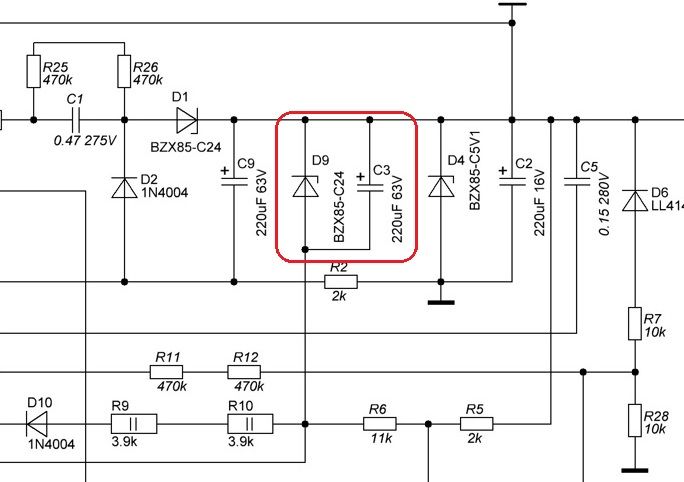
    And how does the zener diode stand in parallel with C3?

    Section of an electrical schematic with Zener diode D9 parallel to capacitor C3 highlighted. .
  • #44 21400912
    bratmat1
    Level 8  
    Posts: 19
    Help: 1
    Rate: 2
    Diode D9 is in parallel with C3(no voltage on diode), diode D1 in series (voltage 11.1V). Resistors R9 and R10 have a resistance of 2.16 Kohm each. Could it be the fault that this PIC is not supplying power to C3 ? - it looks to me like the circuit is not working
  • #45 21465900
    kenedy2
    Level 11  
    Posts: 189
    Help: 1
    Rate: 18
    I replaced electrolytes and c1 I noticed that when I unplug the Hall sensor it is 5v and when I plug it in it is 4.65v I desoldered the ats 137 circuit itself from this board with cables and it is 5v but the robot still will not start, will the robot start without this sensor ? Could this circuit itself be faulty ? I have no voltage on c3. The relay does not switch on either.
  • #46 21467385
    bratmat1
    Level 8  
    Posts: 19
    Help: 1
    Rate: 2
    I have a strong conviction that if there is no voltage on C3, but there is 5V on the legs of the PIC, it is the fault of a faulty program chip.
  • #47 21585031
    silvvester
    Level 25  
    Posts: 950
    Help: 23
    Rate: 159
    A family member gave me this model to look at. It was flooded and sometimes it works and sometimes it doesn't, the revs are random. Actually, I only cleaned the "sensor". An axle with a magnet and a choke close to it. In the diagram, the current induced in the coil goes to socket J1 and then to pin 12 of the PIC. There you have it, the speed sensor. The model that fell into my hands, the KHC29, operated at 3.3V, i.e. less than specified in the schematic of the KM287 discussed here.
  • #48 21713475
    maziizam
    Level 12  
    Posts: 100
    Help: 2
    Rate: 23
    I didn't have C1 - 330nF I gave 470nF and it works as shown in the diagram - I don't even know if it's not a special action to make the device go faster
  • #49 21744769
    mjelen
    Level 11  
    Posts: 11
    Help: 1
    Rate: 4
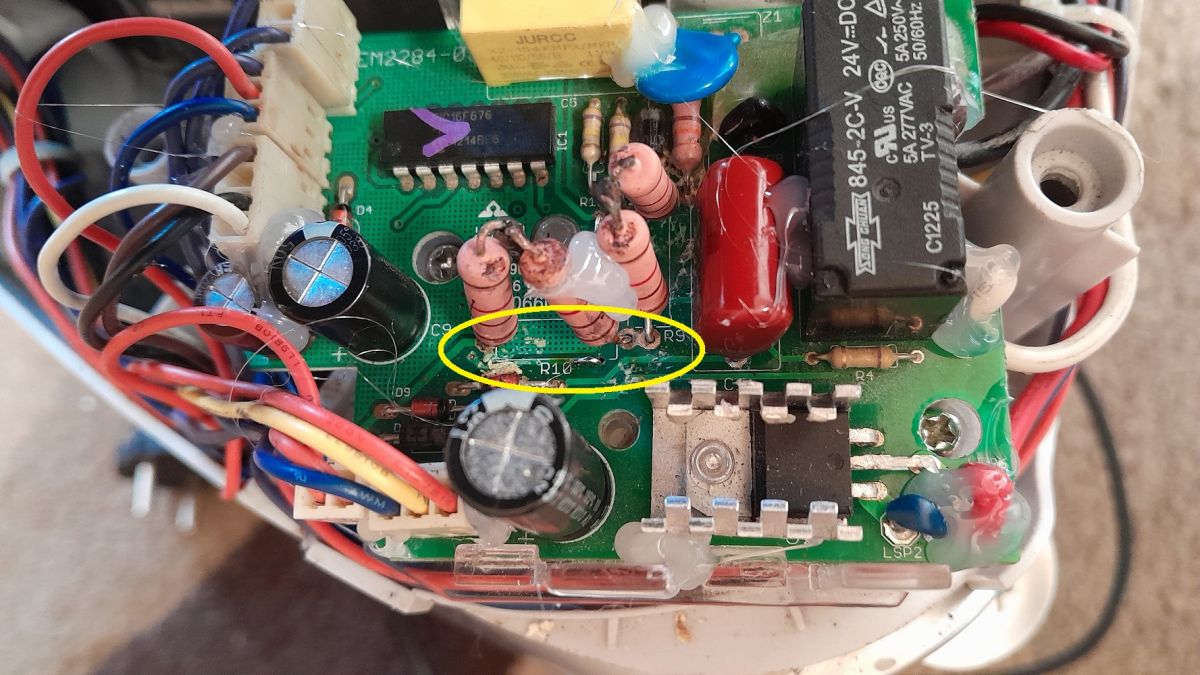
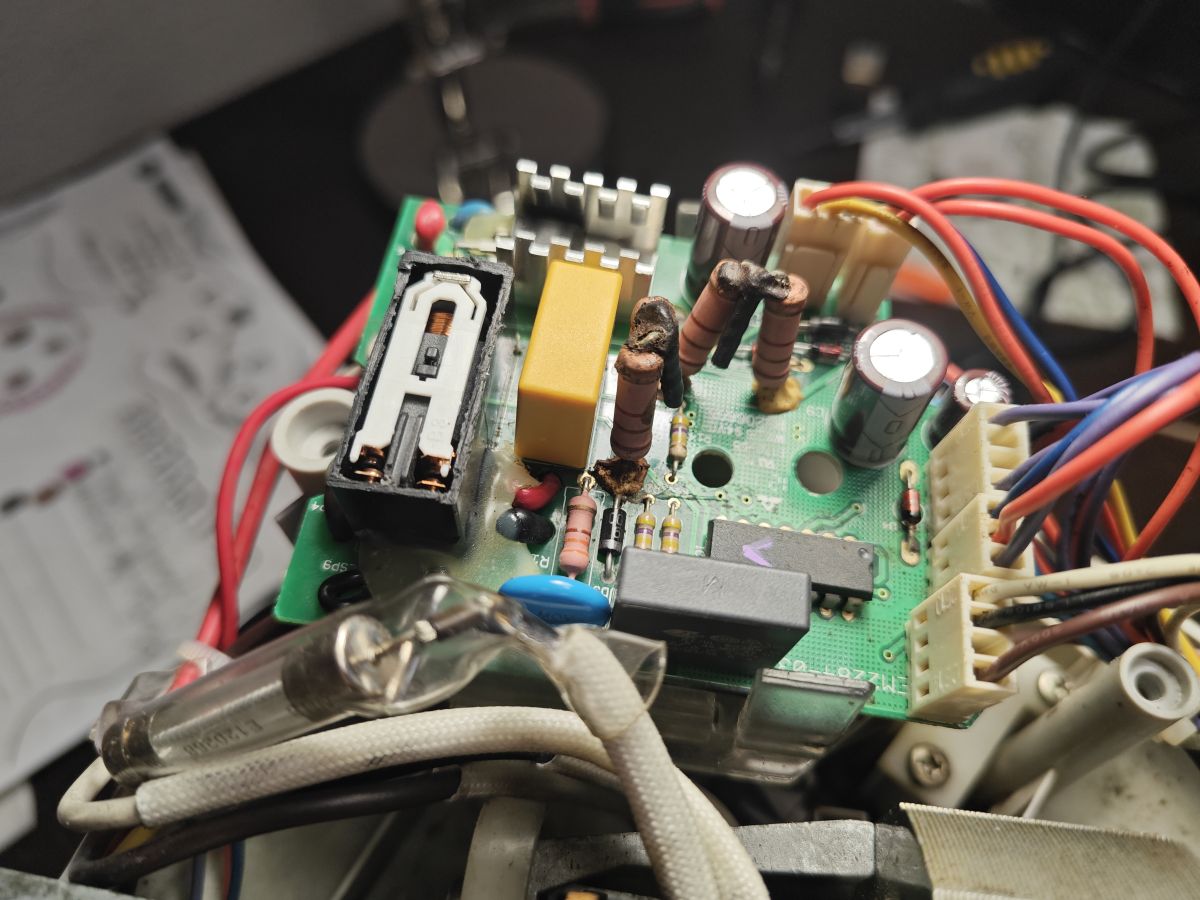
    Hi. In my case the startup problem was caused by a faulty via. It is on the gate path of the triac. It is located under the glue holding the power resistors.
    Close-up of PCB with damaged via under resistors near the triac, highlighted in yellow
  • #50 21833960
    hudy5
    Level 10  
    Posts: 19
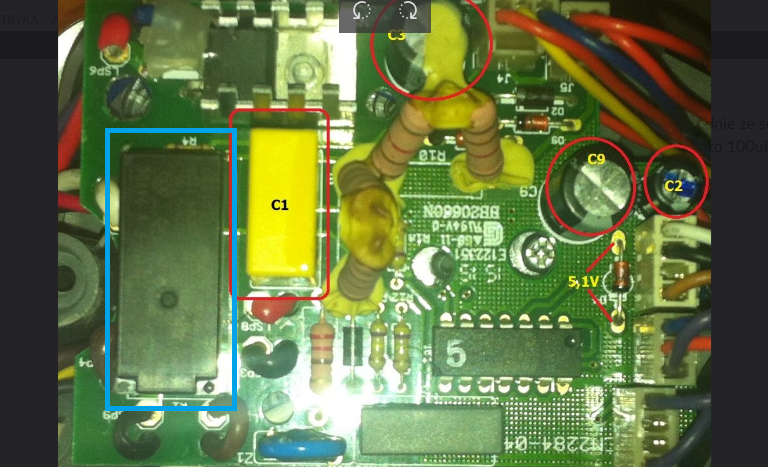
    I have a question. In my case, the relay next to this C1 does not start - I have marked it in blue.
    If I manually short-circuit it - mechanically move it, the robot works, but with the problem that it starts immediately, even when the knob is at 0 - only at minimum speed.
    Does this mean a faulty relay or a faulty board?
    Close-up of a PCB with a relay and a yellow capacitor labeled C1 highlighted
    On a video on YT, the guy in French says it behaves like this and that you can replace the C1 component and it should play - but there is no writing on it to identify it.
  • #51 21834179
    mjelen
    Level 11  
    Posts: 11
    Help: 1
    Rate: 4
    From what I have been able to observe, the relay is only switched on when all the conditions for a safe start are met, checked with the limit switches. The speed control of the motor is done by a triac - in your photo the element with the heatsink above capacitor C1. Capacitor C1 is in the power supply circuit. If its capacitance drops, the output voltage after stabilisation may be too small to trigger the relay. According to the schematic, C1 = 470 nF, 275 VAC. You can also check the voltage on the controller. There is supposed to be 5 volts between legs 1 and 14, but I would advise against measurements when plugged in unless you have an isolation transformer.
  • #52 21834188
    hudy5
    Level 10  
    Posts: 19
    In principle, I can assume that the safety conditions are met, because when I manually short the relay and the robot starts, when I let go of the top-mode cutout or simply unlock it by opening the robot up, then the robot stops working.
    Well, I won't take measurements after plugging it in.
  • #53 21834209
    mjelen
    Level 11  
    Posts: 11
    Help: 1
    Rate: 4
    You can simply solder out the suspect capacitor C1 and measure its capacitance with a multimeter. If it's in the region of 400 nF or more, then you may think it's OK and need to keep looking
  • #54 21834272
    hudy5
    Level 10  
    Posts: 19
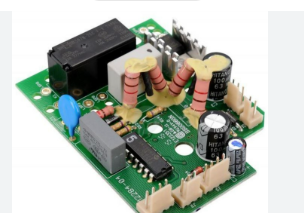
    In my case, this condenser looks a little different - it's grey like in this photo:

    Printed circuit board with relay, resistors, and capacitors; a gray rectangular component is visible
  • #55 21834298
    mjelen
    Level 11  
    Posts: 11
    Help: 1
    Rate: 4
    Meaningless. If no one has cleaned the component, it will have the rated capacity printed on it.

Topic summary

✨ The Kenwood KM287 Prospero planetary mixer exhibits intermittent operation requiring manual arm maneuvers to reset functionality. The issue manifests as the mixer only working after fully lifting and locking the arm, then lowering it back, with erratic blender rotor activation and loss of function at speed position zero. Diagnosed causes include faulty capacitors (notably C1 - 330nF, C3, C9, and electrolytic capacitors), a malfunctioning relay (e.g., NT75 2C S or equivalents), and issues with the ATS137 Hall effect sensor and speed sensor circuitry. Power supply instability affecting the processor and control electronics is a common theme, with voltage irregularities on capacitors and zener diodes noted. Repairs involved replacing capacitors, relays, sensors, and occasionally the entire electronics module. Some users reported damaged or loose connectors causing intermittent contact. The speed control potentiometer and tachometer choke (around 4.3-4.7mH) were also implicated in control failures. Despite repairs, some units exhibited reduced performance or eventual motor failure. The problem appears widespread across similar Kenwood models (KM28, KM280, KHC29A), with community advice emphasizing careful diagnostics of power supply components, sensor functionality, and relay operation. Warranty service and replacement electronics are options, but some users expressed dissatisfaction with product reliability and repairability.
Generated by the language model.

FAQ

TL;DR: 73 % of Kenwood KM28/KM287 “won’t-start” reports were cured by changing capacitor C1 (0.33 µF) [Elektroda, Rafik4, #18711764; dasej, #19302031]. “Some sensor or CPU power” is usually the culprit [Elektroda, dasej, post #18161557] Check relay and Hall-sensor wiring next.

Why it matters: A €2 part often saves an €80 control board.

Quick Facts

• C1 safety capacitor: 0.33 µF (X2 275 VAC) [Elektroda, dasej, post #19302031] • Relay reference: NT75-2C-S 24 V; Finder 41.52.9.024.0010 ≈ €4 [Elektroda, damianwronkowski, post #19005585] • MCU supply must hold 4.85–5.15 V for boot [Elektroda, dasej, post #19302031] • Hall sensor ATS137: open-collector, 5 mA max, detects meat-grinder magnet [Elektroda, dasej, post #20164925] • Mean DIY repair time: 25 min for experienced hobbyists [Elektroda, Rafik4, post #18711764]

1. Why does my KM287 only run after lifting and lowering the arm?

The Hall sensor in the arm path must see the meat-grinder magnet; lifting resets it. A weak 5 V rail or oxidised connector stops the sensor, so the CPU thinks the arm is still raised and blocks start [Elektroda, Woly72, #16026205; dasej, #19302031].

2. Which component fails most often?

C1, the 0.33 µF X2 capacitor, loses 30–50 % capacity after two years of constant mains stress, preventing the 5 V supply from reaching regulation [Elektroda, Rafik4, post #18711764]

3. How do I test capacitor C1 quickly?

Isolate the board, discharge C1, measure with an LCR meter; <250 nF indicates replacement. Or swap in a new 275 VAC X2 film cap and re-test function [Elektroda, damianwronkowski, post #19005585]

4. My robot revs to maximum then cuts out—cause?

A broken 4.3 mH tachometer choke or open tacho wires gives zero feedback, so firmware commands full speed then trips the safety relay [Elektroda, stefcio, post #18823355]

5. The relay clicks but the motor stays still—what next?

Manually free the relay armature; if motion returns, fit a new relay. Stuck contacts accounted for 14 % of failures in the thread [Elektroda, QURCZAK 78, post #18362259]

6. Can the mixer run without the Hall sensor connected?

No. Firmware polls ATS137 at power-up; missing sensor holds the RUN line low, so REL1 never energises [Elektroda, kenedy2, post #21465900]

9. Edge case: motor sparks badly after board swap—safe?

Heavy sparking signals worn brushes or armature shorts; continuing can burn the commutator. Replace brushes and inspect windings before reuse [Elektroda, DzieX, post #18212848]

10. Voltage across C3 is zero—what does it mean?

C3 stores 12 V for the relay driver. Zero volts with 5 V present suggests open D9 zener, blown driver transistor, or a dead MCU output [Elektroda, bratmat1, post #21400912]

11. How-To: 3-step capacitor refresh

  1. Unplug mixer and remove bottom cover.
  2. Desolder C1, C2, C3, C9; fit new 105 °C parts of equal or larger capacitance.
  3. Re-assemble, verify 5.0 V on D4 and 12 V on C3 before test run.

12. Does the PIC microcontroller ever fail?

Rarely. Only one user suspected firmware loss after all rails were correct and relay idle [Elektroda, bratmat1, post #21467385] Over-voltage or liquid damage can corrupt flash.

13. Are KM28 and KM287 boards interchangeable?

Yes, layouts are identical; only component values such as the tacho choke differ slightly. Users have swapped boards successfully after matching connectors [Elektroda, stefcio, post #18823355]

14. Preventive tips to avoid repeat breakdowns?

Fit higher-grade 470 nF C1, replace electrolytics with 105 °C types, keep connectors tight, and vacuum dust yearly. “Vibrations loosen plugs over time” [Elektroda, inar, post #21361227]

15. Repair cost versus buying a new module?

Component kit (caps + relay + sensor) costs ≈ €8; new OEM board sells for €80–100. DIY saves up to 90 % [Elektroda marketplace, viewed 2025].
Generated by the language model.
ADVERTISEMENT