logo elektroda
logo elektroda
X
logo elektroda

Experiencing Rapid Disk Space Consumption on Windows 10 - Drive C: Details Provided

28791 25
Best answers

How can I find and stop the rapid loss of free space on the Windows 10 C: drive?

Use Disk Cleanup with the “Clean up system files” option first, because that can remove WinSxS / Service Pack backup files, Windows Update backup files, reporting files, and thumbnails and may free 20–30 GB after a reboot [#16631575][#16631589][#16637501] If needed, also check System Protection and delete or limit restore points, since they can take significant space [#16632811] To locate any other hidden space hogs, scan the drive with WinDirStat or Dism++ [#16631502][#16631651] The replies also note that a 65 GB system partition is very small for Windows 10, so enlarging C: was recommended as a long-term fix [#16631575][#16632347]
Generated by the language model.
ADVERTISEMENT
Treść została przetłumaczona polish » english Zobacz oryginalną wersję tematu
  • #1 16631484
    Anonymous
    Anonymous  
  • ADVERTISEMENT
  • #2 16631502
    Matuzalem

    Level 43  
    Posts: 17279
    Help: 1651
    Rate: 1079
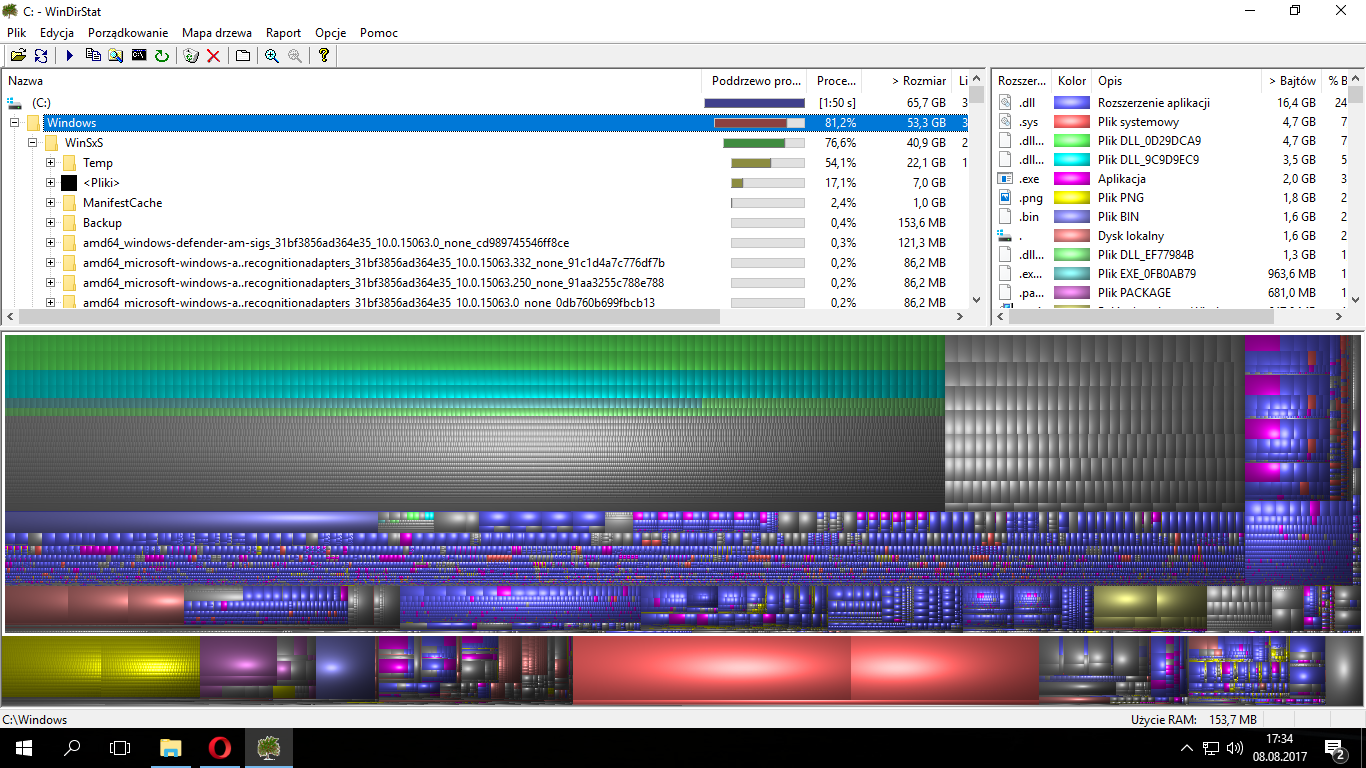
    Please use WinDirStat to find the folder with unwanted content.
    On the basis of what the Lord wrote, I dare not suggest anything more.
    Company Account:
    Doradztwo podatkowe
    Wilczyńskiego 25/13, Olsztyn, 10-686
  • #3 16631553
    Anonymous
    Anonymous  
  • ADVERTISEMENT
  • #4 16631575
    Matuzalem

    Level 43  
    Posts: 17279
    Help: 1651
    Rate: 1079
    Since it is WinSxS - I skip some opportunities for risk-takers, because they and weaving little as a result - it already takes up almost 41GB, it makes no sense to look for anything further until the system partition is enlarged (e.g. x2).
    You can clean - remove even the system disk cleaning "Clean system files" - SoftwareDistribution content (always> 2GB), but not much more.
    Company Account:
    Doradztwo podatkowe
    Wilczyńskiego 25/13, Olsztyn, 10-686
  • #5 16631589
    anonimus
    Level 10  
    Posts: 217
    Rate: 21
    System clean the C drive -> delete Windows Update backup files (I don't remember exactly what this item is called) and reporting files (those with a few GB).
    Of course, click "Clean up system files" - you slow down, shoot 25-30 GB :)

    In addition, 65 GB on C with Win10 is definitely not enough.
  • #6 16631600
    Anonymous
    Anonymous  
  • #7 16631647
    anonimus
    Level 10  
    Posts: 217
    Rate: 21
    First, you click "clean" and the "Clean system files" option will appear at the bottom left. :)
  • #8 16631651
    adamjk
    Level 28  
    Posts: 873
    Help: 125
    Rate: 149
    Before you start acting in accordance with the undoubtedly right advice of previous speakers, please read the following:
    https://www.chuyu.me/en/index.html
    Believe me, it's worth a try. Just make a scan and see how much you can save.
  • #9 16631667
    anonimus
    Level 10  
    Posts: 217
    Rate: 21
    Just out of curiosity ... What is this 1.8 GB PNG file? ;)
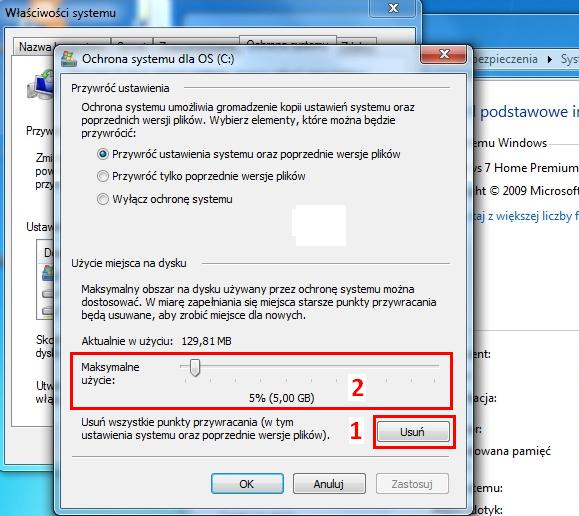
    Delete all restore points (if the system is OK) and limit the space for this purpose to e.g. 5-6 GB - I turned it off completely, I do Backup quite often (it takes 20 minutes with Acronis :)
  • #10 16631681
    Anonymous
    Anonymous  
  • ADVERTISEMENT
  • #11 16631691
    anonimus
    Level 10  
    Posts: 217
    Rate: 21
    Let me put it this way, the system knows better what can be deleted ... ;)
  • #12 16631718
    Anonymous
    Anonymous  
  • #13 16631731
    adamjk
    Level 28  
    Posts: 873
    Help: 125
    Rate: 149
    anonimus wrote:
    Just out of curiosity ... What is this 1.8 GB PNG file? ;)

    This is not one file!
    anonimus wrote:
    Let me put it this way, the system knows better what can be deleted ... ;)

    I envy my sense of humor!
  • #14 16631860
    anonimus
    Level 10  
    Posts: 217
    Rate: 21
    5.6 GB is not enough for you ... Did you use all the tips? Have you done a reboot?
  • #15 16632347
    Matuzalem

    Level 43  
    Posts: 17279
    Help: 1651
    Rate: 1079
    With Dism ++ - probably now it's "mustard after dinner -" I advise you to be careful. You can hurt yourself, and even more the system.
    However, this is a matter of settings, User confidence and Murphy's rights.

    Once again, I suggest you consider resizing your system partition.
    Company Account:
    Doradztwo podatkowe
    Wilczyńskiego 25/13, Olsztyn, 10-686
  • ADVERTISEMENT
  • #16 16632673
    Anonymous
    Anonymous  
  • #17 16632811
    anonimus
    Level 10  
    Posts: 217
    Rate: 21
    Did you system clean the C drive?
    Have you cleaned up system files? -> mainly Backup files Service Pack + Windows Update + Thumbnails

    Have you deleted all restore points (if system OK) and limited the space for this purpose to e.g. 5-6 GB?
    I think restore points are taking your place ...
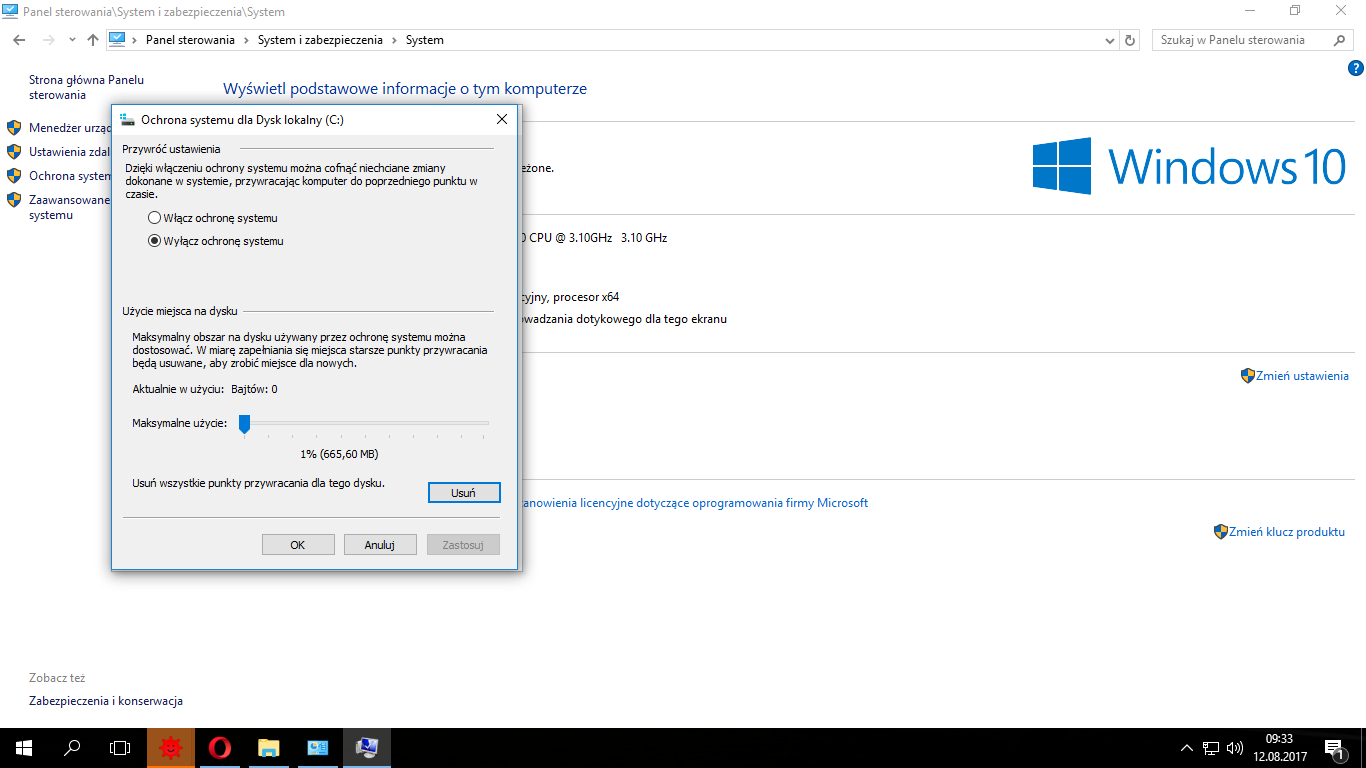
    System protection ->
    "D" -> configure, delete all points and turn off
    "C" -> configure and delete all points, then use the slider to reduce the space (you are sure to set it to 100% space - this is the default).
  • #18 16633027
    safbot1st
    Level 43  
    Posts: 21951
    Help: 2719
    Rate: 1583
    Naweralny wrote:
    today, after a while of playing, I enter and see that there are only less than 6 left.

    In the Users folder, for example, you have replays from GRID 1/2/3, Dirt 1/2/3/4 = 7GB.
    The game saves are also there. 1 save is 3-10? MB x 100 = 1GB and more (I shoot).
    Sam Ccleaner, how many GB does he find after clicking "Analysis"?
    You created such a small partition yourself, and the software still lands on C: \ Program Files? What?
    Do you have the necessary installs in the Downloads folder? On D: \ with them!
    Delete all temporary ones. Even old installation data for things that you won't uninstall (manually) anyway.
    Ccleaner will not remove all TMP / TEMP for fear of a mishap, but fixlist.txt for FRST
    Fixlist.txt content:
    EmptyTemp:

    Save by FRST.exe and select "Repair".
    There are other clever cleaners, e.g. Privazer. I recommend.

    Added after 2 [minutes]:

    Matuzalem wrote:
    Once again, I suggest you consider resizing your system partition.

    If that's what's happening to you, I also suggest you.
    As a curiosity, my C: \ = 29GB W7-64bit. Occupied 50%.
  • #19 16633062
    Anonymous
    Anonymous  
  • #20 16633095
    safbot1st
    Level 43  
    Posts: 21951
    Help: 2719
    Rate: 1583
    Naweralny wrote:
    I don't see folders with replay saves at all, but I never save them myself, so I doubt that there is something there, save the same.

    Maestro, GRID and DIRT write without asking. This is where saves according to You?
    They are often in All Users / Default Users / Default, not in "Username".
    Take TotalCommander and hit the spacebar on the Users folder. How long does this folder take? Mi 900MB.

    Added after 3 [minutes]:

    Do you have hidden / system files enabled as visible at all (In TC-Preferences-> Display)? Linux would be more convenient, because Windows hides half of the rubbish.
  • #21 16633240
    anonimus
    Level 10  
    Posts: 217
    Rate: 21
    First of all, I do not believe you that you cleaned system files as I wrote.
    Second, I don't believe you deleted your restore points - they took nothing ?! You must be kidding!
    Third, how many times do you need to write that partitions are written in CAPITAL LETTERS ?!
    Finally, since you are not doing what I write, I am done with the topic.

    Yes for the information ...
    Option " Clean up system files "cleans just WinSxS folder using the system DISM (the system knows better what can be deleted!) by selecting Service Pack + Windows Update backup files you can min. Free 20 GB.

    safbot1st wrote:
    As a curiosity, my C: \ = 29GB W7-64bit. Occupied 50%.

    And this is how? 14.5 GB? I also have Win7 64-bit ;)
  • #22 16637293
    Anonymous
    Anonymous  
  • #23 16637501
    anonimus
    Level 10  
    Posts: 217
    Rate: 21
    There is no "Lord" on the forums, regardless of age ...
    Naweralny wrote:
    As for the restore points, they did not have a separate space, so they took almost nothing.

    I have a feeling that you have no idea about it, so let me show it graphically:

    Experiencing Rapid Disk Space Consumption on Windows 10 - Drive C: Details Provided

    Naweralny wrote:
    Cleaning up the system files did nothing, it freed up so little space that I barely noticed it, maybe 2-3 GB was added.

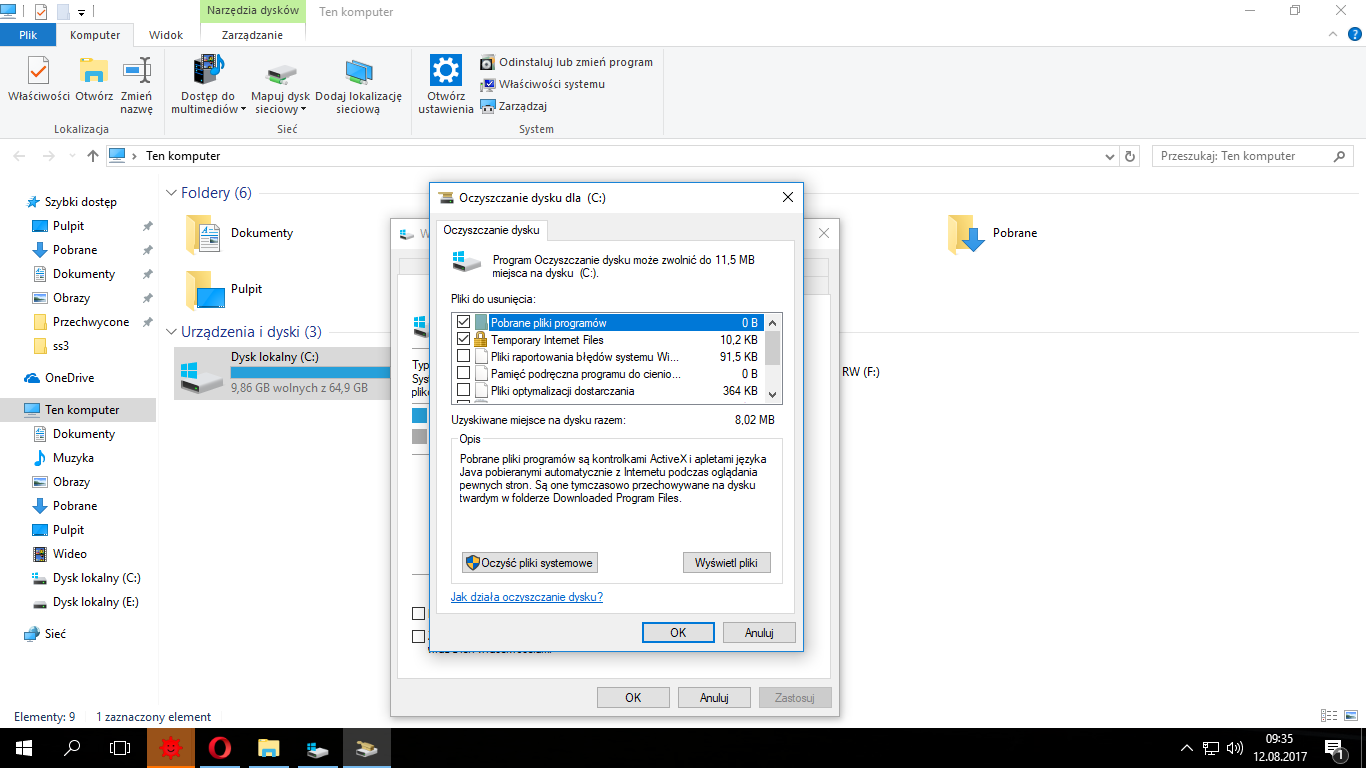
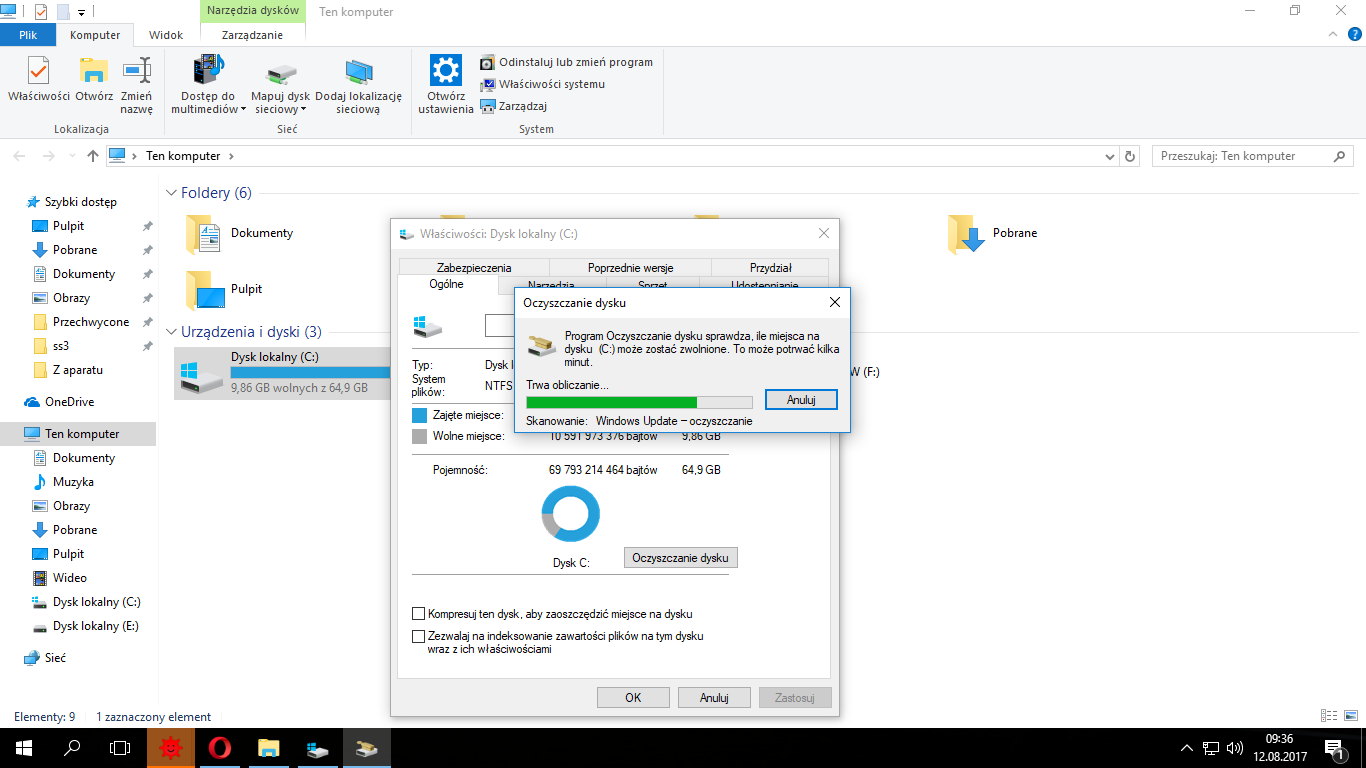
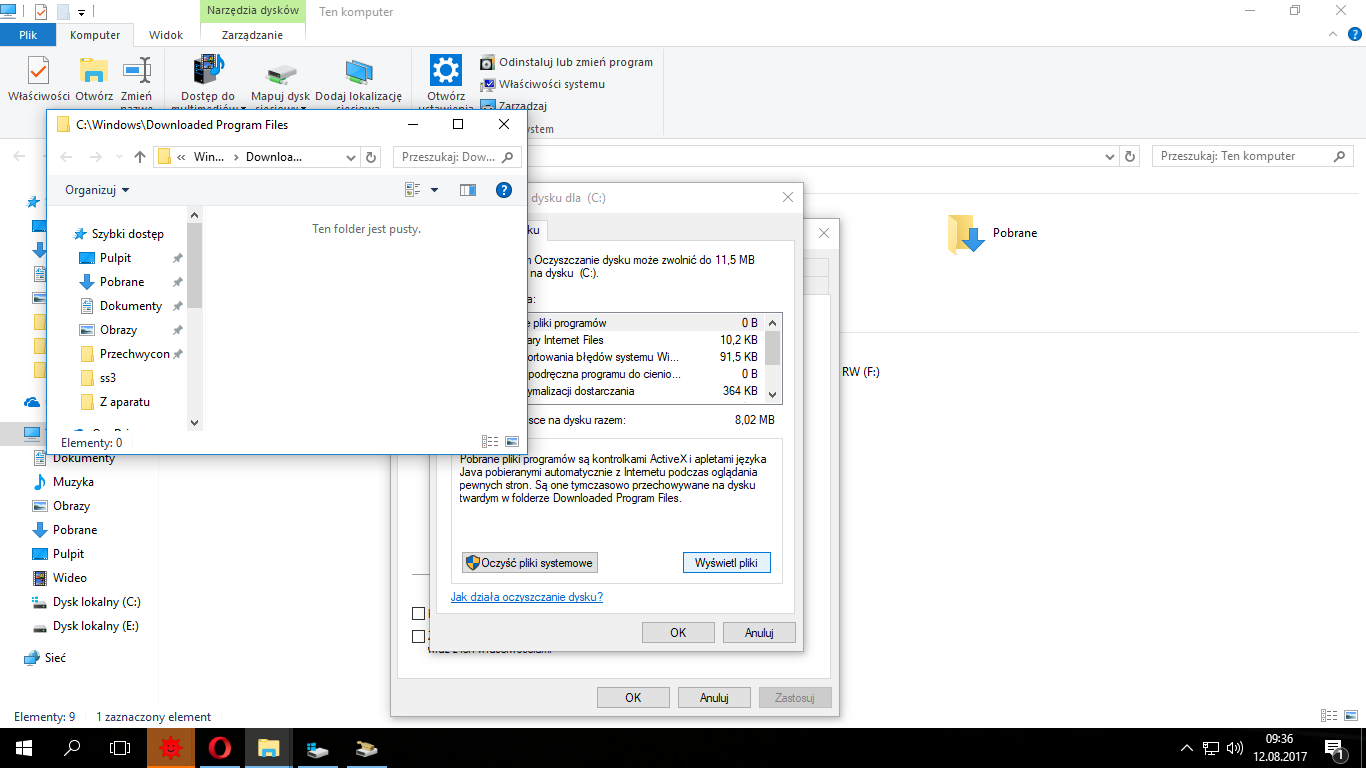
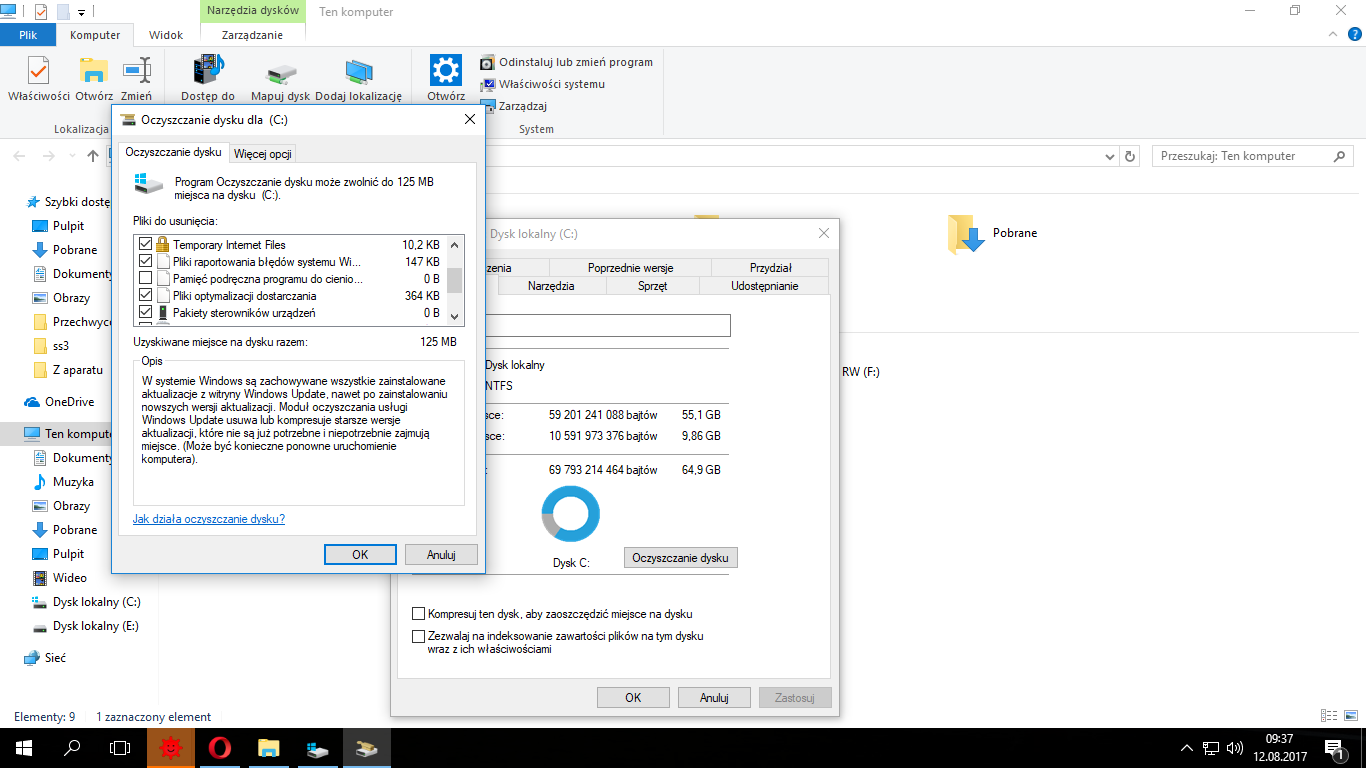
    1. Click "Clean C drive" and wait for the result, how much space can be recovered -> you do nothing, just click "Clean system files" and wait for the result
    2. Select "Service Pack Backup Files" + "Windows Update" + "Thumbnails" and click "Clean"
    3. After cleaning you do RESTART - there will be system configuration and proper cleaning!

    Naweralny wrote:
    Maybe it's through update? I had this shit turned on all the time, I just turned it off.

    This ain't shit! You are smarter than Microsoft, how many wise men in many forums?

    Prove with screenshots that you did what I wrote.
  • #24 16637727
    Anonymous
    Anonymous  
  • #25 16638627
    anonimus
    Level 10  
    Posts: 217
    Rate: 21
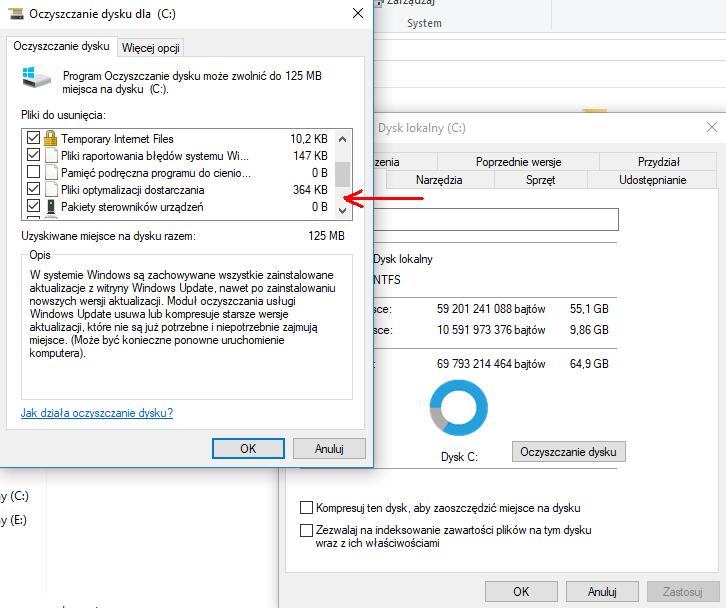
    Can you show the items "at the bottom" ?:
    Experiencing Rapid Disk Space Consumption on Windows 10 - Drive C: Details Provided
  • #26 16638739
    Anonymous
    Anonymous  

Topic summary

✨ The discussion revolves around a user experiencing rapid disk space consumption on their Windows 10 C drive, which is partitioned to 65 GB. Despite efforts to manage space by directing installations to the D drive and cleaning temporary files, the available space continues to decrease significantly. Participants suggest using tools like WinDirStat and CCleaner for identifying large files and cleaning system files, including Windows Update backups and restore points. Recommendations also include resizing the C drive partition to accommodate Windows 10's requirements and disabling unnecessary features like hibernation and Windows Update. The user reports fluctuations in available space, indicating ongoing issues with disk management.
Generated by the language model.

FAQ

TL;DR: WinSxS can exceed 40 GB on Windows 10 if updates aren’t cleaned; “click ‘Clean system files’ first” [Elektroda, Matuzalem, post #16631575] Use Disk Cleanup, remove old Windows Update data and limit restore points; users report regaining 25–30 GB. Why it matters: freeing space prevents update failures and SSD wear.

Quick Facts

• Typical WinSxS size after cleanup: 6–10 GB [Microsoft Docs, 2023] • Disk Cleanup’s Windows-Update option can recover 20–30 GB [Elektroda, anonimus, post #16631589] • Recommended Windows 10 system partition: 100–128 GB for gamers [PCGamer, 2022] • Hibernation file = 30–40 % of installed RAM; disabling frees that space [Microsoft Docs, 2023] • System Restore may reserve up to 15 % of C: by default [Microsoft Support, 2022]

Why did my Windows 10 C: drive shrink overnight?

Large WinSxS growth, Windows-Update backups, restore points, and a hidden hibernation file can eat tens of gigabytes [Elektroda, Anonymous, post #16631484]

What exactly is the WinSxS folder?

WinSxS stores every system component and patch. Without maintenance it can grow past 40 GB [Microsoft Docs, 2023].

Three-step Disk Cleanup routine?

  1. Launch Disk Cleanup and press “Clean up system files”.
  2. Tick Service Pack Backup, Windows Update, Thumbnails.
  3. Confirm, then restart to finish cleanup [Elektroda, anonimus, post #16637501]

Is 65 GB enough for a Windows 10 system partition?

No. Experts suggest 100–128 GB, especially for games and restore data [PCGamer, 2022].

Can I disable hibernation to gain space?

Yes. Run “powercfg -h off” as admin; you’ll recover hiberfil.sys size (30–40 % RAM) [Microsoft Docs, 2023].

Edge case: cleanup done yet space still falls?

Malware, runaway log files, or endless game replays can refill C:. Monitor with WinDirStat weekly [Kaspersky Labs, 2022].
Generated by the language model.
ADVERTISEMENT