logo elektroda
logo elektroda
X
logo elektroda

High Packet Loss Issues: Arris TG2492S Router, 30Mb/s Coaxial Cable, Ping Spikes up to 10,000ms

Szafamoto 6273 12
ADVERTISEMENT
Treść została przetłumaczona polish » english Zobacz oryginalną wersję tematu
  • #1 16652952
    Szafamoto
    Level 7  
    Posts: 7
    Rate: 1
    Hello, I recently connected the internet to multimedia. I sometimes play one game online and unfortunately there are large ping jumps up to 5000-10000 ms, I assume that it is the fault of losing a lot of packets but I am not a specialist for this, so I decided to ask for help to determine the actual cause of the problem .

    What I know about the network:
    30Mb / s, coaxial cable splitter for tv and internet.
    Arris tg2492s multimedia router

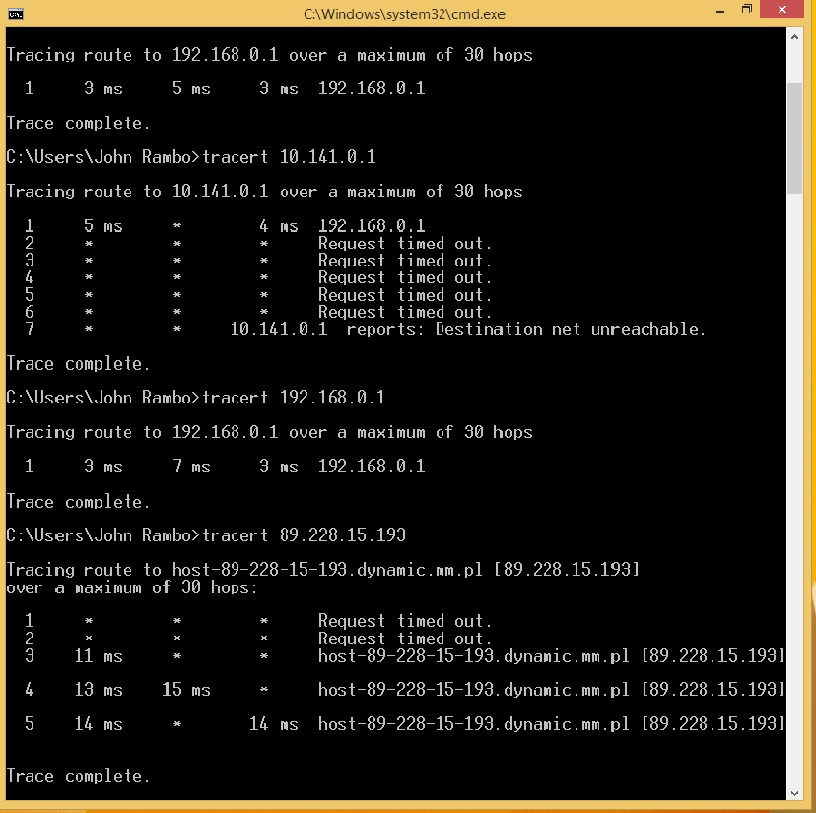
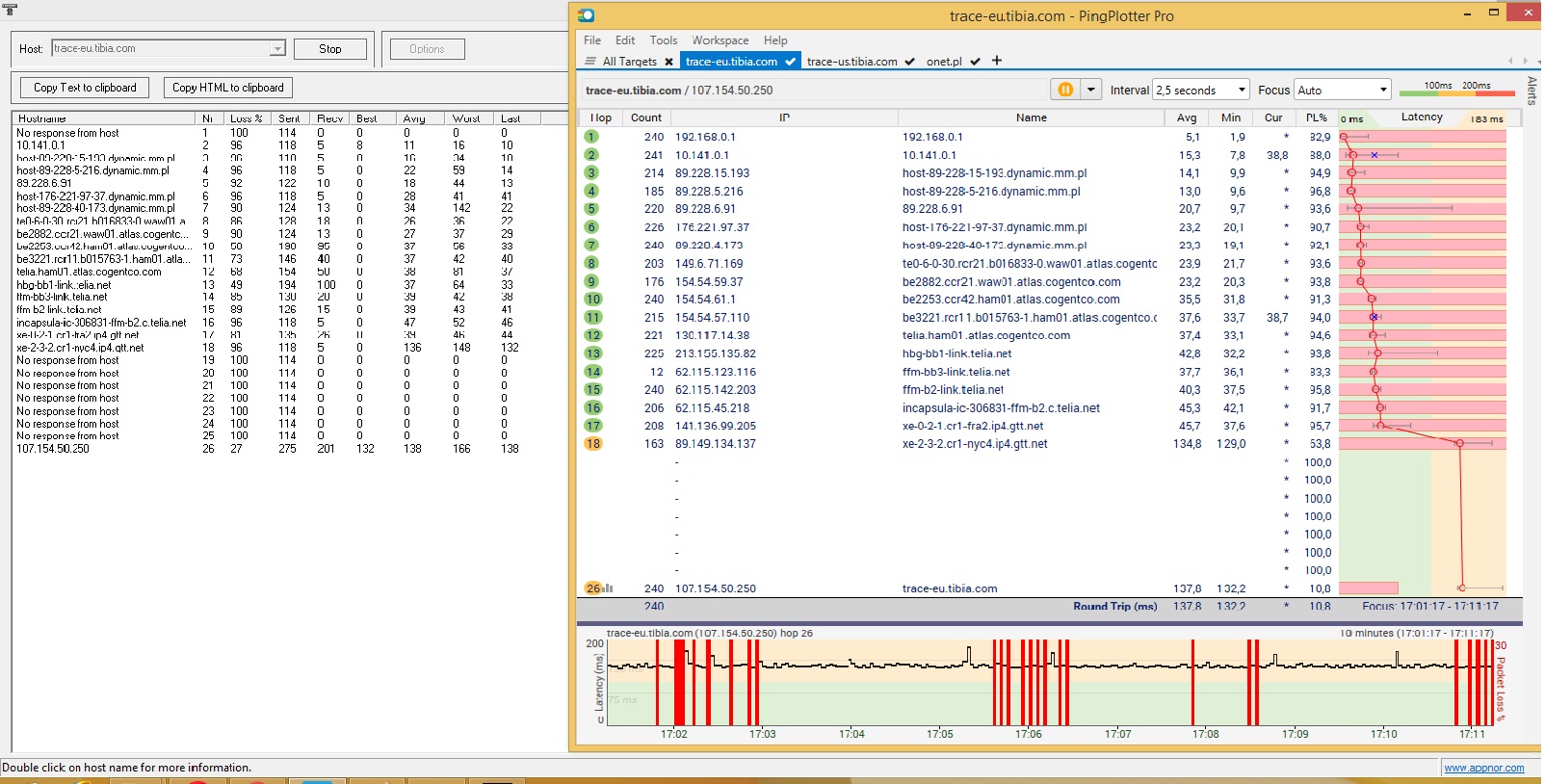
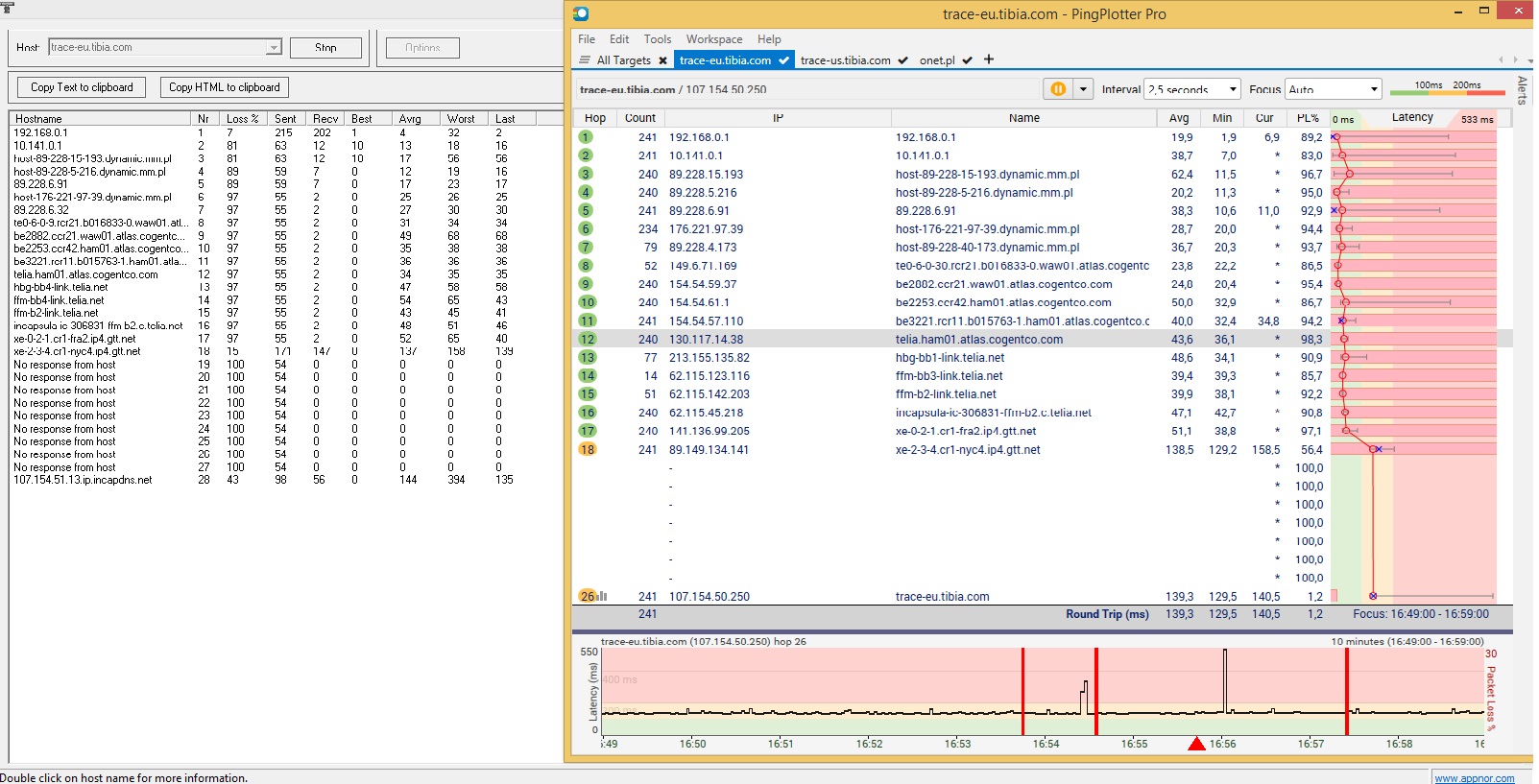
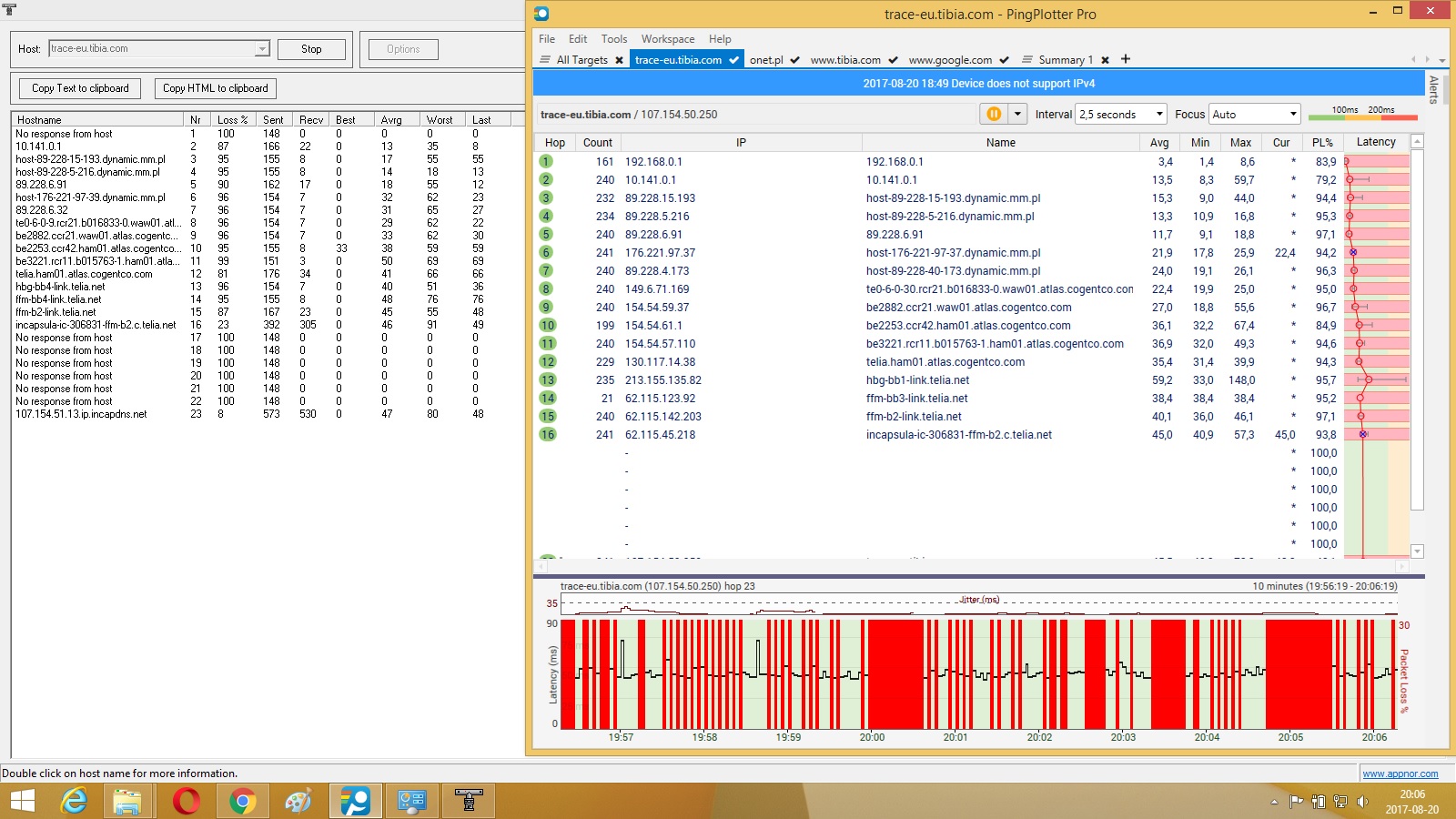
    here are screenshots from the winmtr program and pingplotter, in addition, I decided to do tracert on 1 multimedia server on the way,
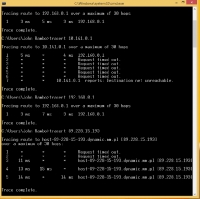
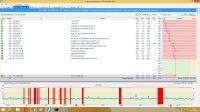
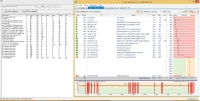
    High Packet Loss Issues: Arris TG2492S Router, 30Mb/s Coaxial Cable, Ping Spikes up to 10,000ms

    High Packet Loss Issues: Arris TG2492S Router, 30Mb/s Coaxial Cable, Ping Spikes up to 10,000ms High Packet Loss Issues: Arris TG2492S Router, 30Mb/s Coaxial Cable, Ping Spikes up to 10,000ms High Packet Loss Issues: Arris TG2492S Router, 30Mb/s Coaxial Cable, Ping Spikes up to 10,000ms

    I did more tests but saved them to a text file but most of it looks like this,
    router 30% loss,
    10.141.0.1 ~ 90%
    and another mm server also about 90%

    I will be grateful for your help, I hope that the information provided is sufficient.

    Regards Grzegorz.

    Edition:
    I will add that the router is 50cm from the laptop, and connecting it with an Ethernet cable does not change anything in the graphs.
    8.1 64bit win computer system

    At the moment of the cuts, despite the fact that the game stops connecting, I hear normally on teamspeak.
  • ADVERTISEMENT
  • #2 16653076
    bogiebog
    Level 43  
    Posts: 24793
    Help: 2569
    Rate: 1528
    Show the graph by cable.

    192.168.0.1 is your router?
    router model?
  • #3 16653209
    Szafamoto
    Level 7  
    Posts: 7
    Rate: 1
    The router as I wrote in the first post is

    Arris TG2492S
    it is owned by multimedia and I cannot log in to it, all I can use ebok is to set the WiFi password and the channel, but changing the channels does not change the situation.

    Yes 192.168.0.1 is rather my router because what else? As I wrote, I can't log in to it.

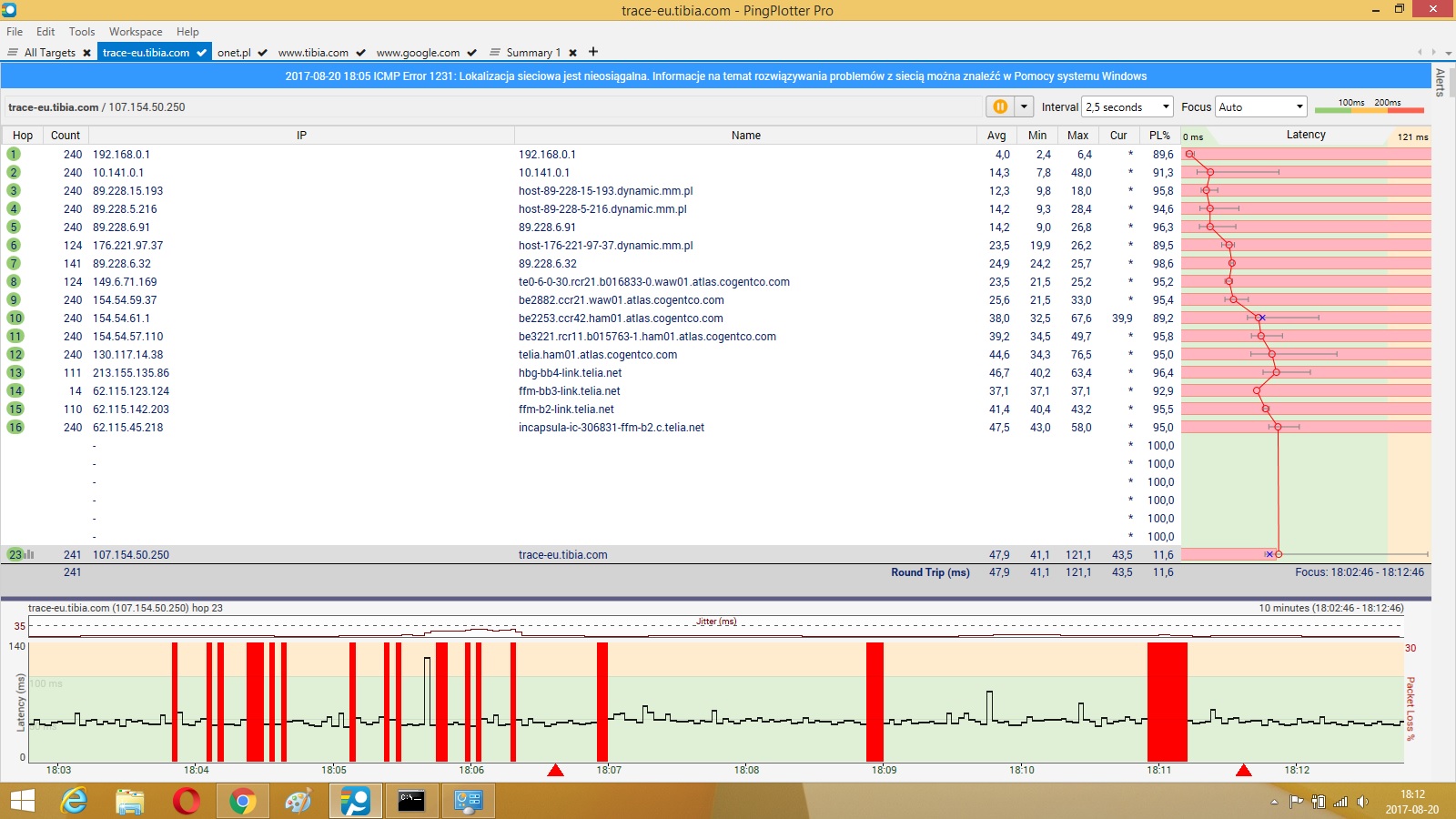
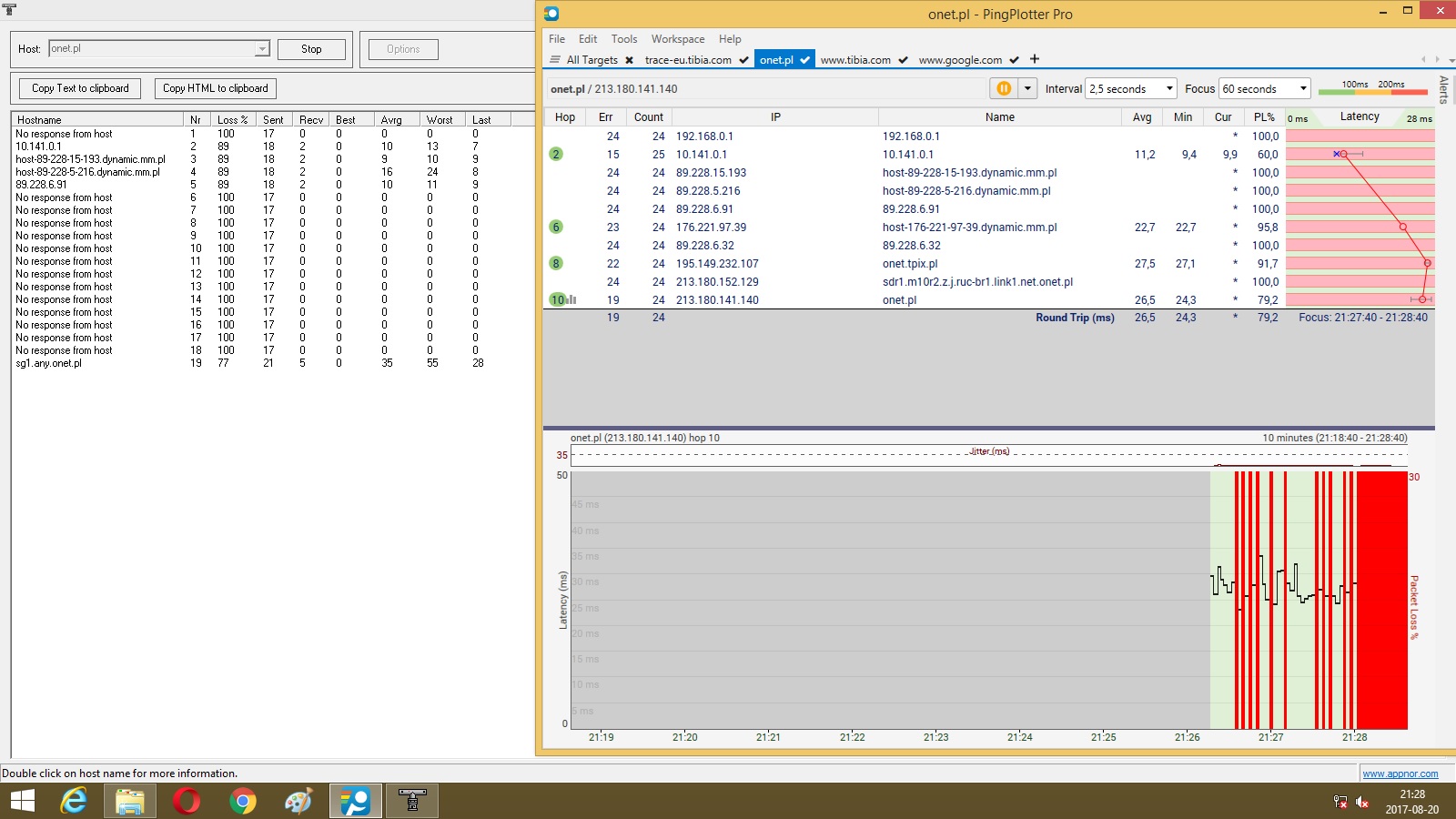
    here is a photo of working on the cable about 10 minutes

    High Packet Loss Issues: Arris TG2492S Router, 30Mb/s Coaxial Cable, Ping Spikes up to 10,000ms
  • ADVERTISEMENT
  • #4 16653227
    bogiebog
    Level 43  
    Posts: 24793
    Help: 2569
    Rate: 1528
    Run cmd.exe, type

    ping -t 192.168.0.1

    Does this ping also lose packets like in ping plotter?

    Added after 33 [seconds]:

    Boot into Safe Mode + Networking, does that change anything?
  • #5 16653392
    Szafamoto
    Level 7  
    Posts: 7
    Rate: 1
    Ping -t on the router shows no ping loss on average 1-6ms maximum 20ms, it took me a while to start in safe mode but I finally managed and unfortunately it does not change anything, I think a short test shows what is needed.

    High Packet Loss Issues: Arris TG2492S Router, 30Mb/s Coaxial Cable, Ping Spikes up to 10,000ms
  • #6 16653753
    bogiebog
    Level 43  
    Posts: 24793
    Help: 2569
    Rate: 1528
    Szafamoto wrote:
    Ping -t to the router shows no ping loss on average 1-6ms, maximum 20ms,

    Apparently trace packets from the plotter's ping are blocked / ignored.

    Try multiple cmd.exe "ping -t xxx" windows where xxx are consecutive traceroute routers until you find the bottleneck.
  • #7 16654011
    Szafamoto
    Level 7  
    Posts: 7
    Rate: 1
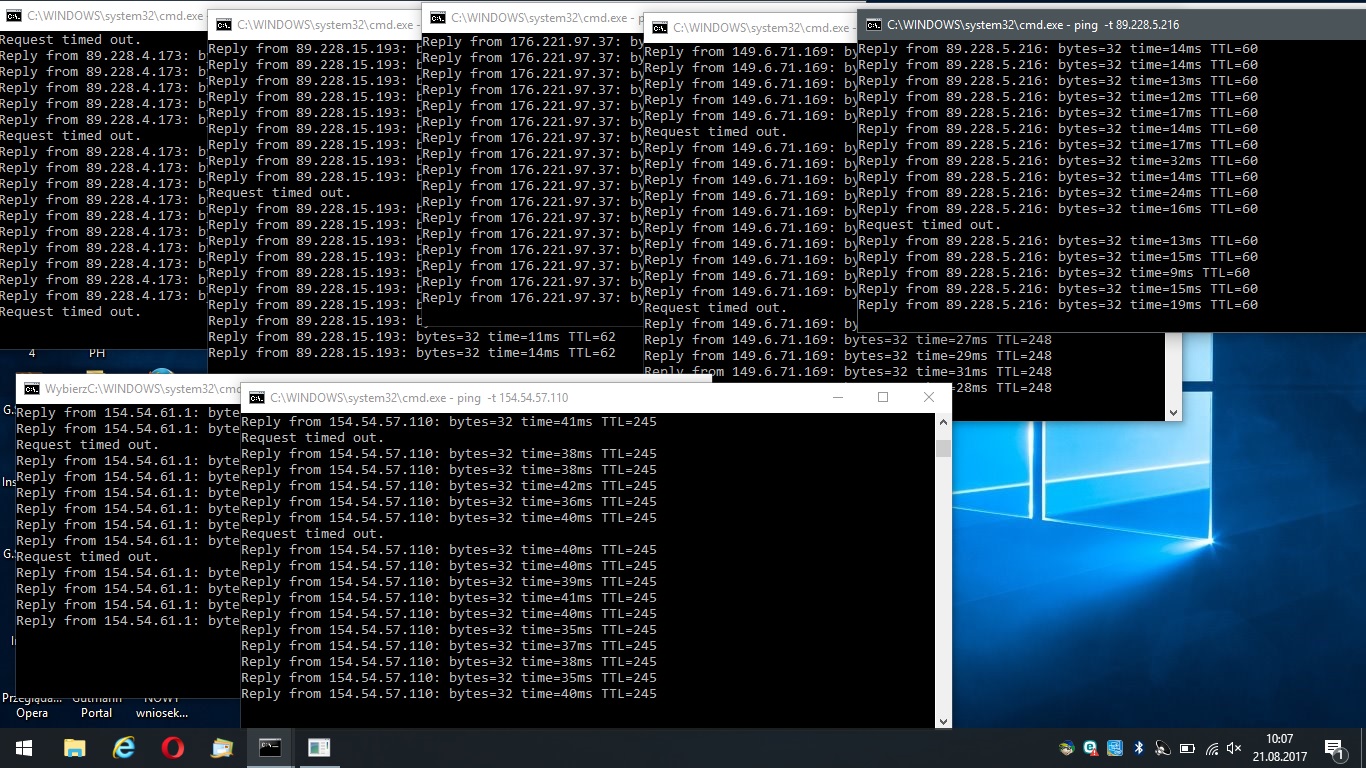
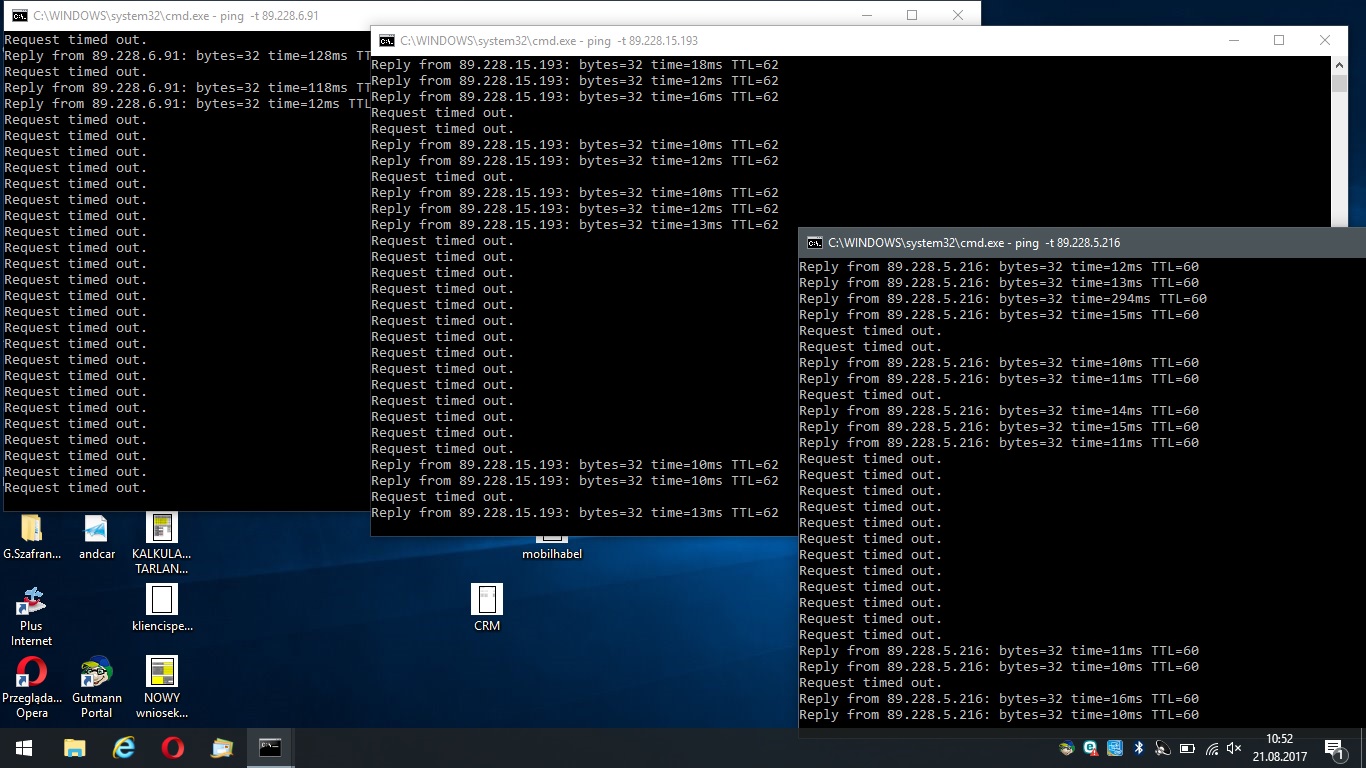
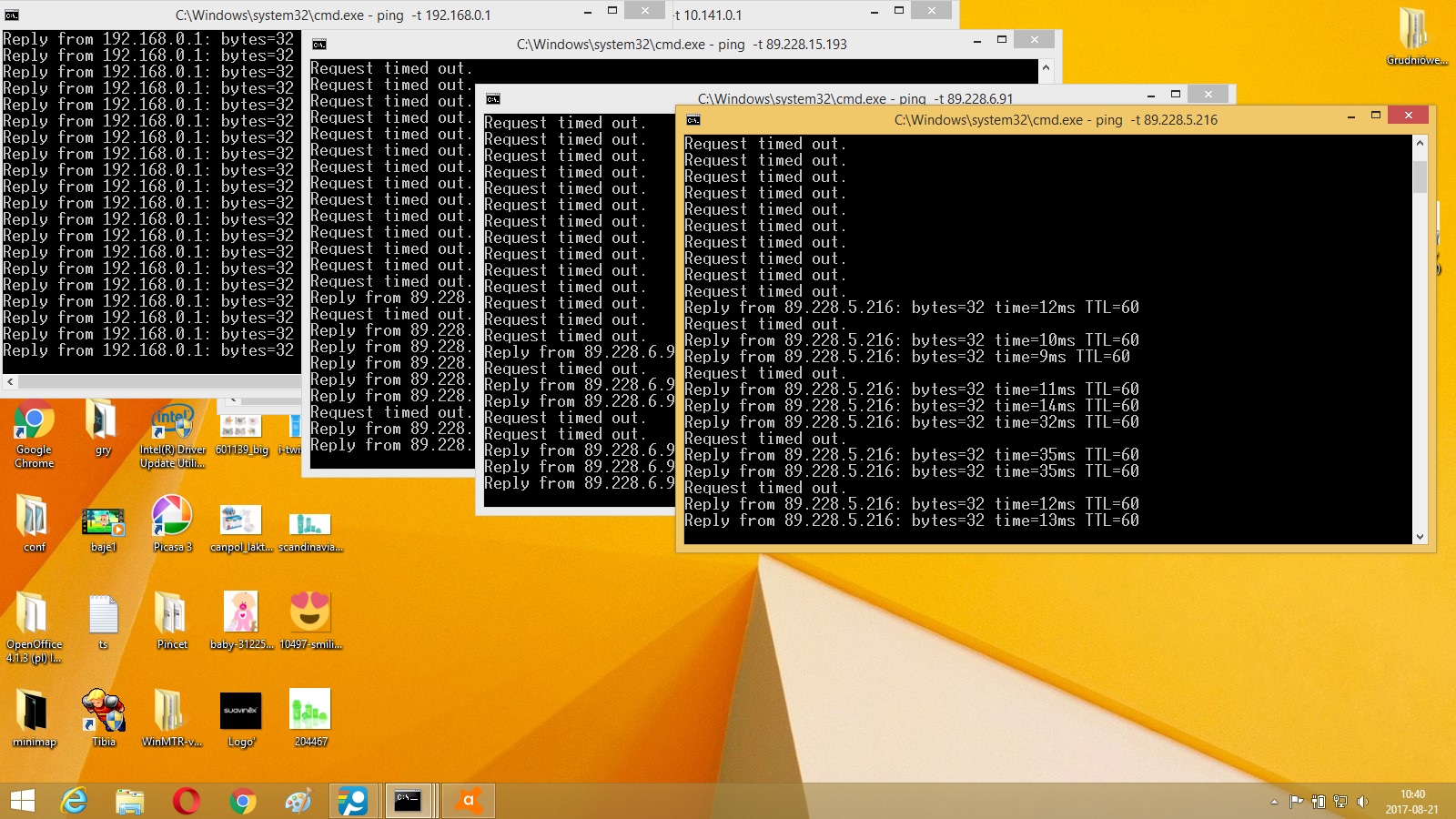
    ok i did, from the second laptop i hope it's not a problem.
    I will throw in a photo but I will describe it first.

    1 after the router, I do not know what it will be, a box on the cage or something I do not know. Request time out.
    on each subsequent one from time to time there are losses from 2 starting, although I think it wasn't until I started pinging around server 9 but it may seem to me, I will try in the afternoon to do it better on my laptop with a mouse because the touchpad is for me divine punishment. I will also put in a comparison with 2 computers that could also rule out computer fault.

    What is a bottleneck? And am I able to use a ping plotter or something else to tell which server is not responding at the moment? Since not every packet loss corresponds to in-game freez, but I am able to locate which by playing.

    High Packet Loss Issues: Arris TG2492S Router, 30Mb/s Coaxial Cable, Ping Spikes up to 10,000ms


    I throw symmetrically made ping, here is laptop No. 2, for WiFi High Packet Loss Issues: Arris TG2492S Router, 30Mb/s Coaxial Cable, Ping Spikes up to 10,000ms


    Here is the laptop No. 1, connected with a cable, High Packet Loss Issues: Arris TG2492S Router, 30Mb/s Coaxial Cable, Ping Spikes up to 10,000ms
  • ADVERTISEMENT
  • Helpful post
    #8 16654393
    bogiebog
    Level 43  
    Posts: 24793
    Help: 2569
    Rate: 1528
    Do "ping -t" without playing (eg to the first 5 routers from the traceroue list), interrupts on some router? ie what% losses are on a given router, you save the results.

    then you test the ping while playing, and look at where it stops and compare it to the results without playing.

    Added after 2 [minutes]:

    I see ping first on x.193 router, so that's the bottleneck.

    Use wireshark to determine packets per second PPS while playing
    https://ask.wireshark.org/questions/43285/how-to-count-packets-per-second
  • #9 16656081
    Szafamoto
    Level 7  
    Posts: 7
    Rate: 1
    The photos I uploaded are with the game turned off, in general, testing while playing is a difficult topic because I don't have much time to play but I managed to establish that even if I have packet losses on the first servers, it did not result in lag, i.e. they were not synchronous, And so, while searching, I tried to ping the last visible address (because later there are 5 invisible and the recipient) and it matches perfectly, 1 address before there is no loss in moments of lag. Could it be this router to blame? It is definitely outside the multimedia backbone network in such a case whether it is possible to bypass such a point either alone or by asking multimedia for help.

    Generally speaking, the pingplotter does not show such losses anymore and the initial servers stopped having red stripes, maybe they improved something because I already reported it in multimedia.
  • ADVERTISEMENT
  • Helpful post
    #10 16656165
    bogiebog
    Level 43  
    Posts: 24793
    Help: 2569
    Rate: 1528
    Szafamoto wrote:
    It is certainly outside the multimedia backbone network, in this case whether it is possible to bypass such a point either by yourself or by asking multimedia for help.

    Only by redirecting packets through your VPN server (e.g. vpnonline en), but this does not guarantee success.
  • #11 16656305
    Szafamoto
    Level 7  
    Posts: 7
    Rate: 1
    And if ping -t shows lag loss here, and 1 before not, can I take it for granted that this router is the culprit or is it not certain?
  • Helpful post
    #12 16656327
    bogiebog
    Level 43  
    Posts: 24793
    Help: 2569
    Rate: 1528
    Certain - no, but it makes the suspicion more probable,
    the role of the router is to route the packets further, not to respond to pings.

    Similarly with traceroute, routers don't have to send TTL expiration notices in the packet, most do, but it's not the router's responsibility.
  • #13 16683781
    Szafamoto
    Level 7  
    Posts: 7
    Rate: 1
    I managed to solve the problem, it was not actually multimedia, but one of the routers on the route. I used OpenVPN and the mydevil.net servers and everything works as it should.

Topic summary

✨ The discussion revolves around high packet loss and significant ping spikes experienced by a user with an Arris TG2492S router while using a 30Mb/s coaxial cable connection. The user reports ping spikes reaching up to 10,000 ms during online gaming, suspecting packet loss as the cause. Various troubleshooting steps are suggested, including running continuous pings to the router and performing traceroutes to identify potential bottlenecks in the network. The user confirms no packet loss when pinging the router directly, indicating the issue lies beyond the router. After further testing, it is determined that one of the routers on the route was responsible for the packet loss, which was resolved by using OpenVPN. The discussion highlights the importance of isolating network components to identify issues and suggests using tools like Wireshark for packet analysis.
Generated by the language model.

FAQ

TL;DR: User saw "large ping jumps up to 5,000–10,000 ms" and identified severe hop-specific loss; fix was routing around it. "I used OpenVPN… and everything works as it should." [Elektroda, Szafamoto, post #16683781] Why it matters: If one upstream router drops or delays ICMP/traffic, your games stutter even when home Wi‑Fi looks fine; this FAQ shows how to confirm and route around it.

Quick Facts

How do I troubleshoot huge ping spikes on an Arris TG2492S cable connection?

Start idle. Run ping -t to your gateway and first few traceroute hops. Save loss/latency. Then repeat while gaming and compare. Use PingPlotter or WinMTR for visual gaps. This isolates the first hop that changes under load. Keep Ethernet connected to remove Wi‑Fi variables. [Elektroda, bogiebog, post #16654393]

Does packet loss on a traceroute hop mean that router is broken?

Not necessarily. Routers often de‑prioritize ICMP and may skip TTL expiry replies. As noted, "the role of the router is to route the packets further, not to respond to pings." Look for loss that continues to later hops to confirm impact. [Elektroda, bogiebog, post #16656327]

What do my gateway pings tell me?

They show your local segment health. If 192.168.0.1 returns 1–6 ms (max 20 ms) and no loss, your LAN and CPE are stable. Issues beyond that point are upstream. Keep this as your baseline during comparisons. [Elektroda, Szafamoto, post #16653392]

Can one upstream router cause lag while earlier hops look noisy?

Yes. The OP matched freezes to the last visible hop; earlier hop losses did not align with stutters. Correlate timestamps with gameplay to confirm. Prioritize the hop whose behavior matches your lag moments. [Elektroda, Szafamoto, post #16656081]

Will changing Wi‑Fi channel or using Ethernet fix these spikes?

In this case, no. The user was 50 cm from the router and Ethernet didn’t change graphs. That points upstream, not Wi‑Fi interference. Always test wired first to verify. [Elektroda, Szafamoto, post #16652952]

What is WinMTR, and how should I use it here?

WinMTR combines ping and traceroute to show per‑hop loss and latency over time. Point it at your game server or endpoint. Watch for high loss that persists to later hops; transient hop‑only loss can be ICMP rate limiting. [Elektroda, Szafamoto, post #16652952]

What is traceroute, and why do some hops show Request Timed Out?

Traceroute discovers the path by increasing TTL. Some routers ignore or rate‑limit ICMP replies, so you see timeouts without real forwarding loss. That behavior is expected and not proof of failure. [Elektroda, bogiebog, post #16656327]

How do I run a controlled ping test while gaming?

Open several cmd windows. Ping -t consecutive hops from your traceroute list. Record loss/latency idle and while gaming. Compare which hop’s behavior changes with gameplay; that is your bottleneck indicator. [Elektroda, bogiebog, post #16654393]

Can a VPN actually fix hop-specific lag?

Yes. By changing your route, a VPN can bypass a congested or misbehaving hop. The OP used OpenVPN to an alternate endpoint and reported stable gameplay afterward. [Elektroda, Szafamoto, post #16683781]

Is VPN the only way to reroute around a bad hop?

From the thread: you can only redirect packets through your own VPN path. Asking the ISP for rerouting may not be feasible. A VPN is the practical user‑side lever. [Elektroda, bogiebog, post #16656165]

What is OpenVPN?

OpenVPN is software that creates an encrypted tunnel to a chosen server. Your traffic then follows that server’s upstream route, which can dodge the bad hop and stabilize latency. [Elektroda, Szafamoto, post #16683781]

What if I can’t log into my Arris TG2492S?

Some ISPs lock management on rental gateways. In this case, only Wi‑Fi password and channel were exposed via the provider portal. That limits local tuning options. [Elektroda, Szafamoto, post #16653209]

Should I test in Safe Mode with Networking?

Yes. Safe Mode trims background drivers and software. The OP tried it and saw no change, which helped rule out local software as the cause. Keep the result as a control. [Elektroda, Szafamoto, post #16653392]

How can I measure packets per second (PPS) while playing?

Use Wireshark during a short session. Capture and read PPS to see whether traffic bursts align with spikes. This helps identify congestion triggers at specific hops. [Elektroda, bogiebog, post #16654393]

I see 30% router loss and ~90% on 10.141.0.1—what does that imply?

It signals a severe upstream issue at or beyond 10.141.0.1. Confirm whether loss persists to later hops and matches your lag times. If yes, consider VPN rerouting or escalate with evidence. [Elektroda, Szafamoto, post #16652952]

Three-step how-to: reproduce and isolate packet loss quickly

  1. Idle: run ping -t to gateway and first 5 traceroute hops; save results.
  2. Play: repeat the same pings while gaming; note timestamps of freezes.
  3. Compare: identify the first hop whose loss/latency changes at freeze times and focus mitigation there. [Elektroda, bogiebog, post #16654393]
Generated by the language model.
ADVERTISEMENT