


logo elektroda
logo elektroda
X
logo elektroda

Two LG Monitors (24MP48HQ & 24MT58DF) Not Working Simultaneously - HDMI, DVI, Zotac Nvidia 1060

sasky7 4971 12
ADVERTISEMENT
Treść została przetłumaczona polish » english Zobacz oryginalną wersję tematu
  • #1 16671821
    sasky7
    Level 9  
    Posts: 14
    Rate: 1
    Hello,

    I have two lg monitors, one 24mp48hq model, the other 24mt58df. The first has a hdmi and vga input, the second has two hdmi and vga once. Both work separately on the hdmi-hdmi cable. Unfortunately, on the graphics card I have only one HDMI input and the other DVI. And just as I connect two monitors at the same time, one with hdmi-hdmi cable and the other with hdmi-dvi cable, the one connected with hdmi-dvi cable doesn't work. ZOTAC Nvidia 1060 graphics card. I would like some advice or clarification.

    Thank you in advance for your help.
    greetings
  • ADVERTISEMENT
  • #2 16671848
    maly_maly
    Level 17  
    Posts: 146
    Help: 25
    Rate: 53
    Hello,
    And did you try to change the display mode of the image as "duplicate" or "extend" in the options of the graphics card
  • #3 16671870
    sasky7
    Level 9  
    Posts: 14
    Rate: 1
    I do not have such options, there is only a tab for configuring multiple monitors, where I have a choice of connected monitors and only the one connected with the hdmi-hdmi cable is visible. I will add that I just checked the connection of one monitor on the hdmi-dvi cable, it works, but it boots with low resolution. After booting the system I changed to 1920x1080, restarted my computer and high resolution is only after booting, while loading and displaying the motherboard logo is still low resolution.
  • ADVERTISEMENT
  • #4 16671878
    maly_maly
    Level 17  
    Posts: 146
    Help: 25
    Rate: 53
    The only thing I can think of is to check if there is any option in the BIOS settings to activate multiple monitors.
  • ADVERTISEMENT
  • #5 16671881
    Kasek21
    Level 43  
    Posts: 45502
    Help: 4962
    Rate: 3503
    sasky7 wrote:
    then the one connected with the hdmi-dvi cable does not work.

    What is this cable? If it works in the system then?
  • #6 16671902
    sasky7
    Level 9  
    Posts: 14
    Rate: 1
    HDMI (M) (19P) - DVI-D (M) (18 + 1) cable from some natec extreme media brand. I will specify that the monitor on this cable works when the other is completely disconnected from the unit.
  • #7 16671996
    Kasek21
    Level 43  
    Posts: 45502
    Help: 4962
    Rate: 3503
    The monitor is detected in the NVidia Panel?
  • #8 16672001
    sasky7
    Level 9  
    Posts: 14
    Rate: 1
    Unfortunately not.
  • ADVERTISEMENT
  • #9 16672031
    Kasek21
    Level 43  
    Posts: 45502
    Help: 4962
    Rate: 3503
    I do not know this model - maybe the DVI and HDMI connectors have the same signal and to connect another monitor you need to connect via DisplayPort ?!
  • #10 16672034
    maurycy123
    Conditionally unlocked
    Posts: 3083
    Help: 225
    Rate: 728
    sasky7 wrote:
    Unfortunately, I only have one hdmi input on the graphics card
    Not the entrance, but the exit.

    sasky7 wrote:
    high resolution is only after booting, while loading and displaying the motherboard logo is still low resolution.
    Maybe drivers for the motherboard logo are missing? But seriously. You will not force a different resolution at the disc logo if the manufacturer did not provide for it. Once the system is loaded, the drivers take control of the display of the image. Therefore, you have a different resolution.
  • #11 16672063
    sasky7
    Level 9  
    Posts: 14
    Rate: 1
    Kasek21 wrote:
    I do not know this model - maybe the DVI and HDMI connectors have the same signal and to connect another monitor you need to connect via DisplayPort ?!

    And you can check it somewhere, because they didn't write anything like that in the attached documentation. But all in all, there are maybe three more DisplayPort inputs for a reason.
  • #12 16675595
    makosuu
    Network and Internet specialist
    Posts: 2984
    Help: 369
    Rate: 369
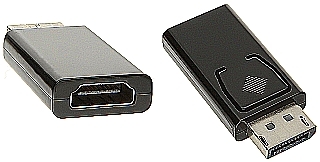
    Or maybe a DP> HDMI adapter?
  • #13 16680660
    zen3x
    Level 35  
    Posts: 2852
    Help: 231
    Rate: 291
    You buy two such adapters, connect them to the graphics card, cable into the adapter and to the monitor. I checked this solution on Nvidia Quadro M2000 4xDP and Matrox C420 cards with Samsung S27A350H monitors.

    They are on the Allegro for PLN 10.
    Two LG Monitors (24MP48HQ & 24MT58DF) Not Working Simultaneously - HDMI, DVI, Zotac Nvidia 1060

Topic summary

✨ The discussion revolves around the issue of connecting two LG monitors (24MP48HQ and 24MT58DF) to a Zotac Nvidia 1060 graphics card, which has one HDMI and one DVI output. The user reports that while both monitors work individually via HDMI, they fail to operate simultaneously when one is connected via HDMI and the other via HDMI-DVI. Suggestions include checking BIOS settings for multi-monitor support, ensuring the monitors are detected in the Nvidia control panel, and considering the use of DisplayPort to HDMI adapters for additional connections. The user also notes that the monitor connected via HDMI-DVI operates at a low resolution during boot but can be adjusted post-boot.
Generated by the language model.

FAQ

TL;DR: Your GTX 1060 runs both LG displays when you skip DVI and use inexpensive DisplayPort→HDMI adapters; they’re about PLN 10 each, and “You buy two such adapters.” [Elektroda, zen3x, post #16680660]

Why it matters: This fixes the no‑signal/undetected‑monitor issue without replacing cables or monitors, fast.

Quick Facts

Why won’t my second LG show when I use HDMI to DVI on a GTX 1060?

Both monitors work alone, but the DVI path isn’t detected when both are attached. Community advice was to avoid that pairing and use a DisplayPort output instead. This sidesteps port conflicts and gets reliable detection in Windows and NVIDIA Control Panel. If you must verify the cable, test it with the other monitor disconnected. Then migrate the second display to DisplayPort using a DP→HDMI adapter. That’s the setup other users confirmed working. [Elektroda, Kasek21, post #16672031]

Does a cheap DisplayPort→HDMI adapter actually solve this?

Yes. A user confirmed success after moving displays to DP→HDMI adapters, noting, “You buy two such adapters,” and that they cost about PLN 10 each. This approach worked across multiple GPUs and common HDMI monitors, and it avoids the flaky HDMI→DVI path when two screens are active. Use passive DP→HDMI for 1080p 60 Hz; plug the adapters into the GPU, then run standard HDMI cables to each monitor. [Elektroda, zen3x, post #16680660]

How do I set Windows to extend or duplicate the screens?

Open display settings and choose Display mode: Extend or Duplicate. NVIDIA Control Panel also offers a multiple‑monitor section. If only one screen appears, fix cabling first, then return here. How‑To: 1. Connect both displays. 2. Open Windows Display settings, select Extend or Duplicate. 3. Apply and confirm. “Extend” increases workspace; “Duplicate” mirrors both screens. [Elektroda, maly_maly, post #16671848]

Why is the motherboard/BIOS logo low‑resolution but Windows is 1080p?

Firmware displays use basic graphics modes until the OS driver loads, so boot logos and pre‑OS screens appear low‑resolution. After Windows starts, NVIDIA drivers take over and your monitor switches to 1920×1080 as configured. This is normal and not a fault. You cannot force higher resolution at the motherboard logo unless the board vendor supports it. “Drivers take control of the display of the image” once the system loads. [Elektroda, maurycy123, post #16672034]

What cable and connector specs were in use here?

The failing path used an HDMI (male) to DVI‑D (male) cable with 18+1 pins. That cable worked at 1920×1080 when the other monitor was disconnected, proving the cable and monitor were functional. The issue appeared only when both displays were attached simultaneously. This points to port pairing rather than a bad cable. Use DP→HDMI for the second screen to avoid the conflict. [Elektroda, sasky7, post #16671902]

What ports does the Zotac GTX 1060 in this thread provide?

The card has one HDMI output, one DVI output, and about three additional DisplayPort outputs. That extra DP headroom is why the recommended fix is to use DP→HDMI adapters for multi‑monitor setups. Populate DP ports first, then HDMI, and avoid mixing HDMI and DVI if detection fails. This layout matches the user’s card photos and description. [Elektroda, sasky7, post #16672063]

NVIDIA Control Panel doesn’t see my second monitor—what should I try first?

Confirm the screen is powered and cabled; then swap to a GPU DisplayPort using a DP→HDMI adapter. Users reported the DVI‑attached display was not detected, but moving the connection to DisplayPort restored detection. After reconnection, open NVIDIA Control Panel and re‑scan. If detection still fails, test each monitor alone to isolate the path. [Elektroda, sasky7, post #16672001]

What inputs do the LG 24MP48HQ and 24MT58DF offer?

According to the owner, the 24MP48HQ has HDMI and VGA, while the 24MT58DF has two HDMI and VGA. Both operated over HDMI individually. The trouble arose when combining HDMI and DVI simultaneously from the GPU. That’s why the community suggested leveraging the GPU’s DisplayPorts with adapters. [Elektroda, sasky7, post #16671821]

What’s the simplest fix if HDMI + DVI won’t run both screens?

Move the second display from DVI to DisplayPort with a DP→HDMI adapter. Users validated this approach and highlighted the adapters cost around PLN 10. Quote: “You buy two such adapters.” Connect adapter to GPU, then HDMI cable to the monitor. Reboot and select Extend mode. This resolves detection and runs 1080p reliably. [Elektroda, zen3x, post #16680660]

Do I need to change anything in BIOS to enable two monitors?

A participant suggested checking BIOS for multi‑monitor options. This is a low‑effort sanity check, but the primary fix here was cabling: using DisplayPort outputs with adapters. Verify BIOS only if displays still fail after the DP→HDMI move. Save changes and retest. [Elektroda, maly_maly, post #16671878]

Is this a known edge case with certain port combinations?

Yes. One responder noted some cards may share signal paths such that certain port pairs cannot be active together. If HDMI plus DVI fails, shift one display to DisplayPort. That avoids shared resources and restores dual‑monitor operation. Treat HDMI+DVI as a potential edge‑case pairing on your board. [Elektroda, Kasek21, post #16672031]

How can I quickly prove my HDMI→DVI cable isn’t the culprit?

Disconnect the other monitor and boot with only the HDMI→DVI path. The user reported it worked and reached 1920×1080 after drivers loaded. That test confirms the cable and monitor function. Reconnect the second screen using DisplayPort to prevent the original conflict. [Elektroda, sasky7, post #16671902]
Generated by the language model.
ADVERTISEMENT