logo elektroda
logo elektroda
X
logo elektroda

High Electricity Bills: AC Adapter 24/7 Usage, 230V & 13.5V 6000mA Parameters - Possible Cause?

ridiccv 7284 19
Best answers

Can a 230 V / 13.5 V 6000 mA AC adapter running 24/7 be responsible for high electricity bills, and how can I check what is actually consuming the power?

If that adapter really drew its maximum rated current continuously, it could consume about 126.5 W and add roughly 75 kWh in 25 days, which at 0.6 PLN/kWh is about 54 PLN per month [#16786081][#16787346] But several replies point out that these are maximum parameters, not constant consumption, so the actual load decides how much power it uses [#16787228][#16789307] For the Creative speaker set, the draw was described as only a few to a dozen watts, and even in standby it may still use a few watts, so it is unlikely to explain a very high bill by itself [#16787327][#16787395][#16788966][#16789410] The best advice was to buy an energy meter and measure devices one by one instead of relying on estimates [#16789226] A computer or other appliance that runs many hours a day was suggested as a more likely contributor than the speaker adapter [#16789226][#16789307]
Generated by the language model.
ADVERTISEMENT
This content has been translated flag-pl » flag-en View the original version here
  • #1 16786067
    ridiccv
    Level 8  
    Every month, my electricity bills from 150 to even 200 PLN. I live in a block of flats with two rooms + kitchen.
    The cost of energy is really considerable, I wonder whether the AC adapter working 24 hours a day on average 25 days a month
    on power supply parameters:

    in:
    230V 50Hz 550mA (~) alternating current
    out:
    13,5V 6000mA (~) alternating current

    can he be responsible for such high energy consumption ???
  • ADVERTISEMENT
  • #2 16786081
    jerry1960
    Level 37  
    The power supply consumes approximately 230 * 0.55 = 126.5 Watt per hour of work. 25 days * 24 hrs to 600h.
    600h * 126.5W is about 75 kWh. What other devices you have connected.
  • ADVERTISEMENT
  • #3 16787191
    ridiccv
    Level 8  
    jerry1960 wrote:
    The power supply consumes approximately 230 * 0.55 = 126.5 Watt per hour of work. 25 days * 24 hrs to 600h.
    600h * 126.5W is about 75 kWh. What other devices you have connected.


    Refrigerator, washing machine, 2 TV sets, nothing special that could have made such a bill. Lighting in the apartment is 70% LED bulbs.
    The fridge operates 24 hours a month (like everyone else), the washing machine starts off on weekends.
    Predicted forecasts of charges for energy sent by TAURON for 3 months is almost PLN 180 per month! These are charges from space.
    I have no idea what can be enough to drive.
    I checked if someone was not connected to the installation on the left, but there is no physical possibility for such a thing. I thought it was guilty of an antique meter from the PRL, so I filed a complaint with Tauron, the meter was changed to a new one, but the bills have not changed.
  • ADVERTISEMENT
  • #4 16787228
    Anonymous
    Level 1  
  • #5 16787327
    ridiccv
    Level 8  
    Adamcyn wrote:
    jerry1960 wrote:
    The power supply consumes approximately 230 * 0.55 = 126.5 Watt per hour of work. 25 days * 24 hrs to 600h.
    600h * 126.5W is about 75 kWh. What other devices you have connected.

    These are probably the maximum parameters of the power supply - the actual load decides.
    Not exactly calculated. You did not include something?

    ridiccv wrote:
    or an AC adapter working 24 hours a day, an average of 25 days a month ..... can be responsible for such high energy consumption

    Write what is connected to this adapter. Probably a laptop?
    Give a photo of this adapter if possible.

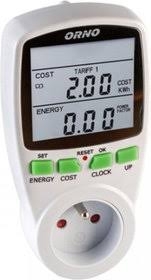
    For measurement measurements, it is best to measure this meter:

    High Electricity Bills: AC Adapter 24/7 Usage, 230V & 13.5V 6000mA Parameters - Possible Cause?


    The described power supply is used to power the Creativa speaker system, the chance that it is responsible for the amount of bills is small, but I miss ideas. :(
  • Helpful post
    #6 16787346
    tomi44
    Level 17  
    The monthly cost of the power supply, assuming the price of 1 kwh at the level of 0.6 PLN, will amount to 54 PLN. Of course, at nominal parameters. So the cost of the power supply is big.
  • #7 16787395
    Anonymous
    Level 1  
  • #8 16787416
    vodiczka
    Level 43  
    ridiccv wrote:
    Refrigerator, washing machine, 2 TVs nothing special
    Induction hob, microwave, dishwasher, electric kettle? - If you do not have them, the bill is actually too high.
    tomi44 wrote:
    The cost per month for the feeder, assuming the price of 1 kwh at the level of 0.6 PLN, will amount to 54 PLN.
    I think the speakers do not play 24/7?
  • #9 16787764
    Zbigniew Rusek
    Level 38  
    If, for example, an air conditioner was used, I would not be surprised (in June, July the monthly bill may be even higher). How often does the iron go? And there is no electric hotspot? How often do you use the vacuum cleaner (everyday or once a week)?
  • #10 16788239
    ridiccv
    Level 8  
    vodiczka wrote:
    ridiccv wrote:
    Refrigerator, washing machine, 2 TVs nothing special
    Induction hob, microwave, dishwasher, electric kettle? - If you do not have them, the bill is actually too high.
    tomi44 wrote:
    The cost per month for the feeder, assuming the price of 1 kwh at the level of 0.6 PLN, will amount to 54 PLN.
    I think the speakers do not play 24/7?


    I have speakers but I do not use it anyway, and so loudspeakers can and do not play all the time but they are turned on all the time.
  • #11 16788951
    Zbigniew Rusek
    Level 38  
    What TV sets? CRT, LCD, LCD in LED technology or plasma? Much depends on this (plasma are more energy-intensive, but not as electricity bills indicate).
  • #12 16788966
    vodiczka
    Level 43  
    ridiccv wrote:
    loudspeakers may not play all the time but they are included all the time.
    But they probably do not work in class A. In each other they download much less power when they do not play or play with incomplete power.
  • ADVERTISEMENT
  • #13 16789088
    ridiccv
    Level 8  
    Zbigniew Rusek wrote:
    What TV sets? CRT, LCD, LCD in LED technology or plasma? Much depends on this (plasma are more energy-intensive, but not as electricity bills indicate).

    One CRT tube, 28 inches DAEWOO and ordinary ordinary LCD
  • #14 16789129
    Anonymous
    Level 1  
  • Helpful post
    #15 16789226
    BUCKS
    Level 39  
    Adamcyn wrote:
    Buy an energy meter, you will measure everything in turn.

    The best idea and probably the only sure way to find this power-hungry device.

    vodiczka wrote:
    I think the speakers do not play 24/7?

    I also have one Creative stereo set and once I checked it when the speakers were on, the power supply on the wattmeter was approx. 10-11W but after switching off the speakers, the same power supply was 8-9W, so contrary to appearances, turning off the speakers does not change much of consumed energy, but they do not make such a high bill again as the author's.

    Adamcyn wrote:
    Have you not forgotten something?

    The computer gets the most energy under the load of the game type, and when using the web, the download significantly decreases.
    However, looking at the GTX590 tests, the computer set at rest took just over 200W, and the load was over 500W.
    If this computer goes a dozen or so hours a day, it is already known that it consumes the most energy from home appliances.
    Maybe it is worth buying an energy-saving set, mainly for www, and the monster to leave for games, etc. It all depends on how much time we lose on games, and how much on www.
  • #16 16789280
    vodiczka
    Level 43  
    BUCKS wrote:
    at included loudspeakers the power supply on the wattmeter was about 10-11W but after switching off the speakers, on standby the same power supply was 8-9W,
    On for 10, 50 or 100% volume?
    The author's power supply is supposedly over 100W:
    jerry1960 wrote:
    The power supply gets about 230 * 0.55 = 126.5 Watt
  • #17 16789307
    BUCKS
    Level 39  
    vodiczka wrote:
    On for 10, 50 or 100% volume?

    It does not matter, it was about the fact that the power supply with the speakers off consumes little less energy, so sometimes it is worth completely disconnect the speakers from the 230V power supply.
    It is always worth checking how much equipment is on the watch, because you can be surprised.
    Just like my BluRay player during work gets 50% less energy than the TVSAT tuner on "waking up" displaying the time, because some devices in pseudo "standby" mode draw almost as much energy as during normal operation.
    vodiczka wrote:
    The author's power supply is supposedly over 100W:

    Just notice that what is written usually means maximum consumption, not permanent, so buying a 500W power supply to the computer almost never will have 500W intake, because the power supply is selected with the supply, not the contact.
    Therefore, over 100W will be in occasional cases. Even counting fixed 100W it will not be the reason for such bills, because I have more equipment and I have lower bills, but my station for the needs of the web devours about 100W.
  • #18 16789334
    vodiczka
    Level 43  
    BUCKS wrote:
    So when buying a 500W power supply to the computer, in practice, it will almost never have a 500W power supply, because the power supply is selected with a supply, not a contact
    This is not a computer power supply but just a column. If it is not oversized, when playing "full" it will be much more than when playing at 10%.
    BUCKS wrote:
    It does not matter, it was about the fact that the power supply with the speakers turned off takes little less energy,
    It is essential whether the author of the theme plays, for example, 80% of power for 2 hours a day or 12 hours a day. Turning on the potentiometer turned to zero will in fact not cause a significant difference in power consumption.
  • #19 16789410
    BUCKS
    Level 39  
    vodiczka wrote:
    This is not a computer power supply but just a column. If it is not oversized, when playing "full" it will be much more than when playing at 10%.

    You write that you have never had audio equipment in your life.
    It is known that the louder the more energy, but I do not know people who listen to music at 100% volume on decent equipment.
    As a rule, at 50% it is loud enough, and if someone wants to splurge, he can give himself 75% but for a moment, not for the whole day, because sooner deaf, unless he is already deaf ;)
    Generally, for me, loudspeakers with typical listening to music do not consume so much energy that it would be crucial in bills but it is worth checking how much the power supply gets on the armed mode, because if it is connected 24h it may be that it consumes relatively much energy unnecessarily when This power supply is completely unnecessary.

    vodiczka wrote:
    It is essential

    Can you read with understanding?
    I gave an example of my power supply from the Creative computer speakers to show that the standby power supply gets almost as much energy as when playing, which you ask at what volume level, and I said that in this context it does not matter, because it was for the very fact of relatively high power consumption in standby mode.

    The meter will show the truth but I bet on the computer as the most power-hungry gadget and it has a key share in the cost of electricity if it works for a long time during the day.

    @ridiccv
    You should look at the actual energy consumption, not on the forecasted accounts, therefore it would be worth knowing the actual consumption of kWh in a given period, so that after the change you can compare them. Now we have the winter period, so we will use the light longer, generally in winter the consumption is a bit bigger than in summer, so you have to take into account, because possible savings on one can be used for more light and you will end up with similar bills.


Topic summary

✨ The discussion revolves around a user's concern regarding high electricity bills, ranging from 150 to 200 PLN monthly, attributed to the continuous operation of an AC adapter with specifications of 230V 50Hz and 13.5V 6000mA. Calculations suggest that the adapter consumes approximately 75 kWh monthly, translating to about 54 PLN in costs, which is significant but not solely responsible for the high bills. The user also operates a refrigerator, washing machine, and two TVs, with LED lighting accounting for 70% of their usage. Various responses highlight the importance of measuring actual power consumption of all devices, including the potential impact of other appliances like air conditioners, induction hobs, and standby power usage of devices. Recommendations include purchasing an energy meter to identify power-hungry devices and considering the operational efficiency of connected appliances.
Generated by the language model.

FAQ

TL;DR: A gaming PC with GTX590 can draw just over 200W idle and 500W+ under load; “the best idea…is to find this power‑hungry device” with a watt‑meter. [Elektroda, BUCKS, post #16789226]

Why it matters: This FAQ helps flat‑dwellers trace surprise electricity costs and decide what to switch off, replace, or measure.

Quick Facts

Could my 230V, 13.5V 6A AC adapter running 24/7 be the main reason my bill is high?

Unlikely with a typical speaker set. Contributors note these amps draw only a few to a dozen watts while playing. Measure to confirm. “Buy an energy meter, you will measure everything in turn.” [Elektroda, Adamcyn, post #16787395]

If that adapter actually pulled 0.55A the whole time, how much energy is that?

At 230V×0.55A that’s 126.5W. Over 600 hours (25 days × 24 h), that equals about 75 kWh. Costs depend on your tariff. [Elektroda, jerry1960, post #16786081]

Do Creative speakers waste much power when left on but silent?

A user measured ~10–11W on and ~8–9W in standby at the wall. That’s small, but unplugging saves a few kWh monthly. [Elektroda, BUCKS, post #16789226]

What appliances should I check first for hidden consumption?

Look at induction hobs, microwaves, dishwashers, and electric kettles. These heat‑based loads can spike kWh quickly. [Elektroda, vodiczka, post #16787416]

Could my gaming PC be the real culprit behind high bills?

Very possible. One report showed a GTX590 rig drawing just over 200W idle and 500W+ under load. Long sessions add up fast. [Elektroda, BUCKS, post #16789226]

What’s the fastest way to find the power hog in my flat?

Use a plug‑in watt‑meter and test each device. “The best idea and probably the only sure way” is direct measurement. [Elektroda, BUCKS, post #16789226]

How do I measure device consumption step by step?

  1. Plug a watt‑meter into the socket.
  2. Connect one device and note watts in ON and standby.
  3. Log hours used and estimate kWh per month. [Elektroda, Adamcyn, post #16787228]

Is standby power sometimes almost as high as active use?

Yes. One user saw a TV‑SAT tuner in “wake” mode draw nearly as much as during operation. Always check standby figures. [Elektroda, BUCKS, post #16789307]

Are forecasts from the utility a reliable guide?

Treat forecasts cautiously. Track actual kWh and note seasonal shifts; winter lighting can mask savings elsewhere. [Elektroda, BUCKS, post #16789410]

Could an old electricity meter be to blame?

The OP replaced an old meter, but bills stayed similar. Before blaming metering, verify devices with a watt‑meter. [Elektroda, ridiccv, post #16787191]

Do class A amplifiers waste more at idle?

Yes. A commenter noted typical speaker amps aren’t Class A; those can draw high power even when silent. [Elektroda, vodiczka, post #16788966]

What did the original poster ultimately do?

They bought an energy meter to diagnose loads device by device. Smart move before changing appliances. [Elektroda, ridiccv, post #17239295]
Generated by the language model.
ADVERTISEMENT