FAQ
TL;DR: P0420 on 1.6 MPI often traces to a tired or missing cat; some fixes last briefly—“After 100km, the check crashed again.” Diagnose cat/O2s, verify exhaust leaks, then choose OEM‑quality cat or a proper software/electronic workaround. [Elektroda, user1442536, post #18939019]
Why it matters: This FAQ helps Skoda/VAG owners stop the check‑engine loop and avoid wasting money on ineffective parts.
Quick Facts
- Electronic O2 emulator install cost: Approx. PLN 300, reported successful short‑term result. [Elektroda, user1442536, post #18804973]
- Cheap 200–300 PLN catalysts are money wasted; effective units cost near 1000 PLN. [Elektroda, przemek25l, post #16841295]
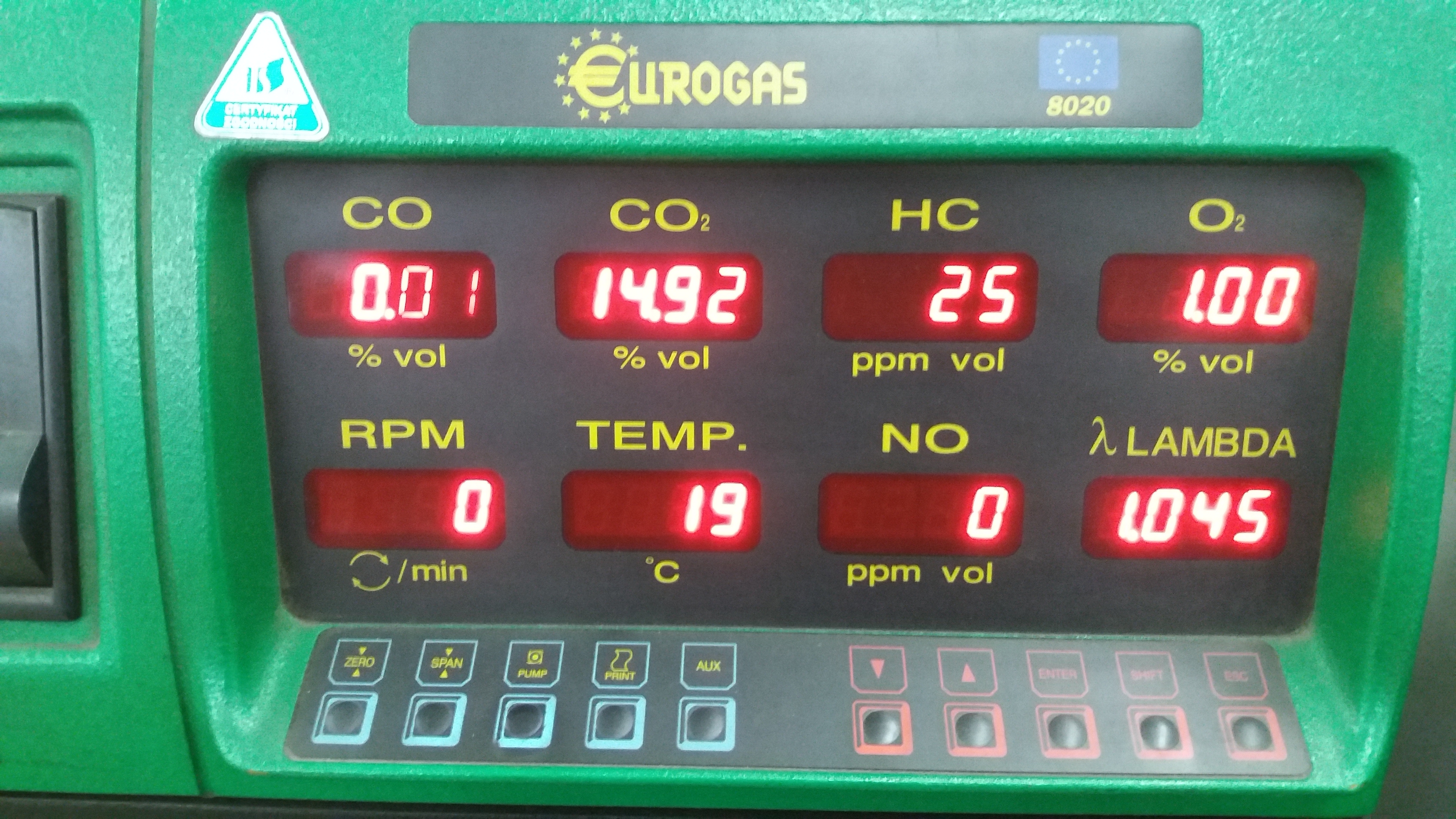
- Analyzer example: HC 238 ppm with high CO indicates rich mix and poor conversion. [Elektroda, przemek25l, post #16842636]
- Used/empty cat is common; welded housings may hide removed substrate. [Elektroda, grala1, post #16841207]
- Rear O2 heater example: 7.6 Ω triggered P0420; 7.0 Ω restored normal behavior. [Elektroda, andrzej163, post #17960335]
What does code P0420 mean on Skoda/VW 1.6 MPI?
P0420 signals the catalyst’s efficiency is below threshold on Bank 1. On these engines it often points to a worn or empty substrate, or incorrect O2 spacer/emulator setup. Start by reading both O2 sensors, checking for exhaust leaks before the rear sensor, and confirming closed‑loop operation when warm. [Elektroda, grala1, post #16840880]
How can I confirm if my catalytic converter is empty or ineffective?
Use an exhaust‑gas analyzer and look for high CO and elevated HC at idle and fast idle. Visual clues like welds around the cat can indicate prior gutting. If readings are poor, replace the cat, clear codes, drive 30–40 km, and recheck. [Elektroda, przemek25l, post #16841435]
Is a 500 PLN aftermarket catalyst worth installing?
No. Experienced members report 200–500 PLN catalysts underperform or fail early. A unit that actually works comes in near 900–1000 PLN for this application. “A better catalyst that starts running costs under 1000 zlotys.” [Elektroda, przemek25l, post #16841295]
Used OEM vs. cheap new aftermarket—what should I choose?
Avoid rock‑bottom units. Low‑cost cats often contain minimal precious metals. Logical cost math suggests corners are cut if a recycler, housing, labor, and retail all fit into 250–500 PLN. Choose proven‑quality parts or reputable refurb units. [Elektroda, grala1, post #16841207]
Can an O2 spacer/emulator really clear P0420?
Mechanical spacers can work only if the orifice is sized correctly. Too large a hole lets the code return; resizing fixed one long‑term case. Electronic emulators can help but may be a temporary band‑aid. [Elektroda, Anon1997, post #18938894]
What’s better: mechanical spacer or electronic emulator?
An electronic emulator installed for ~PLN 300 cleared the light initially on a 1.6 MPI with a worn cat. Mechanical tubes from marketplaces often fail. Note: durability varies and underlying cat issues remain. [Elektroda, user1442536, post #18804973]
Why did my P0420 disappear after highway driving but return later?
Sustained highway heat can temporarily improve catalyst oxidation, delaying the fault. After normal mixed driving, efficiency tests fail again and P0420 returns. One owner saw the light back after 100 km. [Elektroda, user1442536, post #18939019]
Can I solve this by deleting the second O2 sensor in software?
One owner disabled the rear O2 in the ECU and the light stayed off. This only works when the rear sensor is strictly diagnostic. Some cars use it for control, so deletion won’t be viable. [Elektroda, user1442536, post #18939019]
What is “closed loop,” and why does it matter here?
Closed loop means the ECU uses O2 feedback to adjust fueling. If it isn’t in closed loop when warm, readings mislead. On some 1.6 MPI engines, closed loop after restart can take minutes, affecting analyzer results. [Elektroda, przemek25l, post #16842636]
How do intake or exhaust leaks trigger P0420?
Unmetered air at the intake skews fuel trims rich or lean. Exhaust leaks before the rear O2 admit air, fooling the ECU’s efficiency test. Seal the system from the head to the second probe before judging the cat. [Elektroda, przemek25l, post #16842636]
How do I use an analyzer to verify catalyst fix? (3 steps)
- Test before repairs; print results for CO, HC at idle and 2500–3000 rpm.
- Replace the catalyst and drive 30–40 km to light it off.
- Re‑test and compare; improved CO/HC confirms restored conversion. [Elektroda, przemek25l, post #16841435]
Could the rear O2 heater cause a false P0420?
Yes. A worn heater with higher resistance can degrade readings. One case measured 7.6 Ω and set P0420. Replacing with a 7.0 Ω heater resolved it. “The second probe can have a higher resistance of the heater.” [Elektroda, andrzej163, post #17960335]
My scan shows catalyst temperature −32 and rear O2 at 0.3–0.4 V when cold—normal?
Those values were observed alongside intermittent P0420 in the thread. Such readings point you to inspect the rear sensor circuit and heater, then repeat tests warm. Address fueling and leaks first. [Elektroda, lenad, post #17039471]
Why can’t I adapt the throttle, and could injectors be involved?
A member cleaned the throttle, checked intake tightness, and changed plugs but couldn’t adapt. Mixed plug colors suggest uneven fueling. Inspect injectors, wiring, and air leaks again before catalyst judgment. [Elektroda, lenad, post #16853131]
How do I quickly check the rear O2 heater with a multimeter? (3 steps)
- Unplug the rear O2; locate the two heater pins.
- Measure resistance across heater pins at room temperature.
- Compare to known‑good value; around 7.0 Ω worked where 7.6 Ω set P0420. [Elektroda, andrzej163, post #17960335]
What’s the best long‑term fix for recurring P0420 on 1.6 MPI?
Fix mixture issues and leaks, then fit a quality catalyst near the 900–1000 PLN mark. Verify with before/after gas analysis. Temporary emulators or spacers can fail over time. [Elektroda, przemek25l, post #16841386]