logo elektroda
logo elektroda
X
logo elektroda

Renault Clio II 1.9d 2000 - Sudden Power Steering Failure, Electro-Hydraulic Pump Issue, Relay

mazi_dg 10350 19
Best answers

Why did the electro-hydraulic power steering pump on a Renault Clio II suddenly stop working, and what should be checked next?

The pump fault should be checked by feeding it directly from the battery; if it still does not run correctly, the problem is inside the pump, and in this thread it was ultimately the shaft/transmission between the motor and the hydraulic section that had broken [#16909678][#16944660] The relay, fuses, and the broken cable from the hood/alarm sensor were not the cause [#16904560] Power the pump briefly from a battery with correct polarity and see whether it spins; if it does not, remove the pump and inspect the motor/mechanics for internal damage such as brushes/commutator/bearings or a seized pump [#16909678] If it does run, then check the car-side control/relay command with CLIP, because the relay gets + after ignition and the ECM provides the ground after engine start [#16906462][#16910009] After any repair, reconnect the hydraulics and bleed the system [#16910072]
Generated by the language model.
ADVERTISEMENT
Treść została przetłumaczona polish » english Zobacz oryginalną wersję tematu
  • #1 16904551
    mazi_dg
    Level 11  
    Posts: 28
    Rate: 1
    Hi,
    I have a problem with power steering on my Clio II Ph1 from 2000.
    At some point, suddenly, without any symptoms, the support stopped. There was no hum, screeching etc. It was just as if someone had cut it off. The pump is electro-hydraulic.
    I started with an electric diagnosis. Fuses ok. However, I found one 50 A relay in which the coil was shorted. After applying the voltage, the meter showed 50 A. I was glad and bought a new (used) relay. I installed and ... unfortunately nothing helped. I checked the relay to make sure it was operational and functional.
    I went further and checked if there was voltage in the relay connection - there is. I disconnected the pump plug and the voltage on the plug is there. The transition on the pump is. And now I'm stuck because I don't know what to do next.
    I would like to add that 2 years ago the pump was regenerated (then the bearings died).

    At the moment, I am not going to take the pumps for regeneration again because in my opinion, this is a "crap" and they will delete me as for grain.
    Can anyone have an idea where the problem is? My guess is pump, maybe brushes or something? I'm not an electrician, so maybe someone will suggest something.
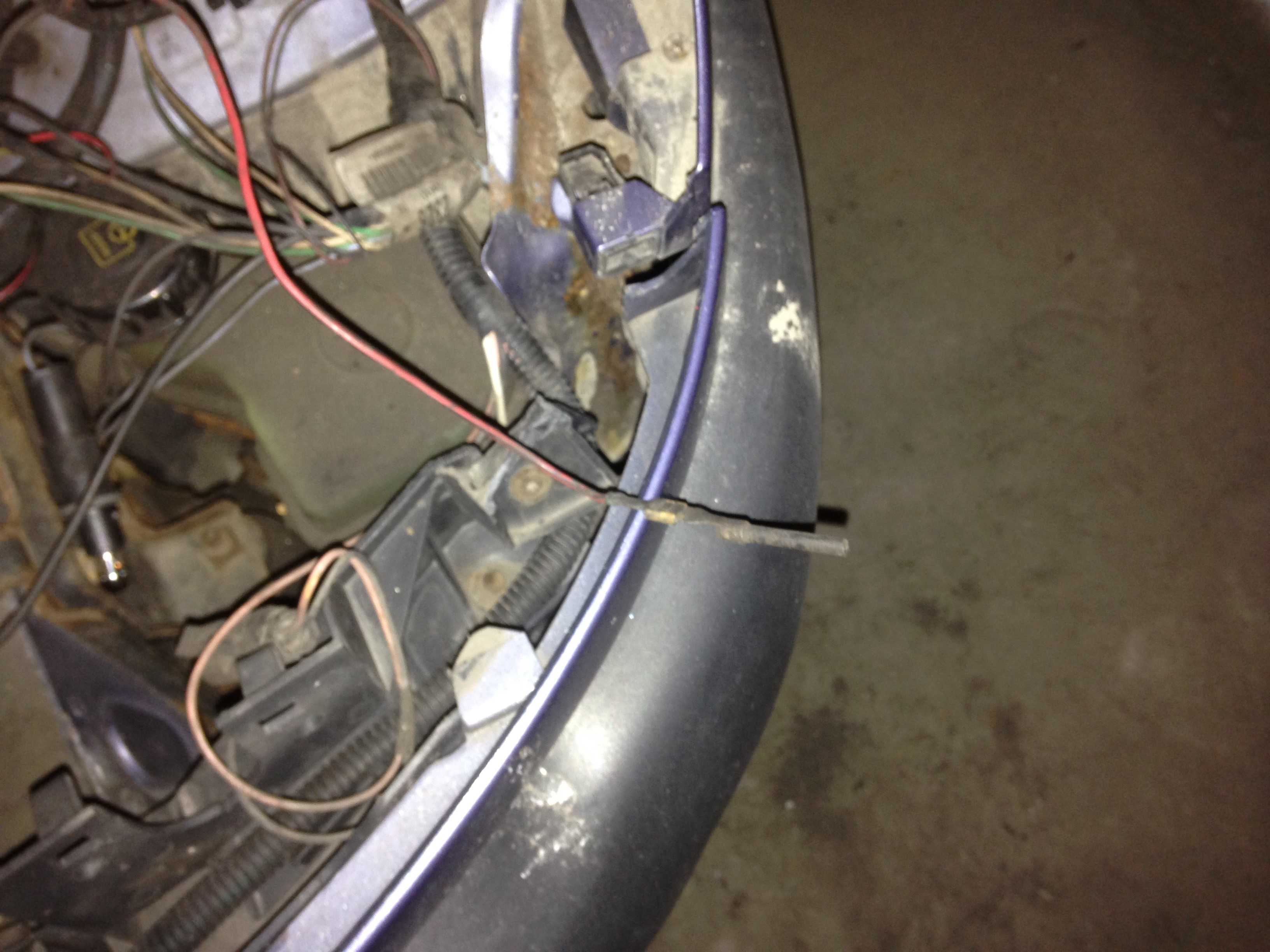
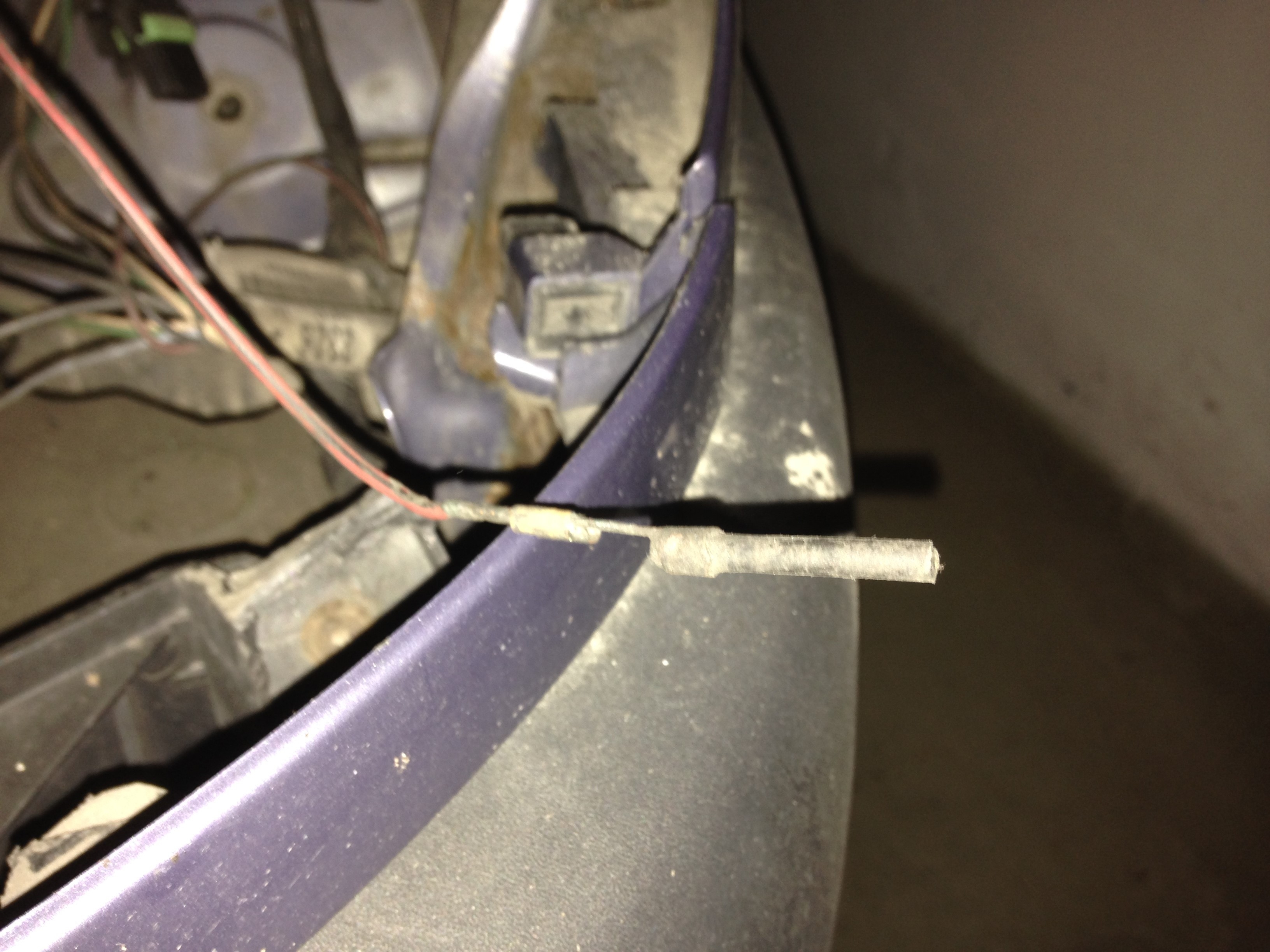
    In addition, during the diagnosis of the pump, I found a broken cable. It broke right after the "pin" connection and I can't find the break point ... I don't know if this cable can affect the pump. Below are photos of the cable.
    Renault Clio II 1.9d 2000 - Sudden Power Steering Failure, Electro-Hydraulic Pump Issue, Relay Renault Clio II 1.9d 2000 - Sudden Power Steering Failure, Electro-Hydraulic Pump Issue, Relay

    I will be grateful for your advice.
    M.
  • ADVERTISEMENT
  • #2 16904557
    Anonymous
    Anonymous  
  • #3 16904560
    abart64
    Level 33  
    Posts: 1706
    Help: 269
    Rate: 629
    The cable is from the mask open sensor from the alarm. It has nothing to do with the main problem.
  • ADVERTISEMENT
  • #4 16904735
    mazi_dg
    Level 11  
    Posts: 28
    Rate: 1
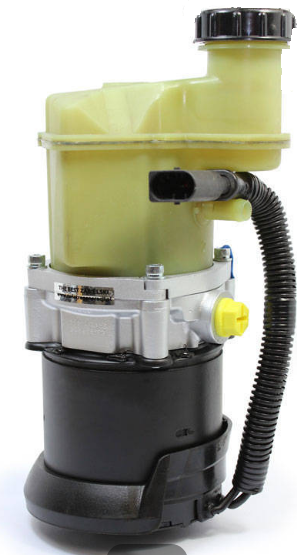
    The pump is electro-hydraulic like in the picture below. I do not have my copy number. The pages contain the following numbers: 7701470783; JER120; DSP706; 04550500
    Renault Clio II 1.9d 2000 - Sudden Power Steering Failure, Electro-Hydraulic Pump Issue, Relay

    So the cable is of little importance in this case. Thank you.
    M.
  • #5 16906168
    Anonymous
    Anonymous  
  • #6 16906460
    kaza12
    Level 10  
    Posts: 28
    Help: 1
    Rate: 7
    mazi_dg wrote:
    maybe brushes
    very likely
    Most often blocked by dirt
    Adam.kowalski432 wrote:
    There are no brushes in such pumps
    and......
  • #7 16906462
    Anonymous
    Anonymous  
  • #8 16907569
    robokop
    VIP Meritorious for electroda.pl
    Posts: 29406
    Help: 1760
    Rate: 6342
    Pump motor connected briefly turns? Communication with the driver is?

    Adam.kowalski432 wrote:
    There are no brushes in such pumps

    They are master, just like the starter.
  • #9 16907679
    kaza12
    Level 10  
    Posts: 28
    Help: 1
    Rate: 7
    robokop wrote:
    quite similar
    Not at all
    Starter - carbon, power - copper
  • ADVERTISEMENT
  • #11 16907716
    Strumien swiadomosci swia
    Level 43  
    Posts: 27411
    Help: 1403
    Rate: 6379
    mazi_dg wrote:
    The transition on the pump is


    Power the pump and see if it spins, there is no electronics there, so if it works, it will start.
  • #12 16909416
    mazi_dg
    Level 11  
    Posts: 28
    Rate: 1
    Thanks for all the answers.
    As far as I know, the brushes are in the pump.
    I did not connect for a while and I will not be able to do it before Christmas, but when I come back I will check it for sure.
    Now I've screwed everything back together so I have to get to the pump again.
    I have a question what to do next, check if:
    1. The pump will start
    2. The pump does not respond to voltage.


    Can connecting to the clip show something?
    How to check the connection with the control?
    Kisses
    M.
  • #13 16909430
    Strumien swiadomosci swia
    Level 43  
    Posts: 27411
    Help: 1403
    Rate: 6379
    mazi_dg wrote:
    Can connecting to the clip show something?


    What will you hook up to the brushes ???? Now I can see why you don't pay for half a day to repair the car, because you just have no idea how much it is ..... and it can't cost a few PLN.
  • #14 16909646
    mazi_dg
    Level 11  
    Posts: 28
    Rate: 1
    I see that hate has appeared, which I will not comment, because why?
    I am waiting for constructive comments.
    M.
  • Helpful post
    #15 16909678
    Krzysztof Kamienski
    Level 43  
    Posts: 21874
    Help: 2030
    Rate: 5128
    @mazi_dg He has already written a constructive comment @robokop . I'll join you. Build the pump, connect it to the battery (pay attention to polarity!). If it does not work, use a wrench (8 or 10), disassemble the pump and check the condition of the brushes, commutator and bearings. Merry Christmas. :D And after Christmas, buy new parts.


    kaza12 wrote:
    Starter - carbon, power - copper
    and for the rice floor :D . You'd be surprised, buddy, how much copper is in the graphite-copper sinter of the starter brushes, which, as a rule, work with a very high current, so they must have the lowest possible resistance.

    Added after 53 [minutes]:

    mazi_dg wrote:
    Can anyone have an idea where the problem is? My guess is pump, maybe brushes or something? I'm not an electrician, so maybe someone will suggest something.
    we suggest :cry:
    mazi_dg wrote:
    Can anyone have an idea where the problem is?
    It does, but you don't care.
    If you have a "transition" on the pump motor, and when connecting to the battery, it will strongly "spark" -
    the pump thus announces that either the rotor is burnt, the bearings are seized, or that the entire pump is seized, or the stator magnet has come off and the motor is blocked.
    Krzysztof Kamienski wrote:
    the next mitoman
    So get off and take care of yourself.
  • #16 16909979
    mazi_dg
    Level 11  
    Posts: 28
    Rate: 1
    Thanks for all comments.

    Now I know what to do next (thank you Krzysztof) and I'll do it after Christmas.
    Krzysztof regarding your comments, I will not agree with you because I take all comments into account and, as I said, I start working after Christmas, so I do not know what you mean, but no matter, because it does not contribute anything constructive to the topic.
    I asked what to do when the pump starts to work immediately and continue on the topic.
    Also, thank you very much for your help and let you know how cunning the work is so that it can be used by someone for the future.
    Kisses
    M.
  • ADVERTISEMENT
  • #17 16910009
    milejow

    Level 43  
    Posts: 13047
    Help: 1558
    Rate: 5103
    mazi_dg wrote:
    I asked what to do when the pump starts to work immediately and continue on the topic.

    It's a simple system like a flashlight electrician, the pump relay gets a plus after ignition and the ECM gives it the control ground after starting the engine. You fire the engine, the relay clicks and the pump runs.
    Company Account:
    Działalność własna
    Mętów 99, Lublin, 20-388
  • #18 16910072
    Krzysztof Kamienski
    Level 43  
    Posts: 21874
    Help: 2030
    Rate: 5128
    @mazi_dg After repair and putting in the car, connecting electrics and hydraulics, bleed the system! Merry Christmas trees :D
  • #19 16911160
    kaza12
    Level 10  
    Posts: 28
    Help: 1
    Rate: 7
    Adam.kowalski432 wrote:
    I did not take apart such a pump

    why do you speak up and confuse ?!

    robokop wrote:
    You have absolutely no idea about anything. Brushes in particular.

    only the robokop knows everything !!

    Strumien swiadomosc ... wrote:
    Power the pump and see if it spins

    Bravo

    mazi_dg wrote:
    The pump will start

    80A fuse

    mazi_dg wrote:
    The pump does not respond to voltage.

    undress

    mazi_dg wrote:
    Can connecting to the clip show something?

    no

    Krzysztof Kamienski wrote:
    is the key in the hand (8 or 10)

    the next mitoman

    Dear Mr. Robokop, this is not a movie where you rule and you are infallible.
    I know criticism hurts but this is no reason to remove help for the needy !!!

    Moderated By robokop:

    I don't see any help here. Only mockery of those taking part in the discussion. Also at the beginning of 14 days of rest to soothe the nerves. 3.1.9. Do not be ironic and do not be mean with the other side of the discussion. Please respect dissenting opinion and other opinions in the forum.

  • #20 16944660
    mazi_dg
    Level 11  
    Posts: 28
    Rate: 1
    Hi,
    the holidays are over, the failure was resolved, but from the beginning.

    After the above tips, I connected the pump for a short time and to my surprise, the pump started. I was struggling with my thoughts about what to do, whether to dismantle the pump and disassemble it myself, or maybe give up and give the pump to a mechanic. I chose option two due to the fact that if it is not the engine, I may not solve the problem myself.
    I also took the car to a mechanic and it turned out that the pump failed in the transmission between the engine and the hydraulics. Apparently, the shaft broke off and had to be replaced. The mechanic replaced the unlucky part and all the hydraulics and gave a year's warranty. The total cost is PLN 450, for information.

    I consider the topic closed.
    Thanks again to everyone for your help.
    M.

Topic summary

✨ The discussion revolves around a sudden power steering failure in a 2000 Renault Clio II Ph1, attributed to an electro-hydraulic pump issue. The user initially diagnosed the problem by checking fuses and discovering a shorted relay, which was replaced but did not resolve the issue. Various responses suggested checking the pump's functionality by connecting it directly to a battery, examining the condition of the brushes, and ensuring proper communication with the vehicle's control system. Ultimately, the user found that the pump was operational when tested directly, but a mechanic later identified a broken shaft in the pump's transmission, which was replaced for a total cost of PLN 450. The user expressed gratitude for the community's assistance and considered the issue resolved.
Generated by the language model.

FAQ

TL;DR: Sudden Clio II power-steering loss here ended up as a mechanical failure—“the shaft broke off”—fixed for PLN 450 with a 12‑month warranty. [Elektroda, mazi_dg, post #16944660]

Why it matters: This FAQ helps Clio II owners quickly decide whether to bench‑test the electro‑hydraulic pump, trace relay power, or pursue a mechanical repair.

Quick Facts

How do I diagnose a sudden loss of power steering on a Clio II 1.9d?

Confirm fuses and the main relay have power. Inspect the electro‑hydraulic pump connector for voltage. If power is present, bench‑test the pump. The thread case had voltage at the plug, leading to a mechanical fault inside the pump assembly. [Elektroda, mazi_dg, post #16904551]

Does the Clio II electro‑hydraulic pump use brushes?

Yes. Experienced members confirm these pump motors use brushes similar to starter motors. “They are… just like the starter.” If brushes stick or wear, the motor may not spin under load. [Elektroda, robokop, post #16907569]

What quick test can I do before removing the pump?

Apply battery power directly with correct polarity to the pump’s motor terminals. If it spins cleanly, the issue may be mechanical downstream. If it sparks hard or stalls, inspect brushes, commutator, bearings, or seized hydraulics. [Elektroda, Krzysztof Kamienski, post #16909678]

My pump spins on the bench but I still have no assist—what then?

Suspect a failed coupling between motor and hydraulic section. In the documented fix, the internal shaft had broken and was replaced. After the swap, assist returned and a 12‑month warranty was provided. [Elektroda, mazi_dg, post #16944660]

Which fuse or relay should I look at first?

Users referenced a 50 A relay during checks, and another noted an 80 A main fuse for the circuit. If the relay and fuse are good yet no assist, move on to pump testing. [Elektroda, kaza12, post #16911160]

Will a diagnostic scan tool (CLIP) help with this fault?

Expect limited value. This circuit is simple: the relay gets battery after ignition, and the ECM provides ground after the engine starts. If the relay clicks and power reaches the pump, focus on the pump assembly. [Elektroda, milejow, post #16910009]

What controls the power-steering pump relay on Clio II?

The relay receives positive voltage with ignition ON. After engine start, the ECM supplies the control ground, closing the relay and powering the pump. If either signal is missing, the pump will not run. [Elektroda, milejow, post #16910009]

I found a broken wire near the hood latch—could that kill the pump?

No. That wire is for the hood‑open sensor used by the alarm. It is unrelated to the electro‑hydraulic pump operation or relay control. [Elektroda, abart64, post #16904560]

What part numbers identify this pump on a 2000 Clio II?

Owners reported markings 7701470783, JER120, and DSP706 on the pump’s casing. Use these when sourcing replacements or rebuild services. [Elektroda, mazi_dg, post #16904735]

What does strong sparking when powering the pump indicate?

Heavy sparking with a known-good supply points to internal faults: burned rotor, seized bearings, jammed hydraulic section, or a detached stator magnet. “Either the rotor is burnt… or the entire pump is seized.” [Elektroda, Krzysztof Kamienski, post #16909678]

How much does a successful repair cost, and what was replaced?

In the documented case, replacing the broken shaft between the motor and hydraulics restored assist. The total was PLN 450, including a one‑year warranty. [Elektroda, mazi_dg, post #16944660]

How do I bleed the system after reinstalling the pump?

Post‑repair checklist: 1) Reconnect electrics and hydraulics. 2) Bleed the steering system per standard procedure. 3) Recheck level and leaks after a short drive. The forum emphasizes bleeding after reconnecting. [Elektroda, Krzysztof Kamienski, post #16910072]

If the relay tests good and there’s power at the pump, what’s next?

Proceed to a direct-power test. If the motor runs but there’s no assist, open the unit to inspect the motor–pump coupling. In the thread, a broken shaft was the root cause. [Elektroda, mazi_dg, post #16944660]

Is there any in-pump electronics to diagnose?

A contributor notes no complex electronics inside this unit for basic spin testing. If power is applied and the motor is healthy, it should start. Focus on mechanical and brush issues first. [Elektroda, Strumien swiadomosci swia, post #16907716]

Where should I start if I only have time for one check?

Bench‑test the pump safely with correct polarity. This isolates electrical feed issues from internal mechanical faults quickly, guiding the next step. [Elektroda, Krzysztof Kamienski, post #16909678]
Generated by the language model.
ADVERTISEMENT