logo elektroda
logo elektroda
X
logo elektroda

Bosch SPS53M88EU - "Milk" stains on glasses / glasses

k3lt 6495 12
ADVERTISEMENT
Treść została przetłumaczona polish » english Zobacz oryginalną wersję tematu
  • #1 16920865
    k3lt
    Level 9  
    Posts: 25
    Rate: 3
    Dishwasher model: Bosch SPS53M88EU, the problem is that transparent dishes, especially on glasses and glasses, show "milk" stains after washing, they are not large, usually 1 small stain, but against the light visible. They can be easily wiped off / washed off. Similar streaks are also visible on the door and walls of the dishwasher after washing (after drying).
    I use Finish Quantum Max tablets, salt and Fnish rinse aid (counting fluid setting is 02), water hardness in our area is 3.0 mmol / dm3. (16.7 German degrees [?N])
    The instructions on the page for this model and the paper instructions that were with the dishwasher give contradictory information ... according to the "paper" instructions, the machine setting value according to the water hardness table should be "H: 05" on a scale of 1 to 7, while the information taken from .pdf instructions downloaded from the official website - :arrow: link , it follows that we should not use salt at all.
    quotes:
    "When using combined cleaning agents with the addition of salt, it is usually possible to dispense with the addition of special salt with a water hardness of up to 21 ° dH (37 ° fH, 26 ° Clarke, 3.7 moll / l). With water hardness above 21 ° dH use of special salt. "

    So how is it finally, and can salt be the cause of these "milky" streaks? We have a dishwasher in less than 2 months, the filters look clean .. I also didn't notice a significant difference after changing the water softening settings from 1 to 5. Practically only the ECO program is used.
  • ADVERTISEMENT
  • #2 16920915
    Borutka
    Level 29  
    Posts: 1284
    Help: 125
    Rate: 412
    Wash the dishwasher from the sediment, adjust the dishwashing without the tablet and rate the sediment. I haven't used Finish for years, because at that time it was in my opinion one of the worst products on the market. Then use the "auto" program. In my opinion salt should be in the tray regardless of the type of tablets used.
  • ADVERTISEMENT
  • #3 16920998
    k3lt
    Level 9  
    Posts: 25
    Rate: 3
    Well, all in all I haven't used any cleaning agent for these 2 months, maybe it really is ... although to be honest I don't see any dirt, the filter also seems to be ok.
  • ADVERTISEMENT
  • #4 16921026
    Ryszard49
    Level 39  
    Posts: 6183
    Help: 312
    Rate: 1001
    Finish Quantum Max in sachets is a good choice, salt should be in the container, the rinse aid also. Try on the AUTO program.
  • #5 16921034
    k3lt
    Level 9  
    Posts: 25
    Rate: 3
    I only use the AUTO program.
    Someone else will tell you how to set the water softening due to this mixed up information in the instructions as described in the first post?
  • #6 16921037
    Ryszard49
    Level 39  
    Posts: 6183
    Help: 312
    Rate: 1001
    Set to the hardest water and increase the rinse aid dosage.
  • ADVERTISEMENT
  • #7 16921124
    k3lt
    Level 9  
    Posts: 25
    Rate: 3
    Eh, everyone says something different ... here is an email from a Bosch reply from the service department ...

    Quote:
    There may be differences in the electronic and paper instructions.
    Under one line of devices, e.g. your dishwasher, there are a dozen or so different models produced over several years.
    Each of the models may differ from the previous one, therefore different information may be given in the instructions.
    The information you have quoted from the latest instructions under the model says that you can opt out of using salt using cleaning tablets with salt.
    Of course, when the water hardness does not exceed 21 ° dH (37 ° fH, 26 ° Clarke, 3.7 mmol / l).
    Therefore, according to information about the hardness of water that is available from the Lord, you can turn off the salt intake in the device by selecting the option H: 00.
  • #8 16921136
    Ryszard49
    Level 39  
    Posts: 6183
    Help: 312
    Rate: 1001
    Turn off salt intake and see what the effect will be.
  • #9 16921176
    Borutka
    Level 29  
    Posts: 1284
    Help: 125
    Rate: 412
    k3lt wrote:
    Eh, everyone says something different ... here is an email from a Bosch reply from the service department ...

    Quote:
    There may be differences in the electronic and paper instructions.
    Under one line of devices, e.g. your dishwasher, there are a dozen or so different models produced over several years.
    Each of the models may differ from the previous one, therefore different information may be given in the instructions.
    The information you have quoted from the latest instructions under the model says that you can opt out of using salt using cleaning tablets with salt.
    Of course, when the water hardness does not exceed 21 ° dH (37 ° fH, 26 ° Clarke, 3.7 mmol / l).
    Therefore, according to information about the hardness of water that is available from the Lord, you can turn off the salt intake in the device by selecting the option H: 00.


    These are harmful recommendations, just like pouring taps into the iron and can result in a quick finish to the equipment. Excess salt is not harmful, and a lack of salt can damage the dishwasher. As for washing the dishwasher itself ... this is another gibberish of manufacturers. Dishwasher tablets are absolutely sufficient for washing the dishwasher (washing machines as well). And when I wrote in # 2 about washing the dishwasher, I meant a wet rag and a common detergent.

    Added after 57 [minutes]:

    Ryszard49 wrote:
    Finish Quantum Max in sachets is a good choice

    I do not deny, but a dishwasher tablet is a common recipe and made according to the art should be useful regardless of the manufacturer. So I don't see the reason for paying Finisha TV commercials, because discount tablets do not wash worse. And what Calgon (then the change to Finish) produced was beyond my control to produce something like that.
  • #10 16941097
    k3lt
    Level 9  
    Posts: 25
    Rate: 3
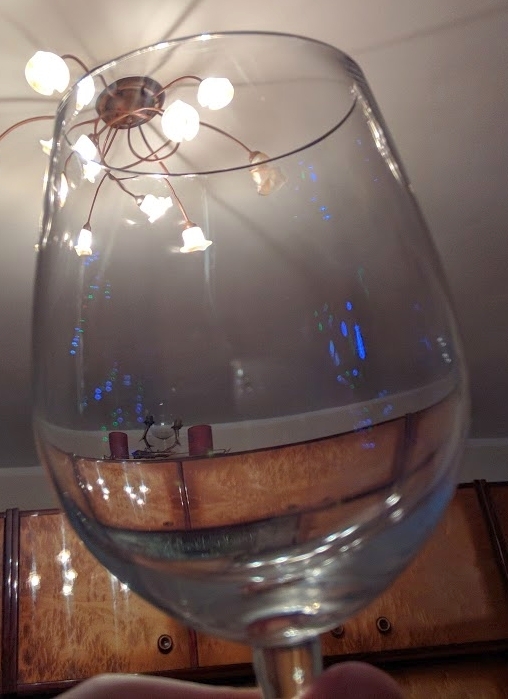
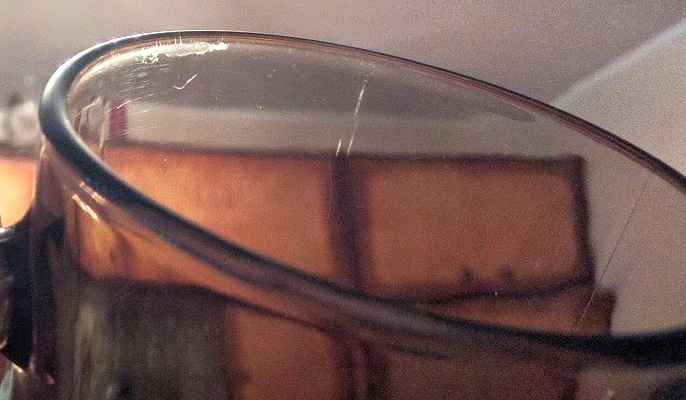
    I managed to take a photo of these stains, although it was not easy to capture it, and they are much more visible live. And there are like two "types".
    The first are longitudinal streaks probably left by the flowing water, they are more and more visible after removing from the dishwasher after a few seconds when drying. (they can be wiped with a cloth). The second type is a small streak that remains near the "tip" of the glass / glass, it seems to me that in a place where it comes in contact with the metal part of the dryer. Or probably caused by the water flowing down / collecting in this place?

    I tried with salt setting at H: 05, no salt at all and no changes. I also washed the dishwasher with this special dishwasher cleaning tablet without any dishes and there were also streaks on the door. (without rinse aid and without Finisha tablet, only salt was included). I remind you that the filter and the interior of the dishwasher are clean and the equipment is less than 2 months old. This is definitely not a problem with Finisha tablets or rinse aid (the problem occurs without using them).
    Have any ideas?
    Pictures:
    Bosch SPS53M88EU - "Milk" stains on glasses / glasses Bosch SPS53M88EU - "Milk" stains on glasses / glasses Bosch SPS53M88EU - "Milk" stains on glasses / glasses
    Moderated By TONI_2003:

    Please read and apply ...
    https://www.elektroda.pl/rtvforum/topic2053101.html

  • #11 16941162
    Borutka
    Level 29  
    Posts: 1284
    Help: 125
    Rate: 412
    There will always be streaks without a rinse aid.
    I understand that you did not wash the dishwasher with a RAG and did not set to clean CLEAN dishes without a tablet (only salt and rinse aid)? ...
  • #12 16941184
    k3lt
    Level 9  
    Posts: 25
    Rate: 3
    No, no .. if I wash dishes normally, the rinse aid is always on. Pictures that I put were after washing on the Auto program with salt on H: 04 and rinse aid on 03 (scale 0-6) And of course Finish Quantum tablets also have some rinse aid in the composition.

    Without a Finisha tablet and without a rinse aid, I released an empty dishwasher without dishes with a dishwasher cleaning tablet on a washing program for the most stubborn dirt from a temperature of 70c. (to make sure it's not a matter of dirt / dirty water after washing)
  • #13 16941291
    Borutka
    Level 29  
    Posts: 1284
    Help: 125
    Rate: 412
    Let me just add that by clean dishes I mean dishes washed normally with a dishwasher in the kitchen sink.
    There are basically three options ... contamination due to chemicals, incorrect rinse aid release or incorrect drying process. But you will do as you think ...

Topic summary

✨ The Bosch SPS53M88EU dishwasher is experiencing issues with "milk" stains appearing on transparent dishes, particularly glasses, after washing. Users report that these stains are small and can be wiped off easily. The problem is compounded by conflicting information regarding water hardness settings in the user manual, with one source suggesting a setting of "H: 05" while another advises against using salt altogether. Recommendations include using Finish Quantum Max tablets, ensuring salt is present in the container, and adjusting the rinse aid dosage. Some users suggest trying the AUTO program and cleaning the dishwasher itself. Despite attempts to resolve the issue by adjusting settings and using cleaning tablets, streaks persist, indicating potential problems with chemical contamination, rinse aid release, or drying processes.
Generated by the language model.

FAQ

TL;DR: For Bosch SPS53M88EU “milky” glass stains, keep rinse aid active and set salt based on hardness; the 21 °dH threshold applies and “you can opt out of using salt.” [Elektroda, k3lt, post #16921124]

Why it matters: This FAQ helps Bosch SPS53M88EU owners fix visible streaks on glassware without guesswork.

Quick Facts

What causes the “milky” stains on glasses in this Bosch model?

Based on user testing, causes cluster into three buckets: chemical contamination, incorrect rinse-aid release, or a drying issue. These lead to visible streaks that wipe off. The thread notes these appear on glassware and even on the inner door after cycles. Start by confirming rinse-aid dosing, then check loading and drying mode. “There are basically three options ... contamination due to chemicals, incorrect rinse aid release or incorrect drying process.” [Elektroda, Borutka, post #16941291]

Do I need dishwasher salt if I use multi-action tablets?

Bosch service replied that you may skip salt when water hardness does not exceed 21 °dH, and you can set H:00 to disable salt intake. This guidance assumes your tablets already include salt functionality. If your hardness is higher, keep salt enabled. Quote: “you can opt out of using salt.” [Elektroda, k3lt, post #16921124]

Could missing or low rinse aid be the reason for the streaks?

Yes. One experienced user stated, “There will always be streaks without a rinse aid.” Ensure the dispenser is filled and the dosage is not set too low. If streaks persist, increase dosage one step and retest on AUTO with the same load. [Elektroda, Borutka, post #16941162]

What water-softening level (H:00–H:07) should I pick?

Follow the Bosch email shared in the thread: if your water is ≤21 °dH, set H:00 to disable salt usage; above that, keep salt enabled. This aligns the softener to actual hardness and prevents over-softening or under-softening. [Elektroda, k3lt, post #16921124]

Should I use AUTO or ECO to reduce milky marks?

Try AUTO. A helper in the thread recommends the AUTO program, which adjusts wash parameters dynamically. Users reporting stains were already using AUTO, but it remains the baseline for troubleshooting and comparison against ECO. [Elektroda, Ryszard49, post #16921026]

How do I test if salt is causing the streaks?

Run several cycles with salt intake turned off, then compare glassware under strong light. This A/B test isolates the softener. The thread explicitly suggests turning off salt intake to evaluate the effect on residues. [Elektroda, Ryszard49, post #16921136]

What’s the right way to clean the dishwasher before testing?

Wipe the interior with a wet rag and common detergent to remove film. One user stressed that tablets suffice for routine cleaning, but physical wiping helps before diagnostics. Avoid harsh chemicals; you only need to remove visible residue before retesting. [Elektroda, Borutka, post #16921176]

Are Finish Quantum Max tablets okay here?

Yes, one contributor called Finish Quantum Max “a good choice,” alongside keeping salt and rinse aid active. If you still see marks, test another reputable tablet to rule out formulation interactions. [Elektroda, Ryszard49, post #16921026]

What rinse-aid setting should I start with?

Increase dosage if you see drying streaks. The advice given was to set the softener to harder water and raise rinse-aid release. Adjust one step at a time and recheck a clear-glass load. [Elektroda, Ryszard49, post #16921037]

Why did I still get streaks after an empty 70 °C cleaning cycle?

A user reported streaks on the door even after a high-temperature cleaning run without a tablet. That observation suggests the issue may not be tablet brand, and points back to softener or rinse-aid/drying. [Elektroda, k3lt, post #16941184]

Is excess salt harmful, or is lack of salt worse?

One experienced member warned that lack of salt can damage the dishwasher, while excess is not harmful. This edge-case highlights why disabling salt should match verified hardness, not guesswork. [Elektroda, Borutka, post #16921176]

How do I run a 3-step diagnostic to stop milky marks?

  1. Hand-wash a small set of glasses until spotless.
  2. Load them carefully, fill rinse aid, and run AUTO without a tablet.
  3. Inspect under light; then repeat with normal tablet to compare. “Set to clean CLEAN dishes without a tablet (only salt and rinse aid).” [Elektroda, Borutka, post #16941162]

What hardness did the original poster report?

They cited 3.0 mmol/dm³, about 16.7 °dH. That’s a concrete data point from the thread and explains why they experimented with H:05 and H:00. Use your local hardness to decide on salt. [Elektroda, k3lt, post #16920865]

Do contradictory paper vs. PDF manuals explain my confusion?

Yes. Bosch support acknowledged differences across models and years under one series line, which leads to varied manual notes. Use the latest guidance for your exact model and water hardness. [Elektroda, k3lt, post #16921124]
Generated by the language model.
ADVERTISEMENT