logo elektroda
logo elektroda
X
logo elektroda

MAGNUM SNAKE 219 PULS IGBT welder, reviews about whether it is worth buying

wojtek1234321 9168 14
ADVERTISEMENT
This content has been translated flag-pl » flag-en View the original version here
  • #1 16943623
    wojtek1234321
    Level 36  
    Hello, it's time for a decision and in the near future (if nothing changes) I'm going to buy a welding machine. The welder is to be used for housework, DIY, small repairs, generally as I wrote above "housework".
    The choice fell on this:
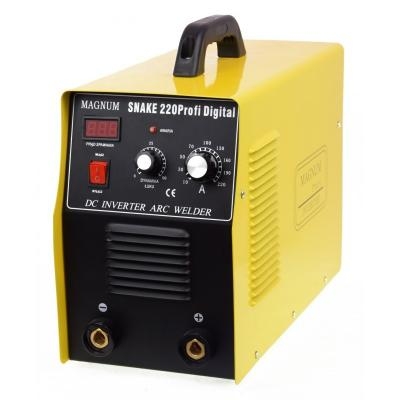
    MAGNUM SNAKE 219 PULS IGBT welder

    http://www.spawanie.com/produkt/spawarka-magnum-snake-219-puls-igbt

    The question is whether it is a good choice, is it worth it for the price or something cheaper.
    The frequency of work and the use of rather small, amateur.

    The next issue is whether "my" network will "pull"? The point is that all, well, almost all devices of this type require 25 A protection, and I have a 20 A fuse for securing the "home" network. There is also a 3-phase "power" network connected, the protection is just 25 A.
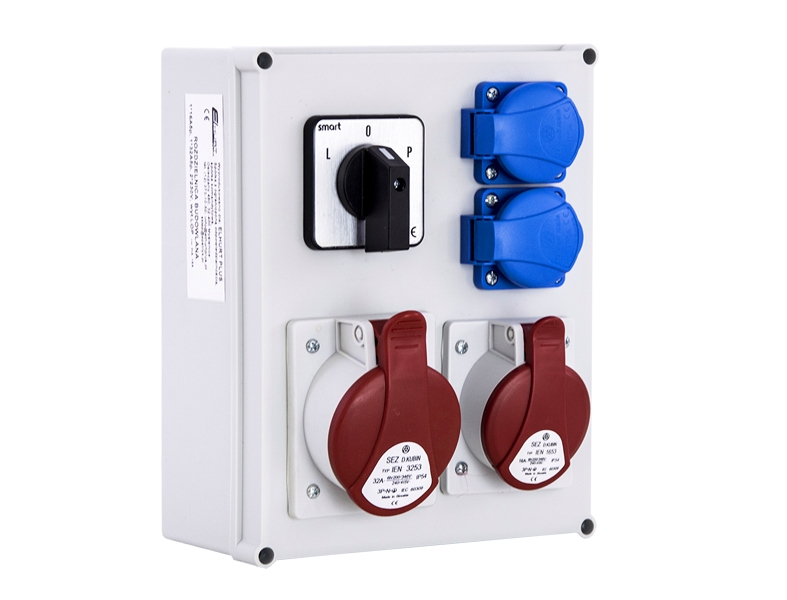
    Is it possible to connect instead of a regular power socket e.g. a switchboard:
    MAGNUM SNAKE 219 PULS IGBT welder, reviews about whether it is worth buying


    Only that there is a problem again, because these 230 V sockets can have a load of only 16 A.
    Is it better to make a "power adapter" from the "power" socket which is in the 32 A garage using one phase and a neutral wire?
  • ADVERTISEMENT
  • #2 16944209
    slawek str
    Level 17  
    I do not know and I do not see what plug or rather the 230V plug they used in this welder. Virtually all 230V sockets are max.16A unless round, but I don't know exactly what they are called industrial. Colleagues from the forum will probably complete me soon. You can ask the seller what connector the power cord is terminated on. And as for the welder, it is enough for DIY. I have a 220P magnum and at 150A I burned holes in a 10mm tin. Secondly, I doubt you would use a current greater than 120A, maybe sometimes. If there will be an industrial plug without the possibility of conversion to a normal one without losing the warranty, that's cool and if it does not remain either an adapter or a welding machine up to 16A.
  • ADVERTISEMENT
  • #3 16944275
    wojtek1234321
    Level 36  
    slawek str wrote:
    I do not know and I do not see what plug or rather the 230V plug they used in this welder.

    The photo shows that such a plugin is used.

    MAGNUM SNAKE 219 PULS IGBT welder, reviews about whether it is worth buying
  • ADVERTISEMENT
  • #4 16944283
    slawek str
    Level 17  
    This is a 16A plugin, so maybe something's wrong here or I'm dark.
  • #6 16944429
    slawek str
    Level 17  
    Description the same but a little different in appearance. The front and back of the case are plastic just like yours. Perhaps mine is smaller. I have not come across sales like I have, but it doesn't matter because the measure is probably the same. I have a normal plugin and when it comes to security I will check tomorrow and write.
  • #7 16944456
    stasiekb100
    Level 30  
    What do you have with this plugin? That's what they allowed the sales people so it's good. When it comes to protection, 16 A can trip on power up.
  • #8 16944487
    slawek str
    Level 17  
    And in your opinion, why would it trigger 16A exercises? Nobody here writes that this plug is bad or something else. But the topic of 230V20A welder was discussed and a colleague who bought it noticed that the plug is industrial. He asked the seller if he could assume the usual received a reply that he would lose the warranty. So explain to me where this welder has a colleague to connect to comply with the instructions in the manual. If you ask the seller if he is suitable for the home, he will answer that yes and here zonk and a topic like this. Best regards.
  • #9 16944755
    wojtek1234321
    Level 36  
    stasiekb100 wrote:
    What do you have with this plugin? That's what they allowed the sales people so it's good. When it comes to protection, 16 A can trip on power up.

    With the plug I have nothing, even if it was mounted different, I can handle it. My question was only if I have a network security at home (still old type of installation, but a new riser and already converted from the meter to copper) 20 amps or will it withstand when connecting this welder. Will it not "blow" the fuse (automatic 20 A, B). Is it better, as I wrote above, to install in the garage instead of the power plug a "switchboard" of a similar type as this:

    MAGNUM SNAKE 219 PULS IGBT welder, reviews about whether it is worth buying


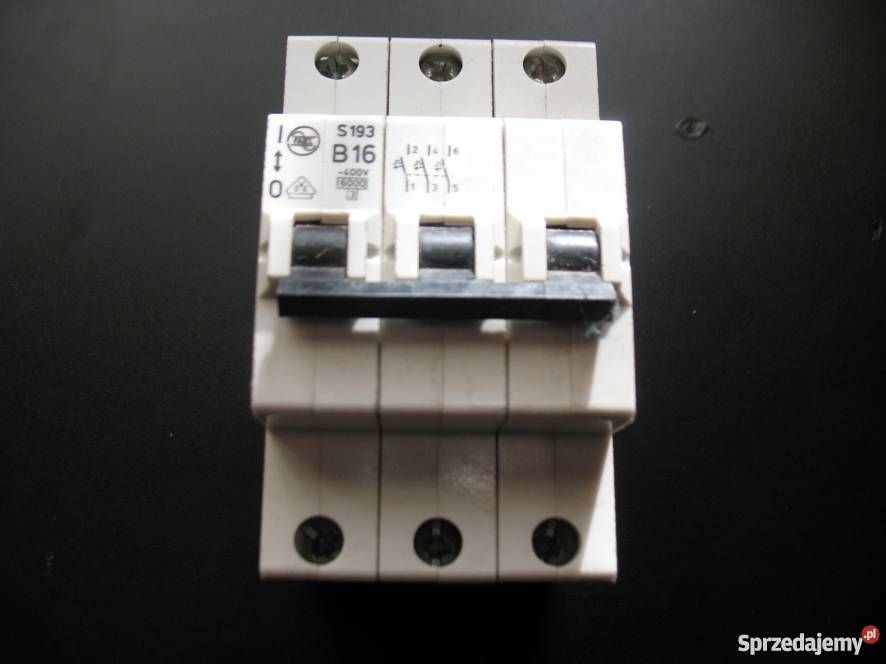
    And use it with a 230 V socket, protection on the power line I also have a 25 A, B automatic machine, similar to this one:

    MAGNUM SNAKE 219 PULS IGBT welder, reviews about whether it is worth buying


    It is only a matter that in such switchboards, the sockets are in the vast majority 16 A and whether all this will not heat up, it could be possible to replace the cables connecting these sockets with thicker, larger cross-section to increase the load efficiency in order to improve the efficiency of this connection. . Can he earn some extra money with a 400 V, 32 A, 5p power socket, so that he can draw 230 V by connecting 1 phase and neutral. Can this be done and is it acceptable and will this line's protection work? That's exactly what I meant.
  • #10 16944845
    Sniezynka
    Level 33  
    Hello,
    After all, the power consumption of such a welder is about 7-8A for welding with 100A and 15-17A for 200A.
    Important is the "rigidity" of the installation and how it is made, not just protection. In addition, who will be welding with 200A current when for the most popular electrode fi 3.25mm welding current is about 120A
  • #11 16945040
    wojtek1234321
    Level 36  
    Sniezynka wrote:
    After all, the power consumption of such a welder is about 7-8A for welding with 100A and 15-17A for 200A.
    Important is the "rigidity" of the installation and how it is made, not just protection.

    Well, the installation is not so new, but everything in copper, how much it is "mm squared" I do not know, but the cables for the sockets for the diameter of the "wire" is about 1.2 - 1.5 mm. Everything is well twisted and the sockets are also "almost new" with no looseness at the contacts and not burned, I care because it is used and it is to be operational. So you say that this (security) will withstand and will play? I was afraid that it was when turning on / starting the device or when the arc started / initiated that a fuse could blow.
  • ADVERTISEMENT
  • #12 16946502
    Sniezynka
    Level 33  
    Probably 1.5 and 2.5mm2, and these devices have a soft-start so it should not be a problem. It is important whether you will use these 200A, probably not, moreover, the welder has an intermittent cycle of work and in amateur use you will not work 8h. At most, you will not use these 200A and 160A, which is completely my DIY task.
  • #13 16946539
    wojtek1234321
    Level 36  
    Sniezynka wrote:
    At most, you will not use these 200A and 160A, which is completely my DIY task.

    Well, the matter of power supply has already been resolved.
    Or maybe a little bit about this welder. How do they work, are they worth the price (this costs about 850 PLN, included is a self-darkening mask, welding angle and other "gadgets", except that the budget can easily be a little higher than this price), or look around for something else (more expensive, cheaper) for the needs of amateur - DIY.
  • #14 16946584
    Sniezynka
    Level 33  
    Honestly, how it goes, what it depends on, I do not know, but I will give an example of Einhella in one welding machine was mounted uc 3845 system with a temperature range of -35; +90 in others 0; +85, probably, the effect that in the least frost the latter shot like fireworks for the new year.
  • #15 16995888
    wojtek1234321
    Level 36  
    I'm closing the topic

Topic summary

✨ The discussion revolves around the MAGNUM SNAKE 219 PULS IGBT welder, focusing on its suitability for DIY and amateur use. Users express concerns about the welder's power requirements, specifically whether a 20 A home network can support it, given that the welder typically requires a 25 A protection. The conversation includes inquiries about the type of plug used, with mentions of 16 A and industrial plugs. Users share experiences with similar welders, noting that the power consumption is manageable for home use, especially at lower amperages. The price of approximately 850 PLN is also debated, with suggestions to consider other options based on individual needs. Overall, the consensus leans towards the welder being adequate for light, non-professional tasks.
Generated by the language model.

FAQ

TL;DR: For home DIY, the MAGNUM SNAKE 219 class inverters draw about 15–17 A at 200 A; “power consumption … 15–17A for 200A.” [Elektroda, Sniezynka, post #16944845] Why it matters:** This FAQ helps first‑time buyers decide if a MAGNUM SNAKE 219‑type IGBT welder will run on their household circuit and meet typical repair needs.

Quick Facts

Is the MAGNUM SNAKE 219 (IGBT) a good buy for DIY and home repairs?

Yes. Users report comparable MAGNUM inverters are sufficient for DIY tasks and light repairs. One owner notes effective performance for home use. Prioritize a solid power feed and realistic current settings for your jobs. Choose reputable sellers and confirm warranty terms before purchase. [Elektroda, slawek str, post #16944209]

Will a 20 A household breaker run this welder?

At 100 A weld current, draw is about 7–8 A; at 200 A it is 15–17 A. Many DIY welds use ~120 A, which keeps current well under 20 A. Keep runs short and connections tight to minimize voltage drop. Use proper wire gauge and a quality socket. [Elektroda, Sniezynka, post #16944845]

Do I really need a 25 A circuit for this class of welder?

Many product descriptions call for 25 A protection. That spec provides headroom for high‑current welding and start‑up. If your panel supports it and local code allows, a dedicated 25 A circuit helps avoid nuisance trips. Always follow manufacturer instructions. [Elektroda, wojtek1234321, post #16944399]

Will a normal 16 A socket work?

Yes, but a 16 A breaker can trip during power‑up on some installations. Use a robust, tight 16 A socket on a short circuit run. Avoid light‑duty extension cords. If trips persist, reduce starting current or consider a dedicated circuit. [Elektroda, stasiekb100, post #16944456]

What plug does the unit use in the discussed setup?

In the thread, the pictured welder uses a standard 16 A 230 V plug. That matches most household outlets but does not change breaker requirements. Inspect the specific unit you buy, since plugs may vary by seller batch. [Elektroda, wojtek1234321, post #16944275]

What wire size is acceptable for sockets feeding a small inverter welder?

The discussion references 1.5 mm² and 2.5 mm² copper circuits. Short, rigid wiring with sound terminations helps stability. “Soft‑start” inverters also reduce inrush. Use 2.5 mm² for longer runs or higher duty use. Always follow local electrical standards. [Elektroda, Sniezynka, post #16946502]

Can I power it from a 400 V/32 A (5‑pin) outlet using one phase and neutral?

This idea was raised in the thread. It requires selecting one phase and neutral with correct protection and pinout. Have a qualified electrician build any adapter and verify earthing. Incorrect wiring risks damage and shock. [Elektroda, wojtek1234321, post #16944755]

What welding current should I use for 3.25 mm electrodes?

Plan around 120 A for common 3.25 mm electrodes. Set slightly higher or lower to suit joint fit‑up and position. Strike at lower current if your supply is marginal, then fine‑tune while watching arc stability. [Elektroda, Sniezynka, post #16944845]

Is 150 A enough for thicker material?

A user reported burning holes in 10 mm sheet at 150 A with a similar MAGNUM 220P unit. This indicates strong output for small structural tasks. Practice on scrap to dial in travel speed and arc length. [Elektroda, slawek str, post #16944209]

Does this welder have soft‑start, and what does it help with?

Participants note these inverters feature soft‑start. Soft‑start reduces inrush current and helps prevent nuisance breaker trips. It also eases arc initiation on lighter circuits. “These devices have a soft‑start so it should not be a problem.” [Elektroda, Sniezynka, post #16946502]

What is the duty cycle and does it matter for DIY?

Thread participants emphasize the intermittent work cycle. For DIY use, you won’t weld eight hours straight. Plan short runs and allow cooling at high currents. This approach extends component life and keeps cables cooler. [Elektroda, Sniezynka, post #16946502]

Any edge cases or failures to watch for with budget inverters?

One user saw failures in cold weather where a control IC with a narrower temperature range was used. Components outside proper temp ratings can misbehave in frost. Store and operate within reasonable temperatures. [Elektroda, Sniezynka, post #16946584]

What plug rating did other users actually see on similar MAGNUM units?

A respondent identified the pictured plug as a 16 A type. That aligns with common 230 V domestic outlets. Always check your unit on arrival to confirm the connector and cable gauge. [Elektroda, slawek str, post #16944283]

What accessories and price were mentioned for this deal?

The thread cites roughly 850 PLN with a self‑darkening mask, welding angle, and small extras. Confirm exact inclusions with the seller. Kits vary and accessories affect overall value. [Elektroda, wojtek1234321, post #16946539]

Could changing the factory plug void the warranty?

A buyer reported the seller warned that replacing the industrial plug would void warranty. If you need a different connector, request an approved solution from the seller. Keep documentation. [Elektroda, slawek str, post #16944487]

How can I reduce nuisance trips when starting the welder?

Try this:
  1. Use a short circuit on solid copper wiring with tight terminations.
  2. Avoid long, thin extension cords; keep connections clean.
  3. Start at moderate current; soft‑start helps reduce inrush. These steps leverage installation “rigidity.” [Elektroda, Sniezynka, post #16946502]
Generated by the language model.
ADVERTISEMENT