logo elektroda
logo elektroda
X
logo elektroda

[Solved] BMW E61 525D 177hp 2004: Turbine Actuator Error 3F57 and Limp Mode Issues After Engine Warm-Up

DejayPablo 44793 12
ADVERTISEMENT
Treść została przetłumaczona polish » english Zobacz oryginalną wersję tematu
  • #1 17012950
    DejayPablo
    Level 15  
    Posts: 342
    Rate: 82
    I bought an E61 525D 177 hp 2004.
    After warming up the engine (on average after an hour, sometimes two hours) I started to throw a turbine actuator error, 3F57. Then the car goes into limp mode, no power. It helps to turn off the car, wait about 15 minutes and start again.

    Steps I've taken so far:
    - replacement of the exhaust manifold with a cast iron one (the old one cracked)
    - replacement of the wiring harness between the computer and the adjuster (no 12 V voltage on the adjuster)
    - replacement of all gaskets (at the turbine itself, at the IC, at the EGR).
    - checking the tightness of the intake (I have a problem here, because I hear a whistling sound somewhere, but I don't know if it is the turbine whistling slightly and giving the effect of whistling from somewhere else)
    - setting up another adjuster (same, adjuster error)
    - replacement of fuel and air filters, checking the pressure on the rail, it is OK
    - checking the geometry cable, it works loosely
    - replacement of the boost pressure sensor in the manifold and its test
    - removing the swirl flap - were nice, but I preferred not to risk it
    - performing the test of the controller in DIS - it walked about half an hour from left to right, never once hung up or stood still.

    When adding gas at a standstill, the adjuster almost does not move at all, and should it twitch?

    I did some DIS tests today
    error number 3F57

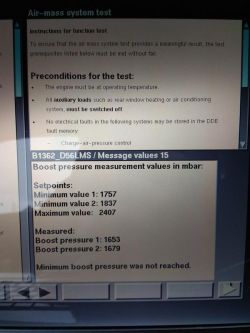
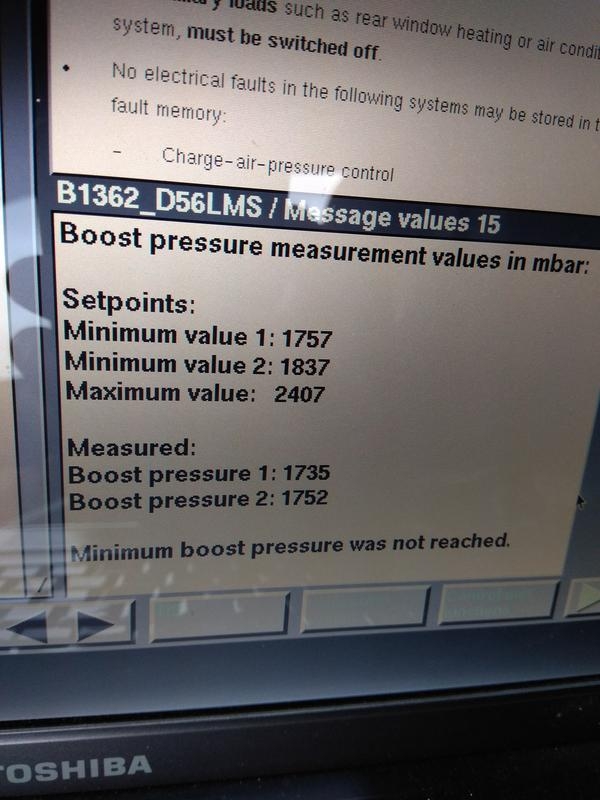
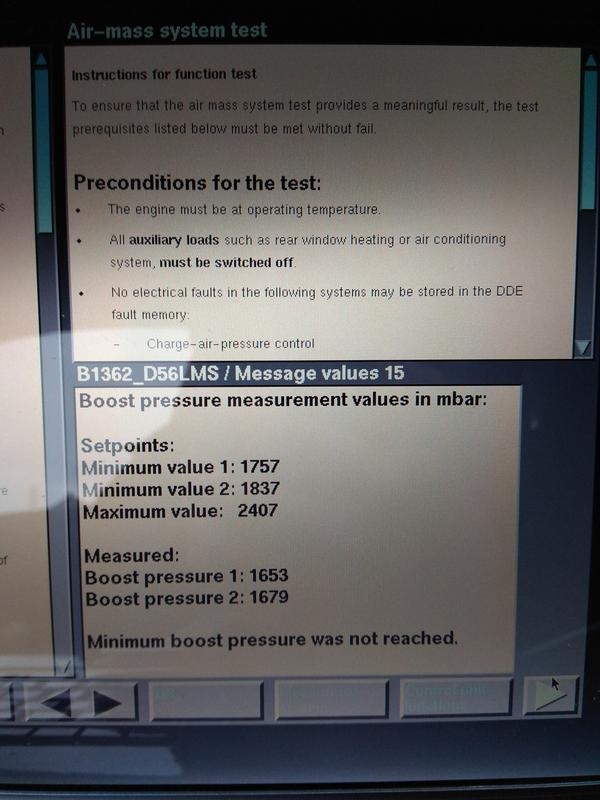
    DIS shows that the minimum boost value has not been reached: (controller problem? or turbine problem?)
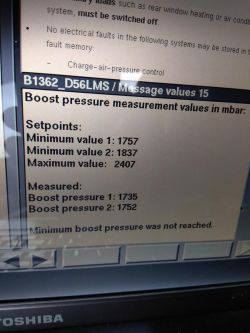
    BMW E61 525D 177hp 2004: Turbine Actuator Error 3F57 and Limp Mode Issues After Engine Warm-Up BMW E61 525D 177hp 2004: Turbine Actuator Error 3F57 and Limp Mode Issues After Engine Warm-Up

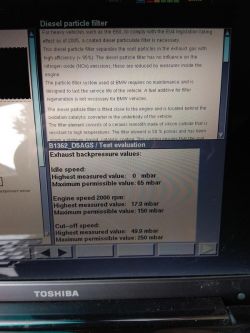
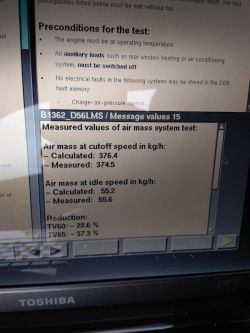
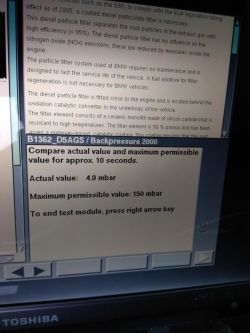
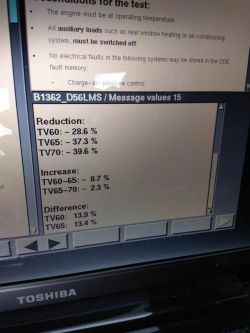
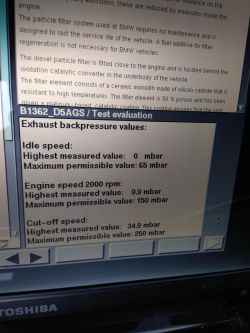
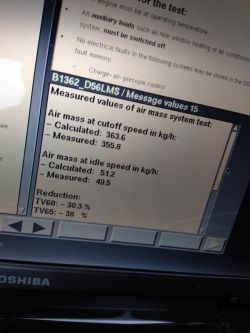
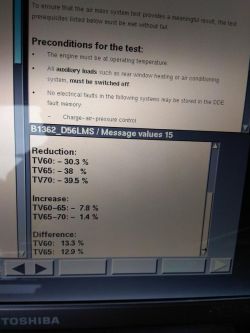
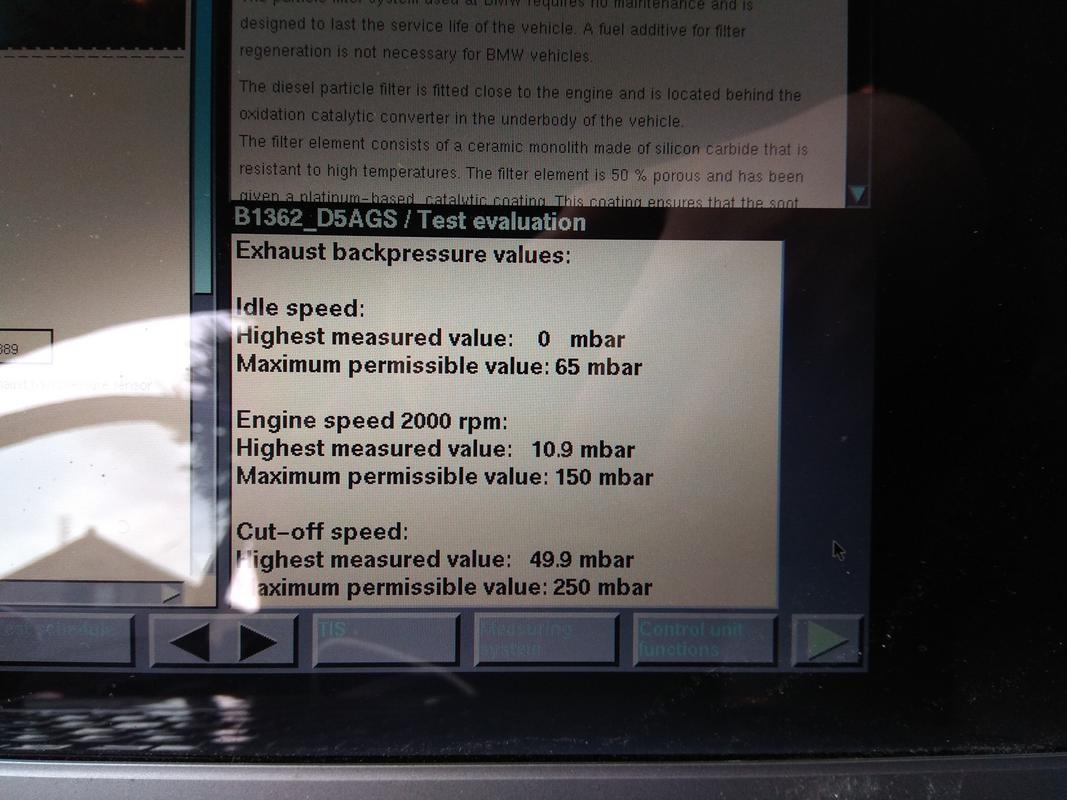
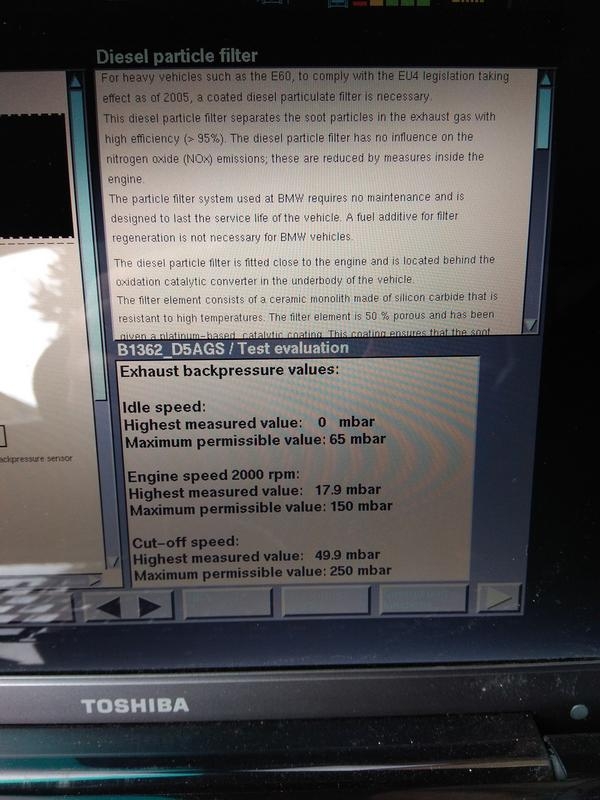
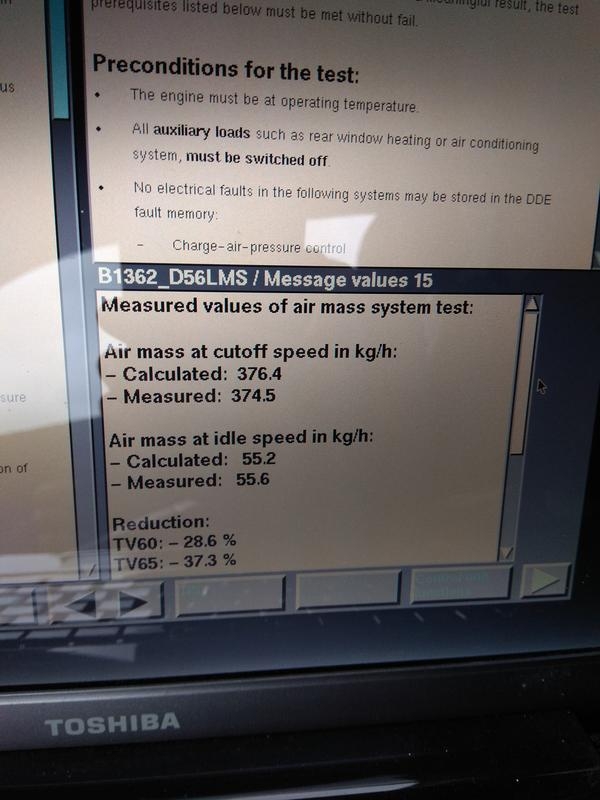
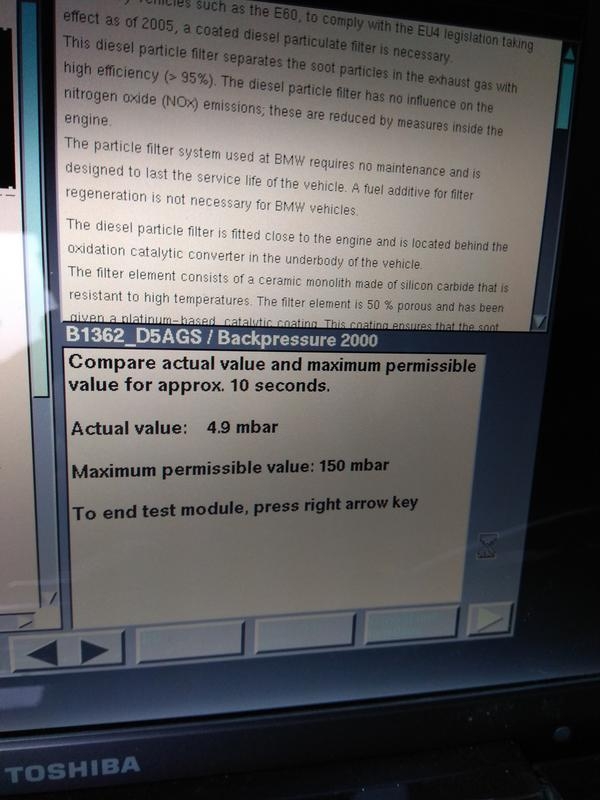
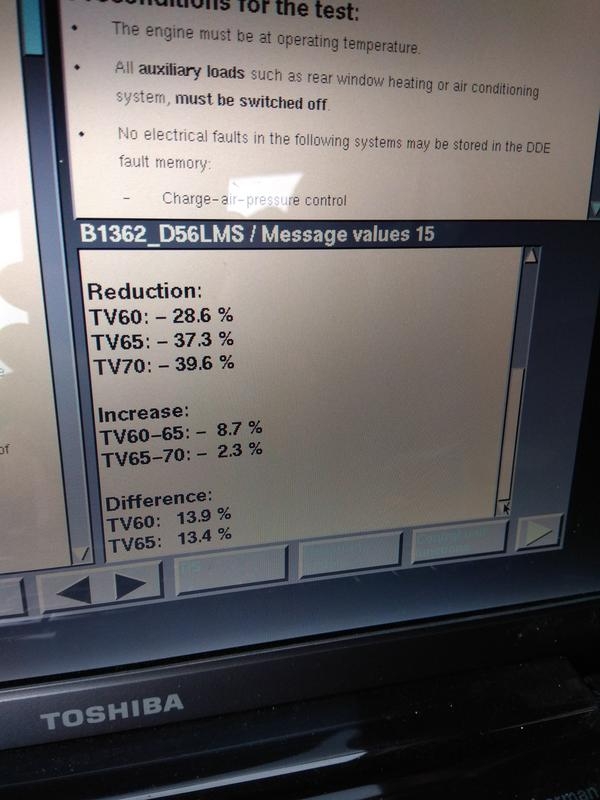
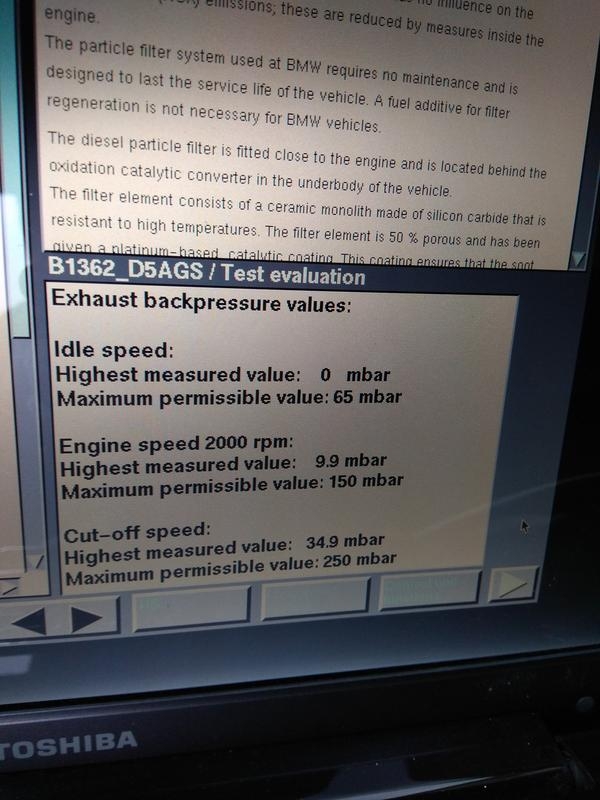
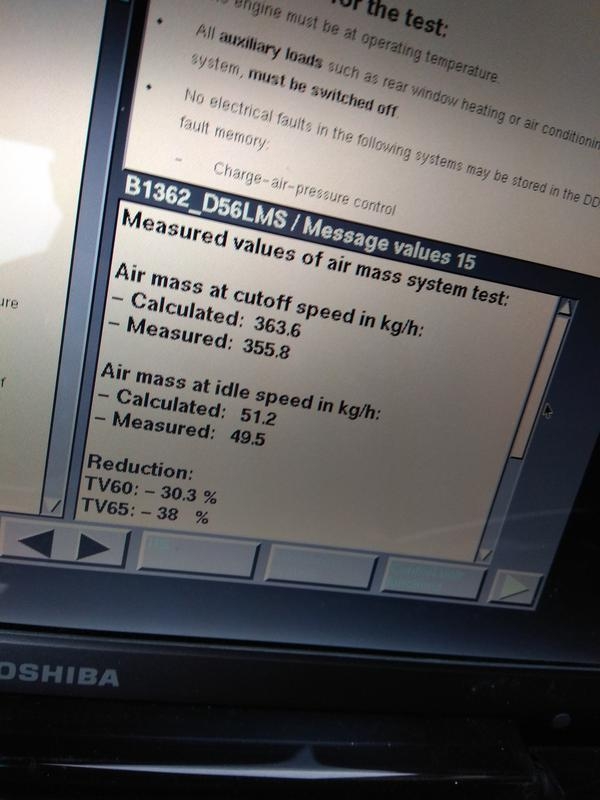
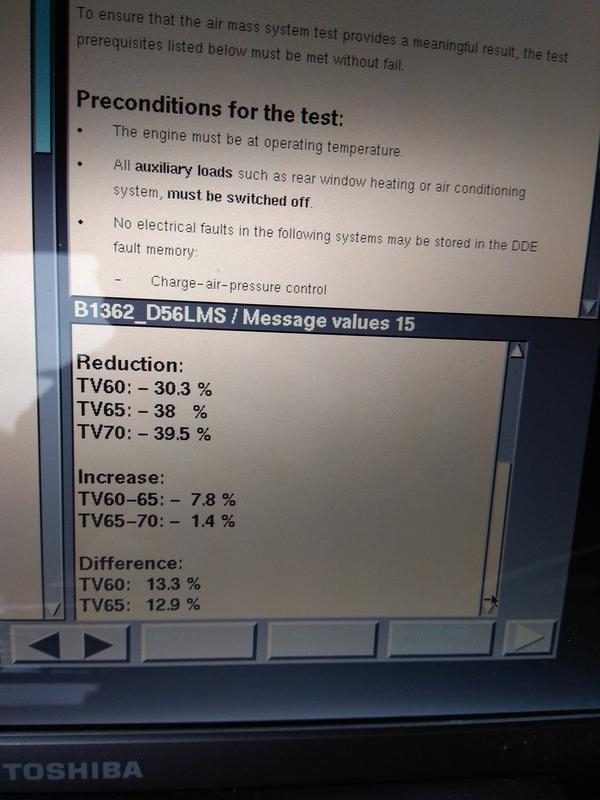
    I have also done a DPF test (can someone explain these values to me?)
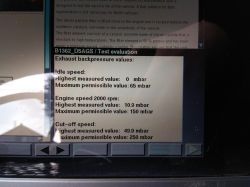
    BMW E61 525D 177hp 2004: Turbine Actuator Error 3F57 and Limp Mode Issues After Engine Warm-Up BMW E61 525D 177hp 2004: Turbine Actuator Error 3F57 and Limp Mode Issues After Engine Warm-Up BMW E61 525D 177hp 2004: Turbine Actuator Error 3F57 and Limp Mode Issues After Engine Warm-Up BMW E61 525D 177hp 2004: Turbine Actuator Error 3F57 and Limp Mode Issues After Engine Warm-Up BMW E61 525D 177hp 2004: Turbine Actuator Error 3F57 and Limp Mode Issues After Engine Warm-Up BMW E61 525D 177hp 2004: Turbine Actuator Error 3F57 and Limp Mode Issues After Engine Warm-Up BMW E61 525D 177hp 2004: Turbine Actuator Error 3F57 and Limp Mode Issues After Engine Warm-Up BMW E61 525D 177hp 2004: Turbine Actuator Error 3F57 and Limp Mode Issues After Engine Warm-Up
  • ADVERTISEMENT
  • #2 17015837
    marcin_70
    Level 21  
    Posts: 418
    Help: 38
    Rate: 269
    Hi
    I once had a similar topic, although not in BMW and in a Japanese car and the ECU was to blame. You have edc16c35, so the subject of a fairy tale, bdm clone to do and test. Once it's read, you can check if any n75 map pseudotuner did not make you weird.
  • #3 17015847
    szymitsu21
    VIP Meritorious for electroda.pl
    Posts: 3702
    Help: 342
    Rate: 1289
    First of all, measuring the top-up while driving.
  • ADVERTISEMENT
  • #4 17016476
    DejayPablo
    Level 15  
    Posts: 342
    Rate: 82
    marcin_70 wrote:
    Hi
    I once had a similar topic, although not in BMW and in a Japanese car and the ECU was to blame. You have edc16c35, so the subject of a fairy tale, bdm clone to do and test. Once it is read, you can check if any n75 map pseudotuner has not made you weird.

    I downloaded the mpps map.
    I know it was done, but it was all before.
    Can a friend check it out?
    Attachments:
    • 1037390905.rar (54.08 KB) You must be logged in to download this attachment.
  • #5 17016477
    daw2
    Level 18  
    Posts: 389
    Help: 18
    Rate: 98
    I do not know about BMW, but at VAG, any interference with the actuator or turbo ends with the service adaptation of the turbine controller to the turbine itself, and then the entire turbine with the controller to the car's ECU. It's different as you describe.
  • #6 17016489
    DejayPablo
    Level 15  
    Posts: 342
    Rate: 82
    And what is the adaptation of the turbine controller to the computer ECU in VAG?
  • ADVERTISEMENT
  • ADVERTISEMENT
  • #8 17024849
    DejayPablo
    Level 15  
    Posts: 342
    Rate: 82
    I already know what's going on, VCDS has a calibration procedure for this adjuster, and BMW DIS or GT1 does not have it, maybe this function was simply not required in BMW.

    The case was solved, I replaced the capacitor in the adjuster, everything started working. I disassembled the turbine to be sure and glassed it inside, so that the geometry was loose, everything works.
  • #9 17026690
    Frost160
    Level 14  
    Posts: 689
    Help: 9
    Rate: 182
    So the used regulator is also damaged, I understand?
  • #10 17028231
    DejayPablo
    Level 15  
    Posts: 342
    Rate: 82
    Used could be good, but prophylactically got a new capacitor, cleaned geometry and so far everything is back to normal, no longer throws a controller error.
  • #11 17028648
    Frost160
    Level 14  
    Posts: 689
    Help: 9
    Rate: 182
    Well, in one post you wrote:
    "The steps I've taken so far:
    - I put on another adjuster (same, adjuster error)".
  • #12 17028658
    DejayPablo
    Level 15  
    Posts: 342
    Rate: 82
    Well, yes, I put on another adjuster and it was the same, I replaced the capacitor in it, cleaned the geometry and it works.
  • #13 17272907
    DejayPablo
    Level 15  
    Posts: 342
    Rate: 82
    The problem turned out to be the turbine, which had a baked geometry and thus threw the controller error, in addition, the DPF was clogged and therefore there were such problems.

Topic summary

✨ The discussion revolves around a 2004 BMW E61 525D 177hp experiencing a turbine actuator error (code 3F57) and entering limp mode after the engine warms up. The owner has undertaken several troubleshooting steps, including replacing the exhaust manifold, wiring harness, gaskets, and filters, as well as checking the intake system for leaks. Despite these efforts, the error persisted. A contributor suggested that the issue might be related to the ECU, while another noted that VAG vehicles require adaptation of the turbine controller to the ECU, a feature not present in BMW systems. Ultimately, the owner resolved the issue by replacing a capacitor in the actuator and cleaning the turbo geometry, which eliminated the error. Further investigation revealed that the turbine had baked geometry and a clogged DPF, contributing to the problems.
Generated by the language model.

FAQ

TL;DR: On a BMW E61 525d, limp mode hit after 1–2 hours, and DIS reported "minimum boost value has not been reached." Code 3F57 indicates boost control shortfall; see diagnostics and fixes below. [Elektroda, DejayPablo, post #17012950]

Why it matters: This FAQ helps BMW E60/E61 525d owners fix 3F57 limp‑mode by targeting turbo control, actuator, and DPF issues fast.

Quick Facts

What does BMW code 3F57 mean on a 525d E61?

It flags turbo boost control not reaching the minimum target and triggers limp mode. DIS explicitly showed “minimum boost value has not been reached.” This aligns with boost shortfall under load rather than a static failure. Expect power loss until the fault clears. [Elektroda, DejayPablo, post #17012950]

Why does limp mode appear only after the engine warms up?

In this case, limp mode appeared after 1–2 hours of warm running, and a 15‑minute key‑off cleared it. That pattern points to a heat‑dependent fault that manifests under sustained load rather than at cold start. Logging while driving helps capture it. [Elektroda, DejayPablo, post #17012950]

What finally fixed the issue in this thread?

The root cause was stuck variable‑geometry in the turbo and a clogged DPF restricting flow. The user concluded, “The problem turned out to be the turbine… and the DPF was clogged.” Restoring VNT movement and addressing the DPF resolved 3F57 and limp mode. [Elektroda, DejayPablo, post #17272907]

Can actuator electronics cause a 3F57 boost error?

Yes. The actuator’s failing capacitor can disrupt control when hot. “I replaced the capacitor in the adjuster, everything started working.” This provided a clear improvement, especially combined with cleaning the VNT mechanism. It can be a temporary or lasting fix. [Elektroda, DejayPablo, post #17024849]

How do I run the BMW DIS turbo actuator test?

Use this quick check: 1) Connect DIS and select the turbo actuator test. 2) Command full-range sweeps and watch travel. 3) Verify it does not hang during cycles. In this case, the test ran about 30 minutes without stalling. [Elektroda, DejayPablo, post #17012950]

Why doesn’t the actuator move much when revving at idle?

Boost and vane position are load‑dependent. Static revs at a standstill often show minimal actuator motion. Log requested versus actual boost while driving to assess control. This captures dynamic behavior that idle tests miss. [Elektroda, szymitsu21, post #17015847]

Does BMW require turbo actuator calibration like VAG cars?

VCDS on VAG supports actuator calibration. The OP noted BMW DIS/GT1 lacked that function. BMW cases like this typically proceed without actuator calibration and focus on mechanical and electrical checks. [Elektroda, DejayPablo, post #17024849]

What is EDC16C35, and can the ECU be at fault?

EDC16C35 is the Bosch diesel ECU on this car. If suspected, bench‑read it via BDM and verify maps to rule out bad edits to boost control. “BDM clone to do and test” was the advice here. [Elektroda, marcin_70, post #17015837]

What is MPPS, and why read the map here?

MPPS reads the ECU calibration through OBD. The OP read the map because the car had prior tuning, and they wanted it checked for odd boost control edits. This helps exclude software as a cause. [Elektroda, DejayPablo, post #17016476]

Could a used turbo actuator still be faulty?

Yes. Swapping to another actuator did not change the error in this case. The user then replaced the capacitor and restored function. Electronics can age similarly across used units. [Elektroda, DejayPablo, post #17028658]

Why did DIS say “minimum boost not reached” even though the actuator test passed?

Because the static test only proves the actuator can move. The fault appeared under load, where airflow and exhaust energy matter. Here, dynamic restriction from VNT sticking or DPF clogging explained the mismatch. [Elektroda, DejayPablo, post #17012950]

What do the DPF test results imply in this case?

They supported a clogged DPF diagnosis. The thread concludes the DPF was blocked, which contributed to low boost and limp mode. Addressing the DPF was necessary to restore performance. [Elektroda, DejayPablo, post #17272907]

How should I check for intake leaks or the whistling noise mentioned?

Inspect all boost hoses, IC joints, and gaskets, as the OP did. A mild whistle can be turbo spool, but leaks worsen boost control. Replace suspect seals and re‑test under load to confirm tightness. [Elektroda, DejayPablo, post #17012950]

Do swirl flaps matter for this 3F57 issue?

The OP removed intact swirl flaps as a precaution. Flap failure was not the cause here. Focus on turbo VNT movement, actuator electronics, and DPF condition for 3F57 limp mode. [Elektroda, DejayPablo, post #17012950]
Generated by the language model.
ADVERTISEMENT