logo elektroda
logo elektroda
X
logo elektroda

[Solved] Windows 7 x64: IVT Bluesoleil Driver Removal & Public Network Restoration Issues

5646 14
ADVERTISEMENT
Treść została przetłumaczona polish » english Zobacz oryginalną wersję tematu
  • #1 17020109
    Anonymous
    Level 1  
  • ADVERTISEMENT
  • #2 17020455
    mateo-salvadore
    Level 15  
    Posts: 219
    Help: 10
    Rate: 58
    Most likely, the virtual network adapter driver has been installed - go to the device manager (computer -> properties -> device manager) and see if you have the Bluetooth section. As is, expand and on each device, right-click and "uninstall device", or go to properties and you will find the same on the driver tab. As mute or done, expand the network cards - see if there is anything with Bluetooth in the name. If it is, the same - uninstall.
  • #3 17020472
    safbot1st
    Level 43  
    Posts: 21951
    Help: 2719
    Rate: 1583
    Falconett wrote:
    I would like to remove it, but it is impossible:
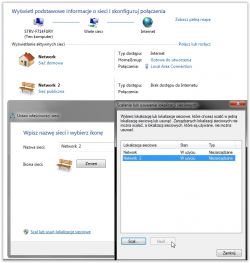
    How is that? And is the device listed in the device manager?
    Type in OS search "display network connections".
    Once you find this place (so perfectly available in XP), you can disable the connection - this will remove the network from the tray. You can also delete.

    Added after 1 [minutes]:

    mateo-salvadore wrote:
    expand network adapters

    I see that we followed a similar course, but I didn't get the idea that the device is virtual ...; P
  • ADVERTISEMENT
  • #4 17020540
    Anonymous
    Level 1  
  • ADVERTISEMENT
  • #5 17020554
    safbot1st
    Level 43  
    Posts: 21951
    Help: 2719
    Rate: 1583
    Falconett wrote:
    there is only the desired combination.

    So it shouldn't be visible in the tray.
    Falconett wrote:
    after reboot, it returned and additionally a warning triangle appeared with an unidentified USB device.

    So he is physically absent? In that case, remove them, e.g. with DeviceCleanup:
    http://www.programosy.pl/program,device-cleanup-tool.html
  • ADVERTISEMENT
  • #6 17020640
    Anonymous
    Level 1  
  • #7 17020658
    safbot1st
    Level 43  
    Posts: 21951
    Help: 2719
    Rate: 1583
    Since the manufacturer does not provide a functional uninstaller, you can always manually "sweep" the registry by name of the equipment / manufacturer, but it is time consuming (make a backup).
  • #8 17020670
    Anonymous
    Level 1  
  • #9 17020749
    safbot1st
    Level 43  
    Posts: 21951
    Help: 2719
    Rate: 1583
    Falconett wrote:
    something mobilizes this crap to re-create

    Perhaps a service. Check those running in services.msc. You can also include FRST logos.
  • #10 17021030
    Anonymous
    Level 1  
  • #11 17021111
    safbot1st
    Level 43  
    Posts: 21951
    Help: 2719
    Rate: 1583
    Uninstall Driver Booster and IObit.
    Make a fixlist:
    
    HKU\S-1-5-21-492606224-3191085158-1332905575-1000\...\Run: [CW] => [X]
    HKU\S-1-5-21-492606224-3191085158-1332905575-1000\...\MountPoints2: E - E:\setup.exe
    HKU\S-1-5-21-492606224-3191085158-1332905575-1000\...\MountPoints2: X - X:\setup.exe
    S3 Btcsrusb; C:\Windows\System32\Drivers\btcusb.sys [42888 2017-10-23] (IVT Corporation.)

    and discussed corrective actions. After that, check if it will "spawn".
  • #12 17021189
    Anonymous
    Level 1  
  • #13 17021257
    safbot1st
    Level 43  
    Posts: 21951
    Help: 2719
    Rate: 1583
    Falconett wrote:
    My hands are dropping now because looking at how people deal with it, the problem should have disappeared long ago.

    I don't know what you mean ...?
    Falconett wrote:
    I would like to add that I followed the instructions posted here: Link

    This is a link that is virtually unrelated to the topic of TCP / IPv6 tunneling.
    I don't want to kill you, but I've had situations where a bug in the device manager forced me to format.
    As for uninstallation - it is not so unusual that there are severe cases:
    https://www.elektroda.pl/rtvforum/topic3421960.html
  • #14 17021264
    Anonymous
    Level 1  
  • #15 17026224
    Anonymous
    Level 1  

Topic summary

✨ The discussion revolves around issues faced after uninstalling IVT Bluesoleil drivers for an external Bluetooth module on Windows 7 x64. The user reports persistent problems, including the creation of unwanted public network connections and residual virtual network adapters. Various troubleshooting steps are suggested, including uninstalling devices from Device Manager, using Device Cleanup Tool, and checking services. Despite these efforts, the user continues to experience the reappearance of the problematic network. Ultimately, the user resolves the issue only after reinstalling the operating system, indicating the complexity of driver-related problems and the limitations of conventional removal methods.
Generated by the language model.

FAQ

TL;DR: On Windows 7 x64, IVT BlueSoleil can leave btcusb.sys (42,888 bytes) and phantom networks. "Uninstall Driver Booster and IObit." Use Device Manager and an FRST fixlist to remove the virtual Bluetooth NIC, then reboot. This FAQ helps Windows 7 users delete reappearing "Public Network" entries and clean leftovers safely. [Elektroda, safbot1st, post #17021111]

Why it matters: Stubborn virtual adapters can break sharing, confuse firewalls, and clutter profiles after driver removal.

Quick Facts

How do I remove the BlueSoleil virtual Bluetooth network adapter in Windows 7?

Use Device Manager to uninstall the Bluetooth stack and its NICs.
  1. Open Device Manager. Expand Bluetooth.
  2. Right‑click each Bluetooth device. Select Uninstall device.
  3. Expand Network adapters. Uninstall entries with Bluetooth in the name, then reboot. This removes the virtual adapter linked to BlueSoleil. [Elektroda, mateo-salvadore, post #17020455]

Why does "Public Network" keep coming back after uninstall?

A remaining service or driver instance is recreating the virtual adapter at startup. Check services in services.msc and disable anything from IVT/BlueSoleil. "Perhaps a service." Removing the connection alone won’t persist if the service respawns it on boot. [Elektroda, safbot1st, post #17020749]

Where do I disable or delete the phantom network connection from the tray?

Open the Start menu and search for "display network connections". In Network Connections, right‑click the unwanted Bluetooth or virtual connection. Choose Disable or Delete. Disabling removes it from the system tray view. This change won’t persist if the driver reappears. [Elektroda, safbot1st, post #17020472]

DeviceCleanup Tool removed Bluetooth PAN entries, but the network still returns. Why?

DeviceCleanup removes non‑present devices, not active services or drivers that reload. In this case, it deleted items like "Bluetooth (Personal Network)", yet the phantom network recurred. That indicates a still‑running component spawning new instances on reboot. [Elektroda, Anonymous, post #17020640]

I see an "Unidentified USB device" warning after removal. What should I do?

If the hardware is absent, remove ghost entries. Use DeviceCleanup to purge devices not currently connected. This clears stale driver bindings and suppresses the warning icon. Rescan hardware afterward to confirm it stays gone. [Elektroda, safbot1st, post #17020554]

How do I check services that may respawn the adapter?

Press Win+R, run services.msc, and review running services. Stop and set to Disabled any IVT/BlueSoleil services tied to Bluetooth networking. If unsure, collect diagnostics with FRST and review for IVT entries. This identifies components that re‑create adapters. [Elektroda, safbot1st, post #17020749]

What did the FRST fixlist target in this case?

The helper targeted IVT artifacts, including btcusb.sys (42,888 bytes) and mountpoint entries. They also advised, "Uninstall Driver Booster and IObit." After preparing the fixlist, run the corrective actions and reboot. Then verify no new virtual adapters appear. [Elektroda, safbot1st, post #17021111]

I disabled services, but the phantom "Public Network" still returns — is that expected?

It can happen if another driver instance re‑adds the adapter. In this thread, two services were disabled, yet the profile regenerated after restarts. Continue removing Bluetooth NICs in Device Manager and clean ghost devices until it stops reappearing. [Elektroda, Anonymous, post #17021030]

Are IPv6 tunnel adapter guides (Teredo/ISATAP) relevant to this issue?

No. The helper noted that such guides are "virtually unrelated" to this Bluetooth virtual NIC problem. Focus instead on uninstalling Bluetooth devices, disabling related services, and cleaning non‑present devices. [Elektroda, safbot1st, post #17021257]

Should I remove Driver Booster/IObit during cleanup?

Yes. The helper explicitly advised, "Uninstall Driver Booster and IObit." Driver updaters can reintroduce drivers or interfere with manual removal. Uninstall them before applying FRST fixes and device removals, then reboot and recheck. [Elektroda, safbot1st, post #17021111]

Why do I see multiple Bluetooth NICs after a reboot?

That indicates duplicated or reinstalled virtual Bluetooth adapters. The user observed two Bluetooth devices under Network adapters after restarting. Each reappearance can generate a new "Public Network" profile, like "Public Network 3". Remove all Bluetooth NIC entries, then reboot. [Elektroda, Anonymous, post #17020670]

Do I ever need to reinstall Windows to fix this completely?

In this thread, multiple removal methods failed, including registry cleaning and DeviceCleanup. The issue only ended after a clean Windows reinstall. Treat reinstall as a last resort when services and drivers persistently regenerate adapters. [Elektroda, Anonymous, post #17026224]

Revo Uninstaller removed BlueSoleil, but the extra network stayed — why?

Uninstallers can leave drivers, services, or virtual adapters behind. Here, Revo was used and leftovers were removed, yet a new public network appeared and could not be deleted. Remove the devices and services directly as described. [Elektroda, Anonymous, post #17020109]

How can I clean BlueSoleil registry remnants safely?

If the vendor uninstaller fails, you can manually sweep the registry by IVT/BlueSoleil names. Back up first. The helper warned it’s time‑consuming and said, "make a backup" before editing. Remove entries, then reboot and verify devices. [Elektroda, safbot1st, post #17020658]
Generated by the language model.
ADVERTISEMENT