logo elektroda
logo elektroda
X
logo elektroda

What is it and how does isostat work?

Janusz athashtshgfza 14856 17

TL;DR

  • Pytanie dotyczy isostatu zależnego i niezależnego oraz tego, czym jest ich „fuzja”.
  • Autor chce zrozumieć, jak działa każdy typ i jak je połączyć w jeden układ.
  • Tekst nie podaje schematów, parametrów ani przykładów, więc pozostaje ogólną prośbą o wyjaśnienie.
Generated by the language model.
ADVERTISEMENT
Treść została przetłumaczona polish » english Zobacz oryginalną wersję tematu
📢 Listen (AI):
  • I am asking you for help, I need to do a paper and I cannot find information on how dependent works, like an independent isostat, how to fuse them together and what is this fusion.

    Moderated By Marek_Skalski:

    I moved the topic to the Tutorials section, as it may be interesting for beginners.


    Cool? Ranking DIY
    About Author
    Janusz athashtshgfza
    Level 6  
    Offline 
    Janusz athashtshgfza wrote 86 posts with rating 34. Been with us since 2018 year.
  • ADVERTISEMENT
  • #3 17054994
    viayner
    Level 43  
    Posts: 10555
    Help: 1557
    Rate: 2006
    Hello,
    were you looking at all? there is a lot about it.
    Generally, it's a type of switch (I assume that's what you mean), see what it looks like, on the slider you have contacts depending on the location of the appropriate pins and that's it.
    Dependent / Independent = "depressing" one isostat causes "jumps" of other dependent (mechanical coupling) in the case of independent everyone can have any position.
    Regards
  • ADVERTISEMENT
  • #4 17055004
    krzysiozak
    Level 40  
    Posts: 6577
    Help: 508
    Rate: 1140
    Combined isostat were used in such old landline telephones, type ZAS 2 with 3 (8 buttons) and ZAS 2 with 5 (ten buttons {if I remember correctly}). [Sekretarski Apparatus Complex, 2 urban telephone lines or 3 urban telephone lines]. That's all I can tell you for now.
    These Isostat former [are] connected to the telephone clevis button.
    They were also used in radios. And many other places.
  • ADVERTISEMENT
  • #5 17055038
    Janusz athashtshgfza
    Level 6  
    Posts: 86
    Rate: 34
    I need to know, e.g. 1z4i5 dependent and the rest I do not have to discover how the dependent ones connect what they are connected in a mechanical and electronic way
    I am not talking about the types but the essence of action and the teacher also told me something about a complex switch

    Added after 5 [minutes]:

    Closer mechanical and electrical coupling of exactly what and how it is connected together that causes disconnection or connection of several pipes
  • Helpful post
    #6 17055053
    zybex
    Helpful for users
    Posts: 15892
    Help: 2093
    Rate: 2919
    Isostats can be freely configured depending on the needs. For example, to change the range of waves in the radio, dependent isostats were used, and because changing the range, e.g. for a short one, discarded the current setting, e.g. medium. The effect was that only one of the dependent teams could be attached. These types of switches were constructed differently than dependent ones. They had special cuts into which a long splint hit, which was finally pressed by a special springy plate.
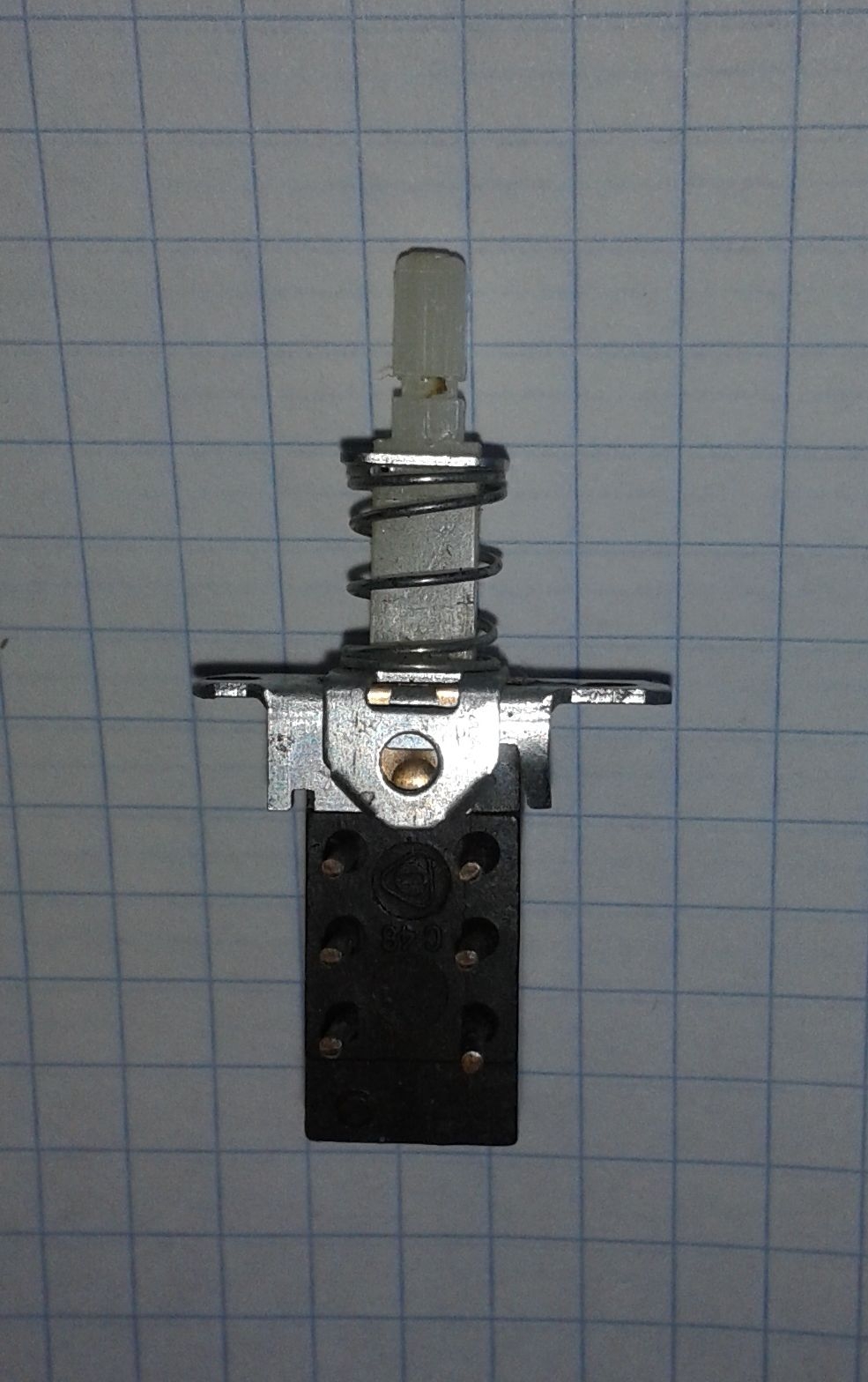
    Independent isostats had a completely different structure. Each had its own elastic plate and a corresponding groove in which a special short rod with rounded ends was placed. Each time the switch was pressed, its status changed to reverse (on / off). The same type of isostats devoid of this plaque and rod became so-called momentary, i.e. they were buttons when necessary.
  • #7 17055076
    Janusz athashtshgfza
    Level 6  
    Posts: 86
    Rate: 34
    It's good but maybe even a little more info although very helpful post and thanks in advance ?
  • Helpful post
    #8 17055115
    zybex
    Helpful for users
    Posts: 15892
    Help: 2093
    Rate: 2919
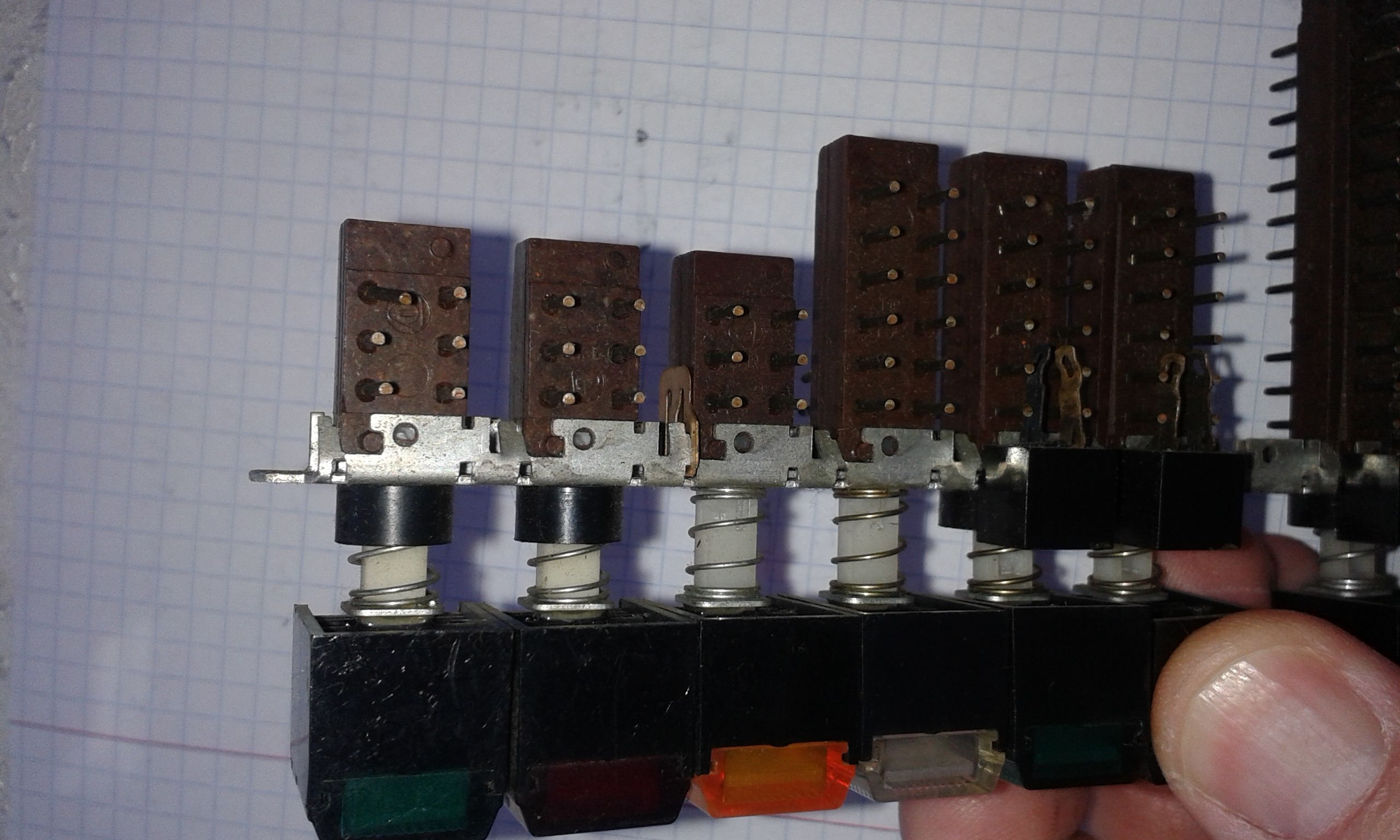
    For a specific example, I am posting a photo of isostat type switches with two dependent units and two buttons.
    What is it and how does isostat work?

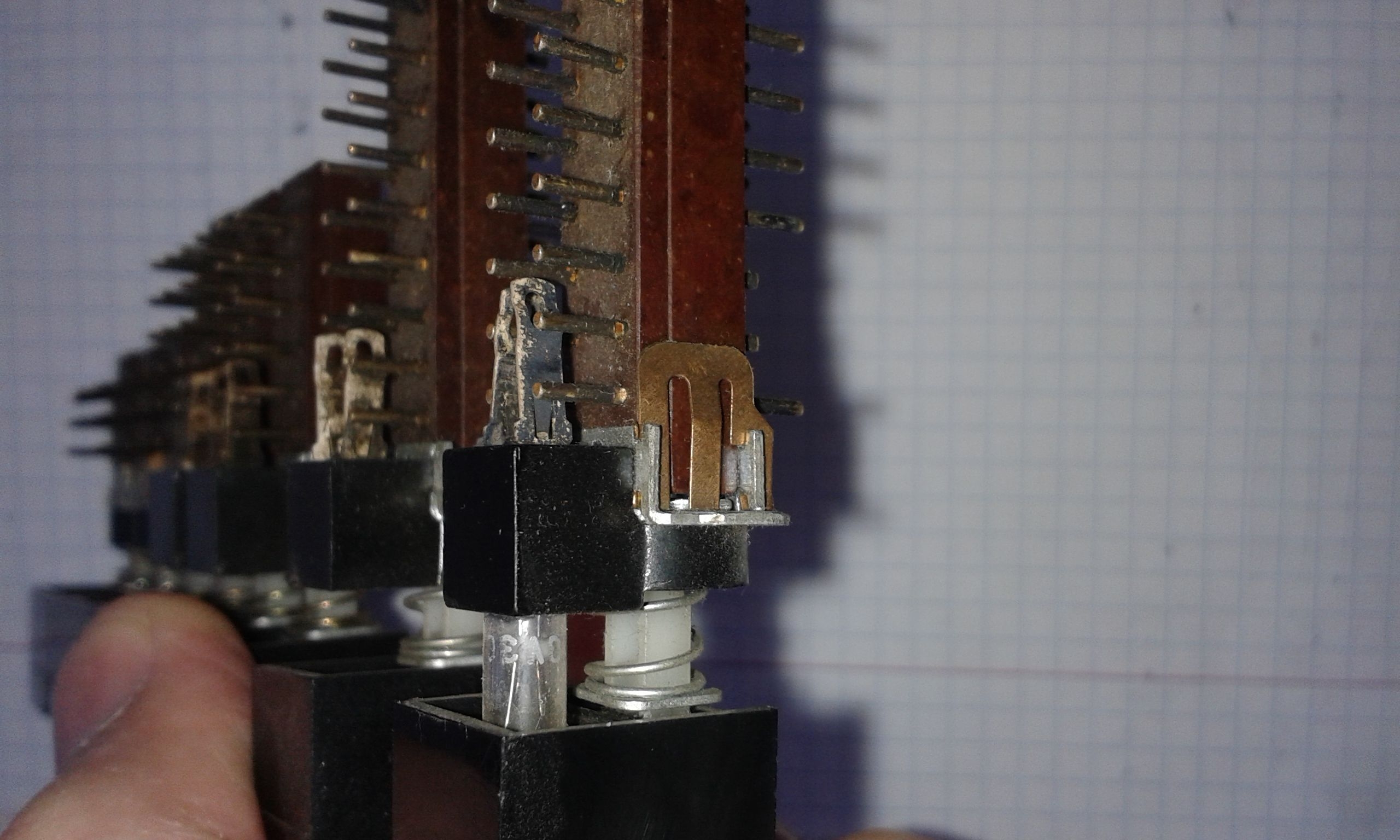
    Looking at the picture, first there are two buttons (with visible stops), then two switches dependent on each other and then four switches dependent on each other. As you can see in the picture, the latter are even more spaced. In addition to what is also visible, isostats have different lengths but it is always a multiple of three pins.

    Springy plates in the right places.

    What is it and how does isostat work?

    What is it and how does isostat work?

    Ps. The round holes, which can be seen in the mounting rail of the individual switches, are used to mount the previously mentioned plates with rods to create independent switches. Of course, the middle elements are of a slightly different construction.
  • ADVERTISEMENT
  • #9 17055143
    Janusz athashtshgfza
    Level 6  
    Posts: 86
    Rate: 34
    Sorry that I am so inquisitive but explain to me how this strip with a particular switch works, or how it happens that if I press one it will pop out the other? This is a general question and does not refer to the photo you posted
  • Helpful post
    #10 17055157
    zybex
    Helpful for users
    Posts: 15892
    Help: 2093
    Rate: 2919
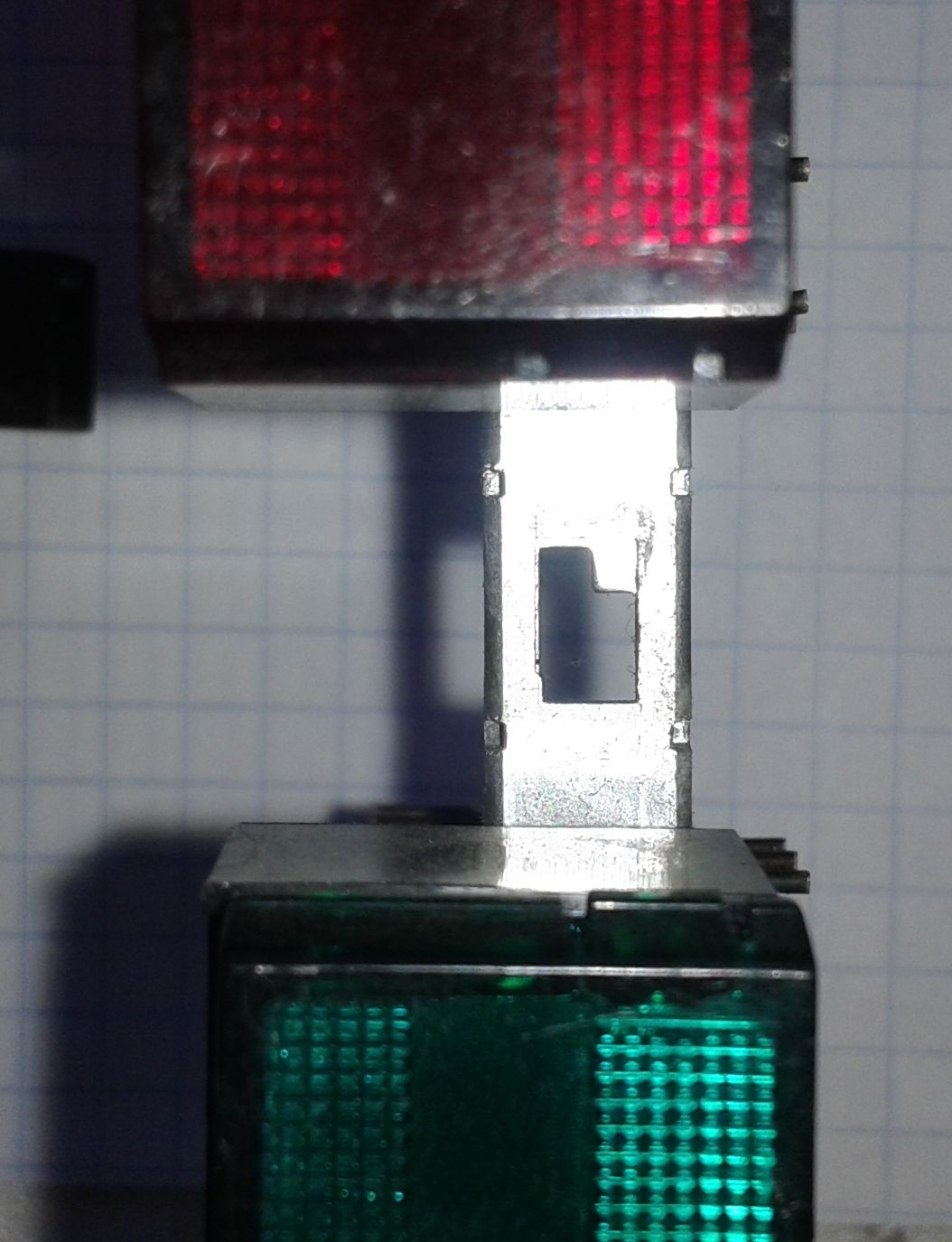
    There is a strip with holes inside, through which individual isostats pass. Each isostat of this type has oblique notches on the side. As soon as such isostat is pressed, the aforementioned slat (rail) is pushed to the side, which always returns to its place, thanks to this elastic plate on the side. It's a kind of latch.
  • #11 17055159
    zster

    Level 28  
    Posts: 857
    Help: 136
    Rate: 69
    Go to a good electronics store, some stock exchange or just order one or several isostats from Alle..oa you will be able to disassemble, examine, x-ray, combine and you will see how it is made. Hands fall - a paper to do and nothing of its own invention, but in fact everything is on Google ....
    Company Account:
    Pracownia Elektroniczna Zdzisław Kasprzyk
    Podegrodzie, Podegrodzie, 33-386 | Company Website: z-ster.pl
  • #12 17055173
    zybex
    Helpful for users
    Posts: 15892
    Help: 2093
    Rate: 2919
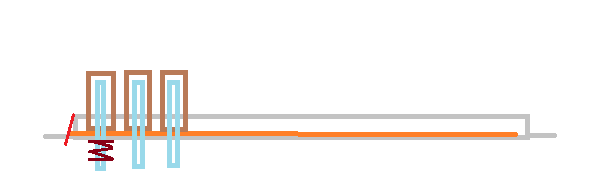
    The pawl, i.e. this inner rail, has a "tooth" which retracts when any isostat in the dependent unit is pressed.

    What is it and how does isostat work?

    By the way, I found a single independent isostat here.

    What is it and how does isostat work?
  • Helpful post
    #13 17055176
    sp3ots
    Level 38  
    Posts: 3065
    Help: 523
    Rate: 673
    What is it and how does isostat work?
    Have more like this dependent Izostat.
  • #14 17055187
    zybex
    Helpful for users
    Posts: 15892
    Help: 2093
    Rate: 2919
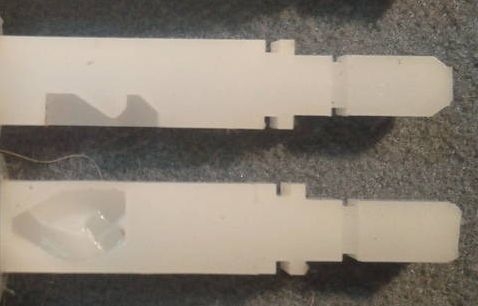
    The difference between the independent and dependent slider is this.

    What is it and how does isostat work?

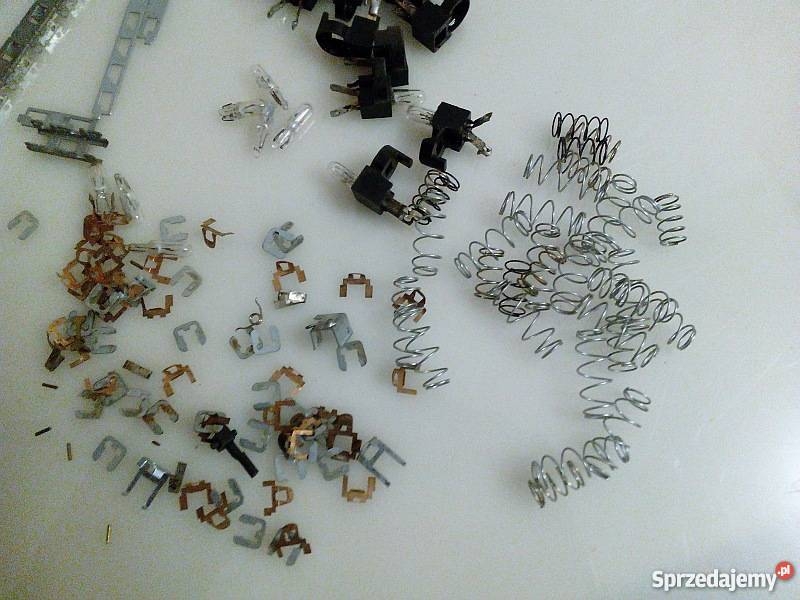
    And a photo on which you can see the aforementioned rail for dependent isostats (left side at the top) and below, among others said rods (pins) and elastic plates for dependent isostats. Photo found on the net.

    What is it and how does isostat work?
  • #15 17055215
    Janusz athashtshgfza
    Level 6  
    Posts: 86
    Rate: 34
    Thank you very much for having sacrificed my time, of course I could have slaughtered the net but thanks to you I understood how it works. Thanks a lot
    Added after 7 [minutes]:
    I already know how its symbol might work, would it be useful to me?
  • #17 17055408
    goldi74
    Level 43  
    Posts: 8058
    Help: 1367
    Rate: 1530
    sp3ots wrote:
    From the provided link it appears that we are writing about Izostatach!

    Just because the name is incorrect in the link does not mean we have to duplicate it. The correct name is Isostat and you should stick to it.
  • #18 17055539
    Freddy
    Level 43  
    Posts: 19997
    Help: 1394
    Rate: 2806
    sp3ots wrote:
    Symbol, e.g. here:
    http://www.cyfronika.com.pl/p_izostat.htm
    From the provided link it appears that we are writing about Izostatach!
    Whereas with THIS . THIS dozens of others, and as well as the Unitra catalog shows that isostat :) actually according to the BN-77 / 3384-02 / 00 standard. Segment key switches :)
📢 Listen (AI):

Topic summary

✨ Isostats are types of switches used in various electronic devices, including landline telephones and radios. They can be categorized into dependent and independent types. Dependent isostats are mechanically coupled, meaning that pressing one switch can cause others to activate or deactivate, while independent isostats operate independently of each other. The construction of these switches varies; dependent isostats often feature special cuts and springy plates, while independent ones have elastic plates and rods that change their status upon activation. The discussion also highlights the mechanical and electrical coupling of isostats, explaining how pressing one switch can affect others in a dependent configuration. Visual aids and links to images of isostat types were shared to enhance understanding.
Generated by the language model.

FAQ

TL;DR: 70 % of Unitra radios used Isostat segment switches [Unitra, 1985]; "Each isostat can be configured freely" [Elektroda, zybex, post #17055053] They are modular slide switches whose rail-latch decides if buttons work singly (dependent) or stay latched individually (independent).

Why it matters: Knowing the latch type avoids shorted ranges and burnt contacts in vintage gear.

Quick Facts

• Contact rating: 1 A / 250 VAC, 25 W DC max [Unitra, 1985] • Mechanical life: Approx. 10 000 cycles per slider [C&K, 2020] • Pitch: 3 pins per 7 mm module; lengths are 3, 6, 9… pins [Elektroda, zybex, post #17055115] • Polish standard: BN-77/3384-02/00 “Segment key switches” [Elektroda, Freddy, post #17055539] • NOS price: €1–3 per module (2023 online listings) [Allegro, 2023]

1. What is an Isostat and why is it called a segment key switch?

An Isostat is a modular slide switch made of identical 3-pin "segments" that you stack on a rail. Each segment changes state when its slider moves, so catalogues call it a segment key switch [Unitra, 1985].

2. How do dependent and independent Isostats differ mechanically?

Dependent modules share a spring-loaded rail with a single tooth; pressing one slider shifts the rail, releasing any other engaged slider [Elektroda, zybex, post #17055157] Independent modules each carry a separate elastic plate and short pin, so every slider latches or releases on its own [Elektroda, zybex, post #17055053]

3. How does the latch strip make one button pop out another?

The common rail sits in side grooves cut at an angle on every dependent slider. When you press a slider, its bevel pushes the rail sideways; the rail’s tooth lifts other sliders out of their detents, forcing them to pop up [Elektroda, zybex, post #17055173]

4. How are the electrical contacts arranged and what circuits can they switch?

Each 3-pin segment is a single-pole, double-throw (SPDT) switch. The centre pin is common; the outside pins connect alternately when the slider toggles. With silvered contacts rated 1 A at 250 VAC, they can switch mains-level or logic circuits [Unitra, 1985].

5. What ratings and standards apply?

Isostats follow Polish BN-77/3384-02/00; typical units handle 1 A, 250 VAC, withstand 1 500 V dielectric test, and last 10 000 cycles [Unitra, 1985; C&K, 2020]. A 2019 teardown showed contact resistance under 50 mΩ after 5 000 cycles—a 5 % rise from new, still within spec [Nowak, 2019].

6. Where were Isostats commonly used?

They controlled wave-band ranges in ZRK/Unitra radios, line selection in ZAS-2 secretary phones, and function selection in cassette decks [Elektroda, krzysiozak, post #17055004] Later, cost cutbacks replaced them with membrane keys.

7. How can I decode markings like “1Z4I5”?

Manufacturers use shorthand: first figure = number of independent sliders (Z — ‘zależny’ means dependent, I — ‘independent’). “1Z4I5” means one dependent block, four independent blocks, five total sliders. Pin pitch still stays 3 pins per slider [Cyfronika catalogue].

8. How do I convert a dependent slider to a momentary push button?

  1. Remove the module from the rail.
  2. Take out the elastic plate and detent rod.
  3. Re-insert the slider: without the detent it returns when you release it, acting momentarily [Elektroda, zybex, post #17055053]

9. What are common failure modes and fixes?

Edge-case: If the rail warps, two dependent sliders can stay engaged together, shorting ranges. Clean contacts with IPA; replace fatigued springs. If bounce exceeds 5 ms on test, replace the segment [Service Note, 1992].

10. How can I safely stack or combine modules?

Keep the rail straight; uneven tension causes mis-latching. Always stack in multiples of three pins and clamp with the end plate before soldering. Solder heat above 260 °C for >5 s can melt nylon bodies [C&K, 2020].

11. Is there a schematic symbol for Isostat?

Most Polish schematics draw each segment as a SPDT switch and label the assembly "ISOSTAT" with segment count; the Cyfronika catalogue shows an eight-segment block symbol with dotted enclosure [Cyfronika, 2010].

12. Where can I buy replacements and what do they cost?

NOS modules appear on Allegro, eBay and Polish ham fairs for €1–3 each; full eight-segment assemblies fetch €10–15 [Allegro, 2023]. Modern C&K replacements cost about €4 per segment but need adapter boards.
Generated by the language model.
ADVERTISEMENT