logo elektroda
logo elektroda
X
logo elektroda

Connecting a Portable Washing Machine to Sink: One-Tap Hot & Cold, No Special Drain Setup

Melaania3 21342 25
Best answers

Can I hook up a portable washing machine to a sink with a single hot/cold mixer tap and no dedicated drain, then disconnect it after each wash?

Yes, but not as a pure no-modification, plug-and-play setup: you need a proper cold-water connection and a proper drain arrangement [#17149547][#17149557][#17149807] For the drain, you can hang the hose over the sink edge, but it should be secured so it cannot fall out and flood the kitchen; alternatively, replace the siphon with one that has a washing-machine outlet [#17149250][#17149573] For the water supply, the replies say to fit a tee/combination valve on the cold-water line under the sink or at the pipe coming from the wall, rather than trying to connect directly to the mixer tap [#17149547][#17149557][#17149807] If the machine is about 2.5 m from the sink, that distance is acceptable with the right hose cross-section and routing [#17149535][#17149573] One reply also notes that the faucet shown appears to be a special setup for a flow heater, so the cold-water feed and valve location need to be checked first [#17149647][#17149793]
Generated by the language model.
ADVERTISEMENT
This content has been translated flag-pl » flag-en View the original version here
  • #1 17149183
    Melaania3
    Level 6  
    Hello and welcome. I live in a very small apartment where I am forced to use a camping washing machine due to lack of space for a washing machine. Recently, I was wondering whether when buying an automatic washing machine it is possible to install it in the sink only for the duration of washing and then put it in a convenient place. Unfortunately, there is no special drain in the sink and also the sink has only one tap from which hot and cold water flows. I hope this solution is possible. Thanks in advance for any suggestions and help. Regards.
  • ADVERTISEMENT
  • #2 17149250
    jdubowski
    Tube devices specialist
    Melaania3 wrote:
    whether when buying an automatic washing machine it is possible to install it in the sink


    In terms of water supply - there are such things: Connecting a Portable Washing Machine to Sink: One-Tap Hot & Cold, No Special Drain Setup

    Drain - hang the washing machine on the edge of the sink (it is worth securing it somehow, because in the event of the hose falling out of the sink, the kitchen "floats").

    The question of putting the washing machine down is more debatable, because the weighs are usually> 60 kg ...
  • ADVERTISEMENT
  • #3 17149349
    Parowy
    Level 22  
    Hello.

    Melaania3 wrote:
    set aside in a convenient place.


    How far is it from this convenient place to the sink?

    Connecting the washing machine's drain permanently is not a problem, as is the cold water supply.
    The question of the distance from the connections.

    Take a picture of the sink and the faucet to help you understand the situation :)
  • ADVERTISEMENT
  • #4 17149487
    Melaania3
    Level 6  
    Thank you very much for your answer. My faucet looks like the first photo attached. Should I also? Such things? what you show in the picture, connect directly to the tap or unscrew the tap and confuse the valve that the pan presents then in place of the tap. When it comes to putting the washing machine down, I meant the pallet on wheels, which can be seen in the second attached photo. Thank you very much again. Regards.
    Attachments:
    • Connecting a Portable Washing Machine to Sink: One-Tap Hot & Cold, No Special Drain Setup EA0B3031-AC42-4F52-A5EB-4D588D8759ED.jpeg (80.61 KB) You must be logged in to download this attachment.
    • Connecting a Portable Washing Machine to Sink: One-Tap Hot & Cold, No Special Drain Setup 7E48B229-22CA-4396-9107-D069EF64170C.jpeg (110.56 KB) You must be logged in to download this attachment.
    • Connecting a Portable Washing Machine to Sink: One-Tap Hot & Cold, No Special Drain Setup 5B762EC9-D747-4DAD-8E23-7D3DAF16362D.jpeg (726.84 KB) You must be logged in to download this attachment.
  • #5 17149520
    Melaania3
    Level 6  
    There is also an option where the washing machine could be located without the need to move it, but then it would be about 2.5 meters from the sink. Would it be an obstacle or would the washing machine function properly if it was equipped with an appropriate length of drain pipe and water supply?

    Added after 1 [minutes]:


    How far is it from this convenient place to the sink?

    Connecting the washing machine's drain permanently is not a problem, as is the cold water supply.
    The question of the distance from the connections.

    Take a picture of the sink and the faucet to help you understand the situation :) [/ quote]

    There is also an option where the washing machine could be located without the need to move it, but then it would be about 2.5 meters from the sink. Would it be an obstacle or would the washing machine function properly if it was equipped with an appropriate length of drain pipe and water supply?
  • #6 17149535
    Krzysztof Kamienski
    Level 43  
    Melaania3 wrote:
    There is also an option where the washing machine could be placed without the need to move it, but then it would be about 2.5 meters from the sink. Would it be a problem, or would the washing machine function properly if the drain pipe and the water pipe were of appropriate length?
    With the right cross-section and arrangement of this "pipe", yes. But what about water supply to the washing machine? The plumber has to install a valve next to the faucet by the sink.
  • #7 17149547
    Parowy
    Level 22  
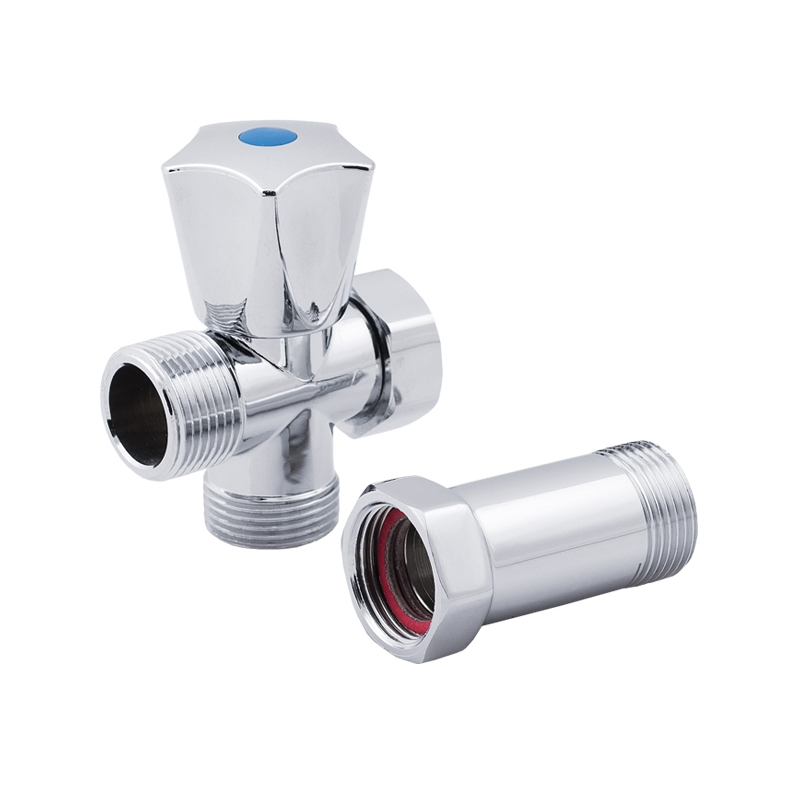
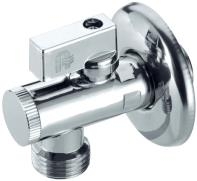
    If the faucet protrudes from the sink 99% under the sink you have valves, such as:

    Connecting a Portable Washing Machine to Sink: One-Tap Hot & Cold, No Special Drain Setup

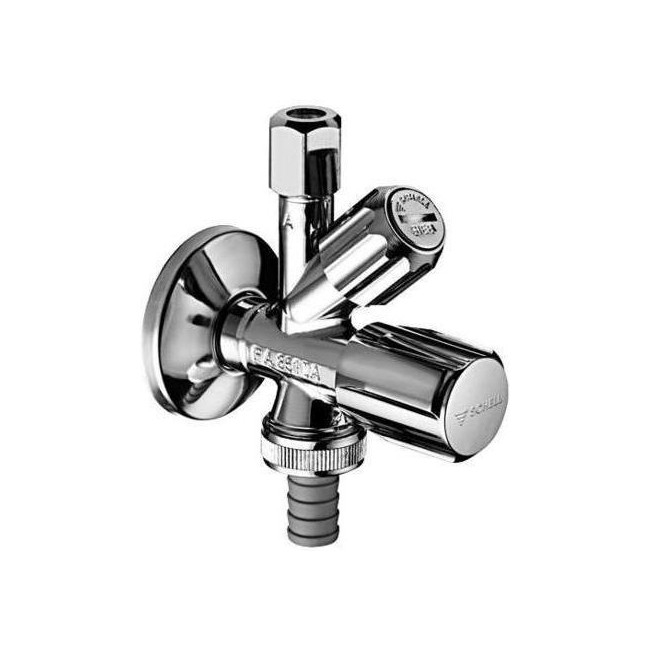
    Change the one in cold water to the so-called valve. Combo to connect 3/8 inch hose to the battery and 3/4 inch to the washing machine, such as:

    Connecting a Portable Washing Machine to Sink: One-Tap Hot & Cold, No Special Drain Setup
    Battery from above, washing machine from below.

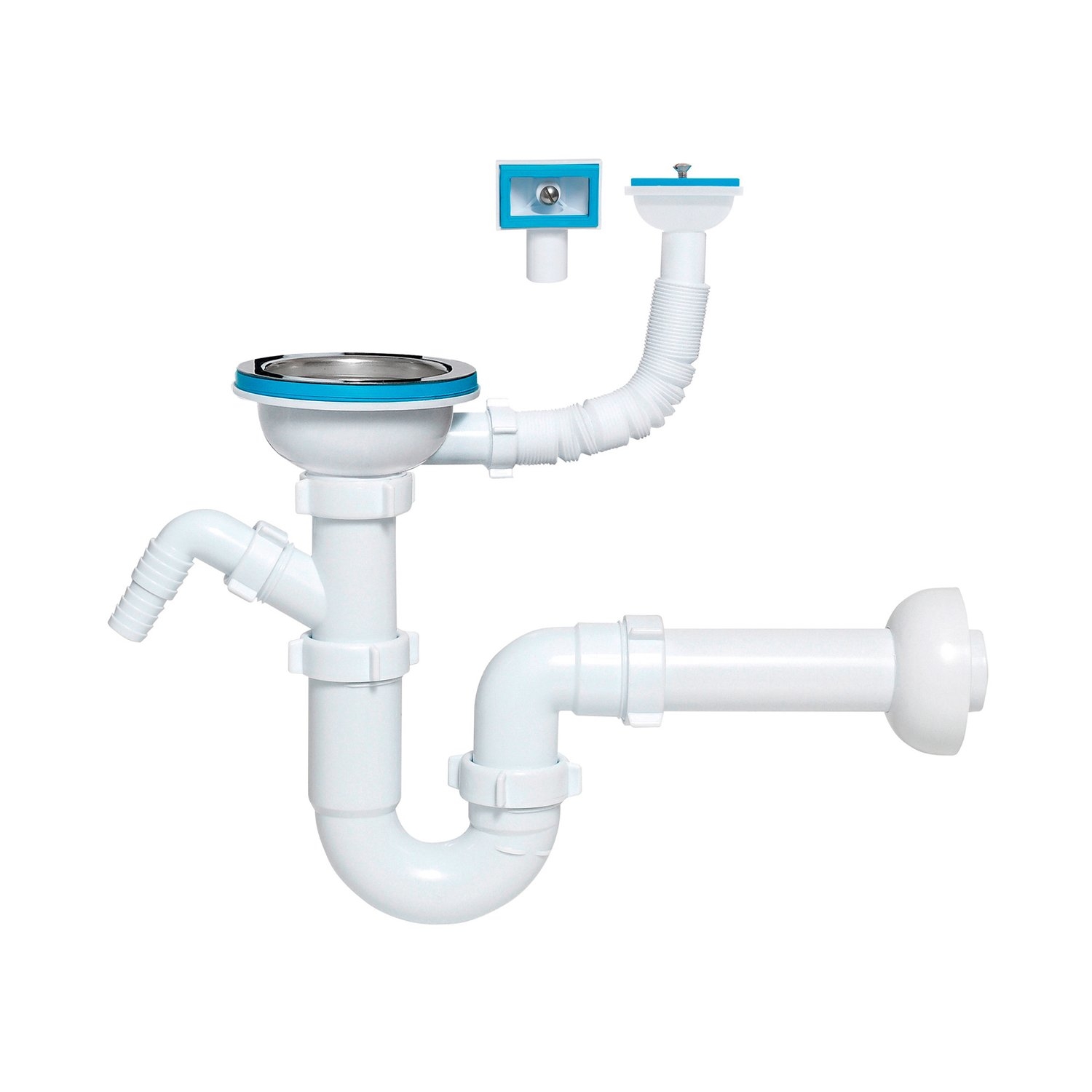
    The sink siphon may have a separate spigot for connecting the washing machine / dishwasher drain, if you do not have to purchase it, this type:

    Connecting a Portable Washing Machine to Sink: One-Tap Hot & Cold, No Special Drain Setup
    That left pucker is what it is.


    I asked about the distance of the place from the sink, because maybe it would be possible to connect everything permanently, without having to move the washing machine.

    Edit:
    My friend beat me :)
  • #8 17149551
    Melaania3
    Level 6  
    Here is a picture of the sink and faucet
    Attachments:
    • Connecting a Portable Washing Machine to Sink: One-Tap Hot & Cold, No Special Drain Setup E94FC134-A973-4386-86E9-4FBE55E5D6BC.jpeg (827.87 KB) You must be logged in to download this attachment.
    • Connecting a Portable Washing Machine to Sink: One-Tap Hot & Cold, No Special Drain Setup F5C80F30-9D53-43FB-971D-DC724A7FC9A3.jpeg (1.83 MB) You must be logged in to download this attachment.
  • #9 17149557
    jdubowski
    Tube devices specialist
    Melaania3 wrote:
    I should connect these "things" that you show in the picture directly to the tap or also unscrew the tap and matte the valve that you are presenting in place of the tap.


    No - in this case, you need to connect to the place where the pipe comes out of the wall. The disassembly will be more difficult, so it will be easier to install an additional valve on the sink to connect the washing machine hose.
  • #10 17149565
    Melaania3
    Level 6  
    There are no valves under the sink.
  • #11 17149570
    Krzysztof Kamienski
    Level 43  
    @ Melaania3 What about the water pipes for the battery? None in the photo. An additional valve is installed there.
  • #12 17149573
    Parowy
    Level 22  
    The siphon would definitely be replaced, the power supply from the combo valve can be extended with a hose of the appropriate length, properly positioned / attached.

    Similarly with the drain, it can also be extended or a piece of sewage system can be connected with a 32 mm pipe.

    These 2.5 meters are in a straight line?
  • #13 17149578
    Melaania3
    Level 6  
    Krzysztof Kamienski wrote:
    Melaania3 wrote:
    There is also an option where the washing machine could be placed without the need to move it, but then it would be about 2.5 meters from the sink. Would it be a problem, or would the washing machine function properly if the drain pipe and the water pipe were of appropriate length?
    With the right cross-section and arrangement of this "pipe", yes. But what about water supply to the washing machine? The plumber has to install a valve next to the faucet by the sink.

    You can't just connect the washing machine to the battery that is already there and use the sink for the drain, then remove it and use the connection only for washing. It needs the simplest possible solution. Thank you.

    Added after 5 [minutes]:

    I need the simplest solution possible. I am afraid that I cannot change or dismantle anything because the apartment is rented and the owner does not agree to it. Thank you.
    Attachments:
    • Connecting a Portable Washing Machine to Sink: One-Tap Hot & Cold, No Special Drain Setup 570F24C8-7EC6-4342-813F-CA74A1393B66.jpeg (2.51 MB) You must be logged in to download this attachment.
  • ADVERTISEMENT
  • #14 17149603
    Parowy
    Level 22  
    Melaania3 wrote:
    You cannot simply connect the washing machine to a battery that is already there and use the sink for the drain, then remove it and use it only for washing. I need the simplest solution possible. Thank you.


    Of course you can.

    You can also wash it in a bowl, it will be even easier :)
    A joke of course, no offense :)

    A simple solution at the beginning, in later use may turn out to be very inconvenient.

    Wouldn't it be better to invest a little first and then enjoy the ergonomics of the solution?
  • #15 17149612
    Melaania3
    Level 6  
    Connecting a Portable Washing Machine to Sink: One-Tap Hot & Cold, No Special Drain Setup Connecting a Portable Washing Machine to Sink: One-Tap Hot & Cold, No Special Drain Setup
    Krzysztof Kamienski wrote:
    @ Melaania3 What about the water pipes for the battery? None in the photo. An additional valve is installed there.


    I need the simplest solution possible. It is not possible to dismantle old cables and install new ones because the owner of the rented apartment does not agree to it. Thank you.
    Attachments:
    • Connecting a Portable Washing Machine to Sink: One-Tap Hot & Cold, No Special Drain Setup 570F24C8-7EC6-4342-813F-CA74A1393B66_1090955.jpeg (2.51 MB) You must be logged in to download this attachment.
  • #16 17149627
    Melaania3
    Level 6  
    Parowy wrote:
    Melaania3 wrote:
    You cannot simply connect the washing machine to a battery that is already there and use the sink for the drain, then remove it and use it only for washing. I need the simplest solution possible. Thank you.


    Of course you can.

    You can also wash it in a bowl, it will be even easier :)
    A joke of course, no offense :)

    A simple solution at the beginning, in later use may turn out to be very inconvenient.

    Wouldn't it be better to invest a little first and then enjoy the ergonomics of the solution?


    As I mentioned in my reply to other users, I cannot make any modifications because the owner of the apartment does not agree. Thank you.
  • #17 17149631
    Parowy
    Level 22  
    Melaania3 wrote:
    the apartment is rented


    It changes things.


    One thing makes me wonder, three hoses come out of the battery, two for valves (which, in fact, are not there and should be), and the third hose?
  • #18 17149637
    Krzysztof Kamienski
    Level 43  
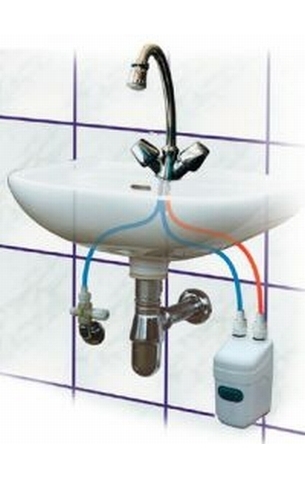
    @ Melaania3 Dear Melanie, there is no need to dismantle anything here. :D on the contrary. Fit the valve upstream of the hose with cold water. After extension, hang the drain hose on the sink.
  • #19 17149639
    Melaania3
    Level 6  
    Parowy wrote:
    Melaania3 wrote:
    the apartment is rented


    It changes things.


    One thing makes me wonder, three hoses come out of the battery, two for valves (which, in fact, are not there and should be), and the third hose?


    He is behind the boiler. I suppose two are connected to the boiler and the third to the water directly.
  • Helpful post
    #20 17149647
    Krzysztof Kamienski
    Level 43  
    Parowy wrote:
    three hoses come out of the battery, two for valves
    Power supply and drain of the boiler - a special battery. But why are two coming out of the wall?
  • #21 17149654
    Melaania3
    Level 6  
    Krzysztof Kamienski wrote:
    @ Melaania3 Dear Melanie, there is no need to dismantle anything here. :D on the contrary. Fit the valve upstream of the hose with cold water. After extension, hang the drain hose on the sink.


    Thank you very much, Mr. Krzysztof. I will take your suggestions into account as much as possible.
  • #22 17149667
    Krzysztof Kamienski
    Level 43  
    @ Melaania3 Thank you :D The only problem may be the need to shut off the water supply outside the apartment for a few minutes. And that's it.
  • #23 17149702
    Parowy
    Level 22  
    Krzysztof Kamienski wrote:
    Boiler power supply and drain - a special battery.


    Krzysztof, could you elaborate on the topic?
    I am asking out of curiosity.
  • #24 17149736
    Krzysztof Kamienski
    Level 43  
    @steam A faucet dedicated to an instantaneous water heater. Opening the hot water valve directs its flow to the heater (or boiler) through the third hose, and from the boiler to the hot water spout with the second hose. Cold unchanged.

    Added after 4 [minutes]:

    @steam More like a flow heater.
  • #25 17149793
    Parowy
    Level 22  
    Key words :D
    Krzysztof Kamienski wrote:
    instantaneous water heater.


    So what the two hoses come out of is not a wall or a boiler, but a flow water heater, it means that the cold water supply to the system is located behind the heater and there theoretically should be a valve installed, which could be changed into a combo valve.
    Relatively low cost.

    Connecting a Portable Washing Machine to Sink: One-Tap Hot & Cold, No Special Drain Setup


    But it will not be at all convenient when you need a washing machine there: plug in - do the washing - unplug.

    It remains to match the washing machine's power connection to the end of the spout, instead of the "strainer".

    Melanio, and the owner admits that you would like to do the laundry?
  • #26 17149807
    Krzysztof Kamienski
    Level 43  
    Even an ordinary tee shut-off valve. "PhDs" again ?? :D . I do not see the slightest problem with connecting the washing machine inside this cabinet under the sink.

Topic summary

✨ The discussion revolves around the feasibility of connecting a portable washing machine to a sink in a small apartment without a dedicated drain setup. The user seeks advice on how to install the washing machine temporarily at the sink, which has a single tap providing both hot and cold water. Various solutions are proposed, including the installation of a combo valve to connect the washing machine to the existing faucet and the use of a drain hose that can be hung over the sink. Participants emphasize the importance of ensuring proper water supply and drainage, considering the distance from the sink, and the need for minimal modifications due to rental restrictions. Suggestions include using a flow water heater setup and ensuring that the washing machine can be easily connected and disconnected for use.
Generated by the language model.

FAQ

TL;DR: A 6 kg compact washer needs only about 43 L per wash [Bosch, 2023]; “Fit the valve upstream of the hose with cold water” [Elektroda, Krzysztof Kamienski, post #17149637] With a combo tee and 2.5 m hoses, you can connect a washing machine to a single-tap sink without drilling or landlord approval. Why it matters: renters gain full-size laundry convenience while preserving fixtures.

Quick Facts

• Standard washer inlet thread: 3/4" BSP, 26.4 tpi [ISO 228-1]. • Combo stop-valve price: approx. €12–€18 in EU DIY stores [LeroyMerlin, 2024]. • Max safe drain-hose height: 60–100 cm above floor, model-dependent [Whirlpool, 2022]. • Certified hose-extension length: up to 3 m, pressure-rated 10 bar [Viega, 2023]. • Average spin-cycle discharge rate: 15–20 L /min [Electrolux, 2022].

1. Can I connect an automatic washing machine directly to a sink with only one mixer tap?

Yes. Add a 3/8" × 3/4" combo stop-valve to the cold line under the sink, then screw the washer hose onto the 3/4" outlet [Elektroda, Parowy, post #17149547] No permanent drilling or faucet removal is required.

2. Do I need a separate hot-water feed?

No. Modern European washers heat their own water; a single cold feed is enough [Bosch, 2023 manual]. Energy use rises ~10 % when inlet water is below 15 °C, but cycle time remains unchanged [Electrolux, 2022].

3. What exactly is a combo stop-valve and how do I fit it?

It is a T-shaped valve with 3/8" inlet and two outlets: one 3/8" to the faucet and one 3/4" to the appliance. 1. Shut building water. 2. Unscrew existing cold hose. 3. Screw the combo valve on, then reconnect both hoses. Total time: ≈10 minutes [Elektroda, Krzysztof Kamienski, post #17149667]

4. How far can the machine sit from the sink?

Manufacturers approve up to 3 m horizontal and 1 m vertical for both inlet and drain hoses when extensions are pressure-rated [Whirlpool, 2022]. The 2.5 m distance mentioned will work if hoses are routed without kinks [Elektroda, Krzysztof Kamienski, post #17149535]

5. How do I secure the drain hose to avoid kitchen flooding?

Hook the hose over the sink rim with the U-bracket supplied, then tie a cord to the faucet body. This prevents accidental dislodging during spin, which can eject 15–20 L /min and flood a floor in <2 minutes [Electrolux, 2022].

6. Can I extend the drain hose myself?

Yes. Use a 32 mm extension kit with rubber sleeve and jubilee clips; keep joins above floor level to stop siphoning [Elektroda, Parowy, post #17149573] Maximum combined length 3 m [Whirlpool, 2022].

7. Will extending hoses void the washer warranty?

No, provided you use manufacturer-approved kits and keep within length and height specs stated in the manual [Bosch, 2023]. DIY drilling or pump modification would void coverage.

8. What parts and tools are needed for a non-invasive install?

Parts: combo stop-valve, 2 m–3 m braided inlet hose, 32 mm drain-hose extension, hose clamp, and plastic U-bracket. Tools: adjustable wrench, Teflon tape, bucket, and towel. All items fit in a small toolbox and cost <€40 total [LeroyMerlin, 2024].

9. Edge-case: What happens if the drain hose falls out mid-cycle?

The pump can expel up to 20 L in 60 seconds, rapidly flooding cabinets and shorting nearby sockets. Always tether the hose and never leave the apartment during a cycle [Elektroda, jdubowski, post #17149250]

10. How-To: three-step daily hook-up routine for renters

  1. Wheel washer next to sink and lock casters.
  2. Screw inlet hose onto combo valve hand-tight; hang drain hose on sink.
  3. Plug machine and run cycle. Total removal time after wash: ~2 minutes—just reverse steps.

11. Can I share the sink with an electric instantaneous water heater?

Yes. The heater uses a special three-hose faucet. The combo valve attaches to the heater’s cold feed line before it enters the faucet, leaving hot-water routing untouched [Elektroda, Krzysztof Kamienski, post #17149736]

12. Do I need a dedicated electrical outlet?

Use a grounded 16 A socket on a 30 mA RCD circuit. Avoid multipoint adapters; spin surge reaches 2 kW on many compact models [Bosch, 2023].

13. Could negative pressure cause the washer to self-drain?

Possible if the drain hose sits lower than the tub bottom. Maintain a 60 cm minimum rise to the sink to prevent siphoning [Whirlpool, 2022].

14. Is landlord permission usually required?

Most leases allow reversible plumbing. Because the combo valve simply screws on existing threads and leaves no marks, it is classed as minor, tenant-borne work in EU tenancy law [EU Tenancy Guide, 2023].

15. How long do braided inlet hoses last?

Typical rated life is 10 years or 2 MPa burst pressure cycles, whichever comes first [Viega, 2023]. Replace at first sign of bulging or rusted ferrules.

16. Expert tip for noise and vibration control

Place the washer on a wheeled dolly with rubber pads; lab tests show a 30 % vibration drop and easier repositioning [“Portable Appliance Vibration Study”, 2022].
Generated by the language model.
ADVERTISEMENT