logo elektroda
logo elektroda
X
logo elektroda

Title: Gurgling Siphon Under Sink: Dishwasher Issues, Aerator Installation & Possible Solutions

qerten 57888 14
ADVERTISEMENT
Treść została przetłumaczona polish » english Zobacz oryginalną wersję tematu
  • #1 18199627
    qerten
    Level 8  
    Posts: 6
    Rate: 7
    Hello,

    I have been living in a new apartment recently and unfortunately I have a problem with the sink. At certain moments of the dishwasher's operation (water is being taken, as I guess) you can hear a loud "gurgling" from the siphon.

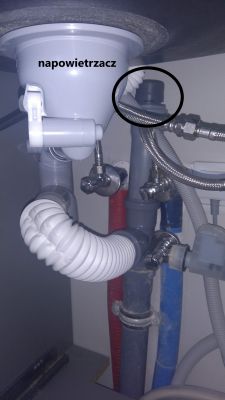
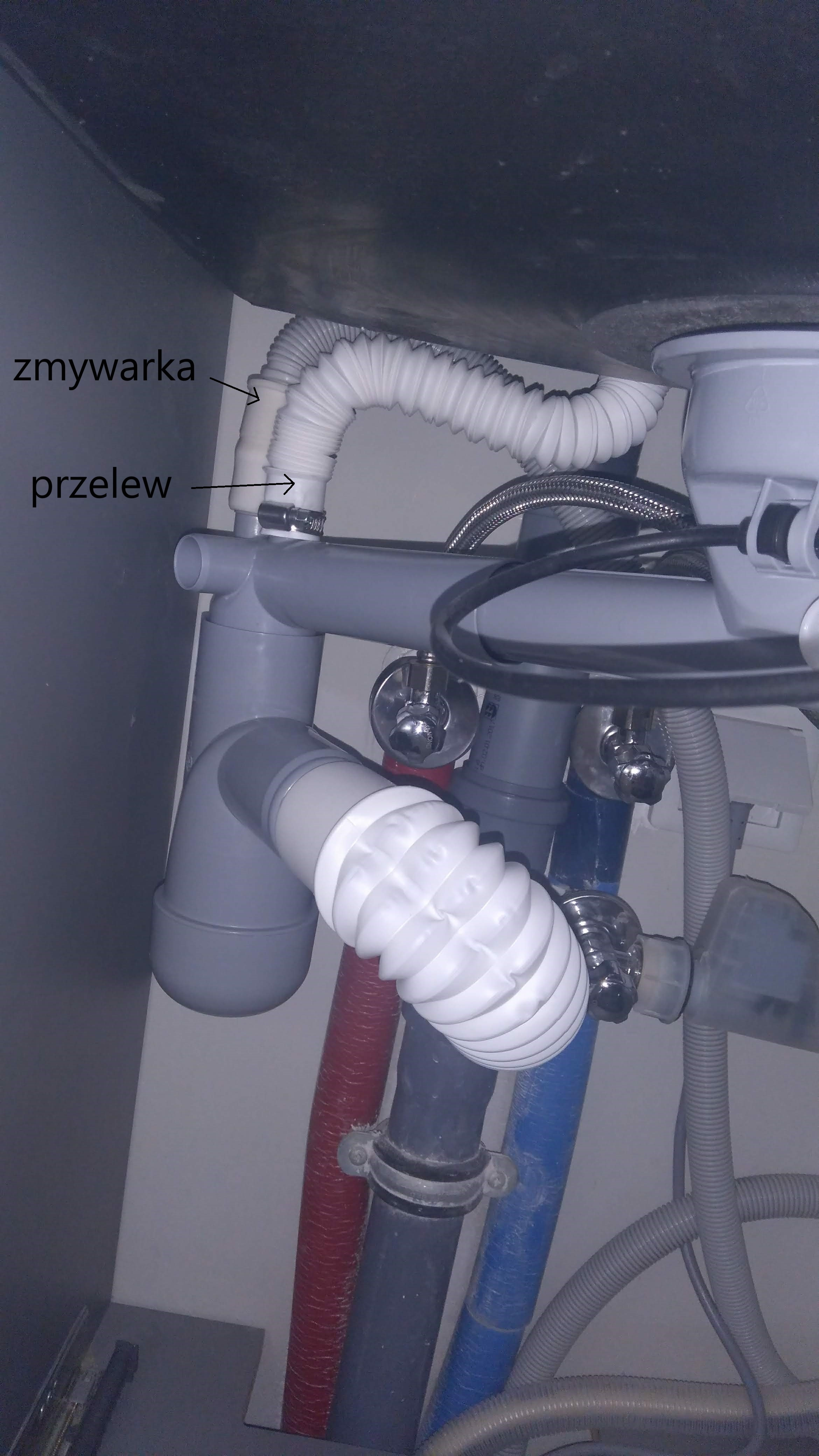
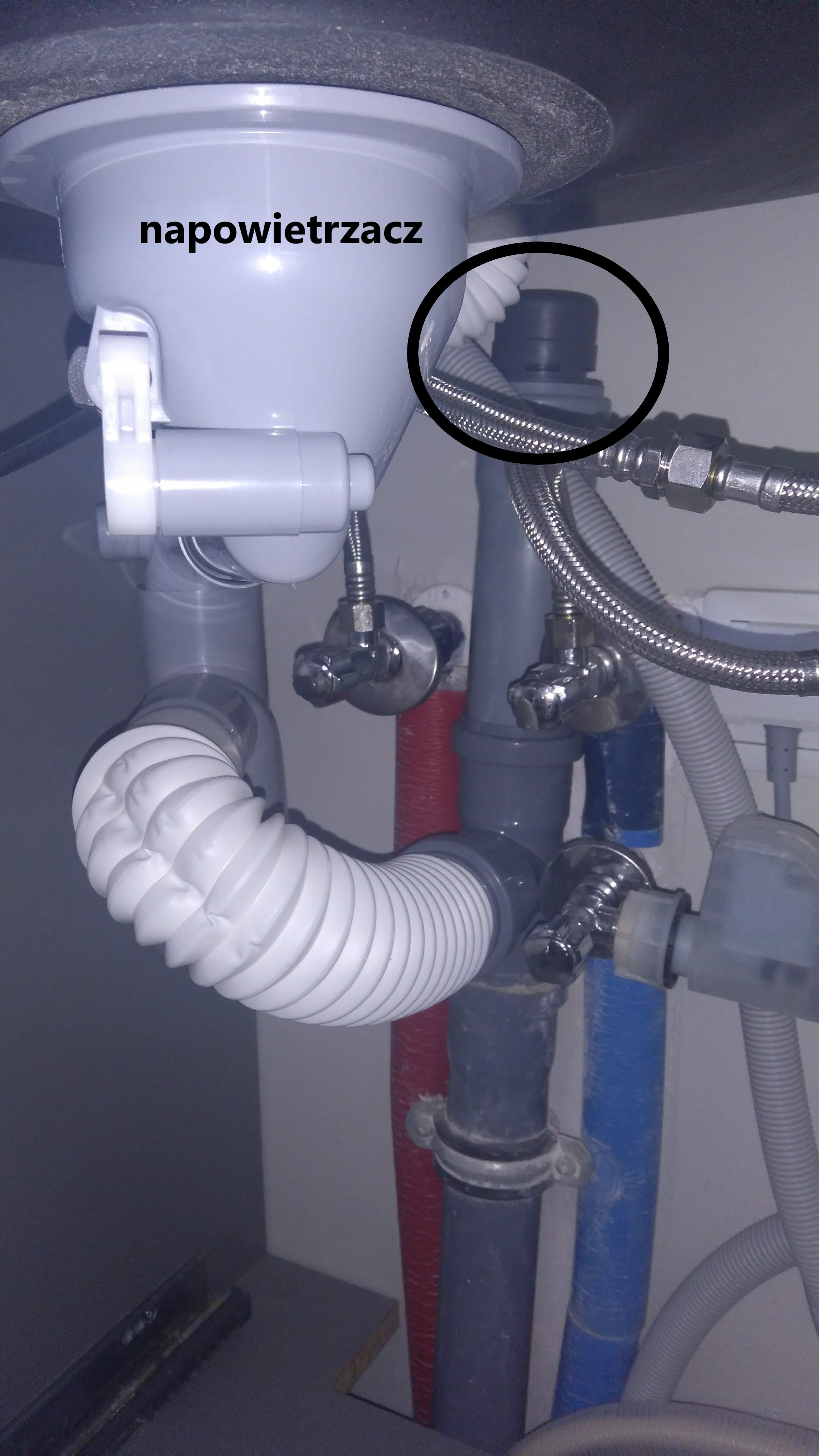
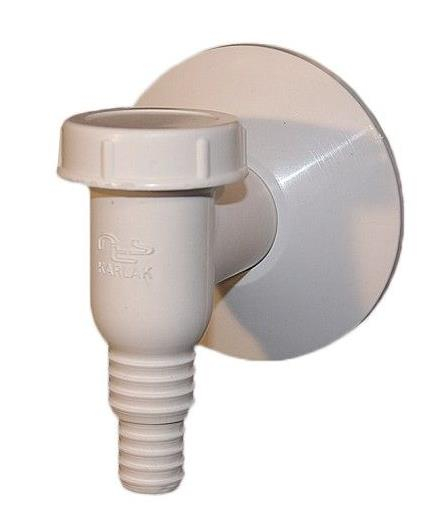
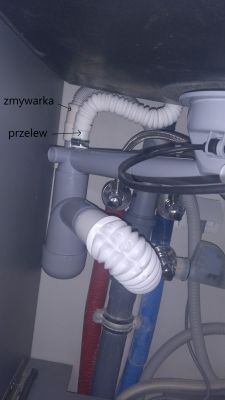
    In the first photo you can see the connection as it was done by the installer. I started to figure it out and mounted the aerator as in the second photo through the positive tee, extensions and the aerator itself. Unfortunately it didn't help and the gurgling from the dishwasher is still as it was.

    I am a layman, hence my question is whether I am doing something wrong, or maybe the aerator is installed incorrectly. I screwed the lid on the aerator all the way, there is a rubber "plug" inside, but I checked with a flashlight and it looks as if the plug does not rise from the moment of bubbling, and I guess the point is that the vacuum from the pipes lifts the plug and then air gets into the installation? If this is the case, why is the aerator not working properly?

    I will be very grateful for your help and hints.
    Title: Gurgling Siphon Under Sink: Dishwasher Issues, Aerator Installation & Possible Solutions Title: Gurgling Siphon Under Sink: Dishwasher Issues, Aerator Installation & Possible Solutions
  • ADVERTISEMENT
  • #2 18199665
    bumble
    Level 40  
    Posts: 7189
    Help: 608
    Rate: 1183
    The valve also works the other way around. It prevents the creation of a vacuum and sucking of water from the siphon, leaving it empty and then an unpleasant odor comes out. So when you drain the water somewhere, and a negative pressure is created in the installation, its task is then to open, allowing air to be sucked in, not water from the siphon. I have a washing machine connected so and you can also hear gurgling as it drains the water. This noise is probably not a gurgling sound, it just seems like it, because there is a diaphragm pump in the washing machine or dishwasher, it may sound like that. If it was only when the dishwasher is working, I would not worry about it. In my case, even the foam can be seen after washing in the sink. Such a charm. You can connect the dishwasher to the sink siphon by making a siphon on the dishwasher's duct so that it does not stink and it should be fine.
  • #3 18199683
    balonika3
    Level 43  
    Posts: 10926
    Help: 1297
    Rate: 3645
    The gurgling comes from clogged pipes. The water does not run down the wall, but along the entire cross-section of the pipe, sucking in the air behind it, which is drawn in through the siphon. Kind of like draining the wine with a snake. The only advice - a spiral.
  • ADVERTISEMENT
  • #4 18199773
    qerten
    Level 8  
    Posts: 6
    Rate: 7
    bumble wrote:
    Such a charm. You can connect the dishwasher to the sink siphon by making a siphon on the dishwasher's duct so that it does not stink and it should be fine.


    Theoretically, you can live with it, because only annoying noises, no unpleasant smells. I will try to connect the dishwasher behind the sink siphon.

    balonika3 wrote:
    The gurgling comes from clogged pipes. The water does not run down the wall, but along the entire cross-section of the pipe, sucking in the air behind it, which is drawn in through the siphon. Kind of like draining the wine with a snake. The only advice - a spiral.

    But I guess this gurgling would always be there, also when draining the water from the sink, and it is only in the dishwasher. Additionally, it's a new construction, so it's probably too early for spirals.
  • ADVERTISEMENT
  • #5 18199821
    balonika3
    Level 43  
    Posts: 10926
    Help: 1297
    Rate: 3645
    qerten wrote:
    But I guess it would always be gurgling, also when draining the water from the sink
    It's a fact. So not this after all
  • #6 18199852
    bumble
    Level 40  
    Posts: 7189
    Help: 608
    Rate: 1183
    The siphon drain should work. The siphon should dampen it.
  • #7 18200104
    piracik
    VIP Meritorious for electroda.pl
    Posts: 4060
    Help: 557
    Rate: 1969
    Moving the drain behind the siphon will stink the sewage system in the dishwasher. A hose kink is not a siphon.
    This gurgling is caused only by the high speed flow.
    It's just that not everything can flow through the siphon.
    Cleaning the siphon may help a little.
    After that, the stream from the dishwasher falls directly into the water level in the siphon. This will also make noise.
    Side approach could be better.

    Why don't you turn this tee towards the siphon and the siphons towards the tee? You would have a much shorter length of white pipe and straight.
  • #8 18200137
    bumble
    Level 40  
    Posts: 7189
    Help: 608
    Rate: 1183
    piracik wrote:
    Moving the drain behind the siphon will stink the sewage system in the dishwasher.

    Nonsense. Read exactly what I wrote.
    bumble wrote:
    by making a siphon on the dishwasher line so that it does not stink

    piracik wrote:
    Side approach could be better.

    He's to my side and hears the gurgling too. But every case is different. Anyway, those on the side are at an angle for sure.
    piracik wrote:
    Why don't you turn this tee towards the siphon and the siphons towards the tee? You would have a much shorter length of white pipe and straight.

    Perhaps there is not enough space to put two stiff pieces together.
  • #9 18200156
    piracik
    VIP Meritorious for electroda.pl
    Posts: 4060
    Help: 557
    Rate: 1969
    bumble wrote:
    Nonsense. Read exactly what I wrote.


    You see. And you read what I wrote?
    Bending the hose is not a siphon. The speed of the flow is so great that it will spit water out of such a bend and it will stink.
    Unless you wanted to add an additional siphon, but your text did not indicate anything like that.
  • #10 18200183
    bumble
    Level 40  
    Posts: 7189
    Help: 608
    Rate: 1183
    I didn't mean to bend the snake, but that should also work. It would definitely pass the slow-flow test, and I don't know. You can try as mentioned. For starters, I would just postpone and check the gurgling. And is there no non-return valve in the dishwasher for the pump? Such an eraser?
  • ADVERTISEMENT
  • #11 18200229
    ta_tar
    Level 41  
    Posts: 6438
    Help: 693
    Rate: 2027
    And how to use 50 diameter pipes on this new section by adding a tee - something like that?
    Title: Gurgling Siphon Under Sink: Dishwasher Issues, Aerator Installation & Possible Solutions
  • #12 18200262
    piracik
    VIP Meritorious for electroda.pl
    Posts: 4060
    Help: 557
    Rate: 1969
    That would be OK, although a regular siphon would have been better.

    bumble wrote:
    And is there no non-return valve in the dishwasher for the pump? Such an eraser?


    It doesn't matter if it is there or not. For dishwashers and similar products that come into contact with food, a drainage break is recommended. The siphon provides this.

    If anything were to come back, it would overflow into the sink. Will not build up pressure on the dishwasher drain.
  • #13 18201426
    qerten
    Level 8  
    Posts: 6
    Rate: 7
    Thanks to everyone for the answers, the problem was solved.

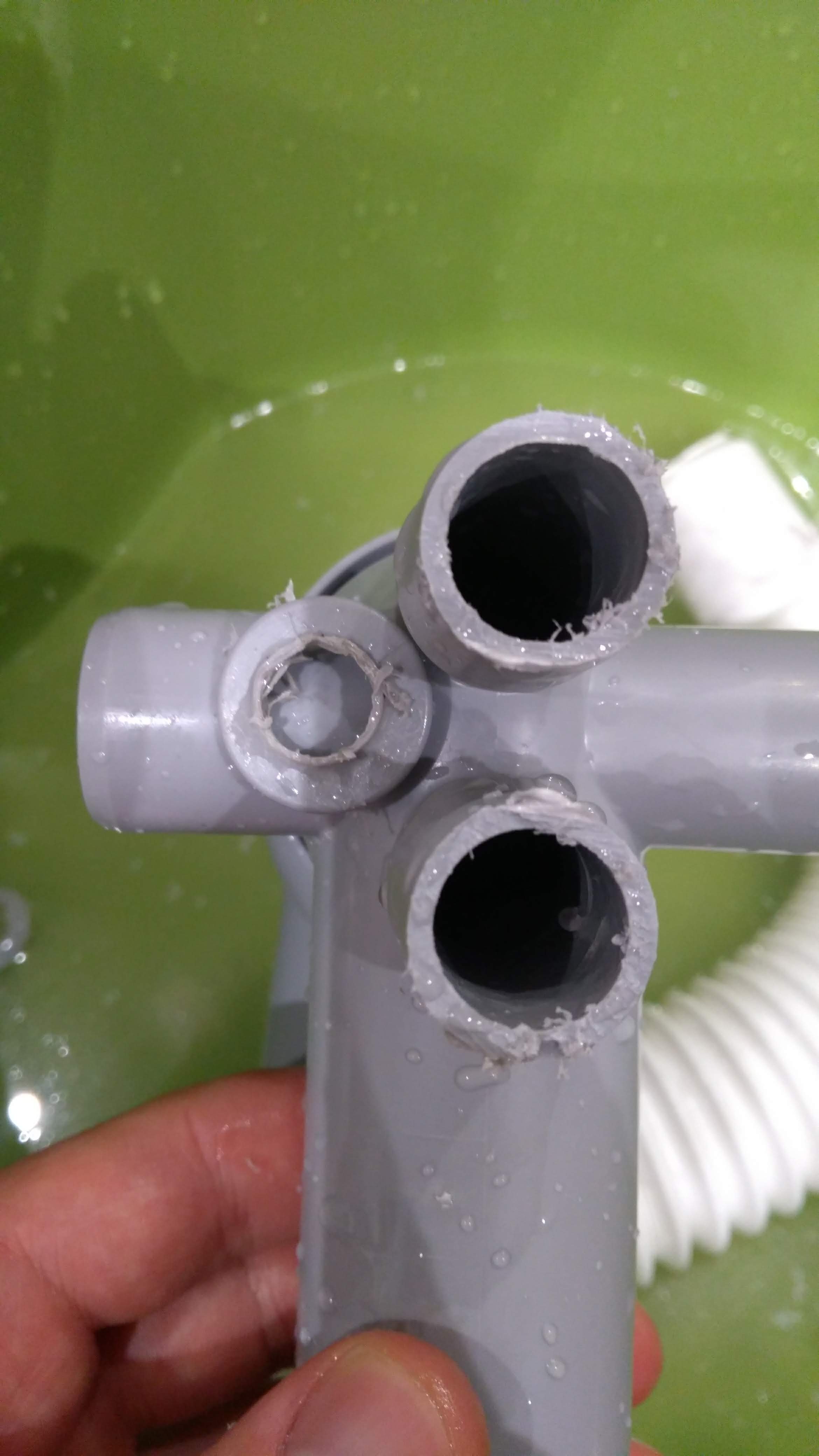
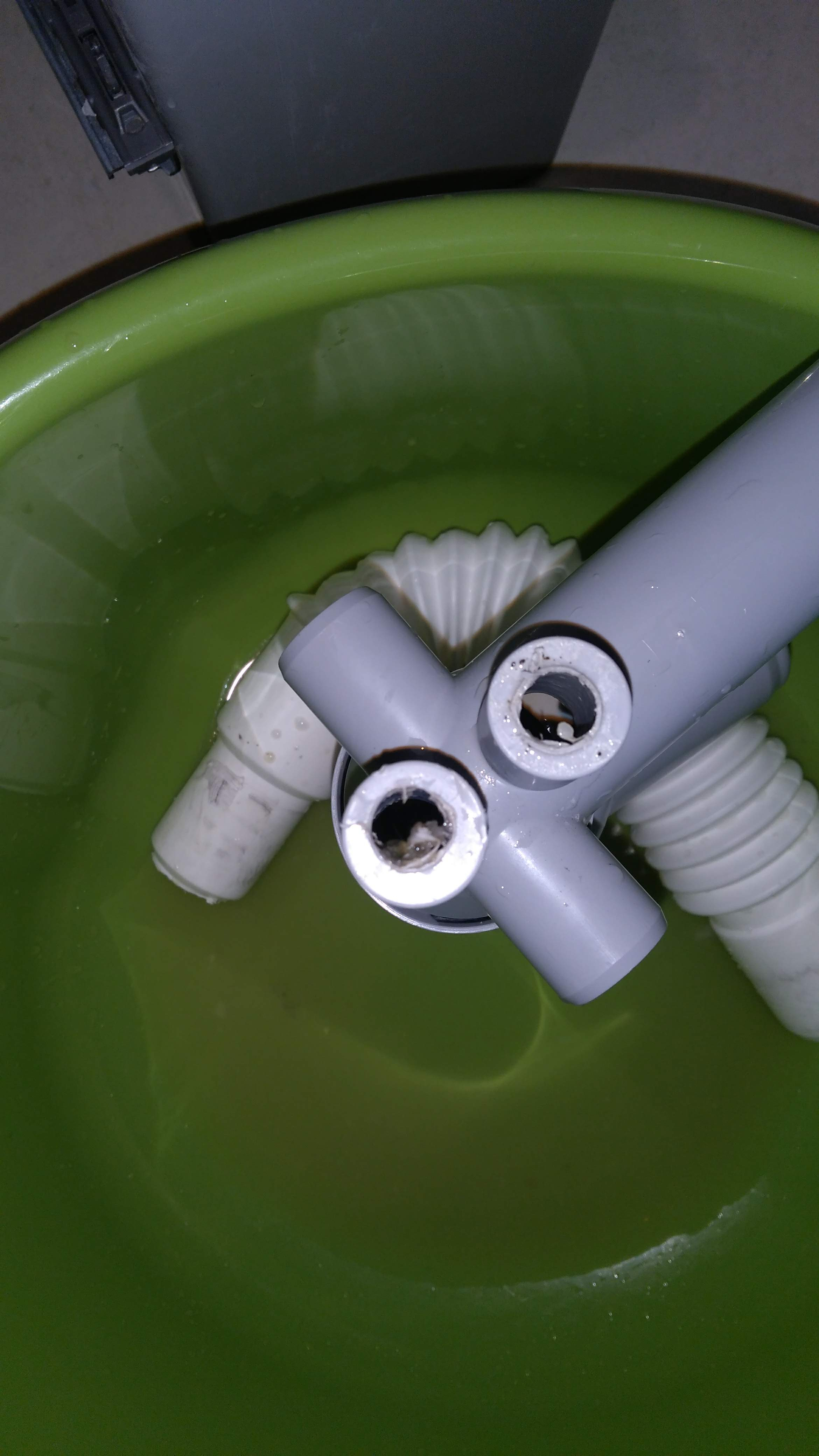
    In fact, the problem was that there was plenty of water in the dishwasher drain. I disassembled the siphon and thought that my installer gave the bodies, making only small holes in the siphon where the dishwasher drain / overflow was attached - as in the picture. I cut off the top layers of these tubes and put them back in place, but it had no effect on the gurgling.

    Title: Gurgling Siphon Under Sink: Dishwasher Issues, Aerator Installation & Possible Solutions Title: Gurgling Siphon Under Sink: Dishwasher Issues, Aerator Installation & Possible Solutions

    So it turns out that the manufacturer of the siphon (the sink is from Berg and the siphon came complete) made the wrong connection. First, the water flows from the top (as indicated by the pirate). Secondly, the protruding pipe in the siphon for connecting the dishwasher pipe should be wider than the dishwasher pipe, so that the dishwasher pipe is inserted inside and the flow diameter does not decrease. Here, as you can see in my previous photos, the end of the dishwasher pipe is put on the place to be connected in the siphon, and not inserted inside (as the dishwasher pipe has a diameter of 25 mm in the middle, after connecting the water flows through the narrow throat surely +/- 20 mm).

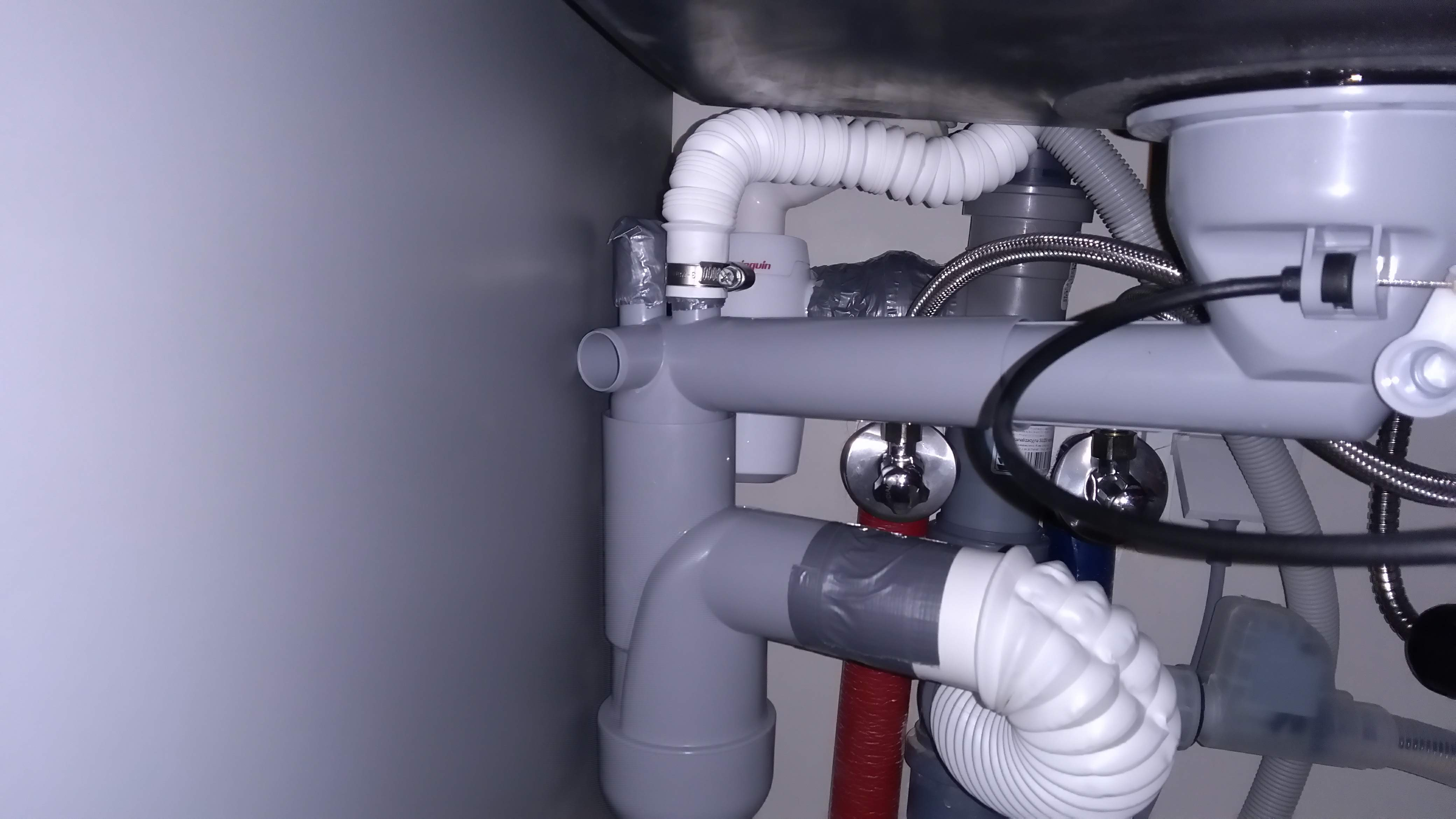
    So I added an extra tee and a siphon. I went to the left, because on the right there is a hose and a weight from a pull-out battery (if the weight rests on the siphon, the battery would not want to hide). There was really little space there, so I had to shorten the horizontal pipe between the tee and the siphon as much as possible and instead of the normal 50/25 reduction elbow I used a 50/25 rubber reduction, so in the end I stiffened it all with tape. Describes exactly, maybe it will be useful to someone in the future. ;)

    Title: Gurgling Siphon Under Sink: Dishwasher Issues, Aerator Installation & Possible Solutions Title: Gurgling Siphon Under Sink: Dishwasher Issues, Aerator Installation & Possible Solutions

    Everything is fine, nothing gurgling or dripping.

    Thanks and regards
  • #14 18201452
    bumble
    Level 40  
    Posts: 7189
    Help: 608
    Rate: 1183
    So the drain went behind the sink siphon as I wrote and it is fine now. Cool.
  • #15 18201794
    ta_tar
    Level 41  
    Posts: 6438
    Help: 693
    Rate: 2027
    You did something similar to what I suggested, only you used the usual siphon and not my suggestion.

Topic summary

✨ The discussion revolves around a gurgling noise from a sink siphon during dishwasher operation in a new apartment. The user initially attempted to resolve the issue by installing an aerator but found no improvement. Responses highlighted that the gurgling could be due to clogged pipes or improper siphon installation, suggesting that the high-speed flow from the dishwasher may be causing air to be sucked in through the siphon. Some participants recommended cleaning the siphon and adjusting the installation to ensure proper drainage. Ultimately, the user discovered that the siphon connection was incorrectly made by the installer, leading to water flow issues. After modifying the siphon connection, the problem was resolved.
Generated by the language model.

FAQ

TL;DR: 25 mm dishwasher hose plus a mis-sized or mis-placed trap inlet can cause gurgling; "the manufacturer of the siphon made the wrong connection." Fix by adding a proper tee and dishwasher siphon, or correcting the branch orientation. [Elektroda, qerten, post #18201426]

Why it matters: For homeowners or tenants hearing under-sink gurgling during dishwasher cycles, this FAQ shows practical fixes that quiet drains and prevent odors.

Quick Facts

Why does my sink siphon gurgle only when the dishwasher runs?

Dishwashers use a pump that discharges at high speed. The jet hits trap water and pulls air, making gurgling sounds. "This gurgling is caused only by the high speed flow." A side inlet and a clean trap reduce splash noise. This pattern differs from a general blockage. [Elektroda, piracik, post #18200104]

Do I need an air admittance valve (AAV) to stop the gurgling?

An AAV prevents trap siphonage by opening under negative pressure. It does not silence pump-discharge noise. Gurgling during appliance drain can be normal pump sound. Ensure a proper trap on the dishwasher branch. Check odor control, not just noise. [Elektroda, bumble, post #18199665]

Should I connect the dishwasher before or after the sink trap?

Always include a real trap on the dishwasher line. Bypassing a trap can let sewer gas into the kitchen. "Bending the hose is not a siphon." Add a dedicated dishwasher trap or use a trap with a proper branch inlet. [Elektroda, piracik, post #18200156]

Could a narrow inlet on the siphon cause gurgling?

Yes. A 25 mm hose forced over a ~20 mm nipple creates a choke point. That restriction retains water and amplifies gurgling. Replace the branch with a matching insert-style connector or add a proper tee and trap. Correcting the restriction resolved the issue. [Elektroda, qerten, post #18201426]

How do I fix the gurgling under-sink noise from a dishwasher?

Try this:
  1. Remove the trap and inspect the dishwasher branch; eliminate small drilled holes or narrow nipples.
  2. Add a tee and a dedicated dishwasher siphon/trap; use a 50/25 reducer as needed.
  3. Rebuild with the shortest, straightest horizontal run you can fit. These steps stopped the noise and leaks for the poster. [Elektroda, qerten, post #18201426]

Will cleaning the siphon help?

Sometimes. Debris can worsen splash and turbulence where the dishwasher stream meets trap water. Cleaning may reduce noise a bit. However, the core cause is often high-velocity discharge and geometry. Consider reorienting the branch to a side inlet. [Elektroda, piracik, post #18200104]

What pipe diameter should I use for a new drain branch?

Use 50 mm pipe for new sections feeding the sink trap or tee. The larger diameter lowers velocity and backpressure. It also reduces noise and improves reliability under appliance discharge. Fit an appropriate reducer for the dishwasher hose. [Elektroda, ta_tar, post #18200229]

Is a side inlet better for dishwasher drains?

Often yes. A side approach reduces the water jet falling straight into the trap seal. That means less turbulence and gurgling. "Side approach could be better." Reconfigure the tee or trap branch to side-entry when possible. [Elektroda, piracik, post #18200104]

How can I tell if the AAV is working?

An AAV opens when the system pulls negative pressure. Its job is to admit air, protecting the trap seal. You may hear it admit air during drainage. "Its task is then to open, allowing air to be sucked in, not water from the siphon." [Elektroda, bumble, post #18199665]

What if it gurgles during all drains, including the sink?

That pattern suggests partial blockage. Water occupies the pipe cross-section and pulls air through the trap. In that case, clear the line with a drain snake. "The only advice - a spiral." Then re-test the dishwasher cycle. [Elektroda, balonika3, post #18199683]

The installer left small holes at the dishwasher connection. Does that matter?

Yes. Small holes or undersized nipples throttle the flow and trap water. Replace the branch with a proper connector, or add a tee and dishwasher trap. Correcting this restriction eliminated gurgling in the documented fix. [Elektroda, qerten, post #18201426]

Does repositioning tees and shortening runs help?

Yes. Rotate the tee toward the trap and minimize pipe length to reduce losses. "You would have a much shorter length of white pipe and straight." Fewer bends and shorter runs reduce splash and noise. [Elektroda, piracik, post #18200104]

Will moving the dishwasher drain behind the sink trap cause odors?

It can if you bypass a trap. Add a proper dishwasher siphon to create a drainage break. "The siphon provides this." Any backflow will overflow into the sink instead of pressurizing the appliance line. [Elektroda, piracik, post #18200262]

What outcome should I expect after adding a dishwasher trap and proper tee?

Quieter cycles and dry joints. The poster confirmed success: "Everything is fine, nothing gurgling or dripping." Proper sizing and orientation matter as much as adding components. Re-test after reassembly. [Elektroda, qerten, post #18201426]
Generated by the language model.
ADVERTISEMENT