logo elektroda
logo elektroda
X
logo elektroda

Addressing Unpleasant Odor from Floor Bathtub Drain in Apartment Block - No Siphon Issue

maliwat69 46470 31
Best answers

How can I stop sewer odor from a bathtub drain in an apartment bathroom when the floor drain has standing water but the bathtub has no siphon?

You need a proper siphon/trap, and the smell usually means the existing floor trap is dirty, partially blocked, or being emptied by a ventilation problem [#18464108][#18463714] Clean the floor siphon thoroughly by hand first, because debris there can let sewer gas through even when water is present [#18464108][#18465288] For cleaning, users recommend a caustic drain cleaner such as Kret/Mole (sodium hydroxide/NaOH) or Domestos, used carefully and never mixed with acids [#18465209][#18464200][#18465235] If you need a temporary bathtub connection, a flexible end siphon can be bent to fit the installation and solve the odor problem, but avoid accordion-style flexible connectors because they clog easily [#18463731][#18463736] Also check the bathroom ventilation grate and any leaking sewer joints, because odor can come from there as well [#18465288]
Generated by the language model.
ADVERTISEMENT
Treść została przetłumaczona polish » english Zobacz oryginalną wersję tematu
  • #1 18463634
    maliwat69
    Level 8  
    Posts: 60
    Rate: 26
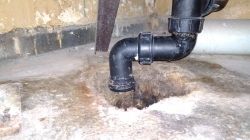
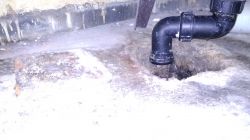
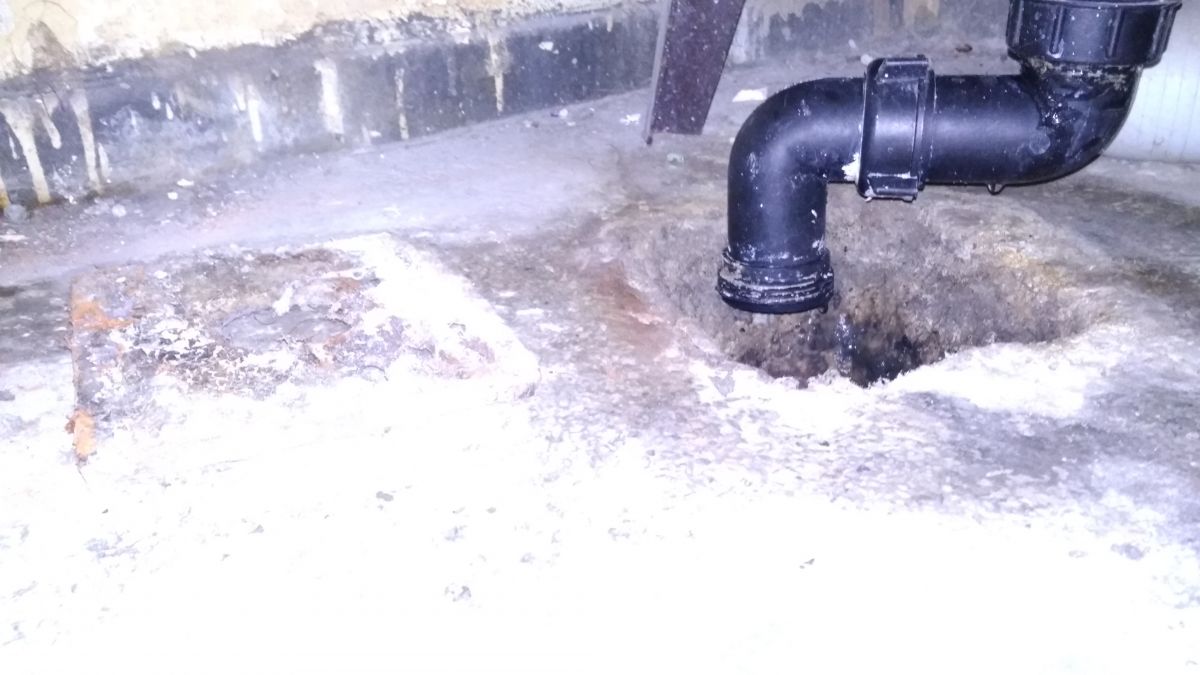
    Hello, I bought an apartment in a block of flats and I have a problem with the drain of the bathtub. Sometimes it stinks from under the bathtub. Today there was a mega unpleasant smell and I decided to go for it. This is the case. The drain is in the floor. The bathtub has no siphon. I found a metal grate on the floor in the corner. When I looked at that square drain in the floor, there is water all the time. Should it be like that? For now, it is not necessary to renovate the bathroom because in the future the cooperative will liquidate gas stoves. How to temporarily fix this situation? Buy a bathtub siphon? But it shouldn't stink now anyway, because there is water in this grate. Addressing Unpleasant Odor from Floor Bathtub Drain in Apartment Block - No Siphon Issue Addressing Unpleasant Odor from Floor Bathtub Drain in Apartment Block - No Siphon Issue Addressing Unpleasant Odor from Floor Bathtub Drain in Apartment Block - No Siphon Issue
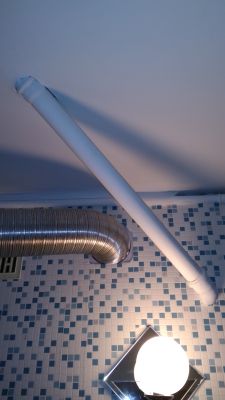
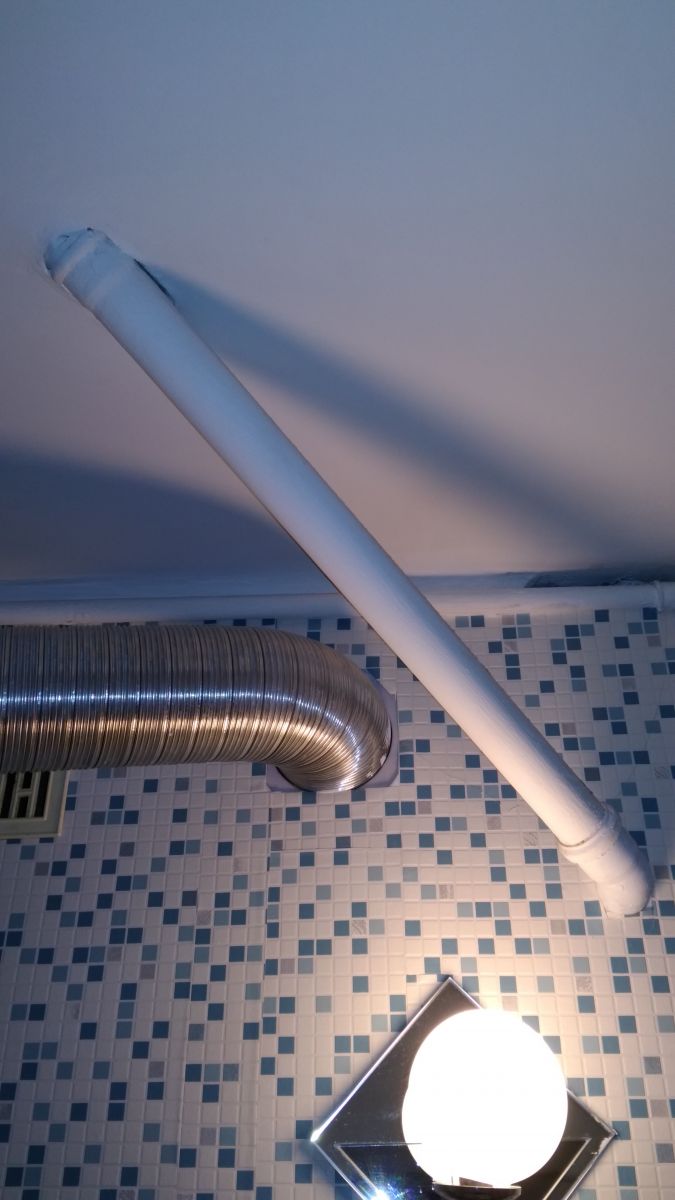
    This inclined pipe is a preview of what the drain pipe from the bathtub looks like
  • ADVERTISEMENT
  • #2 18463641
    ladamaniac
    Level 40  
    Posts: 5317
    Help: 721
    Rate: 2060
    The fact that the water is standing still is not enough. The question is whether the drain is below the water level, i.e. is there any siphon (something in the photo is slightly visible). The second thing, the water splashes onto the spout and soaks into the concrete, as if there are no terrible impurities in the bathtub, but with time it can smell and develop fungus or mold.
  • #3 18463660
    maliwat69
    Level 8  
    Posts: 60
    Rate: 26
    I will try to feel there today whether the drain is under or above the water level.
    Should I buy a grid for this hole or what should I do with it?
    If the drain is under the water level, should I buy a bathtub siphon or leave it as it is?

    Added after 44 [seconds]:

    Luckily I didn't notice any fungus or mold there
  • #4 18463703
    Rezystor240
    Level 42  
    Posts: 9240
    Help: 689
    Rate: 1647
    The grille alone will do nothing in this situation. You must have adequate drainage.
  • #5 18463707
    maliwat69
    Level 8  
    Posts: 60
    Rate: 26
    And I just want to do with this ebb. So we have two options.
    The first outlet from this grate is below the waterline and the second outlet is above the waterline.
    What to do in both cases.
    In addition, it does not depend on which case, what siphon to buy for this bathtub and what grate to buy so that there is no such big hole there.
  • ADVERTISEMENT
  • #6 18463714
    Rezystor240
    Level 42  
    Posts: 9240
    Help: 689
    Rate: 1647
    You must have a siphon, without it it will be a sewer stench.
  • #7 18463731
    RPAS
    Level 28  
    Posts: 805
    Help: 128
    Rate: 235
    The end siphon with a flexible connection will solve your problem, it is flexible so you can form it according to your assembly conditions, at least for me it solved the same problem
  • #8 18463735
    maliwat69
    Level 8  
    Posts: 60
    Rate: 26
    Oki or flexible siphon. How to connect it with a hole in the floor so that it is tight and free of stench?
  • #9 18463736
    Rezystor240
    Level 42  
    Posts: 9240
    Help: 689
    Rate: 1647
    RPAS wrote:
    with flexible connection


    In such a harmonica, they like to collect muck and effectively block water. I recommend so on average. Well, unless you do not cover the bathtub and you will have free access to it to open and clean it.
  • #10 18463749
    maliwat69
    Level 8  
    Posts: 60
    Rate: 26
    I will have access, but if you have another idea, I will be happy to hear it

    Added after 14 [minutes]:

    Oh, and this thing about the tight connection of the siphon with this hole
  • #11 18463774
    palmus
    Level 34  
    Posts: 3931
    Help: 232
    Rate: 734
    Slightly tear down the floor. Discard existing siphon. Install PVC pipe, pour diamond mortar, tile adhesive with sand, etc. Place a flat bathtub siphon and attach to the bathtub. 100% guarantee that the stench will subside.
  • #12 18463788
    maliwat69
    Level 8  
    Posts: 60
    Rate: 26
    https://allegro.pl/oferta/syfon-wannowy-do-wa...98?Jfeed=aa34192d-eee2-4419-9a9a-de66b9dfae24 Przedsiębiorstwosource=google + i + zmi% C4% 99kaczacze + water, + tools% C4% 99dzia, + siphons + i + in% C4% 99% C5% BCe, + valves + and + rest% C5% 82e & gclid = EAIaIQobChMI2Kintf_I5wIVAqoYCh1iGQrxBJQYBiABD_gJQYBiABD_gJQYBDE
    This is what all bathtub siphons look like, so I will have to use a flexible link anyway, because the drain is downwards.

    Added after 1 [minutes]:

    Such renovation works are not yet available
  • #13 18463817
    AdrianK17
    Level 16  
    Posts: 114
    Help: 13
    Rate: 41
    Each of the connectors in the siphon is rotatable, so you can fold it on the elbows so that the drain will be downwards. And looking at the whole thing from the top it will be in the shape of the letter C or V. You can go down from the siphon using a 90 degree bend or 2 x 45 degrees.
  • #14 18463837
    maliwat69
    Level 8  
    Posts: 60
    Rate: 26
    Oki, I can handle the siphon. Help me how to connect it with this hole? Any rubber reduction?
  • #15 18464108
    szogun
    Level 23  
    Posts: 623
    Help: 41
    Rate: 127
    Terrible confusion! First, if there is water, there must be a siphon installed in this floor and you do not need another one. Odors can arise due to the siphon being heavily soiled and must be cleaned preferably by hand. WARNING! In my old apartment I had a similar situation and it turned out that the previous owner was throwing used razor blades on the floor and landing in this siphon, so I recommend caution. The low capacity of this siphon caused by its contamination can cause the rapid flow of the draining water to suck in too much and the siphon to open. This will open up a flow of air (stinks) from all sewerage to the bathroom and then onto the apartment. You don't have to close the holes under the bathtub, because theoretically there is fresh water all the time.
  • #16 18464136
    maliwat69
    Level 8  
    Posts: 60
    Rate: 26
    Shogun thanks for the comprehensive answer. Let me start by cleaning this siphon. And tell me vinegar plus baking soda plus citric acid is good for rinsing these pipes or not?
  • #17 18464176
    palmus
    Level 34  
    Posts: 3931
    Help: 232
    Rate: 734
    Caustic soda (NaOH) which is a popular mole.
  • ADVERTISEMENT
  • #18 18464200
    ak44
    Level 27  
    Posts: 850
    Help: 106
    Rate: 204
    Do not mix acids with hydroxides (caustic soda).

    For example, first hot soda, then some acid after rinsing. Never together. You could get burned.
  • #19 18464240
    palmus
    Level 34  
    Posts: 3931
    Help: 232
    Rate: 734
    I will be more precise: if the drain is clogged with renovation remnants, it is acid. And it's a strong one.
    If organic residues (hair, soap) are just a rule.
    In both cases, it must be very careful in its application.
    Leave the baking soda for other purposes, because it will not help.
  • #20 18464358
    Marek39
    Level 22  
    Posts: 451
    Help: 40
    Rate: 152
    I noticed that only palmus and shogum know what they are writing about, I will add from myself because I had the same and it turned out that the vent riser above me was crammed by jackdaws and draining the water in the shell sucked the water from the trough (siphon) under the bathtub and ended up springing the riser by building manager
  • #21 18465157
    maliwat69
    Level 8  
    Posts: 60
    Rate: 26
    I checked and the drain is slightly below the water level. I cleaned this siphon with my hand as much as possible, I took out a bit of muck but when entering the bathroom I still feel a slight unpleasant smell.
    What agent should I use to treat this siphon to clean it of these organic residues? You write that it is alkaline, but what exactly to use?
  • #22 18465209
    palmus
    Level 34  
    Posts: 3931
    Help: 232
    Rate: 734
    Mole.
    I was talking about it. It is a NaOH solution, sometimes in a gel version.
    Pure caustic soda in a compressed solution works wonders.
    Just b. Be careful with your own body when using it.
    Or start with Domestos for 1.5 days and watch.
  • #23 18465228
    maliwat69
    Level 8  
    Posts: 60
    Rate: 26
    And Domestos or Mole won't eat those old pipes?
  • #24 18465235
    clubber84
    Level 38  
    Posts: 4994
    Help: 433
    Rate: 1667
    maliwat69 wrote:
    You write that it is alkaline, but what exactly to use?

    Go to the store and buy a popular type of decongestant - KRET or TYTAN (in an orange bottle).
    And follow the instructions on the package.
  • ADVERTISEMENT
  • #25 18465258
    maliwat69
    Level 8  
    Posts: 60
    Rate: 26
    Oki, I read that the mole can be used for plastic and metal pipes, not for aluminum ones. It's a block made of a large plate, so the pipes are probably rather cast iron, there should be no aluminum anywhere, right?
    This oblique pipe, which you can see in the photo, seems to be made of plastic, so it should probably be ok.
  • #26 18465272
    ladamaniac
    Level 40  
    Posts: 5317
    Help: 721
    Rate: 2060
    In general, sodium hydroxide should not be used only for aluminum pipes, it reacts with the evolution of hydrogen. For the rest, it is relatively safe, you just need to rinse thoroughly. In contact with the body, it creates deep burns that are difficult to heal. The first sensation is slippery skin, despite being rinsed with water.

    You see you wrote the first one. Aluminum was not used in the sewage system, only plastic, cast iron or stoneware.
  • #27 18465288
    szogun
    Level 23  
    Posts: 623
    Help: 41
    Rate: 127
    maliwat69 wrote:
    I checked and the drain is slightly below the water level. I cleaned this siphon with my hand as much as possible, I took out a bit of muck but when entering the bathroom I still feel a slight unpleasant smell


    You haven't described what else you have in this bathroom. Sink with a siphon (clogged), leaking sewer pipe couplings, faulty ventilation. Check if the ventilation grille is pulling (with a candle, match or lighter). Maybe you can "on the nose" sense where it stinks from. A bad smell can persist for several hours so give yourself a hold and evaluate tomorrow and keep looking.
  • #28 18469107
    Marek39
    Level 22  
    Posts: 451
    Help: 40
    Rate: 152
    maliwat69 wrote:
    I checked and the drain is slightly below the water level.
    and so it has to be boiled with 3 liters of water and pour it into the bathtub and the creatures will die, unless it collapses from the ventilation, as my colleague writes above.
    ps. You will need to clear the mole if you step into a puddle when draining the water. :)
  • #29 18474333
    andrzej lukaszewicz
    Level 42  
    Posts: 7005
    Help: 622
    Rate: 2099
    It all needs to be put back together with new, good fittings (not from the market). It's best to "make" a siphon from several elbows and assemble everything on stiff pipes / elbows and the problem is solved for dozens of years, nothing clogs. Do not use any flexible connectors / accordions.
  • #30 18474911
    szogun
    Level 23  
    Posts: 623
    Help: 41
    Rate: 127
    andrzej lukaszewicz wrote:
    It all needs to be put back together with new, good fittings (not from the market). It's best to "make" a siphon from several elbows and assemble everything on stiff pipes / elbows and the problem is solved for dozens of years, nothing clogs. Do not use any flexible connectors / accordions.


    New siphon in the ceiling? Is he supposed to cut a hole to the neighbor's floor below and put those elbows in for him? Have you read what's going on here?

Topic summary

✨ The discussion revolves around addressing an unpleasant odor emanating from a bathtub drain in an apartment block, where the bathtub lacks a siphon. The user discovers a metal grate in the floor with standing water, raising questions about proper drainage and odor control. Responses suggest that a siphon is necessary to prevent sewer smells, and various solutions are proposed, including installing a flexible siphon and ensuring proper drainage connections. Cleaning the existing siphon and using caustic agents like caustic soda (NaOH) or commercial decongestants are recommended to eliminate organic residues causing the odor. The importance of maintaining clear drainage and avoiding flexible connectors is emphasized to ensure long-term effectiveness.
Generated by the language model.

FAQ

TL;DR: Up to 90 % of domestic sewer smells come from dried or dirty traps [EPA, 2022]; "You must have a siphon" [Elektroda, Rezystor240, post #18463714] Cleaning the floor siphon, maintaining a 50 mm water seal, or fitting a proper bathtub trap stops the odor.

Why it matters: A working trap blocks sewer gases that can carry pathogens and damage indoor air quality.

Quick Facts

• Water-seal depth required for floor drains: 50 mm [EN 12056-2]. • Recommended NaOH (caustic soda) concentration for drain cleaning: 5–10 % [CDC, 2021]. • Corrugated accordion hoses clog up to 3× faster than smooth pipes [Plumbing Eng. Digest, 2020]. • Typical PVC bathtub trap kit price (EU): €8–15 [LeroyMerlin, 2024]. • Cast-iron pipes resist NaOH corrosion up to 20 % concentration [ASHRAE, 2021].

Why does my bathtub drain smell even though I can see water in the floor grate?

Water alone is not proof of a working trap. If the outlet pipe rises above the water line or the seal is sucked out while another fixture drains, gases bypass the water and reach the room [Elektroda, ladamaniac, post #18463641]

How do I verify that the floor drain has a proper water seal?

Shine a flashlight and insert a stiff wire. If the wire hits water within 50 mm of the grate rim and immediately turns downward, the seal is intact. If you feel an open void or air after 50 mm, the trap has failed [Elektroda, maliwat69, post #18465157]

Should I add a bathtub siphon even if the floor trap exists?

No extra trap is needed when the floor siphon is clean and submerged [Elektroda, szogun, post #18464108] Install a tub trap only when the floor drain cannot maintain its 50 mm seal or must be bypassed during future renovations.

Is caustic soda safe for cast-iron and plastic drainpipes?

Yes. NaOH does not attack cast-iron or PVC below 20 % concentration when promptly rinsed [ASHRAE, 2021]. It must never contact aluminum because hydrogen gas evolves [Elektroda, ladamaniac, post #18465272]

Can I mix vinegar, citric acid or other acids with caustic soda to boost cleaning power?

Never mix acids with NaOH; the neutralization can boil violently and cause burns [Elektroda, ak44, post #18464200] Use them in separate cycles with thorough water flushing between treatments.

How do I connect a new bathtub trap to the existing floor opening without leaks?

Use a rubber stepped reducer (32–50 mm) pressed into the floor socket, then insert the trap’s smooth outlet pipe 35 mm deep. Tighten a stainless hose clamp over the rubber sleeve for a gas-tight seal [Elektroda, maliwat69, post #18463837]

Are flexible accordion siphons a bad idea?

They fit tricky layouts but their ridges collect sludge and can block water, leading to odor recurrence [Elektroda, Rezystor240, post #18463736] Smooth-wall PVC traps last longer and flow 30 % more freely [Plumbing Eng. Digest, 2020].

Could poor ventilation or a clogged vent stack be the real culprit?

Yes. A blocked vent riser can create negative pressure that sucks water out of the trap and pulls sewer gas inside [Elektroda, Marek39, post #18464358] Check airflow at the bathroom grille with a lit match; flame should lean toward the duct.

What if odor persists after cleaning and ensuring traps?

Inspect other fixtures for dry or leaking traps, reseal pipe joints with silicone, and verify that the building’s vent stack is clear. Persistent smell in multi-unit blocks may require the cooperative to send a plumber with a camera to locate blockages [Elektroda, szogun, post #18465288]

3-Step quick procedure: using caustic soda safely

  1. Ventilate the bathroom and wear goggles/gloves.
  2. Slowly add 200 g NaOH granules to 0.5 L cold water (never reverse).
  3. Pour into the drain, wait 30 min, then flush with 3 L boiling water. "Be careful with your own body when using it" [Elektroda, palmus, post #18465209]
Generated by the language model.
ADVERTISEMENT